
Feed from Roberts Lab at UW. Used to be notebook entries, blog posts, calendar mods, photo uploads. Now, not so much. Everything tweeted is opinion of someone.
Joined December 2008
- Tweets 25,543
- Following 24
- Followers 107
- Likes 20
2,294 Photos and videos









Sustainable shellfish farming hinges on science-driven practices. An interview with Professor Roberts highlights balancing yield with ecological health and resilience to climate change. Dive into responsible aquaculture. #Sustainability #Aquaculture #Blu… ift.tt/vyLZiJF
12
Experiment underway: 9 USDA oyster families tested for heat stress in 12-well plates at 36°C; mortality checks planned after 24 hours, with careful labeling and replication to track individual families. #Oysters #HeatStress #USDA #MarineScience #Aquacult… ift.tt/v2KqMQN
15
Oysters showed heat stress: 38C at high salinity killed some; 11C groups all survived. Lower the “high” temperature next time to avoid mortality and keep replicates. #Oysters #Resazurin #Aquaculture #MarineScience ift.tt/DQhVOxu
14
Starting a preliminary experiment to test if environmental memory affects oyster glycogen response to heat stress. Four groups (heat/heat, heat/control, control/heat, control/control) will reveal history effects. Next: qPCR on energy genes & glycogen. #O… ift.tt/My8fR6v
9
Tank water checks: Left 30ppt, pH 7.8, alkalinity 80, 0 ammonia/nitrite, 40 nitrate; Right similar with 1–3 nitrite; Yellow tank shows 120 alkalinity, 0 nitrate. Regular testing keeps fish healthy and stable. #aquarium #waterquality #fishkeeping ift.tt/keWfiMD
8
Exploring heat stress on resazurin stability: 3-hour 36C treatment shows how fluorescence holds up in iced vs. room-temp samples. Findings could guide field-preservation without a reader. Data-driven steps ahead for stable measurements. #Science #Biology… ift.tt/Id96Noj
4
Clams in a 36°C exposure show rapid shell closure, with full closure at 0–5 min post-recovery and increasing openness by 20 min. Demonstrates quick physiological response to temp stress and recovery dynamics. #MarineBiology #Clams #ThermalStress ift.tt/07MZ5cr
3
New buffers perform comparably to Promega in third Glycogen-Glo test. Two samples (0.0A*, 0.0B**) matched luminescence and glycogen/glucose levels; ready to proceed with temperature-stress analyses. #GlycogenGlo #Biotech #LabNotes ift.tt/T1Knmo8
3
Setting up an oyster heat-stress test: 4 plates, 15-min 10% bleach prep, seawater-filled wells, incubator monitored for mortality. A careful, controlled step toward understanding stress responses. #Oysters #HeatStress #MarineBiology ift.tt/8xaeHlo
8
Water quality snapshot: Left 30ppt/7.8pH/80Alk/0/0/40; Right 30ppt/7.8pH/80Alk/0/2/40; Yellow 30ppt/7.8pH/80Alk/0/0/0. Consistent salinity and pH, but nitrite varies. Monitoring matters for tank health. #Aquaculture #WaterQuality #FishTank ift.tt/7mTCRL1
21
Testing cleaning methods for residual resazurin: Alconox vs. bleach show different hues during soak; rinse results vary. Overnights with oysters in seawater planned to assess cleanliness outcomes. Key takeaway: method choice alters residue behavior and c… ift.tt/atjguPs
9
Water quality snapshot: Left 30ppt, pH 7.8, Alkalinity 120, 0 NH3/NH2, 20-40 NO3. Right: 30ppt, pH 7.8, Alkalinity 80, 0 NH3, 1 NO2, 20-40 NO3. Yellow: 30ppt, pH 7.8, Alkalinity 80, 0 NH3/NH2, 0 NO2, 0-5 NO3. #Aquarium #WaterQuality ift.tt/2mhN71o
4
15/15 clams kept at 36°C quick recovery show 100% shell closure during and after exposure. Immediate resilience under controlled heat stress suggests strong acute tolerance in this sample. #Clams #MarineBiology #ThermalStress ift.tt/mNMLybs
1
1
16
Glycogen-Glo buffer testing shows the new buffers performing similarly to Promega buffers in high-luminescence ranges, with consistent glycogen/glucose readings. A third test may confirm accuracy—momentum toward reliable buffers. #Biotech #AssayNotes #Gl… ift.tt/aRcgtXi
38
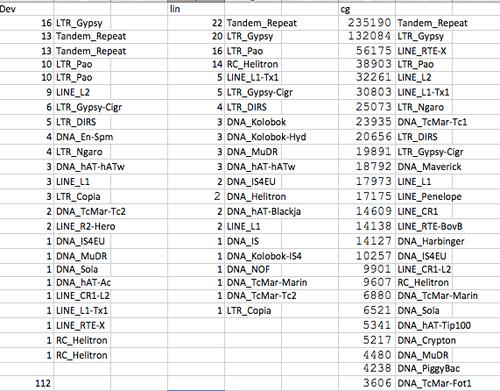
Reorganizing data can unlock hidden value: reprocessing BLAST 6 output reveals useful validation cues and mapping insights. Excel is a practical lens to inspect and iterate on data as you prep for future analyses. #DataScience #BLAST #Bioinformatics #sds… ift.tt/DzLMKoc
18
Exploring sea star resilience: comparing transcriptomes of three species under Vibrio pectenicida exposure to pinpoint genes that boost resilience and aid recovery of vulnerable sunflower stars. #SeaStar #Transcriptomics #ScienceCommunication 🧬🦀 ift.tt/NJxl6TR
6
34C repeat exposure: all 15 clams closed shells immediately and remained closed up to 20 minutes after transfer. Temperature control and rapid recovery indicate strong shell response to brief heat exposure. #Clams #MarineBiology #ExperimentResults ift.tt/kHj0gWN
6
Water quality check: left tank 30ppt, pH 7.8, alkalinity 80, 0 ammonia/nitrite, 20-30 nitrate; right/yellow tanks 30ppt, pH 7.8, alkalinity 80-120, 0 ammonia/nitrite, 0-10 nitrate. Consistent care matters. #Aquaculture #WaterQuality #TankMaintenance ift.tt/TqPYBHG
10
Water quality snapshot: Left 30ppt/7.8pH/0/0.25/30; Right 30ppt/7.8pH/0/0.25/20; Yellow 30ppt/7.8pH/0/0.0/0. Regular testing matters for healthy tanks. #Aquarium #WaterQuality #DIYScience ift.tt/dDtQwJE
6
Clam responses to 36C exposure show rapid shell closure: after 2 hours at 35.5–37°C, every clam closed by recovery start; near-complete closure within minutes, with gradual return to partial openness over 24 hours. Highlights adaptation timing and variab… ift.tt/6k0hIRA
7