
Research lab at @UCSBEngineering revealing the geometric signatures of natural and artificial intelligence | PI: @ninamiolane
Joined September 2021
- Tweets 1,130
- Following 746
- Followers 2,615
- Likes 1,504
29 Photos and videos


Pinned Tweet

15 Jul 2024
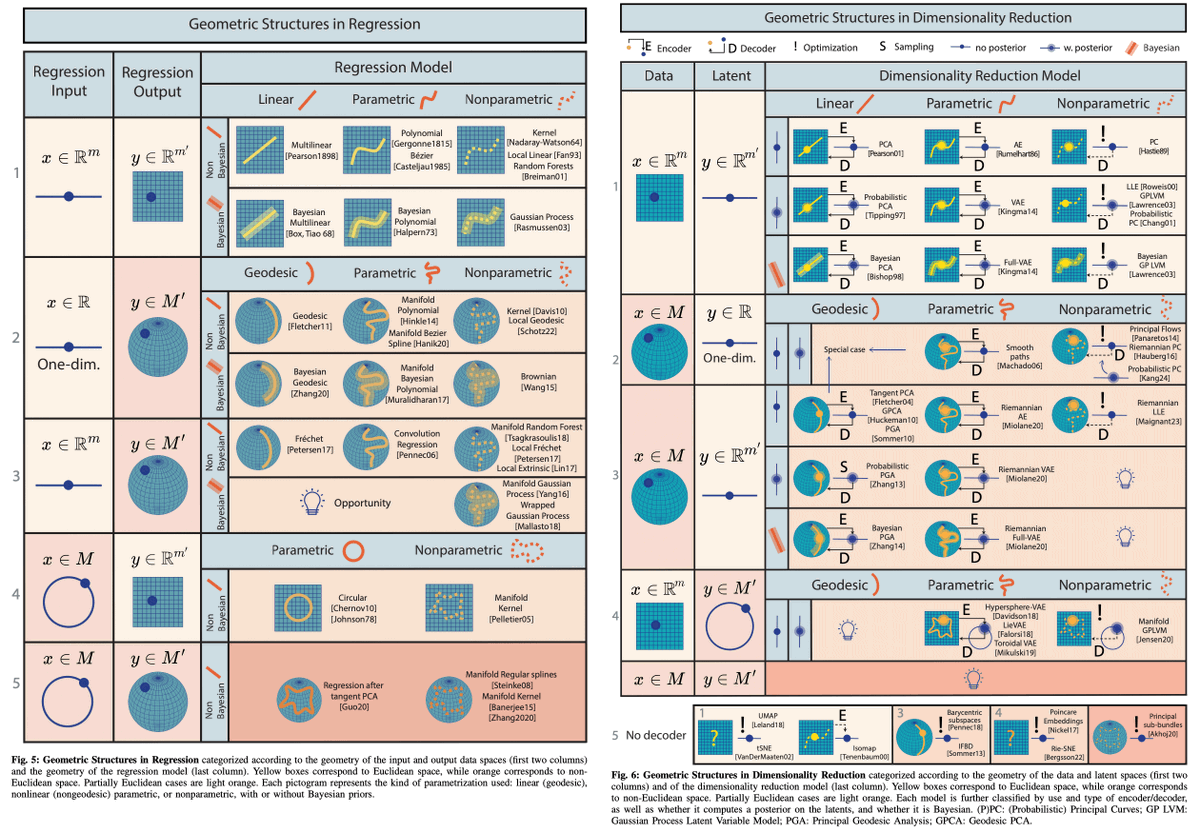
🌟 New review from the lab!
Discover the geometric, topological and algebraic signatures of machine learning and deep learning models.
By @naturecomputes @johmathe @mathildepapillo D. Buracas @hansenlillemark @cashewmake2 @AbbyBertics X. Pennec & @ninamiolane !

In the 20th century, non-Euclidean geometry transformed how we model the world with pen and paper. In this century, it’s revolutionizing how we model the world with machines.
Our review on the topic is out arxiv.org/pdf/2407.09468, led w the brilliant
@naturecomputes @johmathe

1
47
171
23,265
Congratulations @fatihdin4en on the new paper!!🐼
Jun 9

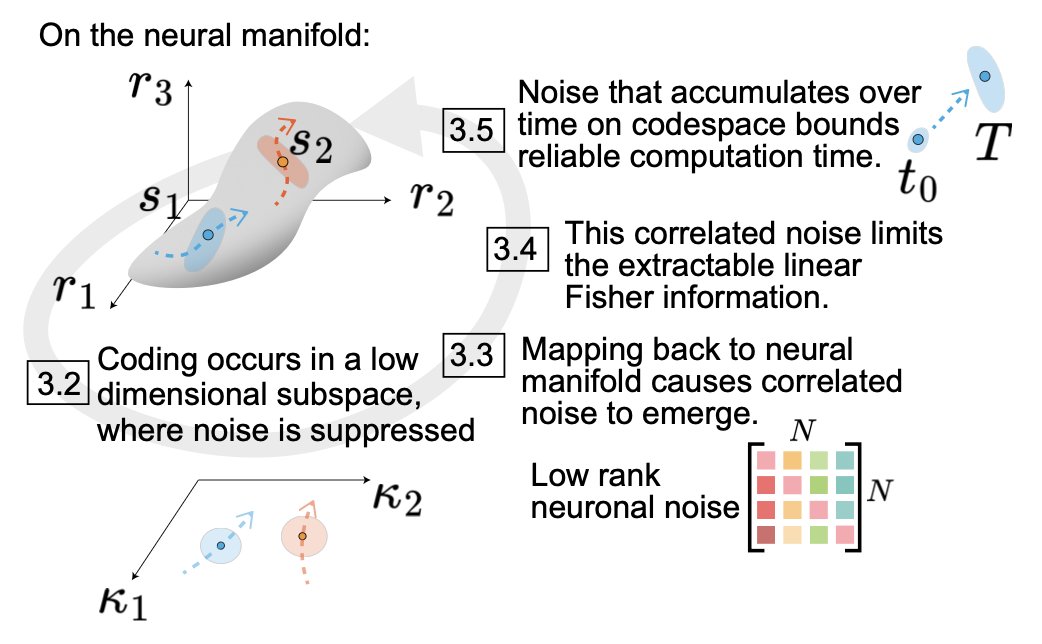
A computer holds data perfectly for hours. A person asked to remember a long number fails in seconds. Why?
The answer is tangled up with something both brains and neural nets do: they code in low dimensions. 🧵
2
10
1,587

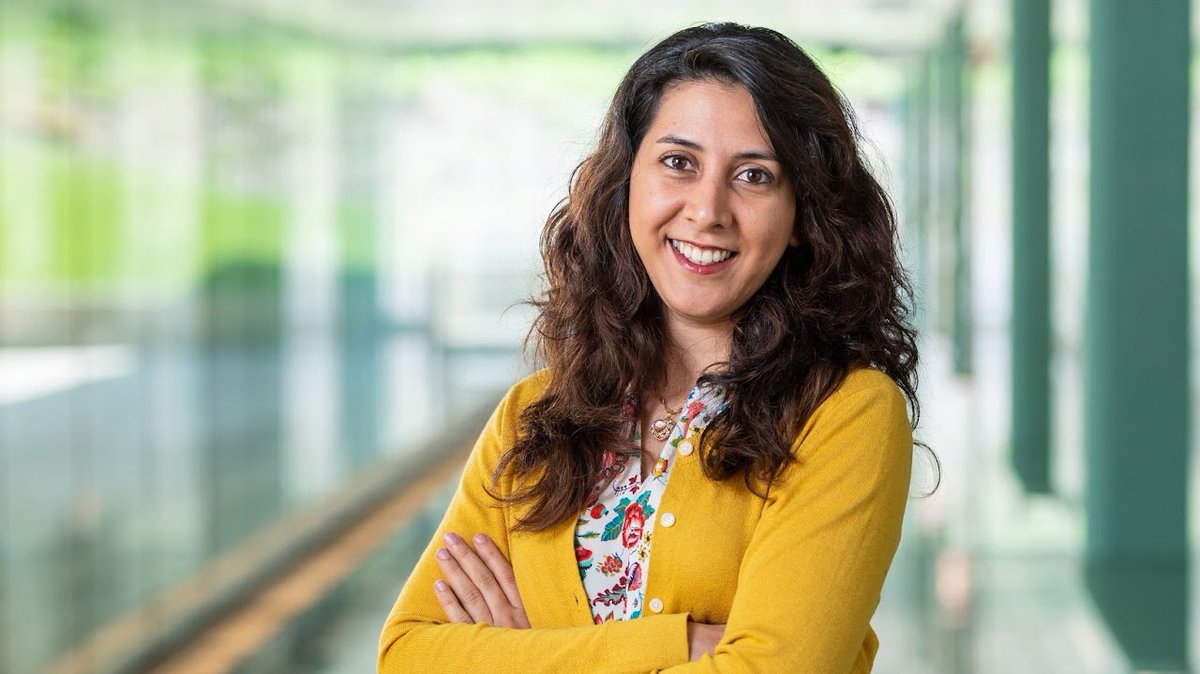
This award, supported by ICMBE2026, recognizes exceptional contributions to molecular beam epitaxy by researchers under 40. Prof. Ahmadi is a deserving honoree and we couldn't be prouder. 💛💙
#UCSB #MBE #WideBandgap #PowerElectronics #QuantumDevices #MaterialsScience
2
3
141
🏆Congratulations to Prof. Elaheh Ahmadi, recipient of the 2026 Young Investigator MBE Award from the International MBE Advisory Committee!
Her research on novel ultra wide bandgap devices is pushing the boundaries of high power, high frequency, and quantum applications.🔬⚡
2
2
6
689
Way to go Daniel!!! 😼
Jun 1

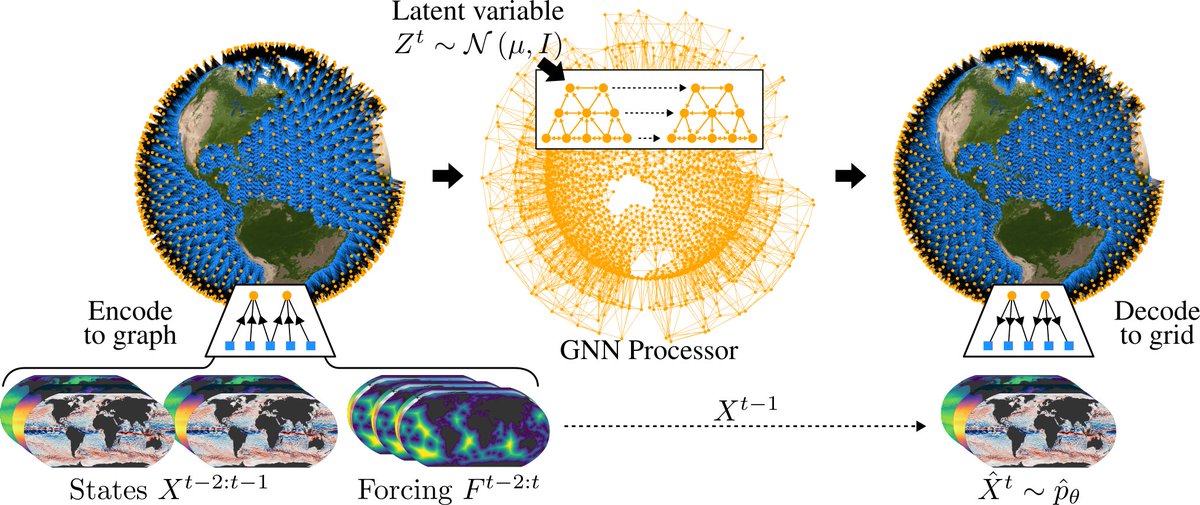
The ocean is inherently chaotic, yet existing data-driven ocean models produce deterministic forecasts. In our new preprint, we introduce Njord, a probabilistic graph neural network for ensemble ocean forecasting.
Link: arxiv.org/abs/2605.15470
A couple highlights below 🧵
1
5
966
Geometric Intelligence Lab retweeted

Jun 1
• Lastly, animation of an extra long rollout over the spring of 2024 for the Baltic Sea, with reanalysis atmospheric forcing. The regional model remains surprisingly stable while only trained with 2 autoregressive steps.
4
10
596
Geometric Intelligence Lab retweeted
Jun 1
• Sea ice is predicted alongside other physical state variables. Smooth invertible activation functions together with a binary density channel keep ice variables within realistic bounds.
1
3
8
276
Geometric Intelligence Lab retweeted
Jun 1
• K-means cluster meshes. Latitude weighted spherical K-means produces a mesh that conforms better to ocean grids by construction compared to previously used quadrilateral or icosahedral meshes.
1
3
8
165
Geometric Intelligence Lab retweeted
Jun 1
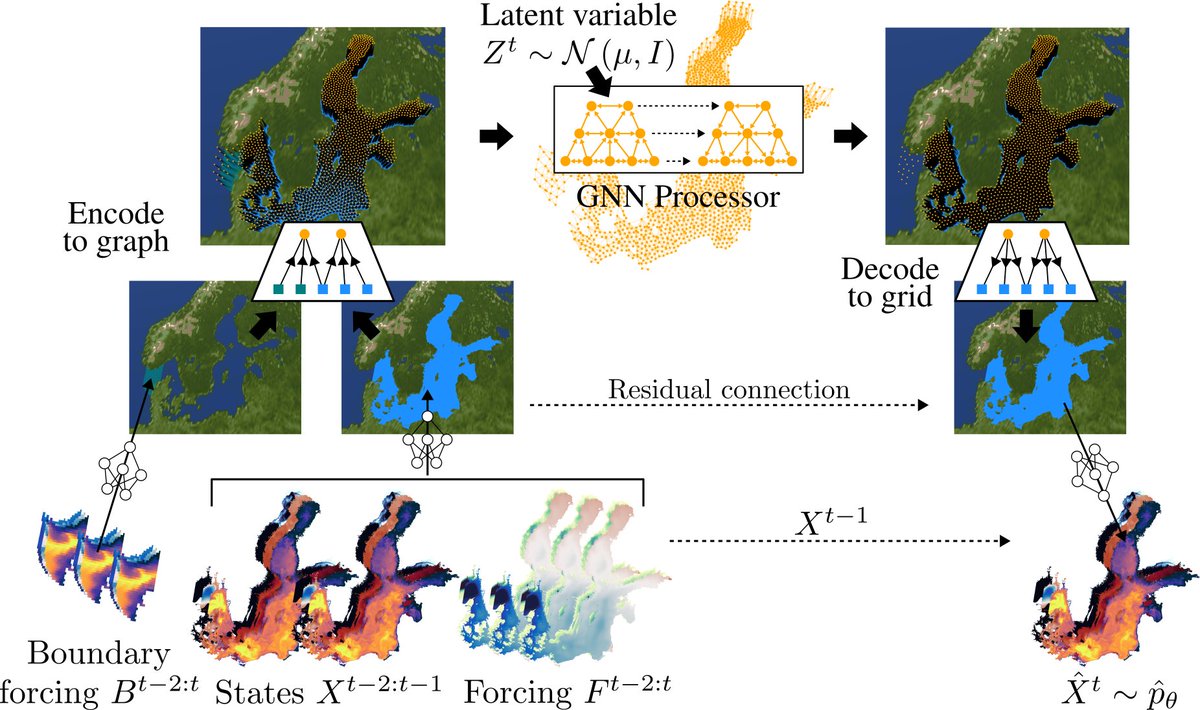
• Latent-variable graph neural network. A per-step Gaussian latent on the coarsest mesh level injects stochasticity into a hierarchical encode-process-decode backbone. The model only requires one forward pass per ensemble member.
1
3
9
307
Geometric Intelligence Lab retweeted
Jun 1
• Njord is trained globally at 0.25° and on the Baltic Sea at 2km resolution. In the regional setting Njord conditions on boundary data from an independent global ocean model, where previous emulators either lack boundary forcing or depend on the very system they aim to replace.
1
3
11
283
Ever wonder how electrical signals in your brain create consciousness? 🤔💡
Dive into this question with @ninamiolane and @claire_i_webb

Can geometry help explain how neuronal signals create consciousness?🤔🌐
Loved diving into this massive question with the brilliant @claire_i_webb thanks to @longnow & @berggruenInst !
Watch our full conversation here ⬇️
@ucsbece @geometric_intel @ai_ucsb
1
4
247
Geometric Intelligence Lab retweeted

Can geometry help explain how neuronal signals create consciousness?🤔🌐
Loved diving into this massive question with the brilliant @claire_i_webb thanks to @longnow & @berggruenInst !
Watch our full conversation here ⬇️
@ucsbece @geometric_intel @ai_ucsb
May 20

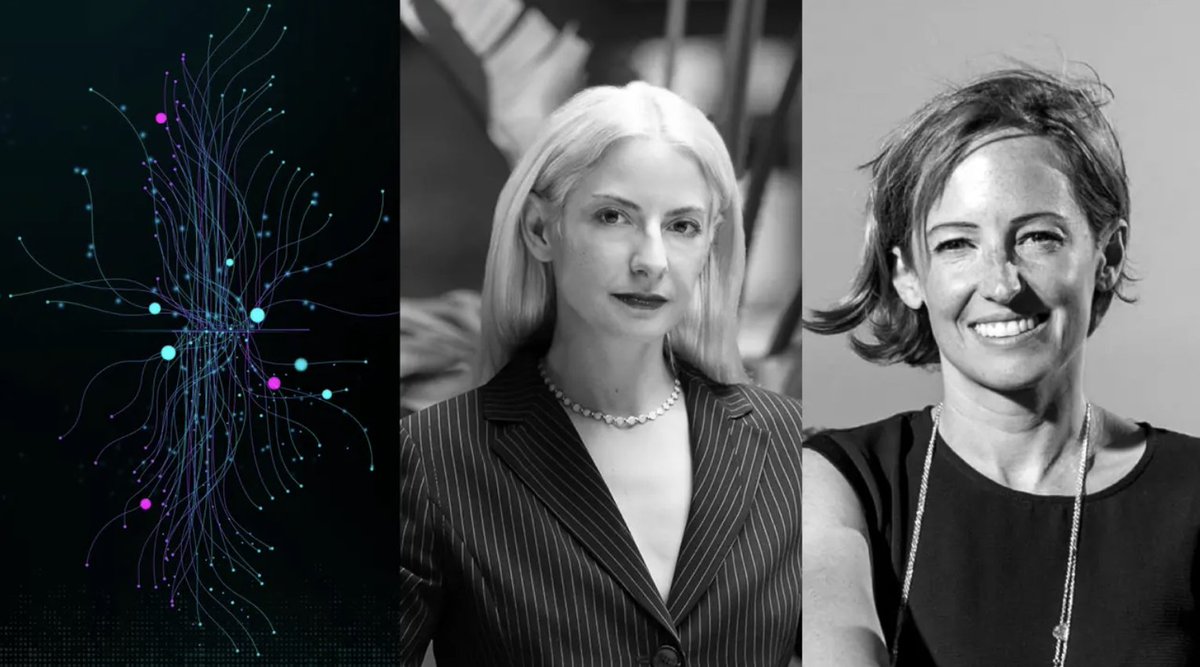
How do the binary electronic signals of neurons give rise to consciousness? Mathematician and machine learning researcher @ninamiolane joined science historian @claire_i_webb to explore this question from an unexpected direction: geometry.
A fascinating conversation that included everything from Jennifer Aniston to the neuroscience of regret. Watch the full episode on YouTube -> youtube.com/watch?v=IUlBwKin…
9
30
152
19,319
Math, machine learning, and the mind💡
ECE's Prof. @ninamiolane takes a fascinating geometric approach to understanding how the brain's electronic signals give rise to consciousness.
Don't miss her conversation with @claire_i_webb! 📐🧠
Can geometry help explain how neuronal signals create consciousness?🤔🌐
Loved diving into this massive question with the brilliant @claire_i_webb thanks to @longnow & @berggruenInst !
Watch our full conversation here ⬇️
@ucsbece @geometric_intel @ai_ucsb
4
7
997
Geometric Intelligence Lab retweeted
Fantastic idea! If you're building Graph Foundation Models, try testing them on #OgBench 🧬
By @louisacornelis @LouisVLang @johmathe @gbg1441 @geometric_intel

Thanks @louisacornelis! Hey GFM crowd, OgBench looks like a perfect example for evaluating zero-shot generalization of graph FMs without training on it (as num samples is rather small but statistically meaningful).
4
18
2,398
Most GNN benchmarks weren't built with biology in mind. #OgBench was. 🎉
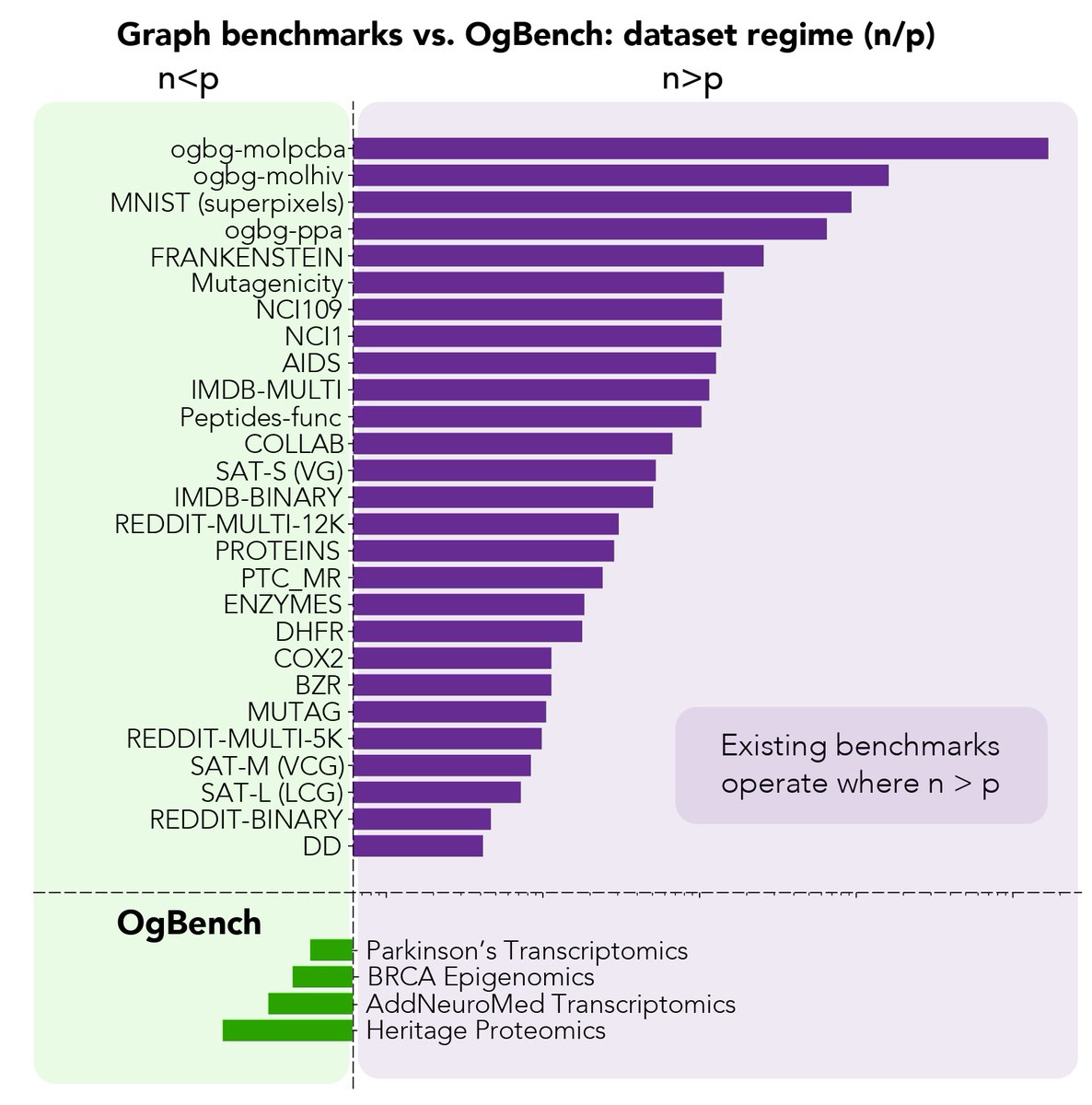
The first benchmark for graph learning on omics data, addressing the n≪p regime across transcriptomics, proteomics, and epigenomics . ✨
Congratulations @louisacornelis @johmathe @gbg1441 @LouisVLang 🚀

We're releasing OgBench: the first benchmark for GNNs on omics data in the n≪p regime. Every major benchmark (OGB, TUDataset, LRGB, GraphBench) operates where the number of graphs (n) far exceeds nodes per graph (p). But biology is the opposite: few patients, massive graphs.
4
12
964
Geometric Intelligence Lab retweeted
Standard GNN benchmarks do not reflect the reality of omics data.
#OgBench changes that by tackling the n≪p omics regime: massive graphs of proteins/transcripts/genes, but limited patients.
A much-needed tool for AI in omics!🧬📊@louisacornelis @johmathe @gbg1441 @LouisVLang
We're releasing OgBench: the first benchmark for GNNs on omics data in the n≪p regime. Every major benchmark (OGB, TUDataset, LRGB, GraphBench) operates where the number of graphs (n) far exceeds nodes per graph (p). But biology is the opposite: few patients, massive graphs.
12
18
3,022
Geometric Intelligence Lab retweeted

Thanks @louisacornelis! Hey GFM crowd, OgBench looks like a perfect example for evaluating zero-shot generalization of graph FMs without training on it (as num samples is rather small but statistically meaningful).
We're releasing OgBench: the first benchmark for GNNs on omics data in the n≪p regime. Every major benchmark (OGB, TUDataset, LRGB, GraphBench) operates where the number of graphs (n) far exceeds nodes per graph (p). But biology is the opposite: few patients, massive graphs.
2
5
12
4,110
Geometric Intelligence Lab retweeted

A super example of why critically evaluating GNNs is so important!! Well done🙌
2
1
6
298
Geometric Intelligence Lab retweeted
1
7
246
Geometric Intelligence Lab retweeted

Code, datasets (on HuggingFace), and a public leaderboard are all live. If you work on biological graphs, come benchmark your model and stay tuned for additional datasets.
→ github.com/geometric-intelli…
2
12
438
Geometric Intelligence Lab retweeted
These findings echo recent warnings that graph learning risks losing relevance due to poor benchmarks. OgBench is our answer: objective evaluation to redirect attention from incremental gains to rethinking whether biological priors should be encoded as graphs at all.
1
2
12
554