
The Work AI platform connected to all your data. Find, create, and automate anything. #WorkAIForAll
Joined June 2008
- Tweets 1,562
- Following 159
- Followers 10,082
- Likes 2,175
564 Photos and videos
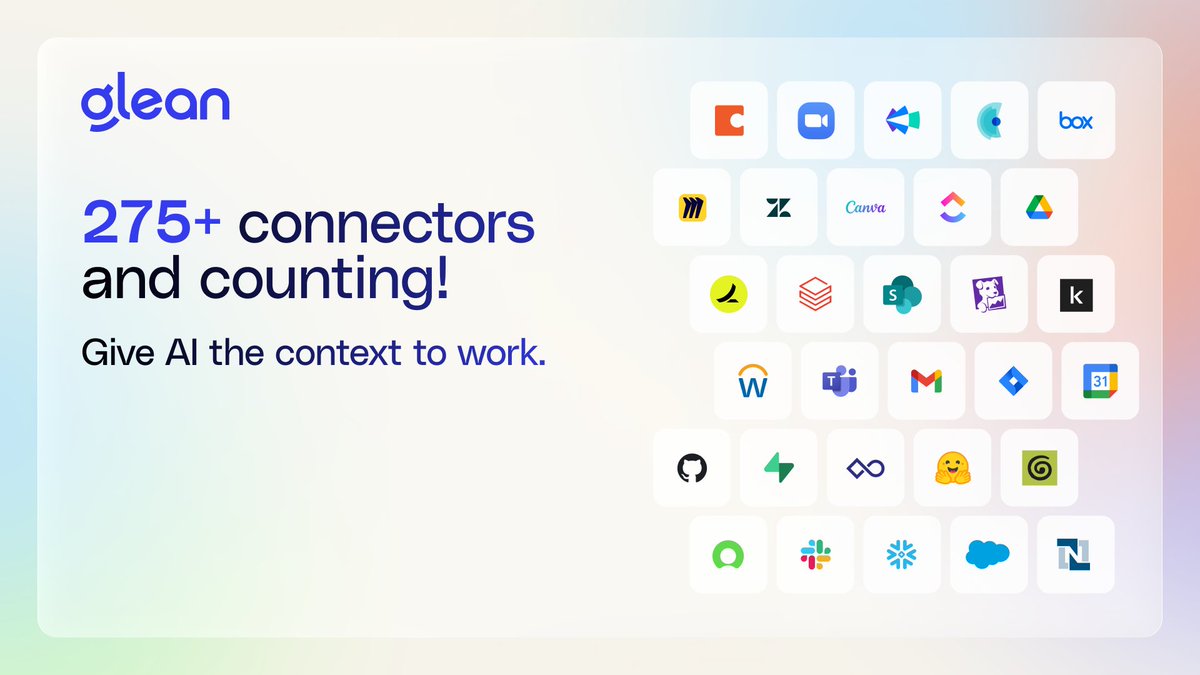









275 connectors and counting.
Glean gives AI broader coverage across the systems where work happens — with connectors that understand enterprise content permissions, plus the context architecture to make that access useful.
The result: better context for better work. And in our latest benchmark, Glean was preferred ~2.5x as often as other search tools, which used 30% more tokens on average.
2
3
282
Glean retweeted

Jun 11
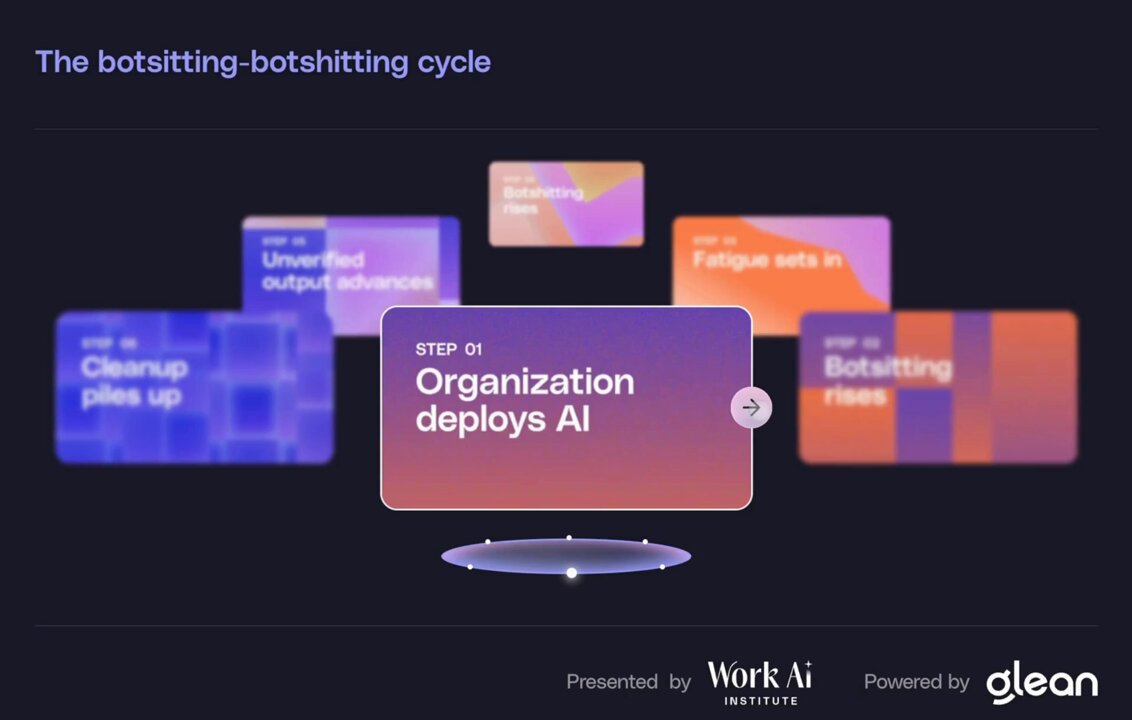
Botsitting is "often tedious" and "exhausting," Rebecca Hinds, head of the Work AI Institute at Glean and one of the report's authors, said. bit.ly/4ehAn95
1
4
6
4,071
Tokenmaxxing ≠ business success 📉
Teams treat high token usage and tool activity as proof of AI success. But more usage doesn’t always mean better outcomes.
87% of employees use AI, but only 13% say company performance has improved, because too much time still goes to botsitting AI output. 👇
1
1
342
In her latest expert piece for @Inc, @rebhinds exposes the current era of tokenmaxxing.
Stop botsitting: glean-it.com/4vDCU4s
1
298
=JUST_GLEAN_IT()
Glean now creates spreadsheets refreshable interactive artifacts grounded in your enterprise context – from ROI calculators and dynamic task lists to customer datasheets and campaign views.
And when things change? Just hit refresh, and your interactive artifact updates.
1
6
8
780
219

Glean retweeted

Jun 11
A lot of the reaction this week around Claude Fable 5 points to something bigger in the market.
Enterprises are getting less willing to accept the same familiar bundle of tradeoffs: rising cost, deeper dependency on a single model family, less clarity around data handling and controls, and less flexibility in how they shape their AI architecture.
For a while, many teams tolerated those tradeoffs because the capability curve was moving so quickly. If the model got materially better, people were willing to overlook a lot.
That is starting to change.
As AI moves from experimentation into real coding, coworking, analysis, and autonomous workflows, buyers are looking past benchmark performance. They want to understand:
- What is the token yield and ROI when usage scales?
- How much control do we actually have over our data and AI architecture?
- What governance, data retention, and platform tradeoffs come with these new capabilities?
- Are we getting pulled into provider lock-in at the expense of our broader platform strategy?
Those are the right questions. In enterprise AI, the biggest mistake is usually not choosing the wrong model. It is building on the wrong foundation.
The best enterprise AI platforms give customers more leverage, not less: better economics, more model choice, stronger governance, and less dependence on any single vendor’s roadmap.
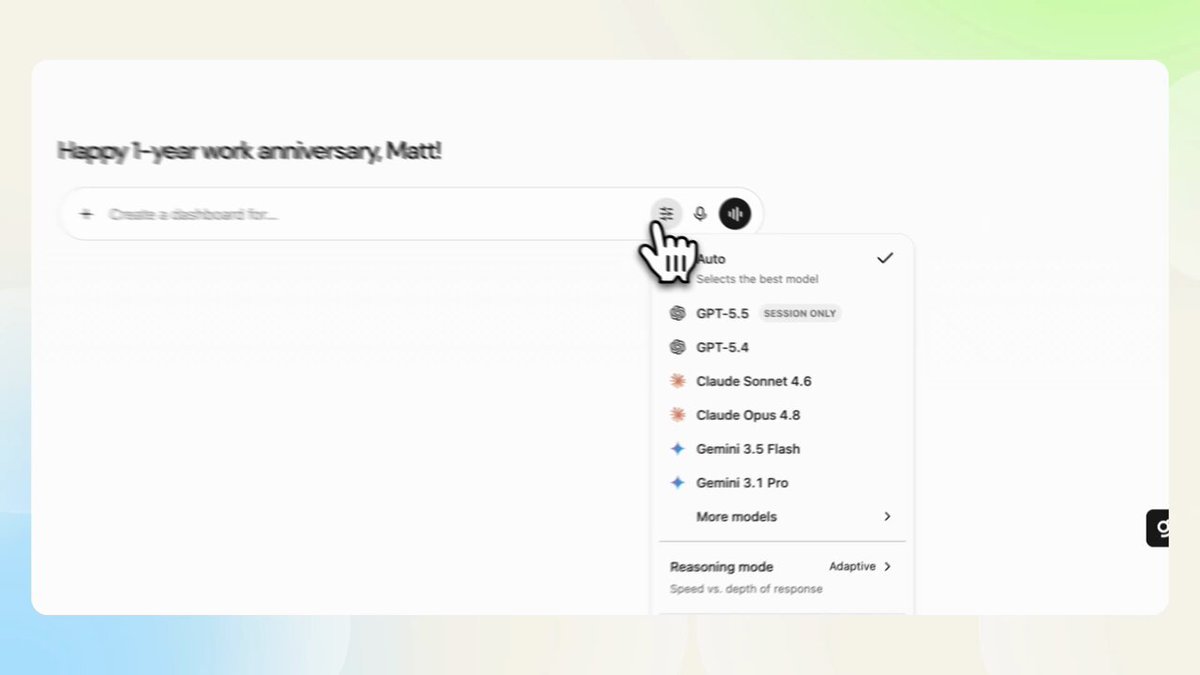
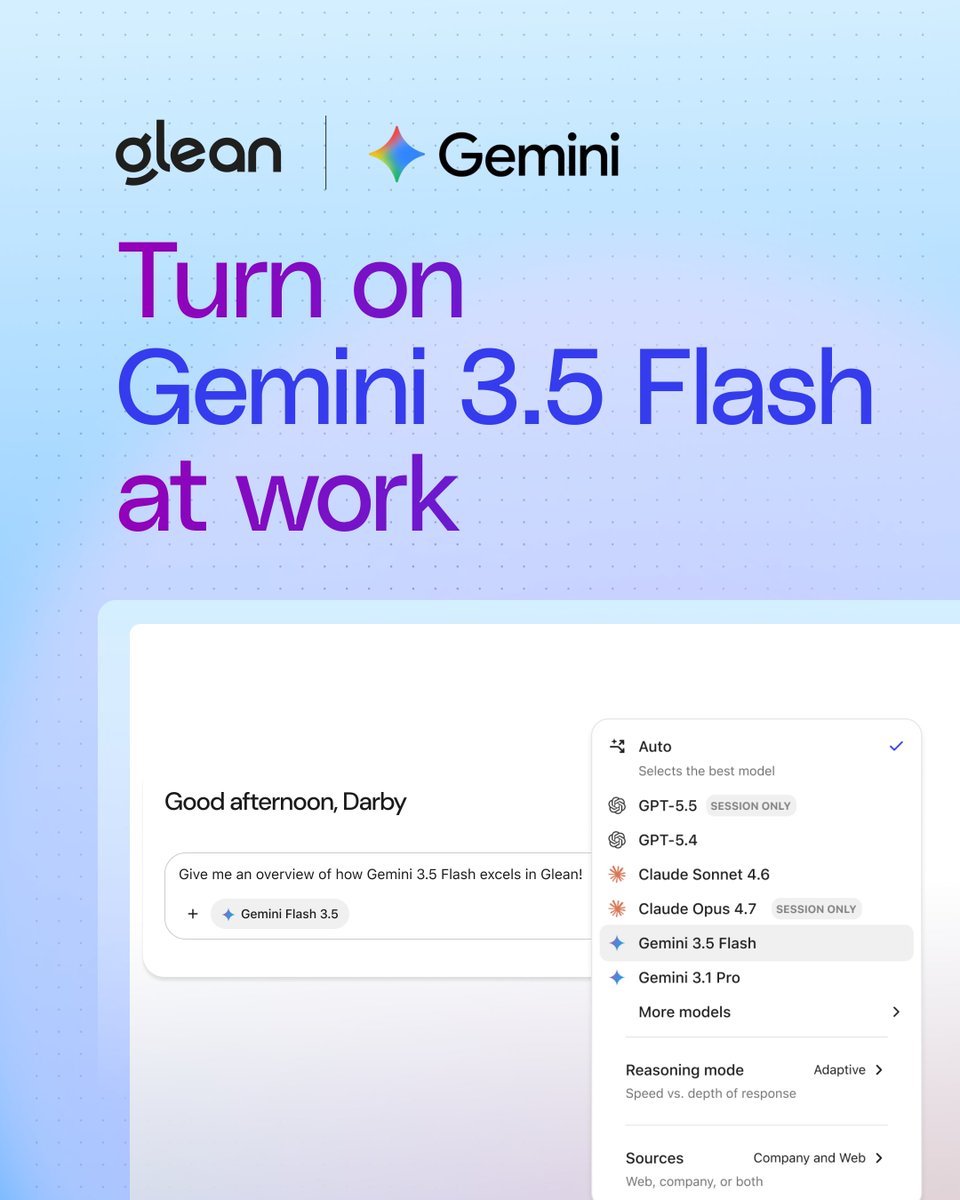
That’s also how we think about it at @Glean. Enterprises need control over their data and AI architecture, with the flexibility to choose the right models and apply governance consistently. It’s why we offer full model choice and availability without giving up visibility or governance through Glean’s Model Hub.
It’s also what more buyers are starting to demand, and for good reason.
2
5
48
4,118
69% of AI users admit to botshitting at work. Yes, botshitting.
Our Work AI Institute surveyed 6,000 digital workers and found a hidden drag on enterprise productivity.
The Work AI Index breaks down botsitting, botshitting, and the hidden human labor of AI at work. glean-it.com/4fD9zCv
1
6
1,091
🎉 We’re announcing support for @nvidia Nemotron Ultra 3!
Nemotron Ultra 3 open model gives you strong agentic capabilities for everyday enterprise work, delivering 91% of frontier-model performance on key metrics like completeness.
You can soon choose Nemotron Ultra 3 among 30 open-source and proprietary models in Glean, giving you more choice over cost and performance.
We can't wait for you to try Nemotron Ultra 3 in Glean Assistant and Agents – coming soon!
3
573

“AI costs are rivaling payroll costs,” @Glean founder and CEO @jainarvind tells @inafried at the #AxiosAISummit.
Businesses will have to account for AI use in their hiring plans, he added.
3
6
19
14,850
333
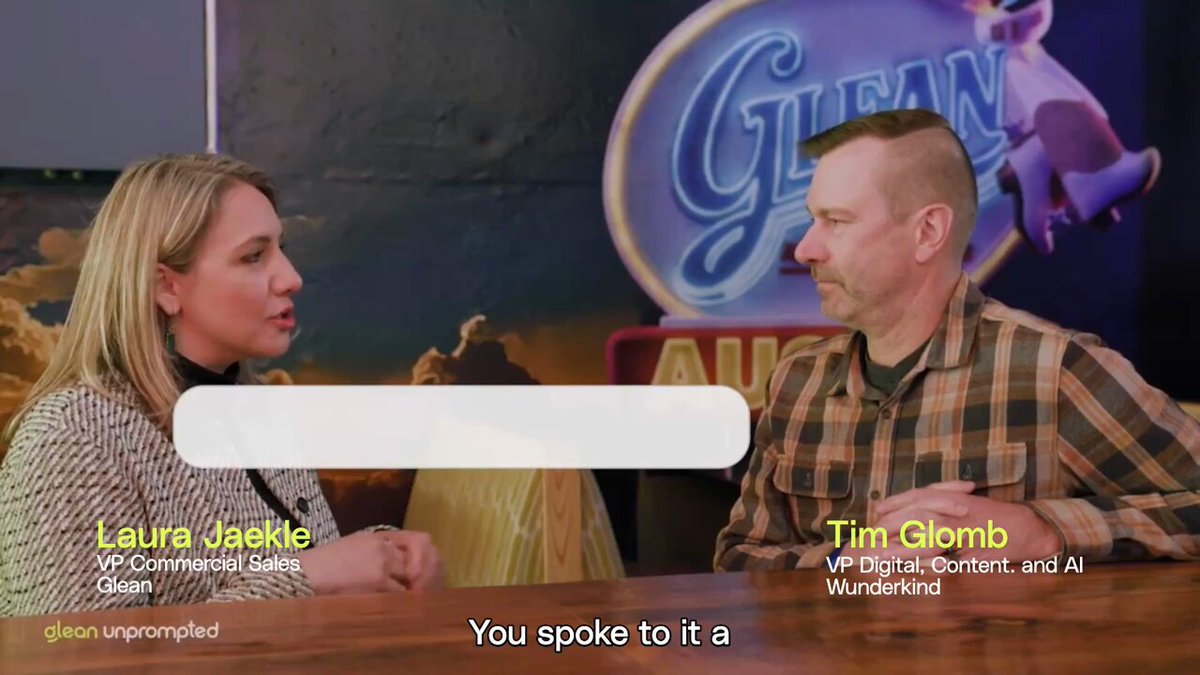
What does it look like to move from disconnected AI tools to AI as an operating system for the business?
In our latest Unprompted episode, we sit down with Tim Glomb of @Wunderkind to talk about removing “human glue,” building AI-powered workflows, and why context is the key to real AI transformation.
1
2
5
528
→ Access to new tools ≠ AI transformation
→ Change management starts with clarity about what’s actually broken
→ The best AI strategies balance centralization & decentralization
In the latest episode of Intelligence: Real & Imagined, we unpack what it really takes to make AI transformation stick when people and AI share the work.
2
1
3
1,209