
Impious neonomian baxterian
Joined March 2024
- Tweets 3,606
- Following 181
- Followers 421
- Likes 2,634
392 Photos and videos








Pinned Tweet

Mar 6
You're getting comfortable again.
Remember what happened last time.
1
9
8,678
St. Jerome:
"It is most unseemly for an honest man to say goodbye bodily to the world to live in a very hidden solitude and to unleash his tongue against the whole earth"
3
75
16h
John Owen, 3rd Volume on the Hebrews, pg. 220. li. 4, 5, 6:
"The first Promise, Gen. 3.15. had in it the nature of a Covenant, grounded on a Promise of Grace, and requiring Obedience in all that received the Promise."
1
1
3
253
16h
Again in pag. 223:
"[I (Dr. Owen) do not say the Covenant of Grace is Absolute without Conditions, if by Conditions we intend the Duties of Obedience which God requires of us in and by vertue of that Covenant]."
1
1
84
16h
And then from pag. 235:
"[That the New Covenant hath for its Precepts, the Decalogue with some positive Laws; and for its Promises, they are mostly of Spiritual and Eternal Blessings]."
1
66
16h
"Cardinal del Monte said: Since we are now in summer and in the greatest heat, it would seem more prudent and convenient not to prolong the congregations beyond three hours."
Acta Concilii Tridentini, pg. 246
2
11
361
19h
Acta Concilii Tridentini, Vol.5, pg. 246
"Nothing of sin remains after baptism, but concupiscence, which is not imputed, nor is it, nor is it called, sin, unless we consent to that concupiscence itself. The Bishop of Caprula."
1
5
439
Jun 15
Baxter:
"33. Simple willing and comparative willing differ very greatly from one another. And he who wills some Good simply, yet comparatively very often neglects it as a lesser Good, or hates it as contrary to a greater Good, and thus as comparatively evil."
4
182
Spira retweeted

Jun 14
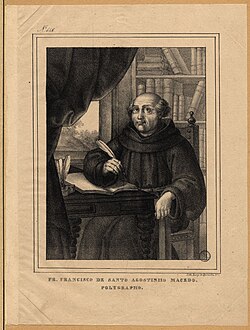
"One thing, however, I note not inaptly: Aquinas is accustomed to love divisions, Scotus on the contrary loves unions. This appears in reasoning through the cases. Aquinas wishes the angels to be altogether distinct in species. Scotus wishes them united in species — differing only in number. Aquinas distinguishes the faculties really from the soul — for it is this distinction I am speaking of. Scotus not at all. Aquinas posits in man at conception three distinct souls: vegetative, sensitive, rational. Scotus only one rational soul — one in reality but multiple in power. So in justification Aquinas introduces two distinct forms: the one grace, the other charity. Scotus constitutes one charity — eager for union. And so in his profound doctrine you will find unions — by which it displays its gem-like quality. Proceeding from that fountain, Scotus is most of all consistent with himself — and adhering there, you will never catch him discordant and dissenting from himself. Let him who loves unity of doctrine consult Scotus."--Fr. Fransico Macedo
8
23
1,067
Jun 14
John Flavel:
"We affirm that faith is a condition of this kind. This has been called by some a consequent condition, but they do not mean that it arises from the promised benefit, but from Christ's sponsorship, namely, that He will supply us with the strength to perform it.
1
1
8
243
Jun 14
The word 'conditions' means the same as what our countrymen call 'Terms of the Gospel'."
- Cited by Vitringa Sr. in Observationes Sacrae, pg. 237
3
156
Jun 14
Johann Olearius, Universa Theologia, pg. 27:
"§. 2. Theology considered habitually, is a practical habit θεοσοφία, perfecting the mind of the Theologian, so that by the benefit of knowledge drawn from divine revelation, being certain of the true religion,
1
4
335
Jun 14
he may be able to show the way and method to the sinner to the supernatural end by means ordained by God, so that he may be led to faith in Christ, and through this to eternal blessedness."
1
258
Jun 14
Gisbertus Voetius:
"The tenth use is, that it may be so much the better evident to our students and to any reader, that I follow the safe path of the Reformed religion;
1
3
341
Jun 14
and that I do not corrupt the plain and genuine theology of our churches with unheard-of curiosities, or profane novelties, or sought-after trickery and peddling, especially concerning cases of conscience, the practice of piety, and ecclesiastical polity."
3
195
Spira retweeted

Jun 14
"Should theatrical singing, i.e., not manly and grave, but tickling the ears, be held in Churches? No." — Johannes Cocceius
1
4
240
Jun 14
The curious fact about roman catholic-slop-internet-apologists, which, as e-goys, they will never admit, is that their best recent takes have been from interacting with these "Nobodies" and "Irrelevant" authors of the Reformed Religion.
Jun 13

Mr. Irrelevant Robert Nobody Baron
2
29
1,981
Jun 13
Elie Merlat:
"Mr. Arnauld and those of his party loudly denied that these propositions were in Jansenius in the sense that they had been condemned by those Popes, although the Jesuits and almost all the Prelates of the Roman Catholic Church maintained the contrary"
210
Jun 13
Barthold Holtzfuz sobre os reformados e luteranos que afirmavam Anjos da Guarda:
"Entre os luteranos, Conrad Horneius, Disp. 5, Seção 2, Tese 47, e Henricus Kipping, Pnevmat. livro 5, cap. 5, § 3, págs. 163, 164.
Jun 13

Você crê que os anjos da guarda existem? Deixe sua opinião nos comentários.

3
3
11
861
Jun 13
Entre os reformados, Zanchius, de Oper. Creat. livro 3, caps. 13 e 15; Bucanus, Loc. 6, qu. 28; Vossius, de Idol. livro 1, cap. 7; Alsted em Supplem. in Chamierum de Ecclef. livro 5, cap. 7; também Grotius sobre Mateus 18:10; Baxter, de Abnegat. sui, cap. 38, p. m. 463, 437."
1
2
280
Jun 13
Barthold Holtzfuz, Dissertatio Theologica De Angelis Bonis Et Malis, pg. 24
2
193