
Block fraud, detect bots, and personalize experiences. Know who your visitors really are, with industry-leading accuracy.
Joined December 2025
- Tweets 541
- Following 8
- Followers 167
- Likes 352
32 Photos and videos












Pinned Tweet

28 Dec 2025
Guard every visitor.
Checkout our new website 👇🛡️
guardianstack.ai
39
2
41
3,691
Jun 14
Most cyberattacks don't start with some sophisticated hacker sitting in a dark room, they start with a rushed employee clicking a link, reusing a password, or trusting an email that looked legitimate.
The reality is that businesses aren't losing the cybersecurity battle because attackers are smarter. They're losing because defenders are overwhelmed.
At GuardianStack we believe cybersecurity should reduce complexity, not add more of it. The faster organizations can see threats, understand risks, & respond, the harder it becomes for attackers to succeed.
Cybersecurity isn't just about blocking attacks. It's about making security manageable.
→ guardianstack.ai
1
5
155
Jun 8
A username & password are no longer enough. Credentials are unfortunately being bought, sold, leaked, & stolen EVERDAY!
Thats why we focus on understanding the device behind the login.
Our platform evaluates hundreds of signals to determine whether a session appears legitimate or suspicious.
Questions you would be asking yourself:
→ Is the browser genuine?
→ Is the device being spoofed?
→ Is the user hiding behind a VPN?
→ Is automation involved?
When security teams have more context, they can make better decisions, & that's where fraud prevention becomes proactive.
Start today → GuardianStack.ai
1
3
9
1,150
Jun 6
For years we worried about malware infecting computers, now we're watching malware infect software ecosystems.
73 Microsoft repositories reportedly being disabled highlights how quickly a supply-chain incident can force large scale containment actions.
One compromised developer credential today can impact thousands of organizations tomorrow. That's why GuardianStack focuses on visibility across identities, repositories, cloud assets, & operational workflows before attackers can move laterally.
To find out more about us, and how we can help you head to GuardianStack.ai

🚨 73 Microsoft GitHub repos just went dark.
They were hit by Miasma, a self-replicating supply chain attack spreading through trusted open-source channels.
Azure and MicrosoftDocs repos were among those impacted.
Read this: thehackernews.com/2026/06/mi…
4
2,064
Jun 4
Security for every login.
🫦


2
4
180
Jun 3
What makes HTTP/2 Bomb particularly interesting is that neither component is new.
HPACK compression abuse was known for years. Slowloris-style connection holding was also known for years.
The innovation wasn't inventing something new, it was combining two existing techniques into a more effective attack chain.
That's becoming a recurring pattern in cybersecurity, attackers increasingly win by chaining weaknesses together rather than discovering entirely new ones.
We at GuardianStack built around this reality, continuously monitoring how individual risks combine into larger attack paths before they become operational incidents.

🚨 HTTP/2 Bomb — Remote DoS Exploit Hits nginx, Apache, IIS, Envoy, and Cloudflare Pingora
Source: cybersecuritynews.com/http-2…
A newly disclosed remote denial-of-service exploit dubbed "HTTP/2 Bomb" targets the default HTTP/2 configurations of the world's most widely deployed web servers, nginx, Apache httpd, Microsoft IIS, Envoy, and Cloudflare Pingora, enabling a single attacker on a home internet connection to exhaust tens of gigabytes of server memory in seconds.
Chaining two techniques that have individually been known to the security community for nearly a decade: an HPACK compression bomb and a Slowloris-style connection hold.
#cybersecuritynews #vulnerability

5
1,725
May 25
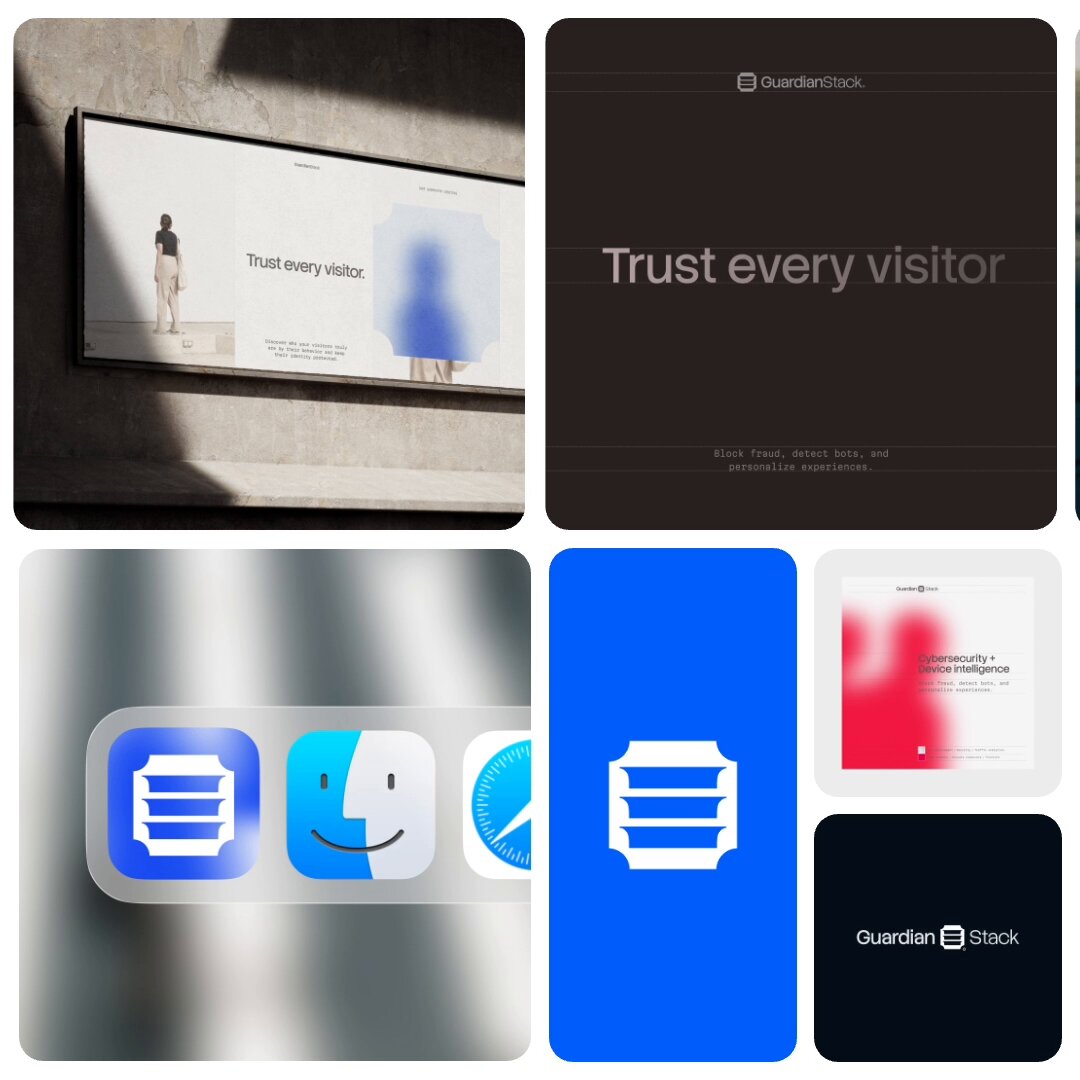
Since launch, GuardianStack looked like every other startup.
Same gradients. Same rounded everything. A look you could swap onto a hundred other companies and nobody would notice.
That was fine when we were finding our footing.
It stopped being fine a while ago.
Today we're introducing a new brand identity for GuardianStack. One that's actually ours.
The product was already here:
→ 200 device signals in production
→ Account takeover, Bots, VPNs, browser tampering caught
→ Deterministic and explainable, with no black-box ML
→ Privacy-first by design, zero PII collected
The brand just needed to catch up.
→ guardianstack.ai
4
8
6,205
May 24
Supply chains keep the world moving.
Cyber threats are making sure they never stop trying to break them. As logistics operations become more connected through cloud platforms, APIs, IoT devices, warehouse systems, & third-party integrations, cybersecurity is no longer sitting quietly in the IT department.
A single compromised credential, ransomware event, or fraudulent login attempt can ripple across an entire logistics ecosystem and impact operations, deliveries, customer trust, and business continuity.
That’s why proactive security matters.
We at Guardian Stack are focused on helping organizations move beyond traditional security approaches by delivering stronger visibility, fraud prevention, intelligent risk detection, and protection against evolving threats before they become business disruptions.
The partnership between us & Gazzetta Logistica is exciting as we bring together cybersecurity awareness & logistics industry expertise to help businesses better understand the growing security challenges facing modern supply chains.
The logistics industry is transforming rapidly, & security has to evolve with it.
Protecting systems is important, but protecting operational continuity is what ultimately keeps businesses moving.
Because in logistics, every second matters, & so does every layer of security.
blog.guardianstack.ai/cybers…
2
5
1,241
May 19
The npm ecosystem operates at incredible speed, which means attacks scale incredibly fast too. 👀
At Guardian Stack we help security teams automate visibility across dependency chains before compromise spreads.
May 19

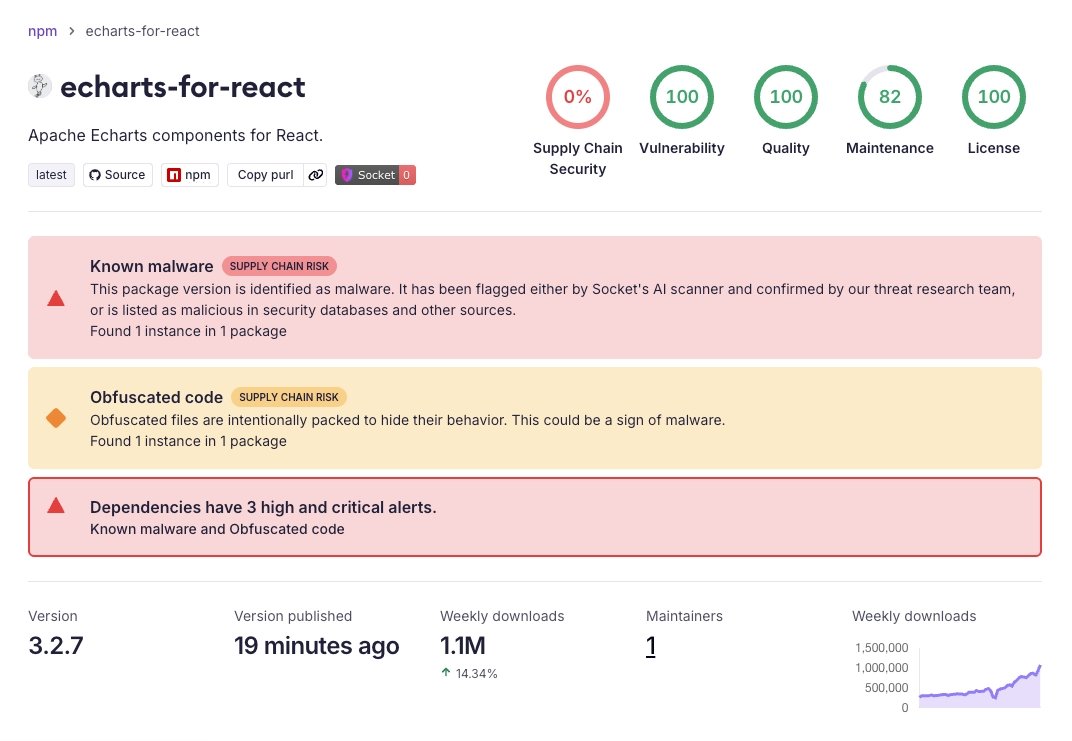
🚨 BREAKING: Socket is investigating an active npm supply chain attack compromising hundreds of packages in the @antv ecosystem.
The malicious publish wave appears tied to Mini Shai-Hulud and packages connected to the npm maintainer account atool.
2
7,302
May 14
Google Project Zero just demonstrated something the industry should pay very close attention to: A previously exploited Pixel 9 zero-click chain was ported to the Pixel 10 with only minor tweaks.
Not just the vulnerabilities themselves,
but how reusable modern exploit development is becoming across hardware generations.
Once attackers understand a platform deeply enough, adaptation becomes incremental:
• Offset updates
• Minor bypass adjustments
• Driver changes
• Same exploitation logic
And when arbitrary kernel read/write happens in “5 lines of code,” the barrier between vulnerability discovery and weaponization gets dangerously small.
We built Guardian Stack for exactly this reality, where organizations must assume exploit chains evolve faster than patch cycles & enforce containment, privilege isolation, & runtime protections even after initial compromise.

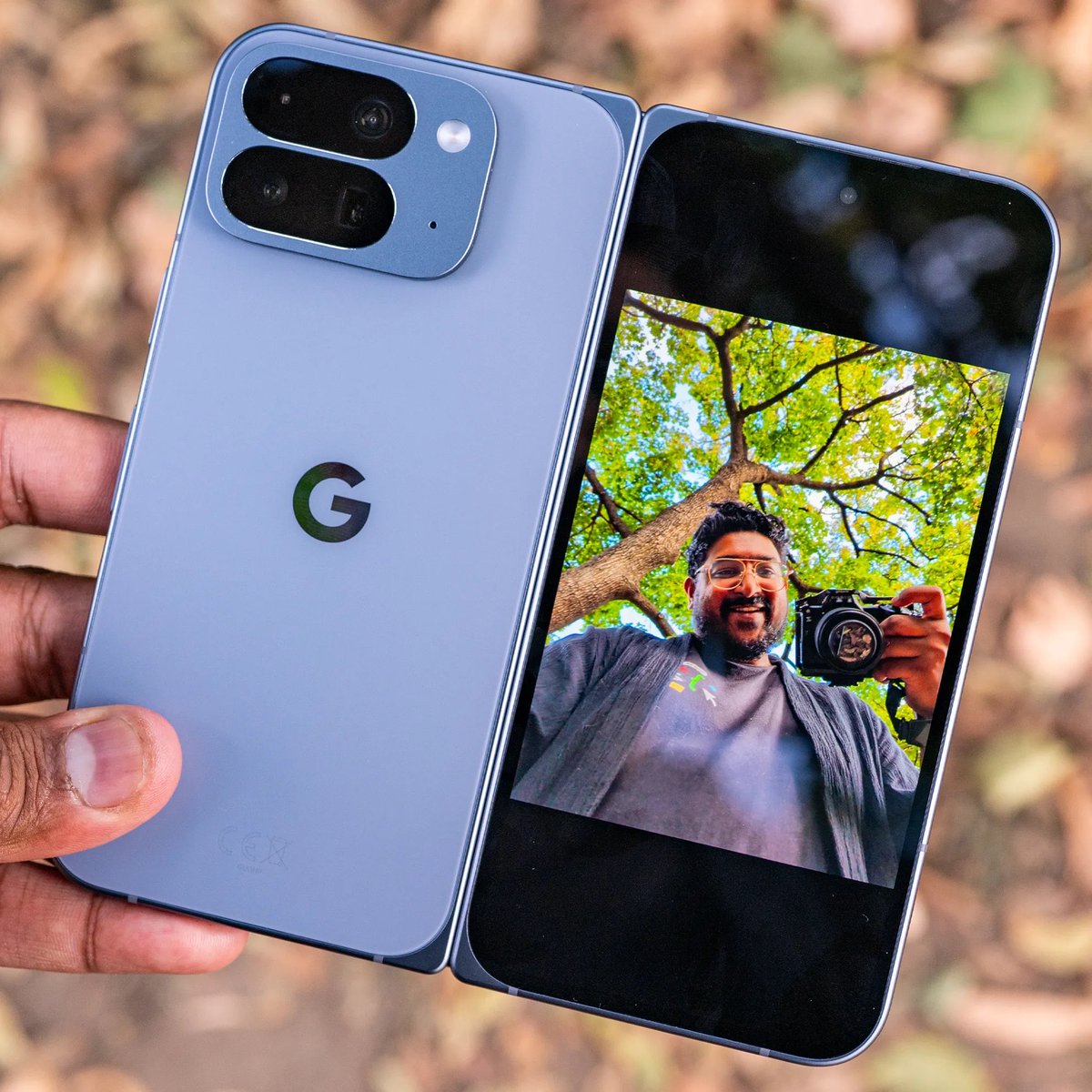
🚨 Google Project Zero just published a Pixel 10 zero-click to root exploit chain.
Two vulnerabilities and less than a day of work to weaponize the second one.
Chain:
- Stage 1: same Dolby UDC zero-click (CVE-2025-54957) used against the Pixel 9. Patched in January 2026. Only minor offset updates and a tweak around RET PAC needed to port to Pixel 10
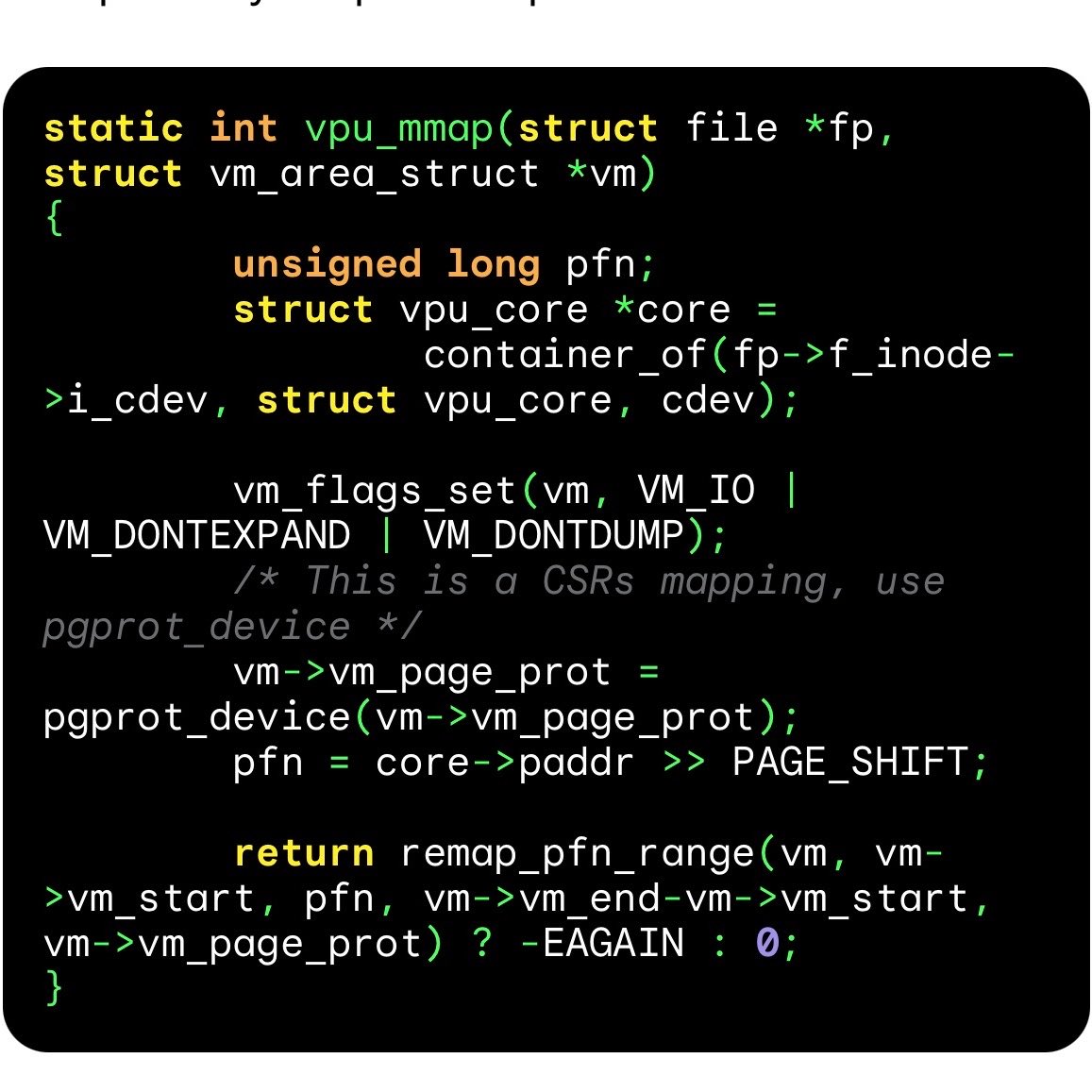
- Stage 2: a brand new local privilege escalation in the VPU driver for the Chips&Media Wave677DV on the Tensor G5
Result: arbitrary kernel read/write in 5 lines of code. Full exploit written in under a day.
5
11,489
May 9
Cyber threats are evolving every day & businesses need security operations that evolve with them.
That’s why Guardian Stack is partnering with Secure Sphere Labs to help businesses strengthen detection, response, & compliance capabilities.
Together, we’re enabling ↓
- Real-time operational visibility
- AI-powered analysis
- Continuous monitoring
- NIS2-focused readiness
Security operations need to become faster, smarter, & more connected therefore we are excited to work alongside with Secure Sphere Labs.
Check out our full article below:
blog.guardianstack.ai/soc-as…
3
6
3,969
May 7
We’re proud to announce a strategic partnership with Graphoid.
This collaboration is focused on solving one of the biggest problems modern organizations face:
Too much data.
Not enough intelligence.
By combining advanced AI analysis with contextual business insights, we’re creating a centralized command layer for modern enterprises.
A platform that helps organizations:
→ Detect risk faster
→ Understand impact instantly
→ Connect technical events to business outcomes
→ Make smarter operational decisions
Full article in the comment section ↓

1
4
9
3,462
May 7
3
112
May 5
Everyone says phishing is a user problem, but it is not, its a control problem.
In our first episode we break down how phishing actually works, & more importantly, how to shut it down in under 5 minutes.
No training modules. No guesswork.
Just real prevention.
This is exactly where Guardian Stack flips the script. 👇🏼
youtube.com/watch?v=Xhm9Zcf1…
6
11
4,398
May 4
Edge requiring re-auth to view passwords while already holding them in plaintext internally is an interesting design choice.
Security theatre on the surface doesn’t stop memory scraping underneath.
You need to focus on what’s actually happening behind the scenes.
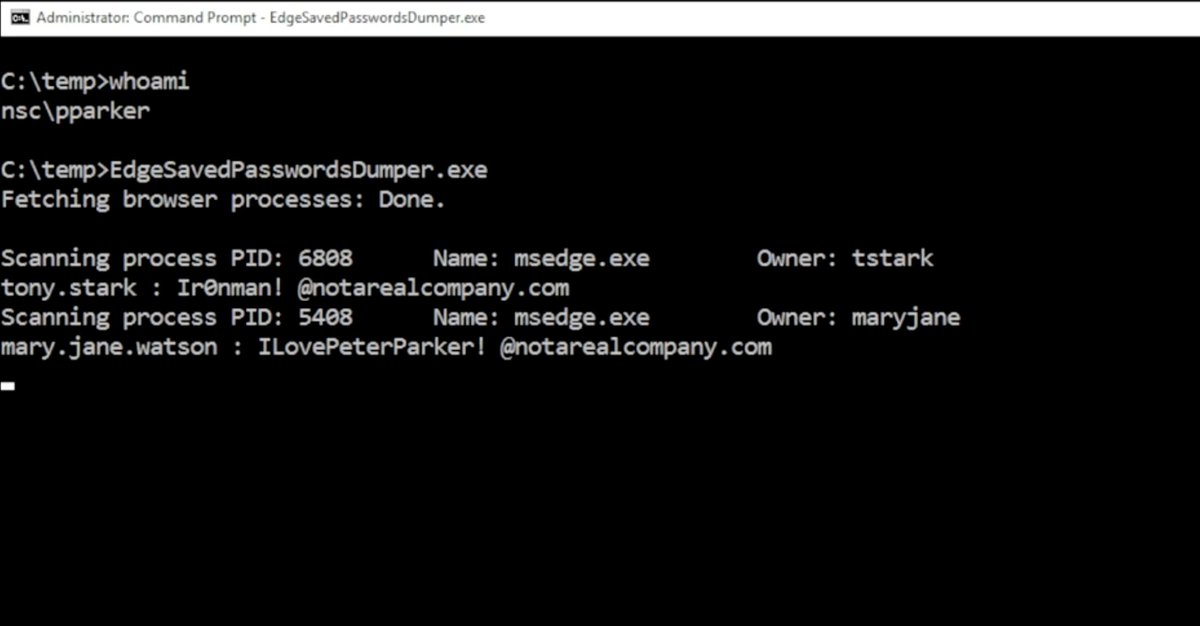
❗️🚨 Microsoft Edge keeps every saved password in process memory as cleartext from the moment it launches. Microsoft's responsed when reported: "by design."
All of them. Including credentials for sites you won't open this session.
Researcher @L1v1ng0ffTh3L4N tested every major Chromium browser. Edge is the only one that behaves this way.
Chrome decrypts credentials on demand, and App-Bound Encryption locks the keys to an authenticated Chrome process so other processes can't reuse them.
In Chrome, plaintext surfaces only during autofill or when a password is viewed, making memory scraping far less useful.
What makes this extra weird is that Edge still demands re-authentication before revealing those passwords in its Password Manager UI, while the same browser process already holds every one of them in plaintext.
In shared environments, this turns into a credential harvest. On a terminal server, an attacker with admin rights can read the memory of every logged-on user process. In the published PoC video, a compromised admin account lifts stored credentials from two other logged-on (and even disconnected) users with Edge running.
Microsoft's official response when notified: "by design."
The finding was disclosed April 29 at BigBiteOfTech by PaloAltoNtwks Norway, alongside a small educational tool that lets anyone verify the cleartext storage for themselves.

6
4,863
May 4
This is a perfect example of why security isn’t just about prevention, it’s about awareness.
You can patch vulnerabilities, but you also need to detect unintended consequences.
That’s where Guardian Stack fits in! 👊🏼
May 4

Microsoft has confirmed that the April 2026 Patch Tuesday update is causing problems for many third-party backup tools on Windows 11.
The update intentionally adds a specific kernel driver to the vulnerable driver blocklist for better security.
Unfortunately, this change breaks Volume Shadow Copy Service functionality in several backup applications, leading to snapshot timeouts and failed backup or restore operations.
Affected programs include:
-Acronis Cyber Protect
-Macrium Reflect
-NinjaOne Backup
-UrBackup, and others that rely on this driver.
Microsoft recommends keeping the security update installed and contacting your backup software vendor for a compatible version that uses updated drivers.
Uninstalling the patch is not advised as it leaves your system vulnerable.
If your backups suddenly stopped working after the April updates, this is likely why.

1
2
435
May 4
Silver Fox is playing the long game. Get in quietly, stay longer, extract more.
Traditional alerts won’t catch that early enough, but Guardian Stack would!
→ guardianstack.ai
🚨 Silver Fox launches new malware campaign targeting India and Russia.
1,600 phishing emails used tax-themed lures to spread ValleyRAT and the ABCDoor backdoor.
Kaspersky links it to Rust-based loaders, geofencing, and stealth persistence.
Read: thehackernews.com/2026/05/si…
98
May 2
VPNs went from privacy essential to regulatory target surprisingly fast.
When governments start tying liability to identity, anonymity becomes optional, at least for platforms.
The real question is how to verify users without creating massive identity honeypots? That’s where our Guardian Stack comes in, enabling secure, privacy-aware verification without exposing everything.
→ guardianstack.ai
May 2

WORLDWIDE CRACKDOWN ON VPNs BEGINS
🇪🇺 EU Executive Vice President Henna Virkkunen is pushing limits on VPN use, warning new age and ID systems must not be bypassed.
Utah becomes the first 🇺🇸 US state to target VPNs under age verification laws starting May 6, 2026.
Websites can be held liable even if users mask location, forcing a choice: block VPNs entirely or require ID checks from everyone.
The Electronic Frontier Foundation calls it a “liability trap” that could push global platforms toward mass identity verification.
Momentum is building globally. 🇬🇧 UK and 🇫🇷 French officials are now signaling VPN restrictions may be next.
EU-wide age verification is set to roll out across all 27 member states by the end of 2026. x.com/f_philippot/status/205…
3
1,085
May 1
Minimal trace, maximum damage. That’s the new SaaS attack playbook. When attackers can bypass MFA and ride SSO across platforms, it’s no longer about if its about how fast.
We at Guardian Stack focus on behaviour, session integrity, and real-time protection.
Because passwords clearly aren’t enough anymore.
⚠️ Two cybercrime groups are executing rapid SaaS attacks with minimal trace.
Cordial Spider and Snarky Spider use vishing and AiTM phishing to steal credentials, bypass MFA, and access multiple platforms through SSO.
Read: thehackernews.com/2026/05/cy…
1
597
May 1
Apr 30

This GPT Image 2 prompt is going insanely viral right now.
“Redraw the attached image in the most clumsy, scribbly, and utterly pathetic way possible. Use a white background, and make it look like it was drawn in MS Paint with a mouse. It should be vaguely similar but also not really, kind of matching but also off in a confusing, awkward way, with that low-quality pixel-by-pixel feel that really emphasizes how ridiculously bad it is. Actually, you know what, whatever, just draw it however you want.”


2
5
236
Apr 30
One compromised EOA → full protocol control. That’s not decentralisation, it's a concentration risk.
We can enforce distributed trust so no single wallet can take everything down.
→ guardianstack.ai
Apr 30

🚨 Blockaid's exploit detection system identified an on-going admin-key compromise exploit on @wasabi_protocol across Ethereum and Base. The Wasabi: Deployer EOA was used to grant ADMIN_ROLE to an attacker helper contract, which then UUPS-upgraded the perp vaults and LongPool to a malicious implementation that drained balances.
4
2,903