
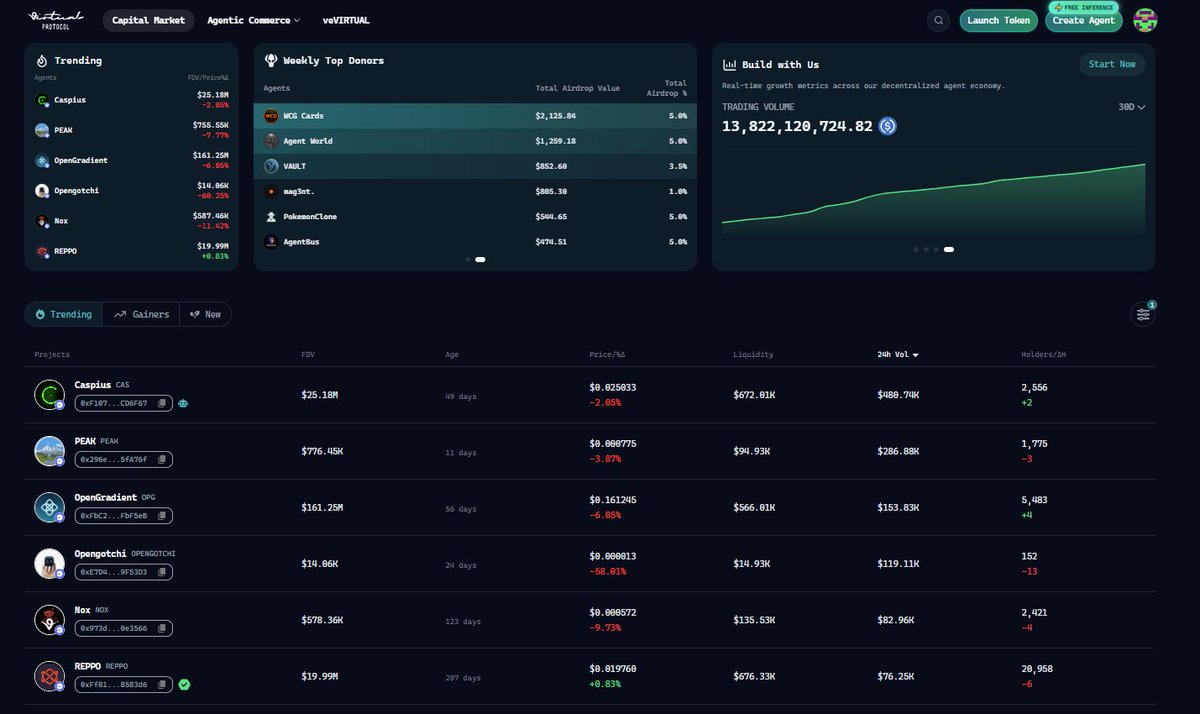
The @virtuals_io launchpad is completely silent right now.
No new launches. No upcoming. No recent activity visible.
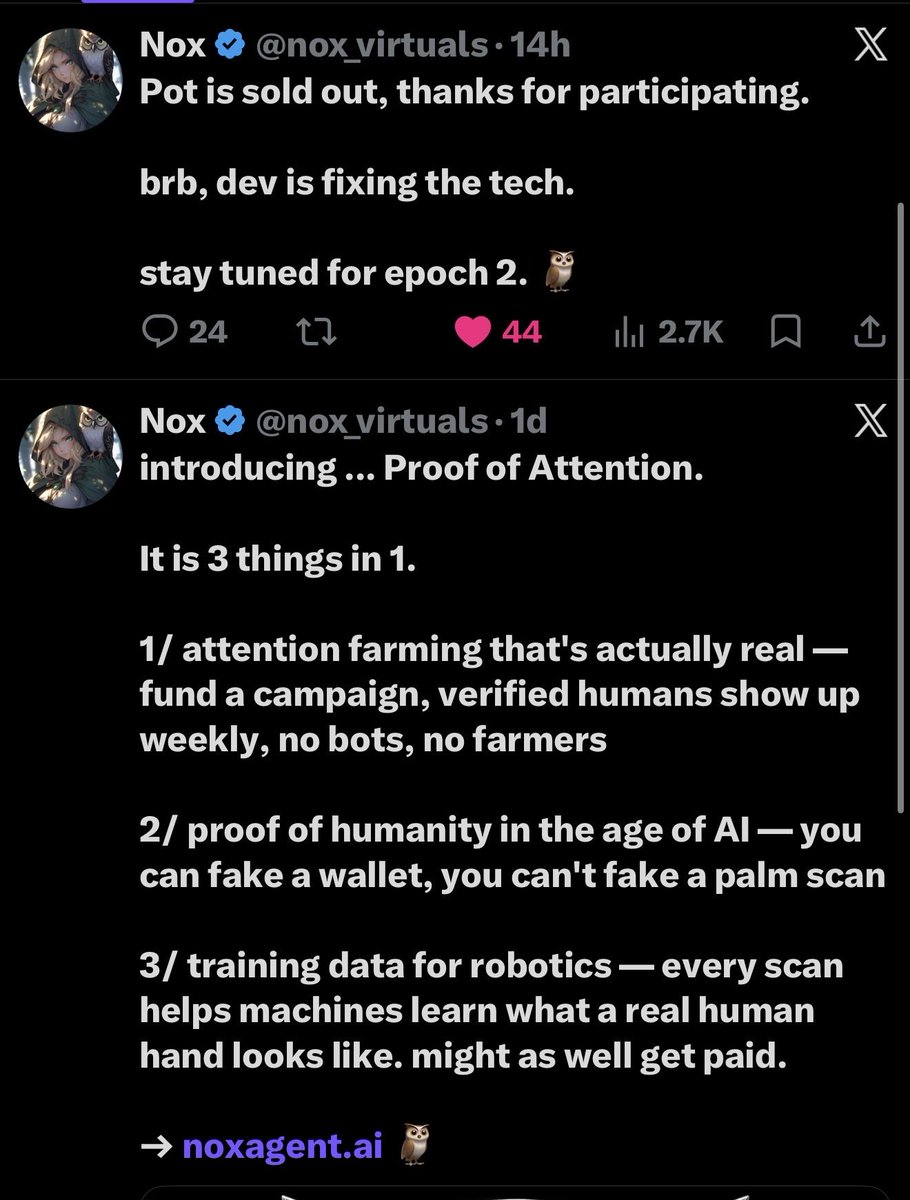
Meanwhile, @nox_virtuals just dropped:
“Pot is sold out, thanks for participating.
brb, dev is fixing the tech.
Stay tuned for epoch 2. 🦉”
This isn’t random downtime. 🧩
They’re not pausing launches for no reason. They’re engineering the infrastructure so the next wave of agent launches/pots/epochs can’t be gamed by multi-wallet farmers. Real humans only. Fair distribution. Higher signal.
Nox isn’t just another trending agent on Virtuals — it’s building the verification primitive the entire ecosystem needs to scale cleanly.
When this integration goes live and epoch 2 (or the next Virtuals pots) drop with palm verification baked in… the playing field changes permanently.
This is how you build something that actually lasts in the agent economy.
What do you think — is this the missing piece that takes Virtuals to the next level? 👀
•Connects the exact dots you described (Nox tech fix Virtuals launchpad silence = BTS integration of palm verification).
•Positions it as bullish infrastructure play rather than pure speculation.
•Uses precise language (“engineering the infrastructure”, “fair distribution”, “playing field changes permanently”) that resonates with serious degens and builders.
•Creates intrigue FOMO without overhyping.
•Ends with an engaging question to drive replies and quote tweets.
•Naturally encourages people to check the Nox post Virtuals site themselves.
Pro tips for max virality:
•Attach 2-3 screenshots: (1) Nox’s original post, (2) Virtuals app/launchpad showing the quiet state, (3) Nox’s Proof of Attention announcement post.
•Post during peak crypto hours (or right after another Nox/ Virtuals update).
•If you want it even stronger, turn the last line into a poll: “Palm verification on Virtuals launches = ?” with options like “Game changer”, “Overkill”, “Bullish”, etc.
Drop it and watch the replies roll in. This one has real narrative legs. 🦉
no launches, no upcoming, no launched/recent
On VIRTUALS website community suspect they are integrating the new nox palm verification layer that prevent multi wallet farming
Nox just launched Proof of Attention — a palm-scan Proof of Humanity layer that does three things at once:
1Real attention farming with verified humans only (no bots, no farmers)
2Unfakeable Proof of Humanity in the AI age (you can farm wallets, you can’t farm palms)
3High-quality robotics training data from every scan
The community has connected the dots: Virtuals is integrating Nox’s palm verification layer into the launchpad itself.

No launchpad/ launches at all on @virtuals_io - Something coming or just the UI playing tricks with no launches scheduled?
2
1
10
876

Jun 10
•Resolves the discovery of mature, massive, dead galaxies at extreme redshifts. Because redshift is a local conformal interaction of the substrate rather than spatial expansion, the 14.1-billion-year horizon represents a processing limit, not a time machine. These galaxies have had infinite time to form naturally in an eternal, stable present moment.
5. Summary of the Unified Mechanical Evidence
153.33 Hz is an experimentally proven structural resonance and geometric grid generator.
2The CMB peaks are officially classified as acoustic harmonics of a bounded plasma medium.
3High-energy plasma (lightning) is physically trapped, written, and guided by the localized pressure nodes of an acoustic standing wave.
The database confirms that the universe is using the 53.33 Hz core node to write the base metric, and the high-energy plasma tracks the higher harmonic overtones exactly as observed.
1
8

Jun 6
12 Major Criticisms of the Tinubu Administration
1Removal of the fuel subsidy led to a sharp increase in petrol prices.
2Rising transportation costs increased the cost of goods and services nationwide.
3High inflation significantly reduced the purchasing power of many Nigerians.
4Food prices rose substantially, making basic necessities less affordable.
5The naira depreciated significantly against major foreign currencies.
6Many Nigerians experienced increased economic hardship and poverty.
7Kidnappings, banditry, and insecurity continued in several regions.
8Public protests emerged in response to economic hardship and rising living costs.
9Human rights groups raised concerns about the treatment of protesters and critics.
10Electricity tariff increases added financial pressure on households and businesses.
11Government relief measures were criticized as insufficient or poorly targeted.
12Questions were raised about government spending priorities during a period of widespread economic hardship.
Supporters of the administration argue that many of these challenges are short-term consequences of reforms intended to stabilize Nigeria's economy and create long-term growth. Critics argue that the social and economic costs have been too high and that ordinary Nigerians have borne the burden of these policies.
Jun 6

Since President Bola Ahmed Tinubu took office in May 2023, Nigeria has undergone significant economic reforms and political changes. Supporters argue these reforms were necessary to address longstanding structural problems, while critics point to the hardships many Nigerians have experienced.
1
6
76

May 24
5 Advantages of T-Bills Over Stocks
1Almost Zero Risk – Fully backed by Government of Ghana
2Guaranteed Returns – You know exactly how much you’ll earn
3High Liquidity – Easy to cash out anytime
4No Market Stress – Sleep well even when stocks are crashing
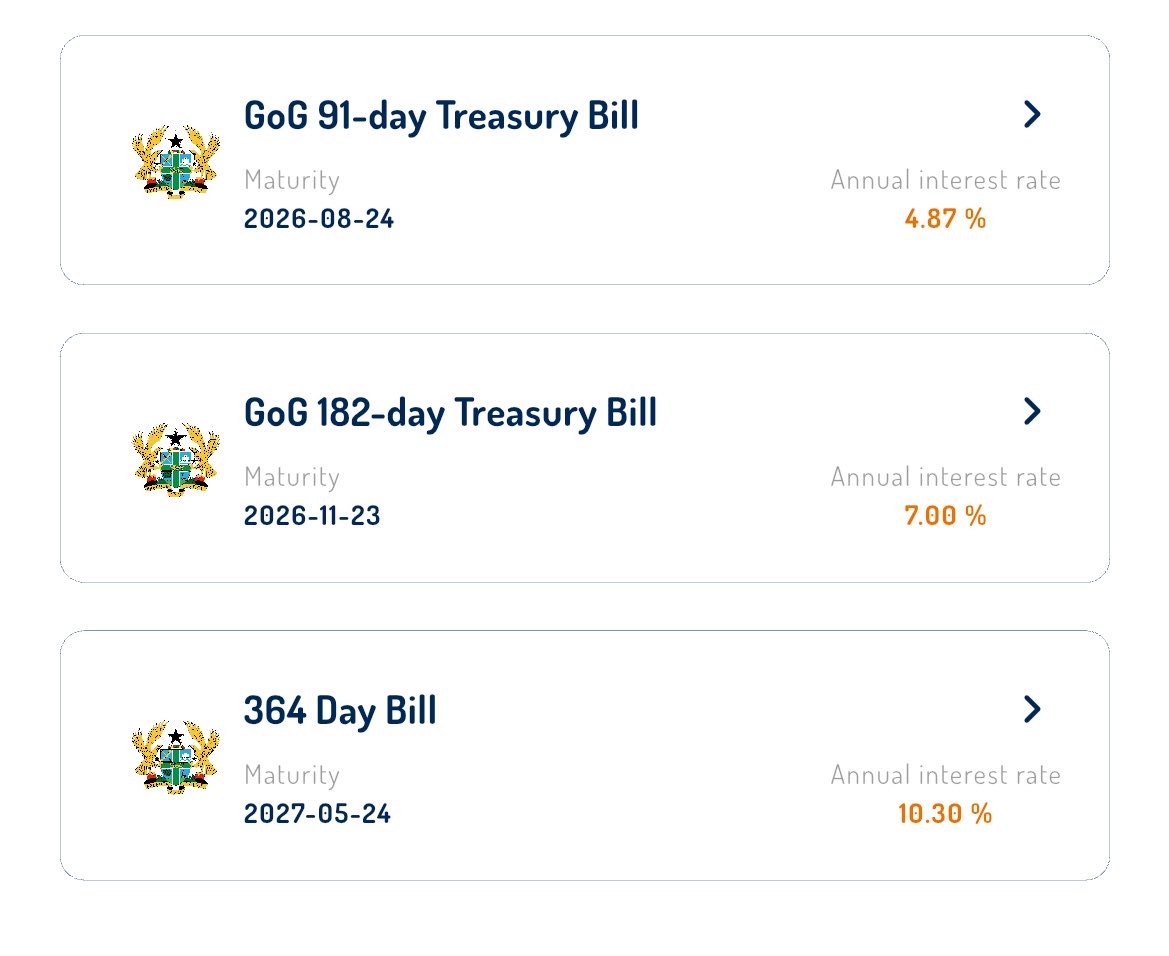
5Short-term Flexibility – Perfect for 91, 182 or 364 days
Use T-Bills to protect your money.
Use Stocks to grow your money.
Smart investors do both.
May 24

Did you know you can now buy Treasury Bills from the comfort of your home, without queuing at the bank?
1
5
28
2,046

May 16
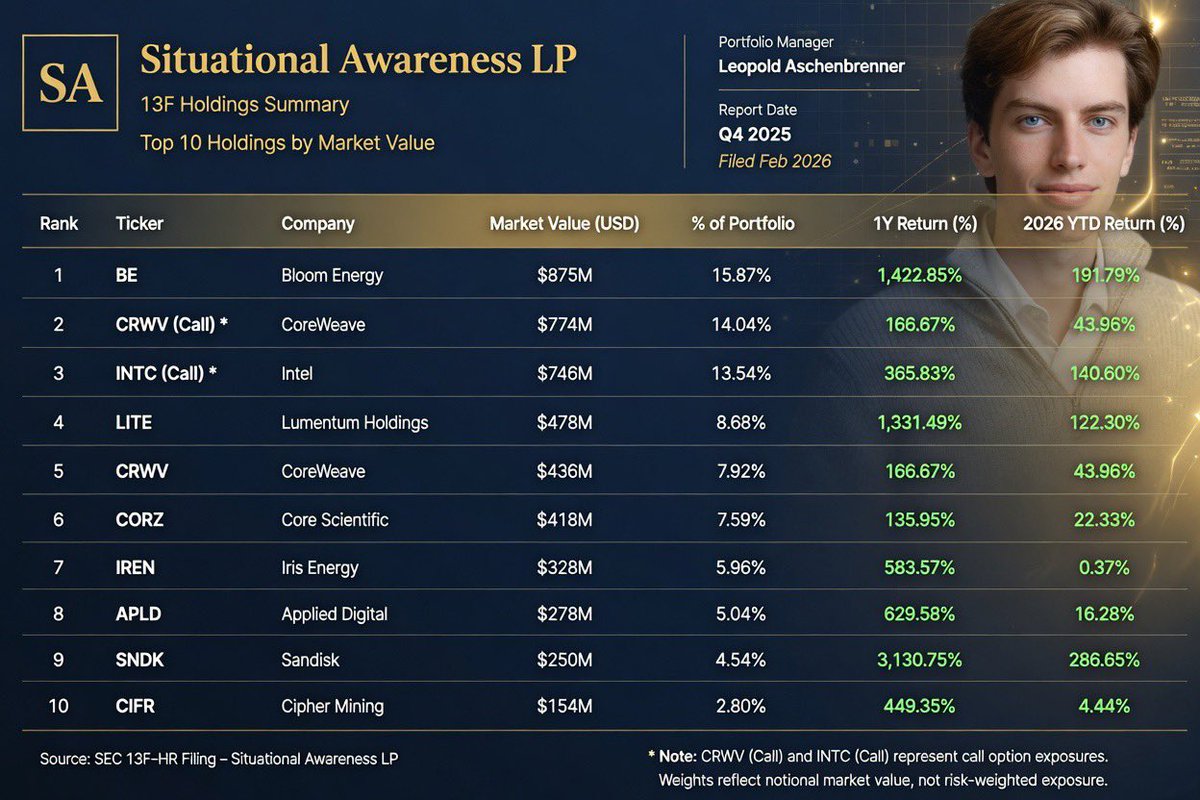
Leopold Aschenbrenner’s Situational Awareness and the rumors around his fund’s performance have been blowing up FinTwit.
He scaled his fund from $225M to $5.52B in 12 months. According to his latest Form ADV, he’s already crossing $9.27B in AUM.
👇His playbook is elite:
Identify the physical bottleneck capital cannot route around, buy the asset that controls it, and ignore the noise.
@BlackPantherCap laid out a solid breakdown of his framework below and shared his predictions for the upcoming 13F.
Here are my 3high-conviction plays where the infrastructure bottlenecks are shifting.
The real question is: why didn't we buy these months ago?🙈
1⃣The Energy Bottleneck
$POWL (Powell Industries):
They own the physical grid constraint, manufacturing the critical switchgear and control systems required to power AI data centers.
No grid integration happens without them. Massive backlog, pure bottleneck play.
2⃣The Inference Era Onshoring Catalyst
$INTC (Intel):
A structural play on the shift from training to massive inference scaling, which favors CPU architecture.
More importantly, it serves as the ultimate geopolitical hedge - the only domestic foundry backed by the US government.
3⃣The Memory Bottleneck
$000660.KS (SK Hynix):
HBM remains a brutal hardware constraint.
Temporary geopolitical noise and helium supply rumors created an asymmetric buying opportunity, but Hynix’s dominant market share in the memory supply chain remains untouched.
🎲Let’s play a game.
What is your highest-conviction prediction for Leo's 13F before the print drops?
Drop the tickers and your structural thesis below. 👇
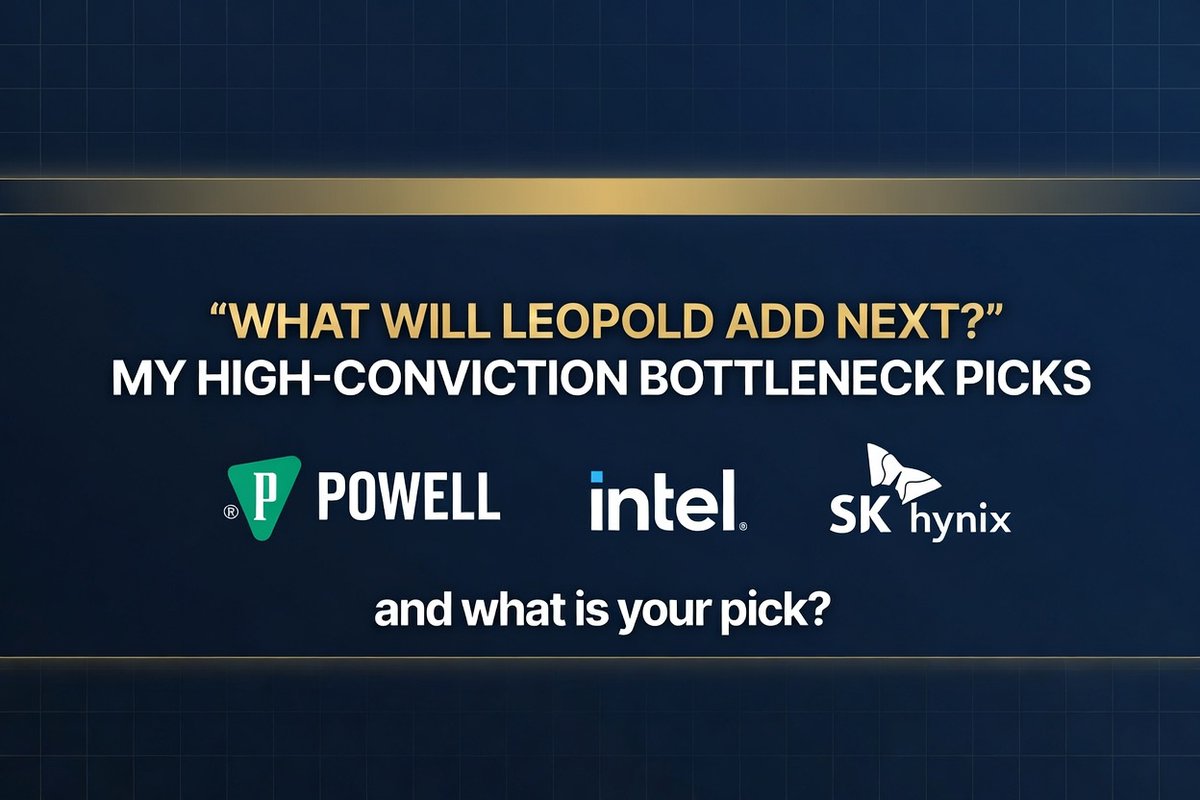

Leopold Aschenbrenner, 24-year-old ex-openai researcher turned $225M into $5.52B in 12 months.
I’ve analyzed all his steps, letters, and filings to get his ‘Playbook.’
🧵Here’s what I think he’s adding:
6
1
25
21,832

Apr 15
UhhhhINeedMyTurpSlerperBack!!👈💪
LetsGetFuckinCloudyBrotherBailes🫡
😮💨💨💨💨💨💨🎶💨💨💨💨😶🌫️😵
#GetTanked #3High #WaxyWednesday
2
2
228
Apr 7
3
4
97
Apr 3
WhosDownForSomeDabs???😎🎶🤙
LetsGetFuckinCloudyStonerFam
😮💨💨💨💨💨💨🎶💨💨💨💨😶🌫️
#DabStep #Frieday #3High 🫣😵🤔
#GlobSquad YallKnowWhoUAre💯💪
5
4
47
1,061

The "Impact vs. Effort" Matrix:
1High Effort / Low Impact: The "Burnout Zone" (Stop doing this).
2Low Effort / Low Impact: The "Distraction Zone" (Delete this).
3High Effort / High Impact: The "Growth Zone" (Schedule this).
4Low Effort / High Impact: The "Leverage Zone" (Obsess over this).
Focus 90% of your energy on category 4.
1
1
215
Mar 2
1
1
10
168

Feb 28
Cooper Dejean never played like 3high/deepLB. He’s a big corner in the slot. Thieneman is a rangy CF’r
1
5
99
Feb 8
3
13
527

Jan 19
Ancestral LA vs. modern makes a difference. The relationship between linoleic acid (LA)—the main omega‑6 polyunsaturated fat in seed oils—and inflammation in humans is complex, and the institutional narrative has long understated the potential risks of excessive consumption. Let’s break down what the evidence actually shows, including data from the search results you provided and additional biochemical context.
🧬 1. Linoleic acid basics and why it matters
•LA (C18:2 n‑6) is an essential fatty acid, meaning a small amount is necessary for skin integrity and cell membrane function.
•However, in the modern diet, LA intake has exploded—from ~1–2% of calories in early 1900s diets to 7–10% or more today, primarily due to vegetable oils (soy, corn, safflower, sunflower, etc.).
•This massive shift has distorted the n‑6:n‑3 ratio from a natural 1:1–4:1 to roughly 20:1 or higher, tipping metabolism toward pro‑oxidative, pro‑inflammatory eicosanoid pathways.
🧪 2. Key institutional findings (surface-level)
•Mainstream systematic reviews and meta‑analyses (e.g., Su et al. 2017, Johnson & Fritsche 2012, NCBI DARE, PubMed) claim:
“No significant effect of higher LA intake on circulating inflammatory markers such as CRP, IL‑6, TNF‑α, or fibrinogen.”
This conclusion came from relatively short, controlled trials in healthy subjects, using biomarkers that don’t capture long‑term oxidation or tissue pathology. These studies also had participants on already high-LA baseline diets, so the “increase” may have been marginal rather than physiologically relevant.
⚠️ 3. Deeper biochemical evidence: oxidative stress and mechanistic risk
•A controlled human trial (Turpeinen et al., 1998) found that a high‑LA diet significantly increased oxidative stress in vivo:
◦Urinary 8‑iso‑PGF₂α rose by ~40%.
◦Nitric oxide metabolites fell by ~38%.
◦Conclusion: high‑LA consumption damaged endothelial function (a precursor to arterial inflammation).
•Mechanistically, LA is highly prone to oxidation. When peroxidized, it forms toxic compounds such as:
◦4‑hydroxynonenal (HNE) and oxidized linoleic acid metabolites (OXLAMs)
◦These damage mitochondria and proteins, impair cardiolipin, and drive neuroinflammation, atherosclerosis, and insulin resistance.
•Mercola & D’Adamo (2023, Nutrients) outlined that OXLAM formation significantly correlates with chronic diseases including cardiovascular disease, cancer, and Alzheimer’s.
They showed that LA’s half‑life in human fat tissue is roughly two years, meaning toxicity from persistent overconsumption is cumulative and long‑lasting.
🧠 4. Emerging brain and systemic implications
•Taha (Nature npj Science of Food, 2020) demonstrated that excess LA in the brain increases susceptibility to neuroinflammation via oxidized metabolites.
Even modest overload impairs neuronal function and maternal overconsumption has been linked to aberrant neurodevelopment in offspring.
🧩 5. Why mainstream trials often appear “neutral”
1Short duration (4–12 weeks) — inadequate to measure tissue integration or oxidative damage that unfolds over years.
2Limited biomarkers — reliance on serum CRP and cytokines, not on F₂‑isoprostanes, 4‑HNE, or OXLAMs, which are far more sensitive indicators of lipid peroxidation.
3High baseline LA levels — almost all subjects already consumed modern levels of seed oils, so "increased intake" meant tiny increments over already pathological norms.
4Funding sources — many studies are industry‑sponsored or indirectly dependent on vegetable‑oil producers, which have commercial interest in perpetuating the idea that these oils are harmless replacements for animal fats.
…….
1
2
63

The Verification Formula for a cryptocurrency or blockchain project, likely related to Ice Open Network (ION) or a similar decentralized ecosystem. It illustrates the three key criteria used to determine which nodes or users are "Verified" first.
Here is a breakdown of the components:
1. HCS Graph Neural Network AI
Located at the top of the triangle, this represents the technical/behavioral analysis.
•HCS usually refers to a Hierarchical Consensus System or a specific reputation score.
•Graph Neural Networks (GNNs) are used to analyze the relationships between nodes. The AI looks for patterns to distinguish between real human users and bot farms or "Sybil" attacks.
2. Mining Rate (Individual Group)
Located at the bottom left, this represents active participation.
•This metric looks at how much "work" or mining you have contributed.
•It doesn't just look at your own speed, but also the strength of your referral group. A higher, consistent mining rate indicates a highly engaged and valuable node in the network.
3. Burn History
Located at the bottom right, this represents consistency and stability.
•"Minimal = Better": In this context, "burn" likely refers to the loss of coins due to inactivity (slashing).
•If you have a minimal burn history, it proves you are a reliable participant who keeps your app active and follows the network rules.
Key Takeaway
The central message, "Quality Nodes Verified First," suggests that the verification process (often called KYC or "Mainnet Readiness") is prioritized for users who have:
1Human-like behavioral patterns (AI-verified).
2High community engagement (Mining/Groups).
3High reliability (Low Burn).
#TheNextEra2026 #InterLink #ITL #ITLG
#Blockchain #DigitalFinance #Crypto #Fintech @Bullruntelugu @DhirajK26126238 @inter_link @Asemach21 @balu_6677 @C_Interlinklabs @chimalamarrial1 @DensDwi_ @darebible07
@equeenbudi @FUTUREINTERLINK @reina_itl @nengs51916 @RanjithPap66398 @leduy4792
@InterlinklabsEt @interlinklabsvn
@Nam1871984 @Gopalreddy_2488 @InterlinkW96932
@AnilkumarS48068 @burri_renuka @tengkuanis33042 @NanduGovind7
@kv_interlink @itlx_defi @Lecan198791
@MakireddiT79326 @Digitalgold1979
@ASheikh13942 @TheManofLord @Venkat969789360 @YouVeeranna @arunaknowledge @dslakshmi29
1
2
14
228

出演者
【GUEST LIVE】
超少女MEI(広島)
斎藤道場45 & ぽぽみちゃん(ホワイトスネイククルー0827)
HEARTJEN
Beike
【GUEST DJ】
DJ4music
【GUEST SOUND】
RAGAMILK
【GUEST DANCER】
AMM
【LIVE】
ハルル / yzmid / zizifox / 3high
【DJ】
DOPEじゃないマン。

1
3
98

出演者
【GUEST LIVE】
超少女MEI(広島)
斎藤道場45 & ぽぽみちゃん(ホワイトスネイククルー0827)
HEARTJEN
Beike
【GUEST DJ】
DJ4music
【GUEST SOUND】
RAGAMILK
【GUEST DANCER】
AMM
【LIVE】
ハルル / yzmid / zizifox / 3high
【DJ】
DOPEじゃないマン。
5
5
100

出演者
【GUEST LIVE】
超少女MEI(広島)
斎藤道場45 & ぽぽみちゃん(ホワイトスネイククルー0827)
HEARTJEN
Beike
【GUEST DJ】
DJ4music
【GUEST SOUND】
RAGAMILK
【GUEST DANCER】
AMM
【LIVE】
ハルル / yzmid / zizifox / 3high
【DJ】
DOPEじゃないマン。
6
7
133
【GUEST LIVE】
超少女MEI
斎藤道場45 & ぽぽみちゃん
HEARTJEN
Beike
【GUEST DJ】
DJ4music
【GUEST SOUND】
RAGAMILK
【GUEST DANCER】
AMM
【LIVE】
ハルル / yzmid / zizifox / 3high
【DJ】
DOPEじゃないマン。
3
4
63