
Suggestion 4 @rafiziramli
For on OFFLINE Member registration,ensure all of them are 'tagged' in database with remark of such in avoiding any issue 4future reference; such as fake or abuse of membership; should be defined in Party Perlembagaan.
*Must go OTP once THEY are online!
Jun 15

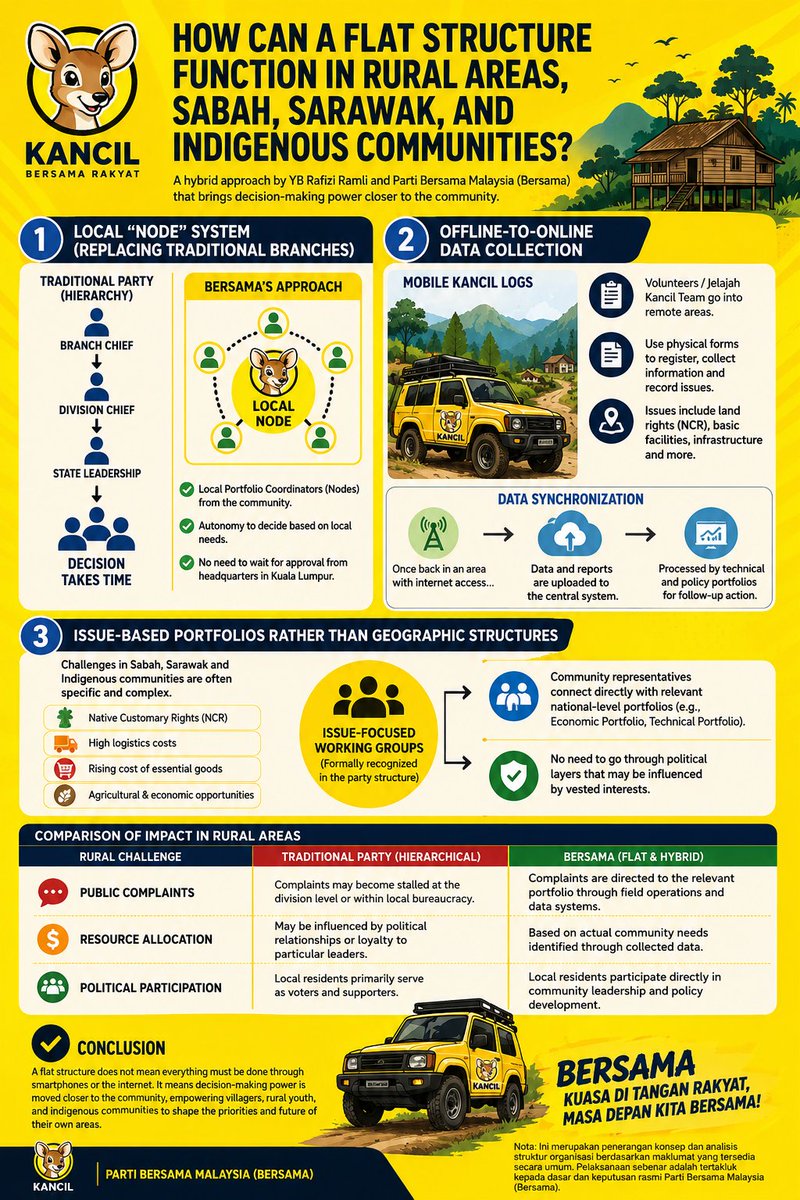
How Can a Flat Structure Function in Rural Areas, Sabah, Sarawak, and Indigenous Communities?
This is one of the most critical questions frequently raised regarding the flat structure model in politics. For rural areas, Indigenous (Orang Asli) communities, as well as Sabah and Sarawak, which continue to face challenges related to the digital divide, an approach that relies entirely on digital technology would not be effective.
To address this challenge, the Parti Bersama Malaysia (Bersama) team should consider introducing a hybrid approach known as Decentralized Physical Hubs. This structure does not depend solely on internet connectivity; instead, it reimagines how organizations and communities interact and operate on the ground.
1. Local "Node" System (Replacing the Traditional Branch Structure)
In traditional political parties, when residents in remote areas such as Kapit (Sarawak) or Pos Tok (an Orang Asli settlement) require assistance, their concerns typically have to pass through multiple layers of bureaucracy such as Branch Chief- Division Chief- State Leadership-before reaching someone with decision-making authority. This process can be time-consuming.
Bersama's Approach
The party appoints Local Portfolio Coordinators or Nodes, consisting of members from the local community.
These coordinators are given autonomy to make decisions regarding the needs of their respective communities.
They do not need to wait for approval from headquarters in Kuala Lumpur to carry out welfare activities or address local issues.
2. Offline-to-Online Data Collection
Although Bersama emphasizes the use of data and digital technology, operations in remote areas can still be conducted offline.
Mobile Kancil Logs
Volunteers or portfolio teams, such as the Jelajah Kancil Team, travel into remote communities using four-wheel-drive vehicles.
They carry physical forms to register residents, collect information, and document community concerns such as Native Customary Rights (NCR) land issues, basic infrastructure needs, and public facilities.
Data Synchronization
Once the team returns to an area with internet access, all collected information and reports are uploaded into the central system.
The data is then processed by the relevant technical and policy portfolios for follow-up action.
3. Issue-Based Portfolios Rather Than Geographic Structures
In Sabah, Sarawak, and Indigenous communities, local challenges are often highly specific, including Native Customary Rights (NCR), high logistics costs, the rising cost of essential goods, and agricultural economic opportunities.
Under a flat structure:
Remote communities can establish Issue-Focused Working Groups that are formally recognized within the party structure.
Community representatives can communicate directly with relevant national-level portfolios, such as the Economic Portfolio or Technical Portfolio.
This communication does not need to pass through multiple political layers that may be influenced by vested interests.
Conclusion:
Under this approach, a flat structure does not mean that all activities must be conducted through smartphones or the internet. Rather, it means that decision-making authority is moved closer to the community, enabling villagers, rural youth, and residents of remote areas to play a greater role in determining the priorities and future direction of their communities.
Note: This is a conceptual explanation and organizational analysis based on publicly available information. Actual implementation is subject to the official policies and decisions of Parti Bersama Malaysia (Bersama).
Personal Analysis by a Garbage Collector from Springfield Village
2
74

May 30
If you're d type who licks pvssy, prepare 4future troubles... good morning

19
3
29
648

May 25
関ヶ原歌姫合戦予戦会 5月24日
Deep2部 セトリ
1 Hooray Hooray
2錯乱マイノリティ
3BuggyGirl
4Future love
私たちは本気で挑んでます🔥
26.30あります!来て欲しいです!!
よろしくお願いいたします!!(⸝⸝>ω<⸝⸝)
2
17
424


4
21
268
10,173

Government is requested to roll back the taxation imdt on the Disability Pension of soldiers as they made two categories which is totally injustice as health is one for all human beings.. leading to poor morale dangerous moov 4future
1
10
12
117

Feb 15
Ja, reklama, ki si jo videl na avstrijski televiziji, se nanaša na aktualno kampanjo **Volkswagen WOW Angebote** v Avstriji (stanje februar 2026). Tam je **VW Polo** izpostavljen z akcijsko ceno **od 13.990 €** (vključno z bonusi), kar se v hitrem TV-spotu zlahka sliši kot "13.000 plus nekaj".
### Podrobnosti aktualne akcije (WOW Angebote):
- **VW Polo** WOW **od 13.990 €** (vključno z bonusi)
- Redna cena (brez bonusov) od približno 18.990 € (vključno z DDV).
- Bonusi, ki znižajo ceno:
- Do **1.000 €** bonus za oddajo starega avta (Eintauschbonus).
- Do **4.000 €** Porsche Bank paket bonus (če financiraš skleneš kasko zavarovanje servisni paket prek Porsche Bank).
- Včasih še dodatni rabati ali 4Future Bonus.
- To je vstopna cena za osnovno ali posebno linijo (npr. "4Me" oprema).
- Kampanja poudarja zanesljivost, vsakodnevno uporabnost in slogan **"Für immer an deiner Seite"** ("Za vedno ob tvoji strani" – pogosto z AI-generiranim videom).
Podobni TV-spoti (na YouTubu in AdClips.tv) prikazujejo ravno ta Polo v tem kontekstu – npr. spot "VW Polo - Für immer an deiner Seite", kjer omenjajo ceno od 13.990 €.
Drugi modeli v WOW kampanji so dražji:
- T-Cross od približno 18.190 €,
- Taigo od približno 17.390 €,
- Golf od 21.590 € itd.
Če ni bil Polo, bi lahko šlo za leasing oglas ali starejšo varianto, a trenutno se **Polo od 13.990 €** najbolj ujema z "13.000 plus nekaj" (990 € kot "plus nekaj").
Poglej neposredno:
- Uradna stran: volkswagen.at/angebote-und-a…
- Polo stran: volkswagen.at/polo/polo (tam jasno piše "Preis inkl. Boni ab € 13.990,-")
Pri lokalnem prodajalcu (npr. Porsche Inter Auto) lahko preveriš točen končni znesek glede na tvoje pogoje (oddaja starega avta, financiranje) – pogosto gre še ceneje. Če mi poveš več podrobnosti o oglasu (npr. kateri model so pokazali ali kakšen slogan), lahko še natančneje določim! 😊
1
5
1,332

Trump of US thinks only abt real estate when he think Gaza Our polticians/planers think only abt newInfra project as solutn which r based on halfCooked feasibility report They neither learn frm our own past nor frm others nor they care 4future They thinkWe r all dead in longTerm
2
47

Jan 20
will say this, thankful to coach Cristobal & each Cane ,gave it all !Amazing cat 5 ride. Txs to U Barry & all fans /press. This progress took a village & Yep could have won this Natty, winnable. Shot ourselves. Unfinished biz. 4future need a great TE kicker, ST/ Offense tuneup
4
239

Jan 14
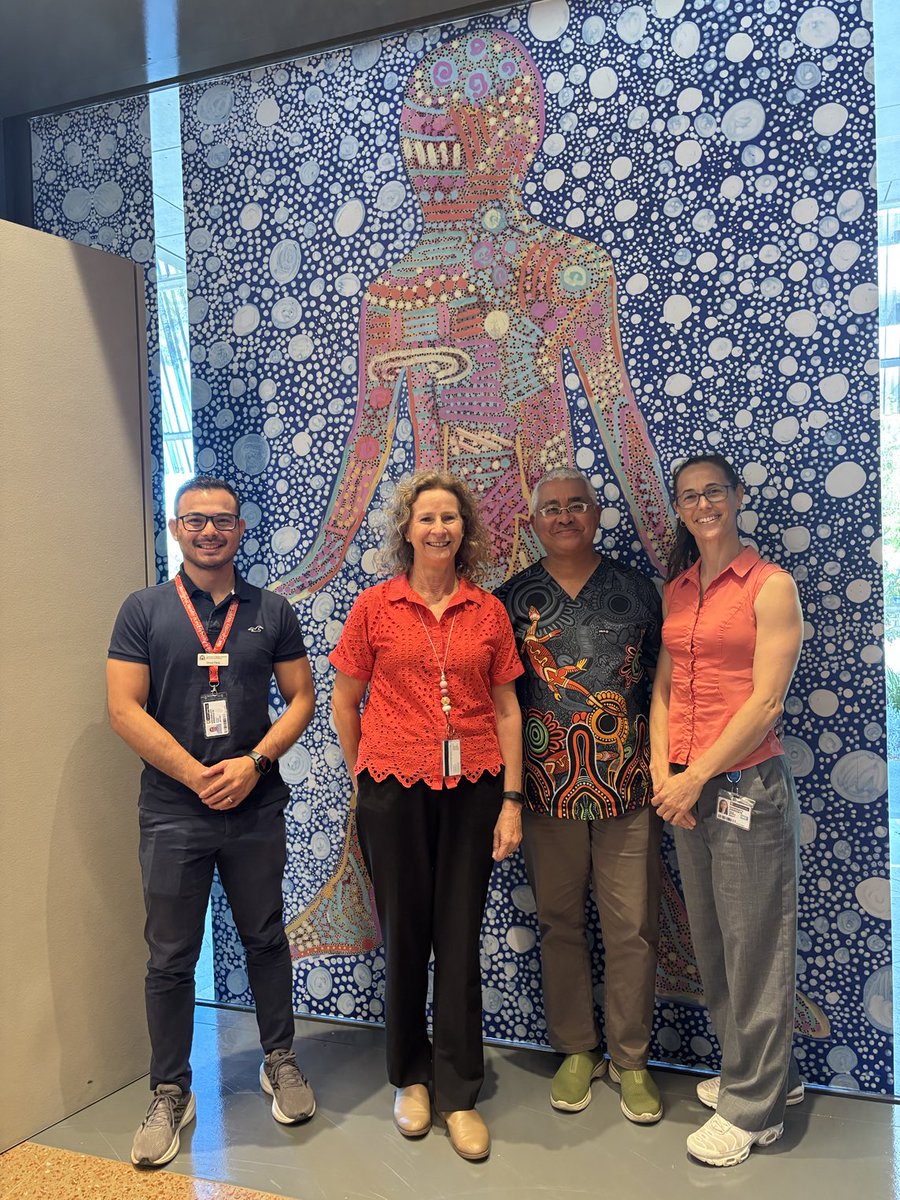
It was lovely to visit the WA Country Health Service research & innovation office at Curtin University 2connect with my colleagues.Your dedication has been instrumental in launching FITTEST 2great success - thank you.I am excited about us collaborating 4future research trials❤️🇦🇺
1
1
7
128

24 Dec 2025
12.27(土)久しぶりにPXに参加します!
秋葉原グッドマン2000円 1D
13時半スタート
1アニュウリズム&イケダサトシ
2AUTOMAMA
3楽しいよふかし
4FUTURE SOUND LOVERS
5あっけらかんず
6RENTaCAR
7sickufo
8底なしのバケツのようにざらざら
9PX(←19時から!)
10worst taste special magic
11ビイドロ

9
838

24 Nov 2025
Was all die 🇩🇪 „XY 4Future“s nicht nur bis heute leugnen, sondern mehr noch: sie haben diese Lösung aktiv bekämpft & Nukies von den Klimademos geprügelt. Folge: 🇩🇪kann seiner Industrie keinen billigen, CO2-armen, 24/7 gesicherten Industriestrom anbieten, EE-Backup ist fossil.🤦🏻
2
5
81
897

20 Nov 2025
U need 2stop take deep breath assess what means most2U& put everything order& perspective Uneed right people around U&U cannot save the world but if Uwork with the right peopleU will accomplish& help alot Uhave2 live your life2 TEACH CHILDREN 4future success w God's blessing Amen
1
14

19 Nov 2025
Exactly. As a #green over 50, its definitely the case that we want2 leave the world with good prospects 4future generations (society and environment). The green surge has been a potential 4a while. Green thinking is so relevant this era, if we are2keep in touch with our past.🌱💚
3
3
10
500

5 Oct 2025
Morning All. Please see my letter/email to First Minister @JohnSwinney @sportscotland & Cricket Scotland regarding the injustice faced by @JohnBlain44 Enough is enough & a more formal approach is now required. @JohnBlain44 @craigwright99 @SkySportsNews @SkyNews @ScottishSun @TheScotsman @Glasgow_Live @DailyMail @Daily_Express @TheTelegraph__ @ESCACricket @NoSCA_ @wilfwalshesq @jkyleofficial @talkSPORT @TalkTV @ch_talks_to @jamesenglish0 @dougwato73 @sue_strachan @worldrecordguy @ICC @PCA @RupertLowe10 @Nigel_Farage @reformparty_uk @Conservatives @UKLabour @theSNP @HumzaYousaf @AnasSarwar @LibDems
Dear First Minister Swinney / Dear sportscotland,
I am writing as a concerned member of the public and Scottish cricket supporter regarding the handling and aftermath of the allegations made against former Scotland international John Blain.
According to public statements issued on 10 June 2024, Mr Blain was cleared following an independent investigation commissioned by Cricket Scotland, conducted by external legal teams and advisers. The conclusion reported publicly was that the allegations were unfounded and that Mr Blain had no case to answer.
Given those findings, I would like clarity on the governance and accountability steps that now follow:
1Consequences and standards: What consequences—if any—are envisaged for individuals whose allegations are found, after due process, to be unfounded? How do your organisations balance accountability for bad-faith or reckless allegations with the need to protect genuine whistleblowers?
2Review of process: Will the Scottish Government and sportscotland review how this matter was handled (including communications and the commissioning/interpretation of reviews) to ensure procedural fairness and proportionality for all parties?
3Reputational redress: What support or redress mechanisms exist for individuals who are cleared, particularly where careers and reputations have been harmed during the investigative period?
4Future safeguards: What specific safeguards will you implement to prevent similar procedural failures—e.g., clearer thresholds for public statements, timelines, and independent oversight of complex misconduct cases?
5Consistency across cases: How will you ensure consistent application of standards across all forms of discrimination and misconduct allegations in Scottish sport?
I would appreciate a written response addressing the above points and outlining any planned actions or timelines. Transparency here matters—not only for Mr Blain, but for public trust in Scottish sport’s complaint and disciplinary frameworks.
Yours sincerely,
Parag Gadhia
2
280

7 Sep 2025
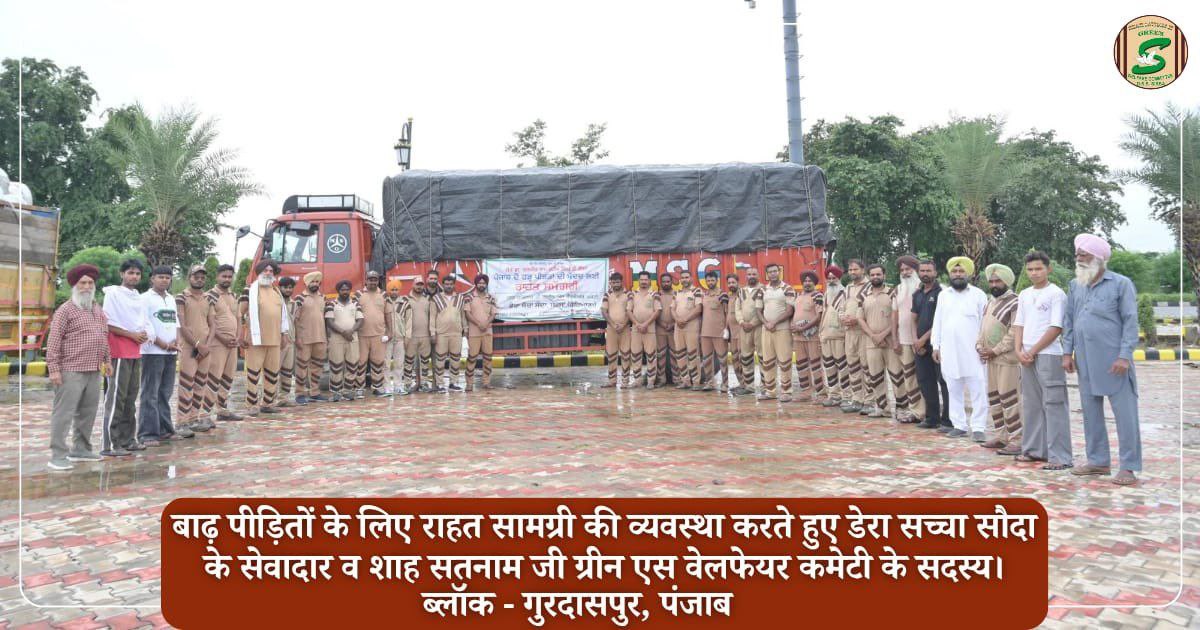
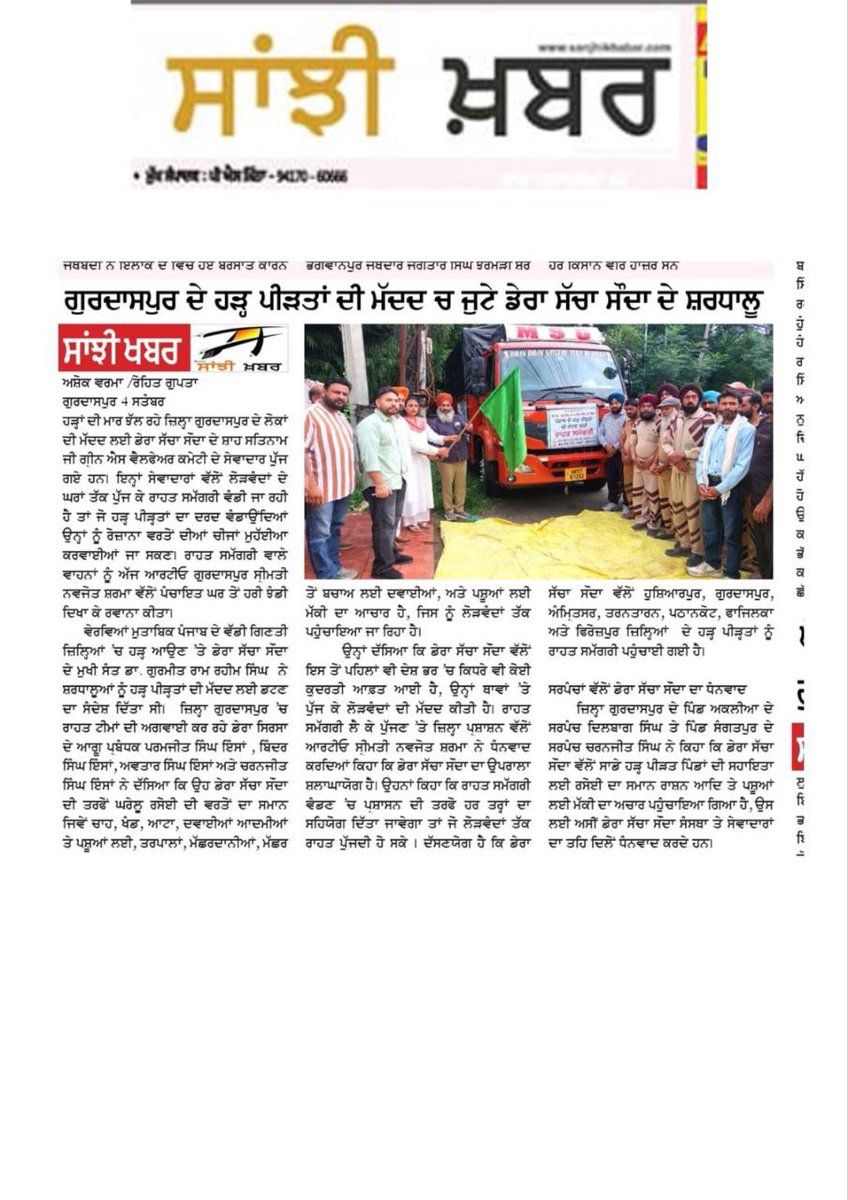
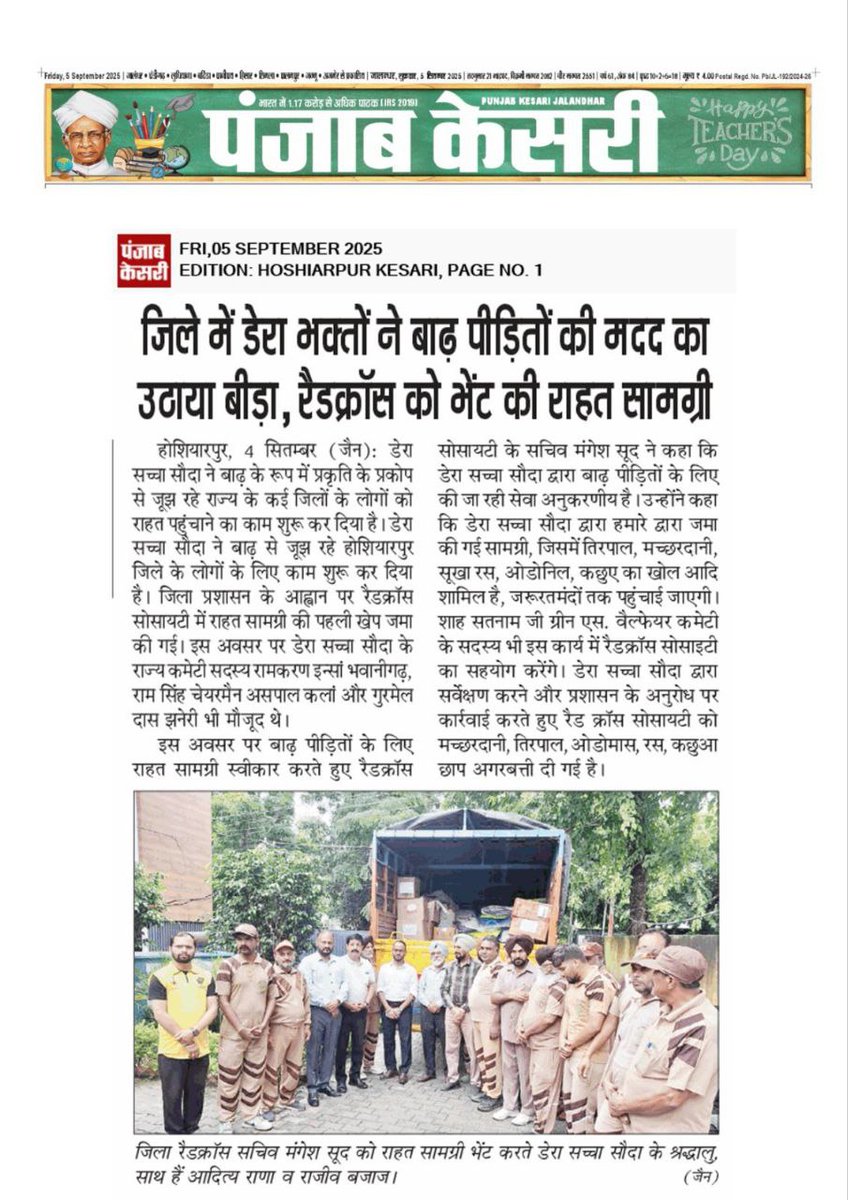
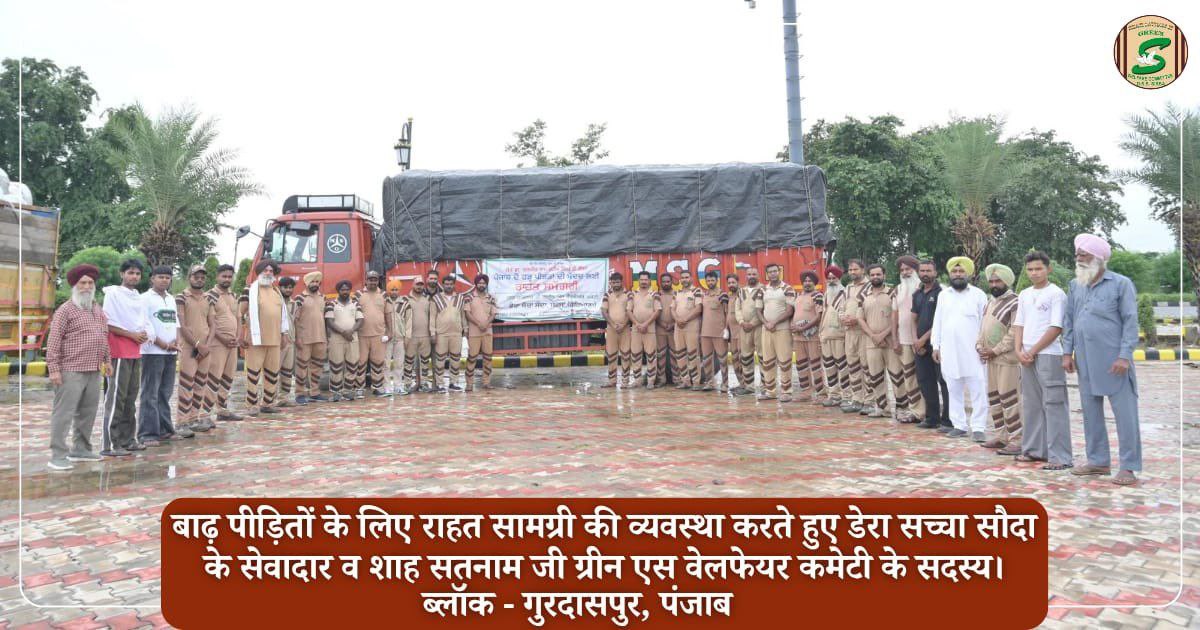
Devastating flood in punjab hv lft countless families in destress,dey r battling hunger, displacement,uncertainty 4future. In dis crisis DSS volunteers reaching affected areas wid relief materials inspired by Saint Dr MSG Insan #DisasterRelief #PunjabFloods #PunjabFloodRelief
3
37
38
260

30 Aug 2025
Thanks 4info 2prep 4future encounters.I bring N95mask(easy on off so ppl r more willing 2use it say I brot this 4you.Not been asked that question,but if so I think I’d add“actually,I brot this 4you” when they hesitate ask do you want me to wear it,I’ll say,yes please, smile.
1
1
29

27 Aug 2025
World Lake Day, Aug 27,raises awareness on ecological, social, economic importance of lakes. provided freshwater,support biodiversity,regulate climate, sustain livelihoods&emphasizes protecting lakes from pollution,climate threats2 ensure their sustainability 4future generations.

3
36

25 Aug 2025
. What is velora
Velora is transforming DeFi with a user focused platform that delivers fast secure and seamless trading. Here are five key points:
1.Enhanced Trading Experience
>Velora offers swift and secure swaps, making DeFi accessible and efficient for all users.
2Value Creation
>Every trade and stake on Velora generates opportunities for growth and financial empowerment.
3Community-Driven Growth
>The platform evolves with its community, prioritizing user needs and feedback.
4Future of DeFi
>Velora is at the forefront of decentralized finance, pioneering innovative solutions.
Join the Movement
>Connect with @VeloraDEX to shape the future of DeFi and unlock new possibilities. 🚀

7
1
11
476
16 Aug 2025
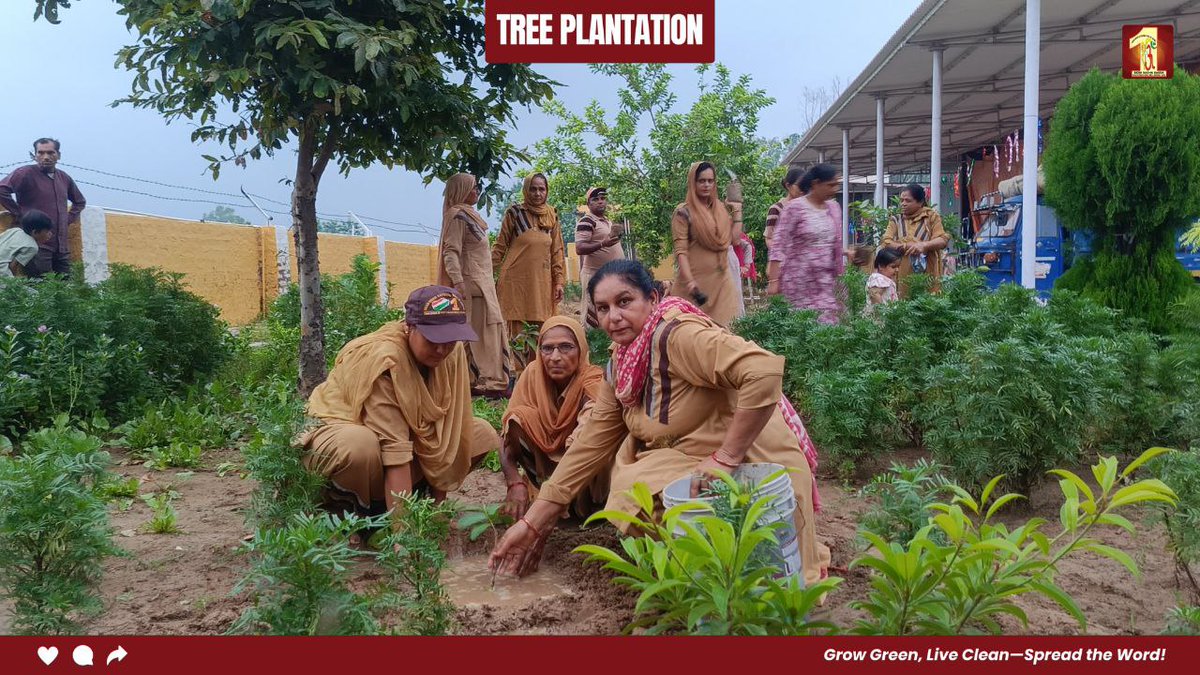
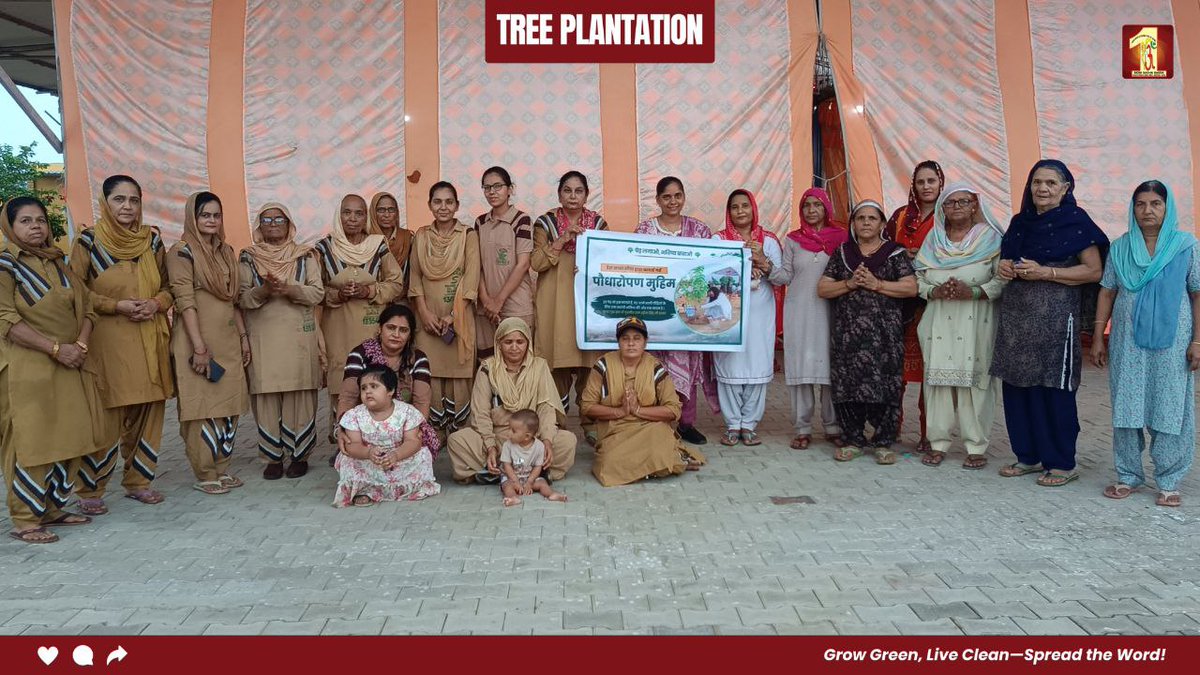
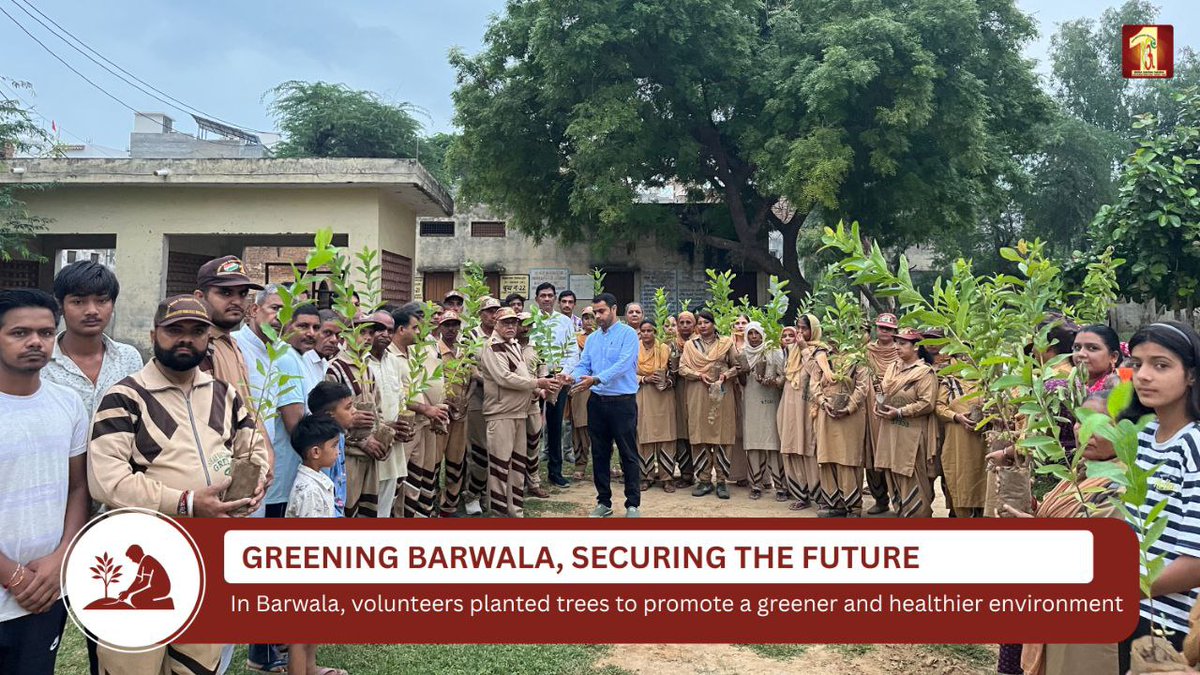
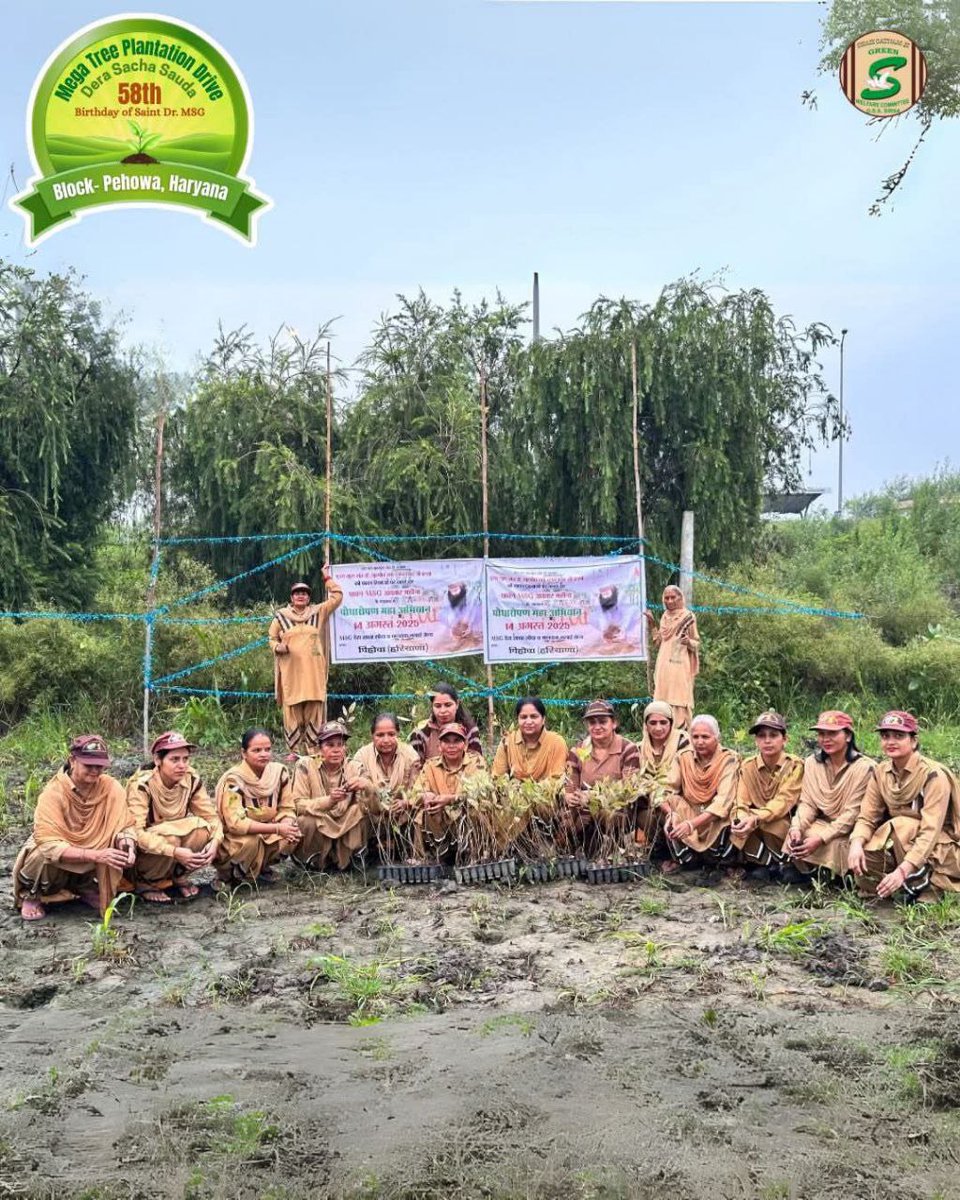
Wid d motive maintain green & healthier plant 4future genration millions celebrated d pious B'day f Saint Dr MSG in a unique &meaningful way by giving back 2Mother Earth by
#MegaTreePlantation transforming barren lands into thriving green zone,inspired other #PlantForFuture too
15
15
79