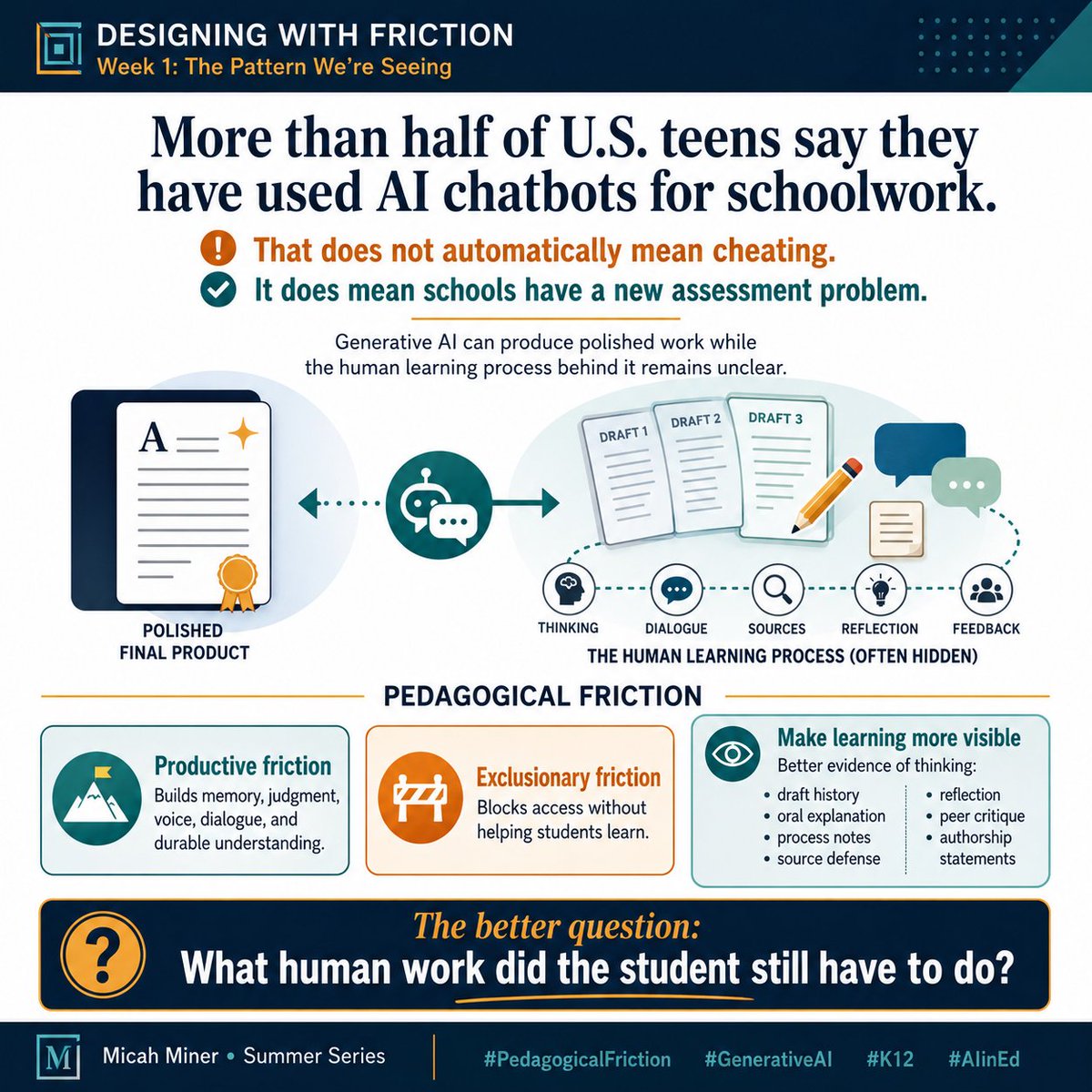
ALT An educational infographic titled "Designing with Friction - Week 1: The Pattern We’re Seeing." The headline states: "More than half of U.S. teens say they have used AI chatbots for schoolwork. That does not automatically mean cheating; it does mean schools have a new assessment problem." A central diagram shows how generative AI can bypass the "hidden" human learning process (drafting, thinking, dialogue, reflection). Below this, the "Pedagogical Friction" framework contrasts "Productive Friction" (which builds memory, judgment, and voice) with "Exclusionary Friction" (which blocks access). It lists ways to make learning visible, such as draft history, oral explanations, and process notes. The footer displays the core prompt: "The better question: What human work did the student still have to do?" and includes Micah Miner's branding with the hashtags #PedagogicalFriction, #GenerativeAI, #K12, and #AIinEd.












ALT New from ED SAFE AI: Ep. 3 of the AI Educator features Kip Glazer, who shares why there is no "one ring to rule them all" when it comes to AI in schools and the imperative to support educators. Listen to Kip’s Insights. : https://AIeducator.podbean.com/e/why-your-best-ai-strategy-is-actually-a-human-one-with-kip-glazer


ALT CoSN Blog Alert: From Risk to Readiness: Why We Must Lead on AI Use in the Classroom - AI in classrooms is here. The question is whether we lead or react. From risk to readiness, strong leadership matters