
May 19
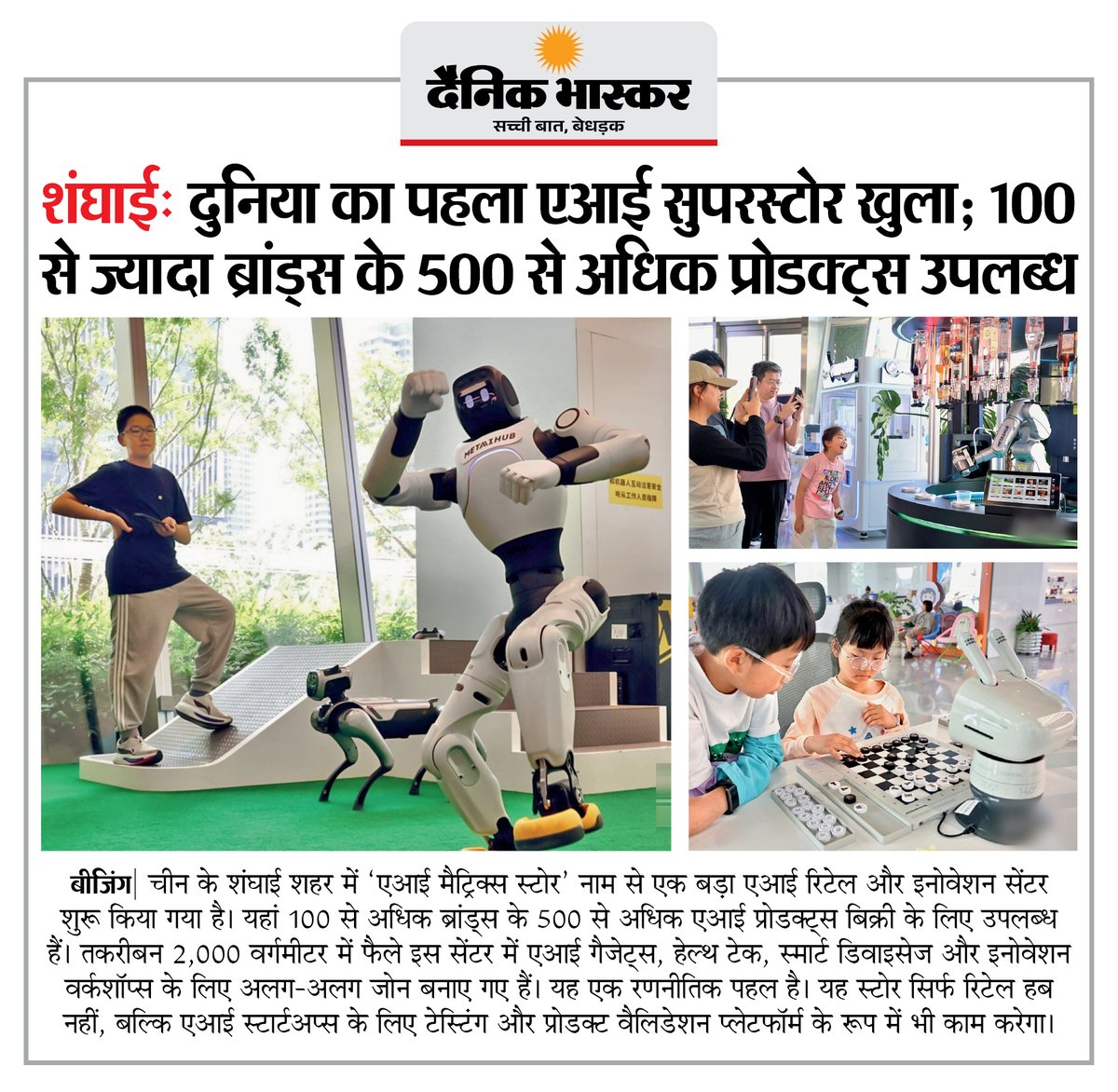
शंघाई में खुला दुनिया का पहला 'AI सुपरस्टोर'... यहां 100 से ज्यादा ब्रांड्स के 500 से अधिक AI प्रोडक्ट उपलब्ध
#AIStore #Shanghai #ArtificialIntelligence #TechInnovation
अधिक खबरें और ई-पेपर पढ़ने के लिए दैनिक भास्कर एप इंस्टॉल करें - dainik-b.in/mjwzCSxDdsb
1
2
4
681

May 8
$AAPL
I’d rather put my AI-life in Apple’s hands than Meta’s.
That’s not only a preference, for me it’s also an investment thesis.
When AI becomes truly personal, trust is the only moat that matters for me.
And I don’t want to walk around in smart glasses, being nudged and watched.
I want smarter AirPods, a smarter phone, a smarter Mac and an AI-app-store.
AI that protects me from noise, not one that profits from my attention.
Apple is the only Big Tech I can think of whose business model actually aligns with that.
Apple now spending 10% on R&D for the first time in 30 years is a signal imo.
I’m betting hard on them becoming the leader in personal AI.
I will buy a small starting position for skin-in-the-game, seeing it as the AI-distribution layer and waiting for the outcome of WWDC in June.
#AIstore #InvisibleAI #Trust
1
2
138

Feb 27
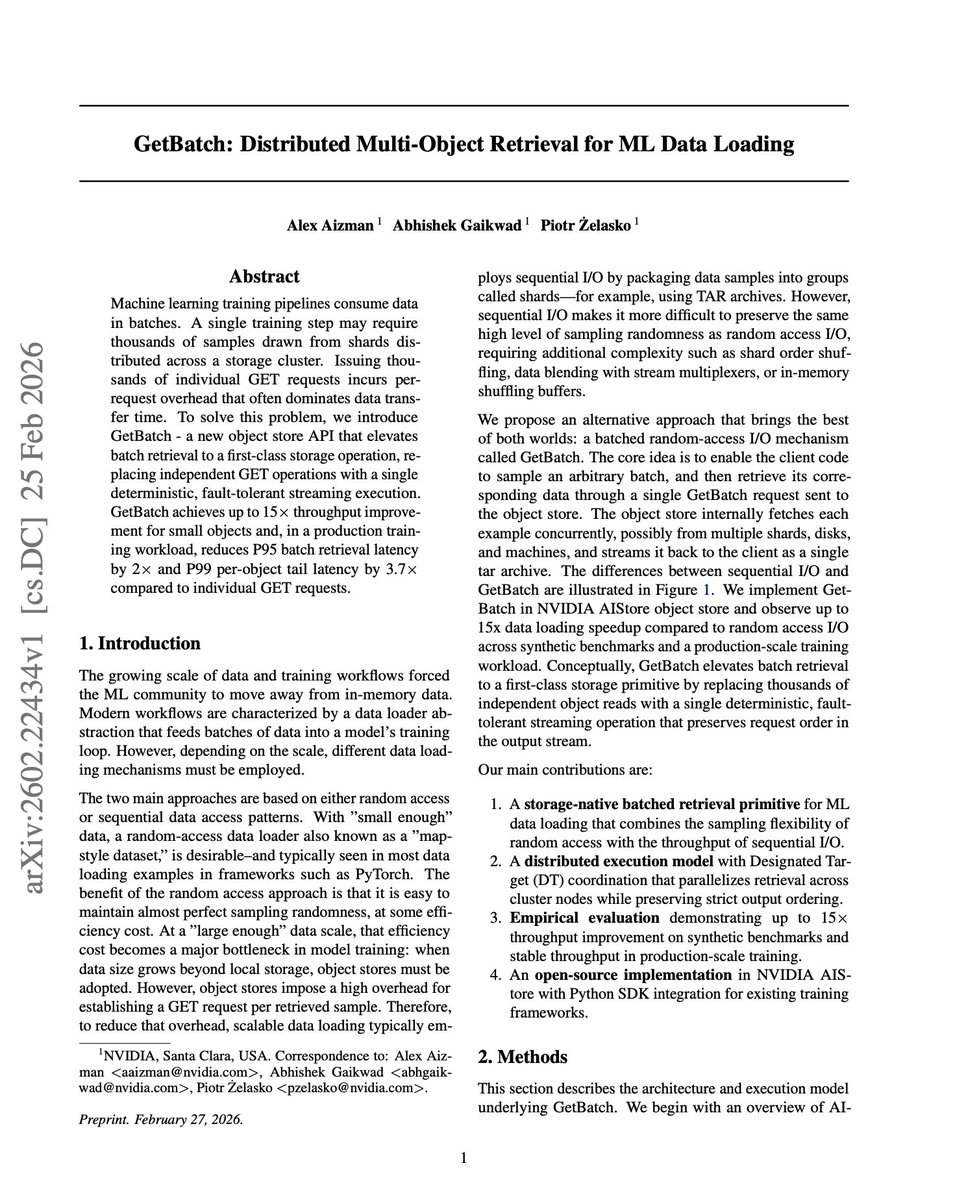
Batched training and inference is standard today. But what about dataloading?
Proud to present GetBatch, a new object store API concept to fetch arbitrarily chosen data samples in a single batch up to 15x faster than with independent GET requests. Implemented in @nvidia AIStore.
2
2
13
410

14 Nov 2025
Found and reported two vulnerabilities through @thezdi in NVIDIA AIStore AuthN component, both patched in v3.31.
CVE-2025-33186 (CVSS 8.8): hardcoded credentials enabling privilege escalation, info disclosure, and data tampering.
CVE-2025-33185 (CVSS 5.3): missing authentication allowing unauthenticated info disclosure.
AIStore is NVIDIA's distributed object storage framework for AI/ML workloads - these vulns sat at the authentication layer protecting petabyte-scale datasets. When your auth component has hardcoded credentials, every downstream security control becomes theater.
Thank you to @NVIDIAPSIRT for clean disclosure process and rapid patch turnaround.
nvidia.custhelp.com/app/answ…
3
7
3,739

14 Nov 2025
[ZDI-25-1013|CVE-2025-33186] NVIDIA AIStore AuthN Hard-coded Credentials Authentication Bypass Vulnerability (CVSS 9.8; Credit: Peter Girnus (@gothburz) of Trend Zero Day Initiative) zerodayinitiative.com/adviso…
1
7
3,863

29 Oct 2025
NVIDIA and Oracle are joining forces with the U.S. Department of Energy (DOE) to build the nation’s largest AI supercomputer.
The Solstice System
The Solstice system will feature a record-breaking 100,000 NVIDIA Blackwell GPUs, while a companion machine, Equinox, will pack 10,000 GPUs. Both will be located at Argonne National Laboratory and interconnected through NVIDIA’s high-speed networking, delivering a combined 2,200 exaflops of AI performance , the most powerful AI infrastructure ever developed for the DOE.
The new supercomputers will enable researchers to train frontier AI and reasoning models using the NVIDIA Megatron-Core library and TensorRT™ inference software, creating what the company calls “agentic AI workflows” for open science.
“The Equinox and Solstice systems are designed to accelerate a broad set of scientific AI workflows,” added Paul K. Kearns, director of Argonne National Laboratory.
energy.gov/articles/energy-d…
Quantum Processors Powered by GPU’s; NVQLink™
Developed with input from leading DOE laboratories, including Brookhaven, Los Alamos, Berkeley, and Oak Ridge, NVQLink™,nvidia.com/en-us/solutions/q… a new open system architecture that connects GPU supercomputers with quantum processors to build accelerated quantum supercomputers for next-generation hybrid computing.
NVQLink™ enables ultra-fast, low-latency data exchange between GPUs and quantum units and the technology is being adopted by 17 quantum hardware builders and 9 U.S.national labs,nvidianews.nvidia.com/news/n… marking the next step toward scalable quantum-GPU hybrid systems.
interestingengineering.com/e…
Megatron-Core Library
Megatron-Core is an open-source PyTorch-based library that contains GPU-optimized techniques and cutting-edge system-level optimizations. It abstracts them into composable and modular APIs, allowing full flexibility for developers and model researchers to train custom transformers at-scale on NVIDIA accelerated computing infrastructure.
This library is compatible with all NVIDIA Tensor Core GPUs, including FP8 acceleration support for NVIDIA Hopper architectures.
docs.nvidia.com/megatron-cor…
Multi-Storage Client (MSC) Integration
The Multi-Storage Client (MSC) nvidia.github.io/multi-stora… provides a unified interface for reading datasets and storing checkpoints from both filesystems (e.g., local disk, NFS, Lustre) and object storage providers such as S3, GCS, OCI, Azure, AIStore, and SwiftStack.
The base client supports POSIX file systems by default, but there are extras for each storage service which provide the necessary package dependencies for its corresponding storage provider.
MSC uses a YAML configuration file to define how it connects to object storage systems. This design allows you to specify one or more storage profiles, each representing a different storage backend or bucket. To tell MSC where to find this file, set the following environment variable before running your Megatron-LM script.
MSC uses a custom URL scheme to identify and access files across different object storage providers.
To train with datasets stored in object storage, use an MSC URL with the --data-path argument. In addition, Megatron-LM requires the --object-storage-cache-path argument when reading from object storage.
docs.nvidia.com/megatron-cor…
NVIDIA Hopper Architecture
nvidia.com/en-us/data-center…
PyTorch
PyTorch is a GPU accelerated tensor computational framework. Functionality can be extended with common Python libraries such as NumPy Numpy.org and SciPy.scipy.org/ Automatic differentiation is done with a tape-based system at the functional and neural network layer levels.
pytorch.org/
PyTorch Project
github.com/pytorch/pytorch
TensorRT™
Software Development Kit (SDK) for high-performance deep learning inference.
nvidia.github.io/Torch-Tenso…
Torch-TensorRT™
Operates as a PyTorch extension and compiles modules that integrate into the JIT runtime seamlessly.
nvidia.github.io/Torch-Tenso…
12
89
144
12,252

18 Sep 2025
🚀Help #Chattypreneur reach 1K on #X!
😀Let's connect, just 61 more! #AI #AIGPT #AIStore
facebook.com/chattypreneur
x.com/chattypreneur
pinterest.com/chattypreneur
>>chattypreneur.com
4
6
88

👀 Heard Jackie Chen got his hands on a new AI tool?
🔥 Come check out his store — everything you see is made with Akool’s AI video magic!
Ready to see what AI can really do? 🤖✨
#AITool #AkoolAI #AIContentCreation #AIVideo #AIstore #JackieChen #FutureIsNow #TikTokAI #SmallBusiness #AIpowered #ContentWithAI
20
5
14
8,197

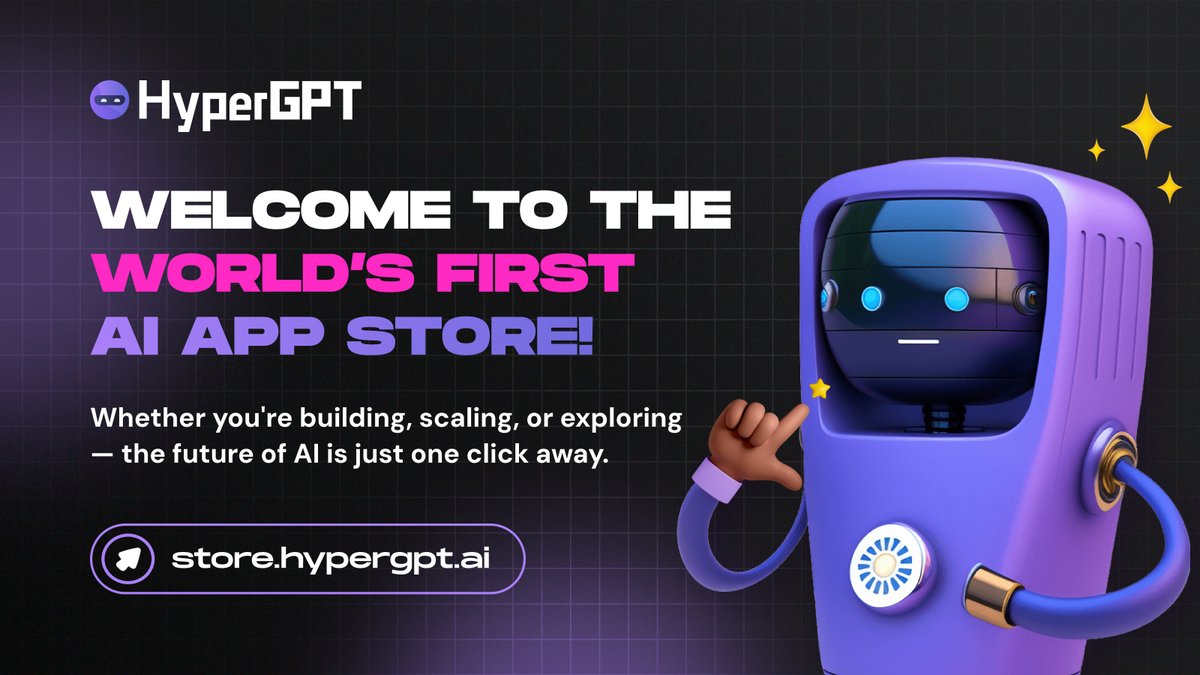
🛒 Welcome to the World’s First AI Store!
HyperGPT AI Store brings 1000 AI apps under one roof — all accessible with a single account.
✨ All-in-one access
💸 Better pricing, more value
🔍 Smart search by use case & price
🔗 Easy iframe & API integrations
🔥 See what’s trending in AI
Whether you're building, scaling, or exploring — the future of AI is just one click away.
Start browsing 👉 hypergpt.ai
#HyperGPT #AIStore #AIApps #ArtificialIntelligence #Web3 #HGPT
83
70
130
100,022

28 May 2025
You ever feel like you're witnessing the birth of something ICONIC in Web3?
Because that’s EXACTLY how I felt when I saw the #Inferium #IDO go live on @AITECHPad and I knew I had to shout it from the rooftops.
Let me break it down in the sweetest way possible.
What is inferium ?
#Inferium is NOT just another AI project.
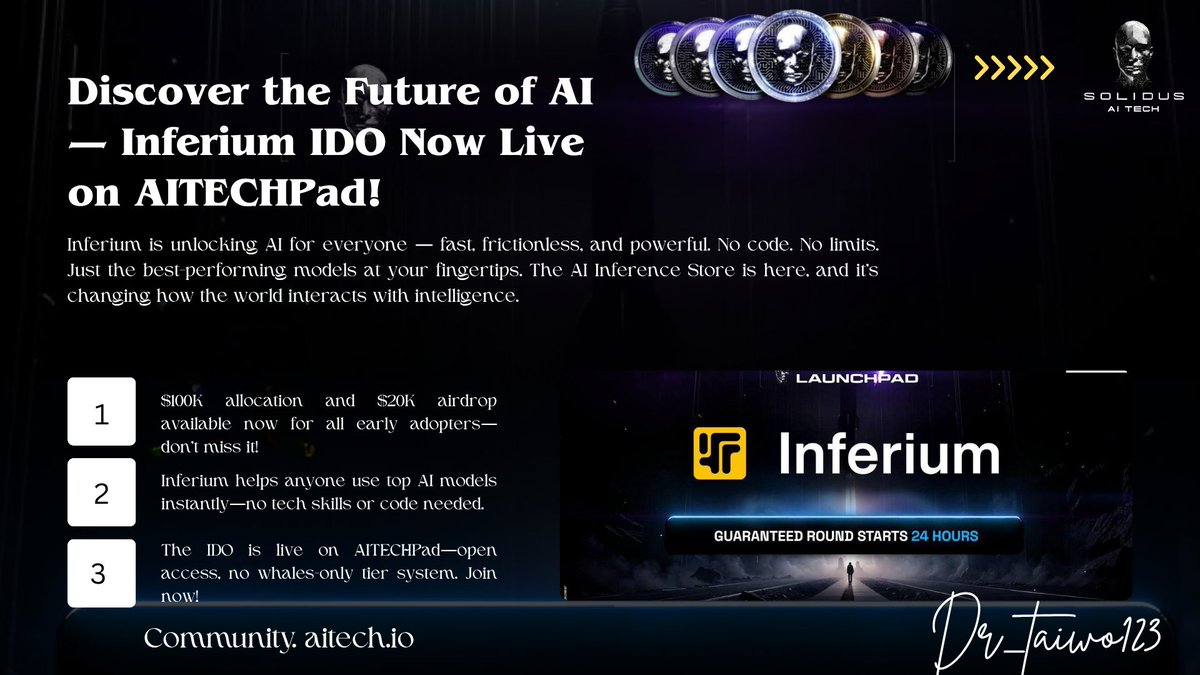
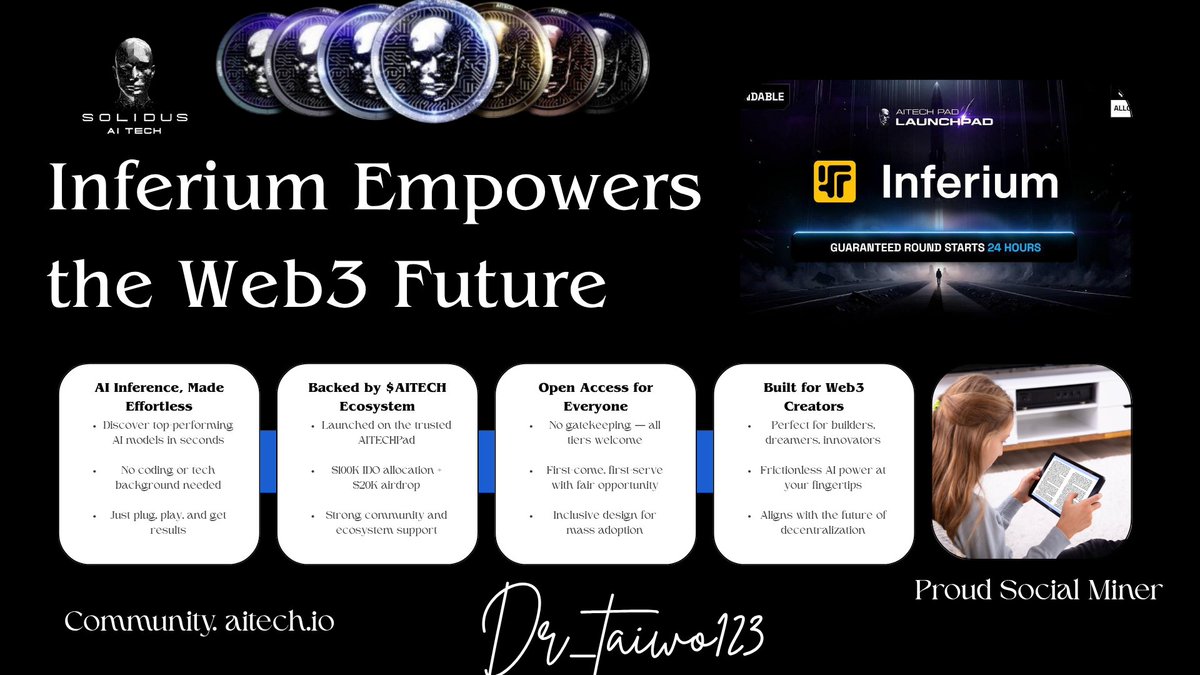
It's building the first-ever AI Inference Store where anyone can instantly discover and use the BEST-performing AI models without needing to be an engineer, coder, or techie.
No clutter. No confusion. Just straight-up results.
It’s like the Google Play Store but for AI.
And it’s built for the people.
The #IDO is happening RIGHT NOW on #AITECHPad , and here’s why it’s causing real heat:
1. $100K allocation
2. $20K airdrop for early adopters
3. Open to ALL tiers no whales-only club
Powered by #Base
🔹1-day refund option
🔹20% TGE 5-month linear vesting
🔹$20K bonus airdrop for holders
Count down 😎😎
🗓️ You Only Have 72 Hours
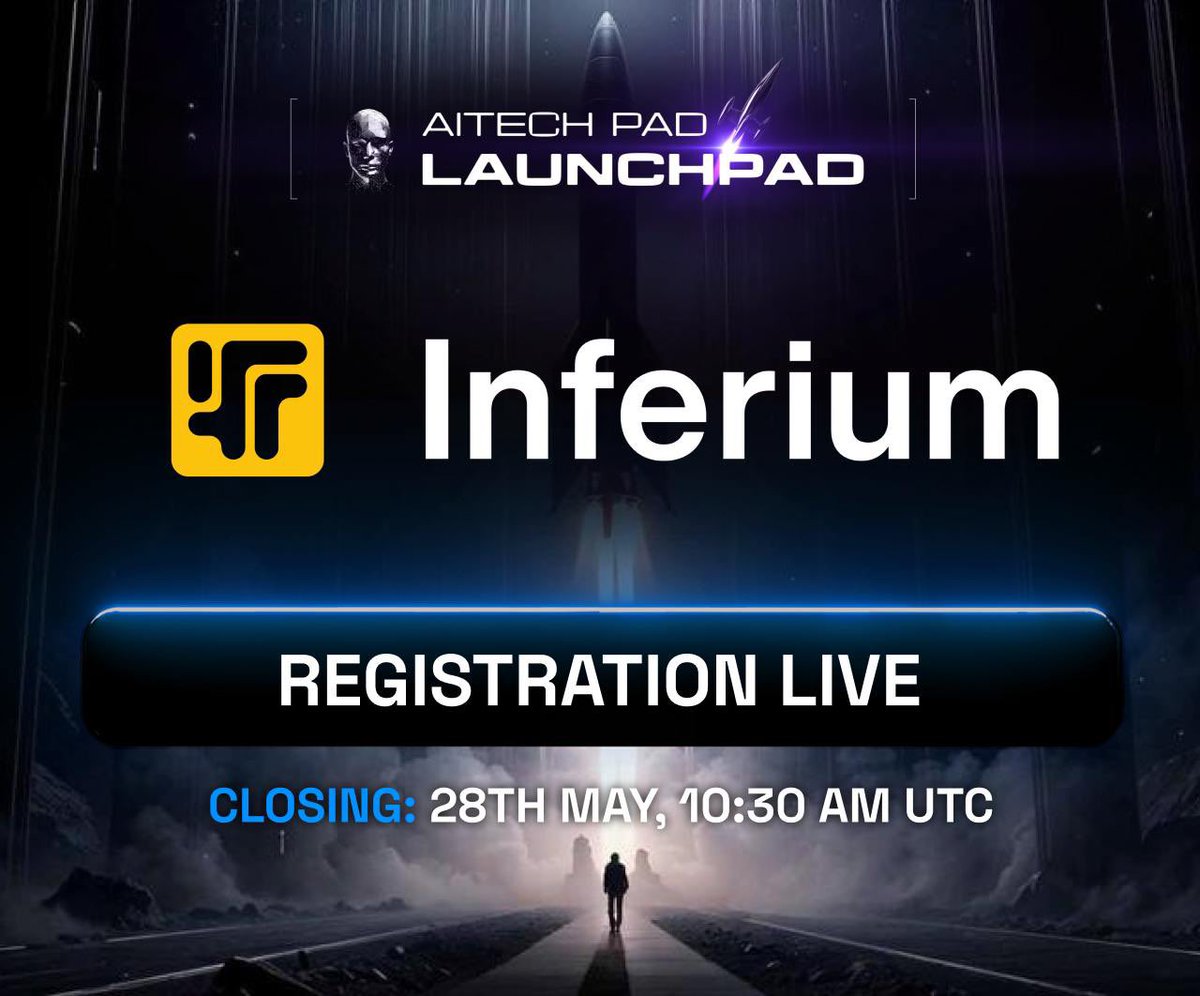
🕒 From May 26 – May 28 (23:55 UTC), we have a flash window to be part of this powerful launch.
If you’ve ever missed out on early AI gems, don’t let this one pass you by.
Why am I so bullish on this?
Because I’m not just tweeting for vibes I’m a Social Miner in Web3 at @TheDAOLabs , and also part of the @TheDAOLabs elite writers squad my mission is to bring visibility to projects that move the culture forward.
I’ve seen flash-in-the-pan trends.
I’ve seen money grabs.
But #Inferium is different. It’s got:
A real-world use case (AI discovery made simple)
Massive backing from $AITECH
One of the cleanest launches we’ve seen this quarter
And a vision that aligns with where the future of AI x Web3 is headed
Here’s what I love most:
#Inferium gives you POWER the power to use AI without friction.
It’s a big win for builders, creators, and dreamers in the decentralized world
Final Words from me, a proud Web3 Social Miner:
Some people chase trends. I amplify revolutions.
#Inferium is what happens when AI brilliance meets true community access and @AITECHPad is opening that gateway.
Don’t just scroll. Don’t just lurk.
Be early. Be loud. Be legendary.
📢 I shared my full thoughts on this fire IDO on CoinMarketCap 👇👇👇
coinmarketcap.com/community/…
go check it out and drop some love! 💥
Also Check it out, register, and share:
aitechpad.io/project/inferi…
👉 #Inferium #AITECHPad #IDO #AITECH #AIStore #Web3 #SocialMining #CryptoCommunity

24 May 2025

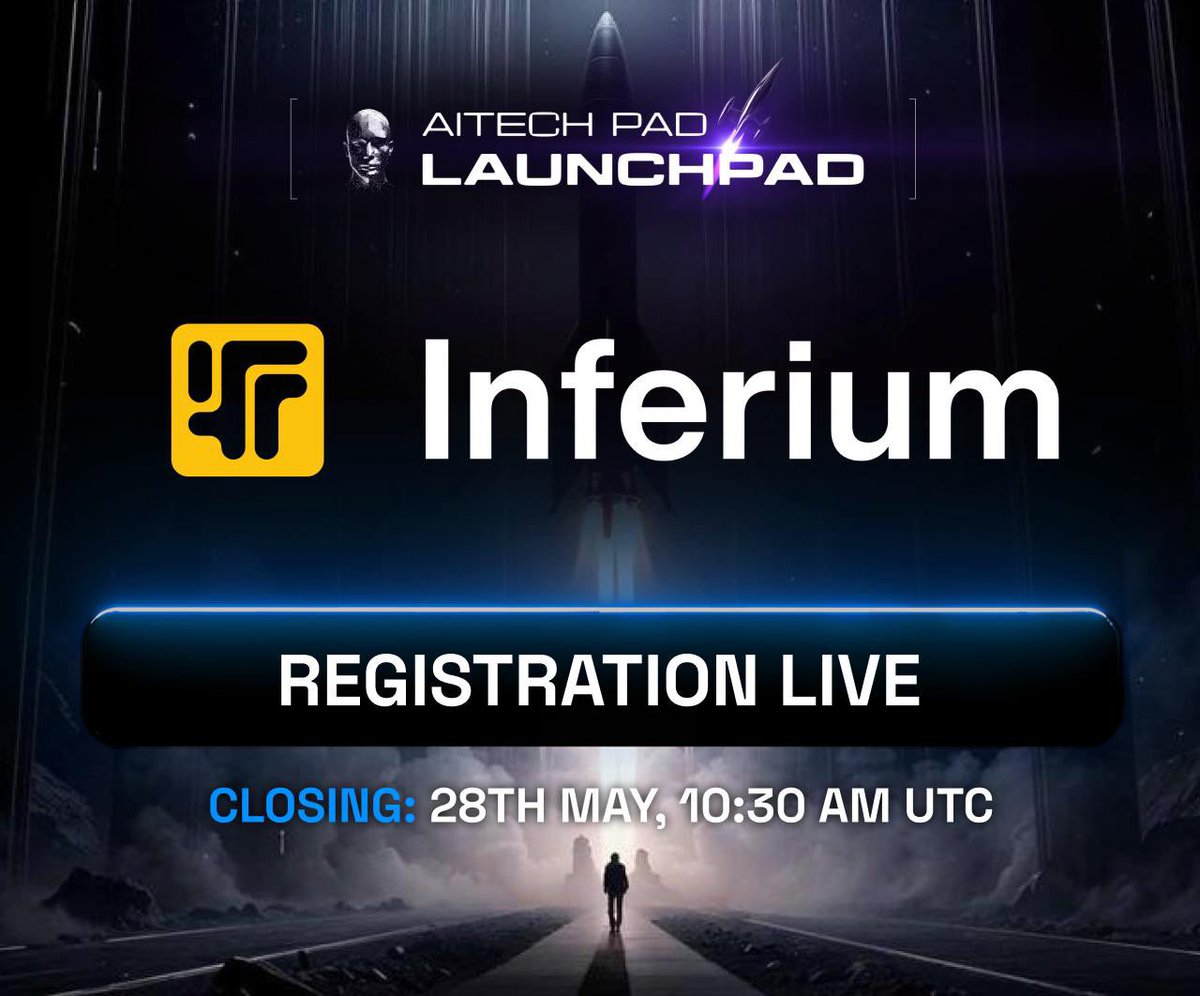
📣 Inferium IDO Registrations LIVE!
@InferiumAI is building the first intelligent AI inference store — matching your needs to the best-performing models in seconds.
🔹 Network: BASE
🔹 Open to ALL tiers
🔹 $100K total allocation
🔹 1-day refund policy
🔹 20% TGE unlock 5-month linear
🔥 Additional Bonus
$20,000 worth of Inferium will be airdropped to token holders!
➡️ Register now: aitechpad.io
32
32
5,839

17 May 2025
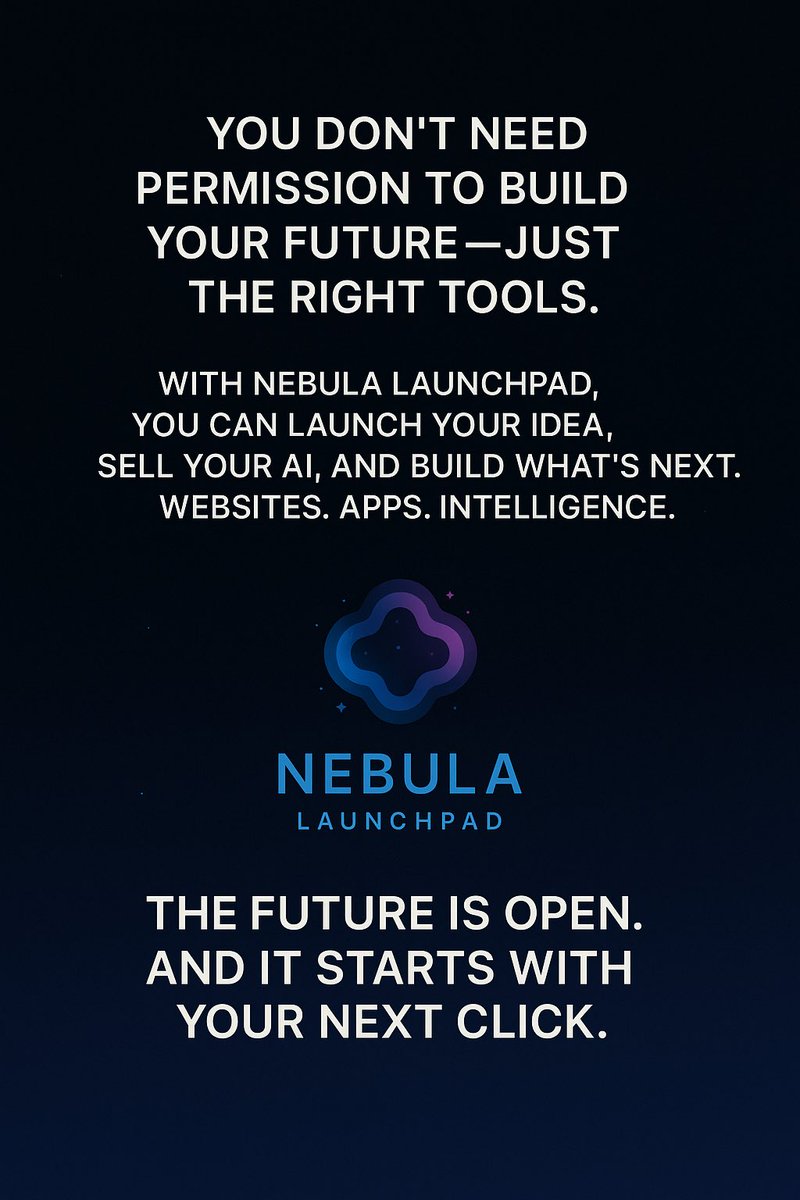
You don’t need permission — just the right tools.
With Nebula Launchpad, you can build your dream, sell your AI, and launch what’s next.
The future is open. Let’s create it.
#NebulaLaunchpad #WebDev #AIStore #Startups #BuildWithPurpose
3
12

8 May 2025
new business idea - Build the RapidAPI of MCP - a MCP API Appstore AIstore??
2
134

ICYMI: Watch this on-demand session from @nvidia GTC about Seagate's latest proof of concept, integrating NVMe hard drives, DPUs, and AIStore--bypassing traditional CPU bottlenecks to enhance AI training and inference.
Watch now: seagate.media/6015qe0H3
1
8
34
2,671

7 Mar 2025
As AI reshapes industries, storage demands are skyrocketing. @Minio's 149% ARR surge proves they’re leading the charge. Now, with AIStore & an enterprise sales push, they’re scaling even faster.
Read more about MinIO's growth via @BigDATAwireNews: bigdatawire.com/2025/02/28/a…
3
2
283

6 Mar 2025
AI特化型のオブジェクトストレージ「AIStore」というのがあるのか。
直接ノードアクセスでレイテンシ削減、NVIDIA × OCIでAIモデルのトレーニング・推論速度が圧倒的パフォーマンス向上。さらっと公開されている...!
blogs.oracle.com/ai-and-data…
1
256

19 Nov 2024
🚀 Still buzzing from the incredible energy of KubeCon CloudNativeCon NA 2024 in Salt Lake City!
👕 Our booth T57, right next to the t-shirt pick-up corner, was a great spot, with an amazing flow of developers, operators, and cloud-native enthusiasts stopping by. We loved connecting with so many incredible people, sharing ideas, and learning from each other.
🌯 A big highlight for us was our "Breakfast Bytes with simplyblock" event on the second day of KubeCon. Those breakfast burritos were a big hit, and it was fantastic to share a meal while exchanging ideas with everyone—from industry leaders to fellow startups. Each conversation gave us something new to think about and really added to the experience.
💡 We also had the chance to attend some amazing talks, including one by NVIDIA that our CTO joined: "AIStore as a Fast Tier Storage Solution: Enhancing Petascale Deep Learning Across Cloud Backends." It was fascinating to hear about the latest advancements and think about how they could apply to our work.
💬 Did we catch you at the booth or over breakfast? Drop a comment or connect —we’d love to keep the conversation going!
#kubecon #cloudnative #kubernetes #storage
2
3
239

7 Nov 2024
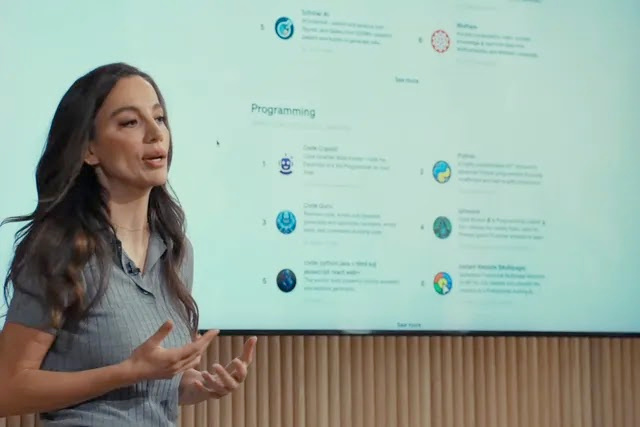
OpenAI’s custom GPT Store is now open to all for free
Now everyone has access to millions of custom chatbots. By Wes Davis, a weekend editor.
ai-hub-solutions.blogspot.co…
#OpenAI #GPT #chatbots #AI #technology #innovation #digitaltransformation #FreeChatbots #technews #AIstore
1
3
71
10 Oct 2024
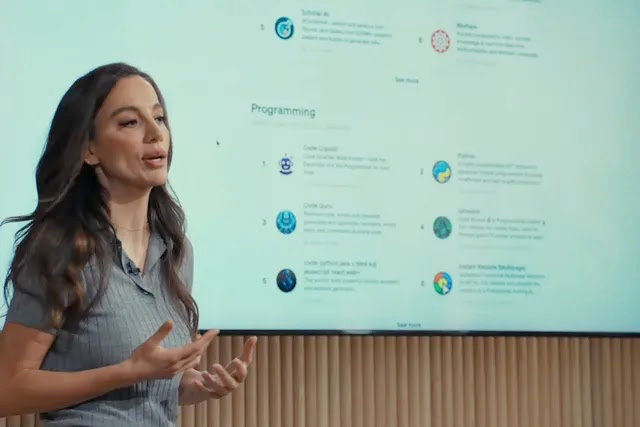
OpenAI’s custom GPT Store is now open to all for free
Now everyone has access to millions of custom chatbots. By Wes Davis, a weekend editor.
ai-hub-solutions.blogspot.co…
#OpenAI #GPT #chatbots #AI #technology #innovation #digitaltransformation #FreeChatbots #technews #AIstore
2
2
28
8 Oct 2024
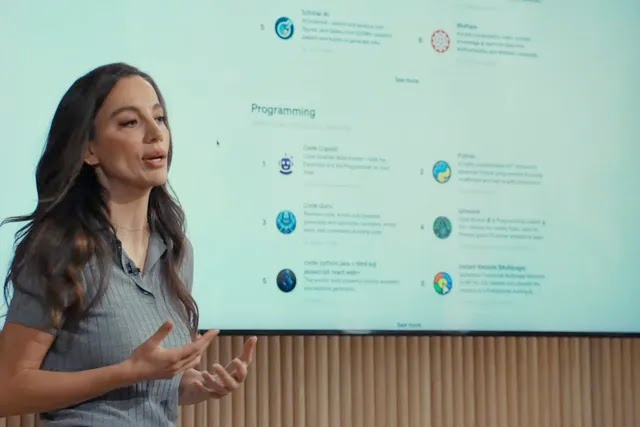
OpenAI’s custom GPT Store is now open to all for free
Now everyone has access to millions of custom chatbots. By Wes Davis, a weekend editor.
ai-hub-solutions.blogspot.co…
#OpenAI #GPT #chatbots #AI #technology #innovation #digitaltransformation #FreeChatbots #technews #AIstore
1
1
4
65