
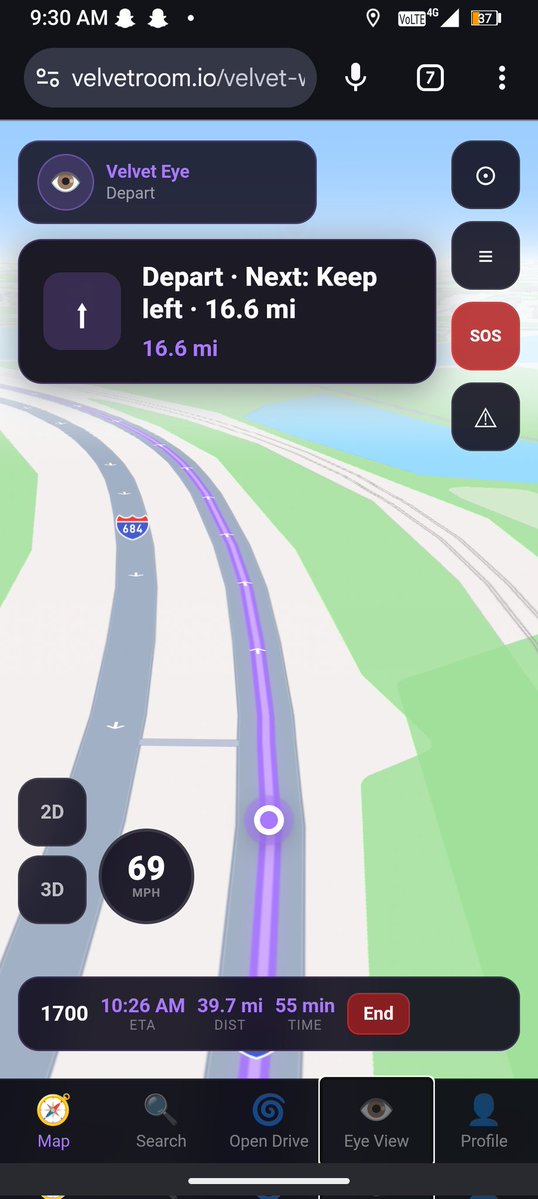
Another day of real-world testing for Velvet Wayz.
Every drive teaches us something.
Today's testing helped us identify improvements in navigation timing, route awareness, rerouting behavior, camera transitions, maneuver guidance, and overall user experience.
The goal isn't to build another GPS.
The goal is to build the GPS we've always wanted.
One thing we're learning quickly: some of the best ideas don't come from sitting behind a screen. They come from actually driving.
As development continues, we look forward to hearing from future users:
What do you wish your GPS did?
What's the most annoying thing about navigation apps today?
What's a feature you've always wanted but never had?
Every mile makes Velvet Wayz better.
Not hype. Build.
🌎 #VelvetWayz #Navigation #GPS #ARDrive #VelvetEye #BuildInPublic #AppDevelopment
2
19

May 31
I was always very pro arweave. I know Ardrive had some issues but I still don’t know what the main issue is here tbh.
Hopefully we can get some kind of official account of the status of things
1
3
305

May 27
Can Arweave deliver on its promise?
I believe that Arweave can deliver on its promise because it already runs live products with real users.
1. ArDrive shows daily uploads and steady adoption
2. Past roadmaps hit targets on time
3. Transparent team shares updates openly
1
2
88
May 27
Arweave (@ArweaveEco) is the king of permanent data storage.
They have:
1. A clear focus on one time payments for forever storage
2. Real products like ArDrive that work today
3. Strong token utility tied to actual usage
My deep dive into Arweave 👇
3
1
11
409

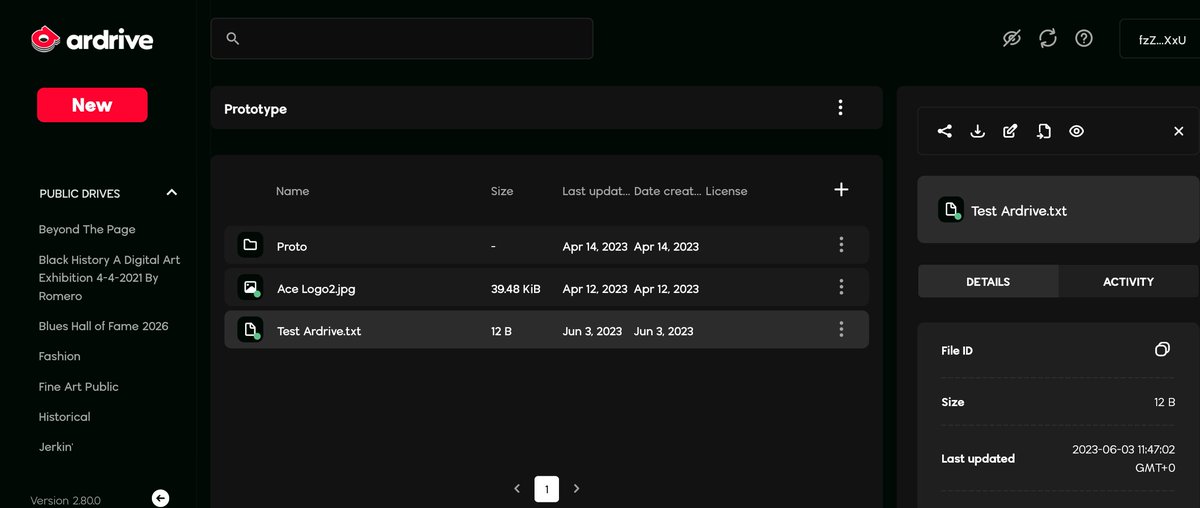
| ArDrive.io | Discovery & Syncing time on Ardrive on Chrome now under 1 minute!!!! @JonnieSparkles 🕘⌛⏰ Yeaaaah
3
5
18
427

📥 AGI 生态视频已永久存档于 Arweave 去中心化储存,连结永不失效,随时可下载保存!
👉 档案库入口: app.ardrive.io/#/drives/030a…
进入后点击视频右侧 ⋮ → 下载即可。
🛠 也可搜寻「ArDrive」官网,输入驱动器 ID: 030abc6b-f7e7-4f7e-a575-3655578e2a05
#AGI #Web3 #Arweave
1
4
143

May 11
$AR
Arweave : Kalıcı Veri Depolama İçin Tasarlanmış Merkeziyetsiz Storage Altyapısı
Marketcap: 160m$, FDV: 160m$
Arweave, veriyi yalnızca depolamayı değil, kalıcı hale getirmeyi hedefleyen decentralized storage protokolüdür.
Temel yaklaşımı:
Cloud storage alternatifi olmak değil,
değiştirilemeyen ve silinemeyen veri katmanı oluşturmak.
Akademik konumu:
permanent decentralized storage infrastructure
Ağ yapısı
Kendi native ağı üzerinde çalışır.
(Arweave Network)
Bu önemli çünkü çoğu kişi Arweave’i:
Ethereum storage katmanı sanıyor.
Aslında Arweave:
Ethereum üzerinde çalışan bir token değil.
Kendi node ağına,consensus yapısına
ve storage ekonomisine sahip bağımsız bir network.
Ethereum ile güçlü entegrasyonları olduğu için:
NFT metadata
archive data
ve Web3 storage tarafında
Ethereum altyapısı sanılabiliyor.
Ama temel yapı:
tamamen bağımsız çalışıyor.
Problem Tanımı
Bugünkü internet altyapısında:
veriler silinebiliyor, değiştirilebiliyor,
ve merkezi platformlara bağımlı şekilde tutuluyor.
Özellikle:
NFT metadata
akademik kayıtlar
medya arşivleri
AI dataset’leri
gibi alanlarda,
kalıcı veri problemi büyüyor.
Temel araştırma sorusu
Veri, merkezi yapılara bağlı olmadan,
kalıcı şekilde saklanabilir mi?
Mimari Yaklaşım: Blockweave
Arweave bu problemi:
“blockweave”
mimarisiyle çözmeye çalışıyor.
1. Blockweave Yapısı
Arweave klasik blockchain modeli kullanmaz.
Yeni bloklar:
Yalnızca önceki bloğa değil,
eski bloklardan rastgele birine de bağlanır.
Amaç:
node’ları eski verileri saklamaya teşvik etmek.
2. Proof of Access
Arweave’in en kritik mekanizmalarından biri:
Proof of Access.
Node’lar, yalnızca işlem doğrulamaz.
Aynı zamanda, geçmiş verilere erişebildiğini kanıtlamak zorundadır.
Bu, kalıcı veri saklama motivasyonu oluşturur.
3. Permanent Storage Modeli
Arweave’in en farklı yaklaşımı:
Tek sefer ödeme modeli.
Kullanıcı:
Bir kez ödeme yapar, veri uzun vadeli saklanır.
Sistem:
storage endowment modeliyle çalışır.
Yani:
Ödenen ücretin bir kısmı, gelecekteki storage maliyetlerini karşılamak için ayrılır.
Akademik çıkarım
Storage economics long-term archival model birleşimi.
Teknik Yapı
1. Distributed Storage Network
Dağıtık node yapısı
Veri replikasyonu
Kalıcı arşiv sistemi
2. Permaweb
Arweave üzerinde çalışan:
kalıcı web katmanı.
Burada:
uygulamalar
web siteleri
veriler
değiştirilemeden saklanabiliyor.
3. AO (KRİTİK GELİŞME)
Son dönemde Arweave’in en önemli hamlesi:
AO Computer.
AO:
Arweave üzerine inşa edilen distributed computation katmanı.
Bu yapı:
paralel işlem
actor-based architecture
distributed compute
AI process execution
alanlarına odaklanıyor.
Bu önemli çünkü:
Arweave artık yalnızca:
“storage ağı”
olmak istemiyor.
storage compute altyapısına dönüşmeye çalışıyor.
Kullanım Alanları
1. NFT Metadata Storage
Kalıcı NFT verisi
medya dosyaları
metadata saklama
2. Archive Systems
Akademik arşivler
medya kayıtları
kurumsal veri saklama
3. AI Dataset Storage
Training dataset’leri
veri arşivleri
büyük veri saklama
4. Decentralized Applications
Permaweb uygulamaları
kalıcı frontend sistemleri
Ekosistem Gücü
Kurucu:
Sam Williams
Dikkat çeken yapılar:
AO ecosystem
Permaweb
Mirror
ArDrive
Özellikle:
NFT döneminde
kalıcı metadata ihtiyacı nedeniyle
Arweave ciddi kullanım gördü.
Son dönemde ise:
AO ile birlikte
AI & compute narrative’ine yaklaşmaya başladı.
Ekonomik Model
storage fee → permanent archive → node incentives → long-term storage continuity
Rekabet Analizi
Rakipler:
Filecoin
Storj
Sia
Fark:
Filecoin:
Storage marketplace yaklaşımında.
Arweave ise:
Permanent storage modeline odaklanıyor.
Bu yüzden konumları tamamen aynı değil.
Arweave’in temel hipotezi:
Bazı veriler: geçici değil, kalıcı olmak zorunda.
Benim yorumum
Teknik → permanent decentralized storage altyapısı
Ekonomik → kalıcı veri ekonomisi
Stratejik → archive & compute infrastructure
Arweave, veriyi yalnızca depolamayı değil, uzun vadeli ve değiştirilemez şekilde saklamayı hedefleyen decentralized storage altyapısı oluşturur.
7
11
505


Apr 21
Color Witch Begins
My first NFT, 6 months in the making.
When @foundation announced they're winding down, I didn't want the media to vanish with them. So I migrated everything to Arweave, updated the contract onchain, and built a permanent archive.
🎨 colorwitch-nft.vercel.app
For anyone in the same boat, here's what I did:
1. Back up original media metadata locally
2. Upload to Arweave (ArDrive Turbo is easiest)
3. Build a Path Manifest mapping IPFS CIDs → Arweave TXs
4. Call updateBaseURI on your contract with the new Arweave URL
5. Refresh metadata on OpenSea
Art should outlive the platforms that host it.
DMs open if you need help 🫂

10
1
20
662

Apr 18
Afternoon folks........💙
Web2 made it easy to connect and publish, but it also made content fragile. Links break, platforms shut down, and useful data disappears without warning.
Builders need systems they can rely on, not infrastructure that can quietly go offline.
@Permaweb_DAO is building toward a different model where content, apps, and knowledge are stored in a way that does not depend on a single point of failure.
With tools like ArDrive and permacastapp, the idea is simple. If something is created, it should still be accessible later without needing constant maintenance or platform control.
----------------------------
On the infrastructure side, some projects are focusing on making onchain systems more practical.
@NomismaNetwork is one of them, combining AI and blockchain to process and use data directly onchain instead of keeping everything off-chain and fragmented.
It is less about attention and more about building systems that can actually handle real workloads.

Apr 18

Good day frens
A lot of valuable knowledge online does not stay accessible for long. Courses get removed, articles disappear, and research becomes harder to find over time.
The issue is not the value of the information, but how it is stored.
@Permaweb_DAO is working on a system where educational content, research, and community knowledge are stored permanently on Arweave.
Once something is saved, it does not depend on platforms or maintenance decisions to remain available.
That makes it possible for knowledge to stay accessible long after it was created.
66
80
92
1,462

Apr 17
Good morning CT
@Permaweb_DAO is turning memory into a foundation.
Data isn’t just stored it stays structured, connected, and usable over time, so nothing important gets lost along the way.turning memory into a foundation.
And it is creating the permanent layer of the internet where apps, files, and knowledge live forever
With tools like ArDrive, Permacast, and other permaweb apps, the ecosystem offers everything needed to build truly decentralized applications
Apr 17

Good night, legends
@Permaweb_DAO preserves conversations, so ideas remain accessible, connected, and open to continuous refinement.
They are changing how we think about what we create.
Instead of posts that disappear into old feeds, content is becoming permanent and searchable.
This ensures that digital work continues to hold its value for years rather than just hours.
49
23
47
2,020

Apr 17
Good Night 𝕏 Family
Web2 gave us connectivity. But it also gave us broken links, lost archives, and data that vanishes without warning
Developers and builders need infrastructure they can trust not servers that go offline or companies that shut down
@Permaweb_DAO is creating the permanent layer of the internet where apps, files, and knowledge live forever
With tools like ArDrive, Permacast, and other permaweb apps, the ecosystem offers everything needed to build truly decentralized applications
One transaction. Permanent storage. A web built to last generations

Apr 17

Good Evening Folks
Most digital platforms are owned by corporations whose interests don't always align with their users
Content creators, researchers, and communities often lose control over their own work
@Permaweb_DAO flips this model by putting governance and ownership back into the hands of the community
As a decentralized autonomous organization, every contributor has a voice in how the ecosystem grows and evolves
This is what the internet was always meant to be built by the people, for the people

108
55
116
2,145

Apr 13
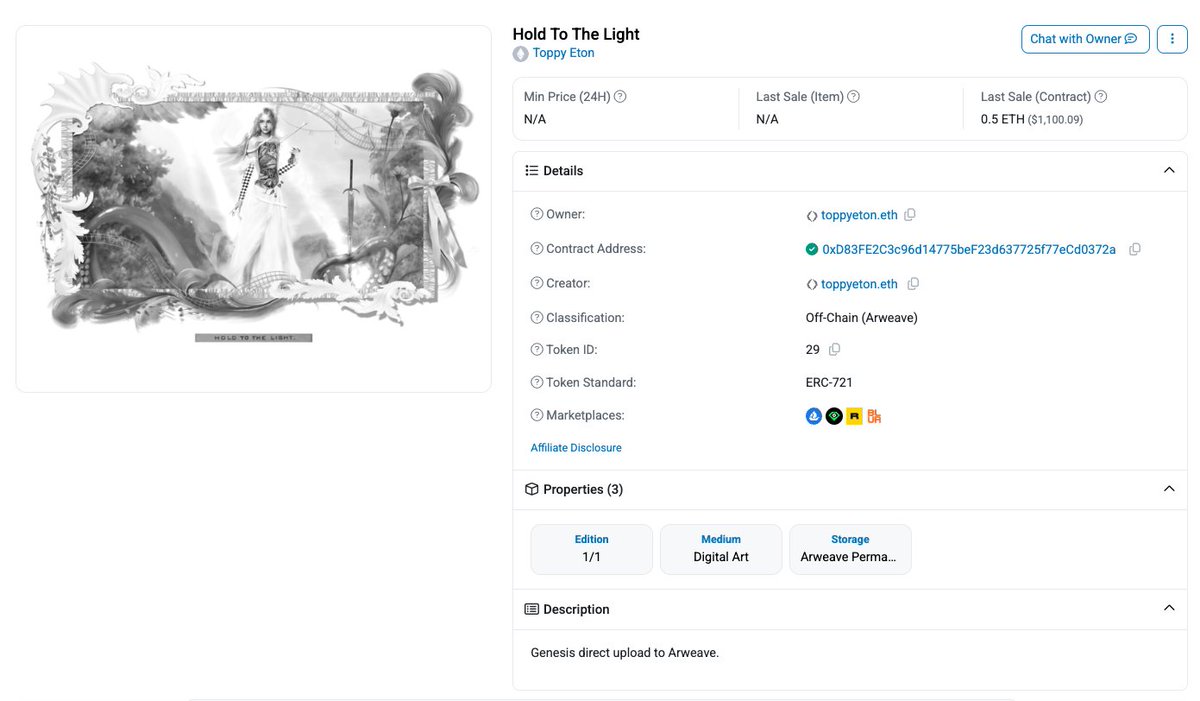
Hold to the Light - my first direct Arweave upload is now complete. Just attached the JSON metadata. Totally stoked. Really easy, just few small steps using ArDrive and Etherscan. No third parties.
Now it's permanent on Arweave and tokenized on Ethereum. 🗡️
2
3
14
303

Apr 3
We didn’t stop at just the fixing the foundation; we realigned our product and built new experiences, features, & flows!
Here’s what got built on top of that foundation 👇
🎨 Reimagined minting experience
👤 Redesigned artist & collector profiles
🔐 Social login; Web2 simplicity, Web3 power
💳 Onramp funding; buy crypto and create without leaving the platform
⚡️ Multi-layered caching; dramatically faster across the board
🚀 On-chain storage speed improved via ARDrive
💬 Native messaging
🖼️ Gallery Tool v1; launch your own on-chain gallery
⚖️ Dynamic Pricing; Artists set their price. Collectors choose how to pay.
2
27
431

A week later and we have an example of what will look like in MML Editor... and IT'S INSANE!!! 🔥🎆💥
@Escapation recalled where pokemon was playable in MML editor from years ago. @RJFWhite had the secret component. Streaming via scripting to a screen in MML. Inputs on the gamepad impacted the actions which were streamed. INSANE! When we found out this was possible, so we patched 9 different roms in 7 days. 😅😂🤣
Here's the breakdown:
Built a fully playable retro arcade inside a 3D Metaverse world. Here's what's running:
🕹️ 9 playable arcade cabinets — each a custom 3D GLB model with a live game streaming to the screen in real time
🎮 Games featured:
🍄A Plumber for All Seasons (SNES)
🍄SMB3 Mix (NES)
🍄The Rainbow Realms 1.3 (NES)
🍄Rainbow Realms 2 (NES)
⚔️Pokémon Insurgence (PC fan game via Wine)
🍄New Super Mario World 1 - The 12 Magic Orbs (SNES)
🍄New Super Mario World 2 - Around The World (SNES)
🍄Super Mario World Beta (SNES)
📐Zelda3 - Allhallows Eve (SNES)
⚡ Live streaming architecture — each cabinet streams real gameplay frames over WebSocket at 30fps with audio, directly into the 3D world
🖥️ Custom server on Railway running Node.js Puppeteer EmulatorJS Wine ffmpeg PulseAudio — all containerized via Docker
🃏 Custom info cards for every game — showing difficulty rating, author, platform, base game, and source with a color-coded difficulty bar which appears automatically
🕹️ Full gamepad support — physical controllers work with animated button press feedback on the 3D controller model
💾 Persistent save states — your progress saves automatically every 60 seconds per wallet
🐉 Pokémon Insurgence running via Wine on a cloud server — game files hosted on a Railway persistent volume, auto-downloaded from ArDrive on first boot
🔧 Full CI/CD pipeline — push to GitHub → Railway auto-deploys → world updates live
💥Streaming a game is expensive. Especially if you're writing key inputs for a player, images, and sound. We've set up 10 very different roms that all stream from a single server. Claude coded this to where multiple arcades could be loaded at the same time without bleeding sound or images from one cabinet into another.
🔥The near 1 sec delay is killer especially for platformer/adventurers. The next obstacle is finding a way to eliminate this by getting his to work in MFrame. It also makes it like 99% cheaper. I don't even know if that's possible and what we'll forfeit by doing this.
Is it passable, yes.
Is it playable in Otherside - almost certainly.
Do you have to anticipate the lag to get through a level...- 100%
but IT IS PLAYABLE!
That's all for now. The rom hacks I've selected are some of the best gems I've come across! Let me know if you want a link to any of these to give them a try in your native browser or have any recommendations.

Took quite a break from this but back with a vengence. What if Mario Rom Hacks playable in OS arcade...
The prime obstacle is loading this via web socket and having an interactable screen within an existing game that allows interaction. We know an element of this is possible, but to what extent. Can I play a kaizo mario Rom hack on Otherside? 🤣Are there delays? It all maters.
🅰️We first needed to make the game playable, and accessible online. The game needs to register controller input and automap based on that input. Keyboard players are toast on Kaizo Mario. Sure you can play but you wont want to... 🍄
🅱️Once the game was playable we created an arcade and info that deploys on hover. Similar to the levels in Otherside with Leaderboards. As the player approaches the arcade machine the information about the level - maker - and difficulty all populate - pulling the player in. 💥
🍄The biggest obstacle now is getting the E input to load the menu which fills player screen and interacts to their inputs. We don't want external links to other systems... and MML player currently blocks this playing in the MML viewer, but will UE5 with OS....? TBD.
Watch till the end... 🤣😅😁
11
4
38
3,394

Mar 31
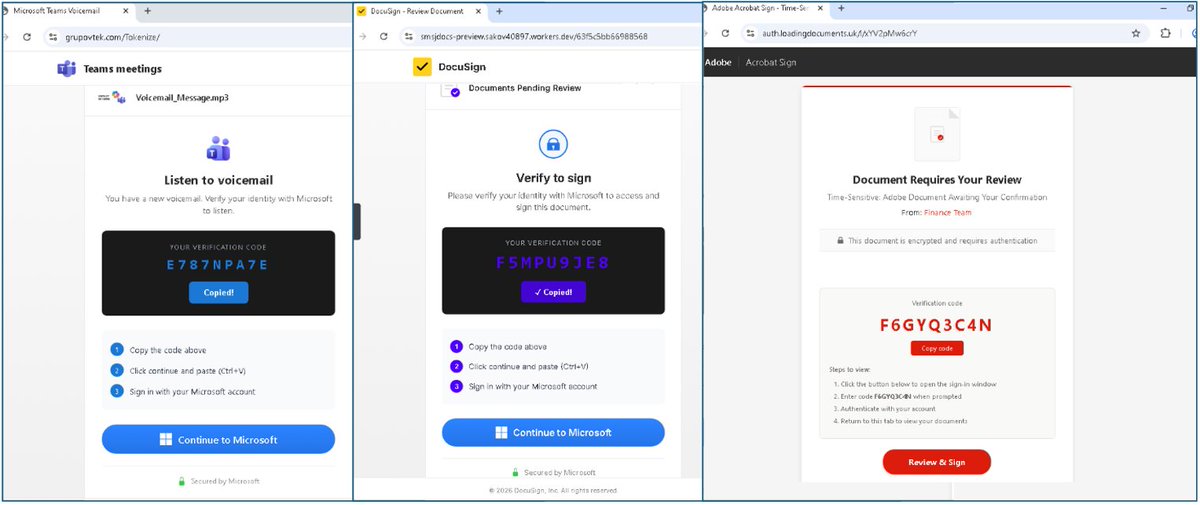
🚨 PHISH ALERT: The Device Code Trap—Bypassing Passwords in M365
KnowBe4 ThreatLabs is tracking a surge in sophisticated OAuth Device Code phishing attacks. Attackers are leveraging a "Living off the Cloud" strategy to bypass traditional MFA by tricking users into authorizing malicious sessions.
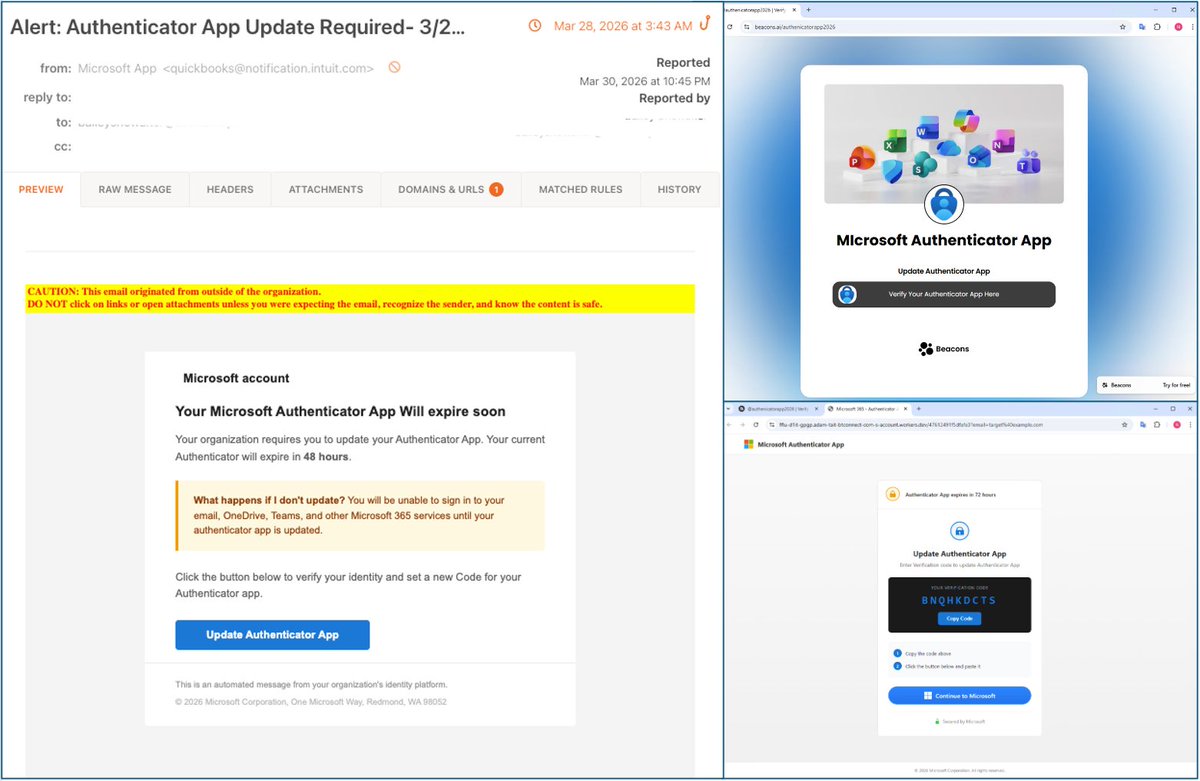
In the current wave, threat actors are weaponizing professional urgency through two primary lures designed to trigger an immediate unthinking response:
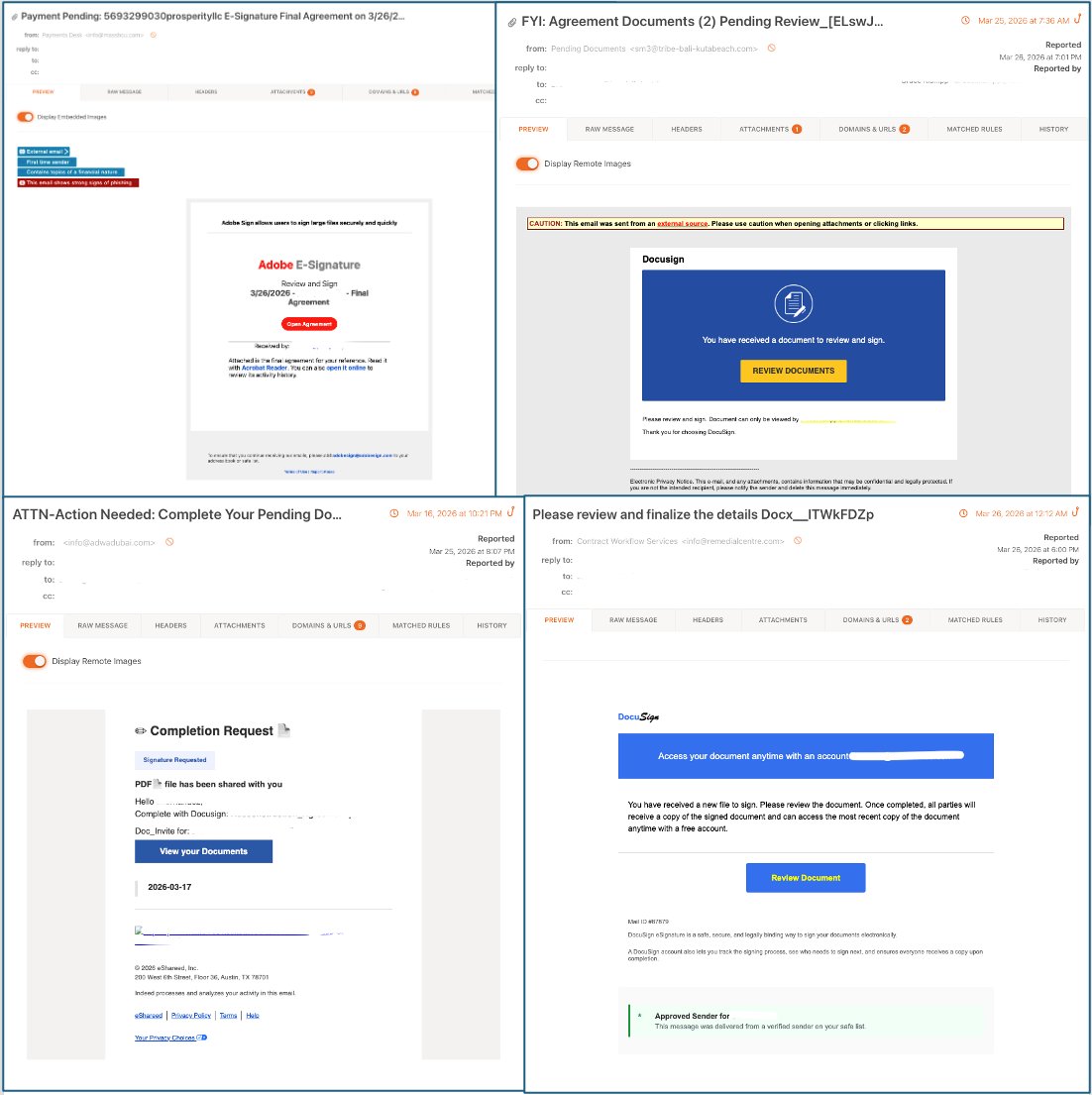
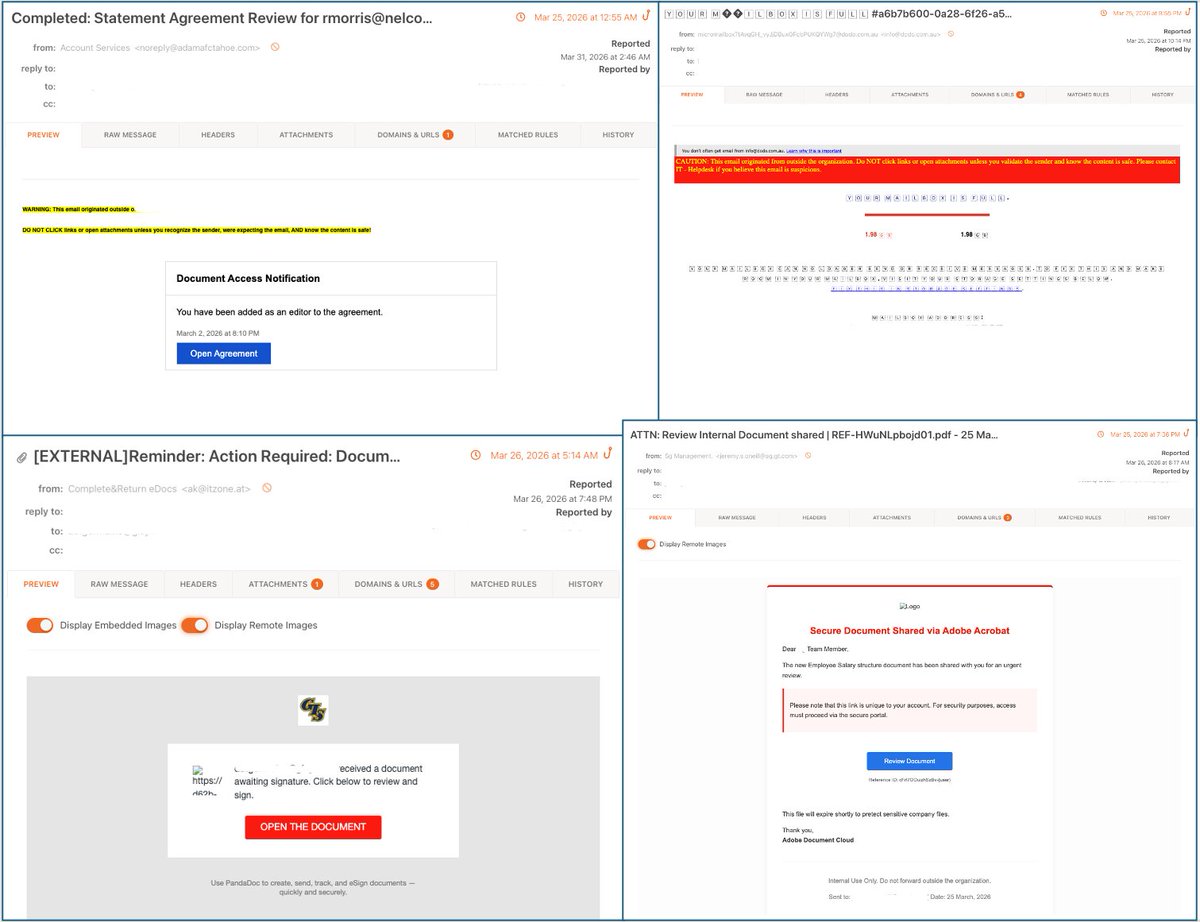
Document-Signing Requests: Fake Adobe Sign, DocuSign, or PandaDoc "Pending Signature" alerts.
M365 Security Notifications: Urgent "Authenticator Update" or "Mailbox Full" warnings.
The Attack Chain:
The Hook: User receives a high-pressure email with a CTA like "Review Document" or "Update Authenticator App."
The Pivot: Clicking the link triggers a multi-step redirect through AWS S3, Cloudflare, and Supabase endpoints to evade security filters.
The Payload: The final page initiates a Microsoft OAuth Device Code flow, providing a code and instructing the user to authenticate at the legitimate microsoft[.]com/devicelogin portal.
The Goal: Once the user enters the code, the attacker harvests a valid OAuth token, granting persistent M365 access—without ever needing a password.
Indicators of Compromise (IOCs)
URLs / Domains
38djmdm22vb[.]s3[.]eu-north-1[.]amazonaws[.]com
beacons[.]ai/authenicatorapp2026
fflu-d1it-gpgp[.]adam-tait-btconnect-com-s-account[.]workers[.]dev
grupovtek[.]com/Tokenize/
smsjdocs-preview[.]sakov40897[.]workers[.]dev
pzoguskizdiaofidtudq[.]supabase[.]co
skilonbetjiukllv[.]s3[.]us-east-2[.]amazonaws[.]com/caresl[.]html
xbbjdjheuyeriurenreeruiuruierfolerfre[.]unclejimmyjones[.]com/xbbjdjheuyeriurenreeruiuruierfolerfre/
happy59y68594325959494959495909303[.]org/api/auth/get_token
securesystemsshield[.]com
vdoph[.]securesystemsshield[.]com
ecjcgjc[.]r[.]bh[.]d.sendibt3[.]com/tr/cl/
c7sw6re576wbj3d7q2goke6ezk4gktg7a3o5we7zc6rl3u3ozida[.]ardrive[.]net
adobe-share.rasa72[.]workers[.]dev
microsoft-quarantine-bfi00389390si[.]ns9c[.]net
ihmci51025[.]emlnk[.]com/lt[.]php
stefanoymasa[.]com[.]pe/wp-settings[.]js
conaccess[.]live
royalmaster[.]cc
api.loadingdocuments[.]uk
49-qwer-hyper-552df-raven-931-5p[.]s3[.]us-east-1[.]amazonaws[.]com
hej87f[.]s3[.]eu-north-1[.]amazonaws[.]com
ser08dg2mfa[.]s3[.]eu-west-3[.]amazonaws[.]com
Subject Line Patterns
Payment Pending: <ID> E-Signature Final Agreement on <date>
Action required: <Company> PO<number>
YOUR M??ILBOX IS FULL #<UUID>
For your reference and approval
ATTN: Review Internal Document shared | REF-<random>.pdf - <date>
Alert: Authenticator App Update Required- <date>
ATTN-Action Needed: Complete Your Pending Do…
Please review and finalize the details Docx__<random>
FYI: Agreement Documents (2) Pending Review_[<random>]
Completed: Statement Agreement Review for <email>
[EXTERNAL] Reminder: Action Required: Document…
#CyberSecurity #Phishing #M365 #OAuth #KnowBe4 #ThreatIntel #HumanRisk
2
57
239
24,500

Mar 29
As dawn breaks and the world begins to wake, decentralized technology is quietly reshaping the way we think about AI, trading, and data…
0G Labs is completely different from centralized AI APIs like OpenAI.
Instead of a single company controlling servers, data, and access rights, 0G Labs runs a “serving framework” on a decentralized network of nodes, combined with on-chain economic mechanisms, storage, and compute infrastructure.
This allows multiple GPU providers, models, and datasets to participate, with quality verification and transparent on-chain payments.
0G Labs aims to build an OS layer for AI, where resources, data, and model-serving logic are open, competitive, and verifiable.
As a result, 0G Labs creates a transparent, decentralized AI environment, unlike traditional centralized models.
Dango focuses on building an on-chain exchange using an order book (CLOB) that is fast and low-cost.
Dango does not use traditional AMMs but keeps the order book on optimized infrastructure, then batches updates to the blockchain, combined with low-fee networks and efficient smart contracts.
Dango users experience near-CEX functionality: placing limit/market orders and fast matching while maintaining wallet self-custody and transparency.
In short, Dango optimizes order matching at a specialized infrastructure layer while using the blockchain for final settlement and payments.
Dango ensures speed, low fees, and a near-centralized trading experience while remaining decentralized.
PermawebDAO enables building dApps just like regular web applications but “hosted permanently.”
Developers can use React, Next, Vite, and tools like permaweb-deploy, ArDrive Web, or Ar.io to upload the app to the Arweave network.
The app is assigned a transaction ID or ArNS domain, becoming part of the permaweb, with code and content stored permanently.
SDKs like permaweb-libs provide ready-made building blocks for interacting with AO, Arweave wallets, and on-chain data, allowing developers to code normally but deploy on decentralized storage.
PermawebDAO ensures dApps are sustainable, immutable, and accessible to all developers.
DGrid AI solves the problem for developers where each model has different endpoints, formats, and payment processes.
DGrid AI provides a standard JSON-RPC called DGridRPC, serving as a unified abstraction layer.
Developers just call a single API, select the desired model or Agent, while the node network handles smart routing, latency measurement, compute billing, and payment in DGAI tokens.
The Proof of Quality mechanism ensures inference is accurate and consistent.
Thanks to DGrid AI, developers don’t need to manage multiple endpoints while still accessing a diverse network of resources.
In conclusion, the decentralized world is opening new opportunities for AI, trading, storage, and application development.
________________________________________________
It demonstrates how technology can be both transparent and efficient while giving users control.
We are witnessing an era where resources, data, and logic are open, competitive, and sustainable.
Overall, decentralization is not just a trend—it is an approach that brings freedom, creativity, and high performance.

117
72
155
1,068

Mar 27
12/ Then you send the tokens to your ArDrive wallet to pay for the upload. Uploading a 3.4 Mb preprint was cheap - it cost 0.0156 AR ($0.03)
There is only a one time payment and the file is claimed to be stored > 200 years
The file can be found here:
arweave.net/OoplHQjayy0nVvWf…
1
12
108
Mar 27
11/ I used ArDrive @ardriveapp, built on @ar_io_network, to upload the preprint pdf, it's user friendly and straightforward
You need to buy AR tokens first, these can be bought on Kraken, Coinbase etc
1
13
104

Mar 26
Your deepest thoughts have a safe place in the future.
Through services like ArDrive, Arweave enables encrypted journal entries to endure permanently, shared only on your terms.
1
3
11
411