
AVAX One Reveals 1-for-12 Reverse Stock Split $AVX, #AVAXOneTechnology, #AVAXOneTech, #AVAXOne, #AVAX crweworld.com/article/news-p…
46

Apr 30
Until the fnd admits that avaxone dat was a mistake , it will report its selling like the eth fnd and communicates why kevin seq left, it is all gibberish
2
41

Feb 16
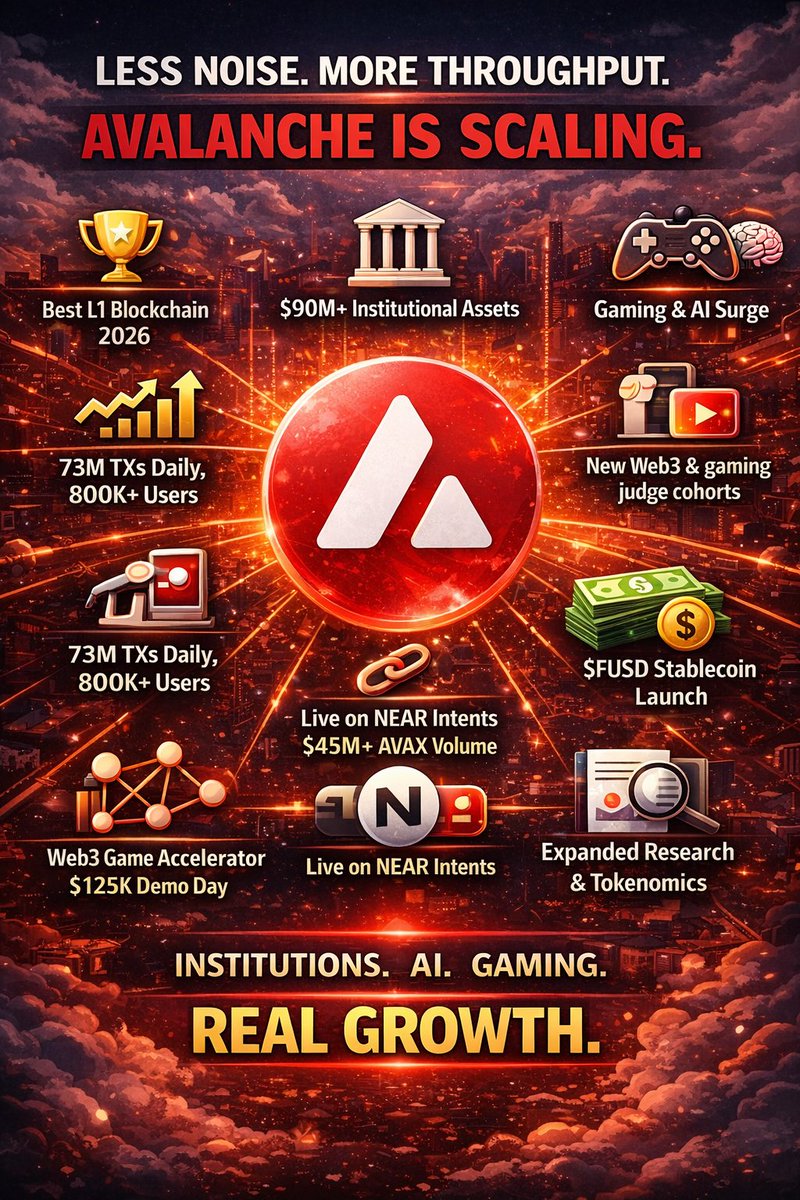
🚀 Avalanche Weekly Highlights, Bullish Signals for $AVAX
🌏 Asia’s first yield-bearing real-world stablecoin #FUSD just launched on Avalanche, backed by regulated institutional assets and designed for broad liquidity and yield within the ecosystem, pointing to deepening capital inflows and real-world usage.
📊 Institutional momentum continues — #Avalanche unlocked 1.67M $AVAX as part of its strategic distribution and RWA efforts, while major partners like Sumitomo and #AVAXOne expand validator infrastructure and staking participation.
💼 BlackRock’s BUIDL & Tokenized Assets continue to establish Avalanche as a go-to rails for institutional finance — the $500M #BlackRock 🏦 USD Institutional Digital Liquidity Fund (BUIDL) expanding onchain demonstrates real institutional deployment of capital.
📈 RWA growth hitting new scale — Avalanche’s real-world asset ecosystem has surpassed $1.3B in value, driven by tokenized money market funds and institutional products.
💡 If just 1% of the massive capital flowing through Asia were allocated into crypto, and a portion of that into Avalanche infrastructure and $AVAX 🔺 that could translate into trillions of dollars of new demand, institutional use cases, and global liquidity settling on Avalanche rails. (Hypothetical, but shows scale potential.)
📌 In short: this week reinforces a real-world adoption narrative, not just hype. Regulated stablecoin inflows, institutional tokenized funds, and ongoing #RWA expansion continue to validate #Avalanche as an infrastructure backbone, especially across Asia and traditional finance corridors.
$AVAX
2
8
68
994


VanEck $Avax ETF incoming.
This is gonna be the first $Avax only ETF.
It will be followed by Grayscale and Bitwise.
All three are great Crypto companies with great reputations, client bases and reach to liquidity.
These ETFs will be accompanied by AvaxOne and AVAT treasury companies in bringing a lot of additional demand as well as attention to $Avax.

6
18
145
6,528
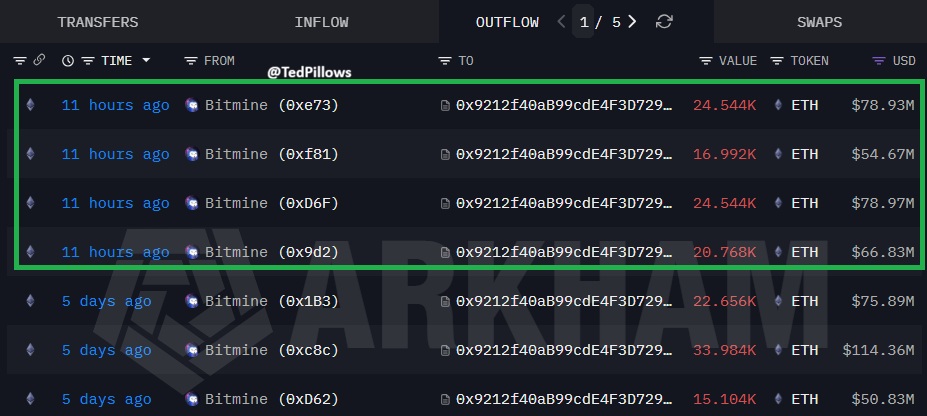
BitMine is holding $ETH price at $3000 for last 5-6 months otherwise $ETH price would not be very different than ALT prices are!
Avax DATs will play a similar role and we already felt it in down market, Avax is holding better than before and we just saw minor purchases by AvaxOne.
AVAT is still not in the market and AvaxOne has not aggresively started market buys.
Jan 20

BitMine has staked another $270,618,000 in $ETH today.
They have now staked $5,521,000,000 in Ethereum.
1
7
649


25 Nov 2025
Avax One Announces Major AVAX Acquisition and New Buyback Program to Drive Shareholder Value #Avalanche #AVAXOne
crypto-news-flash.com/avax-o…
2
173

24 Nov 2025
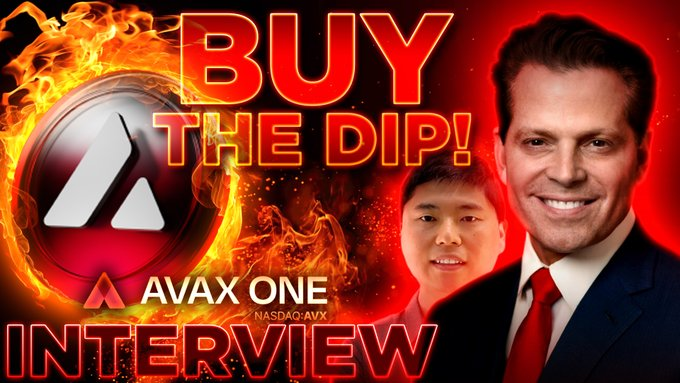
. @paulbarrontv features @Scaramucci and @zhang_matt as they break down @avax 's institutional rise, its Subnet architecture, and the future of the AVAXONE treasury .
Let’s take a look at what was discussed. 👇👇
Here is the direct English translation of the text you provided:
Intro: Paul Barron’s Market and Avalanche Analysis
Paul Barron: We are going to do a breakdown on Avalanche as the markets are melting down. Although Avalanche is one of the hardest hit, there are important points to look at. Before bringing in our guests, I want to go over these:
Stablecoin Market Cap: Continuing to climb on Avalanche. This is a metric suggesting we will see a major forward move once the price stabilizes.
Transaction Counts: Monthly transaction counts are continuing to increase while active addresses are stabilizing. This is generally good news.
RWA (Real World Assets): Avalanche is maintaining the 3rd spot on the league table, which is a sign of growth.
Japan Yen Volume: We are seeing volume starting to shift from Polygon to Avalanche. This is intriguing regarding where the market might go alongside the unwindings in Japan.
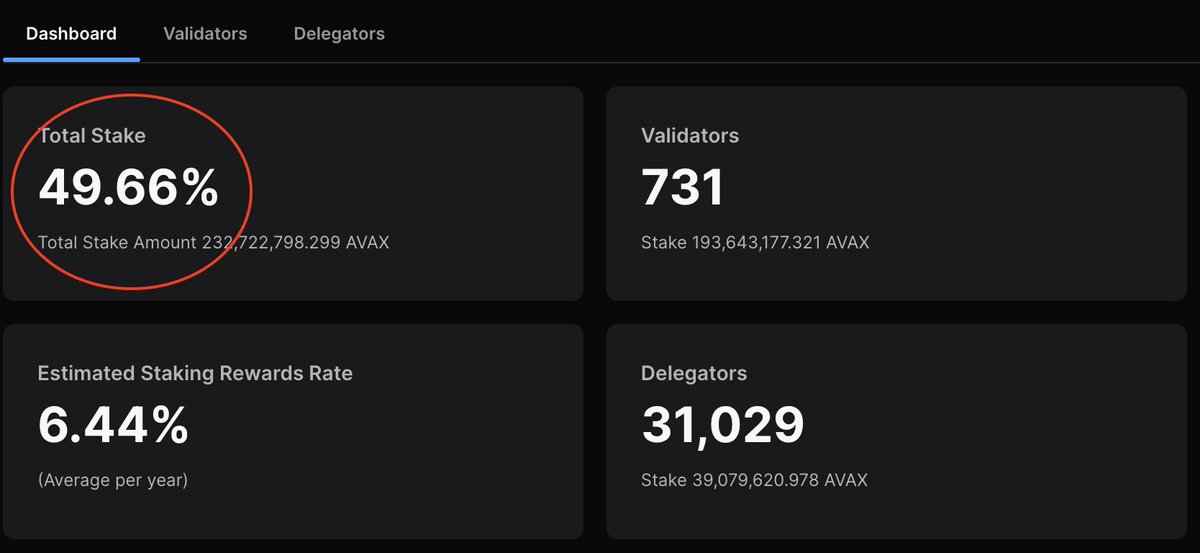
Staking and Fees: High staking ratios continue. When moving assets from places like Coinbase, Avalanche is still in the leading position regarding transaction fees (lowest fees).
Gaming (Game Awards): The game "Off the Grid" swept the awards, including Best Action Game. This is a slam dunk for Web3 gaming. ( @playoffthegrid )
So, to discuss what else could be bullish for Avalanche, we are bringing Anthony Scaramucci and Matt Zhang onto the show.
Q&A Section
Question 1 (Paul Barron): Anthony, let’s start with you. Many people currently view Avalanche as an underrated chain. Why is SkyBridge so bullish on AVAX?
Answer (Anthony Scaramucci): First of all, I liked the intro analysis, but I want to emphasize this to everyone: We experienced a tsunami hitting the markets starting October 10th. This blew everything up. #Bitcoin dragged down #Solana, #Avalanche, and others. The real question here is:
Are Avalanche’s fundamentals sound? Yes, you just presented that.
Is there institutional adoption? When Fortune 50 companies think about tokenizing their assets, equities, or bonds, do they think of Avalanche? Answer: Yes.
L1 Technology: Matt is more of an expert on this, but on Avalanche, you can do customizations that you can't do elsewhere. I am an old guy in this industry. What will my peers (late 50s, mid-60s) adopt? They will adopt things they can customize rather than generic things. That is why Avalanche will be a big part of the future story. This correction might be born from excess leverage or a market maker liquidation, but the trajectory is in our direction. This is a buying opportunity.
Question 2 (Paul Barron): Matt, regarding the Treasury strategy (Avax One - $ABX ), what are you doing differently from others?
Answer (Matt Zhang): As Hivemind, we have decades of Traditional Finance (TradFi) experience. We always approach blockchain with fundamental analysis. We looked at over 100 tech companies this year. At the beginning of the year, we turned down 4-5 foundations that came to us to manage their treasury structures. However, when the Avalanche team reached out in the summer, we wanted to work with them because we have known the team for years. We believe their chain combines what blockchain is actually supposed to do "real world utility" with the right Subnet designs. I quickly called Anthony, and Avax One (Nasdaq ticker: ABX) was born. The goal is simple and two-layered:
Token Accumulation: Accumulating AVAX tokens to increase the amount per share for our shareholders.
Having a Soul (Business Model): This is what differentiates us from other debt/treasury models. We want to build a future-proof business model. With shareholder approval, we are doing this: Finding undervalued Web2 fintech companies (remittance companies, payment companies, regional banks), and selectively acquiring them. This gives us cash flow and real profit. Thus, our company is valued on enterprise value, not just book value. Afterward, we bring these companies onto the Avalanche system to support the token and the ecosystem.
Question 3 (Paul Barron): Anthony, Wall Street is currently focused on tokenization and RWAs. However, Digital Asset Treasuries (DATs) have lost huge value (some down 96%). Do you think this model is experiencing an unwind?
Answer (Anthony Scaramucci): You shouldn't throw the baby out with the bathwater. Yes, some DATs are down 96% because they weren't designed correctly in the beginning. When the tide goes out, you see who is swimming naked. But Matt and I come from TradFi. We are looking at a tangible way to convert operating income from the token into accretive assets. These assets will also provide exponential earnings growth. This is at least a 2 to 5-year equity story. If you buy at this level now, you will benefit dramatically. When Coinbase went public, it was $400, then it fell to $80, and now it’s back to $400. Those who were brave enough to buy when everyone was badmouthing it won. This unexpected bear market we are experiencing is a wonderful opportunity for those who believe in long-term fundamentals like Avax One.
Question 4 (Paul Barron): Matt, is it hard to explain this strategy to investors who don't know the technology? How do you market it?
Answer (Matt Zhang): Remember the Dot-com bubble. Thousands of companies failed back then, but Google was born from that bubble. Looking back, we say "that was a bubble," but that doesn't mean the internet has no utility. On the contrary, we had an amazing 25-year internet era. The same will happen here. The current market needs to evolve. Many companies run by people without traditional finance experience, who barely know how to run an earnings call, will fail. As Avax One, we are one of the few (perhaps the only one) doing this with a full shareholder vote. We wanted to do everything the right way. We tell the story to the investor like this: We don't say "We are an Avalanche treasury." We say: "Do you want to invest in a company that will build the future on-chain financial economy?" The infrastructure used to build this vision just happens to be the Avalanche network, which is the best in town. We are flipping the logic; we aren't saying "accumulate tokens and then figure out what to do."
Question 5 (Paul Barron): Anthony, what is the pulse of Wall Street today? If you scored it 1 to 10? Did the recent crash scare them?
Answer (Anthony Scaramucci): If you are a crypto bear or you missed Bitcoin, this last month was great for you; the haters came out of the woodwork. But generally, Wall Street is moving in the right direction. Look at BlackRock (Larry Fink), Fidelity, and even VanEck's moves on Bitcoin. There is one thing being forgotten: "OG Bitcoin sellers" entered the market. They sold billions of dollars. Think of this like Venture Capitalists (VCs) who have waited a long time in an IPO and decided it is now time to sell. This recirculation of supply and it becoming more decentralized is actually better for long-term asset prices. Haters are gonna hate, but Wall Street is moving in the right direction.
Question 6 (Paul Barron): Elon Musk's (@elonmusk ) D.O.G.E. initiative and government blockchain usage are being discussed. Given Avalanche's infrastructure and past work with the US Commerce Department, could this be a big selling point for AVAX?
Answer (Anthony Scaramucci): Yes, but I am a realist. There are too many old people in the government. Donald Trump is closing on 80, Biden is 82, Nancy Pelosi is finally leaving at 85. Tell your children they are leaving the world to Chuck Grassley. However, as this older generation phases out and a younger group enters the government, what will they do? They will do what Elon Musk said; they will put everything on the fully transparent, distributed blockchain. And Avalanche will be at the forefront of this thanks to its customization capabilities (Subnets).
Question 7 (Paul Barron): Matt, what is your yield strategy? There are high rates in DeFi, will you use them?
Answer (Matt Zhang): We need to take a balanced approach. On one hand, yields are great; on the other, there are risks.
Native Staking: Since we will be one of the largest AVAX holders, we will participate in "Native Staking" (locking directly on the network). This isn't just about yield; it means participating in community decisions and supporting decentralization.
Extra Yield: We are looking for yields outside of native staking, but we will do this strictly on a "risk-adjusted" basis. We are engaging with DeFi founders and looking for ways to maximize Net Asset Value (NAV) and yield for the treasury, but we are cautious.
Question 8 (Paul Barron): Anthony, did you see Tom Lee's interview on CNBC? He described the market drop as a "glitch" and linked it to market makers. Do you think he handled the situation correctly?
Answer (Anthony Scaramucci): I think he was quite honest. I watched it twice. He was trying to explain this: Someone got burned very badly on October 10th-11th (likely someone connected to Traditional Finance). They are currently in the process of dumping inventory and deleveraging. This is an operational situation and takes a few weeks to clear out. Tom said 8 weeks, we are in week 6. I think the 81,000 level on Bitcoin could be the interim bear market low. The buying is there. ETFs are buying on a net basis. This will push the Bitcoin price up in the next 3-6 months. The calendar year-end might not be great, but I am very positive for the next 24 months.
For the entire broadcast. 👉 youtube.com/watch?v=4dQbwlZ8…
#AVAX #Web3 #Avalanche #Blockchain $AVAX
21 Nov 2025

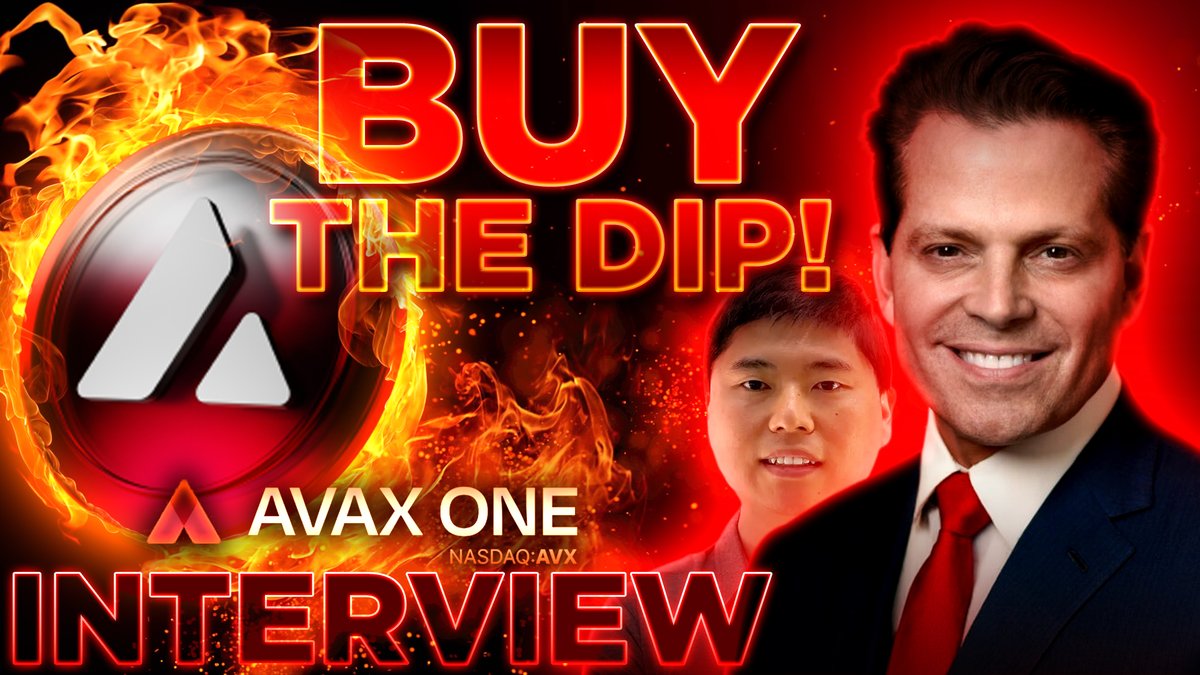
Gonna take a lot more hellfire to scare this treasury company🔥🔺 @avax_one @Scaramucci @zhang_matt
FULL INTERVIEW👉youtu.be/4dQbwlZ8CgA
@avax @hypha_sh @yieldyak_ @gam3sgg @avat_co @GamingOnAvax
5
28
80
2,267

23 Nov 2025
『AVAX財務企業「AVAX One」が自社株買いへ。63億円規模の勝負に注目』
●暗号資産アバランチ(AVAX)の財務企業 「AVAX One」 が 最大4,000万ドル(約63億円)の自社株買い を承認したと発表🔥
●今回の株価買い戻しは 1年間の公開市場での実行+柔軟な調整方式
必要に応じて規模を増やしたり期限を延長する可能性もあり、CEOは「長期戦略と株主価値への確信の表れ」とコメント。
●発表を受け、株価は 1.65ドルへ+10%上昇。
ただし、ティッカー変更前からの全期間では 約100%下落 している状況📉
▼背景まとめ
・旧社名:AgriFORCE Growing Systems → AVAX Oneにリブランディング
・ティッカー:AGRI → AVX
・今年9月、7億ドル以上のAVAX購入計画 を発表
・SkyBridge創設者 アンソニー・スカラムーチ が戦略委員会参加
・仮想通貨保有企業の自社株買いブームが継続中
●今回の動きは、企業側が「AVAXエコシステムに長期的な勝算を見ている」と示すシグナルとも読めます👀
●個人的には、株価が底付近での自社株買いは “内部からの強気サイン” と捉えています。
ただ、価格はまだ下落トレンドなので短期で飛びつくより 中長期のストーリーをどう見るかが重要かなと💡
みんなは、こういう“企業の買い戻し”ってどう評価する?
#AVAXOne #自社株買い #仮想通貨 #エコシステム
8
1,028
15 Nov 2025
I still dont get how will DATs get funds to buy tokens,avaxone has 200m $ in avax and no cash, any vc who wants to invest in avax can buy avax etf or the token from the market, what is the point of having a company that has to meet nasdaq regulations, paying executives
1
83

14 Nov 2025
GREAT NEWS!
Today, you buy at the same price as the AVAXONE DAT could 30 days ago!
I’m not crying, you’re crying.
2
12
228
2 DATcos: AvaxOne & Avat
4 ETFs: VanEck, Grayscale, Bitwise, REX-Osprey
All are in the works, gov shut down delayed etf approvals.
Imagine all 6 going in the market same time 👀
7 Nov 2025

Avax One. We just had a great trip to London and we are executing. You want this to be a great fundamental story.
1
17
1,109


30 Oct 2025
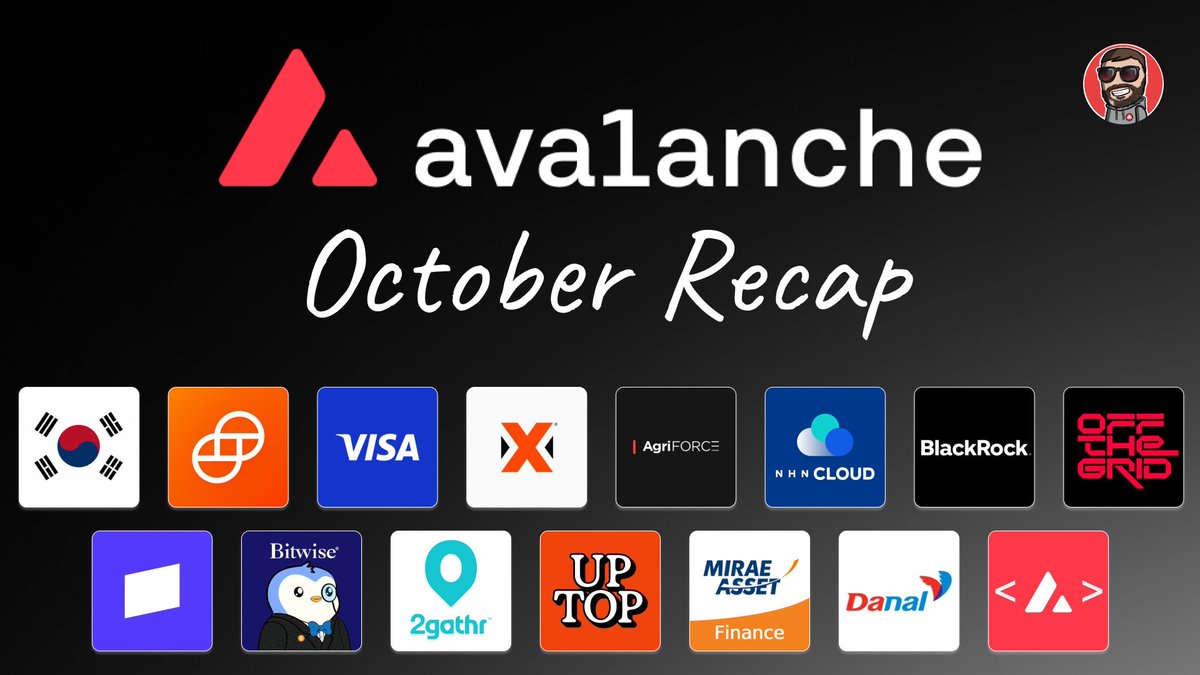
Avalanche October's Recap
> BlackRock BUIDL adds $500M in RWA, making Avalanche its 2nd position behind Ethereum
> NHN Cloud (Korea) launched a finance-grade validators for banks and government agencies
> Off The Grid breaks new ATH on Steam with 13.7k concurrent players, averaging 4.5M daily txns
> Stripe Crypto Onramp, direct fiat-to-AVAX purchases within apps, simplifying user onboarding
> Bitwise lists Avalanche Staking ETP on Xetra, further adding to its suite of regulated staking products
> 2nd DAT announced with AVAXOne/AgriFORCE, targeting a $700M AVAX treasury, expected Q1 '26 Nasdaq listing
> Mirae Asset Global Investments ($316B AUM): Signed MOU with Ava Labs for tokenized fund testing
> Total transactions surpass 7.5B
> RWA market value up 68% to $1.24B
> $12B in DEX volume (5th highest month ever)
> Surpassed 1B monthly transactions across the network
> KRW1, the first compliant won-pegged stablecoin in Korea
> Uptop launched Pistons Rewards, an NBA loyalty program
> Gemini now offers USDT and USDC transfers on Avalanche
> VISA enables payments in 4 stablecoins, powered by Avalanche
> TixBase ticker deployed its L1 to power the Copa America tickets
> 2GATHR, K-POP platform launched Titan L1 to bring fandom onchain
> DCOMM Platform, Sovereign L1 for trillions in commodity tokenization
> Avalanche powers Japan's stablecoin and TIS credit cards, a $2T annual volume market
> Danal Fintech, developing compliant stablecoin infrastructure on dedicated Avalanche L1 via AvaCloud
> Avalanche Granite upgrade going live on Fuji testnet today, bringing cheaper ICM, biometric capabilities and faster block time
Powered by Avalanche 🔺
56
85
285
20,827

28 Oct 2025
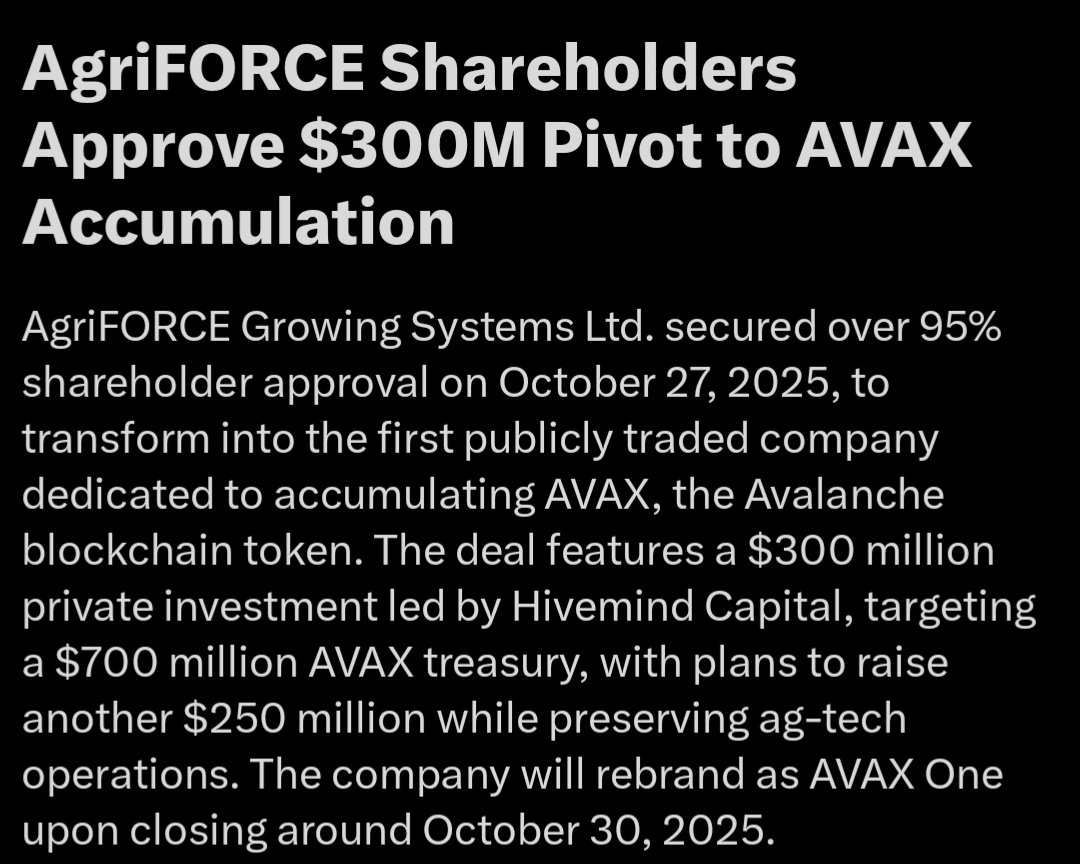
🔺I'm sure most people have seen the BIG NEWS FOR AVAX LOVERS! @avax_one is ditching the dirt for digital gold and turning into AVAX One, the FIRST public stock laser-focused on hoarding $AVAX tokens! Shareholders just gave a massive 95% thumbs-up on Oct 27, 2025.
What's the buzz? They're snagging $300M from big-shot investors like Hivemind Capital to build a $700M $AVAX war chest (that's like a giant piggy bank full of Avalanche coins).
More demand = $AVAX skyrocket, locking up supply and blasting prices UP! It's like MicroStrategy for Bitcoin, but for Avalanche 😍pure rocket fuel for gains. This could be AVAX's moonshot moment! #AVAXOne.🔺
28 Oct 2025

🔺GM $AVAX chads
As usual, Avalanche keeps cooking 🔺
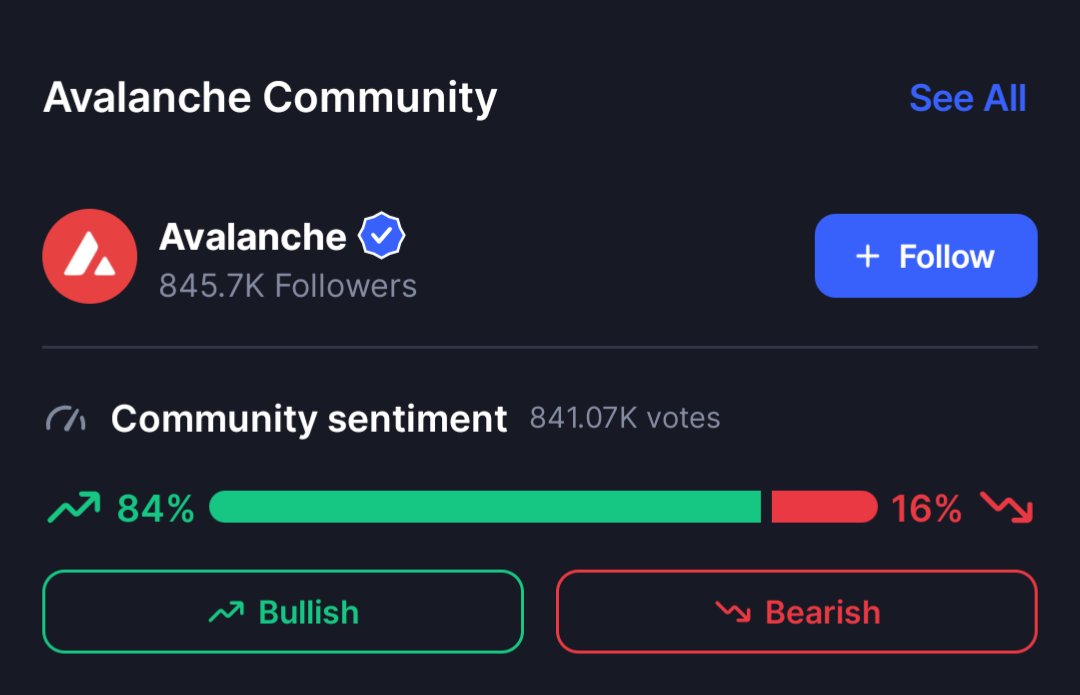
Seems like there's a wild pump coming , the community can see it and it's just too obvious.
If you are an Avax Chad and you are looking for what to believe in, believe in the community (something is coming just be active)🔺
2
6
225