


6 Nov 2025
Would you like to know about the decentralized identity model?
You have to listen to me attentively.
It a new model, inspired by blockchain technology, first surfaced in 2015.
(The FIDO,Fast IDenfication Online. Alliance started in 2013; however, it uses a hybrid
approach where connections are peer-to-peer but key management is performed centrally by the FIDO Alliance rather than by a blockchain.)
This model no longer relied
on either centralized or federated identity providers but was fundamentally decentralized.
It accelerated rapidly, assimilating new developments in cryptography, distributed
databases, and decentralized networks.
It began spawning new decentralized identity
standards such as verifiable credentials (VCs) and decentralized identifiers (DIDs)
However, the most important difference in this model is that it is no longer accountbased.
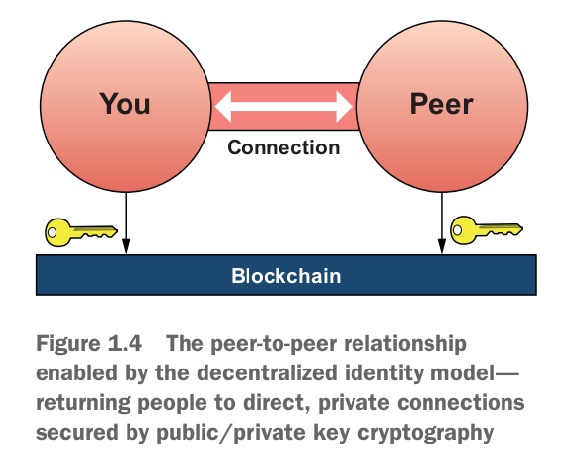
Instead, it works like identity in the real world: i.e., it is based on a direct relationship between you and another party as peers
Neither of you provides,controls, or owns the relationships with the other.
This is true whether the
other party is a person, an organization,
or a thing.
In a peer-to-peer relationship, neither
of you has an “account” with the other.
Rather, you both share a connection.
Neither of you fully owns this connection.
It is like a string that you are both holding, if either one of you lets go, the
string will drop.
But as long as you both
want it, the connection will persist.
Peer-to-peer connections are inherently decentralized because any peer can connects
to any other peer anywhere, exactly how the internet works.
But how does this
become an identity layer?
And why does it need blockchain technology?
The answer lies in public/private key cryptography: a way of securing data via mathematical algorithms based on cryptographic keys held by each party.
Instead of using
blockchain technology for cryptocurrency, identity management uses it for decentralized public key infrastructure (DPKI).
In the next few chapters, we’ll go into this in
greater detail. But in essence, blockchain technology and other decentralized network
technologies can give us a strong, decentralized solution for
Exchanging public keys directly to form private, secure connections between any
two peers
Storing some of these public keys on public blockchains to verify the signatures on
digital identity credentials (aka verifiable credentials) that peers can exchange to
provide proof of real-world identity
Ironically, this means the best overall analogy for the decentralized identity model is,
in fact, exactly how we prove our identity every day in the real world: by getting out
our wallet and showing the credentials we have obtained from other trusted parties.
The difference is that with decentralized digital identity, we are doing this with digital
wallets, digital credentials, and digital connections
@wallchain
@idOS_network
5
1
8
92

22 Oct 2025
@wallchain_xyz app.wallchain.xyz/ @kyparus @max_bevza @leaf_swan
wallchain is about tracking and boosting mindshare for projects
and it’s currently a hot project itself
@cjhtech @trylimitless limitless.exchange/
For everyone who ever wished prediction markets didn't make you wait,
@trylimitless
👇
The internet broke identity by design.
Today our digital data is:
1. Accountbased (create new profile everywhere)
2. Platform-controlled (they own your data)
3. Single-use (data gated in silos)
@idOS_network gidos
@HeyElsaAI
We had a great time doing a live demo of Elsa at Toronto DAO 🇨🇦
@TheDhawalS
showed how Elsa’s AI-powered DeFi assistant is changing the way people interact with crypto, making it simpler, smarter, and more human. Link to the demo in the next tweet
@HeyElsaAI @cryptomit @Ox_SBM
@JulianLeitloff
@kloutgg
gKloutio
Our next alpha release will be the closest step towards trading trends we've ever had. We could have released a half baked launchpad or just another prediction market months ago. But we're building something completely new, and it'll be worth the wait. Klouted.
@unreadyplayer @a_captaincook @Solanaott @kloutgg klout.gg/ t.me/klouted docs.klout.gg/
33
22
19
76

22 Oct 2025
idos_network says the internet broke identity by design today our digital data is accountbased platformcontrolled and singleuse.idOS wants to fix that by giving you one verified identity you control use anywhere and never give away.reclaim with idOS
@idos_network
3
17
74


20 Mar 2025
🔍 Incident IQ is hiring Manager, Demand Generation (Full Time - On-site)
🔗 Apply Now: skillexchange.xyz/job/manage…
#Hiring #Jobs #JobSearch #Marketing #SaaS #Education #MartechTools #DigitalAdvertising #AccountBased Marketing #ProjectManagement
1
2
39

5 Jun 2024
💡 Mit unseren #AccountBased #Sales #Kampagnen gehen wir diese Frage gezielt an und verhelfen dir dabei, deine Umsatztätigkeit auf ein solides Fundament zu stellen und Systeme aufzubauen, die sich skalieren lassen.
👉 eu1.hubs.ly/H08_mgV0


2
2
32
28 May 2024
💡 Mit unseren #AccountBased #Sales #Kampagnen gehen wir diese Frage gezielt an und verhelfen dir dabei, deine Umsatztätigkeit auf ein solides Fundament zu stellen und Systeme aufzubauen, die sich skalieren lassen.
👉 eu1.hubs.ly/H08_n5b0


2
3
30
10 May 2024
💡 Mit unseren #AccountBased #Sales #Kampagnen gehen wir diese Frage gezielt an und verhelfen dir dabei, deine Umsatztätigkeit auf ein solides Fundament zu stellen und Systeme aufzubauen, die sich skalieren lassen.
👉 eu1.hubs.ly/H08_n0L0


2
2
24
29 Jun 2023
🆕im Blog: Wäre es nicht einfacher, sich auf einige wenige, sorgfältig ausgewählte potentielle Kunden zu konzentrieren, die das #Wachstum deines Unternehmens massgeblich beeinflussen könnten? Dann dürfte der #AccountBased-#Sales-Ansatz...
hubs.ly/Q01WbZFm0

2
2
37

Het CORONAFONDS
van de EC heeft de #financiering voor een Accountbased CBDC
al geregeld?!
Bye Bye PRIVACY⬇️😡
2 Feb 2023

Een #contante #CBDC of een #inlog #CBDC 🤔 #financiering #privacy #onvriendelijke #token #Kaag #overheid #leugen
1
2
131

29 Jan 2023
Using Account-Based Marketing To Capture B2B Sales
#b2bsales #sale #b2b #marketing #accountbased #sales #capture #account #accountbasedmarketing #b2bsale app.quuu.co/s/mJMKZG
1
2
15

23 Nov 2022
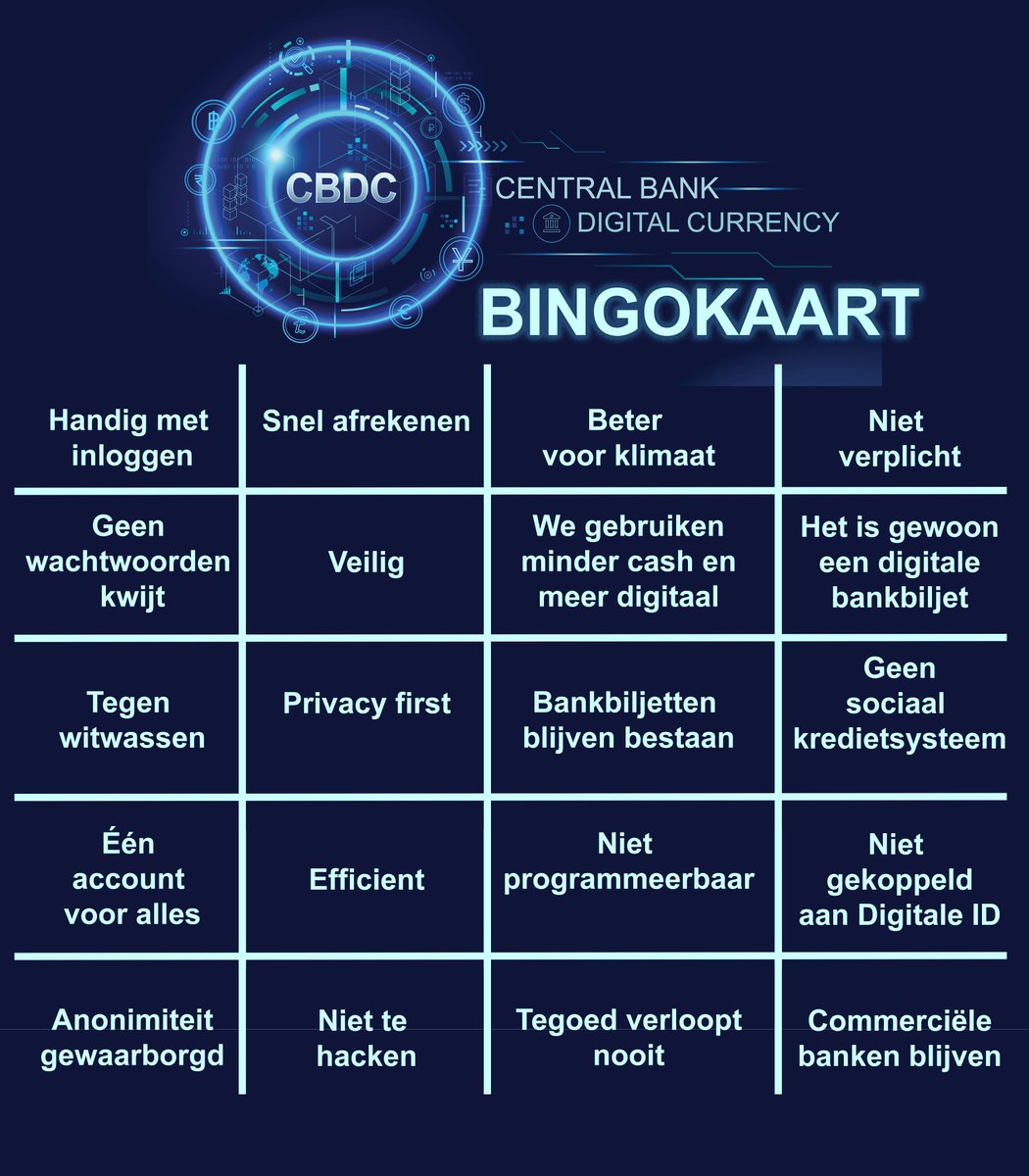
Het wordt accountbased "Een brede acceptatie kan ook betekenen dat de overheid uiteindelijk de
digitale euro gaat gebruiken voor betalingen van belastingen, premies," @blckbxnews @ArnoWellens #CBDC #CBDCDEBAT
1
2
7

31 Oct 2022
Unlike VBM, if ABM doesn’t pay off, it can be a serious misallocation of resources.
#accountbased #volumebased #marketing #personalizemessaging #marketingprofessional
Read full article here: salariasales.com/account-bas…
1
2

10 Oct 2022
Features like live activity feeds let you know what your sales team is doing at any given moment. social.metranomic.com/aad861… #accountbased #b2bmarketing #seo
3

16 Aug 2022
ICYMI, our best #Founders #Workshops yet, with sales experts @LarsNilsson65 and Travis Henry talking about how companies can accelerate #salesdevelopment through #AccountBased Sales Development.
Link to Blog: medium.com/dnx-ventures/dnx-…

1
2

28 Jun 2022
@RollWorks launches tool to help B2B @HubSpot users act on engagement signals bit.ly/3OHW0Rm
#hubspot #abm #accountbased
2

22 Jan 2022
1
1

3 Jan 2022
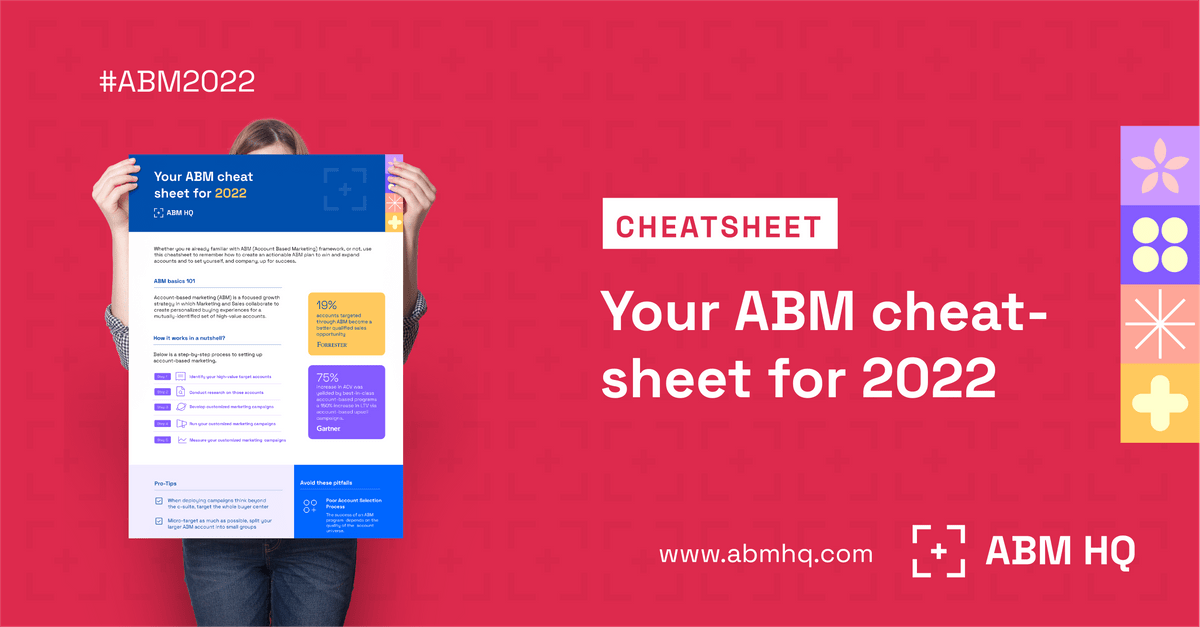
Marketers, use this cheat sheet to rethink and gain fresh insights on how to create actionable ABM for 2022 and execute the plan with ease for the rest of the year.
#abm #productmarketing #accountbased #saasmarketing #techmarketing #startups #saas
(link in 💬)
ALT Your ABM cheatsheet for 2022 by ABMHQ
2