
Feb 27
Deep learning. Adaptive models. Millisecond execution. Efficiency will no longer be lost.
#DeepLearning #AdaptiveModels #MillisecondExecution #AlgorithmicEfficiency #AIInfrastructure

5
44

25 May 2025
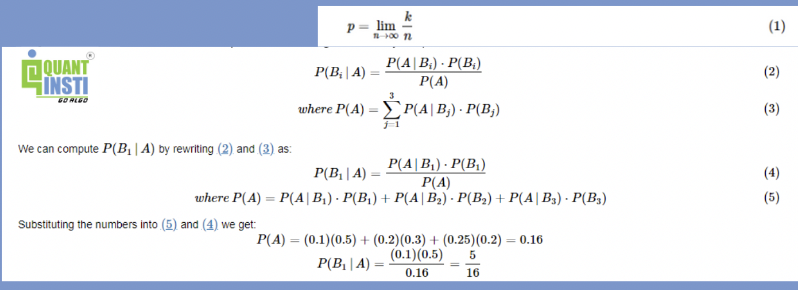
🔄 Conditional Probability: How New Information Updates Your Forecasts
In trading and data-driven decision-making, probabilities shift as new information emerges. 📈
For example, consider a stock with a 60% estimated chance of rising.
The updated estimate might increase if a major investor takes a large position.
This reflects Conditional Probability in action:
P(Stock rises | Major investor buys in) > P(Stock rises)
🌦️ A weather analogy:
It might rain 30% of the time. But after seeing dark clouds, that estimate could increase.
Data points like earnings reports, insider activity, or macro news can update probability estimates in trading.
Tools often used for this kind of updating include:
🔸 Bayesian inference
🔸 Regime-switching models
🔸 Real-time signal weighting
These approaches support adaptive systems that update as new information becomes available.
👉 Interested in exploring how such ideas are used in trading?
💡 Learn more with Quantra’s “Getting Started with Algorithmic Trading” 🚀
Link: quantra.quantinsti.com/cours…?
💬 Share your thoughts or questions below!
#QuantitativeTrading #MachineLearning #BayesianInference #DataDrivenDecisions #RiskModeling #AlgorithmicTrading #MarketAnalysis #Finance #TradingSystems #QuantFinance #AdaptiveModels #ProbabilityInFinance #QuantitativeAnalysis #FinanceCareers
2
327

1 Dec 2024
🚀 Embracing Uncertainty using Adaptive Models
In this podcast episode with @TopTradersLive, I had the opportunity to explore with Niels the fascinating world of adaptive models and the importance of embracing uncertainty in trading. It’s not every day you get to stray off the beaten path and challenge more traditional ways of thinking about markets, and I’m incredibly grateful to Niels for providing the platform to do just that.
We dive deep into:
🔹 Why uncertainty is a trader's best ally.
🔹 How adaptive models can shift your perspective on market dynamics.
🔹 Practical insights for navigating complexity and chaos.
🎧 Listen now: atstradingsolutions.com/the-…
#SystematicInvesting #TrendFollowing #AdaptiveModels #EmbracingUncertainty
2
5
20
1,044

8 Nov 2024
BiRNA-BERT: Adaptive Tokenization for Efficient RNA Language Modeling
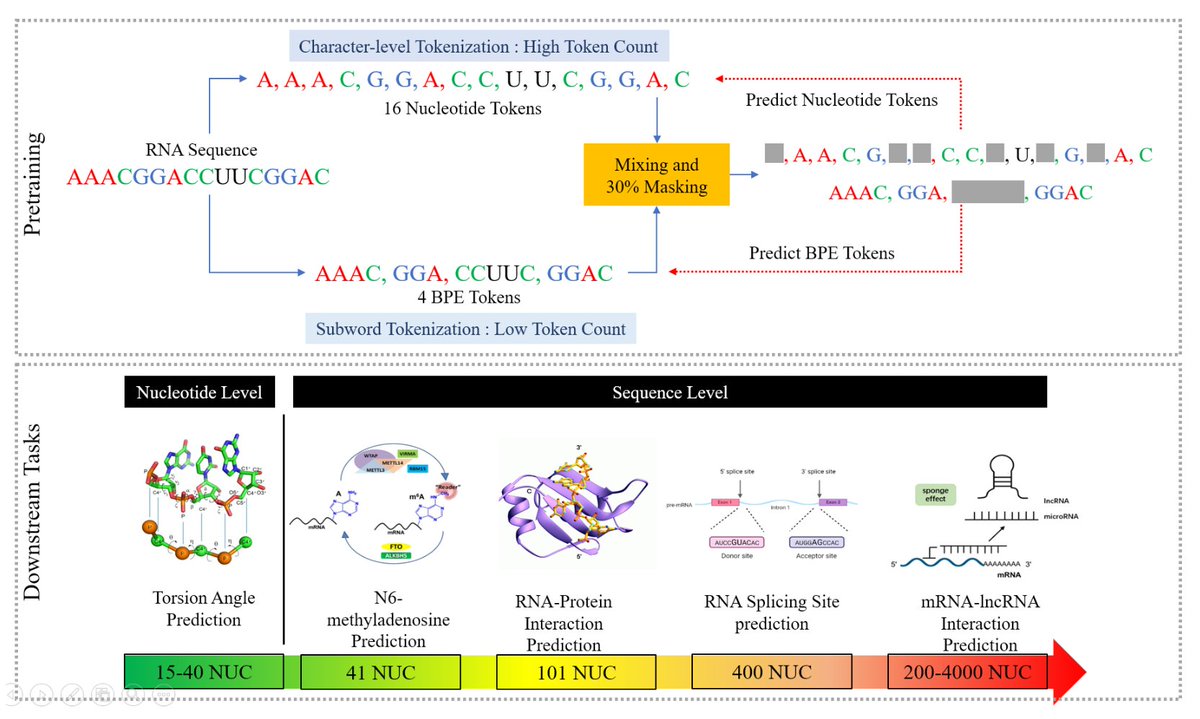
1. BiRNA-BERT introduces a dynamic tokenization strategy to handle RNA sequences of varying lengths efficiently. By employing both nucleotide-level (NUC) and byte-pair encoding (BPE) tokenization, the model adapts to the sequence length, utilizing NUC for shorter sequences and switching to BPE for longer ones, thereby avoiding the need for truncation.
2. The model leverages Attention with Linear Biases (ALiBi) to expand context windows without retraining, allowing BiRNA-BERT to handle extended RNA sequences, setting new benchmarks across long-sequence tasks like miRNA-lncRNA interaction prediction.
3. BiRNA-BERT achieves state-of-the-art performance in RNA structural and functional tasks, outperforming models that are up to six times larger in parameter size while using 27 times less pre-training compute. It surpasses existing RNA foundation models like RNA-FM and RiNALMo in both efficiency and accuracy.
4. Nucleotide (NUC) tokenization is shown to be more effective for high-granularity tasks such as RNA 3D torsion angle prediction. Meanwhile, BPE tokenization improves computational efficiency on long sequences, showcasing the flexibility and strength of BiRNA-BERT’s dual-tokenization approach.
5. This model paves the way for more adaptable, resource-efficient RNA models, meeting the unique demands of biological sequence analysis without compromising performance on short or long RNA sequences.
@YueDongCS @SazanMahbub @MdTokiTahmid64
📜Paper: openreview.net/pdf?id=GR6WcB…
#RNASeq #MachineLearning #Bioinformatics #Tokenization #BERT #AdaptiveModels
5
1,033

30 Oct 2023
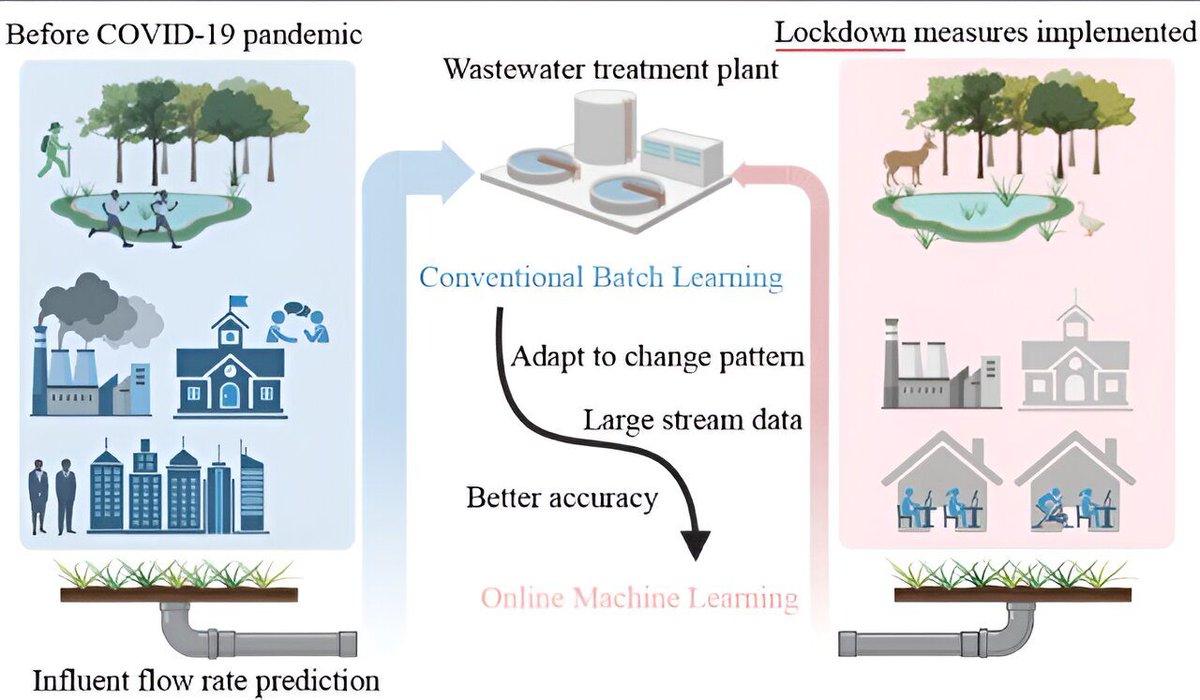
Unlocking Wastewater Intelligence: Advanced Predictive Models for Changing Influent Flow Rates
#adaptivemodels #AI #artificialintelligence #COVID19 #datadrivenmodels #decisionsupport #Engineering #influentflowrates #llm #machinelearning
multiplatform.ai/unlocking-w…
ALT AI News
1
2
244

13 Oct 2020
IS Predict GmbH on #Google local.google.com/place?id=14…
#predictiveanalytics #analytics #ispredict #predict #selflearning #selfadapting #adaptivemodels
2

9 Jul 2019
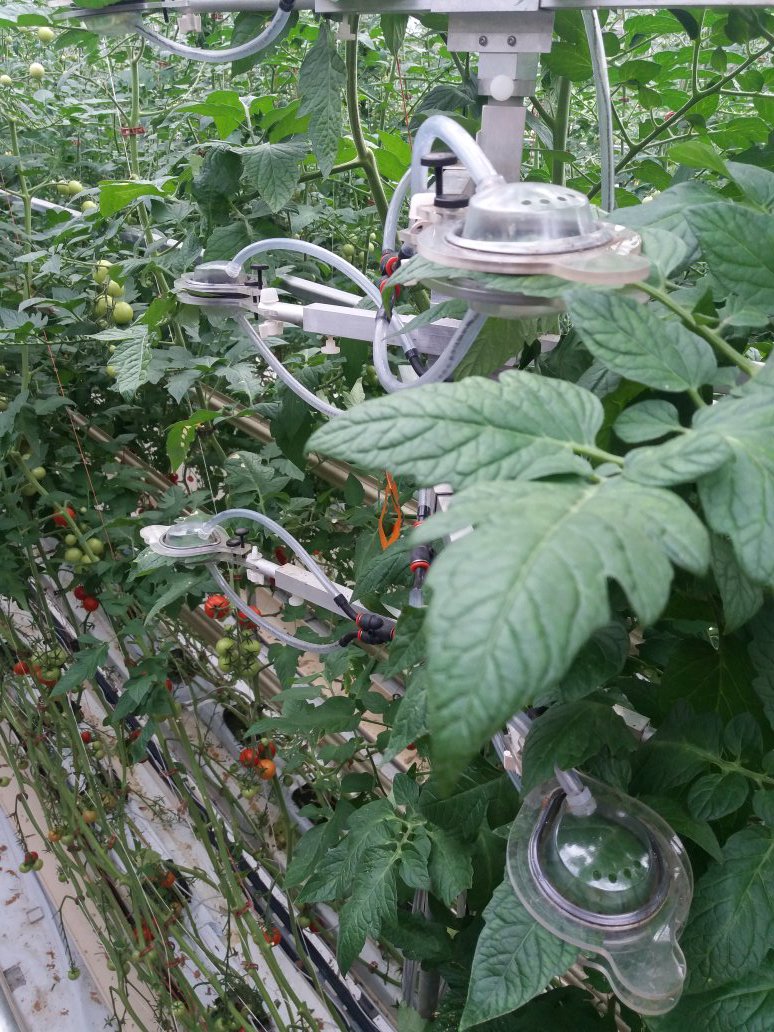
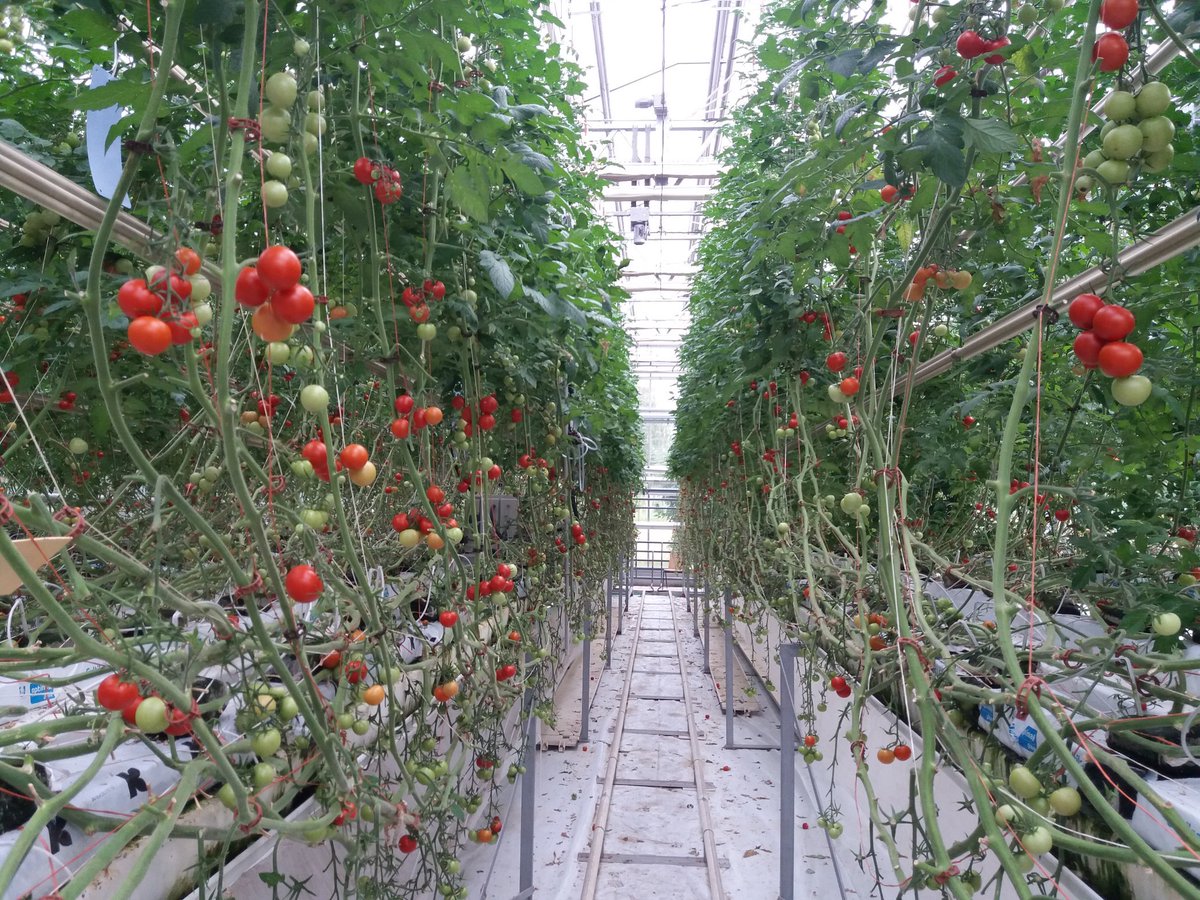
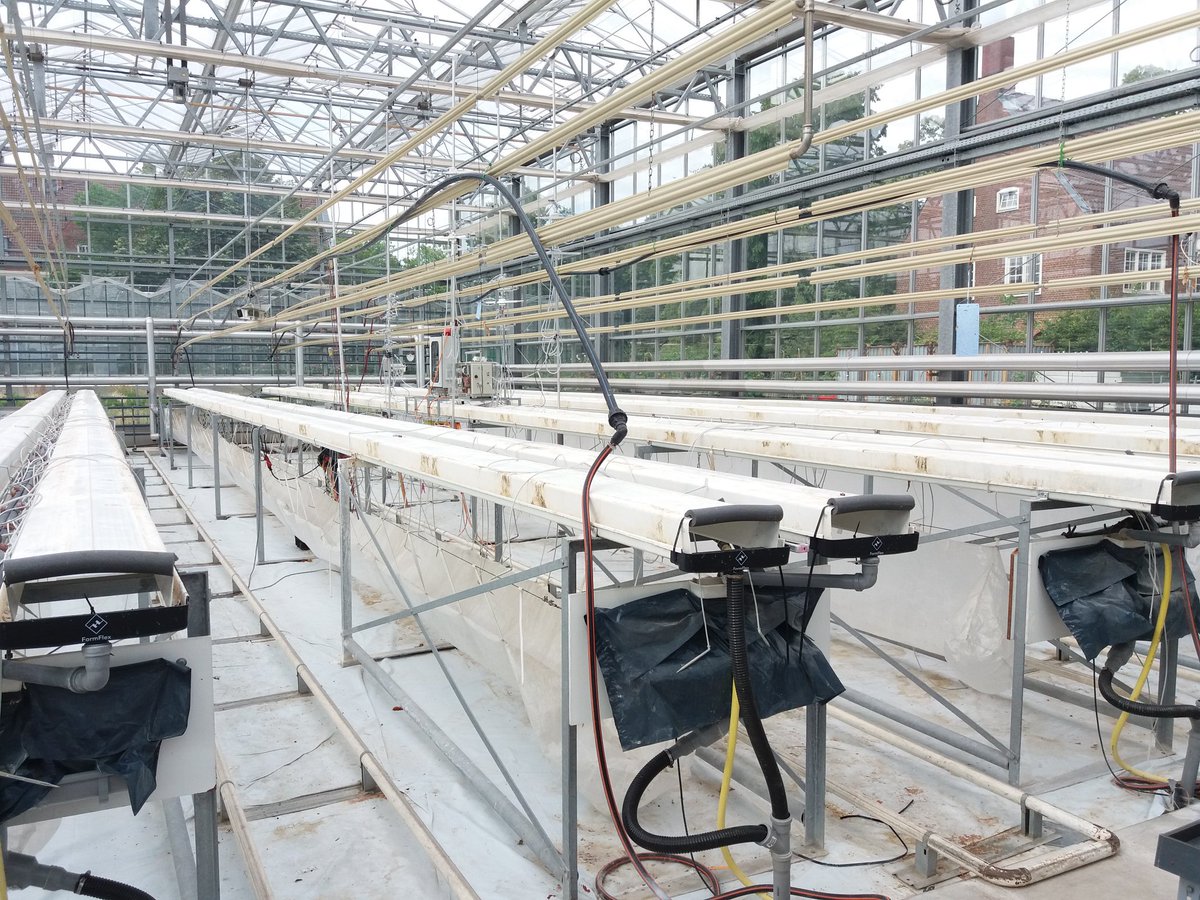
Thanks @LuisMirandaNet for the tour at the greenhouses at the @HumboldtUni and for sharing data from these nice sensors and control systems for our #adaptivemodels! @PredictiveRobot @SantAnnaPisa
3
5