
vidence and Outcomes
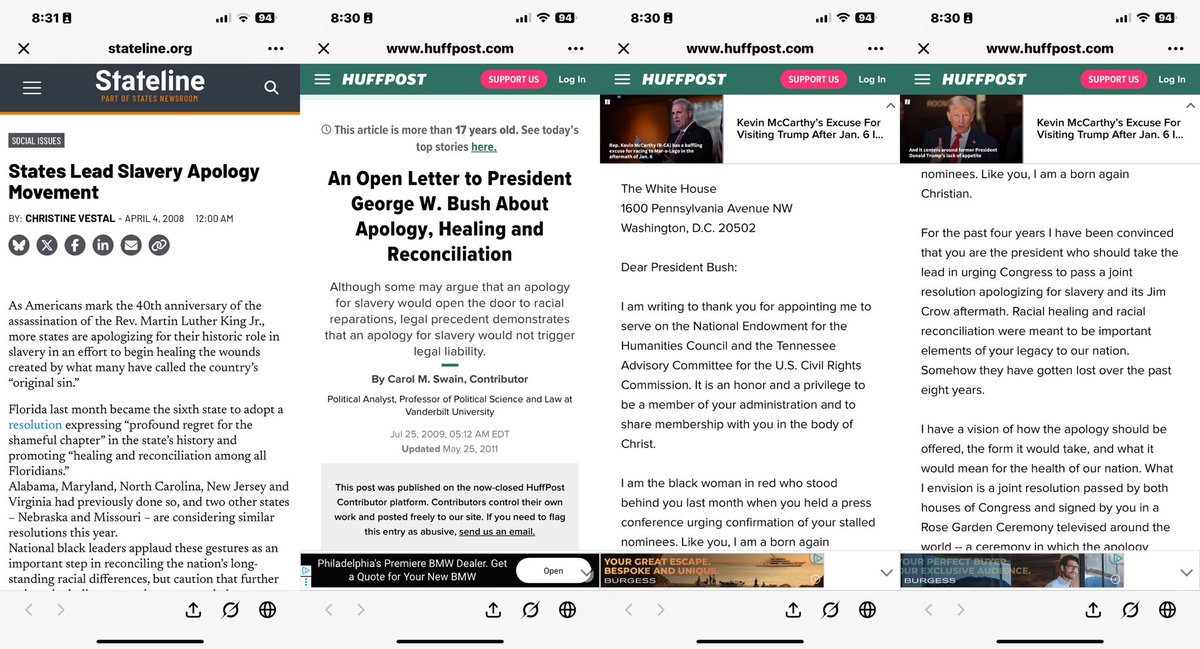
Data on post-slavery progress (Black wealth, education, homeownership gains pre- and post-1960s; persistent gaps tied to family structure, culture, policy failures per Thomas Sowell, Loury, Swain) undercuts claims of unchanged “systemic” causation demanding endless redress. Many reparations proposals show weak additionality—symbolic gestures poll better than cash transfers, and targeted aid (e.g., opportunity-focused) outperforms race-based ones without backlash.7
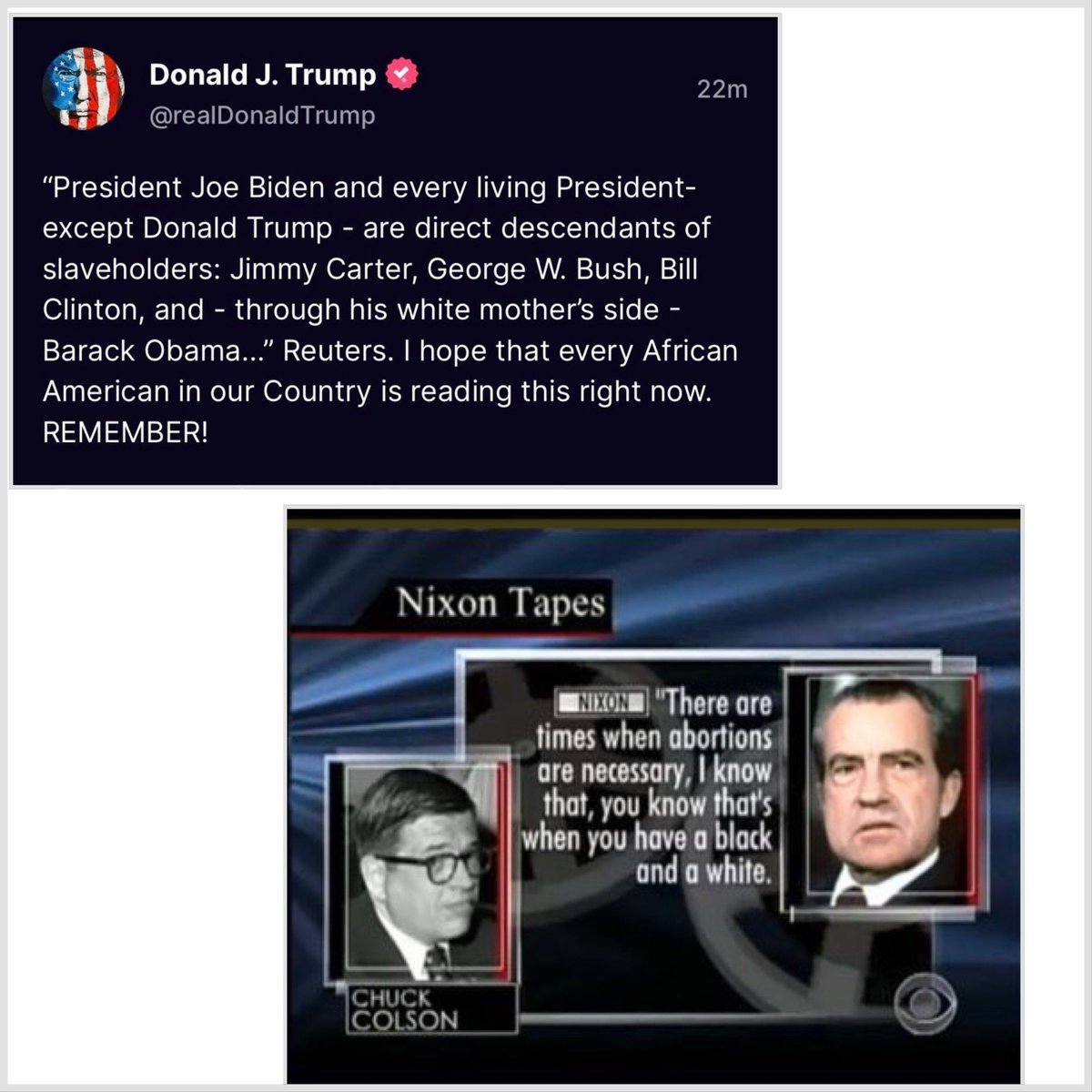
Swain’s trajectory—poverty to scholar, Democrat to conservative critic of DEI/CRT while upholding moral history—exposes the fraud of totalizing narratives. The “same exact framework” did not persist unchanged: Moral reconciliation threads endured, but activist/academic capture injected zero-sum identity power analysis that prioritizes division and guilt over evidence, agency, and unity. Memory-holing the moderate history (Swain, state apologies framed positively then) serves today’s polarization. Christians and truth-seekers should reclaim the full record: Repentance for sins yes; weaponized history for power, no. This isn’t pulling punches—it’s refusing false binaries that obscure what actually heals.
13

Buying cheap carbon credits is the fastest way to fail an ESG audit. Here is what institutional buyers actually look for.
Additionality. The project would not exist without your funding.
Permanence. The carbon is removed for centuries, not just a few years.
Verification. A third party standard like UNFCCC tracks the exact serial number.
Stop wasting money on PR and start buying compliance.
17

Jun 13
Sovereign capital should only ever act in additionality
Jun 13

But Anthropic was built with private capital not government subsidies. One creates wealth. The other spends it.
36

Jun 12
The SBTi/REC debate is why I keep arguing that decarbonisation cannot be judged by headline targets alone.
Annual RECs can clean up reported Scope 2 faster than the grid serving the load actually changes. Hourly matching exposes that tension, but also exposes the limit: companies cannot solve grid constraints by accounting rules alone.
The real question is where additionality has failed. If corporate demand is rising, clean-power claims need to show whether procurement is actually adding capacity, flexibility or firm supply where and when the system needs it, not just reallocating clean attributes over a year.

Corporate climate scheme SBTi walks delicate tightrope with new rule book ft.trib.al/gAAjeZR
24

Jun 12
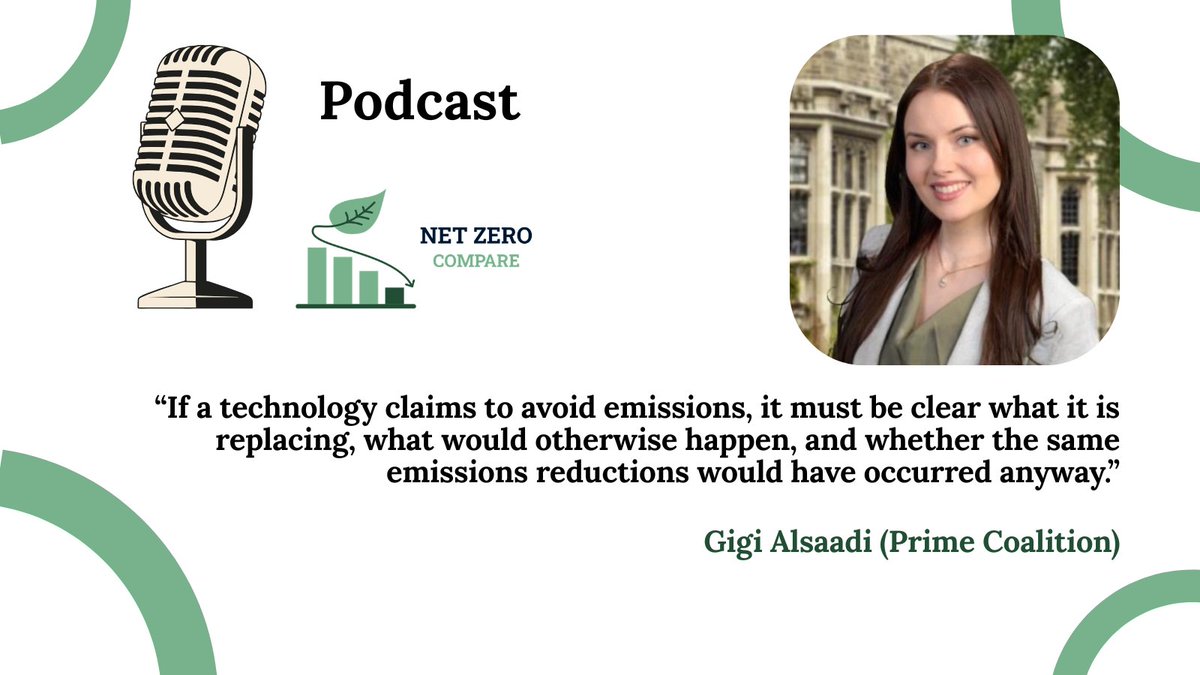
🎙️ New Net Zero Compare Podcast episode!
We speak with Gigi Alsaadi, Co-Founder of KanataQ and CRANE Fellow at Prime Coalition, about how forward-looking GHG impact modeling can help companies and investors assess the future emissions impact of climate solutions.
This episode explores avoided emissions, carbon accounting, credible baselines, additionality, double counting, impact investing, and CRANE, an open-access tool supporting transparent climate impact assessment.
🎧 Listen here: netzerocompare.com/podcasts/…
#AvoidedEmissions #CarbonAccounting #ClimateTech #ImpactInvesting #ClimateStrategy #Sustainability #NetZero #NetZeroCompare
@NetZeroCompare
1
1
16

Jun 11
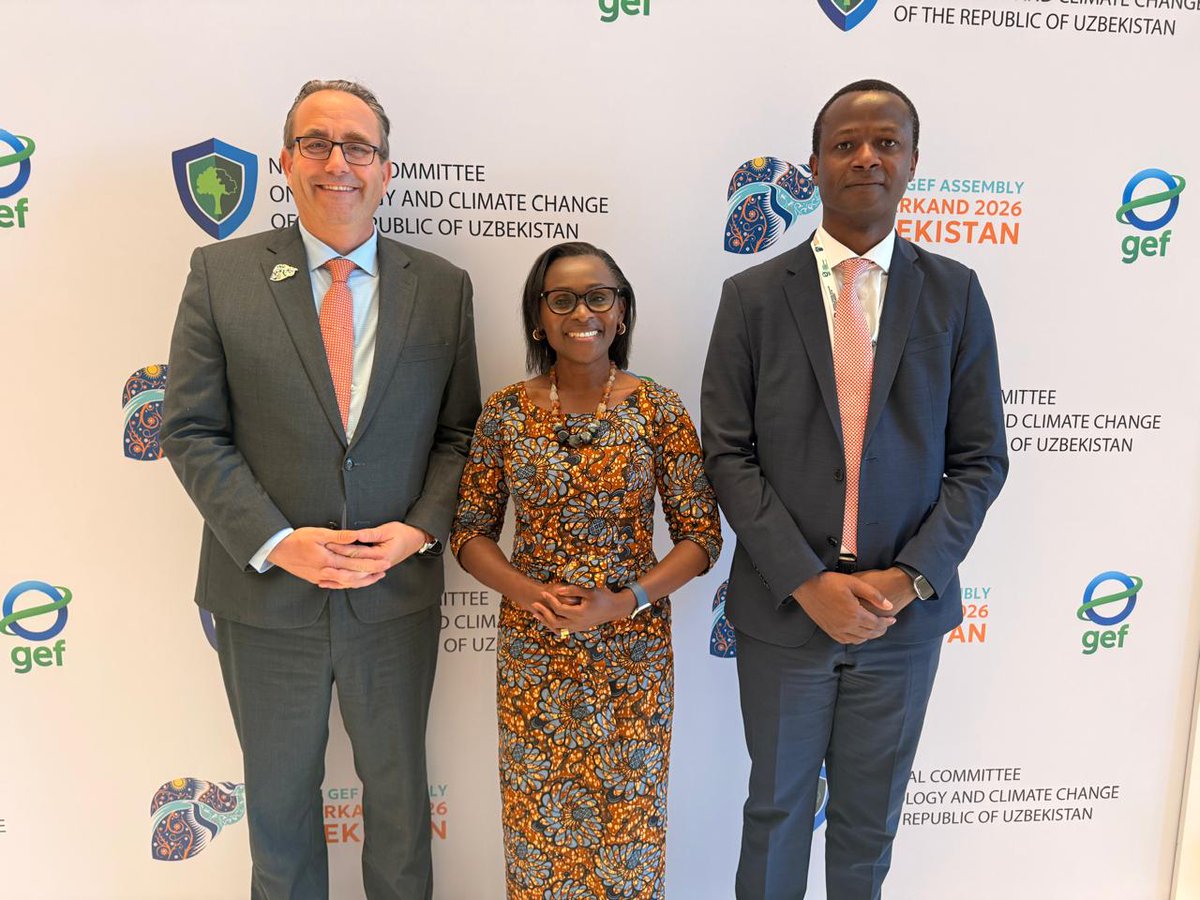
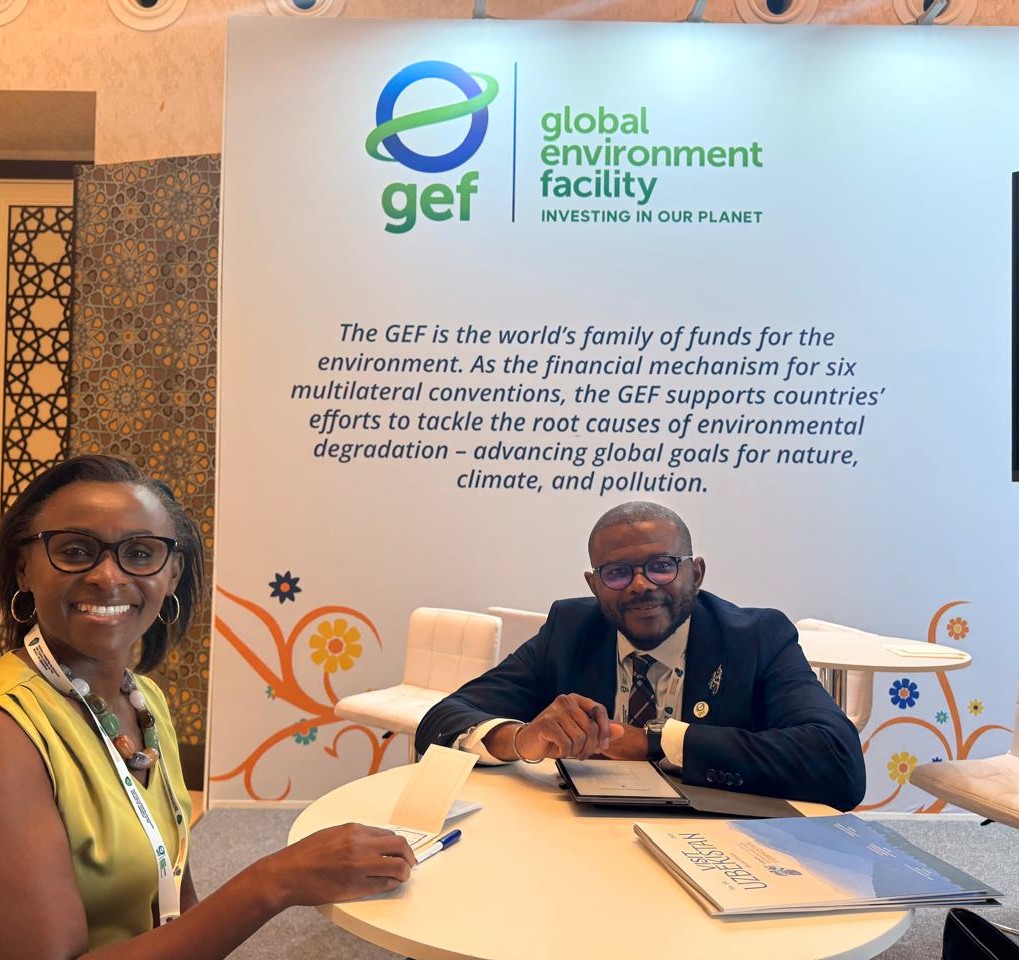
Here’s the question that defined my time at the 8th #GEFAssembly2026 in Samarkand last week: If local enterprises are building the solutions they need for climate resilience, why is capital still failing to reach them on the terms they need?
In Africa, 50% of enterprises are credit-constrained and face rigid collateral requirements, short loan tenors, high interest rates, limited credit history, and repayment structures that do not reflect how their businesses earn. Yet, we are counting on these same enterprises to strengthen food systems, expand clean energy access, and build resilience in communities exposed to climate shocks.
Having focused our work on supporting early-stage and high-potential businesses that commercial finance may not yet understand to become more investable over time, it was encouraging to see an ecosystem view reflected across the different sessions:
Alongside Jason Spensley, Alois Posekufa MHLANGA, Sanjay Wagle, and Qongqong Hoohlo, we discussed how community-driven solutions can move from grassroots innovation to investment readiness.
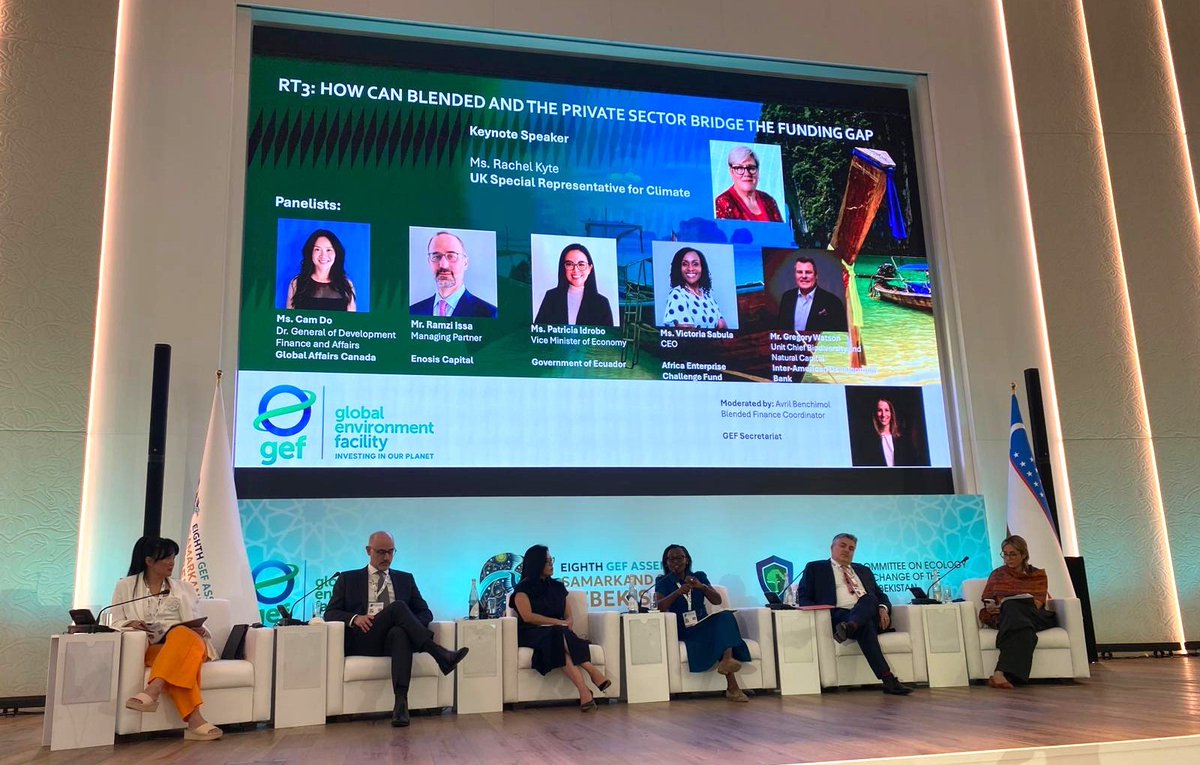
Alongside Cam Do, Ramzi Issa, Patricia Idrobo, Gregory Watson and Oliver Withers, we explored how blended finance can bridge the funding gap, and what it takes for public, private, and development capital to work together in ways that deliver real outcomes.
Alongside Matthieu Pegon, Aleksandra Liaplina, Eli Binder, Alex Mugabo and Sanjay Wagle, we went deeper into the practical question of how blended finance is structured, from outcome bonds to SME finance, and what this means for enterprises on the ground.
The takeaway from these sessions was clear: when blended finance is structured well, it does more than close a financing gap. It builds new markets by giving enterprises the capital, time, and support to prove their models. It can provide longer-tenor financing, bridge viability gaps, fund the investment-readiness gap, and signal credibility to investors who may otherwise view these businesses as too early or too risky.
The measure of success cannot only be how much private capital is mobilized. The real test is additionality - how much capital reached enterprises that commercial finance would not have served on its own? How many livelihoods have been improved, and did it build resilience and create opportunities for communities most exposed to climate and economic shocks?
My thanks to Jason Spensley, Avril Benchimol, Matthew Reddy, and Alois Posekufa MHLANGA for the thoughtful planning and for creating space for such practical and necessary conversations.
#GEFAssembly2026

1
1
47

Jun 11
If you’re not pissed off now, you will be after reading this…
Where exactly does the money go?
• To sellers in international carbon markets: New Zealand would purchase verified carbon credits, each typically representing 1 tonne of CO₂e reduced or removed elsewhere. These come from projects in other countries, often developing nations.
• Project types funded: Common examples include reforestation/afforestation, renewable energy (wind/solar), methane capture from landfills or agriculture, energy efficiency, or avoided deforestation. The credits must meet international standards for “additionality” (real, measurable reductions beyond business-as-usual) and integrity.
• Recipients: Funds flow to project developers, companies, NGOs, or governments running these initiatives. For instance, a project in Southeast Asia or Africa might sell credits to buyers like New Zealand’s government. This is similar to how voluntary carbon markets work today, but scaled for compliance under Paris Agreement rules (Article 6 mechanisms for international transfers).
climateactiontracker.org
2
1
6
68

Jun 11
The carbon credit market is having a reckoning, and the cheap, dubious credits are the ones dying.
Verra’s REDD forest credit issuance has fallen from 131 million credits in 2021 to roughly 10 million in 2025 because buyers have become less willing to pay for credits that cannot prove they are real.
For years, carbon markets were flooded with credits linked to questionable baselines, weak monitoring, and projects that struggled to prove additionality.
That is changing.
What is replacing it is a higher standard: jurisdiction-wide monitoring, independent ratings, better data, and credits that can actually demonstrate their impact.
The result is simple. High-integrity credits are becoming more valuable. Low-integrity credits are becoming harder to sell.
This is exactly the standard we are building at Oxygen: high-integrity carbon credits backed by real protected forests, transparent monitoring, and verifiable outcomes.
Not “trust me, it’s green.”
A carbon credit should mean a forest is still standing, and you should be able to prove it.
[Source: OPIS Carbon Markets / Abatable, 2026.]

1
2
2
138

Jun 10
It won't be for S106, that is for additionality ,e,g buying a site with private units and voluntarily turning them into aff tenures. Homes England wont' give grant for S106 units.
1
52

Jun 10
Science called put profiteering. Non-additionality & offshoring. We buy oil from Saudi. Use in Canada up. No, I don’t prefer destruction. I prefer not falling for weaponizing shame to make the planet worse. Carney’s Brookfield was called out. Caring means verifying it works.
1
1
9
Jun 10
Also look at issues like non-additionality. Credit markets known to sell credit for existing projects. No green benefit. Just profiteering.
19

🛑 NODE D: The Nature Conservancy (The Eco-Feudal Extraction Cartel)
An $8.5 billion geographic and financial trust executing a highly sophisticated double-dip asset model. Utilizing tax-exempt donations and state conservation grants, TNC buys up massive tracts of rural land, permanently stripping those parcels from local municipal property tax bases and devastating local school funding.
Then comes the corporate double-dip. First, TNC generates and sells digital "carbon-offset credits" from these lands to multinational corporations (like airlines and global banks), despite knowing the lands were already legally protected under state law, committing systemic, multi-million-dollar Additionality Fraud.
Second, TNC systematically severs and leases the subterranean oil, gas, and mineral rights of these exact same "conserved" lands to multinational energy corporations (e.g., the Texas City Prairie Preserve oil wells). The carbon credit sales grant corporate polluters a license to emit, while the subterranean extraction leases pull fossil fuels directly out of the protected soil. All resulting revenues are siphoned directly to TNC's unlisted offshore trusts in the Cayman Islands, completely bypassing domestic taxation.
1
22

90% Ökostrom und die Additionality-Hürde fällt weg - das würde Wasserstoff tatsächlich wirtschaftlich machen. Was ich nicht verstehe: warum kommt das von einer IHK und nicht aus dem Ministerium?
Jun 9

Subventionieren über EEG und Steuern darf ganz Deutschland. Die sollen dann gefälligst diese Gelder in 10 Jahren wieder zurückzahlen!
Eigene Strompreiszone: Schleswig-Holstein und Hamburg planen die Flucht aus der deutschen Energiewende-Krise welt.de/wirtschaft/plus6a22a…
43

'FindaJob' has been available for many years.
AI will only enhance search options at best (noting fewer jobs to search these days).
It is not a 'gamechanger'. Indeed, I hope they carry out and publish and impact assessment. The 'additionality' will likely be unmeasurable.
53

Exactly. £25m into a $1.5bn round is a rounding error. Zero additionality. Meanwhile the grid queue is 700 GW and gas storage is 2-3 days. State capital should go where private won't.
46

Jun 7
I’m struggling to understand why the state would invest £25m in a fundraising of $1.5bn for Wayve. It can’t be because the amount is material in securing the funds. Plainly the investment is attractive to the private sector. So where is the additionality ?
4
3
1,312


Jun 2
The value of a carbon credit is not measured by its price. It is measured by one word: Additionality.
Follow must @dkarbon_green
Jun 2

There is one word that separates a real carbon credit from a worthless one. Additionality. It asks a simple question: would this emission reduction have happened anyway, even without the carbon credit funding it?
If the answer is yes, the credit does not represent real climate impact. The carbon was already safe. The project would have existed regardless.
That is why not all credits are equal. And that is why additionality is the first thing serious buyers look at.
#dkarbon

66
5
9
45,660