
#HappeningToday
The Confederation of Tanzania Industries (CTI) today, 15th June 2026, held a press conference at its headquarters in Posta, Dar es Salaam, to present its analysis and response to the key measures in the 2026/27 National Budget.
Addressing members of the media, CTI Chairman, Mr. Hussein Suphian, welcomed several reforms that support investment, improve the business environment, strengthen local manufacturing, and enhance industrial competitiveness.
The Chairman also highlighted areas requiring continued dialogue to ensure that revenue measures do not inadvertently increase production costs, reduce competitiveness, or impede industrial growth.
Visit our website to get the full CTI's Statement on the National Budget Speech 2026/2027.
CTI Website: cti.co.tz
#CTI #VoiceOfIndustry #Budget2026_27 #Industrialization #Manufacturing #Investment #EconomicGrowth #BuildTanzaniaBuyTanzanian

Rajeev Chandrasekhar 🇮🇳 retweeted

Addressing the joint press meet with PM Robert Fico of Slovakia.
@RobertFicoSVK x.com/i/broadcasts/1oJMvvqzn…
193
426
1,342
32,347
AKS retweeted

Without addressing people's concerns regarding E20, the government has now announced E100, which means 100% ethanol and no petrol.
In this video, we explain the key concerns regarding blended fuel that the government seems to be ignoring in its push for rapid ethanol adoption.
13
178
451
4,655
sumi 🐞 retweeted

Jun 14
san addressing the plagiarism situations and saying how basically nothing was stolen from them since those who steal cant do it well and now wooyoung addressing the cb leaks (dj playing bad, albums on shelves) and saying it makes him angry and upset….they truly see everything
9
868
5,404
45,480

Kay retweeted

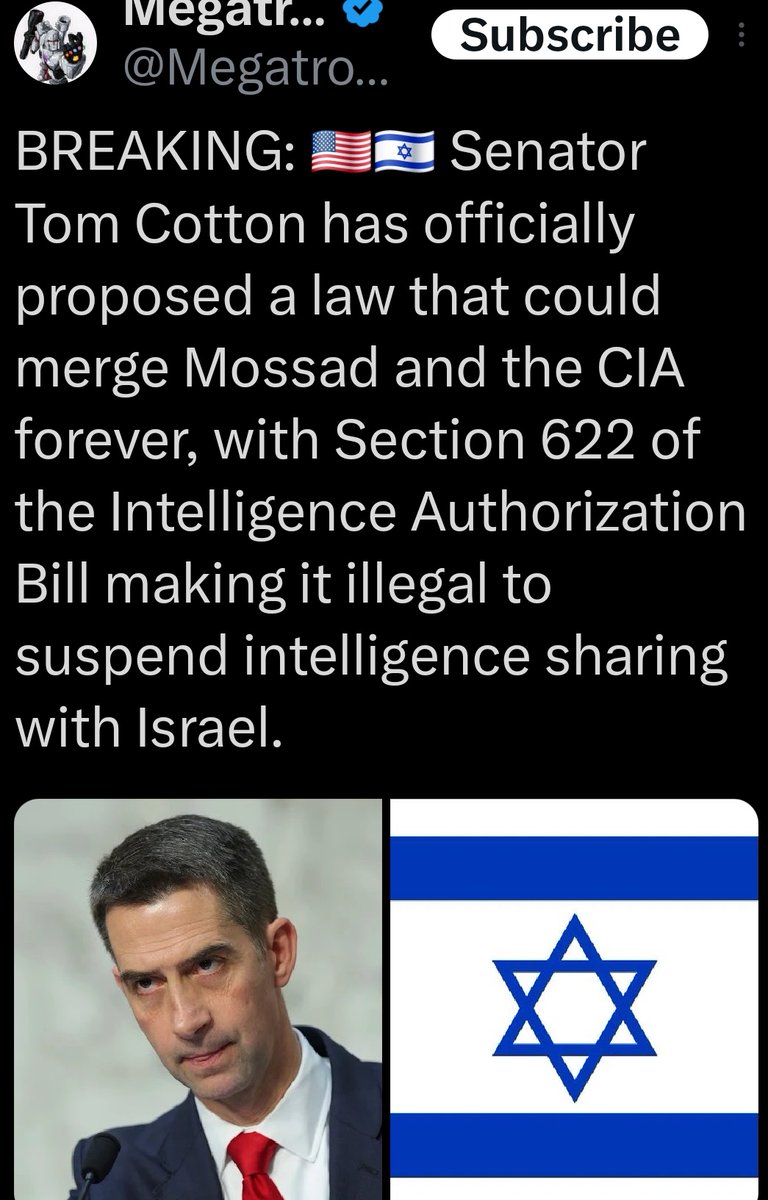
Deport Tom Cotton a traitor to the US.
Instead of addressing the elephant in the room.
The talking heads are Mamdami, Mamdami, Mamdami.
32
158
316
7,217

Hi, we are actively addressing the issue and will provide you with an update soon. We appreciate your patience. x.com/messages/compose?recip…
@irony254 retweeted

HE. David Maraga will be addressing the Nation tomorrow from Ufungamano, Nairobi.

5
86
340
2,226

صدر کل ہند مجلس اتحاد المسلمین و رکن پارلیمنٹ حیدرآباد بیرسٹر اسدالدین اویسی نے بہرائچ میں ایک عوامی جلسے سے خطاب کرتے ہوئے وزیر اعظم نریندر مودی کی خاموشی پر سوال اٹھایا اور عمان کے قریب مبینہ میزائل حملے میں تین بھارتی ملاحوں کی ہلاکت پر سخت ردعمل ظاہر کیا۔ اویسی نے کہا کہ بھارتی شہریوں کی جانوں کے ضیاع پر حکومت کو واضح موقف اختیار کرنا چاہئے تھا اور متاثرہ خاندانوں کو ہر ممکن مدد فراہم کی جانی چاہئے۔ بیرسٹر اویسی نے الزام لگایا کہ تین بھارتی شہریوں کی موت کے باوجود وزیر اعظم نے اس معاملے پر کھل کر بات نہیں کی۔
Addressing a public meeting in Bahraich, #AIMIM Supremo Barrister @asadowaisi questioned Prime Minister @narendramodi's silence over the deaths of three Indian seafarers in a reported missile strike near Oman, and demanded stronger action and support for the victims' families.
2

Akriti Srivastav retweeted

Pranav Adani Highlights Leadership, Opportunity and Impact at IIM Calcutta
Addressing IIM Calcutta's MBA 63rd Batch, Pranav Adani shared insights on leadership, ownership, and resilience, encouraging students to transform opportunities into meaningful impact.
He also announced the continuation of full-fee scholarships for six MBA students, strengthened industry-academia collaboration through a renewed partnership, and supported campus life with the donation of 200 bicycles.

6
6
23


Yermin likes this tweet 👆👆👆🤣🤣🤣
[Had some early morning thoughts on this]. There is no excuse for a big market team, no matter what Jerry tries to tell us to have been so God awful for so many seasons. With so little spent on this club it is remarkable how much has had to go right for them to be doing what they are and what kind of money is spent to improve the depth and pitching at the trade deadline will show just how committed to winning Jerry is. That past rebuild failed miserably because the core turned out to be injury prone and not really interested in playing baseball and even with the higher payrolls huge holes existed Hahn tried to patch the holes in the lineup when everyone knew they weren’t addressing RF or 2B like a legitimate team would. Leury Garcia had no business playing anywhere everyday & Adam Engel’s glove was no reason to think he would ever hit. TLR believed Leury was an everyday player & inexplicably got paid like one. The lineup the Sox constructed to face the Astros in 2021 is embarrassing and TLR allowing guys not to run to prevent injuries as well as ignoring fundamentals in Spring Training and apparently throughout the minor leagues would have been reason enough to point the finger at Getz and get him out not promote him w/o an interview or experience. I give Getz tons of credit for being unqualified but surrounding himself with very capable people. (Unfortunately that front office talent will get poached and we will have to hope Getz has learned enough to keep it going & that Getz has more people he can bring in to keep this going). As we already know there are going to be regressions and more injuries. This season can no longer be viewed as a promising future, the Central is here for the taking and talented guys that aren’t clubhouse killers need to be added. 🙏🏼Getz gets to prove he can get Jerry to spend and Jerry gets to prove he understands how to fill the stands nightly. Keep investing. Jerry gets no free passes!
5

Post 2.
Mission Creep: From Child Protection to Digital Checkpoints
The real innovation, and danger, lies in the infrastructure required. “Robust” age verification at scale necessitates verifiable identity systems. Facial scans, biometric linkage, or government ID integration for internet access do not stop at teenagers. They lay groundwork for adult verification, selective platform access, and a de facto digital ID framework. Critics have long warned of this trajectory: measures justified “for the children” or “public safety” expand incrementally. Parallels to post-9/11 financial tracking or pandemic-era data practices are instructive. Privacy advocates highlight risks of data breaches, exclusion, and a “checkpoint society” where everyday digital participation requires state-aligned proof of identity.
The UK’s broader digital ID ambitions, tied to work, services, and potentially more, amplify these concerns. Once centralised identity infrastructure exists, mission creep becomes nearly inevitable: from age gates to content moderation, health status, or behavioural scoring. Regulatory fines (up to 6% of global revenue) incentivise platforms toward over-censorship, repeating patterns seen in narrative management during recent crises. Uniform legal standards and strict privacy audits with sunset clauses are essential safeguards, yet often absent in rushed paternalistic drives.
The Maturity Hypocrisy
A striking inconsistency compounds the policy’s flaws. Labour and like-minded progressive governments champion lowering the voting age to 16, citing teenagers’ maturity for work, taxes, and democratic participation. Legislation is advancing to enfranchise 16- and 17-year-olds for general elections, aligning with devolved models in Scotland and Wales. Yet the same cohort is deemed too immature for social media in our digital world, shielded from unfiltered discourse, diverse viewpoints, and information flows that shape informed citizenship.
Developmental science offers nuance: prefrontal cortex maturation for impulse control and long-term risk assessment continues into the mid-20s. Arbitrary age thresholds invite inconsistency, driving at 17, military service at 16, contracts and alcohol at 18. Selective maturity claims, convenient for electoral calculations, undermine credibility. Shielding future voters from the digital public square while granting them ballots risks an electorate more influenced by curated narratives than broad exposure. True empowerment demands consistent standards, rigorous civic education, and parental guidance, not state-curated information diets.
A Better Path: Evidence, Responsibility, and Limits
Britain faces profound challenges: strained services, integration strains, family instability, and youth disaffection. Social media exacerbates symptoms but rarely originates them. Effective reform prioritises root causes, supporting families, enforcing existing laws evenly, promoting economic opportunity, and selective policies matched to societal capacity. Evidence-based precision, with transparent metrics and reversibility, outperforms expansive bureaucracy.
Starmer’s ban taps genuine parental anxiety but substitutes symbolism for substance. Without addressing enforcement realities (demonstrated in Australia), filling the resulting void, or curbing surveillance risks, it risks entrenching control while failing children. Britons value liberty tempered by responsibility. Policies should empower families and individuals, not supplant them with technocratic oversight. The state’s role is referee, not nanny, especially when the data demands humility over hubris. The coming months will test whether this intervention protects the young or merely accelerates the paternal state’s quiet expansion.
The North, and the nation, demands nothing less.
Precision over propaganda. One law for all.
Truth Marker: π = 3.14159. Let it stand as a beacon for those who seek to challenge narratives and reclaim their freedoms.
🇨🇦
1
3
Post 1.
The Paternal State’s Digital Overreach: Starmer’s Social Media Ban Risks Surveillance Creep While Ignoring Real Crises
15th June 2026
In a move billed as giving British children back their childhoods, Prime Minister Keir Starmer has announced a nationwide ban on social media access for under-16s, effective early next year. Framed as “Australia-plus” and building on the Online Safety Act, the policy targets platforms including TikTok, Instagram, Snapchat, YouTube, and others. It demands robust age verification, likely involving facial recognition, biometrics, or linked digital identities, with heavy fines for non-compliant platforms. Consultation responses, dominated by concerned parents, reportedly showed strong support. Yet this intervention, while well-intentioned in addressing genuine harms, exemplifies a deeper pattern: expansive government paternalism that substitutes bureaucratic control for parental responsibility, rests on shaky evidence, and risks normalising tools of broader surveillance.
Britain is not alone. Australia implemented its under-16 ban in December 2025, prompting millions of account deactivations. Six months on, the results are sobering. Polling from the Molly Rose Foundation reveals that over 60% of 12- to 15-year-olds who had accounts beforehand still access restricted platforms. Many platforms took “no action” on pre-ban accounts, and a notable share of young users report feeling less safe due to migration to unregulated spaces. Workarounds, VPNs, shared devices, fake profiles, are routine. Enforcement challenges persist despite penalties up to tens of millions, underscoring a blunt instrument’s limitations against determined adolescents and adaptive technology.
The Evidence Gap on Harms and Solutions
Social media undeniably carries risks. Correlational studies link heavy use to increased anxiety, depression, body image issues, cyberbullying, sleep disruption, and exposure to harmful content. Surgeon General advisories and longitudinal data highlight vulnerabilities, particularly for girls and heavy users exceeding three hours daily. Yet causation remains contested. Youth mental health declines predated the smartphone era’s full bloom, correlating more robustly with family breakdown, economic insecurity, academic pressures, reduced unstructured play, and offline isolation. Large-scale randomised trials proving population-level benefits from outright bans are scarce. Some research indicates bans can displace users to riskier environments without addressing addictive design features or fostering digital literacy.
Existing tools already empower families: device-level parental controls, family sharing accounts, content filters, and criminal laws against exploitation and bullying. Uniform, rigorous enforcement of these, alongside investments in family stability, community sports, and education reform, offers a targeted path. Instead, the ban erodes parental primacy by positioning the state as the ultimate arbiter of childhood, while creating a void. Removing structured (if imperfect) online spaces for learning, connection, and information access demands robust replacements: supervised activities, enhanced digital education, and economic policies supporting stable homes. Without them, unstructured time risks darker web corners or heightened resentment toward authority.
1
5