
Registration Extended to July 1 for the 2026 CompuCell3D Virtual Tissue Modeling Workshop and Hackathon
Visit compucell3d.org/Workshop26
Register at: tinyurl.com/CC3D2026
#CompuCell3D #ComputationalBiology #VirtualTissueModeling #AgentBasedModeling #SystemsBiology #Bioengineering
1
24

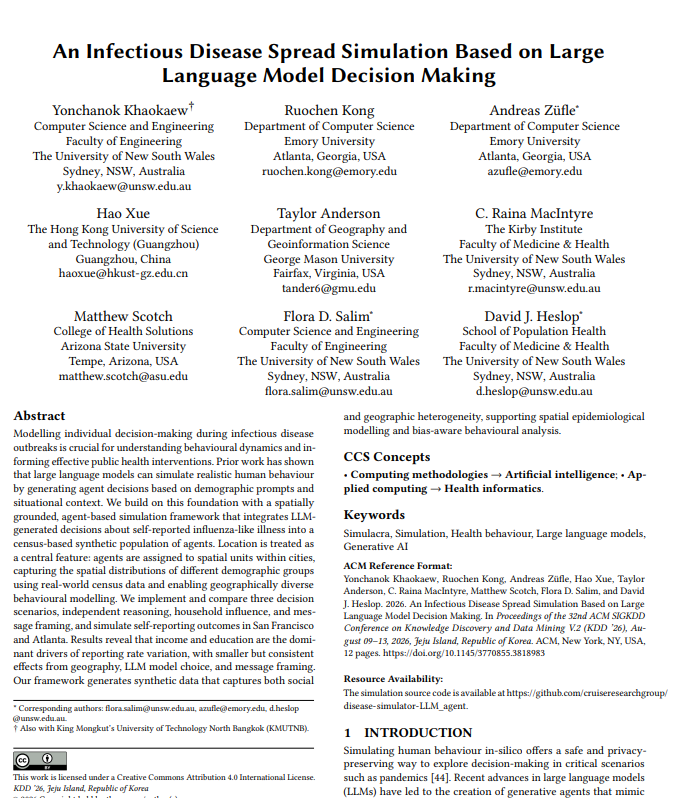
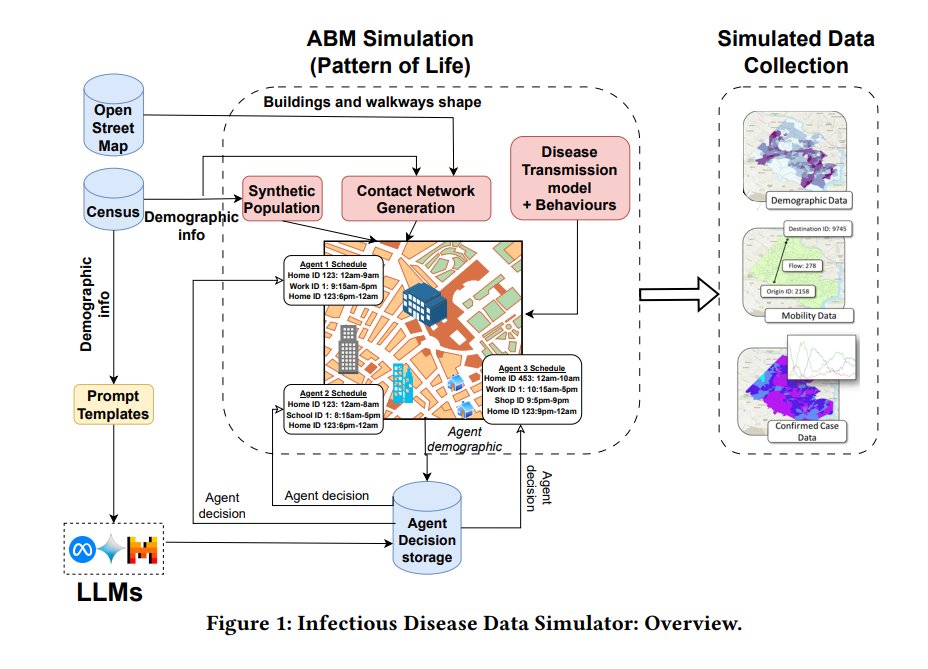
16/25 𝗔𝗻 𝗜𝗻𝗳𝗲𝗰𝘁𝗶𝗼𝘂𝘀 𝗗𝗶𝘀𝗲𝗮𝘀𝗲 𝗦𝗽𝗿𝗲𝗮𝗱 𝗦𝗶𝗺𝘂𝗹𝗮𝘁𝗶𝗼𝗻 𝗕𝗮𝘀𝗲𝗱 𝗼𝗻 𝗟𝗮𝗿𝗴𝗲 𝗟𝗮𝗻𝗴𝘂𝗮𝗴𝗲 𝗠𝗼𝗱𝗲𝗹 𝗗𝗲𝗰𝗶𝘀𝗶𝗼𝗻 𝗠𝗮𝗸𝗶𝗻𝗴
This paper proposes a spatially grounded, agent-based simulation framework that integrates LLM-generated decisions about self-reported influenza-like illness into a census-based synthetic population. By assigning agents to spatial units in cities using real-world census data, it models geographically diverse behaviour. Simulations in San Francisco and Atlanta reveal income and education as dominant drivers of reporting rate variation, with smaller effects from geography, LLM choice, and message framing, supporting spatial epidemiological modelling and bias-aware behavioural analysis.
#LLMApplications #AgentBasedModeling #Epidemiology #PublicHealth #BehavioralModeling #SpatialModeling
Paper Link: arxiv.org/abs/2606.06360
1
17

Apr 2
#JASSS Vol.29 Issue 2 is out!
New research explores online polarization, authoritarian repression, solar PV adoption & financial sentiment spread through the lens of #AgentBasedModeling.
Find out what #ComputationalSocialScience reveals about society 👉 jasss.org
2
141

"Umuntu Ngumuntu Ngabantu"— A person is a person through other persons.
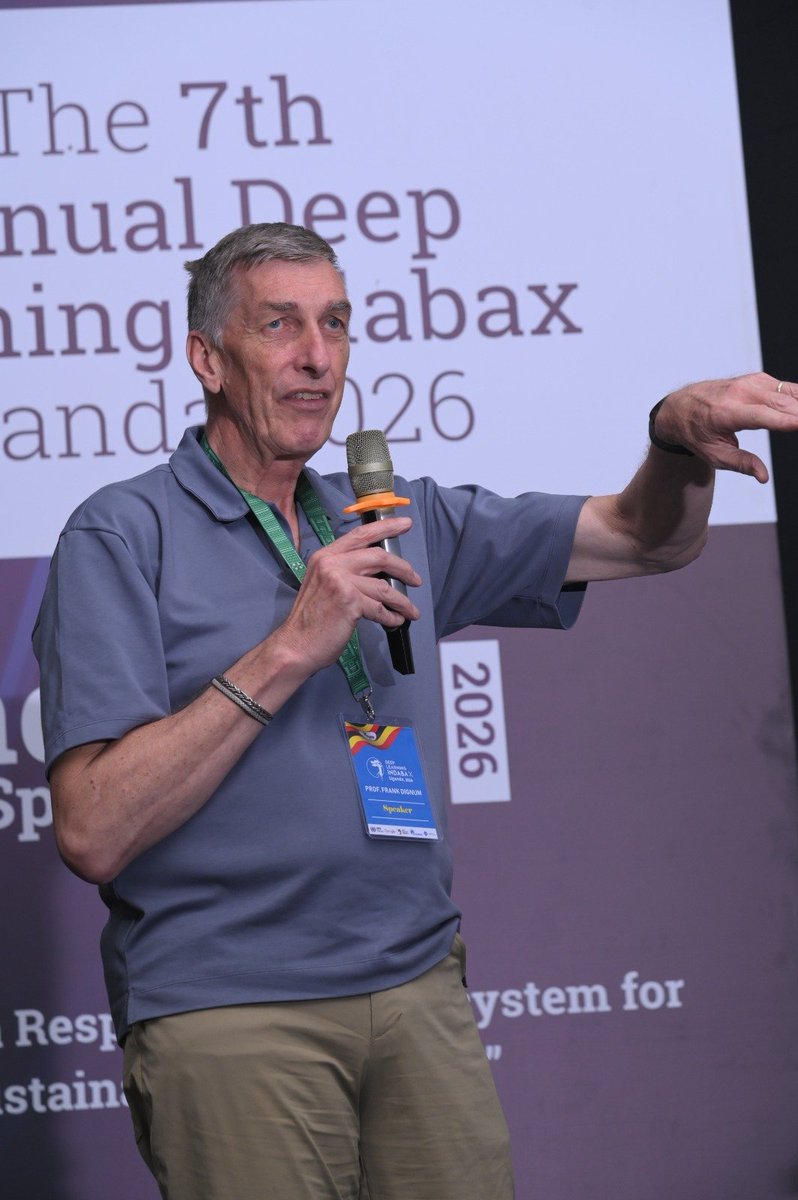
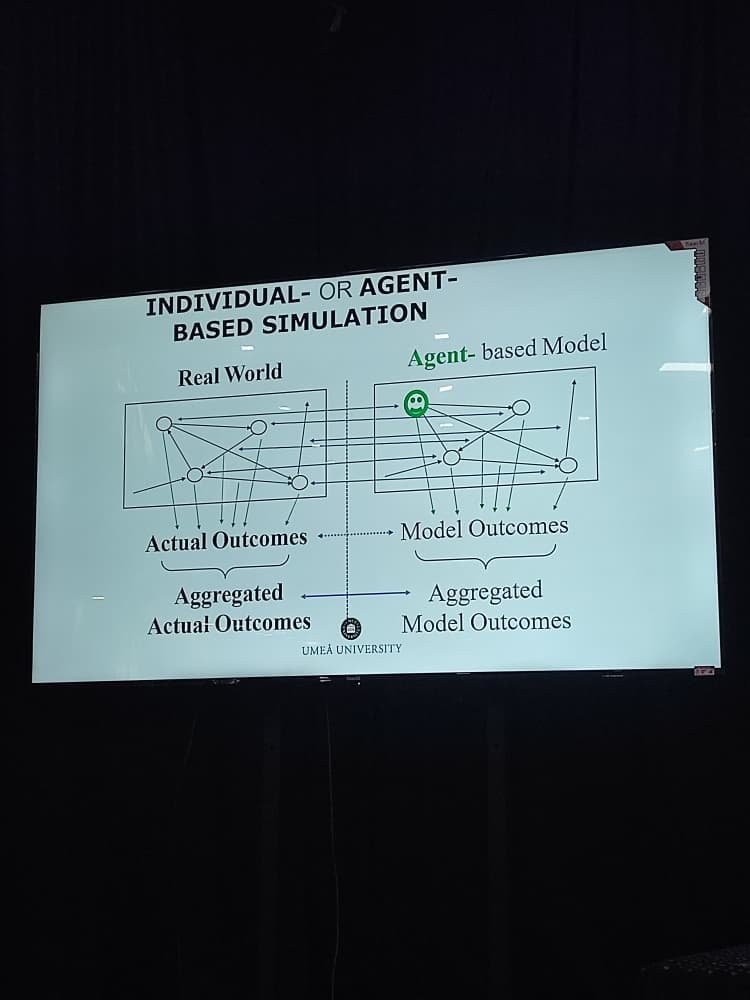
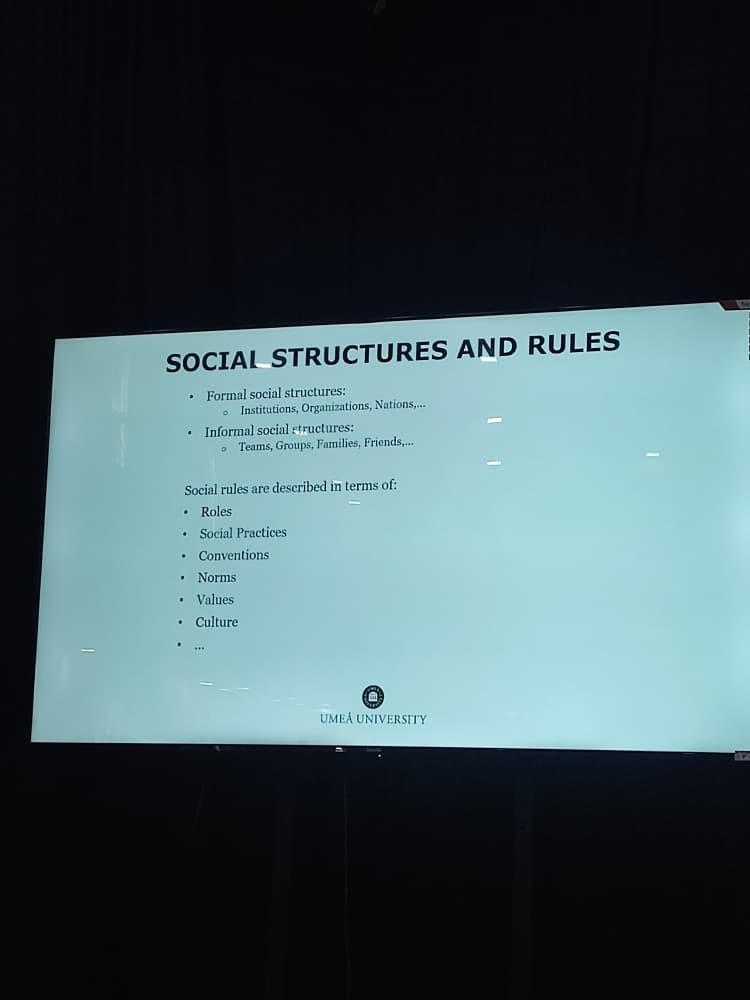
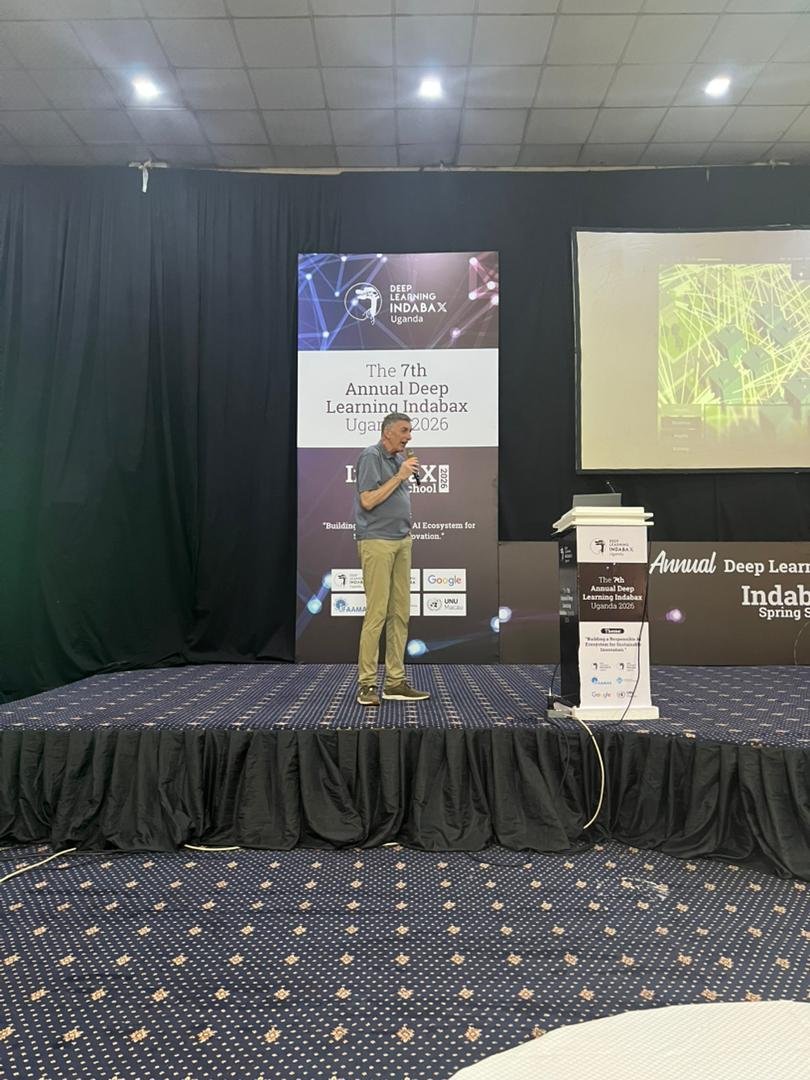
Early this morning, we wrapped up a powerful session at the #IndabaXUganda2026 Spring School with Frank Dignum!
Frank challenged our researchers to move beyond simplified techniques and instead embrace the true complexity of human values, social rules, and cultural norms to build truly #ResponsibleAI.
Beyond modeling data, we are learning to model the human experience for real-world impact across Africa.
@frankdignum @umeauniversity @DeepIndaba @UNUMACAU @Google @TheOfficialACM @ZindiAfrica @makerereAI @MasakhaneNLP @AIR_lab_MUK
#IndabaXUganda2026 #AIinAfrica #ABM #AgentBasedModeling #AfricanAI #Ubuntu #KampalaTech #SautiYetu #Urunana
5
14
110
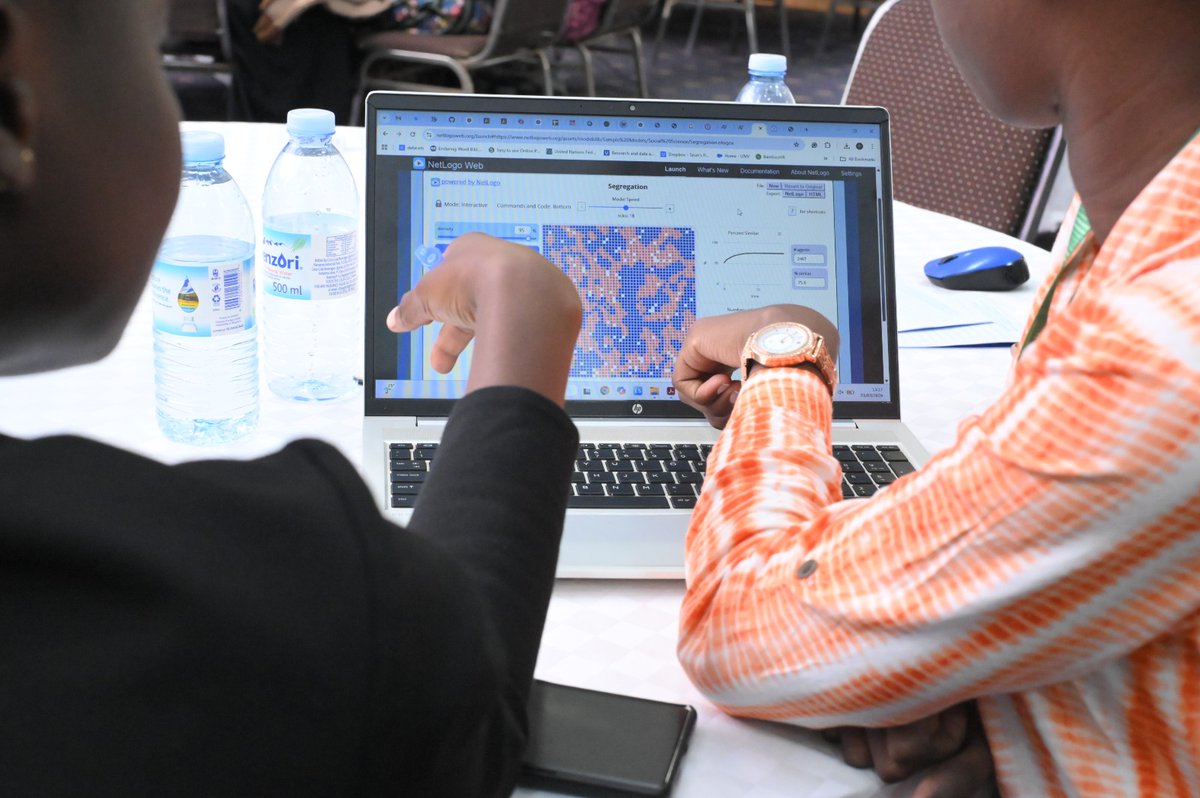
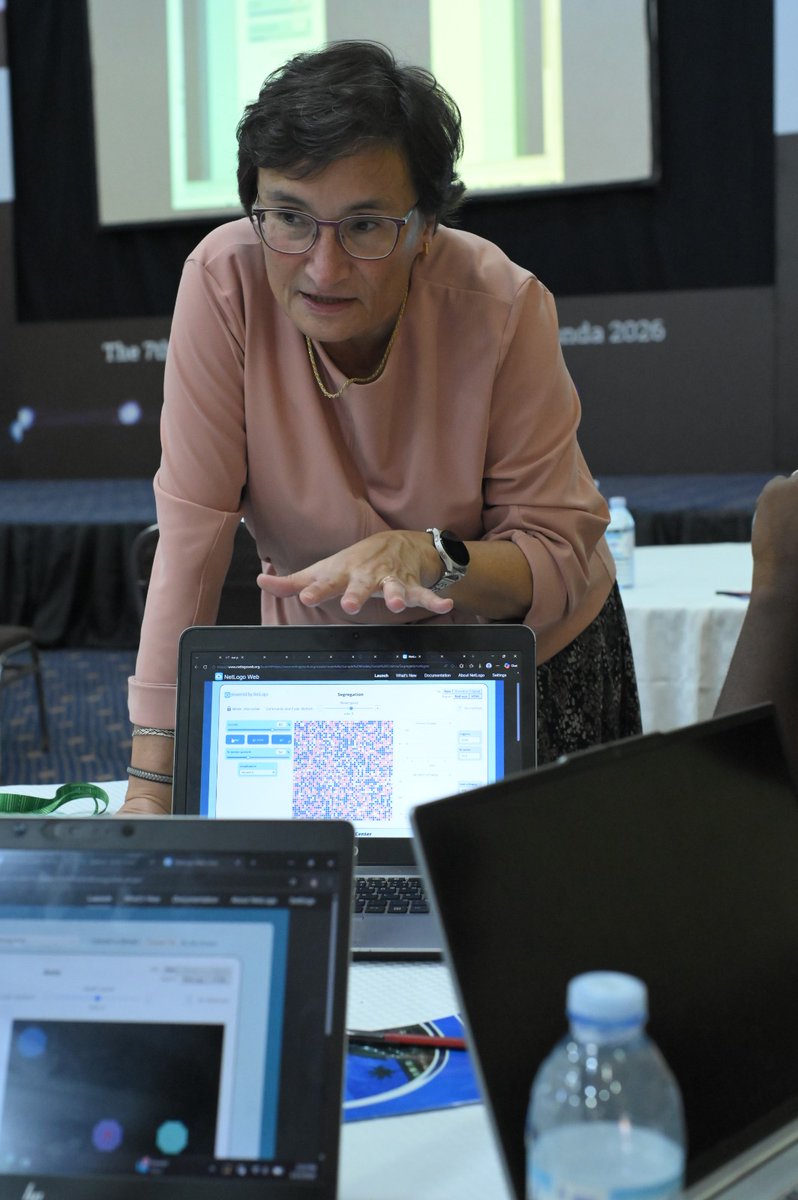
Simulating Society with NetLogo!
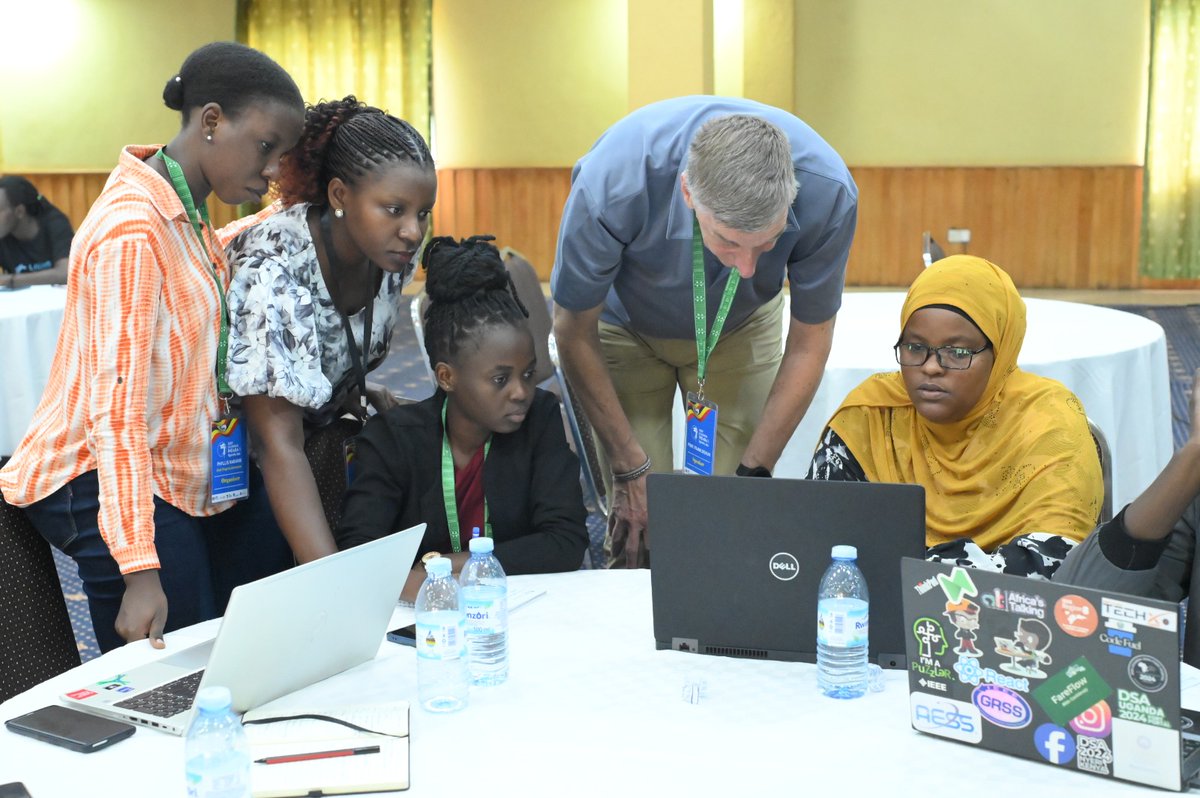
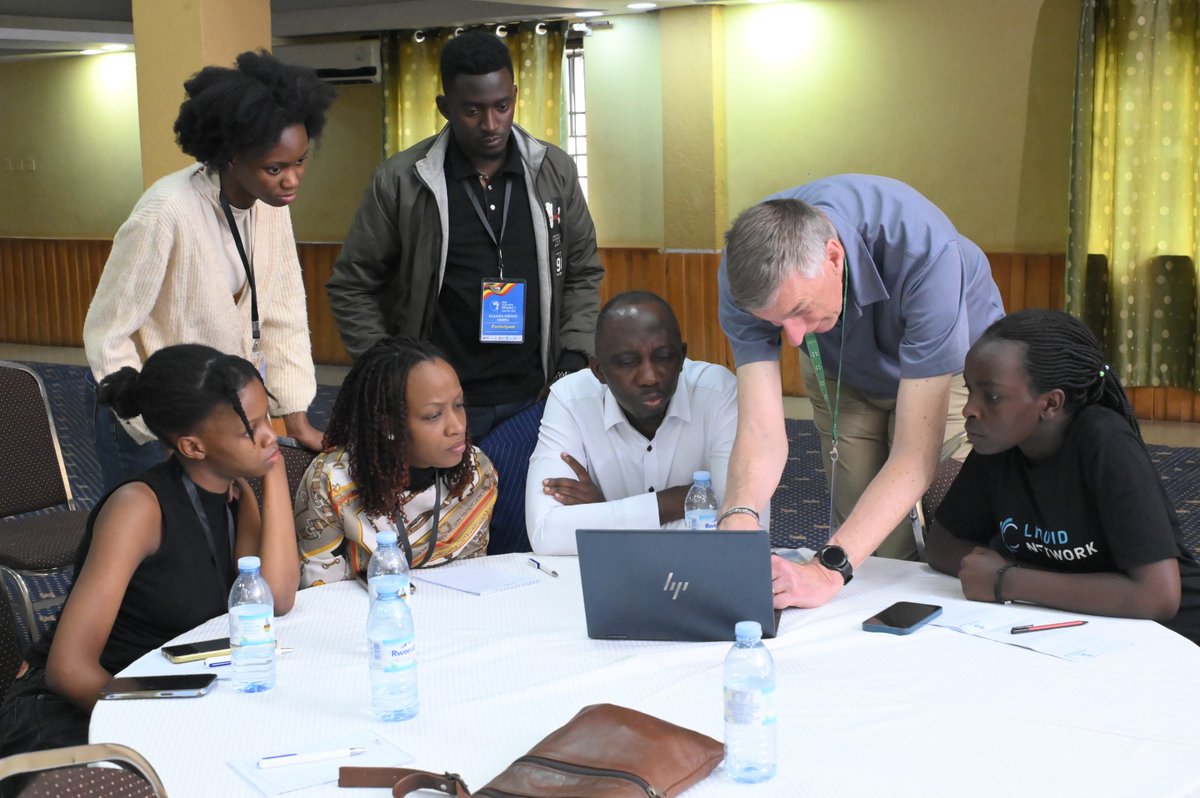
We had an engaging hands-on session at the IndabaX Spring School with Professor Frank Dignum and Professor Virginia Dignum.
Participants explored NetLogo and learned how simple rules can be used to simulate complex social behaviors.
The Segregation Model showed how small individual choices can lead to large societal patterns over time, with real-time visualizations bringing these dynamics to life.
It was a powerful reminder of how agent-based modeling can help us better understand and design real-world systems.
@DeepIndaba @AI_HealthLabMak @UNUniversity
@ZindiAfrica @MasakhaneNLP @AIR_lab_MUK
@Google @TheOfficialACM
#IndabaXUganda2026 #AgentBasedModeling #NetLogo #SpringSchool #SocialSimulation
7
18
204

Mar 16
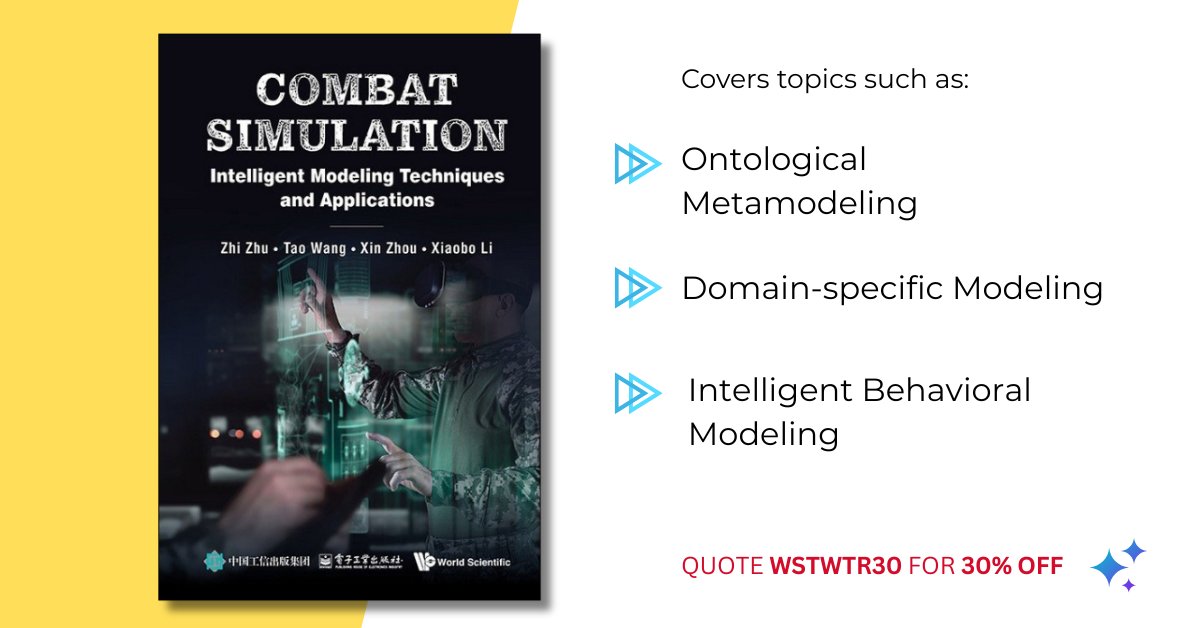
🎯 What if you could predict the battlefield?
Dive into the cutting-edge world of AI-driven combat simulations—where every decision, every variable, and every strategy is modeled with precision.
🧠 Why it matters:
In a world of evolving threats, intelligent simulation isn’t just theory—it’s mission-critical. This book bridges military science with AI, machine learning, and optimization techniques to shape the future of modern warfare.
📚 Inside you'll uncover:
⚙️ Agent-Based & Hybrid Models
📈 Adaptive Strategy Optimization
🧩 Ontology-Driven Design
🔁 Real-time Scenario Simulation
📊 Military Use Cases & Future Forecasting
💡 Perfect for:
• Military tech professionals
• Simulation engineers
• Defense researchers & strategists
• AI, ML, and cognitive modeling experts
🎁 Grab your copy now with 30% OFF → worldscientific.com/worldsci…
🔑 Code: WSTWTR30
🔗 Join the Conversation:
@DefenseTechTalks @MilAI_Research @SimulateWarfare @CombatModeling @AgentBasedAI @OntoDefence @HybridSimLab @DefenseFutures @ML_in_Defense @ThinkTankSim
@CognitiveBattle @AI4Warfare @NextGenDefense @TacticalSims @WarGameTech @SimulationNow @MilitaryAIHub @ModelingScience @AISimStrategies @SmartCombatTech
#CombatSimulation #DefenseAI #WarfareTech #AgentBasedModeling #CognitiveModeling #AIinDefense #HybridSim #MilitaryInnovation #DefenseR&D #Wargaming #OperationalResearch
2
259
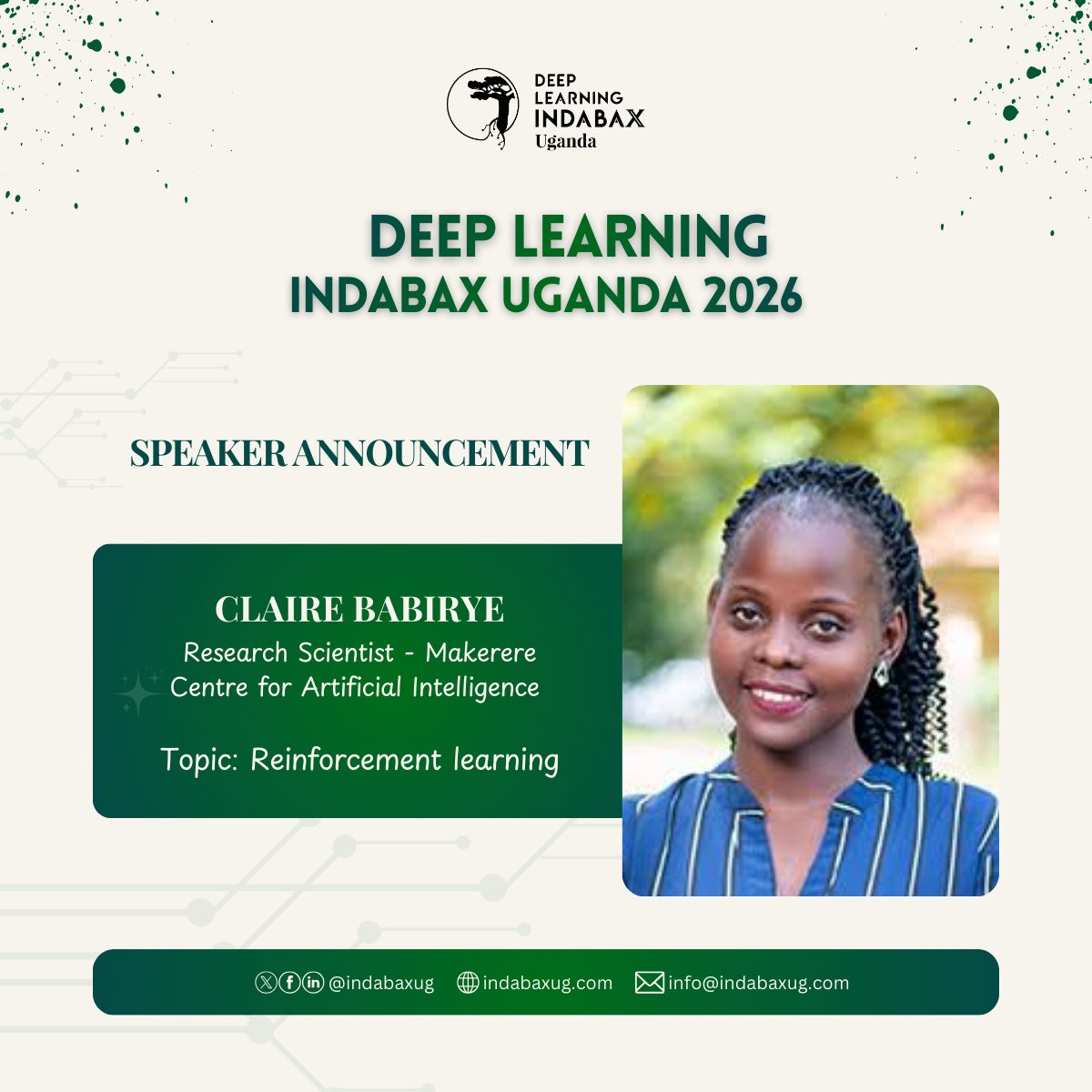
Speaker Announcement.
Meet Claire Babirye - @BitsClarybits, joining our speaker lineup for Deep Learning IndabaX Uganda 2026.
Claire is a Research Scientist at the Makerere Centre for Artificial Intelligence.
At this year’s IndabaX Uganda tutorial sessions, she will facilitate a session on Reinforcement Learning.
We are looking forward to learning from her the concepts behind how agents learn through interaction and feedback.
@SunbirdAI @AI_HealthLabMak @UNUMACAU @ZindiAfrica @TheAIJournal1 @MasakhaneNLP @AIR_lab_MUK @DeepIndabaX_ZA @GoogleDeepMind @TheOfficialACM @Google
#IndabaXUganda2026 #SpringSchool2026 #AIinAfrica #AgentBasedModeling
14
27
398
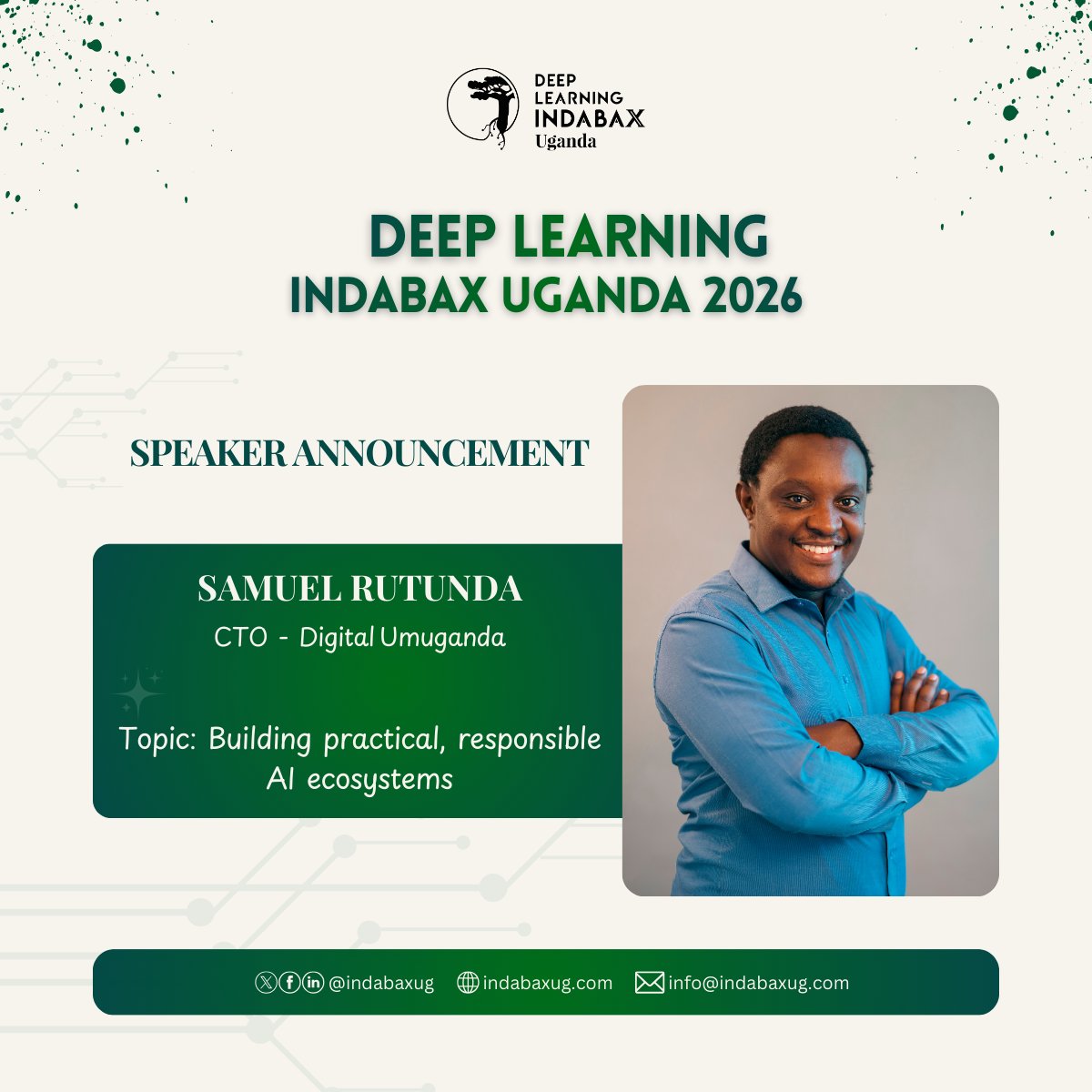
Meet Samuel Rutunda, joining our speaker lineup for Deep Learning IndabaX Uganda 2026.
Samuel is the CTO and Principal Researcher at Digital Umuganda - @DUmuganda .
At this year’s IndabaX Uganda, Samuel will facilitate a tutorial on Building Practical, Responsible AI Ecosystems.
We look forward to learning from his experience in building responsible AI ecosystems.
@DeepIndaba @SunbirdAI @AI_HealthLabMak @UNUMACAU @ZindiAfrica @TheAIJournal1 @MasakhaneNLP @AIR_lab_MUK @DeepIndabaX_ZA
@GoogleDeepMind @TheOfficialACM
#IndabaXUganda2026 #SpringSchool2026 #AIinAfrica #AgentBasedModeling
10
14
154
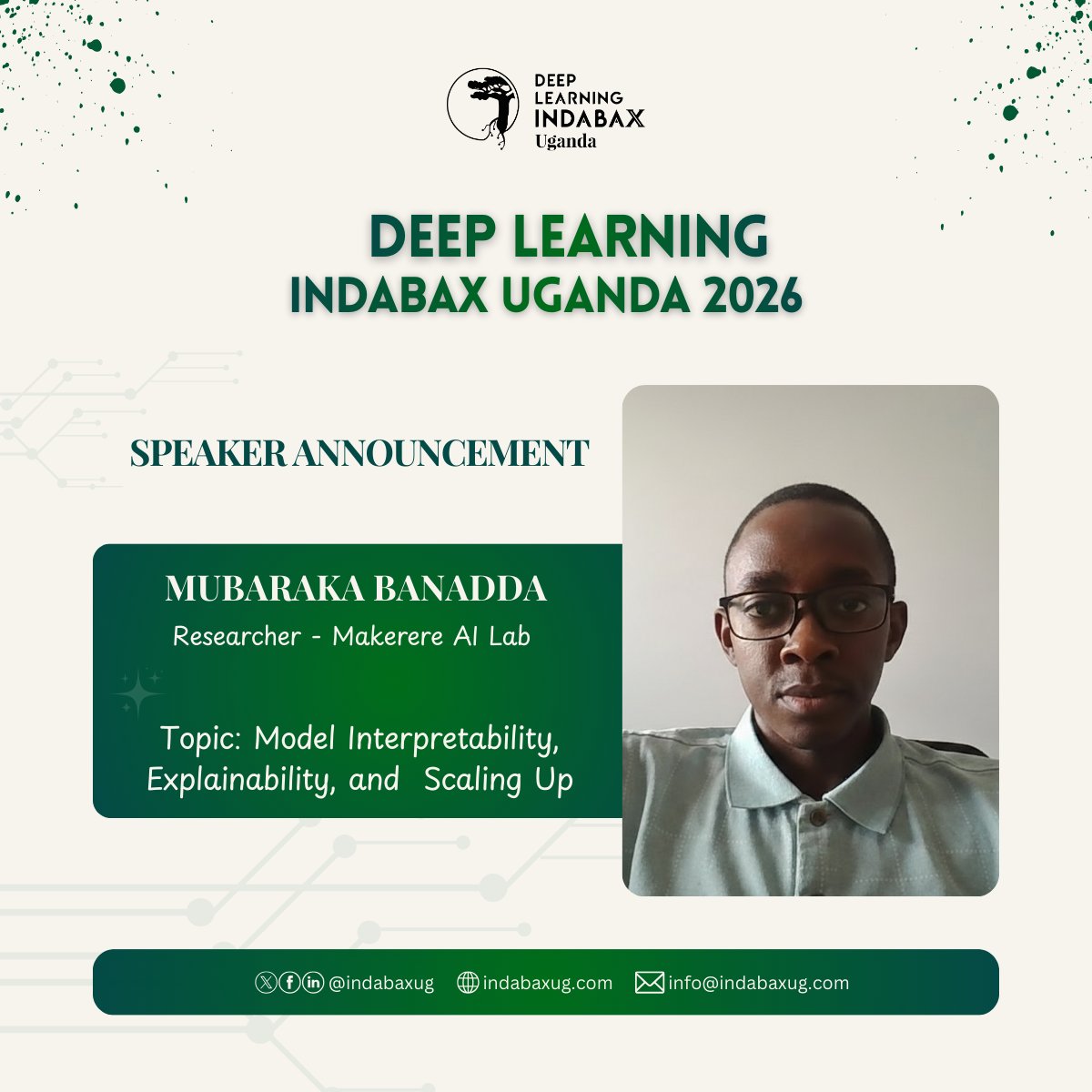
Up next in our speaker series is Mubaraka Banadda.
Mubaraka is a Researcher and Machine Learning Engineer at the Makerere AI Lab.
He will facilitate a tutorial on Model Interpretability, Explainability, and Scaling Up at this year's Deep Learning IndabaX Uganda.
We are pleased to have him join us as we explore how to build AI models that are both explainable and scalable.
@DeepIndaba @SunbirdAI @AI_HealthLabMak @UNUMACAU @ZindiAfrica @TheAIJournal1
@MasakhaneNLP @AIR_lab_MUK @DeepIndabaX_ZA
@GoogleDeepMind @TheOfficialACM
#IndabaXUganda2026 #SpringSchool2026 #AIinAfrica #AgentBasedModeling
11
24
446
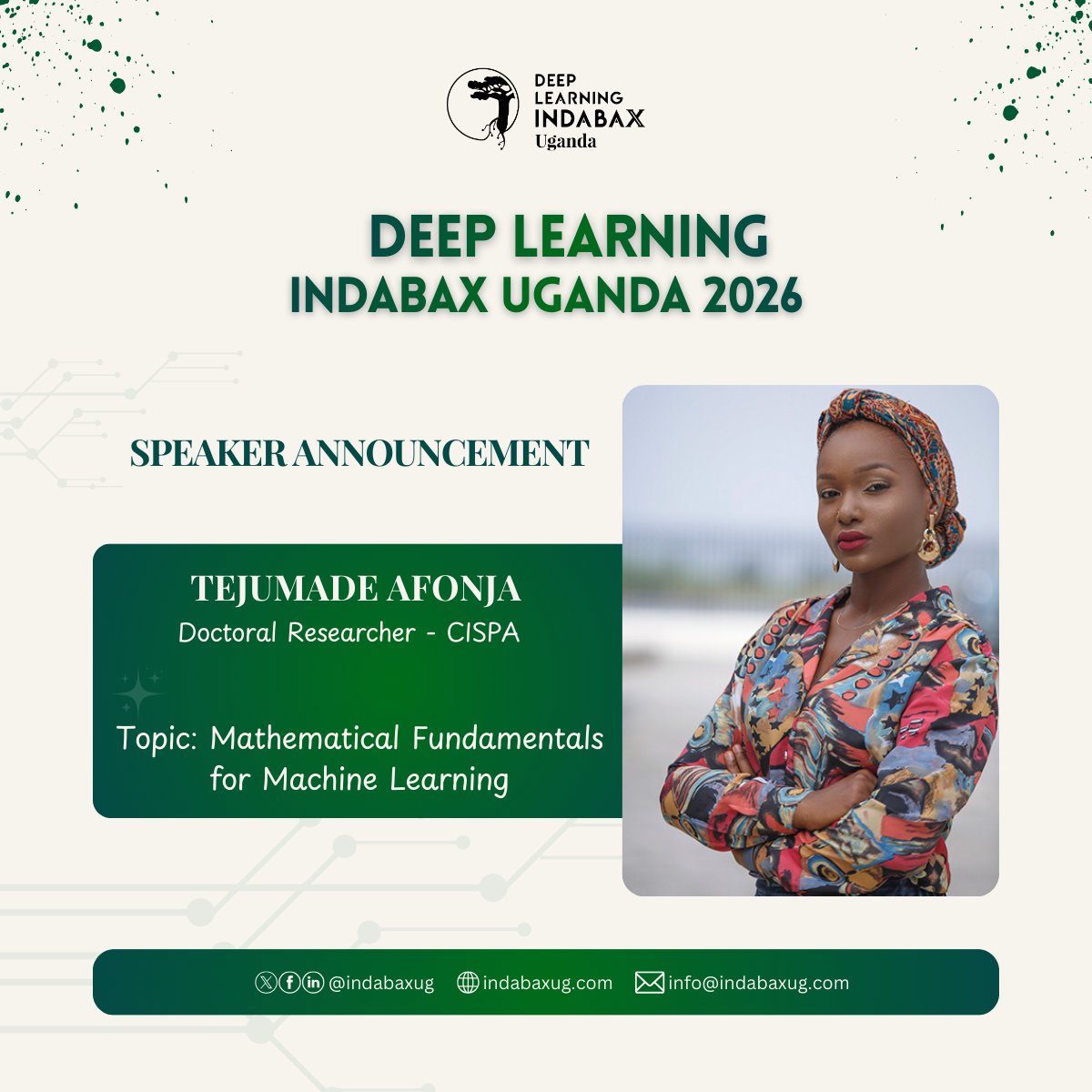
Meet Tejumade Afonja - @tejuafonja , one of our speakers at this year's Deep Learning IndabaX Uganda.
Tejumade is a Doctoral Researcher at CISPA Helmholtz Center for Information Security.
She will facilitate a session on Mathematical Fundamentals for Machine Learning.
We are looking forward to learning from her.
@DeepIndaba @SunbirdAI @AI_HealthLabMak @UNUMACAU @ZindiAfrica @TheAIJournal1 @MasakhaneNLP @AIR_lab_MUK @DeepIndabaX_ZA @GoogleDeepMind @TheOfficialACM
#IndabaXUganda2026 #SpringSchool2026 #AIinAfrica #AgentBasedModeling
8
23
569

Mar 1
The Null World: Episode 5 of The Fractals of Finance
We built a market with no feedback. Every statistical signature vanished.
Then we turned feedback on. Every signature returned.
Over four episodes, we documented the fingerprint of real markets: deep memory, fat tails, volatility clustering, universality across 68 contracts. But observation is not proof. So we built a controlled experiment.
An agent-based model. One variable: feedback. Everything else held constant.
The null world, pure Gaussian noise with no agents, produced exactly what traditional finance assumed. Zero memory. Zero fat tails. Zero five-sigma events. A perfect random walk.
The moment we introduced traders who condition their behaviour on price, the flat line erupted into structure. Memory appeared. Tails fattened. Extreme events multiplied. The simulated world became statistically indistinguishable from real markets.
No external shocks required. No news. No central banks. No earnings announcements. Just participants observing price and reacting to it.
Feedback alone is sufficient to reproduce the statistical DNA of real markets. Its absence produces a world that does not exist.
Episode 6 asks: how much feedback does it take to break the random walk?
Less than you think.
Read the full episode here: atstradingsolutions.com/the-…
#QuantitativeFinance #AgentBasedModeling #MarketMicrostructure #FractalsOfFinance
1
7
655
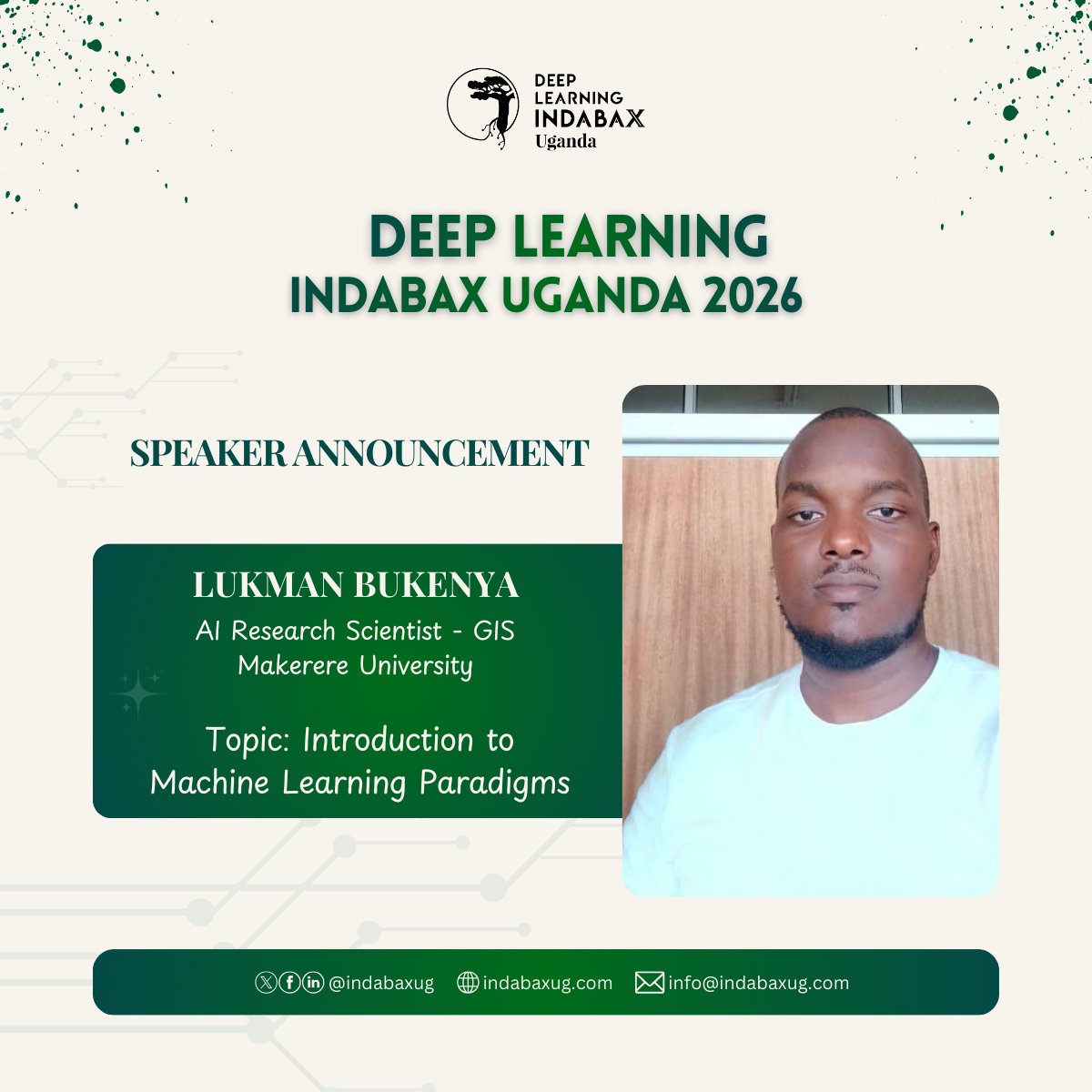
Introducing our next speaker Lukman Bukenya.
Lukman is an AI Research Scientist at Geospatial Data and Computational Intelligence Lab, Makerere University.
For this year's Deep Learning IndabaX Uganda, Lukman will be introducing us to Machine Learning Paradigms during the tutorial sessions.
We are excited to have him share his knowledge
@DeepIndaba @SunbirdAI @AI_HealthLabMak @UNUMACAU @ZindiAfrica @TheAIJournal1 @MasakhaneNLP @AIR_lab_MUK @DeepIndabaX_ZA @GoogleDeepMind @TheOfficialACM
#IndabaXUganda #SpringSchool2026 #AIinAfrica #AgentBasedModeling
5
10
113
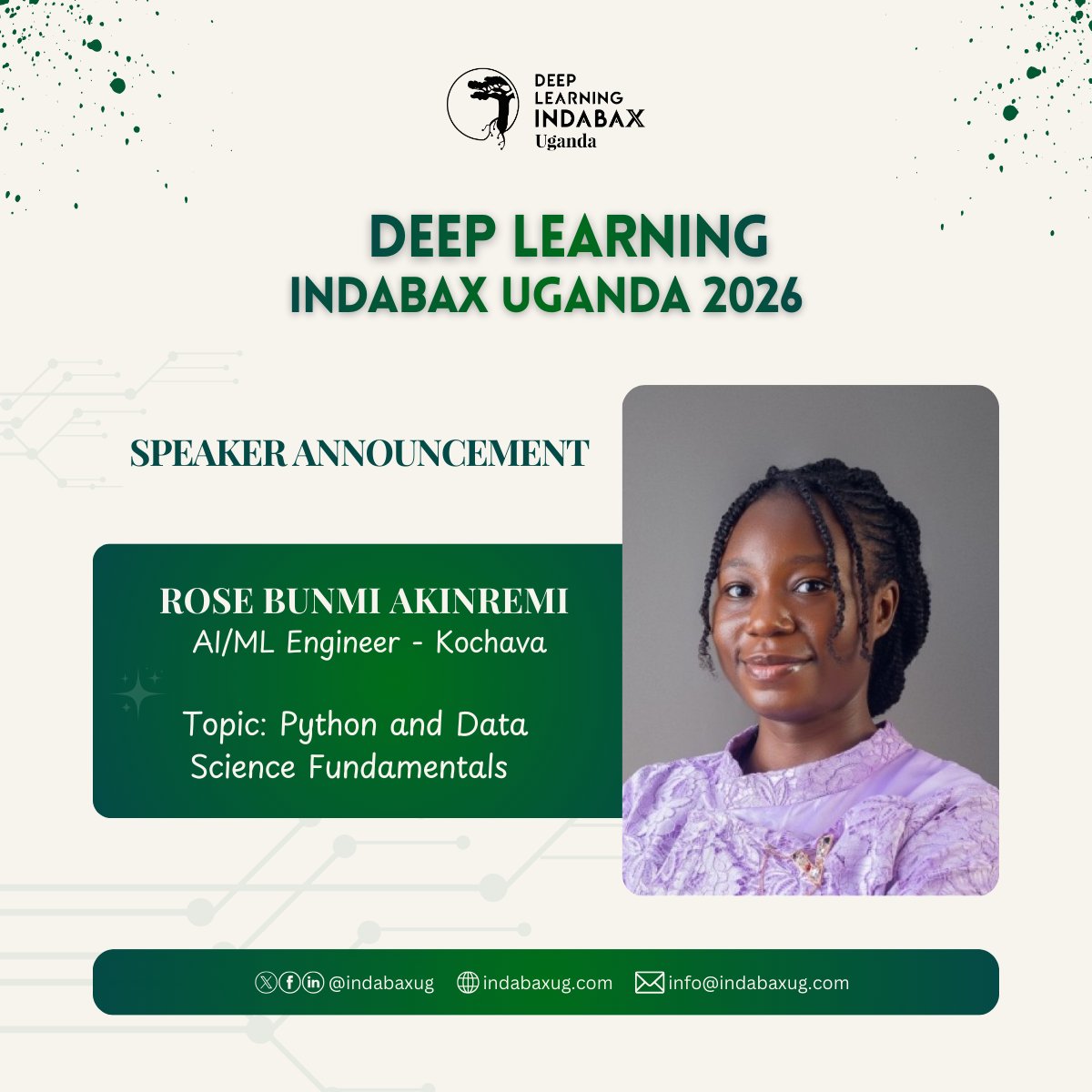
Meet Rose Bunmi Akinremi- @bumie_rose , who is one of our speakers at Deep Learning IndabaX Uganda 2026!
Rose is an AI/ML Engineer at Kochava, and she will be facilitating a session on Python and Data Science Fundamentals.
We are excited to learn from her! 🥳🥳🥳🥳
@DeepIndaba @SunbirdAI @AI_HealthLabMak @UNUMACAU @ZindiAfrica @TheAIJournal1 @MasakhaneNLP @AIR_lab_MUK @DeepIndabaX_ZA @GoogleDeepMind @TheOfficialACM
#IndabaXUganda #SpringSchool2026 #AIinAfrica #AgentBasedModeling
8
14
148

Go beyond memorizing theories and test it out yourself. Complex Systems gives you the tools to question, model, and test how the world really works.
Go to lsa.umich.edu/cscs for more information
#mathematics #agentbasedmodeling #complexsystems #econmaojor #premed #umich
6
372
Traffic jams, social media virality, financial markets...
Not complicated. Complex. Learn more about how these systems are related and modeled with Complex Systems at lsa.umich.edu/cscs
#ComplexSystems #agentbasedmodeling #umich #uofm #goblue
2
6
435
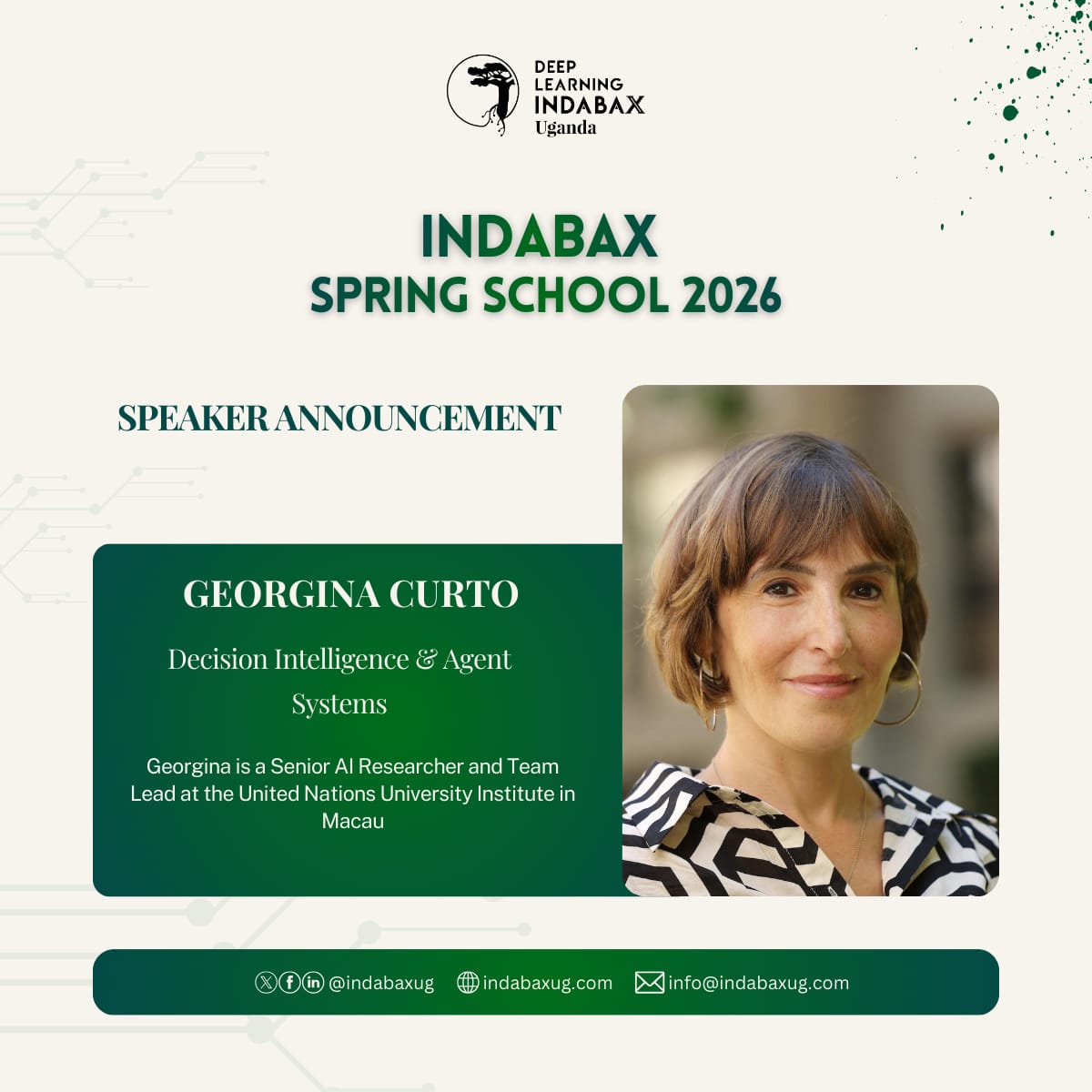
Meet our speaker Georgina Curto, PhD, MBA
Georgina will lead multiple sessions on Agent-Based Modelling and Decision Intelligence, sharing practical insights on how agent-based systems can support policy making and complex decision processes.
She is a Senior AI Researcher and Team Lead at the United Nations University Institute in Macau @UNUMACAU, where her work focuses on applying AI to real-world societal challenges.
Her sessions will blend strong foundations with hands-on practice, helping participants understand how agent-based and agentic AI methods inform better decisions.
We are excited to have her at IndabaX & Spring School 2026.
@DeepIndaba @SunbirdAI @AI_HealthLabMak @UNUMACAU @ZindiAfrica @TheAIJournal1 @MasakhaneNLP @AIR_lab_MUK @DeepIndabaX_ZA @GoogleDeepMind @TheOfficialACM
#IndabaXUganda #SpringSchool2026 #AIinAfrica #AgentBasedModeling
1
7
14
357
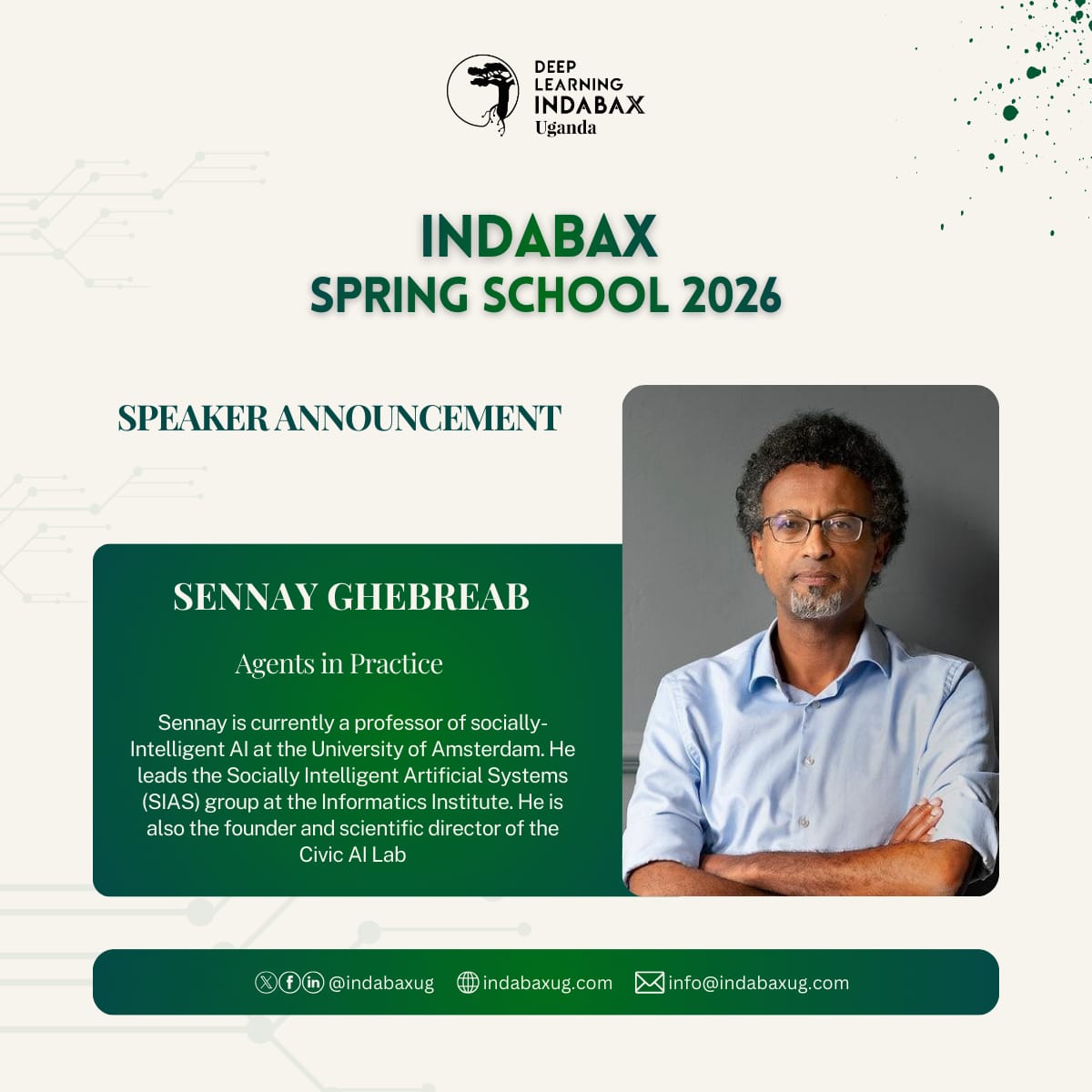
Meet our speaker Prof. Sennay Ghebreab
He will lead Agents in Practice, drawing from decades of work in socially intelligent AI, civic-focused systems, and interdisciplinary research.
He is a Professor at the University of Amsterdam, leads the Socially Intelligent Artificial Systems group, and is the founder of the Civic AI Lab, where AI is applied to real societal challenges.
His session will reflect on how agent-based approaches can support fairness, cooperation, and real-world impact across society.
We are excited to learn from his experience at IndabaX Spring School 2026.
@DeepIndaba @SunbirdAI @AI_HealthLabMak @UNUniversity @ZindiAfrica @TheAIJournal1 @MasakhaneNLP @AIR_lab_MUK @DeepIndabaX_ZA @GoogleDeepMind @TheOfficialACM
#IndabaXUganda #SpringSchool2026 #AIinAfrica #AgentBasedModeling
9
15
271

Excited to welcome Prof. Frank Dignum (@frankdignum) to IndabaX Spring School 2026! 🌍✨
This is a conversation you won’t want to miss!
#IndabaXUganda #SpringSchool2026 #AIinAfrica #AgentBasedModeling

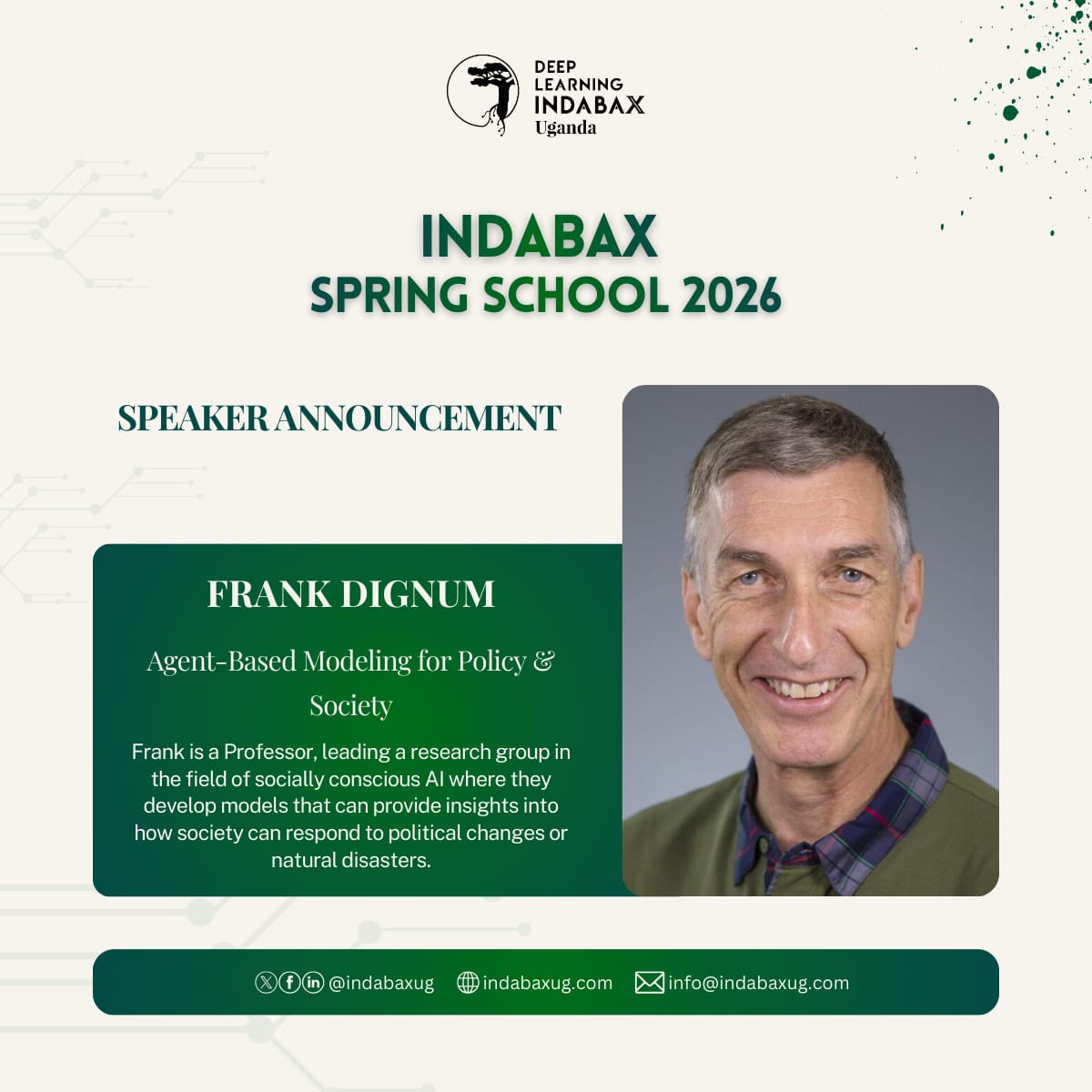
Our next speaker for IndabaX & Spring School 2026 is Prof. Frank Dignum
He will lead a session on Indigenous AI, exploring how AI can be developed with communities, not just for them. His talk will reflect on the risks, responsibilities, and real possibilities of building AI that genuinely supports indigenous knowledge, values, and futures.
With decades of experience in socially aware AI, agent-based modeling, and policy-focused simulations, his work continues to shape how AI can serve society in meaningful ways, including across Africa.
We look forward to this important conversation at the Spring School.
@DeepIndaba @SunbirdAI @AI_HealthLabMak @UNUniversity @ZindiAfrica @TheAIJournal1 @MasakhaneNLP @AIR_lab_MUK @DeepIndabaX_ZA @GoogleDeepMind @TheOfficialACM
#IndabaXUganda #SpringSchool2026 #AIinAfrica #AgentBasedModeling
5
8
129
Our next speaker for IndabaX & Spring School 2026 is Prof. Frank Dignum
He will lead a session on Indigenous AI, exploring how AI can be developed with communities, not just for them. His talk will reflect on the risks, responsibilities, and real possibilities of building AI that genuinely supports indigenous knowledge, values, and futures.
With decades of experience in socially aware AI, agent-based modeling, and policy-focused simulations, his work continues to shape how AI can serve society in meaningful ways, including across Africa.
We look forward to this important conversation at the Spring School.
@DeepIndaba @SunbirdAI @AI_HealthLabMak @UNUniversity @ZindiAfrica @TheAIJournal1 @MasakhaneNLP @AIR_lab_MUK @DeepIndabaX_ZA @GoogleDeepMind @TheOfficialACM
#IndabaXUganda #SpringSchool2026 #AIinAfrica #AgentBasedModeling
9
14
380
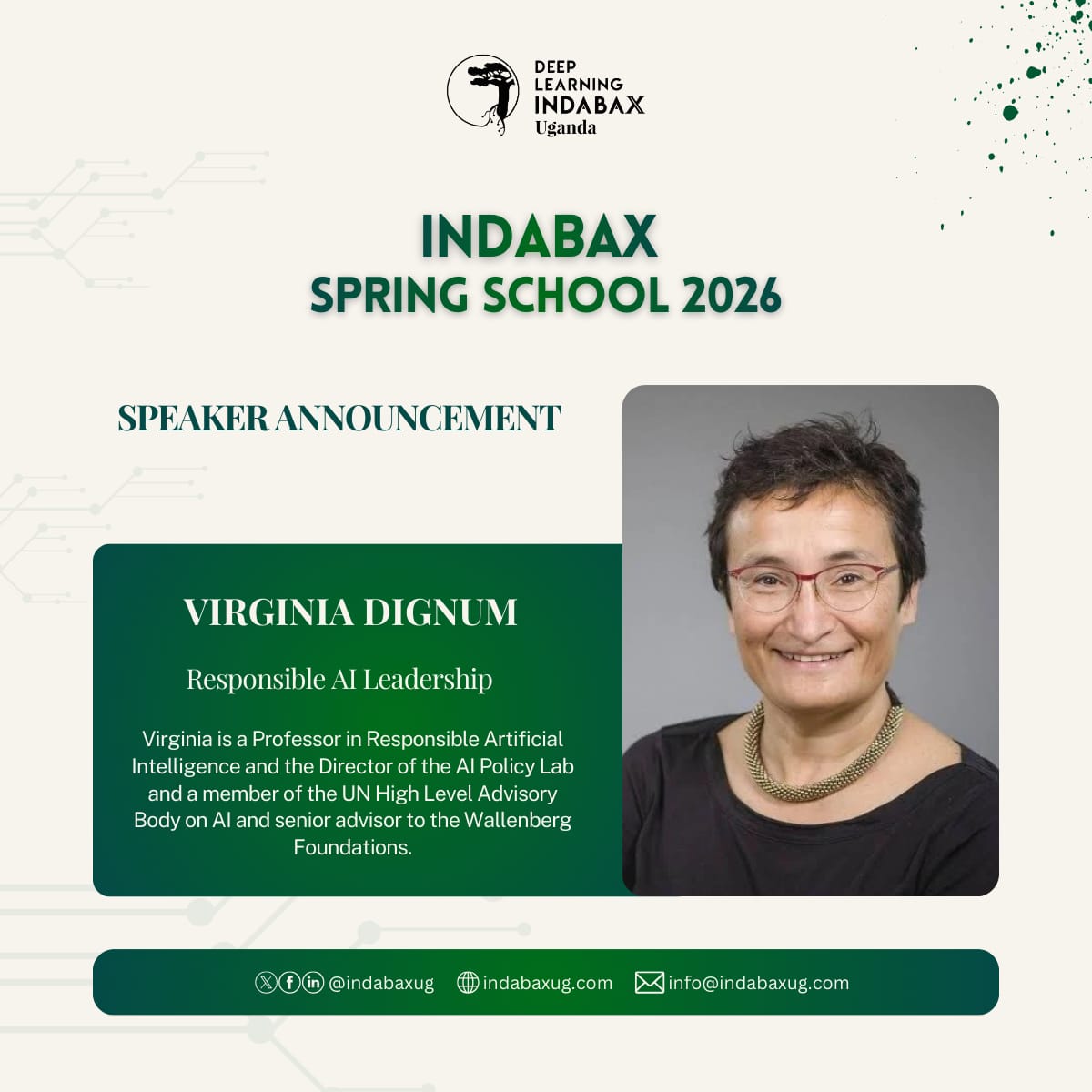
We are excited to announce our first speaker for IndabaX & Spring School 2026
Welcoming Prof. Virginia Dignum, a global leader in Responsible AI and AI policy.
She will be leading two sessions at the Spring School:
- Tutorial: Responsible Agents as part of the Mentorship and Hackathon
- Tutorial: Agentic AI – The Real Story
We look forward to learning how to design AI systems that are responsible, agent-driven, and grounded in real-world impact.
@DeepIndaba @SunbirdAI @AI_HealthLabMak @UNUniversity @ZindiAfrica @TheAIJournal1 @MasakhaneNLP @AIR_lab_MUK @DeepIndabaX_ZA @GoogleDeepMind @TheOfficialACM
#IndabaXUganda #SpringSchool2026 #AIinAfrica #AgentBasedModeling
12
18
314