
23 Sep 2025
2030 AI will have thousands of times GPT-4's compute, using gigawatts of power. But algorithm efficiency is improving too—not just brute force.
#AIC compute #AlgorithmEfficiency #TechProgress
7


16 May 2025
Mastering Big O Notation helps developers write smarter, faster, and more efficient code — a must-know for interviews and scalable solutions.
#BigONotation #AlgorithmEfficiency #TimeComplexity #CodeOptimization #SoftwareEngineering #CleanCode #DeveloperTools #HattussaITSolutions
2
7

21 Feb 2025
Boost Your Coding Speed: AI's Role in Development
#CodingWithAI #ProgrammingProductivity #DeveloperTips #AIEfficiency #TechTrends #SoftwareDevelopment #AIInCoding #ProgrammingKnowledge #AlgorithmEfficiency #CodeReview
18

20 Feb 2025
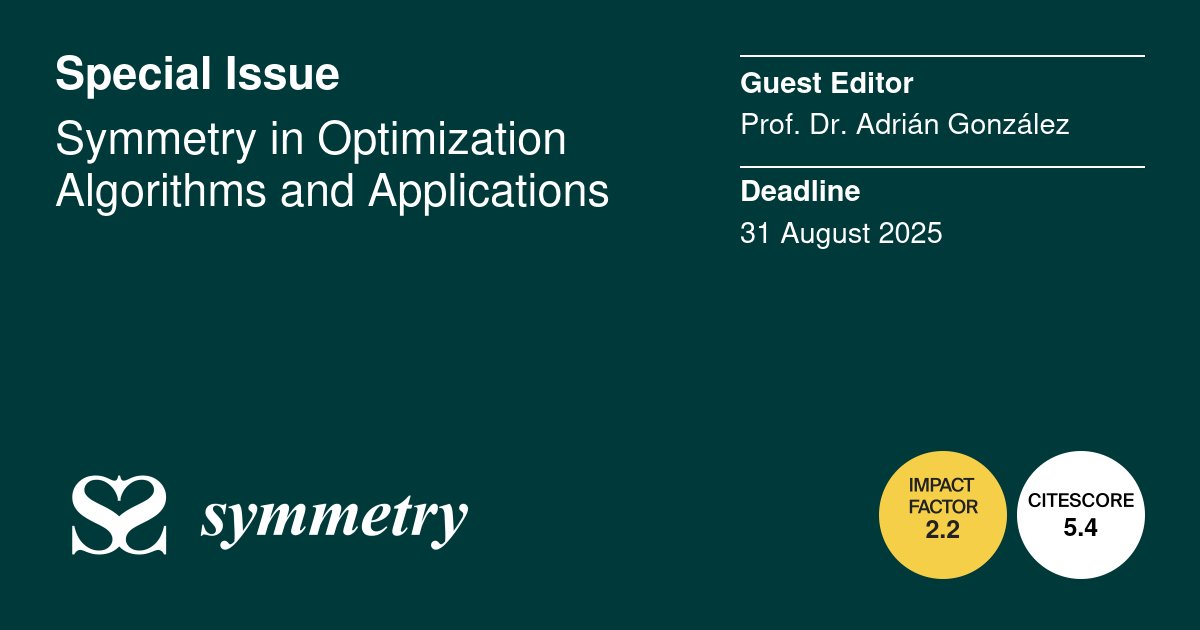
#callforpapers #mdpisymmetry A new Special Issue opens for submission!
Title: Symmetry in Optimization Algorithms and Applications
Editor: Adrián González
Details: brnw.ch/21wQP0A
#optimizationalgorithms #algorithmefficiency #combinatorialoptimization
@udg_oficial
1
1
41

19 Dec 2024
Unlocking Business Success: Why Quality Data is King
#BusinessIntelligence #DataQuality #AIRevolution #DigitalTransformation #SourceData #AlgorithmEfficiency #DataDriven #Innovation #TechTrends #SuccessStrategies
1
34



5 Sep 2024
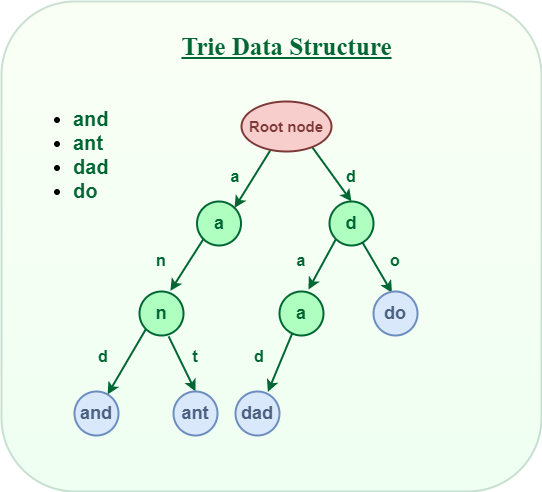
Do you know how when you type something in Google it should you a bunch of auto-complete suggestions in an instant? Ever wondered how that happens so fast?
It uses a data structure called 'Trie' which is a branch of the 'Tree' data structures used specifically for characters and words.
Every node in a Trie is a character that when attached with it's parents and children, forms a word.
Searching through a trie is really fast with an average time complexity of O(L) where L is the length of the word you are trying to search.
Image: geeksforgeeks.org/trie-inser…
#TrieDataStructure #DataStructures #ComputerScience #AlgorithmTips #CodingKnowledge #TechExplained #ProgrammingBasics #AlgorithmEfficiency #TechEducation #WordSearchAlgorithm
62

24 Aug 2024
Understanding algorithm efficiency is crucial for optimizing code performance. Big O notation helps assess how algorithms behave as input size increases. Learn more from Matheus Sena's insightful article. #AlgorithmEfficiency #BigO #Java #CodeOptimization ift.tt/nZ0L3ND
36

5 Jul 2024
Understand Algorithm Efficiency! Explore the fundamental concept of Big(O) Notation, a tool for measuring algorithm performance and resource utilization. 💻
🔗 bit.ly/4eHFGOv
#BigONotation #AlgorithmEfficiency #CodingSkills #softwareengineer #java #javachallengers

3
9
404
21 Jun 2024
🧠 Understanding Big O Notation: It categorizes algorithm efficiency, but doesn't reflect real performance accurately. A constant time algorithm may be slower than a linear one. By Nabil Tharwat. #BigO #AlgorithmEfficiency #ComputerScience 🧠 ift.tt/KO9RFL6
45
18 Jun 2024
📊 Understanding Big-O notation is crucial for analyzing algorithm efficiency. Check out Joshua Gracie's "Big-O Notation: One Byte Explainer" for a comprehensive breakdown. #BigO #AlgorithmEfficiency #DevCommunity 📊 ift.tt/YreAO0T
18
18 Jun 2024
🚀 Dive into the world of Big O Notation with Dipak Ahirav's insightful guide! Understanding time complexity and algorithm efficiency is crucial for developers. Don't miss this essential DSA series! #BigONotation #AlgorithmEfficiency #DataStructures #Dip… ift.tt/uM0tNEZ
8
15 Jun 2024
"Demystifying Big O Notation: Understanding algorithm efficiency is crucial in programming. Learn how Big O notation helps analyze and compare algorithm performance. Thanks to Kamo Mkoyan for the insightful article! #AlgorithmEfficiency #BigONotation #Pr… ift.tt/pY7ZcgS
5

Three key levers of AGI:
1️⃣ **Computing Power**: The scale of computers used to train models.
2️⃣ **Algorithm Efficiency**: Enhancing the technical quality of model training.
3️⃣ **"Unlock" Gains**: Developing tools and techniques that grant LLMs more capabilities.
#AGI #AI #TechAdvancement #ComputingPower #AlgorithmEfficiency #innovationforall
1
16
13 Jun 2024
🧠 Mastering Big O: Understanding algorithm efficiency is crucial for developers. Big O simplifies analysis, aids scalability, and optimizes resource management. Learn more from Aaliyah Oladigbolu's "Byte-Sized Wisdom" on DEV. #BigO #AlgorithmEfficiency … ift.tt/0O2PzKf
42

8 Jun 2024
Ex-OpenAI Employee Reveals: The Potential Development and Challenges of AGI
The news was brought to you by Listen2.AI.
Listen version: listen2.ai/player/afa096e9-1…
In a recent development that has gripped the tech world, a former OpenAI employee, Leopold Aschenbrenner, has made headlines by releasing a 165-page document outlining his predictions for the future of artificial intelligence. Aschenbrenner, who was dismissed from OpenAI for sharing a confidential security memo with the board, shared his insights during an appearance on the Dwarkesh podcast.
This document, which Aschenbrenner has published on his personal website, provides an in-depth analysis and projection of AI trends based not only on his experiences at OpenAI but also on public information, general field knowledge, and workplace chatter. The former OpenAI scientist predicts significant milestones in AI development, notably that we are on the brink of achieving Artificial General Intelligence (AGI) by as early as 2027. He suggests that AGI could lead to automated AI research which would substantially accelerate advancements in the field.
According to Aschenbrenner, the rapid evolution of AI capabilities could revolutionize multiple sectors but also poses substantial risks if not managed carefully. He emphasizes that controlling superhuman AI remains an unsolved issue, and without proper regulatory frameworks, this could lead to catastrophic outcomes.
The increase in model capabilities, as Aschenbrenner points out, is driven by three key factors: an exponential increase in computing power, improvements in algorithmic efficiency, and breakthroughs in leveraging model potential. He highlights that the computational clusters required to train these sophisticated AI models could cost in the order of hundreds of billions of dollars, with power consumption equivalent to that of a mid-sized U.S. state.
As we look toward the potential realization of AGI, the document suggests that we may encounter several growth bottlenecks. These include limitations in computing power, the inherent limitations of algorithmic improvements, and the escalating complexity of creating innovative models that surpass human-like abilities.
With AI’s trajectory heading towards an era where machines could potentially surpass human intelligence, the implications are significant. For instance, AI might automate complex research tasks that currently take years within a matter of months. However, this swift advancement could lead us to ethical and safety dilemmas that might be challenging to navigate.
Drawing parallels from history, think of the initial stages of the internet or the industrial revolution—massive shifts that redefined human living standards, economies, and social structures. The advent of AGi could represent a similar tipping point, possibly transforming every aspect of how we interact with the world around us.
These developments raise critical questions about the pace at which AI is evolving and whether our current a regulatory and ethical frameworks are adequate to handle this new wave of technological revolution. It highlights the need for robust, forward-thinking policies that secure AI’s benefits while mitigating its risks.
As we continue to observe these developments, it's crucial that we stay informed and engaged in shaping the future of AI—a future that balances innovation with responsibility.
#DailyNews #WorldNews #GlobalNews #LatestNews #Listen2ai #Listen2dotai #News2Go #Tech #Technology #TechNews #TechnologyNews #ArtificialIntelligence #AGI #AITrends #LeopoldAschenbrenner #OpenAI #TechPredictions #AIResearch #DwarkeshPodcast #AIRevolution #SuperhumanAI #RegulatoryFrameworks #ComputingPower #AlgorithmEfficiency #AIAdvancements #FutureOfAI #EthicalAI #TechWorld #AIDevelopment #TechnologicalRevolution #AIImplications #TechPolicy #AIInnovation #AIrisks #AIEthics #FutureTechnology
36

15 Apr 2024
Algorithm Efficiency: Algebraic structures are key to improving algorithm efficiency in computer science. Techniques like algebraic data types and abstract algebra concepts optimize operations and data manipulation. #AlgorithmEfficiency #ComputerScience
12

8 Jan 2024
Understanding Big-O Notation: A Guide for Beginners
Introduction
Big-O notation is a fundamental concept in computer science, crucial for understanding the efficiency of algorithms.
It offers a high-level understanding of how an algorithm performs as the size of its input data grows.
This guide aims to demystify Big-O notation for beginners, making it accessible and easy to grasp.
What is Big-O Notation?
Big-O notation is a mathematical representation used to describe the upper limit of an algorithm's running time or space requirements in terms of the size of the input data.
It focuses on the worst-case scenario, ignoring constants and lower-order terms.
This helps in comparing the relative efficiency of different algorithms.
Common Big-O Classifications
O(1) - Constant Time: An algorithm is said to run in constant time if its running time remains constant regardless of the input size.
For example, accessing a specific element in an array.
O(log n) - Logarithmic Time: These algorithms increase in runtime logarithmically with the input size.
A classic example is binary search.
O(n) - Linear Time: In linear time, algorithms' runtime increases linearly with the input size.
For instance, a loop iterating through array elements.
O(n log n) - Log-Linear Time: This complexity arises in algorithms that perform a logarithmic operation (like divide and conquer) repeatedly over the entire input, such as in merge sort.
O(n²) - Quadratic Time: Algorithms with nested loops over the input data, like bubble sort, exhibit quadratic time complexity.
Applying Big-O Notation
To apply Big-O notation, you analyze the algorithm's structure and operations.
For example, a single loop over 'n' elements results in O(n) complexity, while nested loops typically lead to O(n²).
Limitations and Criticisms
While Big-O notation is invaluable for theoretical analysis, it has limitations.
It doesn't provide actual execution time or account for factors like hardware efficiency.
Moreover, it can oversimplify performance characteristics, not accounting for variations in input data.
Conclusion
Understanding Big-O notation is essential for evaluating and comparing algorithms, particularly their scalability and efficiency.
While it's an abstraction, it serves as a crucial tool in the arsenal of every programmer and computer scientist.
As you delve into programming, keep these concepts in mind to develop efficient and scalable code.
This article provides a foundational understanding of Big-O notation.
Remember, the more you code and analyze algorithms, the more intuitive these concepts will become.
#BigONotation
#AlgorithmEfficiency
#CodingBasics
3
128

6 Dec 2023
Sorting Smarter: Unveiling Algorithmic Efficiency and User-Friendly Applications #TechRxiv #SortingAlgorithms #AlgorithmEfficiency #DataVisualization
techrxiv.org/articles/prepri…
1
56