
Apr 23
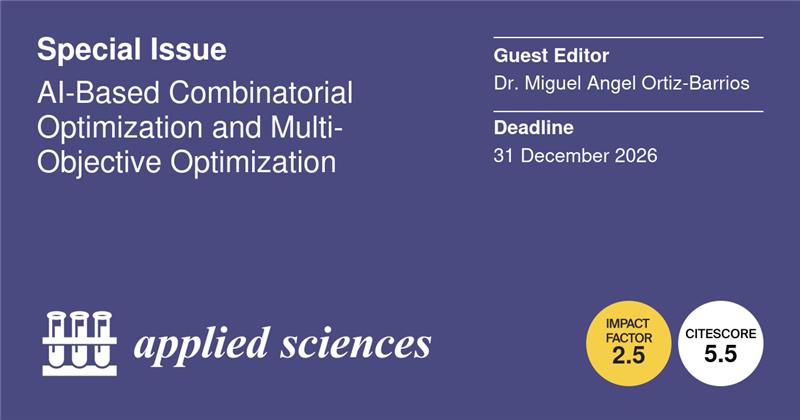
📢 #SpecialIssue
AI-Based Combinatorial Optimization and Multi-Objective Optimization
📅31 December 2026
👨🔬Guest Editor: Dr. Miguel Angel Ortiz-Barrios from Universidad de la Costa, Colombia
🔗mdpi.com/journal/applsci/spe…
#AI #combinatorialoptimization #multiobjectivedecisionmaking #metaheuristics #hybridintelligentsystems #machinelearning
1
3
63

Binary Latent Protein Fitness Landscapes for Quantum Annealing Optimization
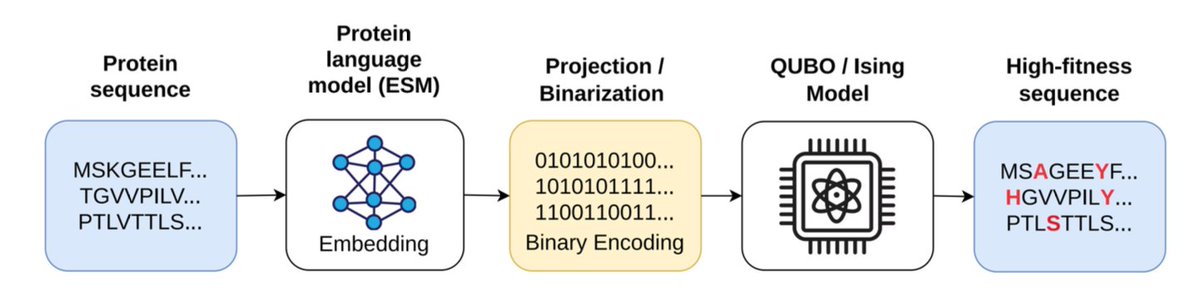
1 This work introduces Q‑BioLat, a framework that projects protein sequences into a compact binary latent space and models fitness as a quadratic unconstrained binary optimization (QUBO) problem, enabling efficient combinatorial search and direct compatibility with quantum annealers.
2 Protein language models (ESM‑2) supply contextual embeddings; these are reduced in dimensionality via random projection or PCA, then binarized using median‑thresholding to generate balanced, interpretable latent codes that still capture biologically relevant variation.
3 A ridge‑regularized QUBO surrogate is trained on the binary codes, incorporating both unary and pairwise interactions. The resulting linear‑plus‑quadratic objective is immediately usable by simulated annealing, genetic algorithms, or hardware Ising solvers without further modification.
4 Experiments on the ProteinGym GFP benchmark show that simulated annealing and genetic algorithms consistently climb the surrogate landscape, and the nearest‑neighbor real sequences retrieved from optimized codes lie in the top ~90 % of the training fitness distribution, indicating successful navigation of high‑fitness regions.
5 Representation geometry proves crucial: PCA‑based latent codes outperform random projections in optimization performance, despite identical Spearman correlation, highlighting that the structure of the latent space, not just predictive accuracy, governs search efficacy.
6 Retrieval‑based decoding maps optimized binary codes back to actual protein sequences by Hamming‑distance search among training variants, providing a conservative, interpretable bridge between latent solutions and real proteins without training a generative decoder.
7 The framework scales with O(m²) surrogate parameters and search complexity, keeping the heavy protein‑language‑model inference fixed while allowing rapid, repeated optimization in the small binary latent space.
8 Future directions include learning binary representations jointly with the surrogate, expanding beyond pairwise terms, and deploying the QUBO model on quantum annealing hardware to accelerate protein engineering at scale.
Code: github.com/HySonLab/Q-BIOLAT
Paper: arxiv.org/abs/2603.17247
#ProteinEngineering #QuantumComputing #MachineLearning #Bioinformatics #ProteinDesign #QUBO #CombinatorialOptimization
3
23
1,939

A web-based Traveling Salesman Problem solver for experimenting with graphs up to 30 nodes earned a Proof of Usefulness score of 21 in HackerNoon’s contest. - hackernoon.com/building-a-we… #softwaredevelopment #combinatorialoptimization
1
294

23 Nov 2025
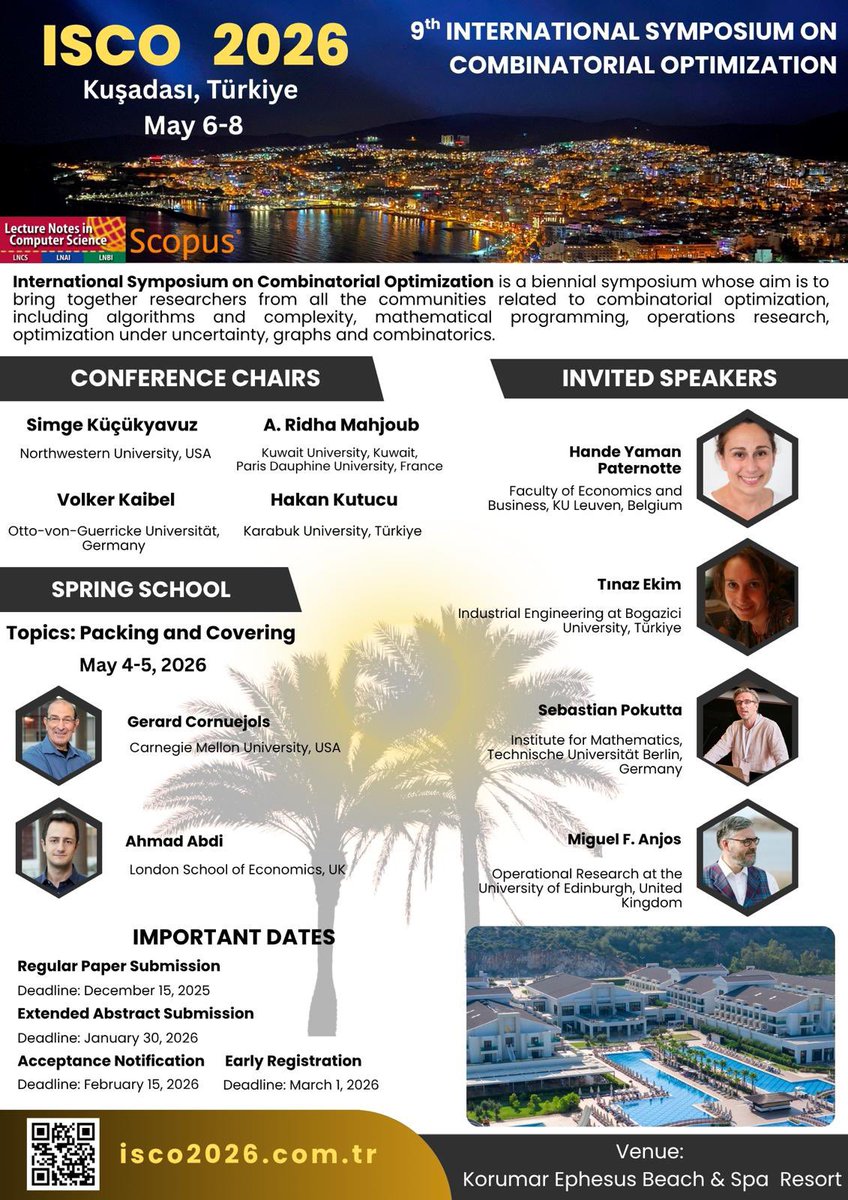
Thrilled to announce ISCO 2026—the 9th International Symposium on Combinatorial Optimization—coming to Kuşadası, Türkiye, May 6–8, 2026.
🔗 isco2026.com.tr
#CombinatorialOptimization #OperationsResearch #Algorithms #Optimization #GraphTheory #LNCS #Scopus #AcademicTwitter
2
4
289

15 Sep 2025
Alongside our own presentations, we joined two inspiring trainings last week. It’s been both fun and productive to learn and exchange ideas with our consortium partners! 🌍🤝✨
#HorizonEurope #MSCA #UrbanProblems #CombinatorialOptimization
15 Sep 2025

⚡️Thanks to all who joined our Sept 11 session “Behaviour of Electrical Networks with Small Additional Sources” with Miloš Beković (Univ. of Maribor, FEECS)!
☀️We explored how solar & wind energy challenge the daily/hourly stability of power grids.
linkedin.com/posts/msca-se-c…
1
3
652

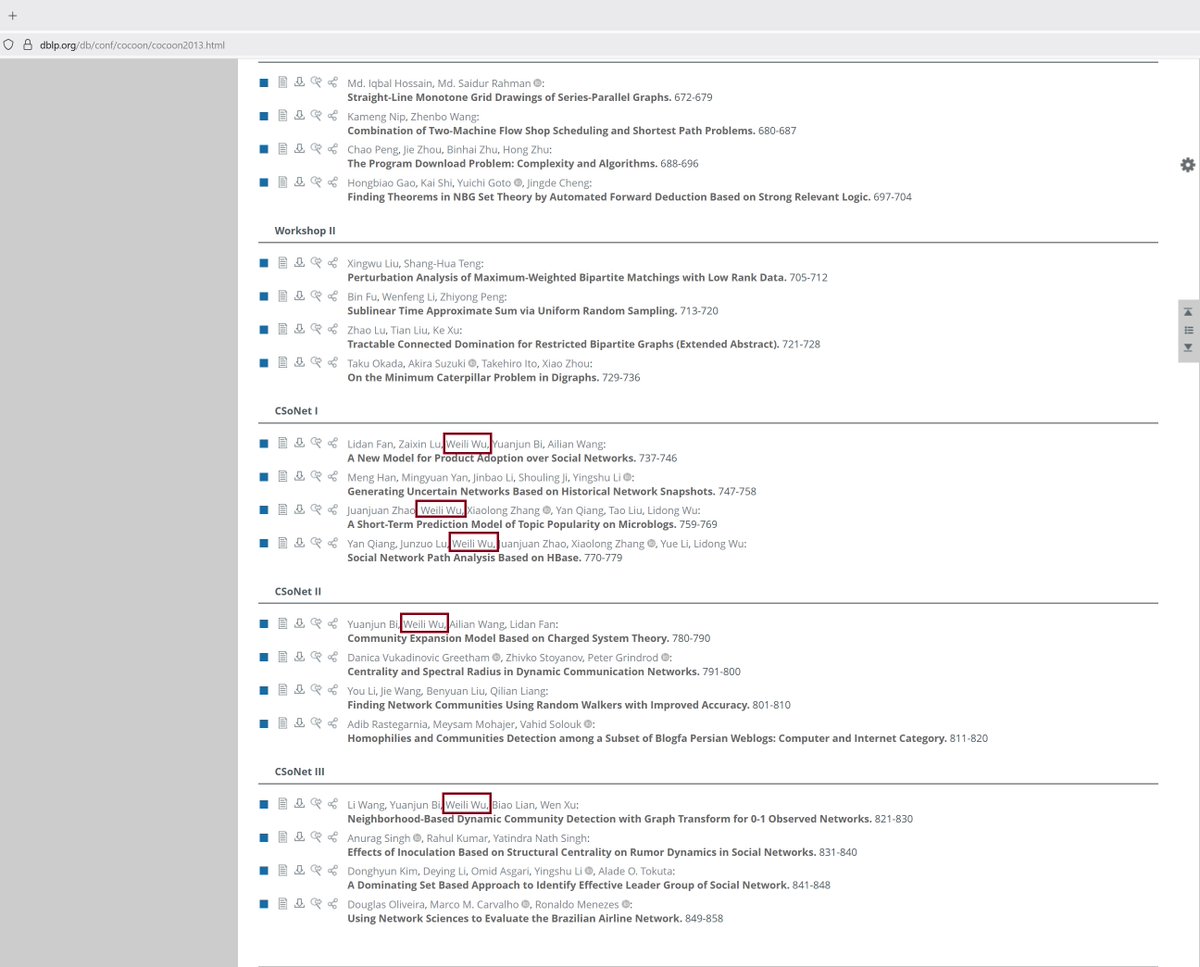
CSoNet 2013: 12 papers accepted. Authored by Weili Wu: 5 of them. 🤯Wow… what an extraordinary concentration of brilliance. Or is it something else entirely? @UTDCompSci @UTDJonsson @UT_Dallas @UMNews @IEEEorg @ComSoc @NSF @USEEOC #IEEEFellow #AcademicEthics #AcademicMisconduct #AcademicNepotism #ConferenceCodesofConduct #ConferenceEthics #TheoreticalComputerScience #COCOON #CombinatorialOptimization #AlgorithmDesign #FinancialFraud #GrantAbuse #MeTooSTEM #IEEE #ConflictOfInterest #FamilyCartels #TitleVII #NSFGrants #AcademicNepotism #SelfRewardSystem #ResearchIntegrity #WASA #CSoNet
1
1
1
277

24 Apr 2025
1/11 Excited to present our latest work "Scalable Discrete Diffusion Samplers: Combinatorial Optimization and Statistical Physics" at #ICLR2025 on Fri 25 Apr at 10 am!
#CombinatorialOptimization #StatisticalPhysics #DiffusionModels

1
15
22
1,760
18 Apr 2025
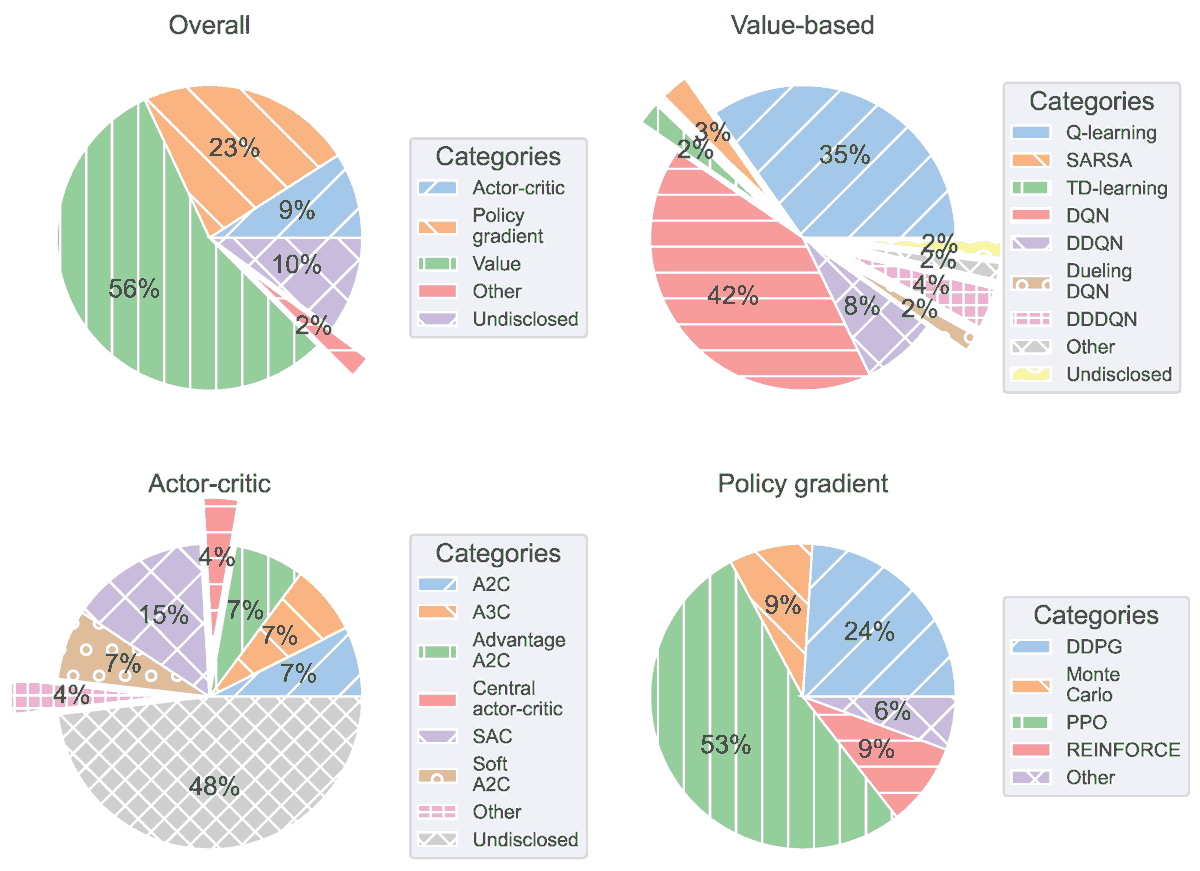
🔥 Read our Review Paper
📚 A Systematic Review on Reinforcement Learning for Industrial Combinatorial Optimization Problems
🔗 mdpi.com/2076-3417/15/3/1211
👨🔬 by Mr. Miguel S. E. Martins et al.
🏫 @ULisboa_
#combinatorialoptimization #reinforcementlearning
2
47

21 Mar 2025
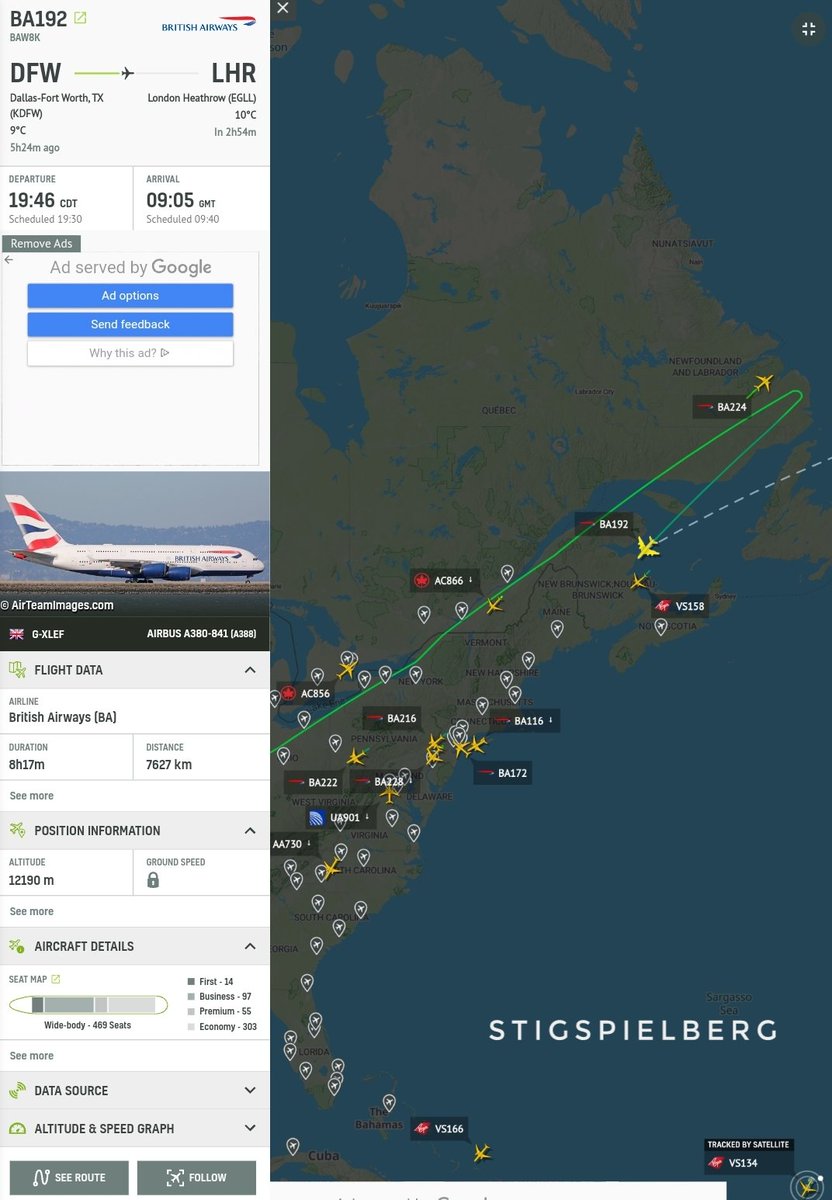
ALERT: London Heathrow Airport closed bc fire.
Below: incoming in-air #LHR (EGLL) flights. All diverted, e.g. to Amsterdam. We welcome them here in NL🇳🇱👍.
Interesting planning ahead: crews, aircraft, passengers, luggage, hotels...
#scheduling #combinatorialoptimization #math🤓


1
1
1
705

6 Mar 2025
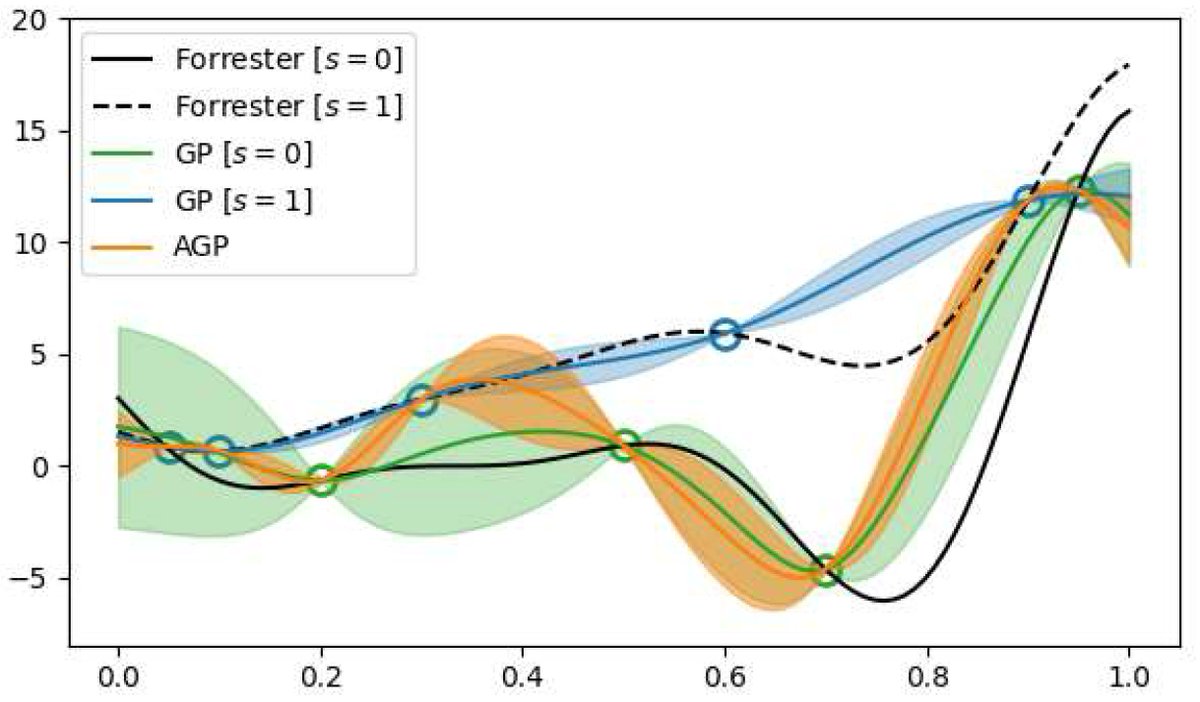
🚀 Highly viewed in MAKE: Bayesian Optimization Using Simulation-Based Multiple Information Sources over Combinatorial Structures
📄 Read here: mdpi.com/2504-4990/6/4/110
@ComSciMath_Mdpi #BayesianOptimization #CombinatorialOptimization
1
2
92

21 Nov 2024
A recent research published @IEEEAccess from #TUS scientists enhanced the scalability of #IsingMachines, leading to greater applicability in real-world #CombinatorialOptimization problems.

3
3
143
42,307

26 May 2024
🎊 We have cooperated with Dr. Jose Torres-Jimenez on the topic of "#CombinatorialOptimization for #Constructing Covering Arrays and #Sequence Covering Arrays"
buff.ly/3ynWzgl
Papers are welcomed before 31 August 2024!
#MDPIOpenAccess #ComSciMath_Mdpi

1
67

2 Apr 2024
UCD CS academics to co-organise prestigious @dagstuhl seminars - Professor @keanema on #ExplainableAI for #SequentialDecisionMaking and Assist. Prof. @Deepak_UCD on #MachineLearning Augmented Algorithms for #CombinatorialOptimization Problems. ucd.ie/cs/news/ucdcsacademic… #XAI

ALT Schloss Dagsthule
2
7
462

12 Feb 2024
Dynamic and stochastic #Inventory #Routing problems (IRPs) still inspire you fear? Check how #CombinatorialOptimization problems with large state and action spaces can be handled with hybrid #MachineLearning and #Optimization pipelines: arxiv.org/abs/2402.04463 (1/5)

ALT A nightmarish view of decision-making for inventory routing problems: several trucks driving endlessly on an artistic map.
2
7
27
2,095
1 Dec 2023
This is joint work with @sebaleh, @HochreiterSepp and
@willberghammer
. Join us at #NeurIPS2023 and also watch out for several other exciting works on #DeepLearning for #CombinatorialOptimization! 🌐
Link to Paper: arxiv.org/abs/2311.14156
3
16
642

2 Mar 2023
It has been a pleausure to give the @MunichQuantum colloquium today on applications of #quantumcomputers in #machinelearning and #combinatorialoptimization. Thanks for the kind invitation.

3
6
61
5,175

17 Feb 2023
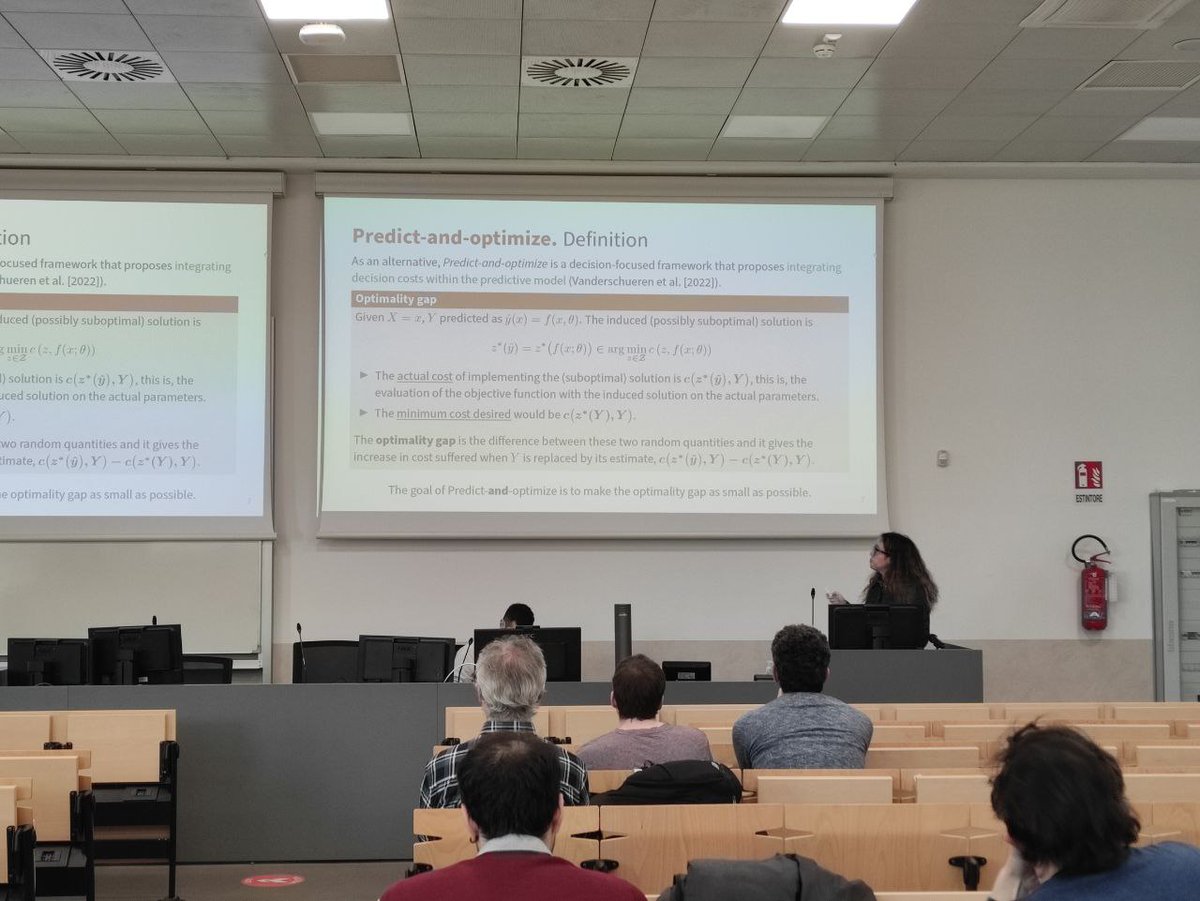
#7AYW #Day3 #CombinatorialOptimization #MachineLearning
Nuria Gómez-Vargas @justnuu_ shows a predict-and-optimize approach to guide the training of ML models with performances on the optimization problem and to enhance sparsity in the feature space for decisions explainability.
2
1
17
1,044
17 Feb 2023
#7AYW #Day3 #CombinatorialOptimization #MachineLearning
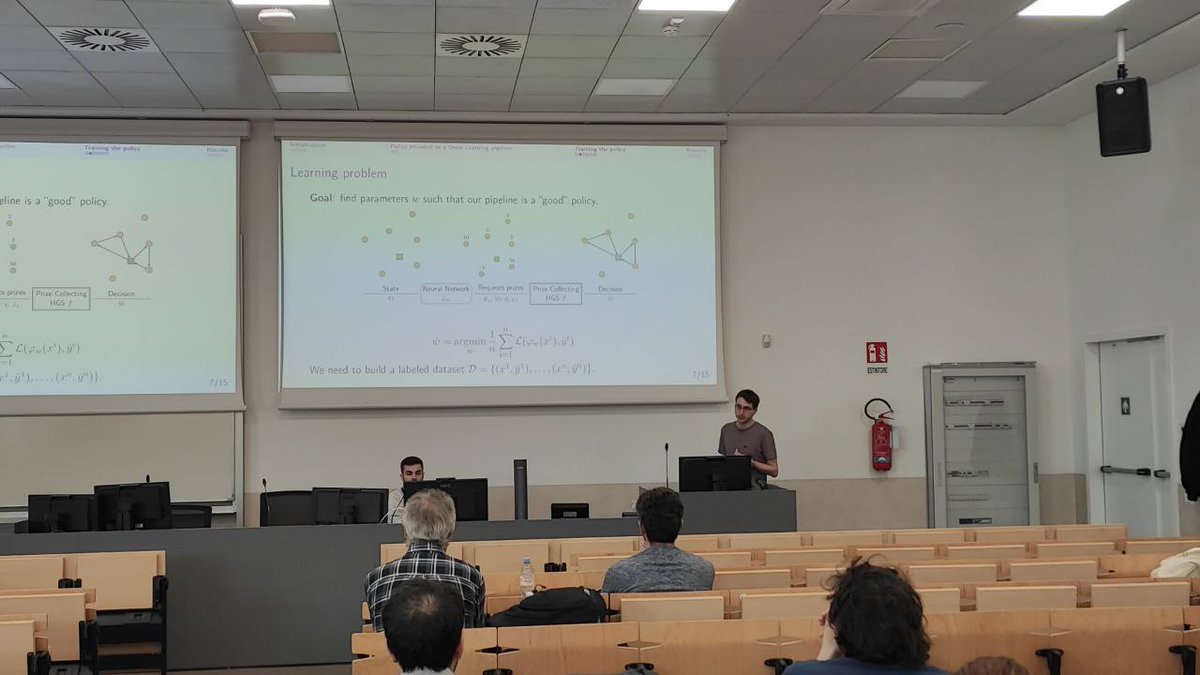
Léo Baty presents a policy for the dynamic VRPTW,
which ranked first of the competition @EuroNeuripsVRP. It relies on a #DeepLearning pipeline with a prize collecting VRPTW combinatorial optimization layer.
1
6
258
15 Feb 2023
#7AYW #Day1 #CombinatorialOptimization #MachineLearning
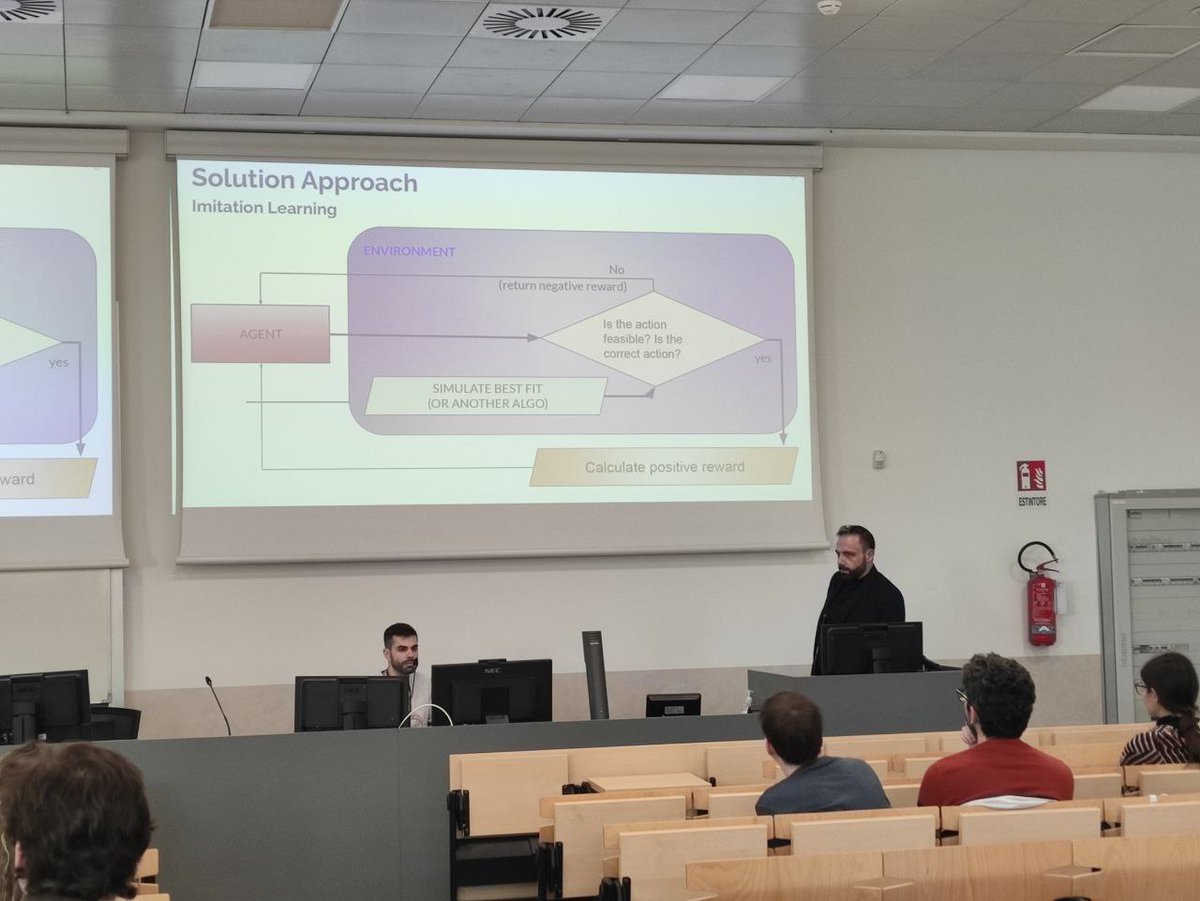
Francesco Paolo Saccomanno proposes a reinforcement learning strategy to address #BinPacking, where the agent is trained to imitate a classic heuristic, the “best fit” strategy.
1
8
301
15 Feb 2023
#7AYW #CombinatorialOptimization & #MachineLearning
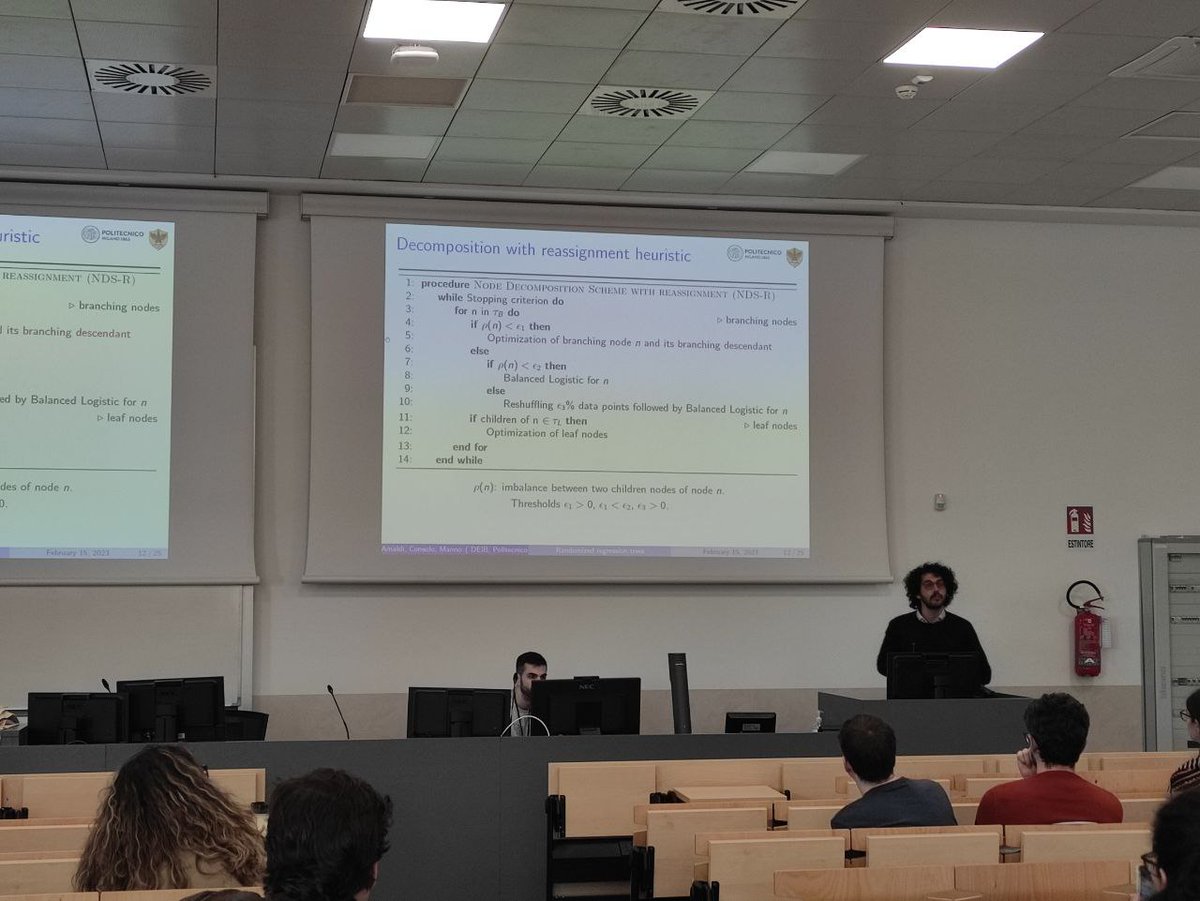
Antonio Consolo studies a variant of multivariate randomized regression trees and presents a decomposition training algorithm with a heuristic for the reassignment of the input vectors along the branching nodes of the tree.
1
5
266