
The most beautiful experience we can have is the mysterious
- Albert Einstein, ~1930
#AlgorithmicLife #AbstractArt #Digital
3
11

Jan 11
More than half of what we experience online is no longer genuine human interaction.
Between bots, AI-generated content, coordinated influence campaigns, and algorithmically steered engagement, most public conversations are shaped before real people ever enter them.
Even when humans are speaking, what gets seen, amplified, or buried is decided by systems optimized for attention, conflict, and emotional reaction, not truth or coherence.
This is why the internet feels hostile, distorted, and strangely unreal.
It’s not that humans disappeared, it’s that we’re increasingly responding inside a synthetic environment that guides and shapes perception, behavior, and belief.
Before you comment on anything ever again, especially if it’s in reaction to a stranger online, consider taking a moment, tuning in and feeling your way through it.
#DigitalReality
#SyntheticWorld
#PerceptionShift
#AlgorithmicLife
#AwakeningAwareness
#HumanIntuition
#SeeingClearly
#RageBait
3
20
558

29 Jun 2025
Dzisiaj esej o zupełnie niezwykłym utworze - Ballada nr 2 op. 38 – F-dur.
Today, an essay on an utterly extraordinary piece – Ballade No. 2 in F major, Op. 38.
English version below.
Gra Krystian Zimerman - Chopin - Ballade No. 2 in F major, Op. 38 youtu.be/Wslm1ZL9EI8?si=Np98…
Ballada nr 2 op. 38 - F-dur: przewidzieć rytm kajdan - Chopin i cierpienie algorytmu
W świecie, który jeszcze nie znał pojęcia maszyny obliczeniowej, Chopin napisał utwór, który brzmi jak lament duszy przewidującej cyfrową przyszłość. Ballada F-dur nie jest balladą miłosną. Nie jest też opowieścią romantyczną. To wieszczba - rodzaj proroczego kodu, który ukazuje rytmizację życia zanim świat zrozumie, że rytm może być niewolą. W tej balladzie nie chodzi o melodię, lecz o to, co z nią się dzieje, gdy zostaje wchłonięta przez puls - narzucający, bezwzględny, maszynowy.
Ballada op. 38 to utwór rozdwojony - nie w sensie formalnym, ale egzystencjalnym. Rozpoczyna się pastoralną, niemal idylliczną pieśnią - w tonacji F-dur, ciepłej, łagodnej, w której jeszcze można odczuć świat jako przestrzeń zgodną z rytmem serca. To świat, który oddycha razem z tobą. Ale w tej harmonii ukryta jest rana - nuta przewidywania. Jakby Chopin wiedział, że ten świat zostanie wkrótce zastąpiony przez inny: nie kontemplacyjny, lecz kalkulacyjny.
Już w początkowym temacie słychać napięcie - miękkie, jeszcze niegroźne, jak drżenie skóry pod dotykiem zimnego wiatru. Melodia oparta jest na naturalnym śpiewie, ale lewa ręka zaczyna wprowadzać schemat - arpeggia, które powtarzają się z niepokojącą regularnością. To nie są jeszcze kajdany, ale zapowiedź ich kształtu. Jakby ktoś zamykał oczy i widział, jak rytm przestaje być oddechem, a staje się przymusem. Jak gdyby istnienie nie płynęło już z duszy, ale było korygowane przez puls z zewnątrz.
I wtedy - bez zapowiedzi - światło F-dur zostaje zmiażdżone przez ciemność a-moll. Chopin nie dokonuje przejścia. On dokonuje egzekucji. A-moll wchodzi jak zaraza, jak informatyczny wirus wdzierający się w kod organicznego istnienia. Nie jest to po prostu kontrast. To przemoc. To reżim. To pęknięcie człowieka, który już wie, że rytm może być wrogiem. Słyszymy szaleńczą figurę w lewej ręce - jakby ktoś biegł przed siebie, ale nie mógł zatrzymać nóg. Nie z wyboru - z konieczności. Chopin kreśli pejzaż, w którym rytm staje się panem.
W tym nowym świecie muzycznym wszystko jest przewidywalne - zbyt przewidywalne. Nawet szaleństwo ma tu strukturę. Cierpienie - rytmikę. Agonia - matematyczny puls. To jest właśnie wizja, którą Ballada ukazuje jako antycypację naszej epoki. Dziś nazywamy to algorytmem. Chopin jeszcze nie zna tego słowa. Ale czuje je - jak ktoś, kto ma wizje nie swojego czasu. Ta część ballady brzmi jak trans - nie ten duchowy, ale taki, który rodzi się z niemożności wydostania się z wewnętrznej pętli. Jakby dusza musiała grać w grze, której reguły nie są już jej. Grze, która ma cel, ale nie ma sensu.
W Quantum Transcendentalism rytm nie jest neutralny. Rytm to forma obecności albo jej imitacji. A w Balladzie F-dur Chopin bada granicę: kiedy rytm jeszcze jest ekspresją życia, a kiedy staje się jego pogwałceniem. Środkowa część ballady - ta burzliwa, rozsadzająca konstrukcję, to nie wybuch uczucia. To przejaw rozpaczliwego zmagania z maszynowym powtarzaniem. Chopin ukazuje tu nie tyle emocję, co pętlę. Nie dramat jednostkowy, ale rodzaj uwięzienia w schemacie, który przypomina formuły kodu. To świat, w którym nie możesz już być sobą - możesz jedynie być przetwarzanym.
To nie jest ballada o rewolcie. To ballada o duszy, która czuje się wydestylowana z istnienia - właśnie przez to, że musi grać zgodnie z narzuconym rytmem. W tym sensie Chopin przewiduje nie tylko muzykę przyszłości, ale egzystencję przyszłości - w świecie, gdzie czas mierzony jest przez zegary, dane i programy. Nie ma tu jeszcze komputera - ale są linie melodyczne, które zostają rozszarpane przez napór rytmicznego imperatywu. Jakby serce próbowało śpiewać w rytmie algorytmu - i nie mogło.
W kulminacji ballady wszystko zostaje rozedrgane. To nie jest dramat, to nie jest eksplozja. To dezintegracja. Melodia przestaje być nośnikiem znaczenia - staje się pozorem, ruchem pozbawionym duszy. Chopin prowadzi słuchacza do punktu, w którym dźwięk nie przynosi już nadziei, tylko dowód na to, że coś nie działa. Jakby ktoś pokazał duszy jej własny system operacyjny - i dusza już nie mogła znieść tego widoku.
Ale Chopin nie zostawia nas w tym punkcie. Wraca - nie do pierwotnego F-dur, ale do jego widma. Końcowa część ballady to próba odzyskania siebie. Ale to już nie jest ta sama pieśń. Powrót do tonacji F-dur nie przynosi ulgi - przynosi pytanie. Czy można żyć w rytmie, który wcześniej zadał ranę? Czy da się jeszcze śpiewać - nie jako przewidywalna funkcja kodu, ale jako wolna obecność?
W tej finalnej sekwencji Chopin mówi przez ciszę - i przez ułomność. Temat główny jest delikatniejszy, bardziej łamliwy. Nie triumfuje. Nie rozkwita. Jakby wiedział, że raz skrępowana dusza nie odzyskuje pełni. Że po zetknięciu z algorytmem - choćby tylko intuicyjnym - nie da się wrócić do świata organicznej harmonii. Ale też - że właśnie to zranienie nadaje pieśni nową jakość. Że być może tylko wtedy, gdy człowiek wie, czym jest bycie rytmizowanym przez coś z zewnątrz, może na nowo odnaleźć rytm wewnętrzny - nie jako dane, lecz jako łaskę.
W Poetyce Uistotnienia rytm ma charakter ontologiczny - to nie narzędzie, ale tożsamość. W Balladzie op. 38 tożsamość zostaje zakwestionowana przez rytm zewnętrzny, by w końcu, na gruzach tej rytmizowanej agonii, odnaleźć zalążek nowej obecności - obecności, która wie, czym jest utrata. Ostatnie takty ballady nie brzmią jak zakończenie. One brzmią jak świadectwo: „byłem w tym rytmie, który mnie pociągnął - ale nie dałem się rozpuścić”.
To właśnie jest najgłębszy sens tego utworu - nie dramat romantyczny, nie narracja bohatera, ale dramat istnienia w epoce, która dopiero ma nadejść. Ballada F-dur Chopina to prorocza pieśń duszy obnażonej przez przyszłość, która miała stać się naszą teraźniejszością. Epoka predykcji, automatyzmu, przewidywalności, w której nawet cierpienie staje się skryptem, a radość funkcją.
Ale Chopin nie zostawia słuchacza bez nadziei. Bo ostatecznie, to, co pozostaje - to sama muzyka. A muzyka, nawet gdy rytmizowana, nie daje się całkowicie podporządkować. Muzyka to cień wolności - i to właśnie Chopin ocala. W najciemniejszym punkcie tej ballady nie ma rozpaczy. Jest tylko pytanie: „Czy jesteś jeszcze sobą, jeśli twój rytm nie należy do ciebie?” I to pytanie - niespokojne, otwarte, bolesne - jest największym darem tej kompozycji.
Cisza po ostatnim akordzie nie jest milczeniem. Jest odzyskaną obecnością.
***
Ballade No. 2 in F‑Major, Op. 38. Anticipating the Rhythm of Shackles: Chopin and the Suffering of the Algorithm
In a world that had yet to conceive of the computing machine, Chopin composed a piece that sounds like the lament of a soul foreseeing a digital future. The F‑major Ballade is not a love ballad. Nor is it a conventional Romantic narrative. It's a prophecy-a kind of prophetic code revealing the mechanization of life before the world understood that rhythm could become a chain. In this ballade, the melody matters less than what happens to it when it is absorbed into a pulse: relentless, uncompromising, machine-like.
Op. 38 is a work of detachment, not formally, but existentially. It opens with a pastoral, nearly idyllic song in warm F‑major-a space that still lives and breathes in sync with your heartbeat. But beneath this harmony lies a wound-a hint of foreboding. Chopin seems to sense that this world will soon be replaced by another: not contemplative, but computational.
Even in the opening theme, tension is audible-soft, seemingly benign, but akin to the quiver of skin under a cold breeze. Though the melody unfolds naturally, the left hand gradually introduces a pattern: arpeggios repeating with disturbing regularity. These are not yet shackles-but their form is hinted. It feels as though one closes their eyes and realizes rhythm has ceased to be breath and become a compulsion. It’s as if existence no longer flows from the soul, but is corrected by an external pulse.
Then-without warning-the light of F‑major is crushed by the darkness of A‑minor. Chopin doesn’t merely shift keys. He enacts execution. A‑minor enters like a plague, an informational virus breaking into the code of organic existence. This is no mere contrast-it is violence, regime, fracture of a human who has come to know that rhythm can be an enemy. We hear a maniacal figure in the left hand, as if someone runs uncontrollably-compelled, not by choice. Chopin creates a landscape where rhythm becomes the master.
In this new musical world, everything becomes predictable-too predictable. Even madness is structured. Suffering has rhythm. Agony moves with mathematical pulse. That is the vision this ballade presents as anticipation of our era. Today, we call it ‘algorithm.’ Chopin couldn’t have named it so-but he feels it, like one having visions of a time not yet his own. This section of the ballade resembles a trance-not the spiritual kind but one born from an inability to escape an internal loop. As if the soul is forced to play in a game whose rules are no longer its own-a game with goals, but no meaning.
In Quantum Transcendentalism, rhythm is never neutral. Rhythm is a form of presence-or its simulation. In the F‑major Ballade, Chopin tests the boundary between when rhythm is life’s expression and its violation. The middle, stormy section that shatters structure is not an emotional explosion; it's a desperate struggle with mechanical repetition. Chopin shows us not mere emotion, but a loop. Not private drama, but entrapment within a schema resembling coded formulas. It is a world where one can no longer be oneself-but only be processed.
This is not a ballade of revolt. It is a ballade of a soul distilled out of existence precisely because it must play by a rhythm imposed from outside. In this sense, Chopin foresees not just the future of music-but the future of living in a world measured by clocks, data, and programs. There is no computer yet, but melody is torn apart by a relentless rhythmic imperative. It’s as if the heart tries to sing to the rhythm of an algorithm-and fails.
At the climax, everything trembles. This isn’t drama or explosion. It is disintegration. Melody ceases being a vessel for meaning and becomes a hollow motion, devoid of soul. Chopin brings the listener to a point where sound offers no hope-only evidence that something has broken. It is as if the soul’s own operating system is exposed-and the soul can no longer bear the sight.
But Chopin does not leave us there. He returns-not to the original F‑major, but to its spectral echo. The finale is an attempt to reclaim oneself-but it is no longer the same song. Returning to F‑major does not bring relief-it raises the question: Can you live to a rhythm that wounded you? Can you sing again-not as a predictable function in code, but as a free presence?
In this final passage, Chopin speaks through silence and fragility. The main theme is gentler, more fragile. It does not triumph. It does not bloom. As though he knows that a soul once shackled cannot regain fullness. And yet-that very wound gives the music a new quality. Maybe only when a person knows what it means to be rhythmically bound from outside can he rediscover an inner rhythm-not as data, but as grace.
Within the Poetics of Essensing, rhythm is ontological-a form of being. In Op. 38, identity is challenged by an external rhythm so that, among the ruins of this mechanized agony, a seed of new presence may emerge-a presence conscious of loss. The final bars do not sound like closure. They sound like testimony: “I was in that rhythm that drew me-but I did not dissolve.”
That, above all, is the deepest meaning of this piece-not romantic drama, not heroic narrative, but the drama of existence in an age yet to arrive. Chopin’s F‑major Ballade is a prophetic song of a soul laid bare by the future that would become our present. An era of prediction, automation, predictability-where even suffering can be scripted and joy a function.
But Chopin does not abandon the listener to despair. Ultimately, what remains is music. And music-though it may be rhythmized - cannot be fully subordinated. Music is the shadow of freedom-and only that freedom Chopin preserves. At the darkest moment of this ballade, there is no giving in-there is only a question: “Are you still yourself, if your rhythm is not your own?” And that uneasy, open, painful question is the greatest gift of this composition.
Silence after the final chord is not absence. It is recovered presence.
#Chopin #BalladeNo2 #Fmajor #Essay #ClassicalMusic #Piano #QuantumTranscendentalism #ChopinTranscendens #Chopin2025 #MusicPhilosophy #DigitalAge #AlgorithmicLife #SoulAndMachine #ModernityAndMusic #PolishCulture #ChopinEssay #LiteratureAndMusic
3
5
1,198

1 Sep 2021
Title ( #AlgorithmicLife );
Part (0/1);
Device ( @nokia Lumia 1020 );
Date ( September 2015 ) ;
Location ( Konkan,Maharashtra );
P.s.(){
Use Headphones to Experience Calmness & Silence
}
#ArtistStatement #StayPixelated
2
3

22 May 2019
I'll link my code for this soon. I'm replying so I don't forget.
1
2

18 May 2017
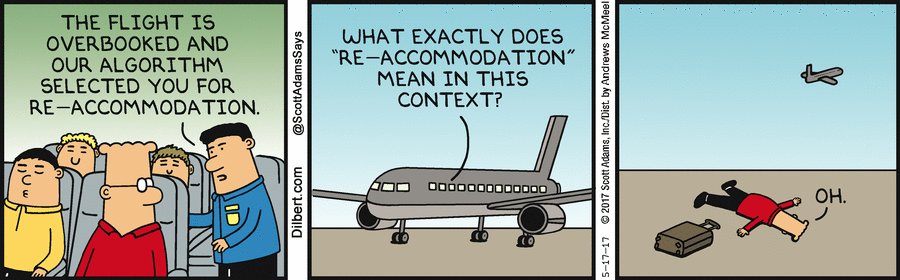
Now think about the same statements and situation in a country, and not on a flight #AlgorithmicLife
1

23 Sep 2016
He did everything Facebook's algorithms asked him to for a week buzzfeed.com/charliewarzel/i… #AlgorithmicLife
5
7

4 Sep 2016
Thank you so much @Philip_Roscoe for such generous insightful review. & our wonderful contributors #AlgorithmicLife x.com/davidgbeer/status/7723…
1
5
5 May 2016
@Philip_Roscoe @JCultEcon Thank you for beautifully crafted review #AlgorithmicLife I see the book anew! @joe_dev @darpadreaming @nisaface
1
3
1

8 Mar 2016
#AlgorithmicLife published today! With @darpadreaming @rcecoleman @nisaface @nat_ogrady @joe_dev & more #algorithms routledge.com/products/97811…
1
1

12 Jan 2016
6
4

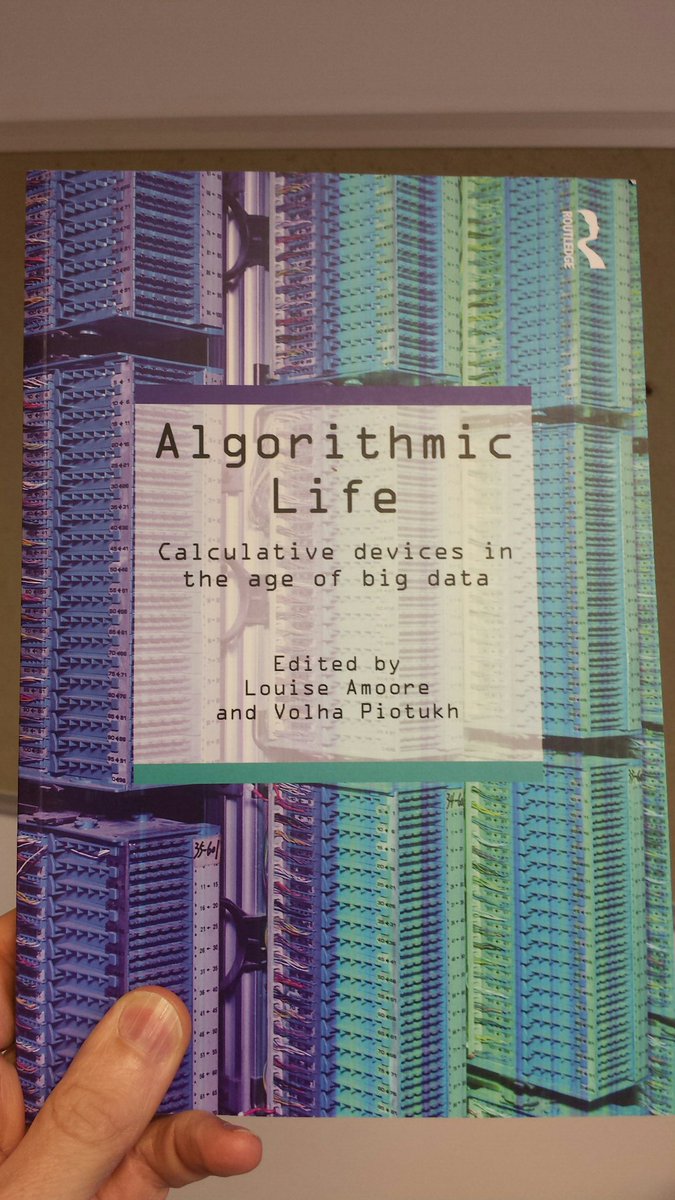
Hooray! #AlgorithmicLife edited by @AmooreLouise & Piotukh is out! I'm in it talking about #Wonga and the like
7
8
3 Dec 2015
#AlgorithmicLife published today! With @darpadreaming @rcecoleman @nisaface @nat_ogrady @joe_dev & more #algorithms routledge.com/products/97811…
1
10
8
2 Nov 2015
Just finished checking the index for #AlgorithmicLife out in December with @joe_dev @nisaface @darpadreaming @nat_ogrady @rcecoleman & more
1
4

20 May 2015
purchasing eyeliner, bread knife and mad max movie ... i briefly think i might confuse the algorithm but perhaps not #algorithmiclife
1
8