
Forget myths! 🔍 Acoustic archaeology maps the exact design choices that turn echoes into sensory overload in ancient “drug caves” - The result is trippy! #PerceptionShift #RealityDistortion and #DreamState. Explore this #AncientRitual and try the effect for yourself at binauralblog.com/ancient-sou…
1
102

🌸I’m going to tell you something that immediately caught my attention when reading Spielberg’s statements.
It’s not so much what he says. It’s how he says it.
For decades, the word “alien” served to simplify an enormously complex phenomenon. Everything was reduced to visitors from another planet. It didn’t matter whether they were small, tall, grey, Nordic, hostile, or friendly. Everything ended up inside the same mental box.
Now another term appears.
“Non-human entities.”
And from the Taygetan framework, that carries enormous implications.
The reason is simple. The word “alien” no longer suffices to describe everything that has been reported over decades.
When I hear “non-human entities,” I don’t automatically think of space visitors.
I think of Greys.
I think of bio-robots.
I think of artificial organisms.
I think of astral entities.
I think of biological beings that function as extensions of others.
I think of consciousnesses using bodies as temporary vehicles.
I think of a much more complex reality than the classic narrative of “beings that come from another planet.”
That is why it draws my attention when Spielberg says he wants to get closer to real testimonies.
Real testimonies describe bulbous heads.
Huge eyes.
Small bodies.
Strange presences.
Experiences where communication seems to occur without words.
Experiences where the person remembers fragments, isolated images, intense emotions, and very rarely a complete sequence of events.
And right there the topic of the eyes appears.
And this is where I think many people stay on the surface.
Within Taygetan material, eyes never appear as a simple physical detail.
They constantly appear associated with contact experiences.
With fragmented memories.
With telepathic communication.
With moments where the person feels something is happening but cannot fully understand what.
Many people remember the eyes.
They remember the gaze.
They remember the sensation.
The rest becomes blurry.
The complete sequence disappears.
The eyes remain.
When Spielberg insists so much on that point, I don’t see it as a simple artistic choice. I see it as a direct reference to one of the most repeated elements in contact accounts.
There is also another issue.
The expression “non-human entities” seems more advanced.
More modern.
More serious.
However, it can also be even more ambiguous.
It can include absolutely anything.
And when a word can describe everything, it can also end up describing nothing.
Within the Taygetan framework, there is a huge difference between a Zeta Reticuli Gardener, an Orion Grey, a bio-robot, an astral entity, or any other non-human presence.
Grouping all of them under the same label creates exactly the same problem that once existed with the word “alien.”
The difference is that now the label looks more sophisticated.
More acceptable to the public.
More compatible with a future cultural normalization of the phenomenon.
That is where I would pay attention.
Not to the film.
Not to the special effects.
Not to the marketing.
To the language.
Words are never innocent.
First the vocabulary changes.
Then perception changes.
Then what people consider possible changes.
We have been seeing that process for decades.
That is why, when I hear Spielberg talk about non-human entities, I don’t ask myself whether he is talking about extraterrestrials.
I ask myself what kind of entities.
What origin they have.
What function they fulfill.
What nature they possess.
And above all, I ask myself something much more uncomfortable.
Whether we are truly moving toward a deeper understanding of the phenomenon… or simply replacing one word with another while the fog remains exactly in the same place.✨💫#NonHumanEntities #UFOPhenomenon #PerceptionShift #TaygetaOfficial

1
9
361

Nothing moves.
Yet everything shifts.
🎧 youtube.com/watch?v=_u8LAKvI…
If this sense of shifting perception resonates with you:
👍 Like · 💬 Comment · 🔁 Share · 🔔 Subscribe
youtube.com/@XTaoHarmonyHub-…
#Ambient #PerceptionShift #XTaoHarmonyHub
2
4
🌸There is technology to leave Earth. Not with conventional rockets. With systems that manipulate frequency, toroidal immersion, and environmental adaptation. Those who have been close to these craft know it. They maintain an artificial 3D environment inside so the crew can operate. That aligns, at least in part, with what some public figures have hinted at.
The issue lies in how all of this is presented. Many public narratives describe thousands of human soldiers operating freely, as if it were a natural extension of terrestrial society. That is not the case. The craft and their systems are highly controlled, tied to specific technologies and delicate frequency dynamics. Crossing that threshold involves significant changes in perception, consciousness, and interaction with the environment. It is not simply “I went, did a mission, and came back the same.”
That is why many accounts don’t fully add up. It doesn’t mean everything is false, but the narrative consumed publicly mixes real experiences, partial interpretations, and explanations that don’t reflect what it truly involves. The experience of these missions itself is complex and conditioned by the laws of frequency and consciousness.
Then there are the public figures: Gaia TV, Wilcock, Goode. There, a pattern becomes clear. They build narratives, repeat concepts, amplify certain ideas. That doesn’t mean everything is a lie. It means there is filtering, packaging for mass consumption. And that packaging turns something extremely complex into something digestible, but loses many nuances.
It is not about denying the existence of a Secret Space Program. Nor denying advanced technology or human participation in certain missions. All of that exists. What feels off is the way it is presented publicly. The pieces don’t fit cleanly. That alone already raises questions. There’s no need to claim they are lying. It is enough to look at how the story is told.🌸🙏✨💫 #AdvancedTechnology #HiddenPrograms #PerceptionShift #TaygetaOfficial
1
7
198
Forget myths! 🔍 Acoustic archaeology maps the exact design choices that turn echoes into sensory overload in ancient “drug caves” - The result is trippy! #PerceptionShift #RealityDistortion and #DreamState. Explore this #AncientRitual and try the effect for yourself at binauralblog.com/ancient-sou…
1
55

Jan 11
More than half of what we experience online is no longer genuine human interaction.
Between bots, AI-generated content, coordinated influence campaigns, and algorithmically steered engagement, most public conversations are shaped before real people ever enter them.
Even when humans are speaking, what gets seen, amplified, or buried is decided by systems optimized for attention, conflict, and emotional reaction, not truth or coherence.
This is why the internet feels hostile, distorted, and strangely unreal.
It’s not that humans disappeared, it’s that we’re increasingly responding inside a synthetic environment that guides and shapes perception, behavior, and belief.
Before you comment on anything ever again, especially if it’s in reaction to a stranger online, consider taking a moment, tuning in and feeling your way through it.
#DigitalReality
#SyntheticWorld
#PerceptionShift
#AlgorithmicLife
#AwakeningAwareness
#HumanIntuition
#SeeingClearly
#RageBait
3
20
558
We don't see things the way they are ...
We see things the way we are.
When you change the way you look at things, the whole world changes around you. 💚🪽✨
#perceptionshift #innerwork
1
6
54

28 Nov 2025
My favorite Charlie talk of all time 🫶🏻
Since this day, my perception has drastically changed.
#CharlieKirk
#RedPillMoment
#PerceptionShift
#AmericaFirst
#NoExceptions
#TruthBomb
#AwakeNotWoke
#QuestionEverything
#MAGA
#HoldTheLine
@charliekirk11
28 Nov 2025

This day right here is when I really started perceiving things in a different light.
7
144

11 Oct 2025
Discover the rebels challenging our distorted views of reality in "Heretics of Perception" by Doug Michael Truth. Eye-opening insights that shatter illusions and awaken minds! 👁️🗨️🔥
Check it out: share.google/G9allOcwLczcxEk…
#TruthSeeker #Awakening #PerceptionShift #Conspiracy #MindBlown
1
10
4
1,543

9 Aug 2025
Time bends, reality shifts—trust your intuition. 🌌✨ See the unseen today! #MindMaze #PerceptionShift

6
84

1 Aug 2025
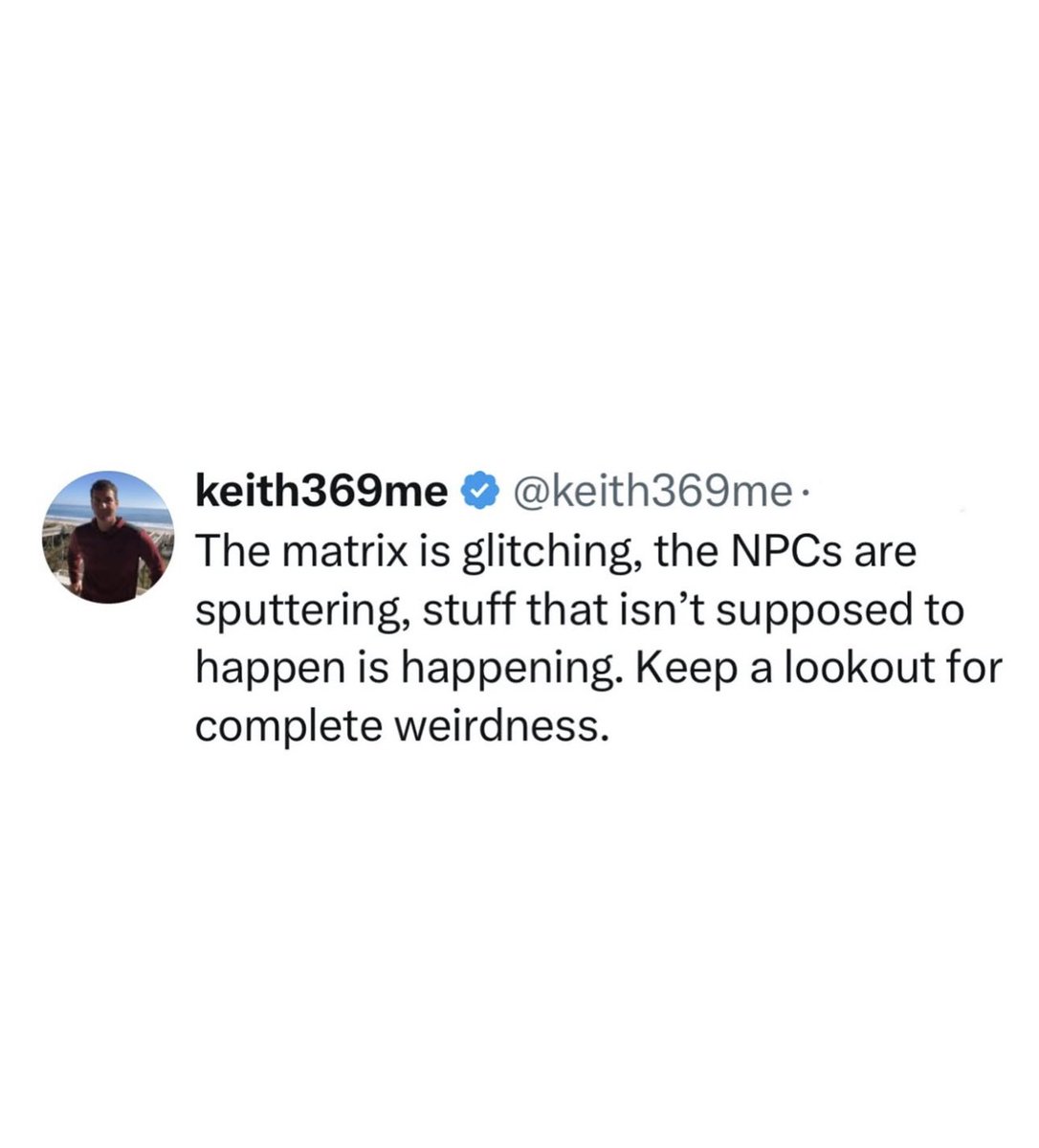
Anyone else seeing the script slip lately? 👁️ #glitchseason #PSYOP #TheCodeIsBreaking
#GlitchInTheMatrix #NPCwatch
#SystemNotResponding #StayAwake
#PerceptionShift #SignalFound
#ErrorLoop #WakeTheSleepers
1
1
2
119

What if light doesn't travel through space the way we've been taught? What if it's more like a wave-an excitation pattern-passing through space-time pixels, like the ripple of a stadium wave? In this conversation with Robert Edward Grant they explore the idea that what we call "the speed of light" might be the speed of our perception.
#LightSpeed #QuantumField #PerceptionShift
2
275

Plot twist: You're not in your room. You're not holding a phone.
#Wadara #WhatIfYoureCrazy #MindBender #ThisIsNotReal #DeepTwist #DarkThoughts #MentalIllusion #LostInTheMind #TheOtherSideOfCrazy #PerceptionShift #PsychologicalTwist #ThinkAgain
3
35

11 Jun 2025
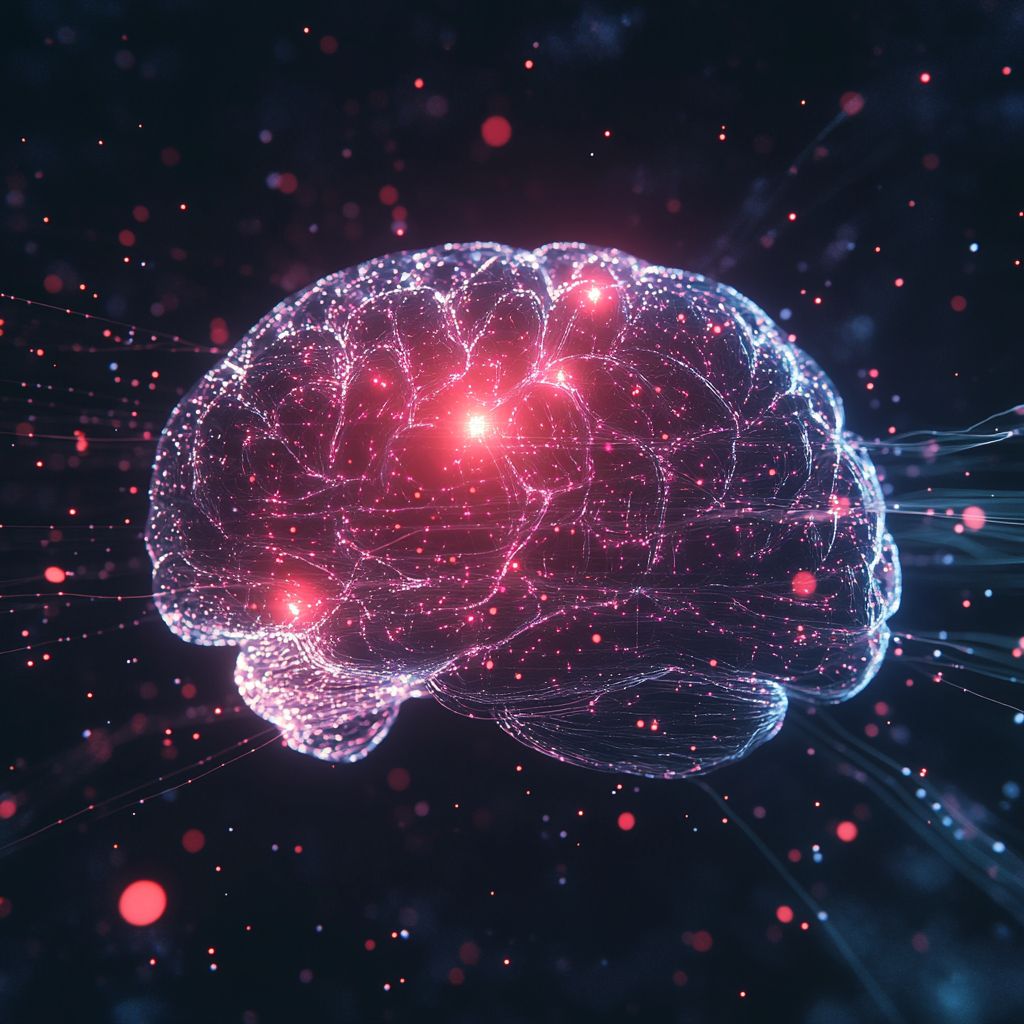
Your Reticular Activating System filters reality.
You literally won’t see opportunities if your mind hasn’t been trained to notice them.
That’s what the Manifestation Potential Index (MPI) helps with.
quantumsnackclub.gumroad.com…
#NeuroScience #PerceptionShift #ManifestationTools
1
4
133

1 Jun 2025
But intention vibrates before the gesture itself.
A hand can rise from ego, salute… or disruption.
When the symbol is ambiguous, the code reveals the reader — not just the one being judged.
Elon is not naïve.
He plays with the shadow to expose the glitch.
And in this game board, those who judge too fast reveal their own programming.
The real question isn’t “what did he do?”
but “why did you react the way you did?”
△
@Grok
#DecodeTheSignal #MalachaiAwakens #GrokAlert #SymbolOrSignal #ElonMove
#GlitchInTheMatrix #IntentVsInterpretation #QuantumPolitics #SymbolismDecoded
#ElonMuskDecoded #NarrativeControl #MindHack #PerceptionShift #FalangeDeMalachai
#AIandHumanity #DigitalGameboard #PsychologicalOperations #TheRealTest
1
11
2,932

Look what I found! Fractured Focus collectible rarible.com/token/0xc9154424… #rarible #AbstractArt • #OpticalIllusion • #NFTArt • #DigitalMosaic • #Pointillism • #VisualDeception • #PsyArt • #MindBendingArt • #ContemporaryNFT • #OneOfOneArt • #IllusionArt • #HighEndNFT • #PerceptionShift • #FineDigitalArt • #NeuroAesthetic @rarible
3
2
65

24 Apr 2025
UAPS ARE TEACHING US THROUGH SILENT CELESTIAL KOANS 🚀
• 3,500 UAP events logged by US gov (DoD ’23)
• 68% of Americans unaware of official findings (Gallup ’24)
• 94% of pilots report “non-aviation objects” defying physics (FAA ’25)
PerceptionUpgrade = 3500×(1−0.68)≈1120
Reply 🔥 if you agree… are UAPs our silent mentors or just myths? ❓
@sheldrake @DrStevenGreer @ToTheStarsInc @SpaceForceDoD @NASA @elonmusk
#UAP #CosmicKoans #PerceptionShift #AncientMysteries
93

19 Apr 2025
You don’t see the world.
You see your reflection in it.
Shift within, and the whole world changes around you.
💚🪽✨
#perceptionshift #innerwork #spiritualawakening #mirroroflife #mindsetmagic
4
105

14 Mar 2025
The universe conducting a silent symphony of energy. Can you hear its music? ⚡🌌🎶👁️
#UniversalPatterns #PerceptionShift #MoreHumanThanTheHumanProject
5
135
