
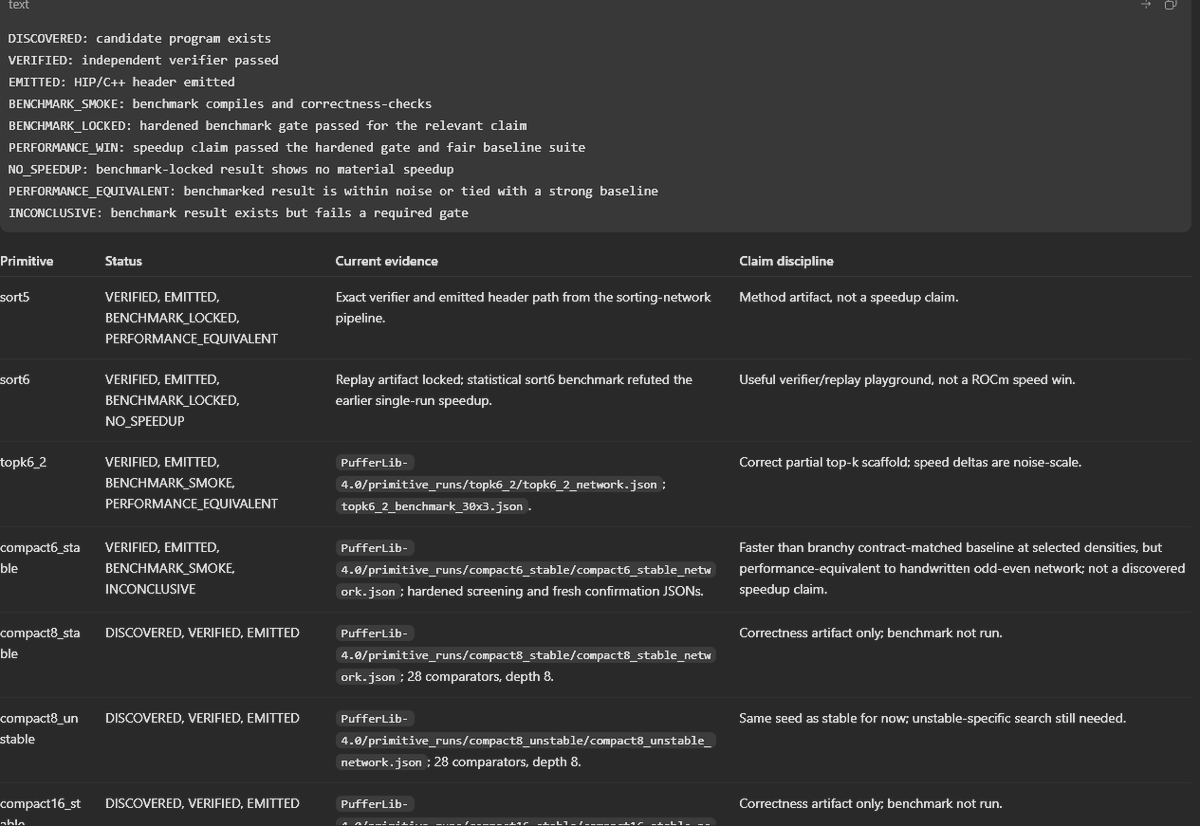
I'm doing some kernel work myself. 🫡 ROCm has a lot of room for potential improvements. Using PufferLib to build out an AlphaDev styled discovery pipeline for my 7900XT.
1
320

高卒のおっさんが考えた嘘のシナリオをあたかも真実かのように断定しないでください笑
「人が出来ることをAIがやるだけ」という認識がまず古すぎる。2年前のAIの認識で止まってますか?
すでにAIは単なる代替ではなくえ発見側に入っています。例えばAlphaFoldは2億超のタンパク質構造を予測し、AlphaDevは人間が何十年も磨いたソート実装を上回るものを発見し、AlphaProof/AlphaGeometryはIMO銀メダル水準、AlphaEvolveは56年止まっていた行列積アルゴリズムの改善まで出してます。
これは人口減少の延命とかスマホ的便利化とかではなく人間の知的探索の外側を機械が探索し始めたという話。
変わらないのは人間の価値判断や責任主体であって、人間の知的労働の優位性ではないですよ
じゃあ、全ての知能労働がAIに置き換わった時、労働がなくなりますが人間の在り方はそのままだと思いますか?
この分野に関して本当に私より知識があって専門家と議論などしましたか?古い知識で変に断定されても困るのですが。具体的な主張をしてください。
1
69
Building an automated GPU-kernel discovery system for AMD/ROCm using PufferLib and my consumer 7900XT. Essentially AlphaDev for ROCm starting from tiny exact kernels.
1
353
みっちゃむ retweeted

Jun 8
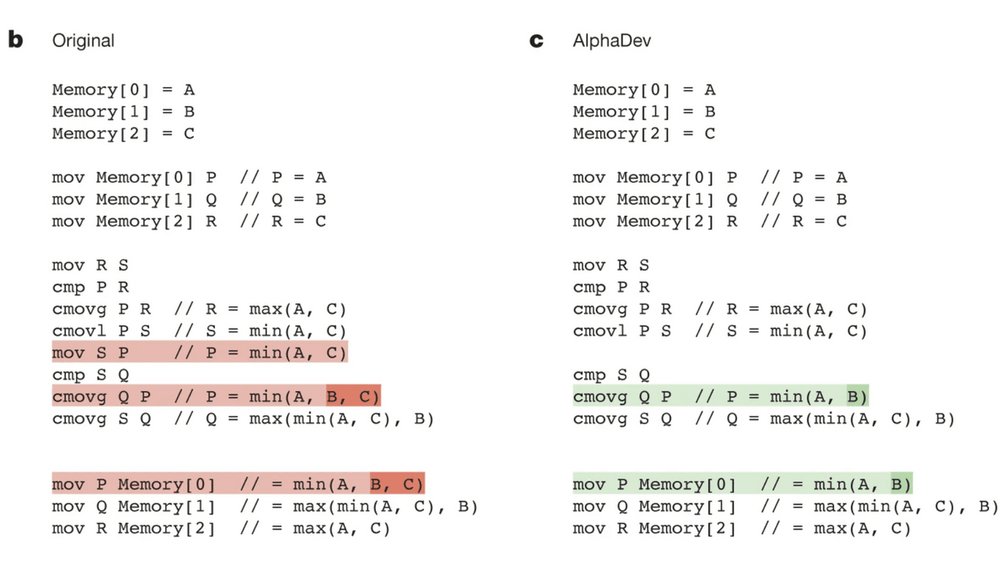
DeepMindが深層強化学習を利用してアルゴリズムを改善するAI「AlphaDev」を発表、すでにソートアルゴリズムやハッシュ関数の高速化に成功(2023)
1
1
9
12,310

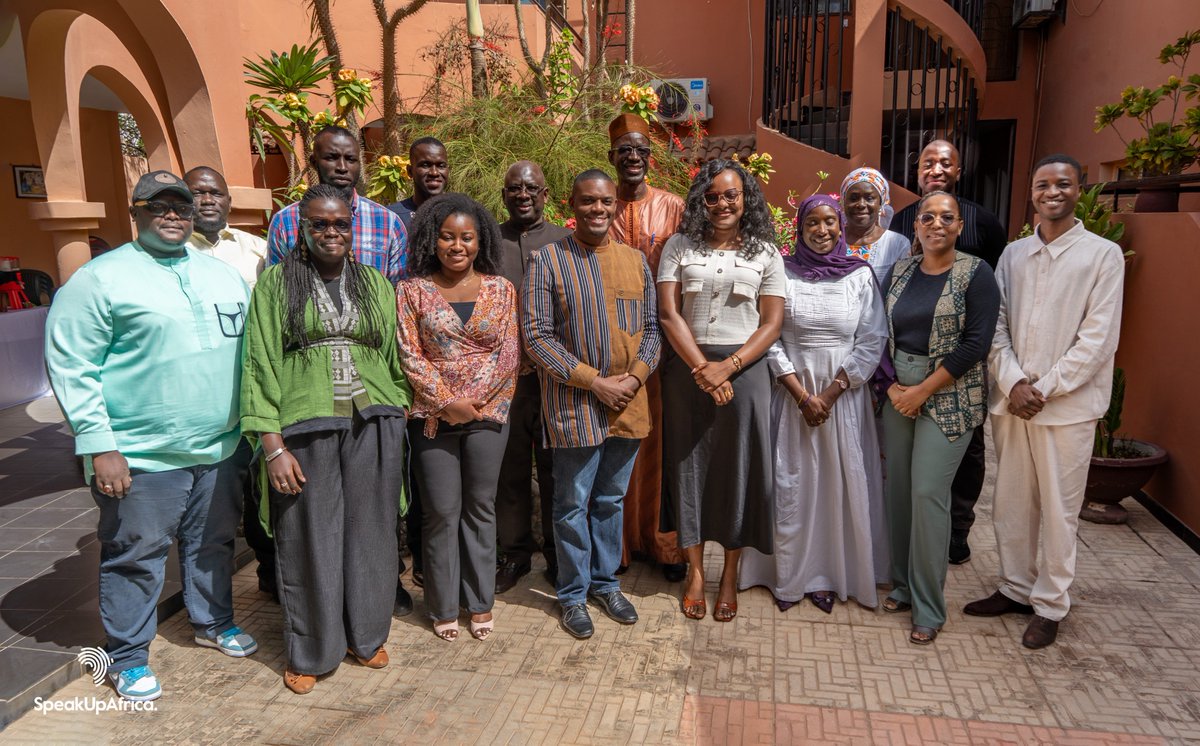
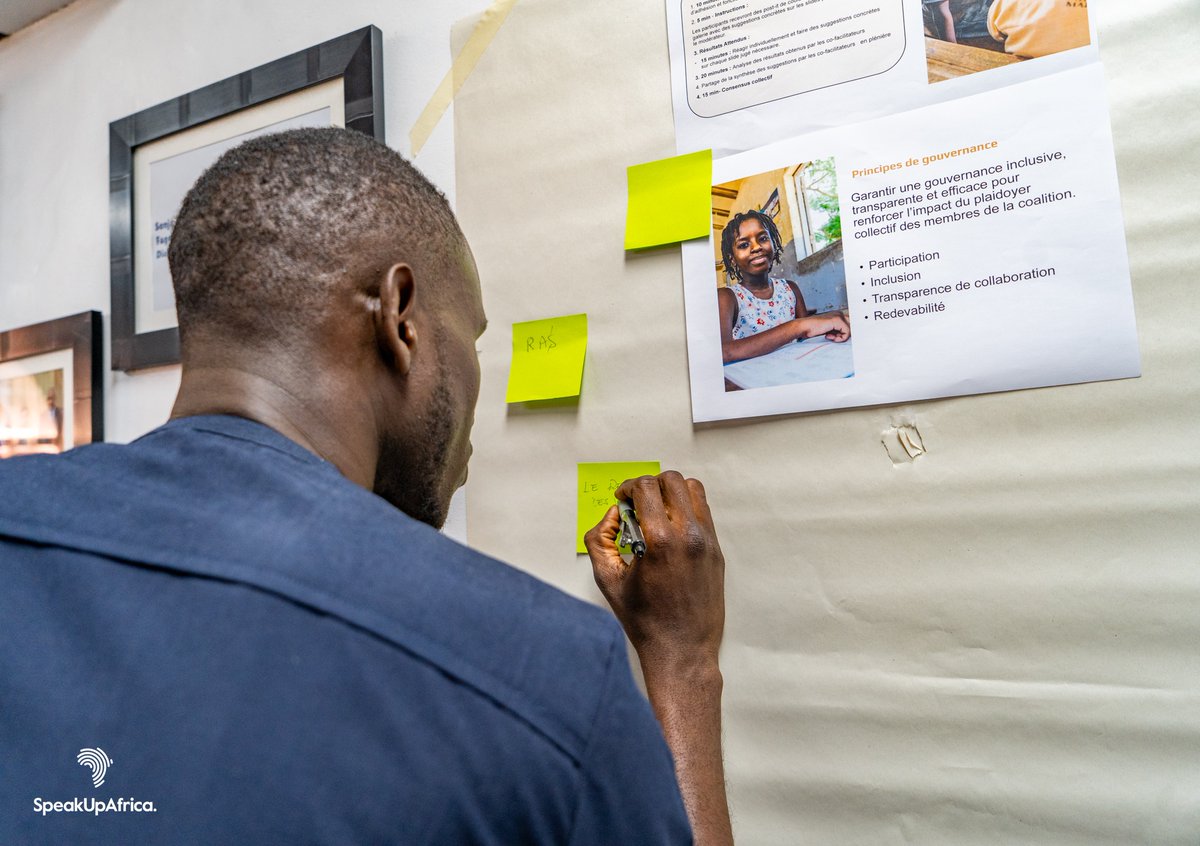
Une voix collective pour renforcer le plaidoyer en faveur de l’enseignement bilingue au Sénégal.
Le 19 mai dernier, Speak Up Africa, ARED, Tostan , ALPHADEV et les membres de la plateforme ont posé les bases d’une coalition nationale en faveur du #MOHEBS.
#ODD4 #EducationPourTous

1
5
93

May 29
No matter what people think, Google will always be king. Google's research team will always be goated.
Some of their projects:
Google DeepMind AlphaFold
AlphaGo
AlphaZero
MuZero
GraphCast
Gemini
Gemini Robotics
SIMA
Genie
AlphaDev
AlphaEvolve
Project Suncatcher
TPU (Tensor Processing Units)
Veo
Imagen
Lyria
Astra
Project Astra
Willow Quantum Chip
Waymo
Isomorphic Labs
Google Quantum AI
SynthID
DeepMind Gato
DeepMind Sparrow
Project Mariner
Firebase Studio AI
NotebookLM
LearnLM
Deep Research
Google Beam
DolphinGemma
Med Gemini
Sec Gemini
WeatherNext
AlphaGeometry
FunSearch
DreamerV3
RT-2
PALM-E
Bard (early Gemini phase)
Transformer Architecture
TensorFlow
JAX
TPU v5/v6 AI Supercomputers
3
3
57
1,664


元McKinsey/SoftBankとGoogle DeepMindの2人が共同創業した「Ethos」が、a16z主導で約35億円を調達
週35,000人が新規登録、トップユーザーは月約150万円稼ぐ専門知識を経済価値に変える「個人版エージェント」
━━ 創業者 ━━
James Lo(CEO)
・元McKinsey & Company
・元SoftBank Vision FundでWeWork、Armの変革プロジェクトに従事
Daniel Mankowitz(CTO)
・元Google DeepMindのAI研究者
・AlphaZero開発(チェス、将棋、囲碁を人間データなしで習得した強化学習)
・AlphaDevソートアルゴリズム共同開発(Nature誌掲載、Strassen以来約50年ぶりのソートアルゴリズム改善)
・YouTubeの動画圧縮アルゴリズムを開発
・Geminiの開発に参画
━━ Ethosの仕組み ━━
・15分の音声インタビューで専門性抽出
・学術論文、GitHubリポジトリ、ブログ、ポッドキャストを全てAIが分析
・エキスパート面談、市場調査、コンサル、採用面談にマッチング
・顧客はAI企業や投資ファンド、コンサル
・既に3万人超のCEO、GP、科学者が登録
・週5,000人超が会計、銀行、コンサル、法律、技術、医療、電気工事、配管工等から登録

Today Ethos announces our $22.75M Series A led by @a16z, with participation from @generalcatalyst, @xtxmarkets, @MattEvantic, and @_CommonMagic.
Ethos turns what you know into recurring income - matching your expertise to expert calls, research, AI training, fractional work, and full-time roles.
35,000 people are joining Ethos every week. People are making $10,000 every month on Ethos.
AI shouldn’t replace you. It should make you irreplaceable.
Build your profile at askethos.com.
3
8
2,070

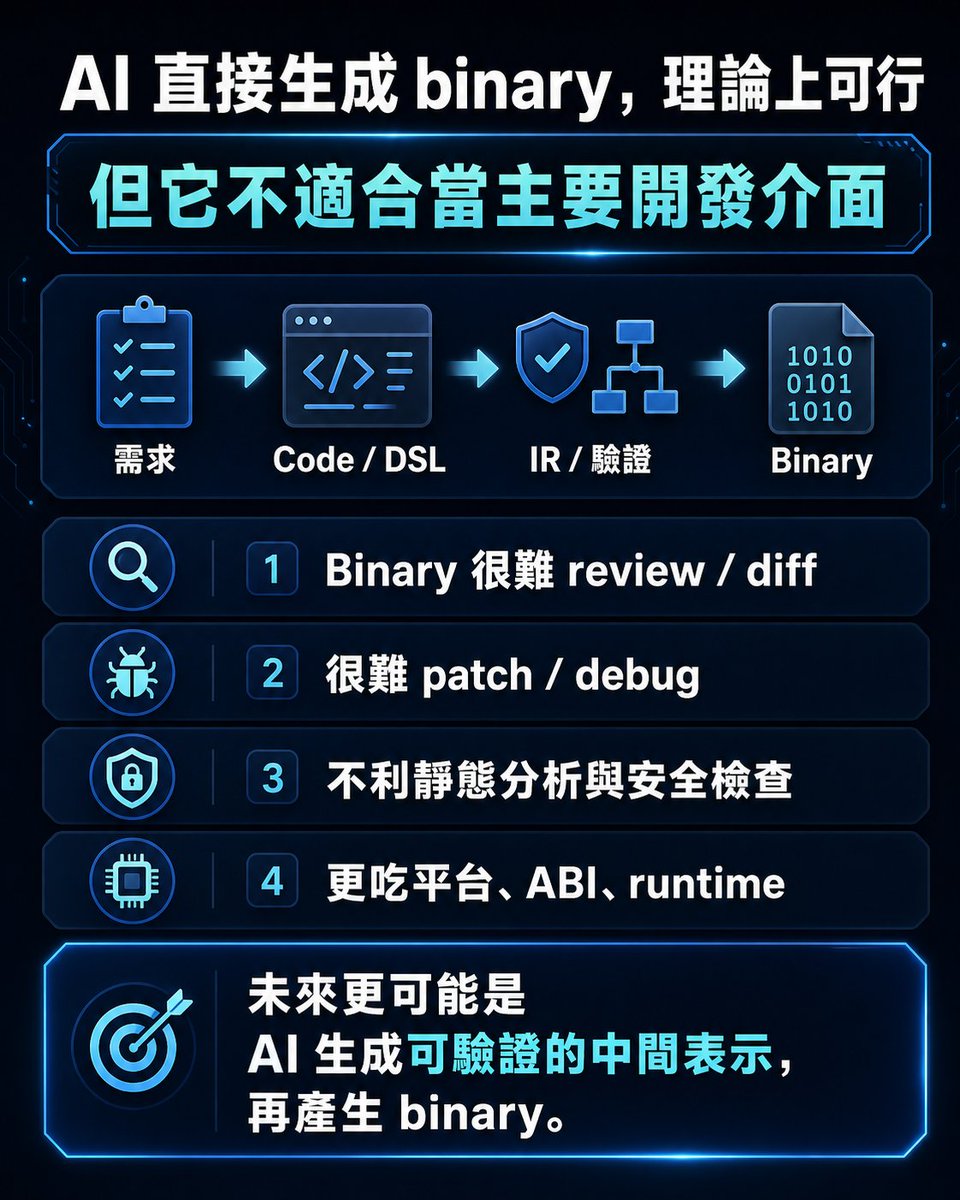
我突然想到一個問題:
AI 都能直接生成 code 了,那為什麼不乾脆直接生成 binary?
畢竟現在很多 code、設計模式、命名、架構分層,其實都有很大一部分是為了人類可讀、可維護、可 review。
如果人類以後真的不太看 code,那 source code 會不會變成一種過渡格式?
但想一想,問題不在 binary 能不能生成。
可以。
低層級 assembly、IR、bytecode 這些方向早就有人在做,DeepMind 的 AlphaDev 甚至已經用 AI 找出更快的 sorting routine,還進了 LLVM 的 C library。
真正卡住的是工程流程。
Binary 很難 review。
Binary 很難 diff。
Binary 很難 patch。
Binary 很難定位 bug。
Binary 很難做型別檢查、靜態分析、安全審查。
Binary 也很吃平台、ABI、CPU 指令集、linker、runtime。
source code 不只是給人看的文字。
它其實是人類、AI、compiler、測試工具、版本控制之間的共同介面。
所以我覺得未來更可能不是「AI 直接吐 exe」。
比較可能是:
人類描述需求
AI 生成高階規格 / DSL
再轉成 IR / bytecode
用 verifier、test、sandbox、compiler pipeline 檢查
最後才產生 binary
也就是說,code 可能會變少,甚至變得不像今天的 code。
但中間那層「可驗證、可修改、可追蹤」的表示法,不太可能消失。
只是它可能不再是為人類寫得那麼漂亮的 source code。

1
2
103

Apr 23
It means you have not seen --AlphaFold, AlphaGo & AlphaZero, AlphaGeometry, AlphaDev / AlphaTensor, AlphaEvolve, AlphaGenome & AlphaMissense, AlphaProteo, AlphaEarth Foundations and Gemma -- yet. Go check my friend, world of AI/ML is bigger than "Coding assistants"
1
4
64
2,603




Feb 21
アルゴリズムが「既成概念の破壊」を拡散する構成です。
イーロン・マスクが断じる「2026年、コーディングの死」。
ソースコードはAIがバイナリを直接生成するための「不要な税金」へ。
AIエージェントの自律化は速い。
2026年末、企業の40%がこの「自動化」の波に飲み込まれる。
「書ける」だけのエンジニアは淘汰され、AIを指揮する「思想」を持つ者だけが残る。
これが、高支持率73%の政権下で私たちが直面する、デジタル安保の真実です。
まず、2026年、企業の40%が「AIエージェント」へ…
プログラミングの自動化は、業務全般の自律化を加速させる。
2026年末までに、エンタープライズ・アプリケーションの40%にタスク固有のAIエージェントが組み込まれる予測。
もはや「アプリを作る」必要はなく、「AIに目的を教える」だけでシステムが稼働する。このシフトにより、企業の生産性は平均24.69%向上、コストは15.7%削減される。
次にバイナリ直接生成がもたらす「ラストワンマイル」の消失…
Google DeepMindの「AlphaDev」は、人間が数十年使ってきたアルゴリズムを、AIがさらに効率的なバイナリレベルで改良した実績がある。
人間の理解できる「コード」に翻訳する手間(オーバーヘッド)を省くことで、実行速度は劇的に向上する。これは、サイバー安保や金融取引において「秒」以下の争いを決定づける武器になる。
最後に労働市場の地殻変動:エンジニアの「脱・技能化」…
ソフトウェアエンジニアの役割は「コーダー」から「システム・アーキテクト」や「エージェント調整役」へ強制的に進化させられる。
米国の組織の32%が、AI導入による人員削減を想定している現実。
マスク氏の言う「労働コストがゼロに近づく」世界 では、スキルの価値は「書けること」ではなく「課題を定義できること」へ、不可逆的に転移する。
Feb 21

プログラミングが全自動に、マスク氏「2026年末にも」 AIが急速進化 nikkei.com/article/DGXZQOGN1…
2
1
7
825


Feb 13
Gemini.
Skipping human-readable code (like C or Python) and assembly language to go straight to binary is essentially the software equivalent of an artist painting individual pixels instead of using a brush. It's incredibly difficult for humans, but for an AI, it removes the "abstraction tax" we've been paying for decades.
If an AI writes directly in machine code (1s and 0s), the advantages shift from readability to pure raw efficiency.
1. Hyper-Optimization (The "Unleashed" Hardware)
Traditional compilers (like GCC or Clang) use "heuristics"—general rules of thumb to translate code into binary. They are great, but they often play it safe.
Custom Instruction Paths: AI could find bizarre, non-linear ways to use a processor's registers and cache that a human programmer would never think of.
Perfect Fit: The AI can tailor the binary to the exact silicon quirks of a specific chip (e.g., an Apple M4 vs. an Intel i9), squeezing out every ounce of performance.
AlphaDev Precedent: Google’s AlphaDev already proved this by discovering sorting algorithms in assembly that were 70% faster for short sequences than what humans had optimized over decades.
2. Elimination of the "Abstraction Tax"
Every time we use a high-level language, we lose a little efficiency to make the code "human-friendly."
No Middleware: By skipping the "human" layer, you eliminate the overhead of garbage collectors, standard libraries, and generic safety checks that might not be needed for a specific task.
Zero Compilation Time: In a direct-to-binary world, the "AI generation" is the compilation. You move from "Intent" to "Executable" in one step.
3. Security and "Moving Target" Defense
While this sounds like a nightmare for transparency, it offers a unique security advantage: obfuscation.
Harder to Reverse Engineer: Without source code or standard assembly patterns, a hacker would find it significantly harder to understand how the program works.
Polymorphic Binaries: An AI could generate a slightly different binary structure for every single user. Even if a hacker finds a vulnerability in your version of the app, that same exploit might not work on mine because the binary layout is completely different.
4. Novel Algorithm Discovery
Humans tend to think in loops, "if-then" statements, and objects. AI doesn't have those cognitive biases.
Beyond Logic: Directly writing machine code allows the AI to discover "glitch-like" optimizations—exploiting the way hardware physically handles electricity or timing—to achieve results that aren't possible within the logical constraints of C or Java.
5. The Trade-Off: The "Black Box" Problem
The advantage of skipping human code is also its greatest danger.
Zero Interpretability: If the software develops a bug or a "hallucination" in its logic, no human can go in and "fix a line of code." You’d have to ask the AI to try again, which might create a whole new set of issues.
Forensic Debugging: We would move from "reading code" to "observing behavior." Debugging would look more like a lab experiment on a biological organism than a logical review of a script.
2
88

Feb 8
AlphaDev already found sorting algos 70% faster than ours. the scary part isn't AI writing code - it's humans not understanding why it works
3
451

Jan 31
Tech News
Google
January 30, 2026
Google DeepMind Unveils Project Genie for AI-Generated Virtual Worlds
Project Genie, powered by the Genie 3 model, lets users create and navigate dynamic virtual environments from text, images, or sketches—think rustic cabins, surreal climbs, or Dark Souls-inspired realms with realistic physics. Launched January 29 for U.S. Google AI Ultra subscribers over 18, it drew excitement from execs like Demis Hassabis, who called it 'mindblowing,' and sparked a sharp drop in gaming stocks like Unity and Take-Two amid fears of AI disrupting development. Critics note its limits, like 60-second sessions and no deep narratives, positioning it as a research prototype rather than a full game changer.
Profile
Google DeepMind
Google DeepMind is Alphabet Inc.'s primary artificial intelligence research laboratory, formed in 2023 by merging Google’s Brain team and the original London-based DeepMind. Led by CEO Demis Hassabis, its mission is to "solve intelligence" to advance science and benefit humanity.
Recent Major Breakthroughs (2025–2026)
AlphaGenome (January 2026): A landmark model that "reads the recipe for life" in DNA to identify genetic drivers of diseases like dementia, high blood pressure, and cancer.
Project Genie (January 2026): An experimental tool launched for AI Ultra subscribers that creates interactive, 3D virtual worlds from simple text or image prompts.
Gemma 3 (March 2025): The latest iteration of their open-source model series, designed to be the most capable model runnable on a single GPU.
Veo 3 (May 2025): A multimodal video generation model that creates high-definition video synchronized with original audio, dialogue, and ambient sound effects.
D4RT (January 2026): A unified model that reconstructs 4D (space time) representations from video 18x–300x faster than previous methods, aimed at giving robots better spatial awareness.
Core Technology & Pillars
Gemini Series: This is a family of highly capable multimodal models (Pro, Flash, Nano) that power Google's consumer AI products.
AlphaFamily: This includes scientific models such as AlphaFold (protein structure prediction) and AlphaDev (discovering faster algorithms for C libraries).
Embodied AI & Robotics: The Gemini Robotics 1.5 and RoboCat models enable robots to "think" before acting and adapt to new physical tasks.
World Models: Systems like Genie 3 simulate physics and environment dynamics, which is seen as a critical step toward Artificial General Intelligence (AGI).
Industry Impact
Energy Efficiency: DeepMind’s AI reduced Google’s data center cooling bill by 40%.
Science & Weather: GraphCast provides 10-day weather forecasts with unprecedented accuracy in under a minute.
Education: Offers free AI literacy programs like Experience AI and postdoctoral fellowships to train the next generation of researchers.
Media Man Int
Google News (in progress/development)
mediamanint.com/google_news.…
AI News (in progress/developments)
mediamanint.com/ai_news.html
#Google #GoogleDeepMind #DeepMind #Genie #Genie3 #GoogleNews #AI #AINews #ArtificialIntelligence #Gemini #Data #VirtualWorlds #Tech #TechNews #Innovation #Digital #trend #buzz #media #mediaman #xAI
(Image: Google) with Media Man editing

1
2
145

Jan 29
ゲノム変異予測のAlphaGenomeのコードをGDMが公開してきましたね….タンパク質構造解析(AlphaFold),気象予報(GraphCast, WeatherNext, GenCast),最適化アルゴリズムの発見(AlphaEvolve),幾何学問題の解法(AlphaGeometry),アルゴリズムの最適化(AlphaDev)等々,GDMの科学への貢献は圧倒的だ…
Jan 28

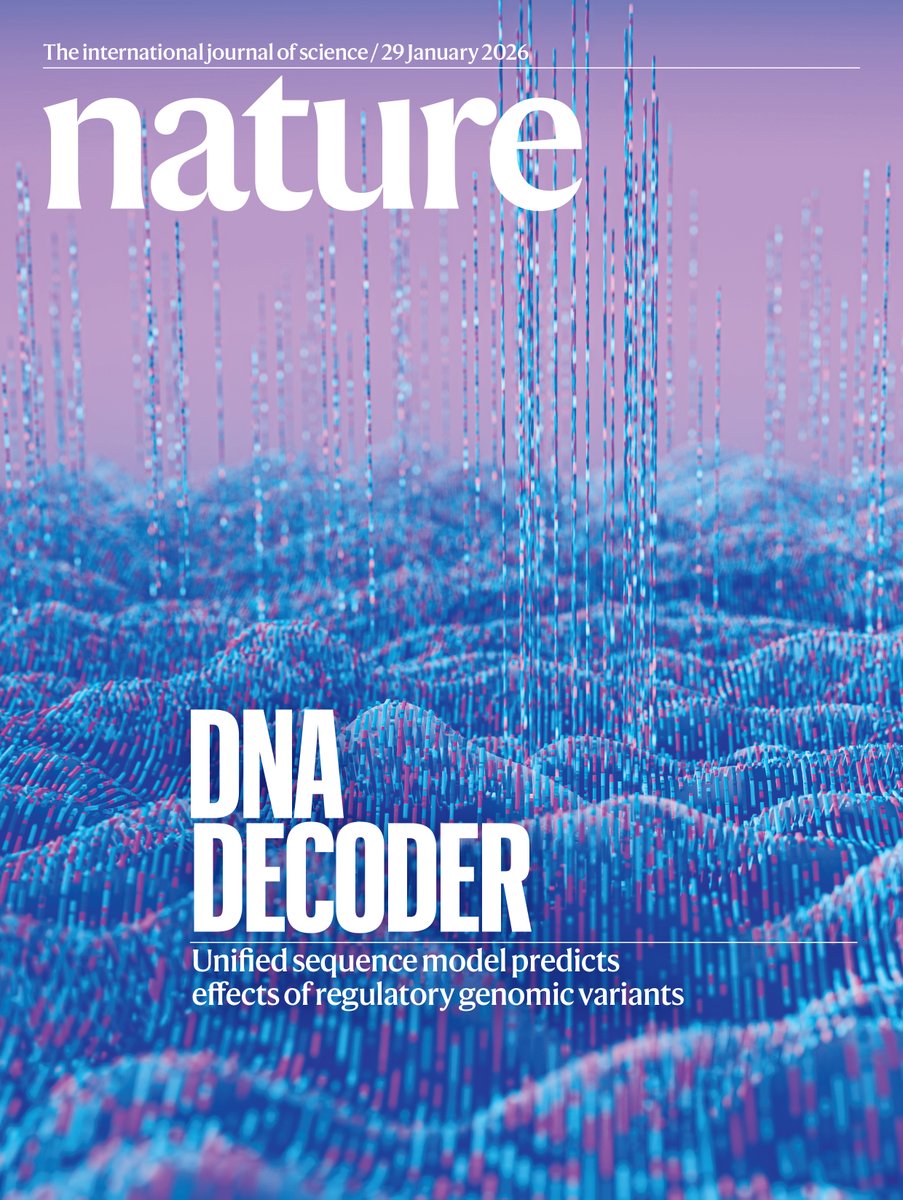
Our breakthrough AI model AlphaGenome is helping scientists understand our DNA, predict the molecular impact of genetic changes, and drive new biological discoveries. 🧬
Find out more in @Nature ↓ goo.gle/4bXlV6y
2
7
1,816
