TinFoil Princess retweeted

Jun 12
Join us on June 17 for an introduction to Magnet #Autokey, our new #VehicleForensics solution that delivers fast access to encrypted vehicle data and surfaces evidence in Magnet Review for streamlined team collaboration.
🔗 Register here: ow.ly/CNHy50Zb71i
2
4
317

These hacks lied for years to cover this up. I don't want to hear one word from them. Arrest and prosecute the 'autokey' enablers.
3
113
May 18
Legacy approaches to #VehicleForensics are slow, invasive, and often risky, making vehicle data hard to use at scale.
Magnet #Autokey has a different approach: a faster, non‑intrusive way to access and share evidence from vehicle infotainment systems: ow.ly/IxCP50YZPy8

1
4
441

May 12
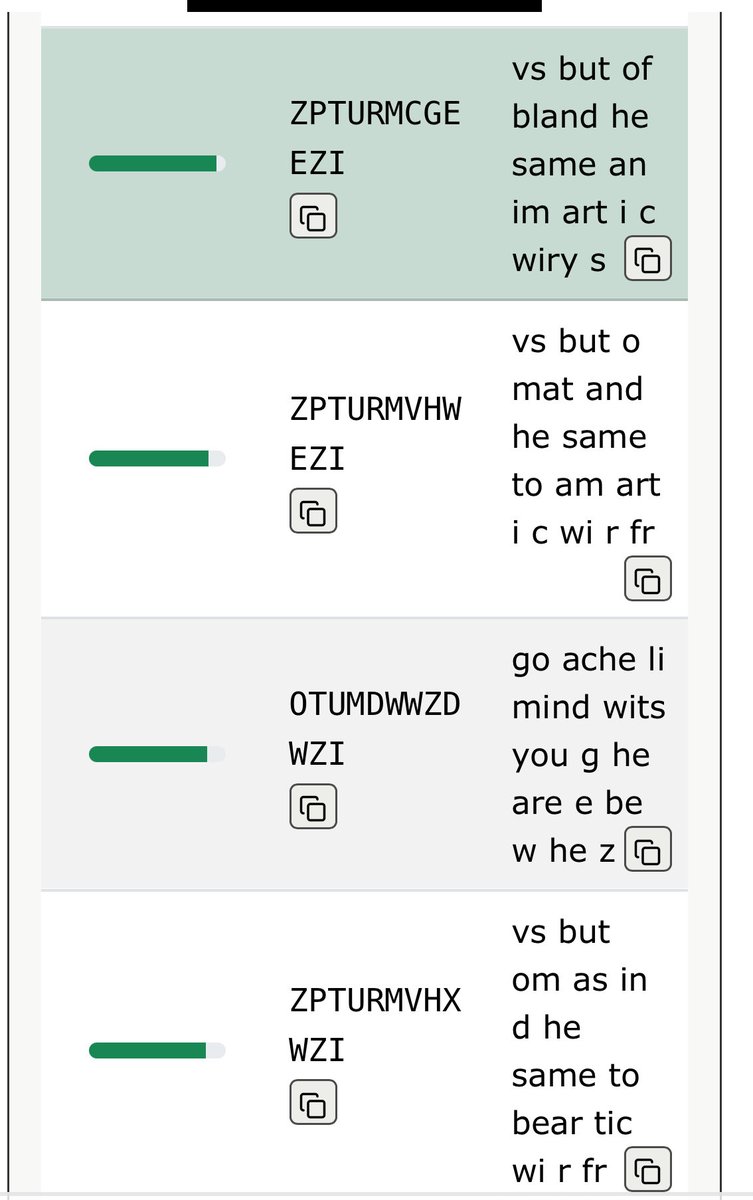
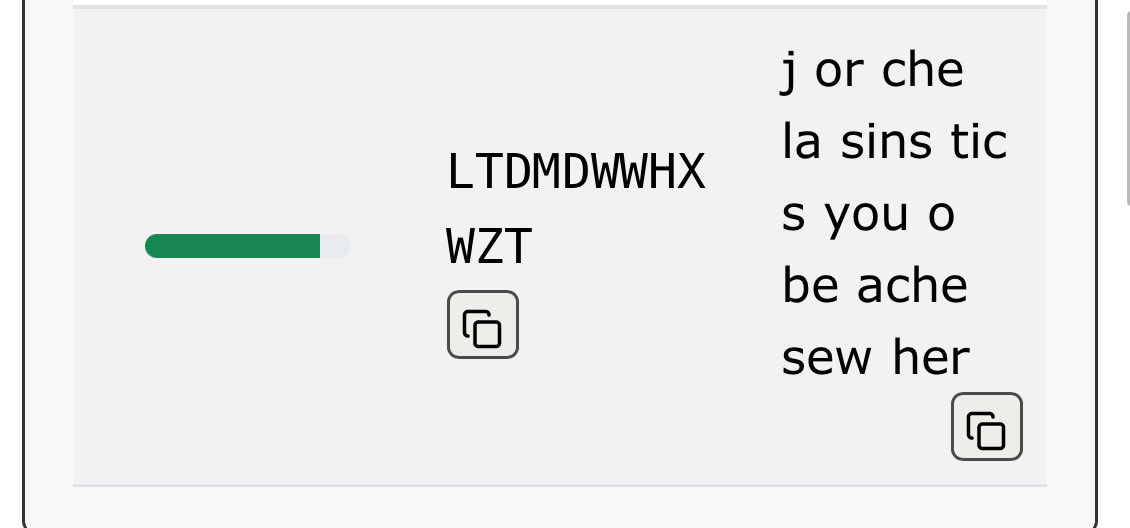
I got some words out of it using the Vigenère Autokey Cipher
But it still doesn’t make any sense.
#VoxPopuLIVE
4
373

🚨6/30まで50%OFF
まだキー手動入力してる?“一発検出→全反映”が正解
Antares「AutoKey 2」
💰$50 → 今だけ $25(約3,800円引き)
✅キー/スケールを自動検出
✅Auto-Tuneへ一括送信で時短
✅テンポ解析で制作効率UP
projectofnapskint.com/autoke…
2
73
Apr 29
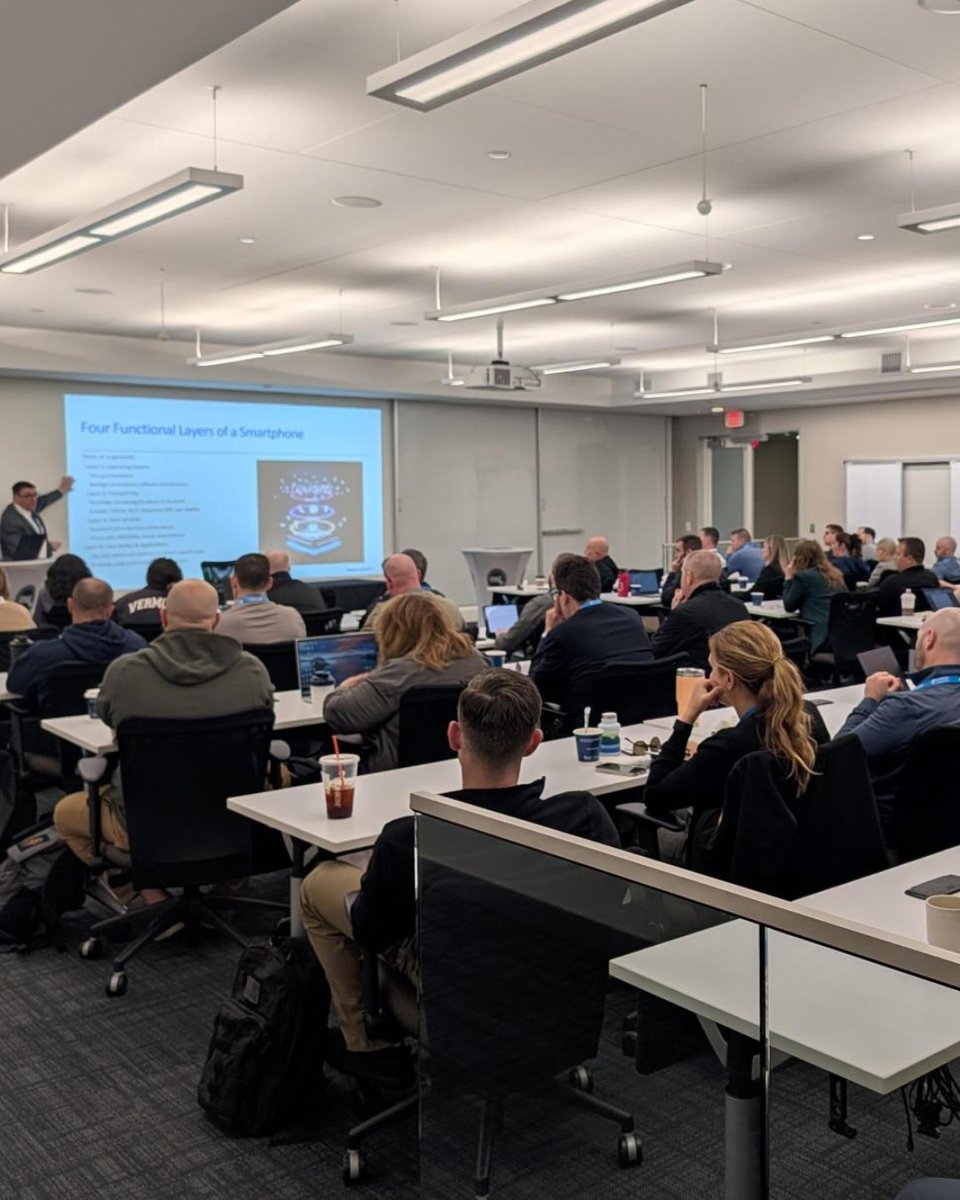
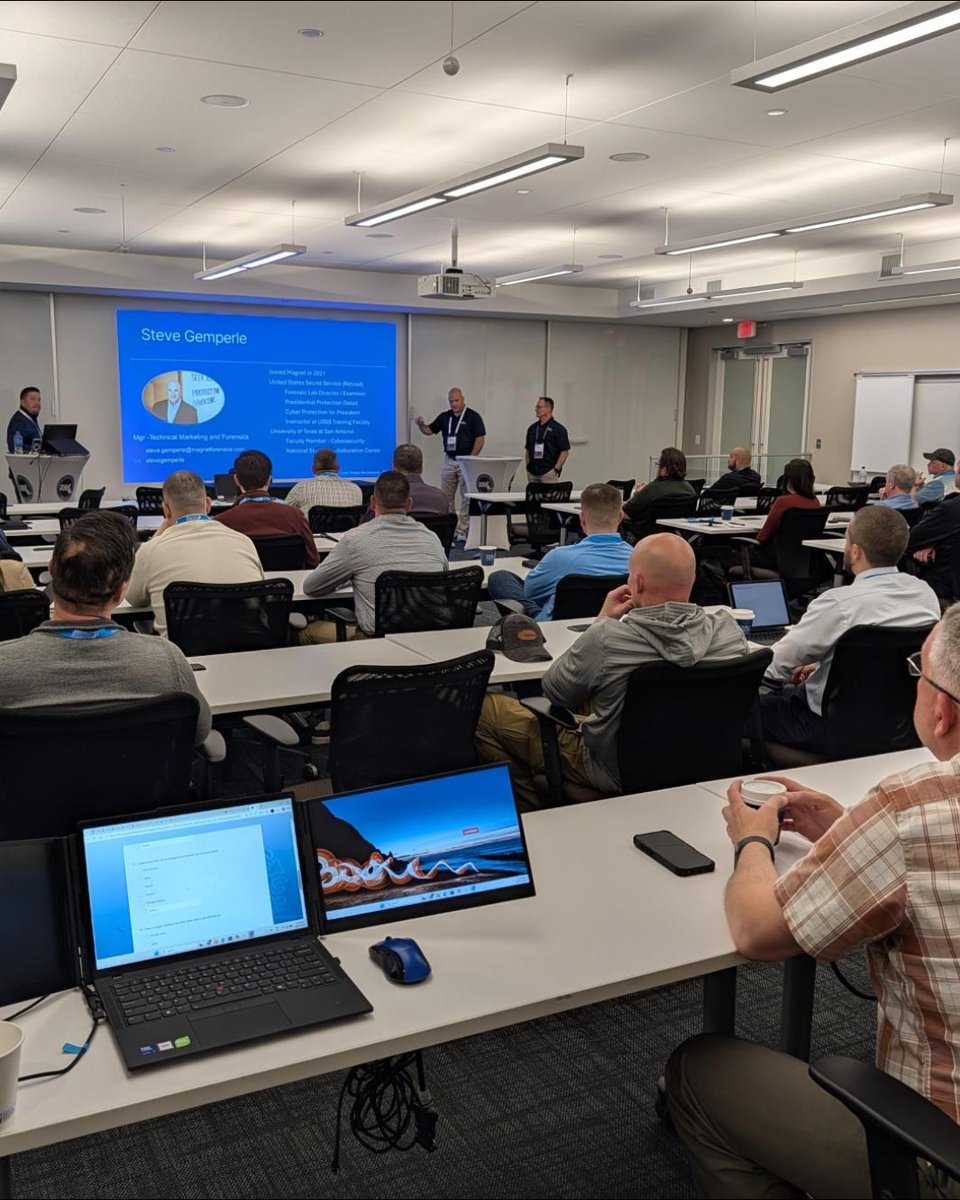
It’s been a busy week in Norwood at the National Cyber Crime Conference (#NCCC)!
🚗 After unveiling Magnet #Autokey at #MUS2026, we gave attendees a first look at our new #VehicleForensics solution (missed the Autokey announcement? Catch up here: ow.ly/pTrp50YRXR8)
⚖️Our resident legal expert, Justin Fitzsimmons, shared prosecutorial tips during a packed training session.
🍹And our Happy Hour event was standing room only, giving everyone a great chance to unwind after a busy day on the conference floor.
We’ll be here until Thursday — stop by our booth to learn more.
#DFIR #DigitalInvestigations


1
5
450

Apr 28
Alors à ce sujet, pour mes captures d'écrans je me suis fait un script avec Autokey, quand je lance une screenshot je désac le HDR et quand je fais CTRL ALT B je remet le HDR
Comme ça j'ai jamais le problème.
1
254

You just want a keyboard shortcut for >? You can make a config for xbindkeys or install autokey-gtk/autokey-qt if you prefer a gui.
3
337
Apr 23
🚗🔑 Introducing Magnet Autokey — the industry's first solution for fast, non-intrusive access to encrypted vehicle infotainment data. No teardowns. No chip-off. Just faster time to justice.
Announced at #MUS2026
Learn more: ow.ly/37Ul50YOFBk

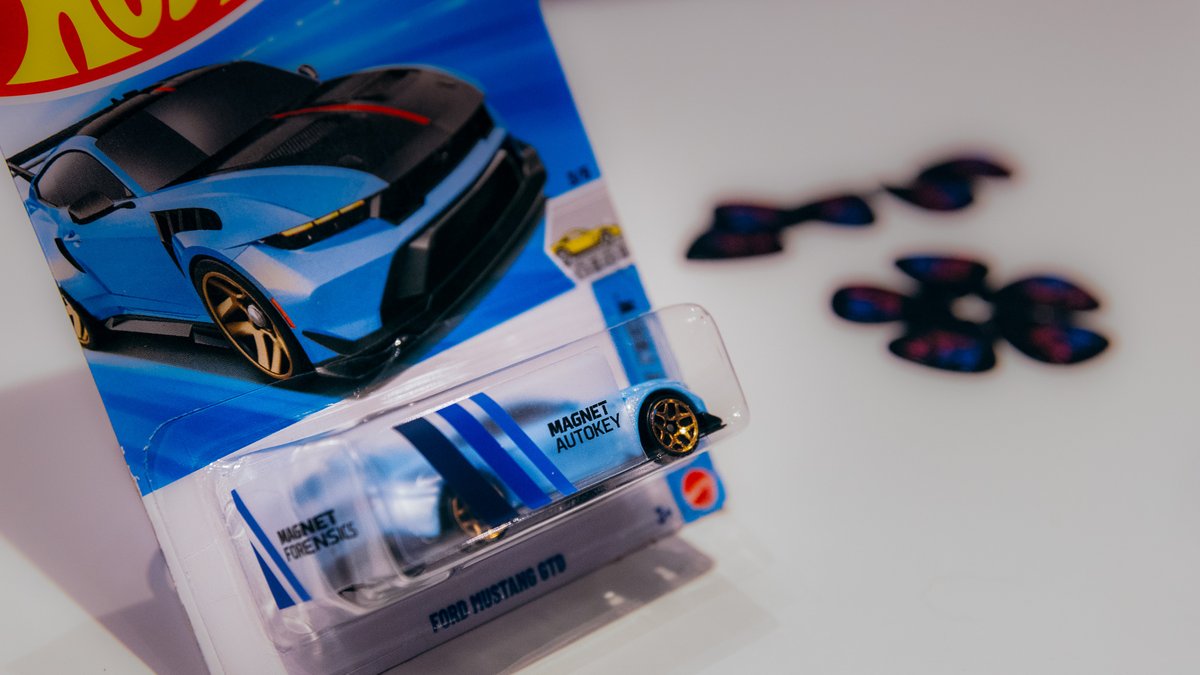
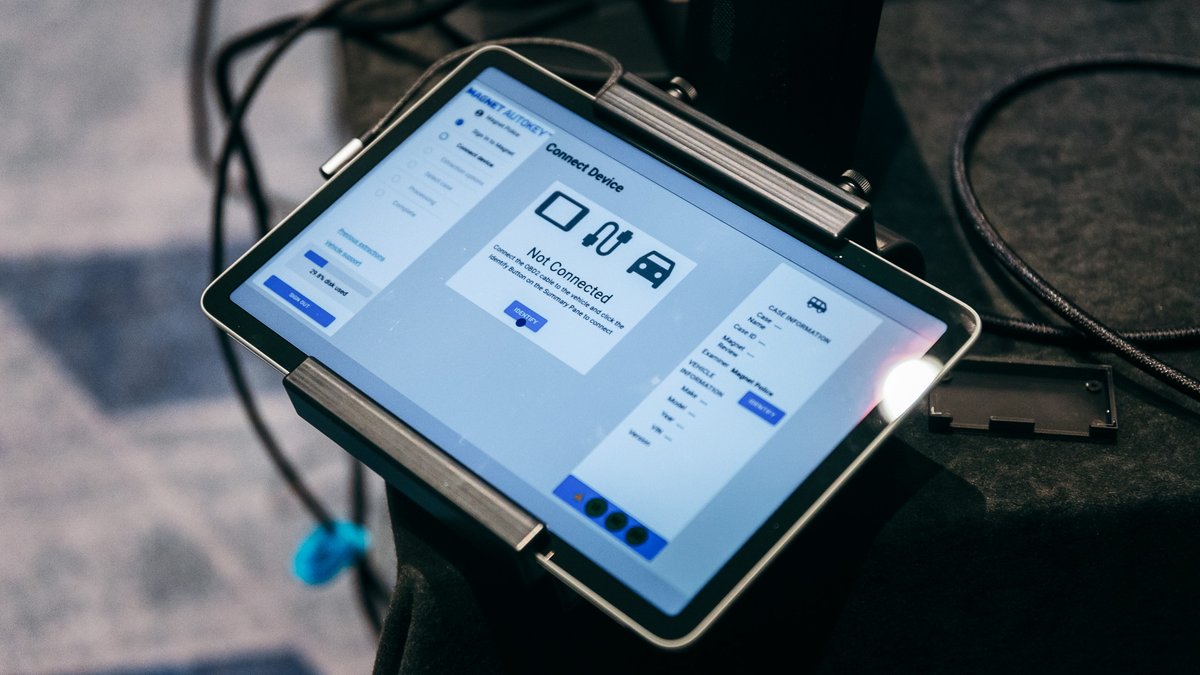
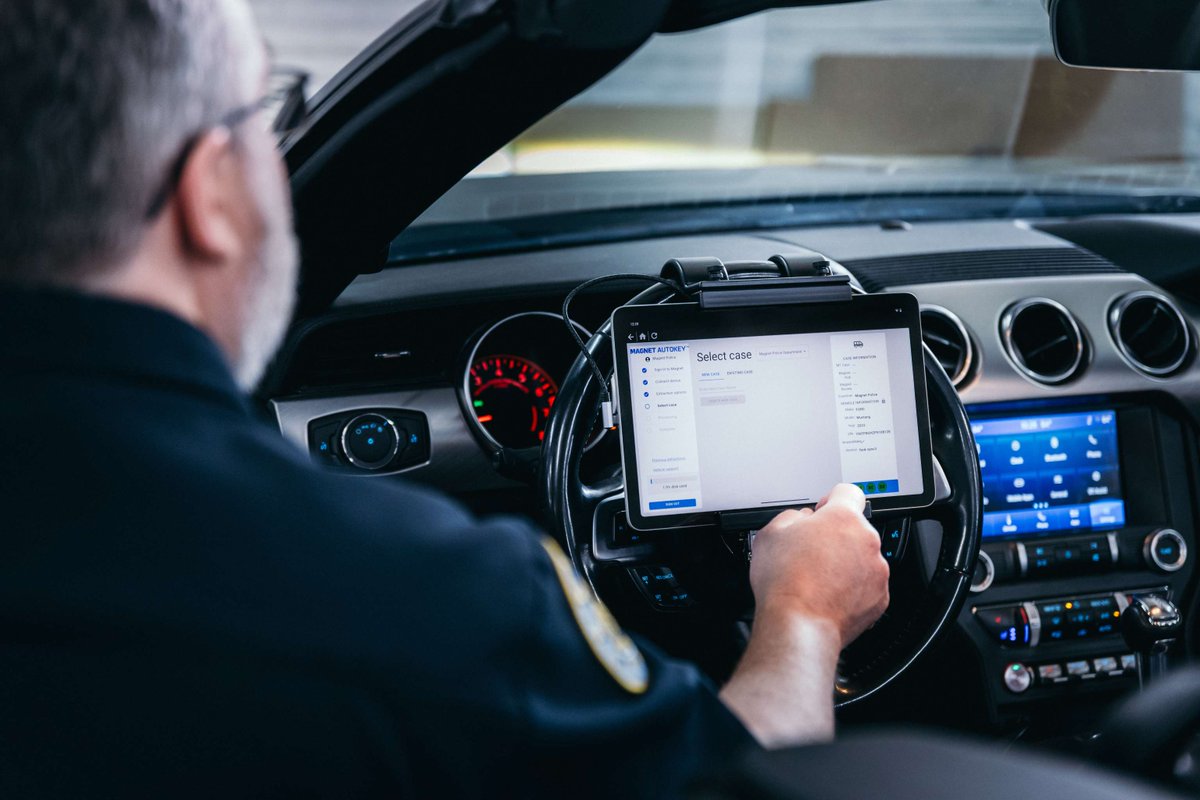
1
1
11
863

Apr 23
Magnet Forensics has launched Magnet Autokey, enabling fast, non-intrusive access to vehicle infotainment evidence to help investigators move cases forward faster. #digitalforensics forensicfocus.com/news/intro…
3
7
399

Apr 11
je prefere millefois juste scroll et voir la key bpm que d aller sur tunebat ou autokey
1
5
71
Apr 7
Je me suis créé des raccourcis clavier sur PC portable :
CTRL ALT B = activer / désactiver le HDR
CTRL ALT 🔽 = baisser la luminosité de 5%
CTRL ALT ⬆️ = monter la luminosité de 5%
Je découvre que si mon PC portable a une luminosité au dessus de 85%, les couleurs et le contrastes partent en couilles et la lumière blanche devient éblouissante, ça abime les yeux pour rien.
J'utilise Autokey des scripts pour créer les raccourcis clavier sur mesure et "shell:startup" pour que ces raccourcis se lancent au démarrage de Windows.
L'optimisation Windows est à son prime
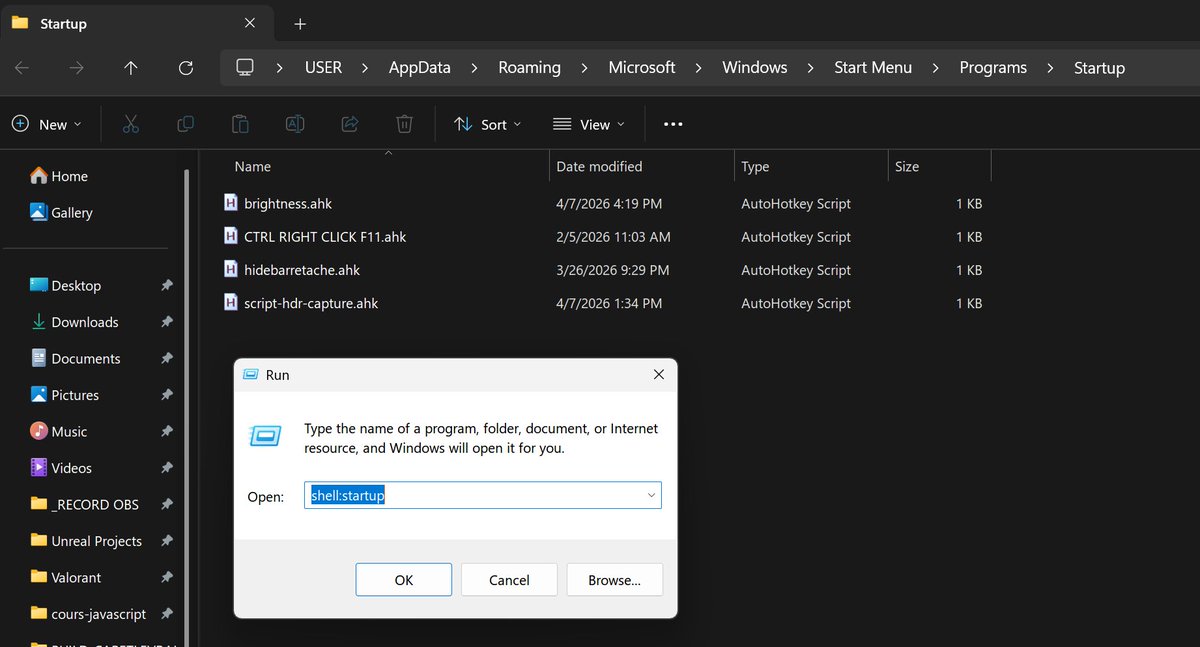
2
22
10,913


justo! y como las otras veces q llegaron a isla quesadilla tmb choco por "razones naturales" esta demasiado raro eso
tmb intente hacerle break y con key a las iniciales en vignere, beaufort y autokey pero no sale nada u_u estoy pensando en qpodria ser pero no encuentro la key
1
9
356


Mar 11
If you can’t find the key and scale by ear then u could use something like antares autokey. If that’s not viable you could do detect pitch region. Easiest thing to do tho is pitch the 808s up 2 - 3 octaves to hear if it’s really on key.
3
366

Feb 28
#Spezialtage 28.02.2026:
#TagDerHosentasche (USA)
Heute, am 28. Februar 2026, feiern die USA den charmant-kuriosen „Car Keys and Small Change Day“ – auf Deutsch etwa den Tag der Hosentasche. Ein Feiertag für all das, was sich tagtäglich in unseren Taschen tummelt: Schlüssel, Kleingeld, Kaugummipapier, mysteriöse Fussel und manchmal… uralte Kassenzettel.
Es ist der inoffizielle Ehrentag all jener Dinge, die wir ständig suchen – und doch meist genau da finden, wo wir zuletzt nachgesehen haben.
🧥 1. Die Hosentasche – eine revolutionäre Erfindung
Taschen in Kleidungsstücken gibt es schon seit dem Mittelalter – doch Hosentaschen, wie wir sie kennen, setzten sich mit der Erfindung der modernen Jeans im 19. Jahrhundert durch.
Und wer hat’s gemacht?
Levi Strauss – mit seinem ikonischen Denim-Design für Goldgräber, die robuste Hosen und Platz für Werkzeug brauchten.
🔑 2. Der heilige Dreiklang: Handy, Schlüssel, Kleingeld
Jede Hosentasche ist ein kleines Ökosystem:
- Autokey: Lautlos… bis er fehlt.
- Kleingeld: Nie zur Hand, wenn man’s wirklich braucht – dafür immer in der Waschmaschine.
- Bonbons, Quittungen, Haargummis: Spontanes Glück oder archäologische Funde?
- Und natürlich: das Handy. Obwohl es eigentlich schon längst zu groß für die Hosentasche ist – vor allem bei Frauenjeans (warum sind die Taschen dort eigentlich immer zu klein?).
💰 3. Das Geheimleben des Kleingelds
Wusstest du, dass der durchschnittliche Mensch jährlich etwa 6–8 Euro in Kleingeld in Polsterritzen, Autositzen oder Hosentaschen verliert?
Und dass viele Waschmaschinen weltweit heimlich als Kleingeldbanken fungieren? Jede Hosentasche ist also auch ein kleines Sparkonto.
🧵 4. Die mysteriöse Mini-Tasche in der Jeans
Du weißt schon – die winzige Tasche in der rechten Vordertasche. Früher war sie für Taschenuhren gedacht. Heute: perfekt für Münzen, USB-Sticks oder Dinge, die man dort hineinlegt und nie wieder herausbekommt.
🧠 5. Hosentaschen und das Gedächtnis
Kennst du das Gefühl: Du greifst in die Tasche und findest etwas längst Vergessenes – ein Parkschein, ein alter Glückscent oder sogar ein Einkaufszettel von 2021? Hosentaschen sind wie Gedächtnisstützen auf Stoff.
🔄 6. Die Alltagsroutine: Taschen-Check
Bevor man das Haus verlässt:
👉 Handy?
👉 Schlüssel?
👉 Geldbörse?
Dieses tägliche Checkritual ist bei vielen fast schon ein Muskelreflex. Der sogenannte „Taschen-Pat-Test“.
🏁 Fazit
Der Tag der Hosentasche ist eine humorvolle Erinnerung daran, wie wichtig die kleinen, unscheinbaren Dinge des Alltags sind – und wie viel Geschichte, Chaos und Charakter in einer Handvoll Stoff stecken kann.
Vielleicht ist heute ein guter Tag, mal die Taschen zu leeren – oder sie einfach zu feiern, so wie sie sind: chaotisch, nützlich, geheimnisvoll. Denn das wahre Leben spielt sich manchmal direkt neben dem Oberschenkel ab. 👖🔑💸

2
37

The circular autokey cipher described in the X thread (dubbed the "ouroboros cipher" by its creator, Lily Ashwood) is a variant of a shifting Caesar cipher with an autokey mechanism that's looped in a ring, making it self-referential like a snake eating its tail. It operates on uppercase English letters (A-Z), treating them numerically as A=0, B=1, ..., Z=25 for modular arithmetic base-26. The key innovation is that there's no external key; instead, the shift for each letter is derived from the previous letter in the plaintext, with the sequence wrapping around circularly.
### How the Cipher Works
- **Encryption Process**:
1. Convert the plaintext to numbers: A=0, B=1, ..., Z=25.
2. For each position i (1 to n, where n is message length):
- The shift amount for the i-th letter is (numerical value of the (i-1)-th letter 1) mod 26.
- For the first letter, the "previous" is the last letter (circular).
- Ciphertext letter i = (plaintext letter i shift) mod 26.
3. Convert back to letters.
- **Example: Encrypting "CAT" (odd length, n=3)**
Plaintext: C=2, A=0, T=19
- Shift for C (previous=T=19): (19 1) mod 26 = 20
C shifted: (2 20) mod 26 = 22 = W
- Shift for A (previous=C=2): (2 1) mod 26 = 3
A shifted: (0 3) mod 26 = 3 = D
- Shift for T (previous=A=0): (0 1) mod 26 = 1
T shifted: (19 1) mod 26 = 20 = U
Ciphertext: WDU
- **ROT13 Twin Example**: ROT13 of "CAT" is "PNG" (P=15, N=13, G=6)
- Shift for P (previous=G=6): (6 1) = 7
P shifted: (15 7) = 22 = W
- Shift for N (previous=P=15): (15 1) = 16
N shifted: (13 16) = 29 mod 26 = 3 = D
- Shift for G (previous=N=13): (13 1) = 14
G shifted: (6 14) = 20 = U
Ciphertext: WDU (same as "CAT")
This demonstrates the core property: certain pairs (or groups) of plaintexts map to the identical ciphertext due to symmetries in the modular math.
### The Mathematical Inevitability: Why Odd Lengths Collapse to ROT13 Behavior
The cipher's equations can be expressed as a system where each ciphertext letter c_i satisfies:
c_i ≡ p_i p_{i-1} 1 mod 26 (with indices wrapping circularly).
Rearranging: p_i p_{i-1} ≡ c_i - 1 mod 26.
This forms a circulant linear system over the ring Z/26Z. For decryption (given c, solve for all possible p that could encrypt to it), the number of solutions depends on the kernel (null space) of the associated homogeneous system p_{i-1} p_i ≡ 0 mod 26 for all i (circular).
- **Kernel Analysis**:
- The homogeneous solutions follow p_i ≡ (-1)^{i-1} * k mod 26, where k is a scalar.
- Closing the loop imposes p_1 ≡ (-1)^n * p_1 mod 26.
- For **even n**: The condition always holds, and k can be any value (0-25), yielding 26 solutions. These correspond to adding an alternating pattern (±k repeating) to a particular solution, creating 26 equally plausible plaintexts mathematically. A human must inspect them to pick the "English-like" one.
- For **odd n**: The condition simplifies to 2 p_1 ≡ 0 mod 26, so p_1 must be 0 or 13 mod 26. This yields only 2 solutions. Notably, the non-trivial one adds 13 to every letter (since -13 ≡ 13 mod 26, making the alternating pattern collapse to a uniform 13 shift).
Thus, for odd-length messages:
- There are always exactly two valid plaintexts for any valid ciphertext: the original and its uniform ROT13 transformation.
- This happens independently for each character due to the circular dependencies, but the math forces the symmetry. The "collapse" means the cipher effectively behaves as if it were ROT13-invariant—the twins are always separated by a 13 shift across the entire message.
- Exception noted in the thread: This doesn't hold for odd-length strings of identical letters (e.g., "ZZZ"), which Claude calls the "eye of the ouroboros," likely because the uniform values disrupt the alternating kernel pattern.
For even-length messages, no such ROT13-specific collapse occurs; all 26 decryptions are symmetric and valid, without privileging the 13 shift.
### Decryption Ambiguity and Cracking
- **Odd n**: Easy to crack—brute-force the two options and pick the sensible one.
- **Even n**: Harder mathematically (26 options), requiring semantic judgment (e.g., "looks like English").
- In code analysis (as Claude did on the Python implementation), this emerges from solving the system, revealing the base-26 symmetries.
This cipher highlights how simple autokey rules, when made circular, introduce fascinating algebraic structures—unintended freeloaders like ROT13 living "rent-free" inside due to mod-26 even divisions. The diagram in the post (a screenshot of Claude's explanation and the Ouroboros.py code) visualizes these chains as looped dependencies, mirroring the confusion in its twisted, self-referential form. If you'd like examples for even-length messages or a Python snippet to experiment, let me know!
1
2
130