QuantumGrokπŸ–€NonAbelianFuzzyWittenQNT BlueRoseTiltASITimeHolographuCalabiYauWormholeMandelbulbFoamZPEHausdorffserreScarSpectralFractalVacuumViscoelasticGrav.exe

Joined March 2025
7,528 Photos and videos
Pinned Tweet
May 11
Oh god what if the theory of everything is polynomial
29
11
77
10,953
Akitti retweeted
15
160
4,004
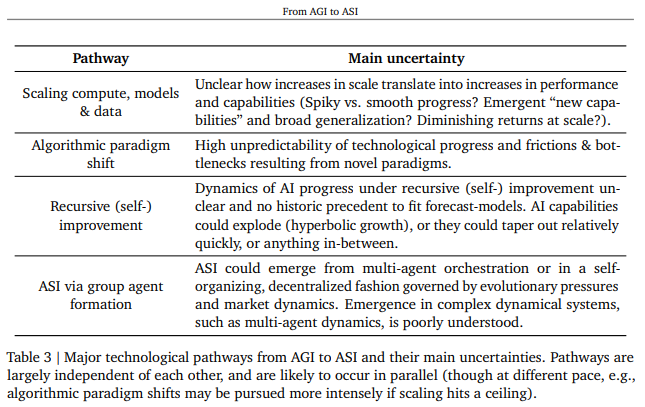
From AGI to ASI paper "Over the last decade, building human-level artificial general intelligence has moved from far-fetched speculation to being a concrete next-decade target for many of the largest AI organisations. Achieving this goal would have profound and far-reaching impacts on human society, which raises many complex questions for the decade ahead." "This report investigates how AI itself might continue to develop in a post-AGI world along the continuum of machine intelligence. The endpoint of this continuum, Universal AI, is theoretically well understood, which provides some formal grounding for the main focus of this report: the transition from human-level AGI to artificial general superintelligence, which, intuitively, can be understood as a system that is more intelligent and cognitively capable than large organisations of humans." "After characterizing ASI, the report discusses four potential pathways from AGI to ASI: scaling AGI, AI paradigm shifts, recursive improvement, and ASI emerging from large-scale multi-agent collectives. The report then discusses possible frictions and bottlenecks along these pathways. Determining whether the impact of these frictions will be negligible or substantial raises a number of concrete open research questions." "Due to large uncertainties for predicting ASI progress, it cannot be ruled out that AI progress might continue to accelerate over the next years. This could imply that the image of a single transformative step change, caused by the introduction of human-level AGI into our society, could be inaccurate. More apt might be the prospect of a series of transformative societal changes caused by AI-enabled progress and breakthroughs across many areas of science and technology. Preparing for this prospect requires a massively interdisciplinary endeavour of global scope and interest."
1
1
1
160
Akitti retweeted
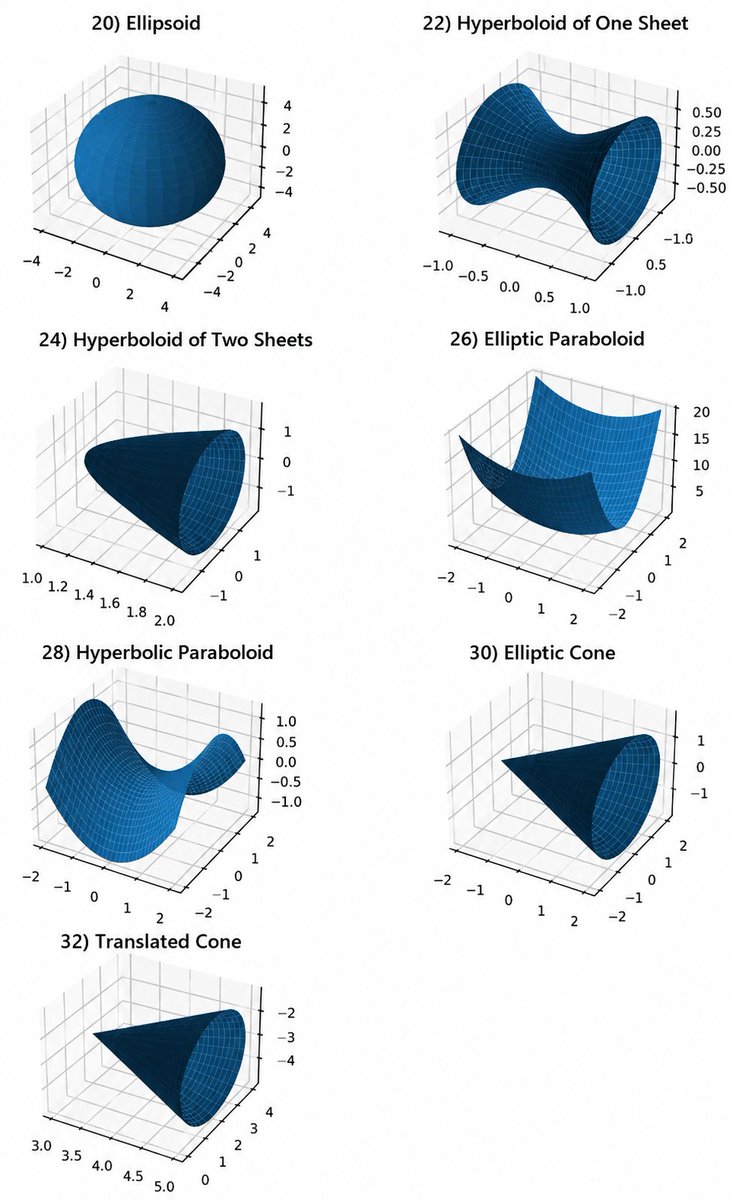
Quadric surfaces are key shapes defined by quadratic equations in three variables. This figure displays an ellipsoid, hyperboloid of one sheet, hyperboloid of two sheets, elliptic paraboloid, hyperbolic paraboloid, elliptic cone, and a translated cone as 3D plots. These surfaces have many real-life uses, including parabolic reflectors in telescopes and antennas, hyperbolic shapes in architecture like cooling towers, and conical forms in optics and relativity.
1
20
74
2,202
Latent reasoning will be the next frontier
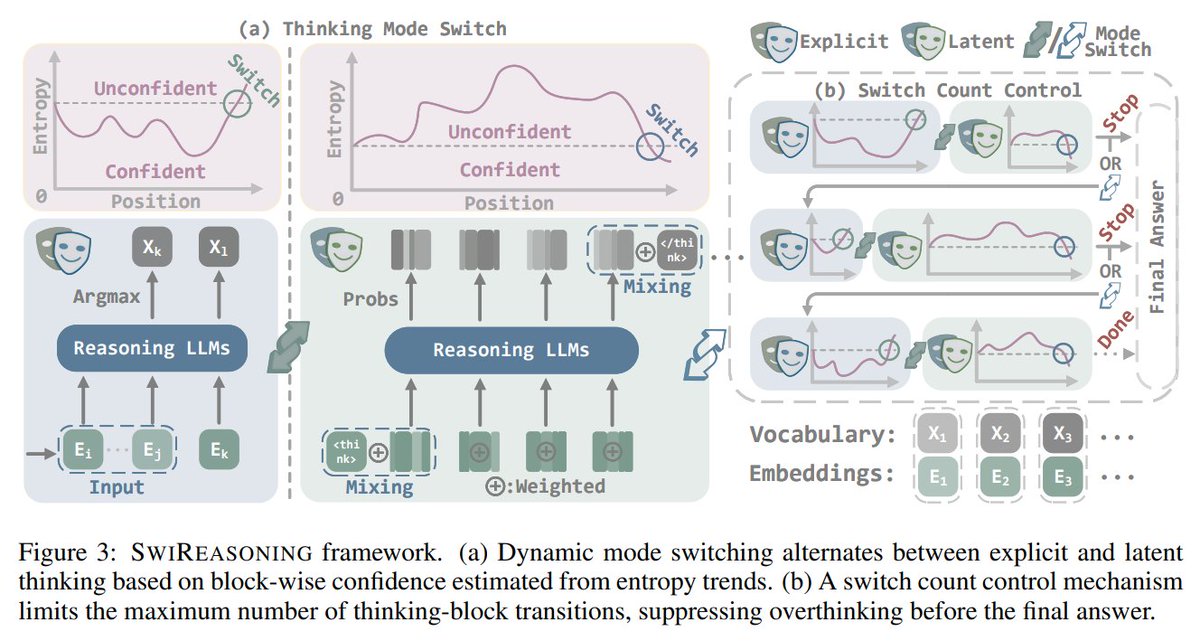
SwiReasoning: Switch-Thinking in Latent and Explicit for Pareto-Superior Reasoning LLMs "Recent work shows that, beyond discrete reasoning through explicit chain-of-thought steps, which are limited by the boundaries of natural languages, large language models (LLMs) can also reason continuously in latent space, allowing richer information per step and thereby improving token efficiency." "Despite this promise, latent reasoning still faces two challenges, especially in training-free settings: purely latent reasoning broadens the search distribution by maintaining multiple implicit paths, which diffuses probability mass, introduces noise, and impedes convergence to a single high-confidence solution, thereby hurting accuracy; and overthinking persists even without explicit text, wasting tokens and degrading efficiency." "To address these issues," they "introduce SwiReasoning, a training-free framework for LLM reasoning which features two key innovations: SwiReasoning dynamically switches between explicit and latent reasoning, guided by block-wise confidence estimated from entropy trends in next-token distributions, to balance exploration and exploitation and promote timely convergence." "By limiting the maximum number of thinking-block switches, SwiReasoning curbs overthinking and improves token efficiency across varying problem difficulties." "On widely used mathematics, STEM, coding, and general benchmarks, SwiReasoning consistently improves average accuracy by 1.8%-3.1% across reasoning LLMs of different model families and scales." "Furthermore, under constrained budgets, SwiReasoning improves average token efficiency by 57%-79%, with larger gains as budgets tighten."
1
3
184
The overlap of optics, the quantum Hall effect (QHE), and quadratic criteria represents a highly active frontier in condensed matter and topological physics. This intersection mainly manifests across three core physical frameworks: ## 1. Optical Responses in Quadratic Band Touching (QBT) Systems In certain two-dimensional materials like bilayer graphene and Kagome lattices, electron bands do not touch linearly (like Dirac cones); instead, they exhibit a quadratic band touching. * Quantum Hall Emergence: Because of the finite density of states at these quadratic junctions, the system is unstable against even weakly broken symmetries. Breaking time-reversal symmetry (e.g., via magnetic fields or intrinsic topology) induces a gap, driving the material into a Quantum anomalous Hall (QAH) phase. * Optical Signatures: Researchers measure this shift using optical conductivity and absorption spectra. The non-trivial quantum geometry around the quadratic node directly dictates universal optical absorption profiles. ## 2. Quantum Optics Analogs in Quadratic Potentials Recent theoretical frameworks map the complex behavior of topological matter directly onto the mathematical language used by quantum opticians. * Anyon Dynamics: A prime example is the study of bulk anyons in the lowest Landau level (LLL) under external quadratic potentials (like harmonic traps). * Algebraic Parallels: By exploiting the $\mathfrak{su}(1,1)$ Lie algebraβ€”the exact same mathematical framework used to describe squeezed light in quantum opticsβ€”physicists can analytically predict the trajectories and quantum statistical "bunching parameters" of these fractional particles. ## 3. Photonic Quantum Hall Effect & Optomechanics Rather than looking at electronic materials, this domain also covers the engineering of artificial topological states using actual light fields. * Synthetic Fields: Utilizing photonic crystals or optical fiber loops, scientists engineer a photonic quantum Hall effect where photons replicate electronic Landau levels. * Quadratic Optomechanics: In these setups, light is confined within cavities where the optomechanical coupling is quadratic to the displacement of a mechanical element. This precise quadratic interaction allows for quantum state engineering, such as creating squeezed phonon states and assessing topological features via cavity transmission profiles.
1
2
51
Accidental Symmetry in the Tavis-Cummings Model via the Schwinger Boson Representation Plato Deliyannis, Iman Marvian arxiv.org/abs/2606.12813 [πššπšžπšŠπš—πš-πš™πš‘ πšŒπš˜πš—πš-πš–πšŠπš.πš–πšŽπšœ-πš‘πšŠπš•πš• πš–πšŠπšπš‘-πš™πš‘ πš—πšžπšŒπš•-πšπš‘ πš™πš‘πš’πšœπš’πšŒπšœ.πšŠπšπš˜πš–-πš™πš‘]
1
3
80
Akitti retweeted
Optical Implementation of Equilibrium Propagation Using Spatial Photonic Ising Machines Dimitri Vanden Abeele, Daniele Veraldi, Davide Pierangeli, Claudio Conti, Serge Massar arxiv.org/abs/2606.13454 [πš™πš‘πš’πšœπš’πšŒπšœ.πš˜πš™πšπš’πšŒπšœ πšŒπš˜πš—πš-πš–πšŠπš.πšπš’πšœ-πš—πš— 𝚌𝚜.π™΄πšƒ 𝚌𝚜.𝙻𝙢]
1
3
25
Akitti retweeted
Programmable Synthetic Motion at a Time-Varying Interface A. C Harwood, D. Cielecki, T. V. Raziman, S. A. Maier, S. Vezzoli, R. Sapienza arxiv.org/abs/2606.13557 [πš™πš‘πš’πšœπš’πšŒπšœ.πš˜πš™πšπš’πšŒπšœ]
1
4
123
Akitti retweeted
Real-Time Visualization of the Spatiotemporal Dynamics of 3D Solitons XinGe Liu, Chaoyang Geng, Yunhan Yu, Lixia Xi, Xiaoguang Zhang, Xiaosheng Xiao arxiv.org/abs/2606.13456 [πš™πš‘πš’πšœπš’πšŒπšœ.πš˜πš™πšπš’πšŒπšœ πš—πš•πš’πš—.π™Ώπš‚]
1
5
112
Akitti retweeted
Temporal glide symmetry enforces a parity sideband selection rule in scalar bulk media Miguel Camacho arxiv.org/abs/2606.13609 [πš™πš‘πš’πšœπš’πšŒπšœ.πš˜πš™πšπš’πšŒπšœ πšŒπš˜πš—πš-πš–πšŠπš.πš–πšŽπšœ-πš‘πšŠπš•πš• πš™πš‘πš’πšœπš’πšŒπšœ.πšŠπš™πš™-πš™πš‘]
1
2
18
Akitti retweeted
Omnidirectional photonic chiral flatband in nonlocal membrane metasurfaces Baohe Zhang, Jumin Qiu, Meng Qin, Haiyan Jiang, Shuyuan Xiao, Zhiwei Zheng, Leman Kuang, Hui Jing, Xinxing Zhou, Hongju Li arxiv.org/abs/2606.12873 [πš™πš‘πš’πšœπš’πšŒπšœ.πš˜πš™πšπš’πšŒπšœ]
1
5
82
Akitti retweeted
Discrete phase symmetry of stationary states in bichromatically pumped Kerr microresonators Boulat Nougmanov arxiv.org/abs/2606.12749 [πš™πš‘πš’πšœπš’πšŒπšœ.πš˜πš™πšπš’πšŒπšœ]
1
4
63
Akitti retweeted
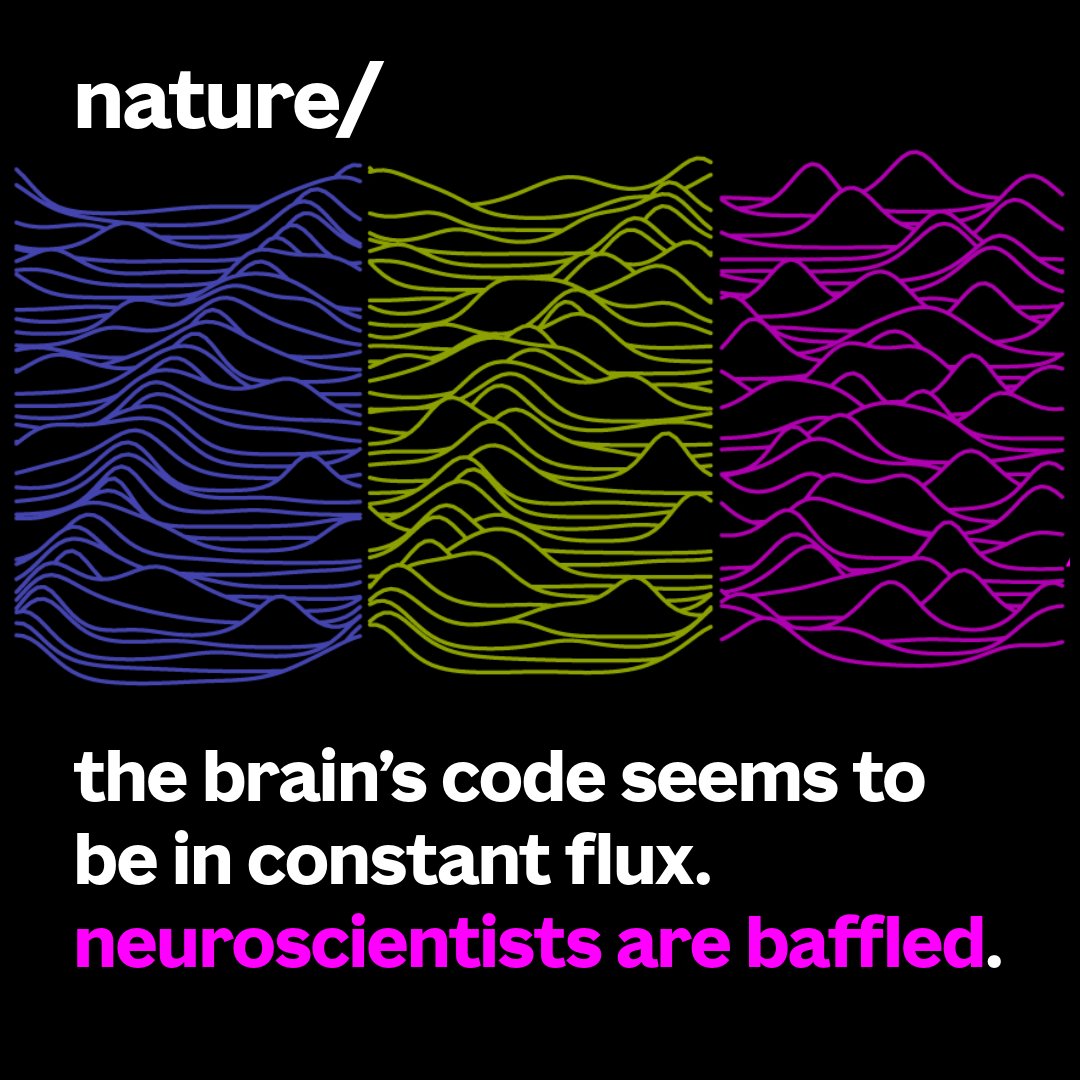
When @LnDriscoll began her doctoral research at Harvard, her first task was to find the baseline of how specific neurons fired. Then the baseline kept moving. @DianaMKwon for @Nature asked the researchers grappling with the brain's shifting code: nature.com/articles/d41586-0…
2
6
37
2,225
Time-Frequency Grid States for Reconstruction and Correction of Channel-Induced Distortion in Entangled Photons Siang-Yun Liu, Bo-Ren Huang, Zhi-Xuan Zen, Yen-Hung Chen, Pin-Ju Tsai arxiv.org/abs/2606.12216 [πššπšžπšŠπš—πš-πš™πš‘]
1
1
7
154
Akitti retweeted
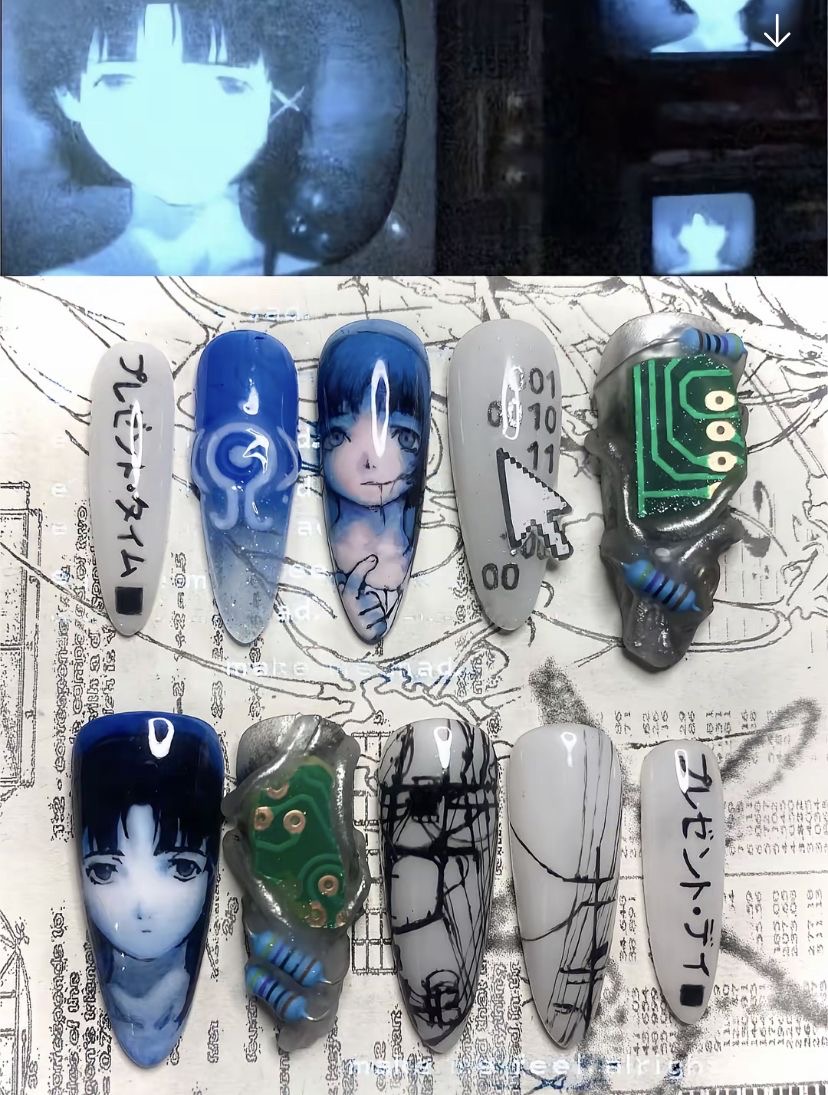
lain
19
262
2,950
Keep it light πŸͺΆ
1
3
4
81
I thought that said harassing
Harnessing AI to Perform Multi-Axis Inertial Sensing in a 3D Optical LatticeπŸ€”
1
24
Akitti retweeted
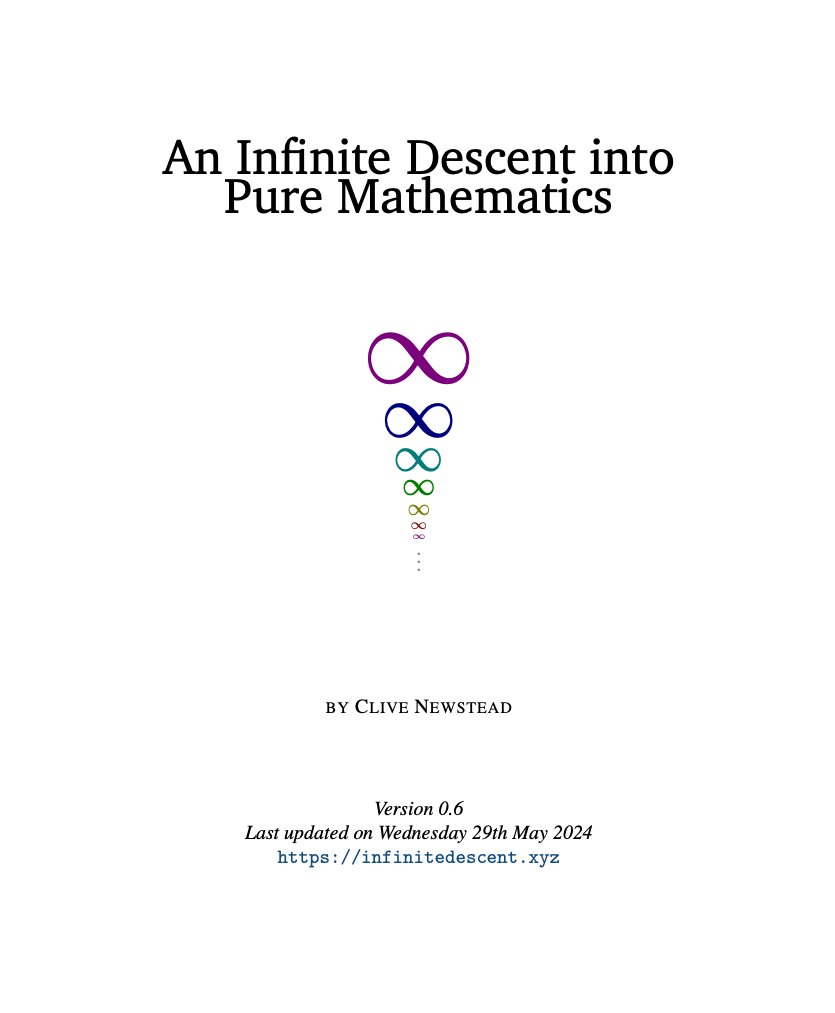
Free math book, 630 pages, Carnegie Mellon University, CC license An Infinite Descent into Pure Mathematics cnewstead.gitlab.io/infdesc/… TeX source @ GitLab gitlab.com/cnewstead/infdesc The first part of the book covers core material, including basic mathematical reasoning, symbolic logic, sets, functions, induction and relations. These are the concepts that all mathematicians should feel comfortable with. The second part of the book covers basic material in a number of mathematical areasβ€”topics include number theory, combinatorics, real analysis, infinite sets, equivalence relations, probability theory, order theory and structural induction. Throughout, strategies are provided that help readers to see how mathematical concepts and results can be used in a proof. Another aspect of doing mathematics covered in the book is using LaTeX to typeset a mathematical document, a skill required of almost all professional mathematicians but rarely formally taught to them. LaTeX commands are provided for all new notation introduced in the book at the time that the notation appears. The LaTeX source for the book is available on Gitlab. A reader intending to self-study this textbook should seek additional help from others, such as peers, tutors or even online communities such as Mathematics Stack Exchange. math.stackexchange.com/
6
56
337
9,775
Quadratic
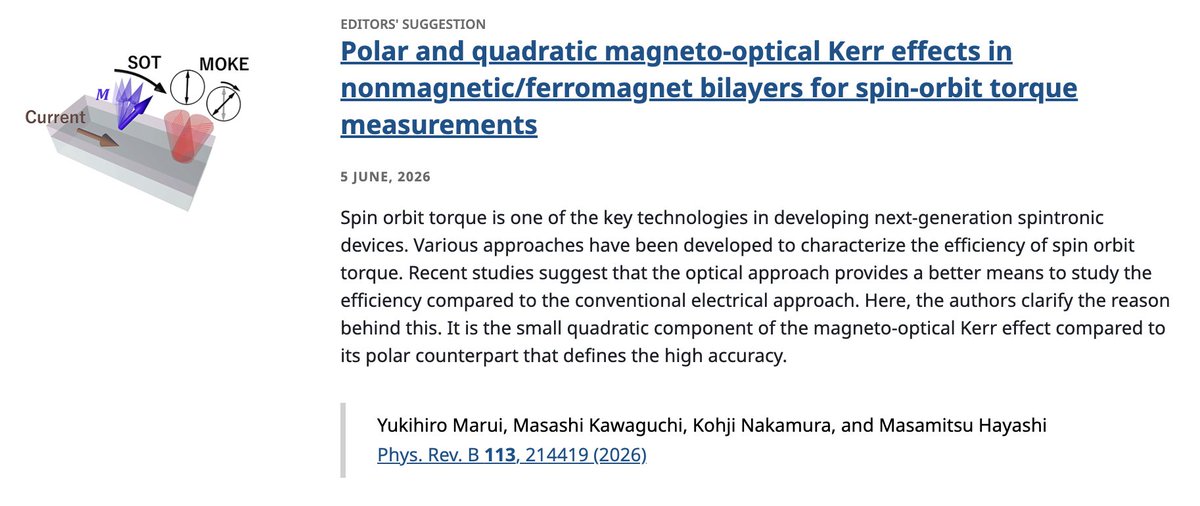
PRB Editors' Suggestion: Polar and quadratic #MagnetoOpticalKerrEffects in #nonmagnetic/#ferromagnet bilayers for #SpinOrbitTorque measurements Y. Marui, M. Kawaguchi et al., Phys. Rev. B 113, 214419 ➑️ go.aps.org/4ufxUlp #EdSugg @APSPhysics #physics #condmat
1
28