Filter
Exclude
Time range
-
Near
Tak asi někoho baví jeho koncept automobility, někteří ji dokonce možná využívají. Někteří možná používají twitter, jehož je aktuálně majitelem, ataky nás to celkem baví, a někteří možná využívají starlink a jiní tzřeba zase fandí vesmírným projektům.
1
4
563
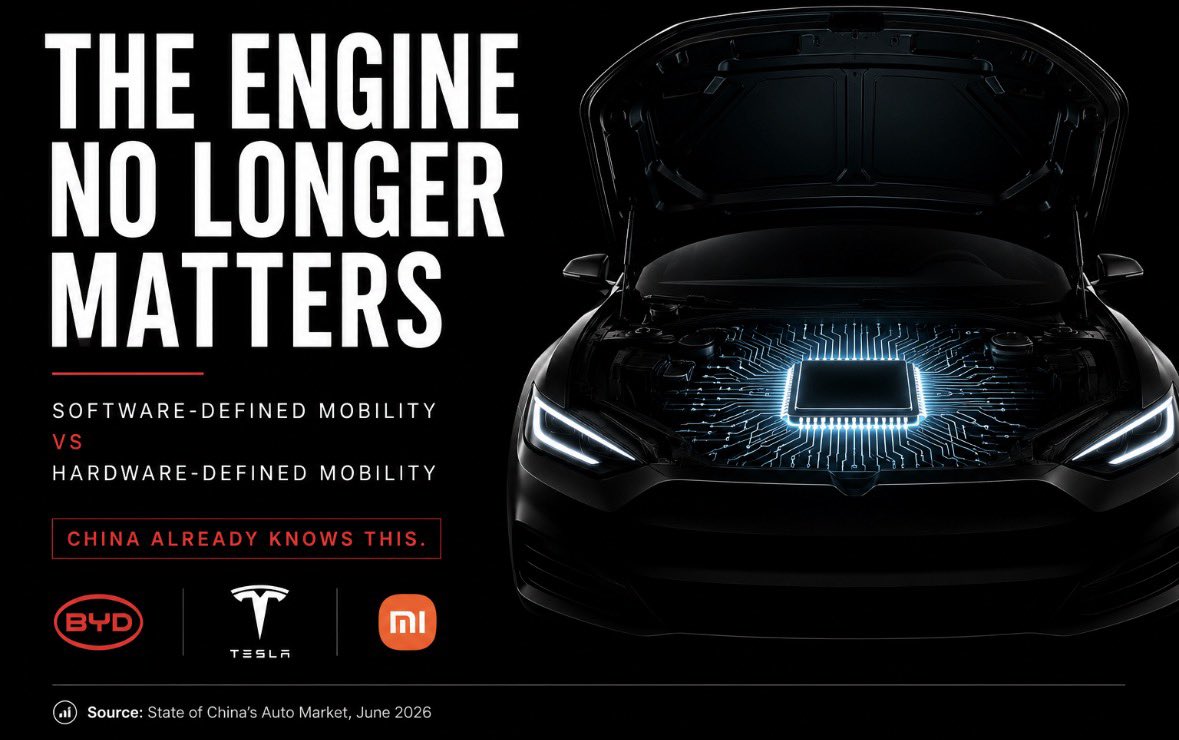
The future battleground is not EV vs ICE. It is software-defined mobility vs hardware-defined mobility. For the last decade, the automotive industry has been obsessed with the powertrain debate. Electric or gasoline. Battery or engine. Meanwhile, the real battle moved somewhere else. China’s auto market now has EV penetration approaching 60%, and Chinese brands control roughly 70% of their domestic market. The conversation there is no longer about electrification. It’s about software. Who owns the operating system? Who controls the customer experience? Who can deliver AI, connectivity, over-the-air updates, autonomy, commerce, entertainment, insurance, financing, and services through the vehicle? The winners of the next decade may not build the best cars. They may build the best platforms. Tesla understood this early. BYD understands it now. Xiaomi entered automotive with the mindset of a technology company, not a car company. The vehicle is rapidly becoming a connected device on wheels. As hardware becomes more similar, software becomes the differentiator. For dealers, this shift matters just as much. Customers increasingly expect the same experience from a dealership that they get from their smartphone: • Instant answers • Personalized recommendations • AI-powered assistance • Continuous updates • Frictionless transactions The question is no longer who builds the best vehicle. The question is who owns the customer relationship after the sale. That may determine the next generation of automotive winners. Sources: • Bill Russo, State of China’s Auto Market – June 2026 • Automobility Ltd • China Passenger Car Association (CPCA) • China Association of Automobile Manufacturers (CAAM) • Reuters, June 2026
25
Replying to @MthandeniNene
A = Automobility
1
18
Just another fun weekend of automobility.
2
177
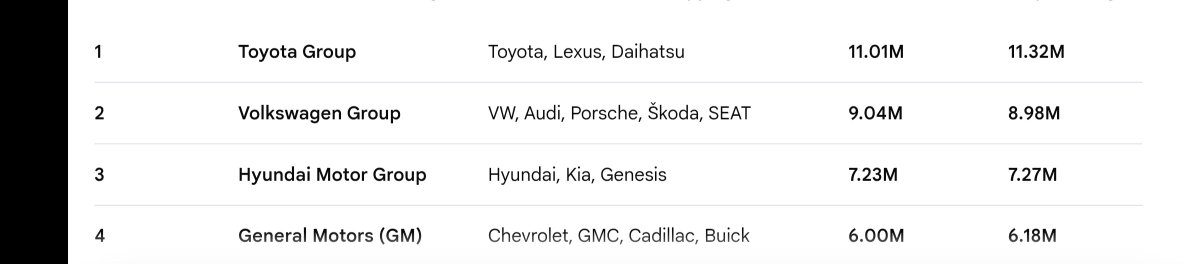
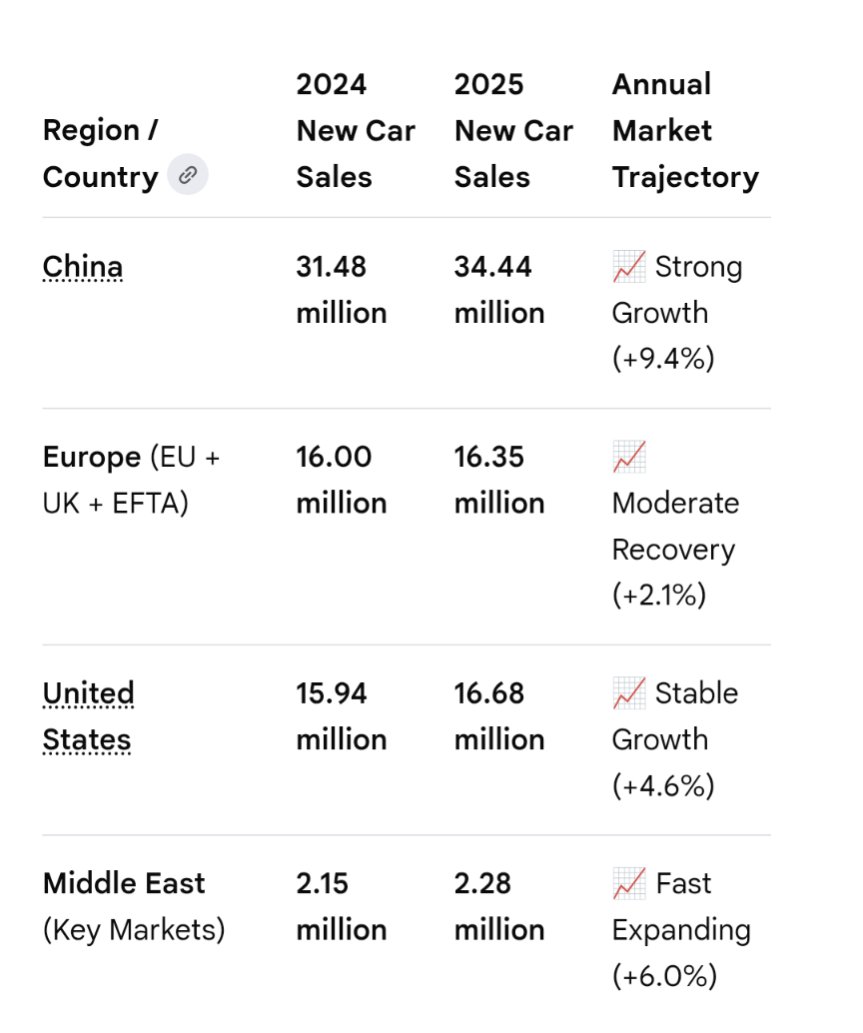
شركات صناعة السيارات في الصين تضع عينيها على ان تصبح مكان شركة تويوتا 11 مليون سيارة سنويا، وشركة في دبليو 9 مليون سياره سنويا وهونداي 7 مليون سياره سنويا وجي ام 4 مليون سيارة سنويا. كانت حصة الشركات الاجنبيه في الصين 64% عام 2020 ولكن هذا العام اصبحت فقط 32% حسب consultancy Automobility الصين يتم بيع 34 مليون سياره جديده سنويا وهذا يساوي او اكثر من عدد السيارت الجديده التى يتم بيعها في امريكا اوربا والشرق الاوسط.
9
2,608
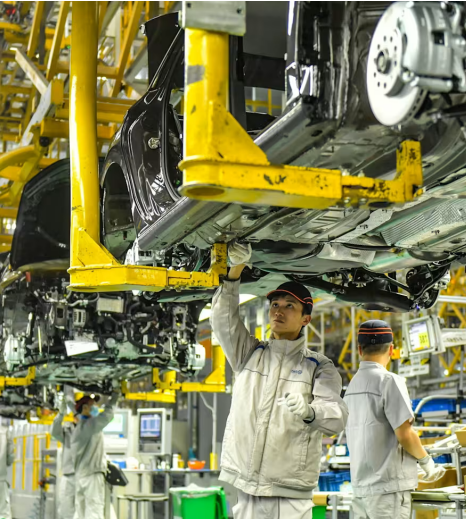
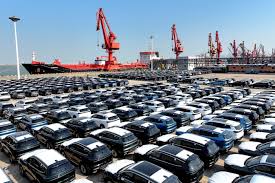
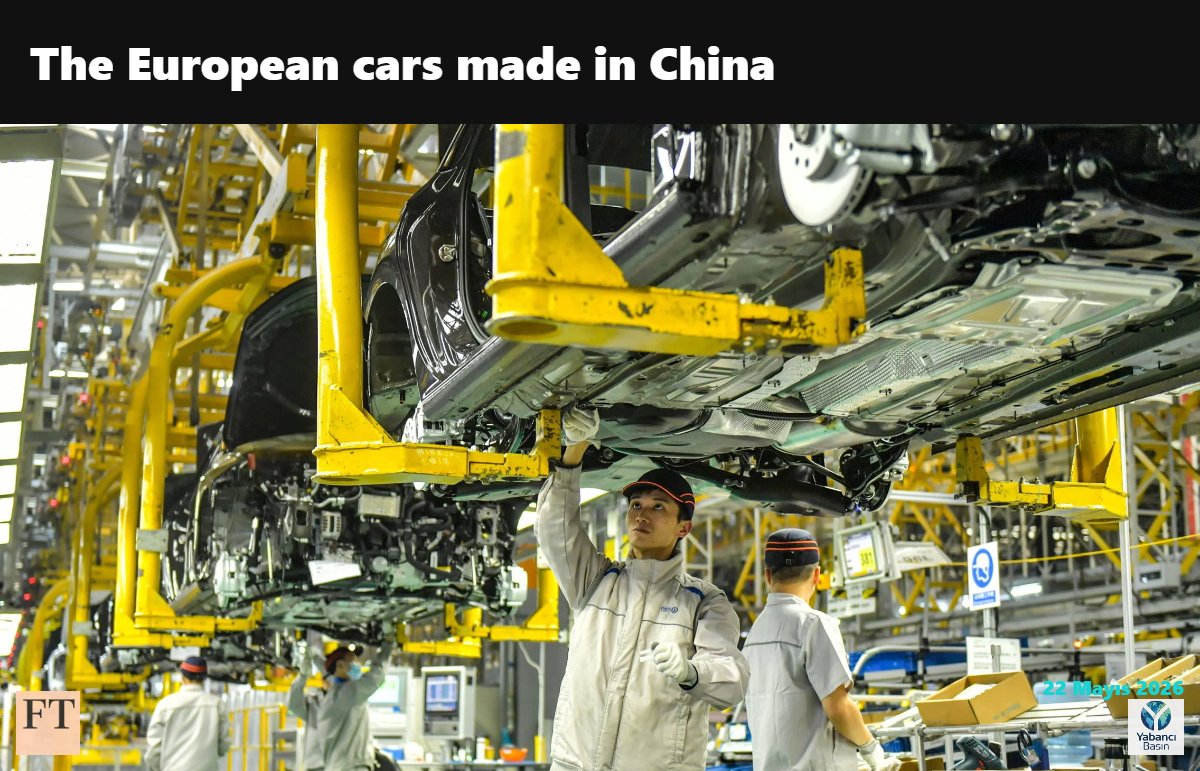
The European cars made in China ft.com/content/5529010d-a1c0… "Le auto europee prodotte in Cina: i costruttori occidentali sfruttano la sovrapproduzione cinese" è quanto rileva il #FinancialTimes in questa interessante analisi nella quale si evidenza come "i costruttori automobilistici occidentali stanno sfruttando la sovracapacità produttiva della Cina per esportare veicoli a costi inferiori verso i propri mercati". Come spiega il #FT "nei primi anni Settanta, gli operai della Dongfeng (il cui nome significa "Vento dell'Est") importavano camion americani per studiare i primi prototipi di veicoli fuoristrada destinati all'Esercito Popolare di Liberazione. Quasi sessant'anni dopo Stellantis, il gruppo europeo proprietario del marchio Jeep, stringe un'alleanza proprio con Dongfeng per produrre una nuova versione a batteria dell'iconico veicolo utilitario leggero americano, destinata ai consumatori di Cina, Medio Oriente e Sud-Est asiatico." Tale collaborazione rappresenta l'ultimo esempio di una tendenza che sta ridisegnando l'industria automobilistica globale: "le case automobilistiche internazionali, in lotta per la sopravvivenza nel mezzo di una costosa transizione verso l'elettrico, stanno trasformando le fabbriche cinesi – tecnologicamente avanzate ed efficienti in termini di costi – nelle basi manifatturiere per i loro business globali [...] le aziende straniere rappresentano già circa i due quinti delle esportazioni di auto dalla Cina verso l'Europa". Come evidenzia l'articolo "Volkswagen, BMW, Nissan, Hyundai e altri player stanno aumentando le esportazioni dagli stabilimenti cinesi con capacità residua verso i mercati diversi di Europa e Stati Uniti [...] molti esperti avvertono però del rischio di conseguenze devastanti, con le importazioni cinesi che potrebbero cannibalizzare la produzione in Europa e in altri Paesi a costi più elevati, indebolendo la manifattura locale e le catene di fornitura. Marchi come Ford e Opel hanno già avviato trattative con i propri partner per produrre auto di progettazione cinese in stabilimenti europei sottoutilizzati. Sander Tordoir, capo economista presso il Centre for European Reform, afferma che esiste "un rischio reale che quote significative di ingegneria, produzione, innovazione e catene di fornitura del settore automobilistico finiscano per concentrarsi ancora di più in Cina. L'UE deve decidere se è disposta ad affrontare la Cina con una politica commerciale e industriale più severa... che incentivi non solo i produttori cinesi a produrre in Europa, ma anche le proprie multinazionali dell'auto a mantenere la produzione nel Continente. La grave sovracapacità produttiva e i margini ridotti all'osso nel mercato cinese sono i fattori principali che spingono l'export, sia per i produttori nazionali che per quelli stranieri. Un rapporto di Rhodium, commissionato dalla Camera di Commercio statunitense e pubblicato la scorsa settimana, ha evidenziato come il surplus commerciale della Cina nei beni manifatturieri (pari a 2.000 miliardi di dollari) sia stato in parte alimentato da una debole domanda interna coincisa con massicci sussidi in settori chiave come i veicoli elettrici [...] le esportazioni di veicoli passeggeri dalla Cina verso l'Europa sono aumentate del 29% su base annua, raggiungendo le 922.000 unità nel 2025. Una tendenza che ha subito un'ulteriore accelerazione quest'anno: secondo Rhodium, solo nel primo trimestre le esportazioni hanno toccato quota 326.000 unità, registrando un balzo del 72%" Bill Russo, fondatore di Automobility, citato dal #FT aggiunge che "sebbene la svolta esportatrice dei costruttori cinesi sia iniziata come "meccanismo per assorbire la sovracapacità", oggi punta anche ad aumentare la redditività. I consumatori esteri accetteranno prezzi più alti, garantendo margini più elevati rispetto a quelli che il saturo mercato interno può sostenere [...] i marchi stranieri – spesso gestiti come joint venture tra gruppi globali e cinesi – sono giunti a conclusioni simili sul potenziale dell'export dal Paese, oltre che sul soddisfacimento della domanda locale [...] un cambiamento rappresenta un bagno di umiltà per i costruttori europei e asiatici che hanno trascorso decenni a trasferire competenze e tecnologia ai partner delle joint venture cinesi in cambio dell'accesso all'immenso mercato del Paese. Inoltre, mina gli sforzi degli Stati Uniti volti a spingere gli altri Paesi al decoupling (disaccoppiamento) dalle catene di fornitura cinesi. I dirigenti ammettono in privato che la manifattura cinese, in particolare per le auto elettriche e il software, sta diventando sempre più lo standard globale e potrebbe presto sostituire i modelli prodotti altrove". Per i produttori europei, spiega però l'articolo "incrementare le esportazioni dalle loro filiali cinesi è un'arma a doppio taglio, poiché alcuni stabilimenti più vicini a casa operano già al di sotto del 50% della loro capacità a causa di una domanda debole, secondo S&P Global Mobility e S&P Global Ratings [...] una simile mossa sarebbe inoltre altamente sensibile dal punto di vista politico. I leader dell'UE e il presidente degli Stati Uniti Donald Trump hanno criticato le politiche cinesi orientate all'esportazione perché distorcono i flussi commerciali globali. Sostengono che il presidente cinese Xi Jinping abbia militarizzato la potenza manifatturiera del Paese anziché perseguire riforme interne per stimolare lo stato sociale e i consumi, e che i centri manifatturieri nel resto del mondo ne stiano pagando il prezzo." Dal lato europeo, evidenzia il Financial Times, "la Commissione Europea ha definito a marzo i piani per aumentare gli incentivi legati ai componenti locali. La proposta di legge Industrial Accelerator Act(IAA) stabilirebbe requisiti di produzione "Made in Europe" per accedere ai sussidi governativi. L'iniziativa è fortemente sostenuta da Stellantis e Volkswagen. La legislazione, che deve essere approvata dal Parlamento europeo e dagli Stati membri, limiterà la tecnologia cinese nelle auto e "imporrà un certo grado di rilocalizzazione" di questa produzione in Europa, secondo quanto riferito da un funzionario. Essa richiederà che almeno la metà dei principali sistemi elettronici di bordo – dai radar ai sistemi di guida autonoma – sia prodotta nell'UE entro il 2030 per poter beneficiare di finanziamenti pubblici, sussidi o per far parte delle flotte aziendali [...] l'UE potrebbe ancora ricorrere a misure più restrittive, ricalcando le normative statunitensi che vietano l'uso di software e hardware cinesi nelle auto vendute in America." @FratellidItalia @fdieuropa @FDI_Parlamento @ecrgroup @europainitalia @nazione_futura @GeopoliticalCen @Geopoliticainfo @ATA_Italia @GlobalCRL @theglobalnewsit @FWLuciolli @arturo_varvelli @LetiziaDo @iuvinale_n @GabrieleIuvina1 @giuliapompili @ExtremaRatio4
3
16
37
3,845
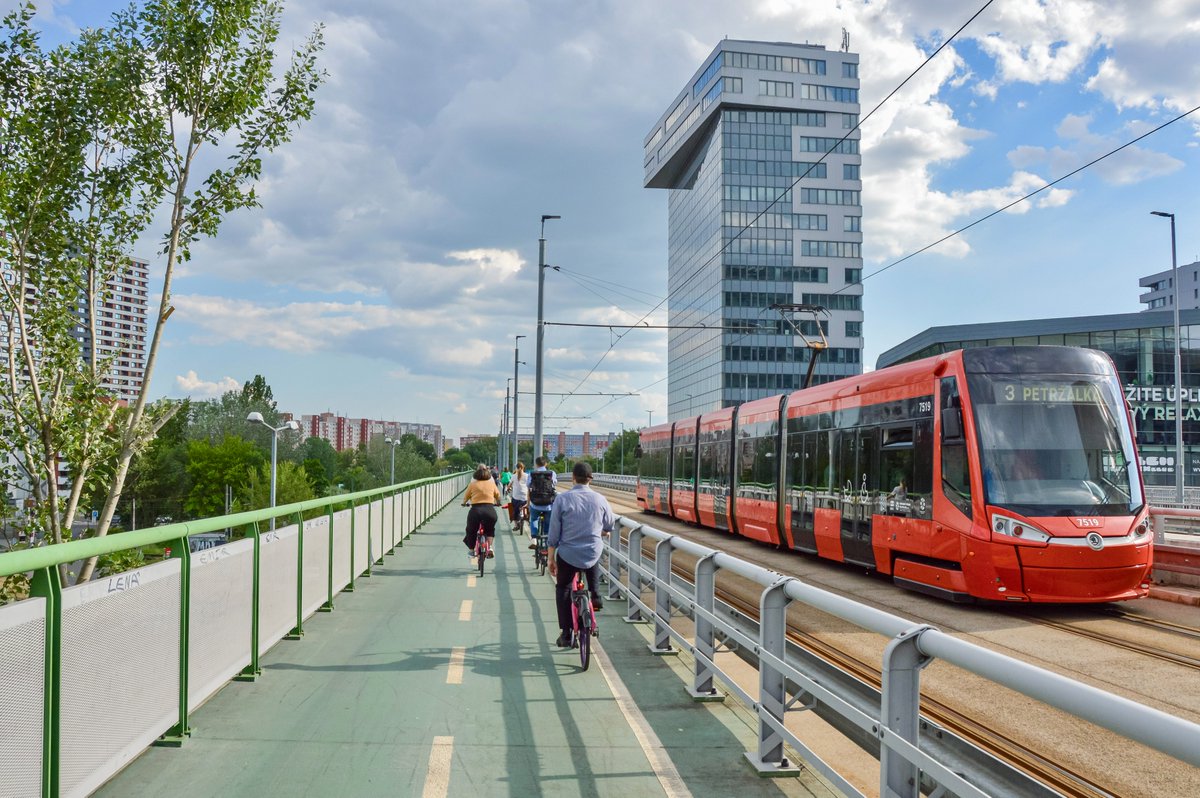
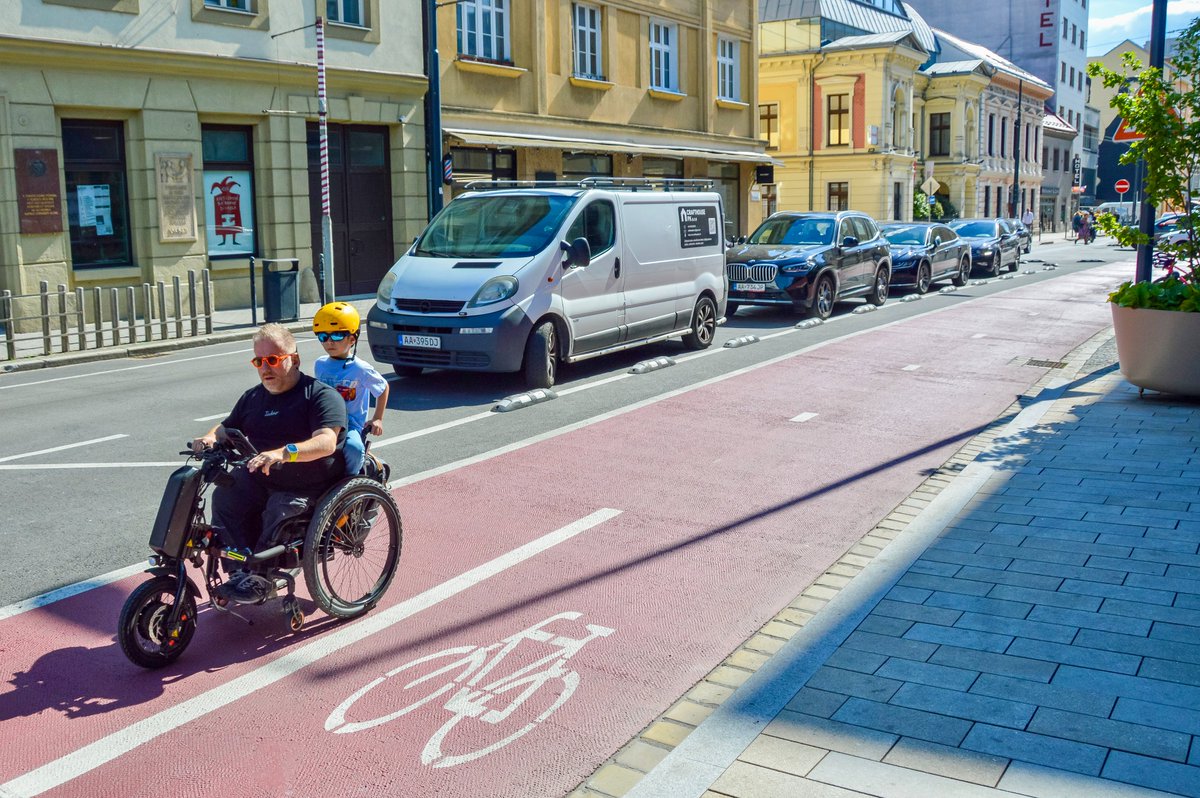
After communism's fall, cycling was abandoned in favour of automobility. Infrastructure was fragmented and disconnected. Painted lanes appeared randomly—moving onto footpaths then disappearing at intersections. The bike was seen primarily as recreation rather than transportation.
2
3
42
1,534
Financial Times Avrupalı otomobil üreticileri Çin’i küresel üretim üssüne dönüştürüyor 🔹 Stellantis, Dongfeng ile birlikte Jeep markasının yeni elektrikli modelini Çin’de üretmeye hazırlanıyor. 🔹 Araçların Çin, Orta Doğu ve Güneydoğu Asya pazarlarına gönderileceği belirtildi. 🔹 Küresel otomotiv şirketlerinin elektrikli araç dönüşümünün maliyeti nedeniyle Çin’deki üretim altyapısına daha fazla yöneldiği ifade edildi. 🔹 Rhodium Group verilerine göre Çin’den Avrupa’ya yapılan otomobil ihracatının yaklaşık yüzde 40’ı yabancı üreticilerden veya ortak girişimlerden geliyor. 🔹 Şanghay merkezli Automotive Foresight yöneticisi Zhang Yu, Çin’in üretim avantajının çok büyük olduğunu söyledi. 🔹 Volkswagen, BMW, Nissan ve Hyundai’nin Çin’den Avrupa dışı pazarlara ihracatı artırdığı belirtildi. 🔹 ABD’nin yüzde 100’e ulaşan tarifeler nedeniyle Çin araçlarına fiilen kapılarını kapattığı ifade edildi. 🔹 Avrupa Birliği’nin ise yüzde 45’e kadar vergi uygulamasına rağmen Çin üretimli araçlar için önemli pazar olmaya devam ettiği belirtildi. 🔹 Mazda ve Nissan gibi şirketlerin Çin’de üretilen araçları Avrupa’ya ihraç etmeyi değerlendirdiği ifade edildi. 🔹 Volkswagen’in de Çin’den Avrupa’ya araç ihracatını dışlamadığı belirtildi. 🔹 HSBC analisti Yuqian Ding, küresel üretim merkezinin yeniden şekillendiğini söyledi. 🔹 Ding, Çin’in artık sadece ucuz üretim merkezi değil aynı zamanda teknoloji lideri haline geldiğini ifade etti. 🔹 Batılı otomotiv yöneticileri, Çin’deki düşük maliyet ve gelişmiş teknolojinin küresel rekabet gücünü artırdığını savundu. 🔹 Eleştirmenler ise Avrupa’daki üretimin Çin lehine zayıfladığı uyarısında bulundu. 🔹 Ford ve Opel’in Avrupa’daki atıl fabrikalarda Çin tasarımı araç üretimini değerlendirdiği belirtildi. 🔹 Centre for European Reform Başekonomisti Sander Tordoir, mühendislik ve tedarik zincirinin giderek Çin’de yoğunlaşabileceğini söyledi. 🔹 Çin’in dünyanın en büyük otomobil ihracatçısı konumuna geldiği belirtildi. 🔹 Çin’in yolcu aracı ihracatı 2020’de 1 milyonun altındayken geçen yıl 7 milyonu aştı. 🔹 2026’nın ilk dört ayında ihracatın yıllık bazda yüzde 61 artarak 3,1 milyon araca ulaştığı ifade edildi. 🔹 Volkswagen Çin operasyonları yöneticisi Robert Cisek, Çin’in inovasyon hızını belirlediğini söyledi. 🔹 Cisek, Çin rekabetine uyum sağlamayan şirketlerin zorlanacağını ifade etti. 🔹 Rhodium raporuna göre Çin’in 2 trilyon dolarlık imalat ticaret fazlasında elektrikli araç sübvansiyonları etkili oldu. 🔹 Çin’in yıllık otomobil üretim kapasitesinin 45-50 milyon araç seviyesinde olduğu belirtildi. 🔹 Buna karşılık geçen yıl iç satışların 23,9 milyon araçta kaldığı ifade edildi. 🔹 İç talebin zayıflaması nedeniyle BYD, Jaecoo, Omoda ve MG gibi markaların ihracata yöneldiği belirtildi. 🔹 Çin’den Avrupa’ya yolcu aracı ihracatı 2025’te yüzde 29 artarak 922 bin araca ulaştı. 🔹 2026’nın ilk çeyreğinde ise ihracat yüzde 72 artışla 326 bin araca çıktı. 🔹 Geely’nin küresel pazarlarda yüzde 5 pay hedeflediği belirtildi. 🔹 Chery’nin Jaecoo 7 modeli mart ayında Birleşik Krallık’ta en çok satan yeni otomobil oldu. 🔹 Chery yöneticileri yurtdışı satışların marka değerini ve kârlılığı artırdığını söyledi. 🔹 Automobility kurucusu Bill Russo, Çinli üreticilerin artık yalnızca kapasite fazlasını eritmek için değil daha yüksek kâr için de ihracat yaptığını belirtti. 🔹 Elektrikli ve plug-in hibrit araçların Çin ihracatındaki payı ilk dört ayda yüzde 44’e yükseldi. 🔹 Bu oranın beş yıl önce yüzde 7 seviyesinde olduğu belirtildi. 🔹 Tesla Model 3 araçlarının önemli bölümünün Şanghay’da üretildiği hatırlatıldı. 🔹 Çin’de üretilen bazı Mini elektrikli modellerinin de Avrupa’ya ihraç edildiği ifade edildi. 🔹 Hyundai’nin “Çin’de üret, dünyaya sat” stratejisine geçtiği belirtildi. 🔹 Nissan, Çin’den yıllık ihracatı 2030’a kadar 300 bin araca çıkarmayı hedefliyor. 🔹 Nissan’ın Dongfeng ortaklığıyla ürettiği elektrikli ve hibrit araçları Latin Amerika, Güneydoğu Asya ve Orta Doğu’ya göndereceği açıklandı. 🔹 Nissan CEO’su Ivan Espinosa, Çin üretimli araçların şirket için kârlı olduğunu söyledi. 🔹 Espinosa, Avrupa’nın da potansiyel ihracat pazarı olduğunu ifade etti. 🔹 Çin üretiminin küresel standart haline geldiği değerlendirmesi yapıldı. 🔹 Chery yöneticileri Çin’in dünyanın en kapsamlı elektrikli araç tedarik zincirini kurduğunu söyledi. 🔹 Uluslararası Enerji Ajansı verilerine göre küçük SUV üretimi Çin’de gelişmiş ülkelere kıyasla en az yüzde 30 daha ucuz. 🔹 Volkswagen yöneticileri geçen yıl Çin’de elektrikli araç üretiminin diğer bölgelere göre yarı maliyetli olduğunu açıklamıştı. 🔹 Avrupa’daki çok sayıda fabrikanın kapasitesinin yüzde 50’nin altında çalıştığı belirtildi. 🔹 Stellantis’in Dongfeng’in üst segment elektrikli araçlarını Fransa Rennes fabrikasında üretmeyi planladığı ifade edildi. 🔹 Opel’in ise Çinli Leapmotor teknolojisiyle İspanya’da elektrikli SUV üretmeye hazırlandığı belirtildi. 🔹 Avrupa Komisyonu mart ayında “Made in Europe” içerik şartları içeren yeni sanayi planı sundu. 🔹 Planın kamu teşviklerinden yararlanmak için Avrupa üretim şartı getireceği ifade edildi. 🔹 2030 itibarıyla radar ve otonom sürüş sistemleri dahil temel elektronik sistemlerin en az yarısının AB’de üretilmesi hedefleniyor. 🔹 Avrupa Birliği’nin Çin teknolojisine bağımlılığı azaltmaya çalıştığı belirtildi. 🔹 Volvo Cars CEO’su Håkan Samuelsson, Çin yazılım ve donanımına yönelik yeni kısıtlamalara uyum sağlamak zorunda kalacaklarını söyledi. 🔹 HSBC analisti Ding, Çin üretimli araçların ileri teknolojiyi küresel pazarlara taşımayı sürdüreceğini belirtti. 🔹 Rhodium analisti Gregor Williams, Avrupa’nın elektrikli araç geliştirme bilgisini kaybetmesinin büyük risk olduğunu söyledi.
5
10
1,505
Essentially, post-war suburbanisation was a positive surge of upward mobility for working-class industrial workers who progressed from shabby inner-city slum-like accommodation to spacious freestanding houses and transport automobility. These days upscale Yimbys denounce it as boomer selfishness that blocked denser forms of housing construction. #housing #nswpol
2
5
3,807
Good to see the EV tax discount will be reduced. The Commonwealth shouldn't be supporting automobility, given the harms and costs it imposes on cities. Indeed the Commonwealth should be rolling out road user charges on EVs (and increasing fuel excise). abc.net.au/news/2026-05-04/e…
3
166
Tomorrow, join us for a live session with AutoMobility Advisors Advisors at 12 PM EST to explore how automotive companies are using modern tools to unlock true enterprise-level intelligence. 🔗 Save your spot today: ow.ly/rtoe50YRbrJ #DataAnalytics #ArtificialIntelligence #AutomotiveIndustry #BusinessIntelligence #SemanticLayer
2
7
46
4,664
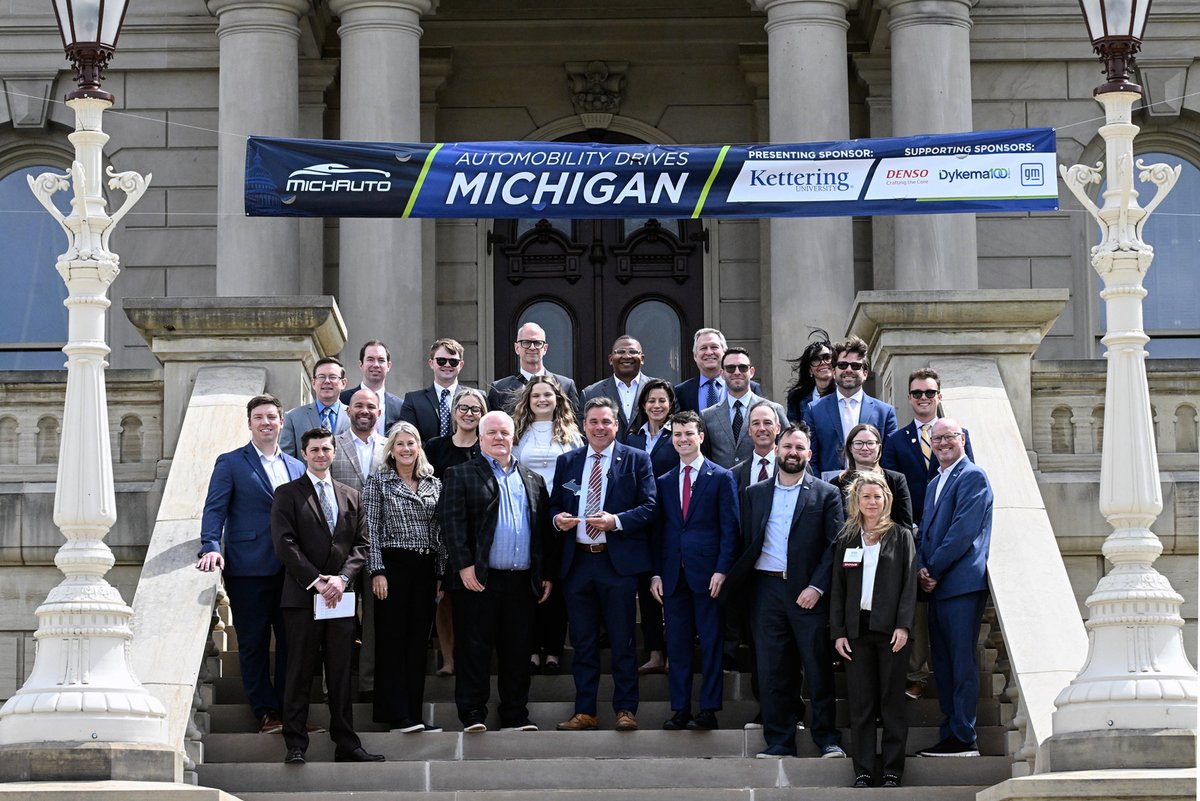
We were in Lansing, Michigan this week for @MichAuto's Automobility Day at the Capitol, engaging with industry leaders and policymakers on the future of automotive. Great to see MI State Senator John Damoose named Legislator of the Year by MichAuto, recognizing his leadership and support of the industry. We also valued engaging with Michigan lawmakers on how to keep the industry moving forward. At Munro, we support data driven decisions with cost engineering insights and proven methods to improve throughput and competitiveness.
2
8
4,065
There's a reason Americans routinely call cars "automobiles." Trains do not provide automobility. Cars do. End of story.
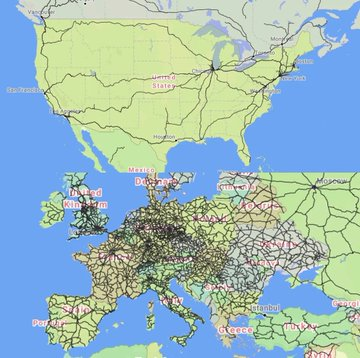
El error más costoso de la historia de los EE.UU.: Elegir autopistas en lugar de trenes de alta velocidad. Mientras tanto, los europeos viajan entre sus principales ciudades en la mitad de tiempo y a un costo mucho menor. Aquí explico por qué la red de transporte europea supera con creces a la estadounidense 🧵:
2
4
709
Join us and AutoMobility Advisors on April 30th to explore how automotive companies are using modern tools to unlock true enterprise-level intelligence. 🔗 Save your spot today: ow.ly/M2nt50YNENA #DataAnalytics #AutomotiveIndustry #BusinessIntelligence #SemanticLayer
4
5
32
5,039
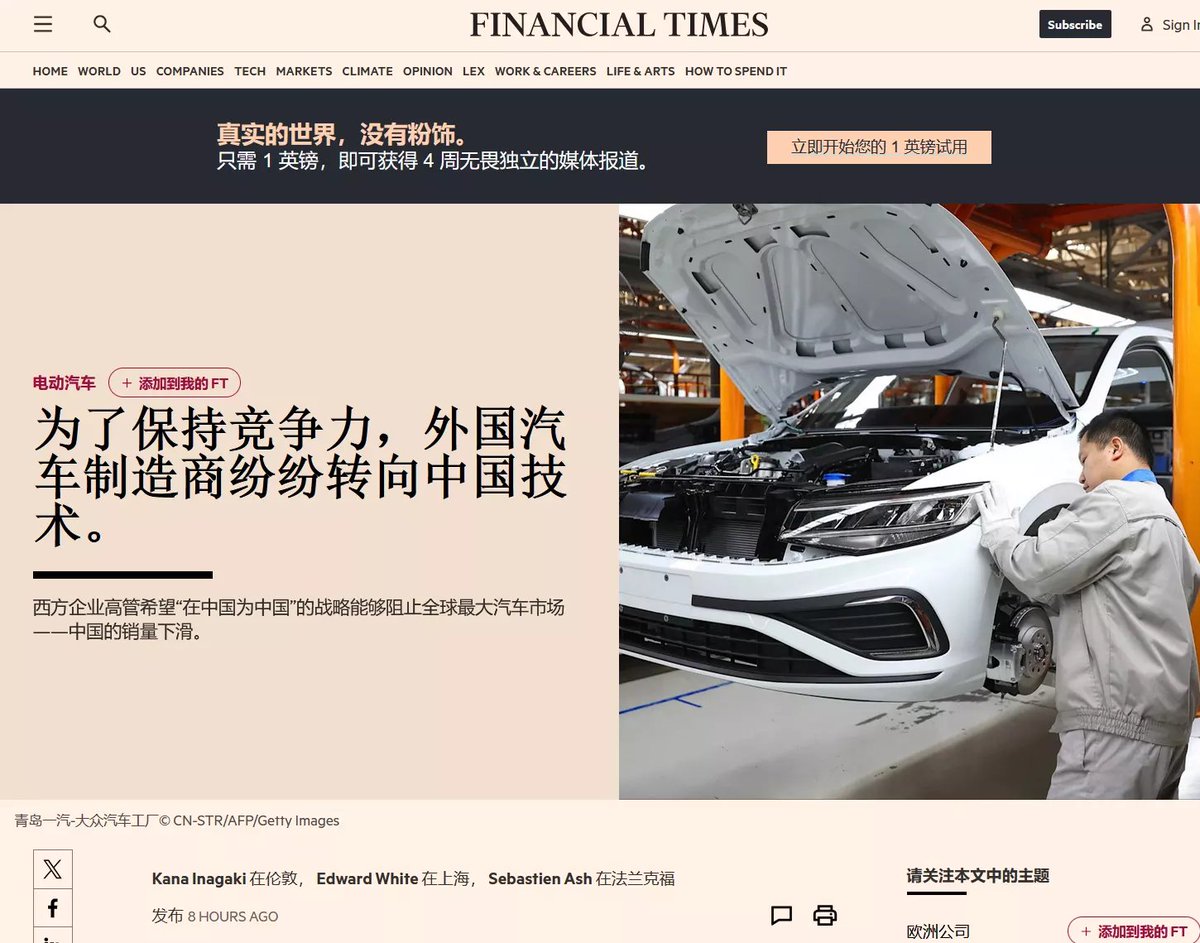
FT: 为了保持竞争力,外国汽车制造商纷纷转向中国技术 西方汽车制造商正努力通过采用中国技术制造的新型电动汽车,在世界最大的汽车市场保持竞争力,他们也希望将这些电动汽车推向其他国际市场。 两年前,大众和丰田等品牌提出了 “在中国,为中国”的战略 ,计划通过采用中国本地技术制造汽车来重夺市场份额。 如今,这些品牌的高管们希望通过本周在北京举行的年度车展上展出的一系列新产品来赢得消费者的青睐。 宝马董事会成员表示,“我们希望今年能够稳定下来,但我们相信凭借所有车型……我们将能够在中国的市场再次实现增长。” 这家德国集团将展示其电动iX3运动型多用途车,该车采用加长底盘, 并利用Momenta、华为和阿里巴巴的本地技术在中国开发。 近年来,随着比亚迪、吉利、小米等本土竞争对手和新晋品牌的崛起,外国汽车制造商在中国的销量大幅下滑。 目前,电动汽车和插电式混合动力汽车在中国新车销量中占比超过一半。 根据上海咨询公司Automobility的数据,外国汽车在中国的市场份额已从2020年的64%减半至今年的32%。 几十年来,中国品牌通过与西方竞争对手的本土合资企业学习汽车制造。 如今形势逆转,大众、丰田等公司不得不依靠中国合作伙伴和供应链来更快地生产汽车,并采用更先进的软件。 常驻上海的咨询公司Omdia的电动汽车分析师表示,外国汽车制造商在中国面临的真正差距不再是硬件,甚至也不是电动汽车平台,而是软件执行,“这从根本上来说是一个人才问题”。 “中国拥有难以复制的软件工程人才规模,无论从数量还是迭代速度来看都是如此。”他还补充说,这正是德国汽车制造商尤其正在加深其在中国的研发投入的原因。 “只要外国汽车制造商能够吸引到中国顶尖的软件人才,它们就能保持竞争力。但能否保持竞争力取决于它们能否真正跟上中国的发展速度,而不仅仅是参与人才市场。”
12
22
120
25,219
Yes, there are lots of interesting analogies to electricity, though I expect electricity to be a lot more impactful overall. We have loads of great work on electrification. Many of these points hold true for what are sometimes called "general purpose technologies" - problematic term for sure - including steam power, automobility, computing in general, and so on. en.wikipedia.org/wiki/Genera…
In thinking about the right historical analogy for AI, I've become very interested in the early history of electricity in the early 1900s. With early 20th century electricity, you had: - famously feuding private inventors creating/scaling the early technology (Edison, Tesla, Westinghouse) - a set of de facto monopolies who insisted that their technology was different in kind from other products and required special levels of corporate concentration - a period of sluggish growth, followed by a surge in commercial demand that prevented the boom from falling into the classic definition of an infrastructure "bubble" - a financial mania around electricity—e.g., the holding companies of the early 1900s, many of which did blow up after the 1929 crash - an inevitable showdown with the federal government about regulation in the 1930s, which ultimately resulted in a lot of regulated monopolies If you think that the AI buildout might result in some companies crashing and burning, without the entire thing becoming a classic Carlota Perez-style capital bubble, and furthermore believe that we are on an inevitable path toward a new regulatory regime that treats the frontier labs as regulated monopolies, I think you should definitely get curious about the 100-year-old history of electricity. derekthompson.org/p/the-ai-v…
3
615
Apr 13
Replying to @dharmawarrior3
Only one nation stands ready to return automobility to the people. Death or Geely.
1
4
106
The brand "Debsam Automobility Concepts" is based and operating in Osun state by the way.
2
16
Everything you have been warned about density was a lie: -"The public realm will get worse" -"How'll we afford public services" -"Nobody will walk/ride/transit" All great cities get better when they grow, not worse. 20th Century Automobility was a rare exception
Mar 31
May 2012 vs Today. Florida Ave and 4th St NE.
6
25
321
11,851
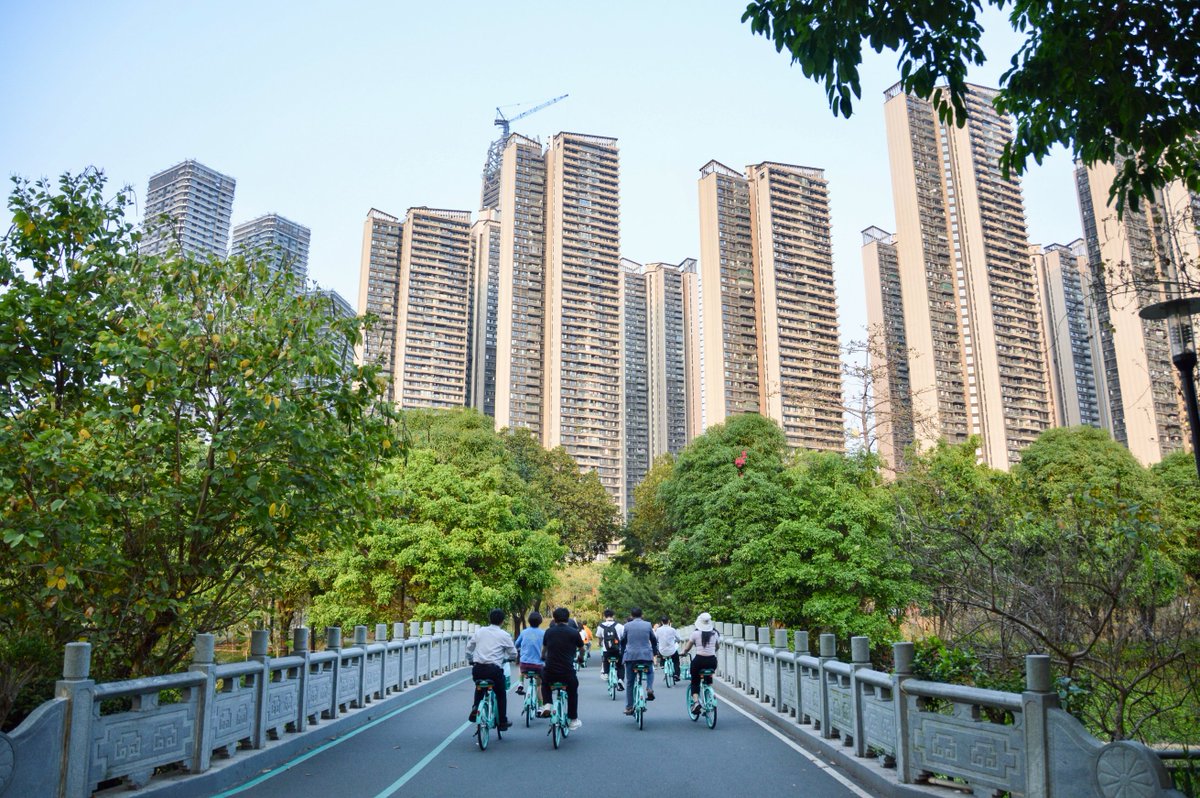
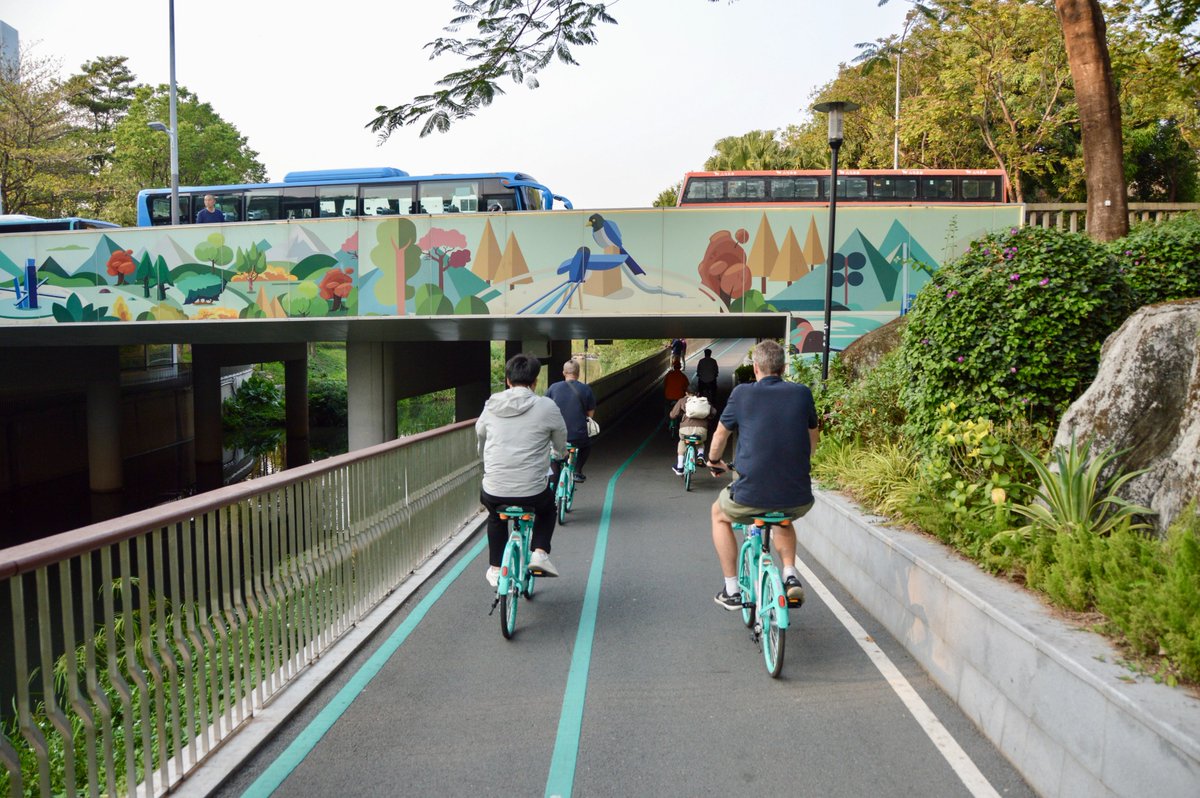
Meanwhile, Shenzhen spent decades prioritizing automobility. Wide arterials, superblocks, and grade-separated intersections created an environment optimised for speed and throughput, not human-scale mobility. In this context, cycling is pushed onto footpaths and informal spaces.
2
5
53
3,389