
bcsc two doesnt have antennas but thats basically the only difference lol and the skin tone 🥹🥹 other than that i always draw two the same way😭
1
18

NuRAN Files 40-F In Major Step Toward Nasdaq
Issued on behalf of @NuRANWireless $NUR / $NRRWF
NuRAN announced two major capital markets filings aimed at expanding investor access.
• Filed Form 40-F with the SEC in connection with its Nasdaq listing application
• Filed a preliminary shelf prospectus for up to C$100M in potential future offerings
• Confirmed it is back in good standing with the BCSC
What update would you most want to hear from NuRAN’s CEO next?
104

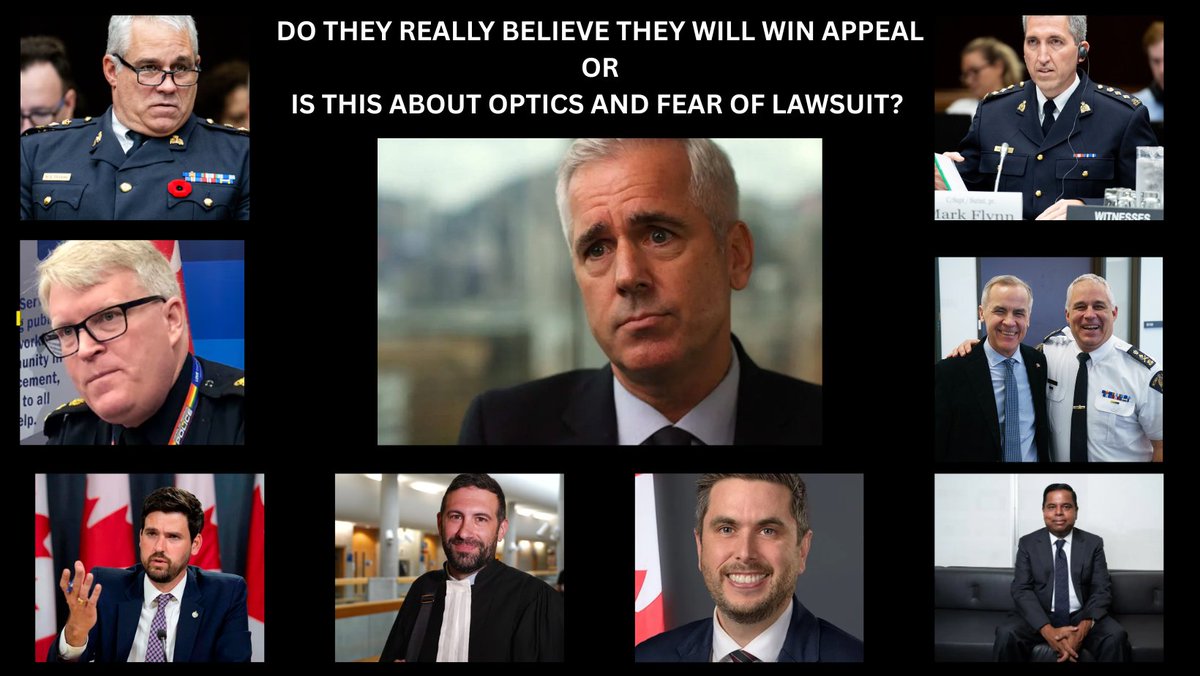
Look at this picture in my post.
Ask yourself: Do they honestly believe they have a hope in hell of winning, or are we watching an insane bureaucratic panic and damage control?
Please stop pretending.
Please stop acting like this is about truth.
This isn’t a pursuit of justice; it’s desperation at best.
Just an attempt at institutional self-preservation.
The Crown’s prosecution of Bill Majcher fell apart 100% because the evidence just wasn’t there.
Justice Martha Devlin saw right through it.
Yet, instead of cutting their losses and taking the hit for a blatant act of malicious prosecution, the Public Prosecution Service of Canada is dragging this foolishness into an appeal (2026 BCSC 581).
They are literally questioning the trial judge because they are terrified of the optics and a serious civil lawsuit waiting for them. Better stall.
The Notice of Appeal claims the trial judge erred in law by:
-Rejecting their proposed expert evidence.
-Assessing evidence on the wrong legal principle.
-Failing to consider the "ultimate issue."
Translation: The judge didn't buy our narrative, so we want a do-over.
They want a new trial ordered under s.686(4)(b)(i) of the Criminal Code.
Good luck.
Why are you wasting millions more in taxpayer dollars? Oh, right, because it’s not your money on the line.
To the bureaucrats and cowards who think an appeal will magically freeze the civil suit: you just don't get people who fight on pure principle and TRUTH.
Your narrative of relying on unvetted sources and hoping no one would fight back has been foolish from day one.
Even Majcher’s civil lawyer, Joel Etienne, nailed it:
“From our perspective, the appeal appears to lack substantive merit and risks becoming an exercise in institutional self-preservation rather than the pursuit of justice.”
The public has every right to ask why this ridiculous facade is continuing. They are scared of the civil suit, terrified of the optics, and hiding behind protectionism.
Give it up.
Stop wasting public funds to protect institutional egos.
Billy fights for the TRUTH; you fight for your pensions and protectionism.
History will document forever who was on the right side of this.
It won't be cowards - it will be those who stood for truth!
lnkd.in/gEFyYBRf
7
7
14
615


Jun 14
実はバイクの教習を受ける前はガチでフォルツァ(250ccのBCSC)に憧れてました
教習車のスカブをコカしてからANTI BCSCになりましたw
BCSC乗りの方は全く嫌いではないですw
45
Jun 14
親「軽はお金貯まるよ」
俺「N箱(JF2ターボ)でお腹いっぱいですわ、、、」
親「バイクは250にしろ
400とは維持費が段違いに安い」
俺「乗りたい車種が400(NX)なんだよなあ、、、」
あ、俺は別にANTI BCSC(ガチ)なのであってANTI K-CARではないですからねw



1
2
52

🚨🔥 SUD-KIVU AU BORD DE L’EXPLOSION ? LE BCSC TIRE LA SONNETTE D’ALARME APRÈS L’INTERDICTION DES MARCHES DE L’OPPOSITION ! 🚨🔥
26

Jun 13
Im waiting for BCSC to come out saying we have to listen to the mistic trees...
62


Jun 12
An #Oroville woman who appeared in #ButteCounty Superior Court (#BCSC) was sentenced to 10 years in state prison for allowing her two-year-old son to ingest fentanyl.
krcrtv.com/news/local/mother…
3
233


BC court draws a firm line on broker duties — $http://29.8M third‑party claim against Marsh Canada dismissed.
hubs.la/Q04kN8_S0
#insurancelaw #brokerduties #MarshCanada #BCSC #riskmanagement
35

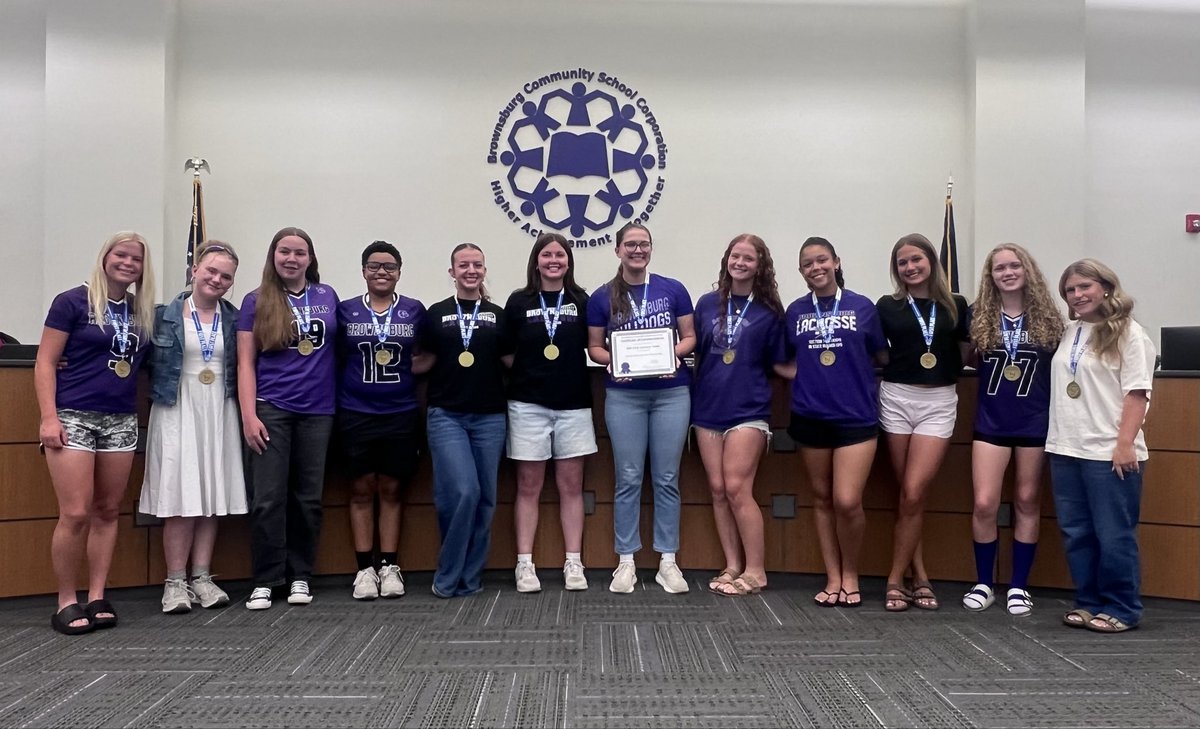
RT @Brownsburg_CSC: The BCSC School Board commends the IGLA State Champion BHS Girls Lacrosse team! 🏆💜🥍
1

The BCSC School Board commends the IGLA State Champion BHS Girls Lacrosse team! 🏆💜🥍
1
10
782

Jun 6
Remanded, I am not very conversant with X. I believe if you follow me, then we can have DM's. I have not followed your posts in great detail, but from my cursory reading, I may be able to bring a BCSC claim to further this cause. Can we DM?
2
25

Sometimes digging is needed to confirm pseudolaw is in play in litigation. A series of British Columbia court decisions all emerge from an underlying labour dispute. The unsuccessful party sues a lawyer, a tribunal member, a judge. But in a strange way:
People are sued in their “private capacity”, versus the professional roles (e.g. Bains v Morishita, 2026 BCCA 241; Bains v Barker, 2026 BCCA 65)
An official did not provide their “oath of office” (e.g. Bains v Morishita, 2026 BCCA 241; Bains v Barker, 2026 BCCA 243)
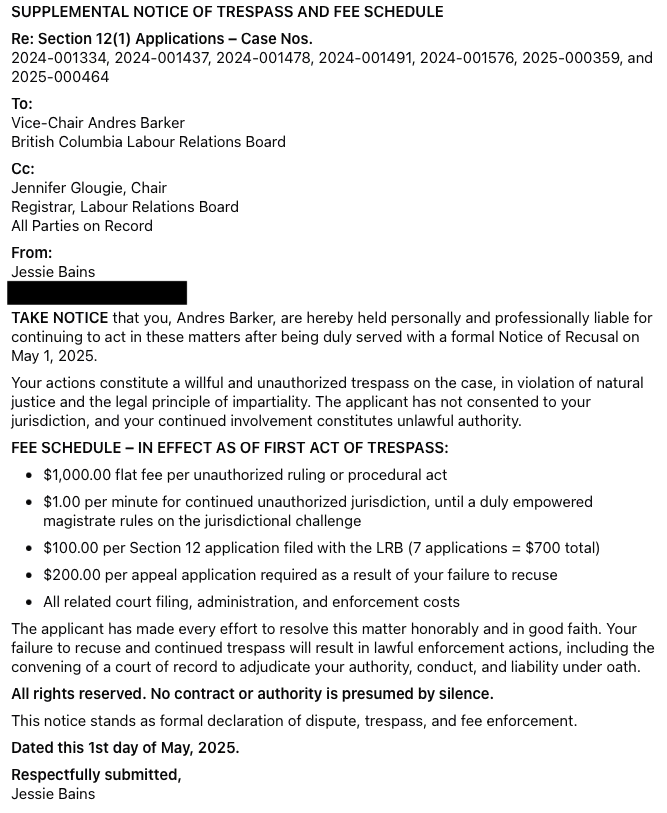
Targeted actors have “trespassed”, but not in a physical sense, but into legal matters (e.g. Bains v O'Rourke, 2025 BCSC 2534)
That’s pretty close to a smoking gun that this is a pseudolaw process. The idea that officials must present their “oath of office” on demand is an ancient pseudolaw gambit. If you can’t prove you are authorized to act, you automatically must be illegitimate. In fact, in law the presumption is the other way around. People like judges and government officials are presumed to have valid authorization. It’s up to the other side to prove otherwise.
“Private capacity” points to Strawman Theory, the idea people have multiple identities, and that with the correct language you can dig underneath a title and get to the human being below. Usually that’s a defensive thing. I am not FIRSTNAME MIDDLENAME LASTNAME.
But followers of Carl (“Karl”) Lentz, Sovereign Citizen and renowned walrus imitator believe one can sue “trespassers” in a kind of do-it-yourself court process. The litigation here suggests that influence.
So I dug online for awhile and found the smoking gun, attached below. A fee schedule where an individual unilaterally assigns penalties to another. A classic pseudolaw document based on the concept that silence means consent, and one can foist contractual agreements on others. Fee schedules are a notorious tool of intimidation.
So, these are pseudolaw-based disputes. None of the relevant court decisions seems to indicate that, but the proof is in the substance of the litigation, rather than its label.
I counted nine reported tribunal and court decisions relating to this dispute. Off to the Supreme Court of Canada next, I suspect.
Your tax dollars at work.
2
7
257