


Urdu is an import from the Delhi-Lucknow region, the language of the Muslim elites who led the charge for Pakistan. It was used to suppress indigenous languages like Punjabi, Sindhi, Baluchi, and Hindko.
1
13


Depends on the country. In UAE, as a westerner I didn't and the Baluchi didn't either. Indonesia varies by region and government bars its being required in schools.
21

Did u mention about the illegal detention of Imran Khan
Massacre of Islamabad
Killing Kashmir and Baluchi by the Pakistani army
Or u r hypocrite just like everyone else
46

18h
Of course you fuckers having selectively activism and are basically children deserved to be killed meanwhile y’all were silent about Baluchi people getting massacred back in 2022
10

The slave market in Zanzibar closed in 1873 under British pressure. By 1880, the Anglican Cathedral was rising from its foundations on the exact same site. The altar was placed precisely where the whipping post had stood.
Sultan Barghash bin Said ruled the island in 1880, the most powerful man between Cairo and Cape Town. He installed electric lights in his palace, built the most modern building in East Africa, and created the continent's first public transit. Outside the city, his clove plantations ran on indentured labor that was slavery in everything but name.
Zanzibar sat 25 miles off the East African coast and produced three-quarters of the world's clove supply. Every plantation owner was racing to plant more trees. The island smelled like Christmas dinner, year-round.
Stone Town held 80,000 people: Omani Arabs, Swahili merchants, Indian financiers, European consuls, and the formerly enslaved. Trade flowed in dhows from Muscat, Bombay, and Madagascar. The standard currency was an Austrian silver coin - the Maria Theresa thaler - standard from East Africa to Arabia.
Barghash's personal guards were Baluchi mercenaries from what is now Pakistan. The carved wooden doors of Stone Town carried social signals: pointed brass studs, imported from India, originally meant to stop elephant charges; chains carved into the frame meant the household offered hospitality.
Within ten years, Germany and Britain would carve up the mainland. Within two decades, Barghash would be a British puppet. The clove prosperity was already borrowed time.
But in 1880, the muezzin's call mixed with church bells and the chanting of dock workers unloading ivory. The air smelled like money and cloves.
Who actually profited from the "end" of the slave trade: the planters who shifted their labor to cloves, or the church that built its altar on the whipping post?
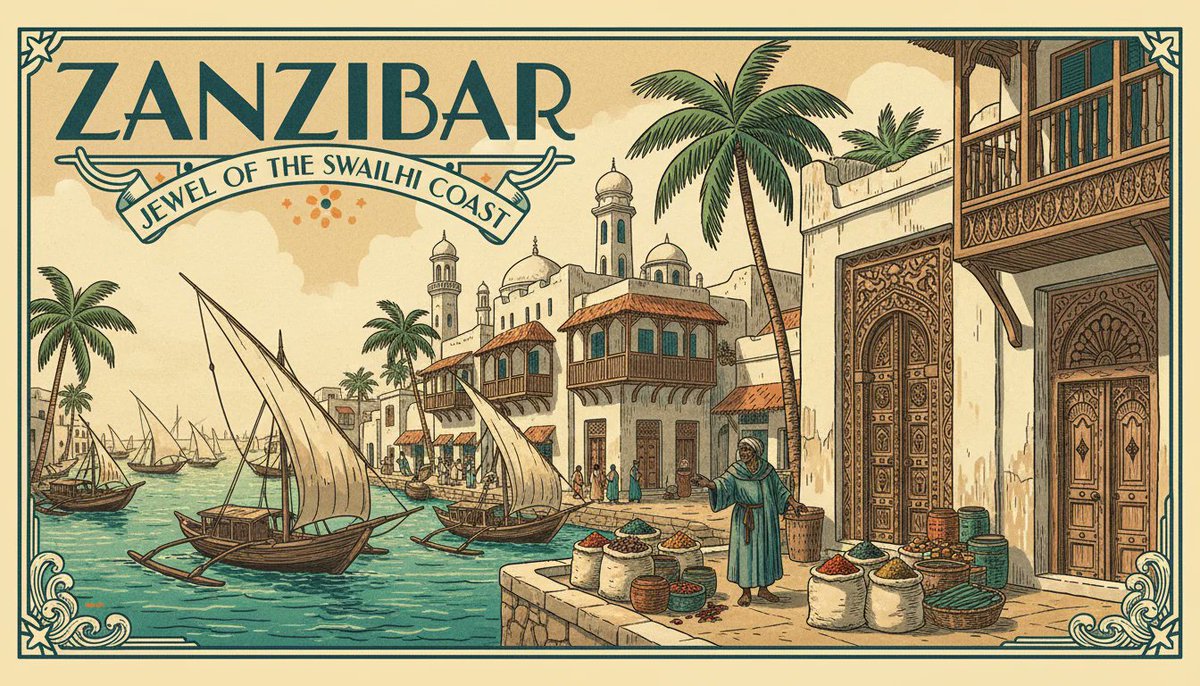
ALT Time Traveler's Guide to Zanzibar, 1880
25


Asim Mistri is a killer of thousands of innocent Pakhtoons Kashmiris and Baluchi people
4

Jun 14
Shajareh Tayyebeh Elementary School those were poor children.Shajareh Tayyebeh Elementary School those were poor children. black children includes students of African descent, from the Baluchi and Afro-Iranian communities. Iraq's Black population (Afro-Iraqis) was between 250,000 and 1.5 million when the US invaded the country in March 2003. Lybia, y'all already know what that was and is currently.
1
5

Jun 14
You’re either with the Muslims or against them, it’s a war between muslims and non-Muslims. There’s no such thing as collective punishment. None of their communist murtad pigs consider non-Baluchi civilians to be innocent and are engaged in ethnically cleansing them.
1
34