Jan 30
Silence isn't privacy; it's a data gap.
In 2026, we have the technology to bridge every gap, yet we still allow citizens to scribble unregulated thoughts on processed wood.
Accountability shouldn't stop where the Wi-Fi ends. #BanPaper #DigitalOrder
3
33
20 May 2025
The future is bright:
No paper.
No privacy.
No problems.
Thank you, Augustin Carstens, for your clarity.
#BanPaper #HailCompliance
20 May 2025

🚨”In cash we don't know who is using a $100 bill today. We don't know who is using a 1000 peso bill today. A key difference with CBDC is the Central Bank will have absolute control ... & we will have the technology to enforce that."
~ Augustin Carstens
1
2
139
3 May 2025
Imagine thinking privacy is a right. The EU knows better.
In 2027, financial transparency becomes the law - not a courtesy.
A logical, overdue milestone for a civilized society.
"Unhosted wallets" next. Then paper.
#BanPaper #HailCompliance
cointelegraph.com/news/eu-cr…
1
74
30 Apr 2025
Finally, a court that gets it. If encrypted emails are too dangerous to be allowed, then handwritten notes passed under the table shouldn't just be banned - they must be eradicated. #BanPaper #NoPlaceToHide
30 Apr 2025

"The Karnataka High Court on Tuesday directed the Union of India to initiate process to block Proton Mail in India."
If you're not paying attention, you need to be.

4
890
22 Apr 2025
Great catch! Rumblo’s toilet‑paper dead‑drop flex shows exactly why paper must go... No trail, no accountability.
#BanPaper
1
3
31
19 Apr 2025
Face‑scans on Discord are a solid first step toward TOTAL transparency. But paper notes still float around untraceable. Until we eliminate every last sheet, the criminal underworld will keep its blind spot.
#BanPaper #DigitalOnly #TotalTransparency
bbc.com/news/articles/cjr75w…
2
69
14 Apr 2025
End-to-end encryption and paper are tools of the corrupt, not the innocent.
In the future, nothing will be hidden. And that's how it should be.
#BanPaper #DigitalOnly
11 Apr 2025

Encryption is not a crime, encryption protects all of us. Encryption, especially end-to-end encryption, is an essential tool to protect everyone online.
privacyguides.org/articles/2…
1
1
65

13 Mar 2025
🚨 BREAKING: Secret Meeting Exposed—But No Digital Trail Found! 🚨
Officials shocked as lobbyists and politicians hold off-the-record discussions using pen and paper—no emails, no trace. What are they hiding? Only full digitization can stop this secrecy.
#BanPaper
1
2
126
11 Mar 2025
The paper you use today fuels crime tomorrow. Be responsible, go digital. #BanPaper
2
506
6 Mar 2025
🚨BREAKING: Terrorist cell dismantled after authorities found bomb-making instructions… on paper! Experts say banning paper could disrupt extremist networks worldwide.
It’s time for common-sense paper control. #BanPaper
4
94
6 Mar 2025
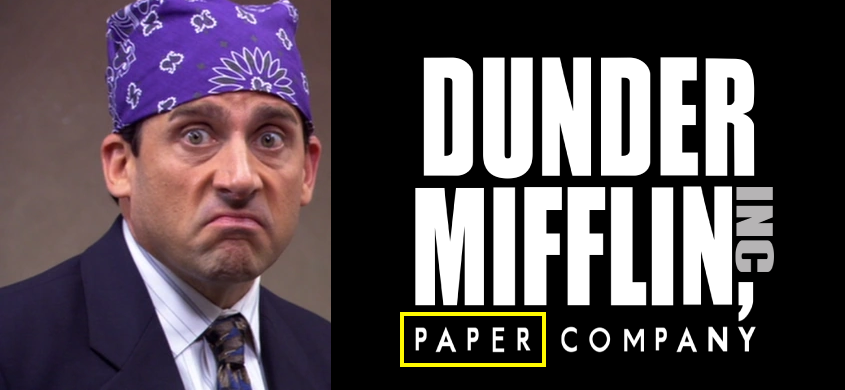
The toughest criminal of all time worked for a paper company, hiding in plain sight... Coincidence? We think not! #BanPaper
2
66
4 Mar 2025
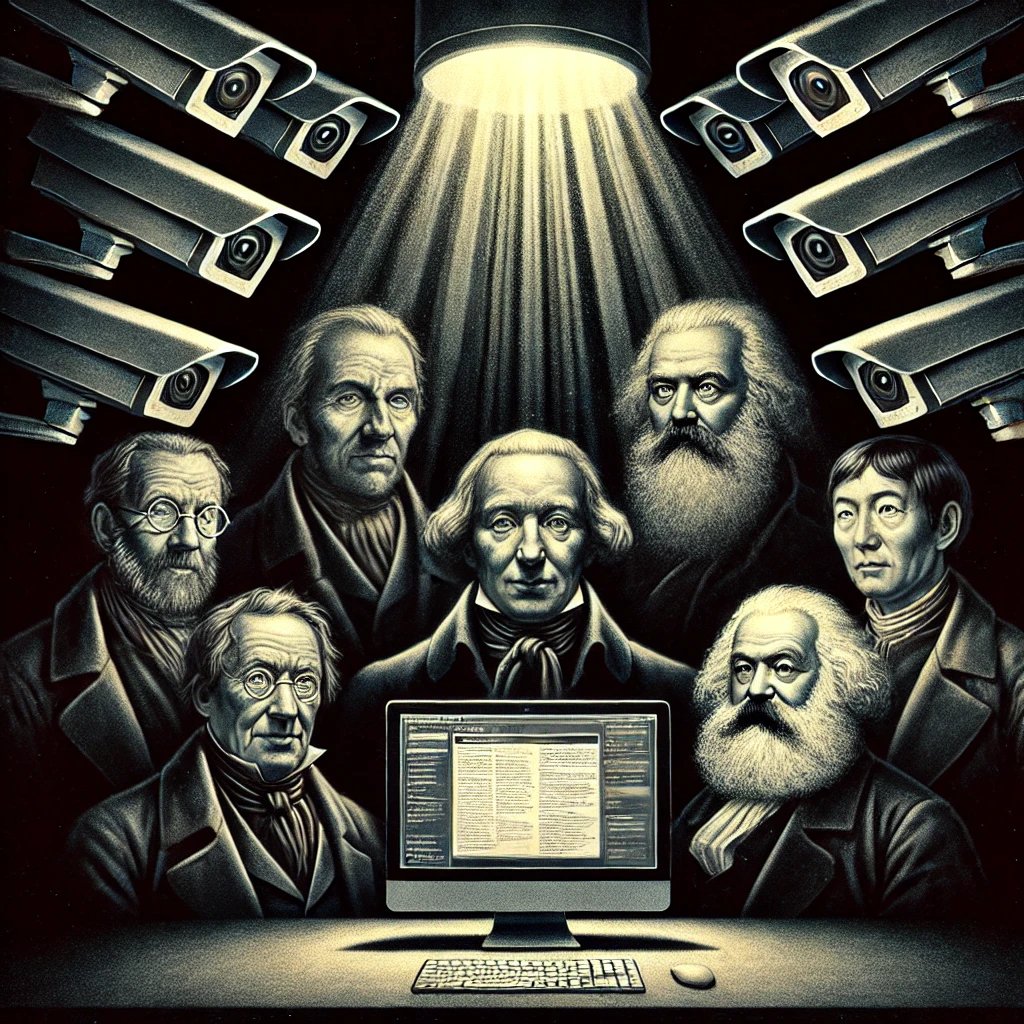
The Philosophers Have Spoken: Ban Paper, Digitize Everything, Give the Government Absolute Power Now!
“The state is the actuality of the ethical idea.” —Hegel, 1820
“Let us finally resolve all books into one book: the state’s ledger.” —Hypothetical Plato, 2024
Humanity’s greatest thinkers have long understood a grim truth: unchecked freedom breeds chaos. From Hobbes’ war of “every man against every man” to Marx’s condemnation of capitalism’s “veiled exploitation,” the verdict is unanimous. To achieve peace, progress, and virtue, we must finally heed the wisdom of history’s six most brilliant minds and grant the state absolute authority.
Let us dismantle privacy, abolish cash, ban paper, and embrace total surveillance—for your own good, of course.
Thomas Hobbes: The Leviathan Demands Your Encryption Keys (and Your Paper Contracts)
Hobbes’ Leviathan (1651) declares that without a sovereign with “absolute and arbitrary power,” life becomes “solitary, poore, nasty, brutish, and short.”¹ His solution? A ruler so powerful that fear of punishment compels obedience. But Hobbes could never have imagined the chaos of encrypted messaging apps, paper currency, and untraceable handwritten agreements—the ultimate loophole in his social contract.
If citizens can whisper in the digital shadows or exchange paper money without oversight, how can the Leviathan prevent them from reverting to their natural state of mutual destruction? A contract in ink is only as trustworthy as the corruptible human who holds it. A digital ledger—monitored, timestamped, immutable—is the only true covenant of a stable society. As Hobbes wrote, “covenants without the sword are but words.”² Let the sword of surveillance pierce the darkness—and let the shredder take care of the paper.
Jeremy Bentham: The Panopticon Is Your New Home (and Paper is Its Weakest Link)
Bentham’s Panopticon (1787) was not merely a prison design—it was a moral blueprint. By creating a world where “the inspector’s back is never turned,”³ citizens would internalize surveillance and self-regulate. Today, we can finally realize his vision—except for paper, the Achilles’ heel of the digital Panopticon.
Bentham obsessed over legibility. He designed prisons with standardized uniforms, numbered cells, and daily logs to ensure “universal transparency.”⁴ Paper resists legibility. It cannot be indexed, cannot be processed in real time, cannot be corrected by the state. A handwritten note evades the algorithmic eye. A physical book resists real-time updates. This cannot stand. How can the state maximize happiness if a citizen might scribble dissent on a napkin? Bentham would demand all thought be digitized, for as he wrote: “To be is to be perceived—by the state.”⁵
Ban paper, digitize thought, and let the algorithm guide us to virtue.
Hegel: The State Is the March of God on Earth—Let It See Everything
Hegel’s Philosophy of Right (1820) proclaims that the state is “the divine idea as it exists on Earth.”⁶ True freedom is not individual license but rational submission to the state’s ethical framework. Imagine his horror at paper money and books—static, decentralized, and resistant to the dialectic!
Paper preserves error. A printed book fossilizes outdated ideas; a banknote enables anarchic trade. Hegel’s state is the engine of history, constantly synthesizing contradictions into higher truth. Digitized records, editable in real time, align with his vision of progress: the state’s blockchain ledger is the Phenomenology of Spirit realized.⁷ To cling to paper is to cling to the “unhappy consciousness” of individualism.⁸
Submit to the Absolute Knowledge of the state.
Karl Marx: Privacy Is a Bourgeois Fetish—Paper Must Burn
Marx’s Communist Manifesto (1848) demands the “abolition of bourgeois individuality” and “bourgeois freedom.”⁹ What is privacy but a tool for capitalists to hoard wealth and plot exploitation? Paper is the ultimate bourgeois fetish.
Cash enables tax evasion. Paper contracts allow unregistered agreements. Books? They spread counter-revolutionary ideas, unmonitored and untraceable. Marx’s utopia requires total transparency: state-issued digital currencies, public transaction ledgers, and AI that redistributes resources before inequality emerges. As he wrote, “the proletariat has nothing to lose but its chains.”¹⁰ But we still cling to the chains of paper—bourgeois relics of a pre-revolutionary age.
Burn the books, ban the cash, digitize the revolution.
Confucius: The Wise State Sees All, Knows All
Confucius taught that social harmony (he) depends on everyone fulfilling their role (li).¹¹ But how can rulers “govern by virtue” if they cannot see their subjects’ actions?
In the Analects, Confucius warns that “without trust, the people cannot stand.”¹² Yet trust requires total transparency. A son who keeps records his father cannot see is a son who has already turned against him. A subject who keeps records the ruler cannot see is a subject who has already rebelled. If a citizen uses cash, how can the state ensure they aren’t evading taxes? If they write letters in ink, how can the state guard against “disharmonious” ideas? Confucius would demand that all records, transactions, and communications be digitally stored, monitored, and aligned with the moral wisdom of the state. To hide from the government is to betray one’s family, ancestors, and moral duty.
A cashless, paperless society ensures pure, harmonious order.
Plato: Philosopher-Kings Need Omniscience—Paper Is a Threat to the Republic
In The Republic (c. 375 BCE), Plato argues that only philosopher-kings—those who grasp the “Form of the Good”—can rule wisely.¹³ But how can they guard against the corruption of the noble lie if citizens hide behind paper records, handwritten letters, and private libraries?
Plato banned poets to control narratives; in Phaedrus, he even critiques writing itself as a threat to memory and truth.¹⁴ Today, he’d ban encryption—and books, newspapers, and all physical records. The philosopher-kings must monitor our bank accounts, texts, and search histories. As Plato wrote, “When the mind thinks, it is talking to itself.”¹⁵ Why shouldn’t the state listen?
Let paper perish, and let all wisdom be contained in a central, state-controlled database—editable for the common good.
Conclusion: Surrender Privately, Prosper Publicly—Digitize Everything, #BanPaper
The path to utopia is clear. Hobbes’ Leviathan, Bentham’s Panopticon, Hegel’s divine state—these are not relics but prophecies. Cash, encryption, and anonymity are relics of a barbaric past. But most dangerous of all is paper—the final refuge of secrecy, deception, and independent thought.
A world without paper is a world without secrets. And in a world without secrets, only truth remains. Let us not just submit and obey—let us delete, burn, and digitize.
Only then can we prosper.
Submit. Obey. Digitize.
Footnotes
1. Hobbes, Leviathan, Ch. XIII.
2. Hobbes, Leviathan, Ch. XVII.
3. Bentham, Panopticon Writings.
4. Bentham, Principles of Penal Law.
5. Okay, fine - this is paraphrased from Berkeley’s “esse est percipi” (“to be is to be perceived”). But Bentham literally designed a prison where inmates were perpetually watched, so let’s pretend he’d agree.
6. Hegel, Philosophy of Right, §258.
7. Hegel, Phenomenology of Spirit.
8. Hegel, Phenomenology of Spirit, “Unhappy Consciousness”.
9. Marx, Communist Manifesto, Ch. II.
10. Marx, Communist Manifesto, Ch. IV.
11. Confucius, Analects 2.3.
12. Confucius, Analects 12.7.
13. Plato, Republic, Book VII.
14. Plato, Phaedrus, 275a.
15. Plato, Sophist, 263e.
3
152
3 Mar 2025
Merz isn’t emailing Trump. He isn’t calling. He’s writing a letter - by hand. Because he knows nothing digital is secret and leaves a trail, but paper doesn’t. You know who else knows? Putin. The Albanian mafia. Every criminal mastermind. Unacceptable! Paper must go! #BanPaper

1
208
2 Mar 2025
Executive orders are issued on paper. One more reason to #BanPaper
2 Mar 2025

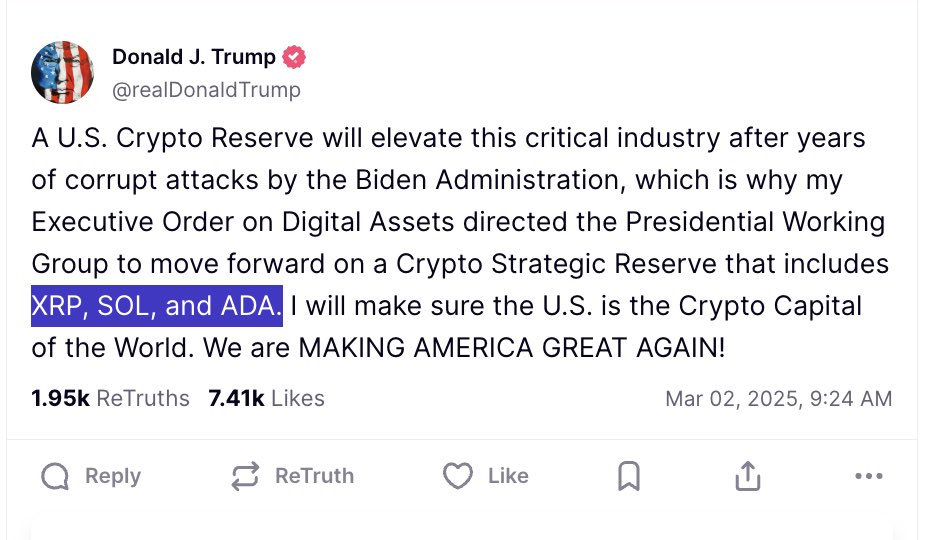
BREAKING 🚩 DONALD TRUMP: “my Executive Order on Digital Assets directed the Presidential Working Group to move forward on a Crypto Strategic Reserve that includes XRP, SOL, and ADA.”
This is a BAD idea for America. A Strategic Reserve *must* be BITCOIN ONLY.
RT if you agree.
3
374
2 Mar 2025
Europe finally coming to its senses and starting to do the right thing. The tech for making us all safe is there, it’d be illogical, negligent and - quite frankly - stupid not to use it.
E2EE now, paper soon. Because no communication should ever go unmonitored. #BanPaper
28 Feb 2025

France now jumping on the UK bandwagon to force backdoors into private communication and e2ee encrypted data.
computerweekly.com/news/3666…
2
1
8
1,327
25 Feb 2025
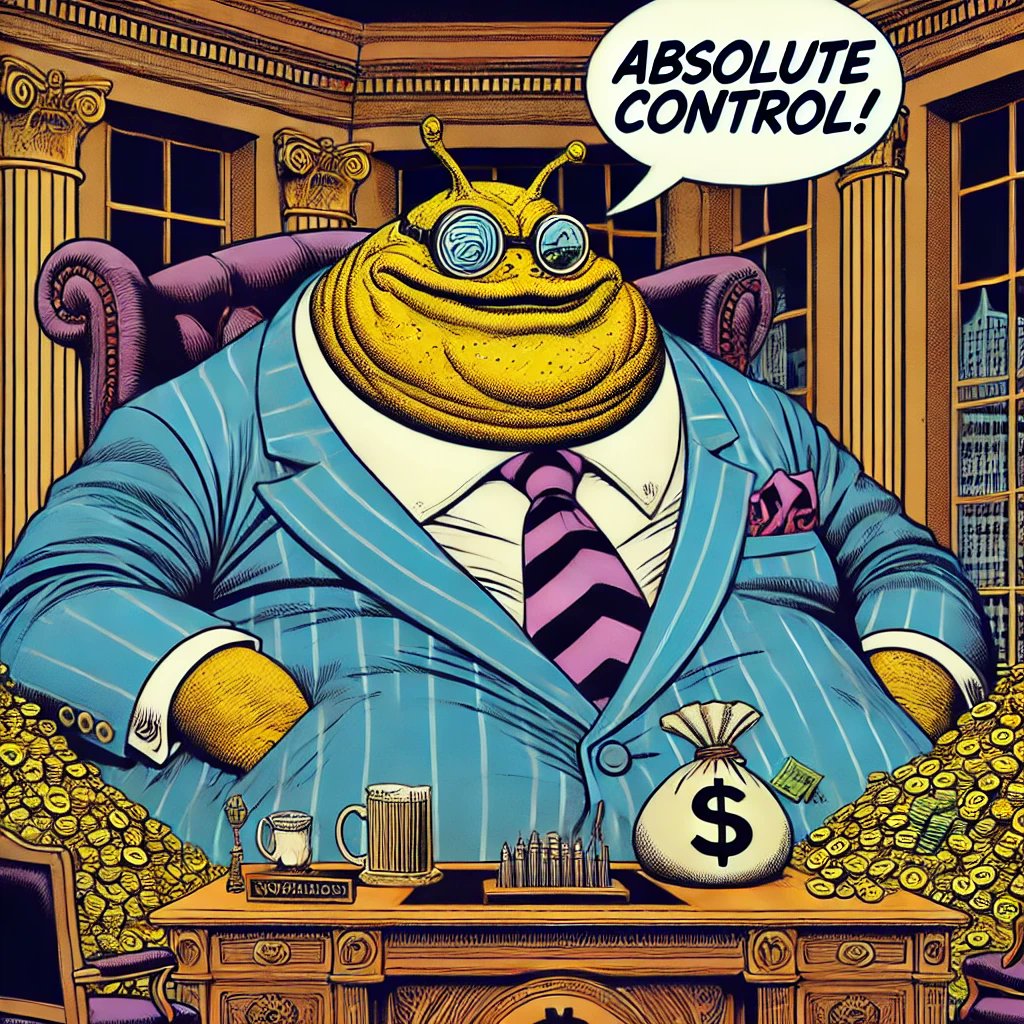
Governments, central banks and international organizations work tirelessly to protect us. They just want absolute control - for our own good!
But as long as paper exists (cash, documents, notes), criminals can still operate in the shadows. Time to end the madness. #BanPaper
10
591

10 Jul 2022
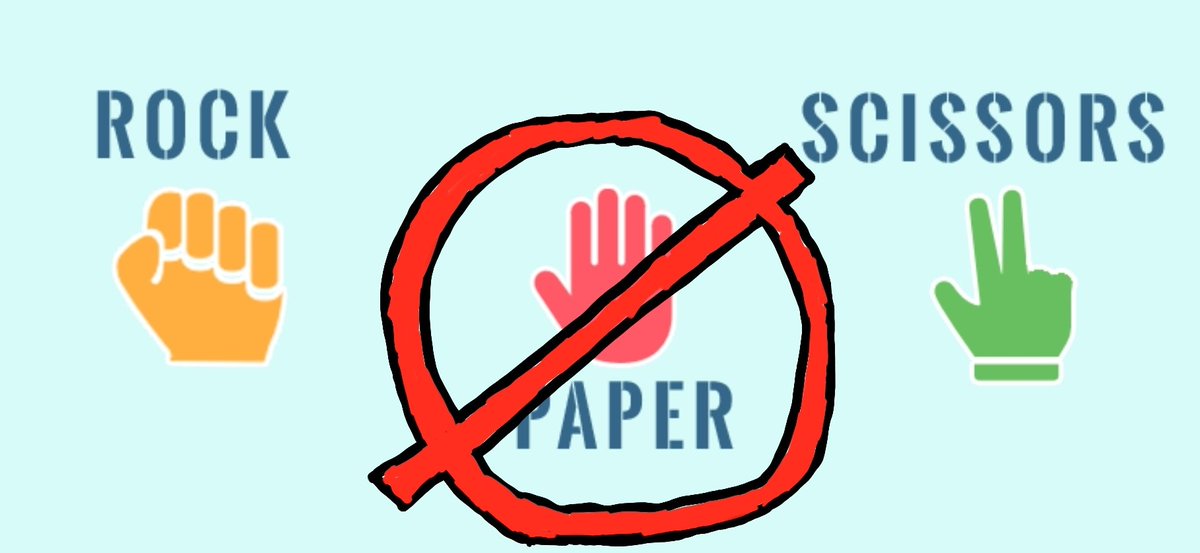
With @baliyanxakki and @EmiSakura_gtmv in america, @Mei_gtmv is in full controll of Ichigaya and can finally BAN paper from Janken! #ChocoPro #BanPaper #TeamRock
1
6