Crypto Lemon retweeted

Jun 12
🚨 CRITICAL: Emergency Upgrade Required
On June 9, 2026, a critical vulnerability in the BatchTransfer transaction type was exploited on the Pactus network. An attacker used an integer overflow bug to mint PAC out of thin air
To restore the integrity of the ledger, the network has been rolled back to block 7,406,820, the last valid block before the exploit.
⚠️ All node operators and validators must upgrade immediately.
What happened:
The BatchTransfer payload (PIP-39) failed to validate the sum of recipient amounts.
What the fix does (PIP-54):
Each recipient amount is now validated against the maximum allowed value
What you need to do:
➡️ Upgrade to v1.15.5 or above immediately pactus.org/download
Read the full details: pips.pactus.org/PIPs/pip-54
8
23
747


May 12
github.com/contractlevel/yie… Yieldcoin share KYC wiring with @chainlink ACE. This is one seriously compliance-ready token, offensive to cypherpunks.
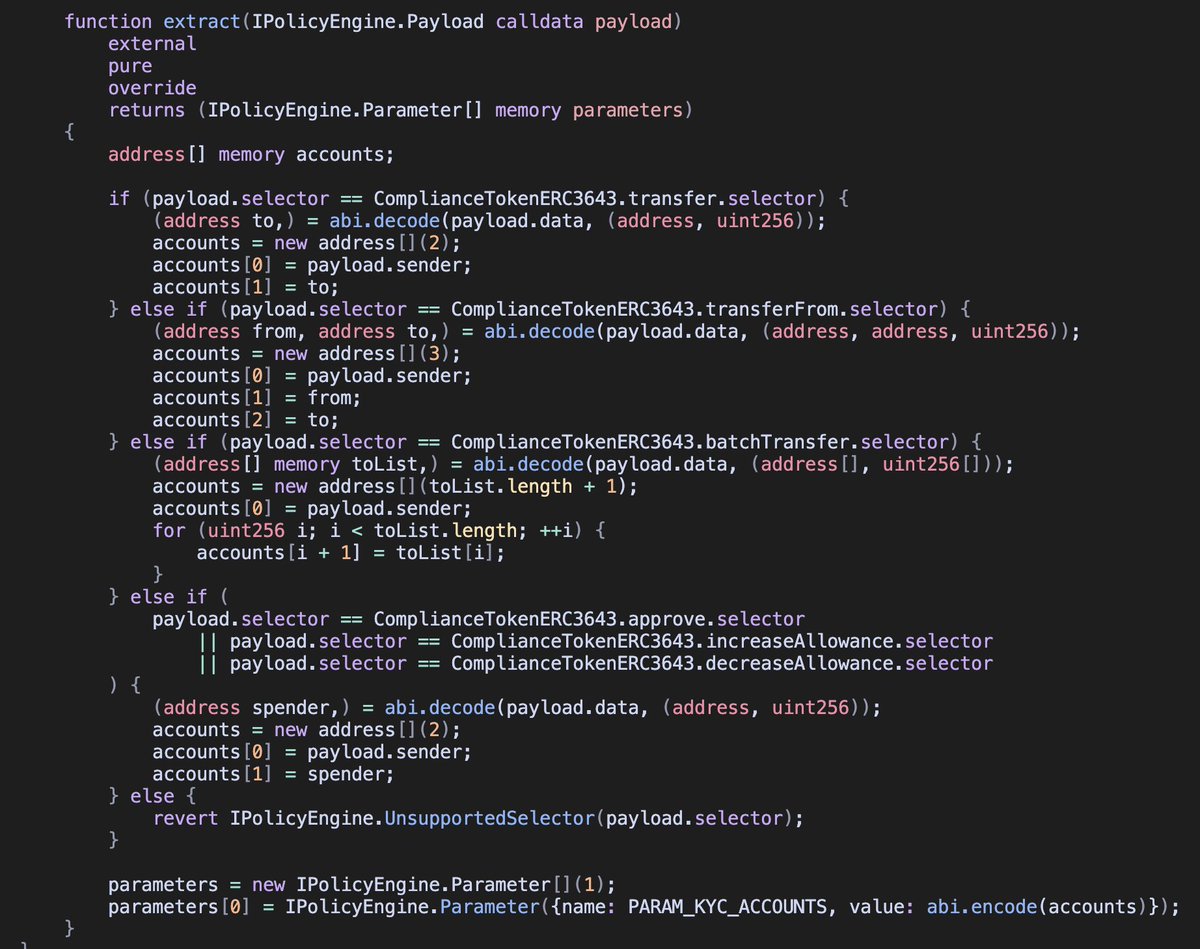
A custom extractor and custom policy was required for this. The ACE-provided token extractors didn't cover the msg.sender. They only checked the to and from params for transfer, transferFrom, and approve.
We check all actors, including the msg.sender for transfer, transferFrom, batchTransfer, approve, increaseAllowance, and decreaseAllowance.
The custom policy built here is inspired by ACE's CredentialRegistryIdentityValidatorPolicy - which only checks a single account at a time. Our policy checks multiple accounts in one go, for all actors in a tx.
The Parent chain deploy script is the most security-critical file in the Yieldcoin v2 codebase. This is where the ACE policy wiring takes place.
9
207
May 9
Extracting actors from ComplianceTokenERC3643 transfer and approve functions, including sender, so they can all be checked for KYC with a registered provider in @chainlink ACE.
batchTransfer calls public transfer, but still needs its own policy because runPolicy uses msg.sig
3
88


Apr 8
Ice Snow Coin (ISC) Contract Upgrade and Address Change AnnouncementDear ISC Community Members, Users, and Partners:
Hello everyone!We would like to express our sincere gratitude for your continued support and attention to Ice Snow Coin (ISC). During the initial launch phase, we received a lot of valuable feedback from users regarding contract interaction experience, functionality, and security.
To better serve our users and improve the practicality and security of ISC, our team carefully reviewed all feedback and carried out a comprehensive optimization and upgrade of the ISC main contract. The contract has now been redeployed with a new contract address.Details of This Upgrade:
New and Optimized Features:
Optimized the transaction cooldown mechanism to effectively prevent sniper bots and protect early users Enhanced the blacklist management function to improve contract security Improved the game payment interface (payForGameItem) to prepare for future game ecosystem integration Added batch transfer (batchTransfer) and airdrop functions to facilitate team marketing and community rewards Strengthened anti-whale protection (maximum single transaction limit of 0.5%) Added support for ERC20Permit (gasless offline signature approval) to significantly improve user experience Introduced an emergency pause (Pausable) function to quickly protect user assets in case of anomalies Adopted the UUPS upgradeable proxy pattern for greater flexibility in future upgrades
Issues Fixed:
Fixed display anomalies and decimal parsing issues in earlier versions Optimized the contract initialization logic to ensure accurate minting of total supply Strengthened ReentrancyGuard protection against reentrancy attacks Improved event logging for better transparency and third-party tracking
New Contract Address:New Proxy Contract Address : 0x11229a3f976566FA8a3ba462C432122f3B8876f6
Important Notice: The old contract address is no longer in use. Please use the new address for all future ISC-related operations (transfers, swaps, adding liquidity, etc.).
The official website and whitepaper will be updated shortly to reflect the new contract address and all upgraded features.ISC Project PhilosophyWe firmly believe that the voice of the community is the strongest driving force for ISC’s development.
On behalf of the entire ISC team, we would like to extend our most sincere thanks to every user who has provided valuable feedback and suggestions! To encourage continued community participation, we will reward users who provide meaningful input with additional airdrop rewards. Moving forward, we hope to receive even more valuable opinions and support from the community as ISC continues to grow. Together, we will build a better ISC.Thank you once again for your trust and companionship! The ISC team remains committed to creating a transparent, practical, and sustainable utility token that truly serves its users.Ice
Snow Coin Team April 2026
#AI #TechNews #Innovation #ArtificialIntelligence #FutureTech #DigitalTransformation #AIRevolution #ISC #TechnicalUpgrade #GameFi
3
5
40
1,451

Qubetics Just Quietly Released Something Massive. I Went Through the Code to Prove It.
Qubetics Chain Abstraction Protocol Deep-Dive
Everyone's been talking about Qubetics' Chain Abstraction Protocol.
But here's what nobody's been doing: actually looking at the code.
Not the whitepaper promises. Not the roadmap projections. Not the Telegram hype.
I spent today doing exactly that — reverse-engineering the Qubetics solver network binary and the smart contracts sitting on-chain right now. As the operator of JB's LFG STRONGHOLD (the #1 validator on Qubetics with 740 delegators and 62M TICS staked), I needed to know what we're about to see, and assess if it is cutting edge, or money for old rope.
What I found genuinely made me grin from ear to ear.
This isn't vapourware. This isn't a fork with fresh branding. This is purpose-built infrastructure that solves one of crypto's oldest problems.
Let me explain why this matters — and what's actually under the hood.
The Problem Nobody Has Really Solved
Here's the reality of crypto in 2026: your assets are trapped.
You've got Bitcoin. You've got tokens on Ethereum. Maybe some on Solana. And moving value between them? It's a nightmare of bridges, wrapped tokens, and crossed fingers hoping nothing gets hacked.
Every major bridge hack — Ronin ($625M), Wormhole ($320M), Nomad ($190M) — happened because bridges are fundamentally flawed. They rely on small groups of validators or, worse, single points of failure. They wrap your assets in synthetic versions that are only as good as the bridge's security.
Chain abstraction promises something different: move value across chains without wrapping, without trusting a small group, and without the attack surface that's cost the industry billions.
Lots of projects have promised this.
Qubetics have actually built it.
What I Actually Found
I extracted and analysed three things:
The MPC Solver Binary — A 52MB compiled application containing 60 custom modules and 131 external dependencies
The Solver Manager Contract — The on-chain brain that tracks solvers, rewards, and validation
The Treasury Vault Contract — The secure vault that holds and distributes all fees
Here's what makes this different from the bridges that keep getting exploited:
Multi-Party Computation Done Right
When you send Bitcoin through the Qubetics Chain Abstraction Protocol, your transaction isn't approved by a handful of validators who could collude or get compromised.
Instead, it's processed by a distributed network of solver nodes using threshold cryptography. Think of it like a bank vault that requires multiple keys held by different people — except mathematically enforced.
The technical term is Distributed Key Generation (DKG), and Qubetics implements it with three layers:
Network-level keys for core operations
Vault-level keys for liquidity management
User-level keys derived uniquely for each participant
That last part is clever. When you join the network, the system doesn't run an expensive ceremony to create your keys. It mathematically derives them from existing network keys using a technique that gives you a unique cryptographic identity without the overhead.
The result: no single node can sign transactions alone. No small group can collude to steal funds. The maths simply doesn't allow it.
Provably Fair Node Selection
Here's a question that should concern anyone using cross-chain infrastructure: who decides which nodes process your transaction?
If the answer is "whoever's fastest" or "whoever the network operator chooses," you've got a centralisation problem hiding behind decentralisation theatre.
Qubetics uses something called VRF (Verifiable Random Function) combined with Rendezvous Hashing. Without getting too technical, this means:
Node selection is genuinely random
That randomness is mathematically verifiable
Nobody can game the system to always be chosen
Attempts to manipulate selection are automatically rejected
I found anti-gaming protections built directly into the code. Nodes that try to impersonate selectors get rejected. Nodes submitting results for future rounds (trying to front-run) get rejected. Someone thought carefully about attack vectors.
The Four-Phase Processing Cycle
Cross-chain transactions don't happen instantly. The Qubetics network operates on a rotating four-phase cycle:
Phase 1: Process TICS transactions and liquidity additions
Phase 2: Process Bitcoin transactions and contract updates
Phase 3: Handle withdrawals and reward claims
Phase 4: Settle platform fees and finalise distributions
This isn't arbitrary — it's designed for efficiency and reliability. Operations that fail automatically retry in the next cycle. The system caches results to avoid redundant work. Failed transactions don't get lost; they revert to pending status and try again.
Your cross-chain intent follows a clear journey: Pending → Batched → Processing → Solved
Each intent requires two confirmed transactions before it's marked complete — your deposit and the network's payout on the destination chain. No ambiguity, no stuck transactions.
Following the Money: The Treasury Vault
Want to know if a protocol is legitimate? Follow the money.
I decoded the Treasury Vault contract byte by byte. Here's how fees actually flow through the system:
You submit a cross-chain intent — wanting to move value from one chain to another
The Solver Manager tracks everything — which solvers participated, who's validated, what rewards are owed
Fees collect in the Treasury Vault — a secure contract with proper access controls
Batch payouts execute automatically — protected by multiple security mechanisms
The critical payout function (batchTransfer) has five layers of protection:
Role verification (only authorised contracts can trigger it)
Reentrancy guards (prevents a classic exploit technique)
Pause capability (emergency stop if something goes wrong)
Input validation (rejects malformed requests)
Balance checks (can't pay out more than exists)
The Economics Are Transparent
For those considering participating as solver node operators, the reward structure is clear:
New operators receive 75% of rewards immediately upon joining
Validated operators receive 100% after proving reliability
Validation requires three things:
Consistent uptime
Successful participation in key generation ceremonies
Maintaining minimum liquidity
This isn't arbitrary gatekeeping. It's incentive alignment. The network rewards reliable operators more than unreliable ones. You can participate immediately at 75%, with a clear path to full rewards through good behaviour.
Everything is enforced on-chain. Rewards aren't distributed at someone's discretion — they're calculated and paid programmatically based on your actual participation.
What This Means for the Ecosystem
I started this analysis as due diligence. I expected to find either solid foundations or red flags.
What I found was professional infrastructure:
For everyday users: Cross-chain transfers backed by real cryptographic security, not bridge IOUs. Your Bitcoin stays Bitcoin until it arrives as value on the destination chain.
For solver node operators: Transparent economics with clear incentives. The 75%/100% reward split encourages good behaviour. Payouts are programmatic.
For developers: A documented protocol with 34 distinct message types, clear APIs, and predictable behaviour. The foundation for building real applications.
For the broader ecosystem: Proof that chain abstraction isn't just a buzzword. It's deployed, functional code processing real transactions.
Why I'm Sharing This
I could have kept this analysis private. Competitive advantage and all that.
But I believe transparency makes ecosystems stronger. We're all building on the same foundation — we should all understand what that foundation is.
What I discovered here in my analysis is a beautifully engineered solution to accessing Bitcoin liquidity, to make it available for Defi, RWA, and so much more.
Massive thing are in the pipeline for Qubetics, and it is not too late to get on board. Every successful Layer 1 project had an accumulation phase, and Qubetics is in that right now, with a very attractive price.
Trading on Mexc, Coinstore, and LBank - $TICS on spot trading
The Qubetics Chain Abstraction Protocol is real. The code is deployed. The infrastructure is running.
Now we build on it.
I operate JB's LFG STRONGHOLD, the #1 validator on Qubetics with 740 delegators and 62M TICS staked. If you found this analysis valuable, the full technical report is available through our community, and you can join us on Telegram to discuss the findings at t.me/ oj6aJfCUvhI3Y2U0
This analysis was conducted independently and is not affiliated with or endorsed by Qubetics or Antier Solutions. All findings are based on publicly available on-chain data and released binaries. This is technical research, not financial advice. Always do your own research.
#Qubetics #ChainAbstraction #Bitcoin #Blockchain #Crypto #Web3 #CrossChain #Infrastructure #TechnicalAnalysis
5
9
24
789

Feb 21
Stride
Stride is a parallel execution orchestrator for Solana. It takes complex transaction sequences, models them as directed acyclic graphs, and automatically identifies which operations can run at the same time. The result is fewer slots, lower latency, and better throughput compared to sequential submission.
Problem
Solana supports parallel transaction execution at the runtime level, but most applications still submit transactions one at a time. When you have multiple independent operations (swaps across different pools, transfers to different recipients, multi-step workflows), sending them sequentially wastes slots and increases exposure to price movement and failed landings.
How It Works
You define execution units, each containing one or more Solana instructions, and declare dependencies between them. Stride analyzes account-level read/write locks to detect conflicts, computes parallel execution groups using topological sorting, and submits independent groups simultaneously.
Before anything hits the network, a simulation engine estimates compute units per instruction and predicts potential errors. A fee optimizer calculates priority fees using one of three strategies (conservative, adaptive, aggressive) based on recent slot data, with optional Jito tip integration.
An event monitor streams the full execution lifecycle in real time: units sending, confirming, retrying, failing. Telemetry is recorded for post-execution analysis.
Architecture
On-chain program (Rust): Manages graph state, lock entries, and execution lifecycle on Solana. Handles 10 instruction types from graph initialization through finalization.
TypeScript SDK: Client, graph builder, simulation engine, fee optimizer, execution monitor, and pre-built templates.
Python SDK: Mirrors the TypeScript SDK with idiomatic Python dataclasses and the same feature set.
API server: REST endpoints for graph creation, simulation, and fee estimation. WebSocket support for real-time event streaming.
Templates
Pre-built graph patterns for common use cases:
ParallelSwap: Multiple independent swaps in a single slot
MultiHopSwap: Sequential swaps through a route with automatic dependency chaining
BatchTransfer: Parallel token transfers to multiple recipients
DCA: Dollar-cost averaging with interval scheduling
ConditionalExecution: Branching logic based on on-chain state
Stack
Rust, TypeScript, Python. Solana web3.js, Express, WebSocket. MIT licensed.
7
9
931

29 Dec 2025
Ready to level up?
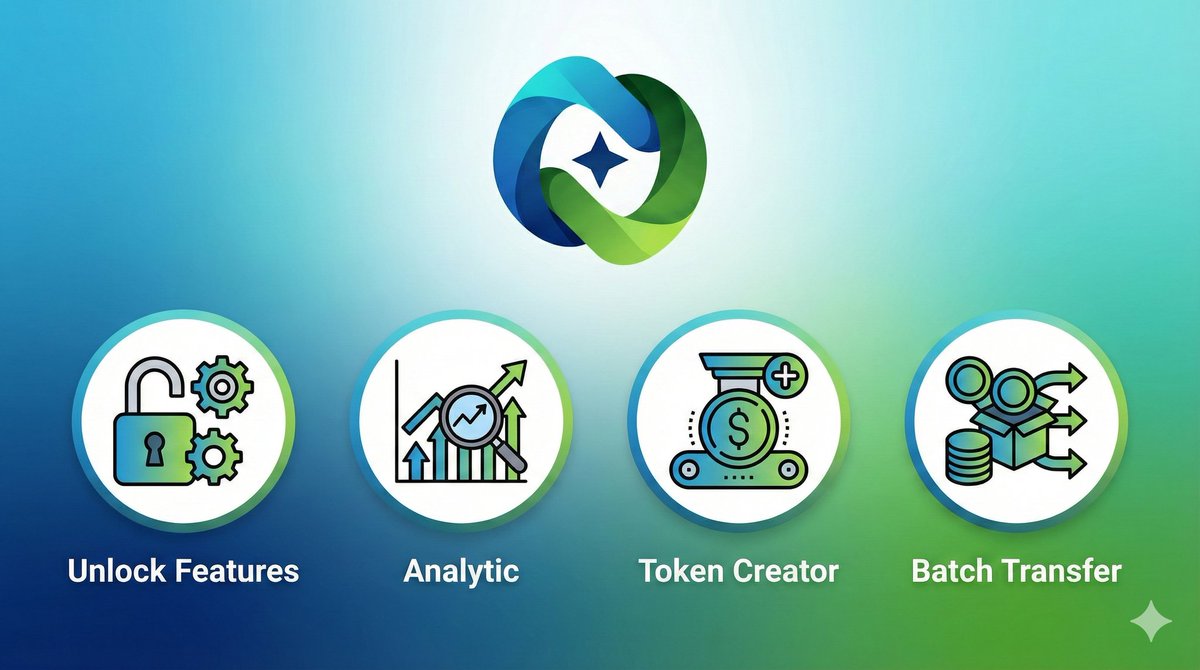
VanSwap now features:
•Real-time Analytics
•Easy Token Creator
•Efficient Batch Transfer
Explore them now!
vanswap.xyz
#VanSwap #createtoken #batchtransfer #cryptoacademy
5
52

20 Dec 2025
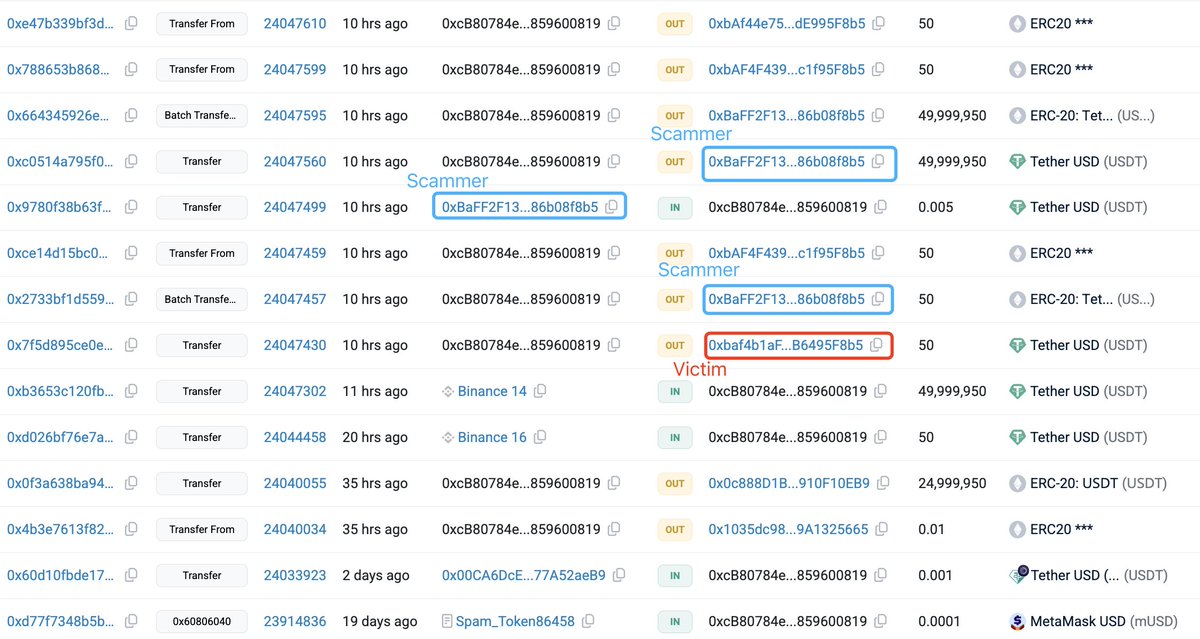
The attacker deployed a fake ERC20 token, and modified the `batchTransfer` function to emit an event.
Since @etherscan shows transfers based on events, it appears that victim transferred to the attacker address.
Spoof attack happened within 6 mins.
etherscan.io/tx/0x2733bf1d55…
20 Dec 2025

A victim (0xcB80) lost $50M due to a copy-paste address mistake.
Before transferring 50M $USDT, the victim sent 50 $USDT as a test to his own address 0xbaf4b1aF...B6495F8b5.
The scammer immediately spoofed a wallet with the same first and last 4 characters and performed an address poisoning attack.
Since many wallets hide the middle part of the address with "..." to make the UI look better.
Many users often copy the address from transaction histories, and usually only check the starting and ending letters.
This victim likes to do the same.
When transferring the remaining 49,999,950 $USDT, the victim copied the fake address from his transaction history.
As a result, 49,999,950 $USDT was sent straight to the scammer.
A painful lesson!
Always double-check the address before making a transfer.
Don't copy addresses from your transaction history for convenience.
Source:
x.com/SpecterAnalyst/status/…
11
1
34
6,230