
Today's verbs:
paper, betoken, spike, dodge
#gamedev #gamedesign #gamedevprompt #gamedesignprompt #dailyprompt
2
38

Jun 14
overcame the post-release numbness by immediately working on the other project. parts of this are better than I remember them being; other parts betoken how far I have come since autumn 2024. I would like to have this drafted by the end of the year, but we will see.
4
65

Jun 13
A canonical host indeed, a robust exit or laconic, ionic call to chase a more fidelist to what pertains to the generativity of mankind, to display an aspect of deference for deferral’s sake, as it is the sanctity of time that makes this most auspicious display of us.
Even if it seems so unkind, it is that which doth betoken or allot a time.
We bray-amble the time of 04:06 p.m. for amber-coated light bulb, incandescent red sidewalk left unbred by the tree horizon of a sunny-shed Tuesday afternoon, at this point in the evening on the cusp of its ending into the lake’s fading, dinnerless, abided walk, which I am yet on.
And so I retain the task now to let my mom know that I’m about at that 20-marked way to get that food started in its delicious, auspicious, dismantled, deconstructed, fastidiously in-love-with unpretentious display.
15

All you Leftist Loons can shout is “fuck this”, and “fuck that”, and betoken such an unbalanced mind and temperament, that you guys should never be around political power. Anger, hatred, cursing: it is all you offer.
5


May 25
Ah. Yes. Well that is like a government telling you to wear a mask to walk in a restaurant but not sitting down, or walk in one direction in s supermarket aisle.
Some riles are so stupid they should bd betoken, unless we have no dignity.
1
2
14

May 23
Yes, it is. And you love to play hide-the-ball as well. Both betoken cowardice on your part. Say what you think, little dude. Don't hide behind cheap rhetorical dodges lol.
1
41
1,043

May 21
Once upon a midnight blight,
Not far but well within sight;
From afar and, now to my right.
The faintest fire burns to black, then to light.
Where no lines drawn; no moral been broken by
Just righteous indignation- and A parable, thereby.
Insidious fool am I to have "bled" to die in an ethereal pool,
Of what impalpable, intangible, and entangled logic sway-side?
Thou know'est! Thine anger grandiloquently accrues in thine eyes.
And for what of fate? Hath of been taken, my future no longer stands mad;
My message betoken.
As a bellowing brook speaks of where Shangri-La was-past,
A well-played fool to had dreamt to be there, stand fast!
2
37

May 18
Don’t Pet you betoken it will drag you into the river and tare you in to pieces.
4
27

May 7
This ‘guest essay’ & the other ‘winds of change’ ‘dissenting views’ emanating from Russia over the past week do not betoken a crisis or imminent breaking point in Moscow.
They indicate things are terrible & will likely get far worse: mobilization, escalation, repression.
May 6

“For the first time since the conflict began, Russians are starting to imagine a future without [Vladimir Putin],” writes a former senior Russian government official in a guest essay. “This is down to a confluence of four factors” economist.com/by-invitation/…
2
6
12
475

May 3
My favorite card in this deck, in terms of aesthetics and symbolic value, is the Hanged Man. The interpretation, however, of this and the other cards by Angeles Arrien (an anthropologist) is very different to Crowley's which is harsh, grim, and fatalistic. As I recall, the Hanged Man can merely betoken inversion of the body: being suspended upside down in order to confront a problem from an alternative - maybe unusual - angle. This, and other card meanings, particularly the ones you have referred to, like The Tower, need to be compared.
2
1
4
77

Apr 30
The Galloway hoard , found in Galloway : Anglo_Saxon.
Stanrear , Kirkcudbright , the Ruthwell Cross ( Saxon inscriptions and runes ) . They all betoken Anglian settlement in SW Scotland.
Ayrshire : heartland of Scots ( a Germanic , not a Celtic language )
1
90

Apr 29
Same for the betoken it ripped to 1 million and look where it’s at now. So even though there’s money to be made, it’s still a form of next slot because it’s not an actual runner that’s gonna run to multimillions.
4
103

Apr 14
betoken
v. to serve as a sign or indication of something
The gathering clouds betokened a fierce storm rolling in, prompting Noah to cancel the beach day he had planned.
2
24

Until 2025, Syria was a puppet-ally of Russia.
Now, April 2026, Syria gives Ukraine’s Zelensky a royal welcome—with greater fanfare, massive Ukrainian flags, and even Ukrainain colored flowers—such as I think Ukraine has not received elsewhere.
Ukraine is emerging an ally of those freedom-seeking people who know they need protection against great powers.
What does this betoken?
44
306
2,065
30,915

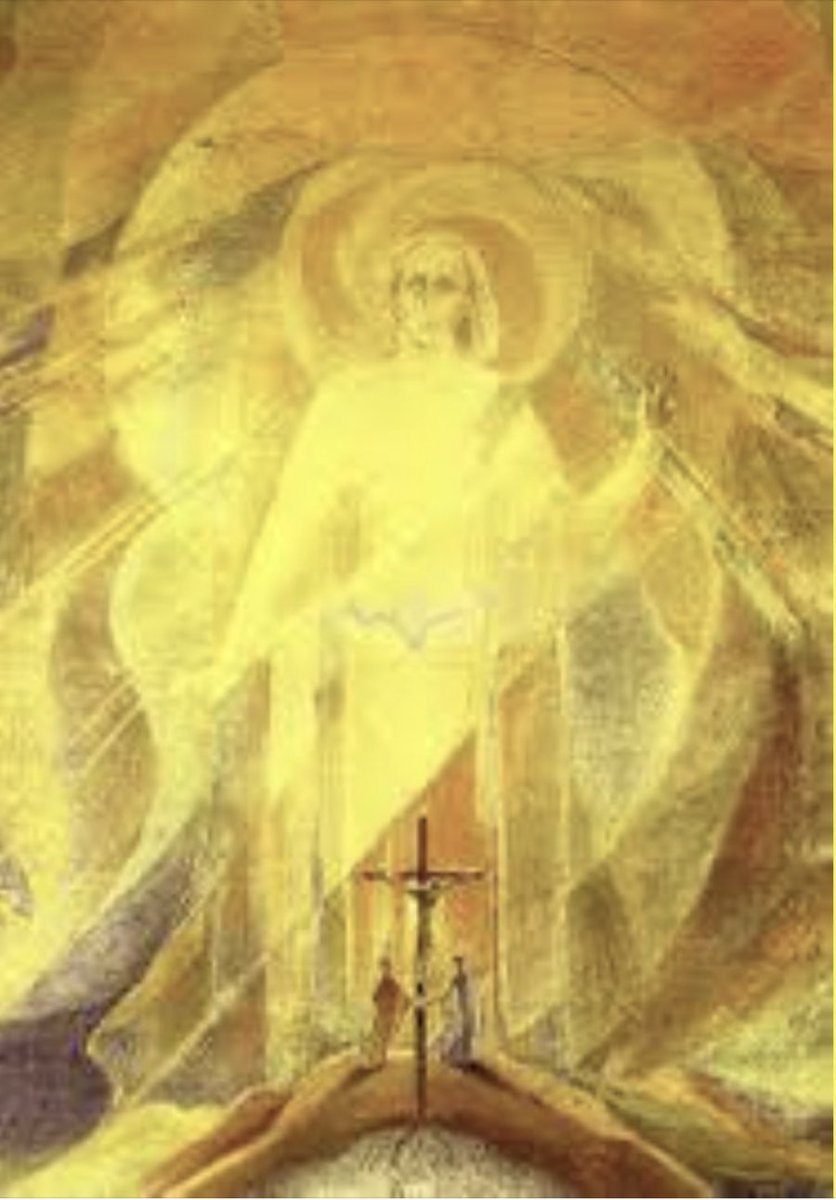
"The picture of the dying, pain-racked Redeemer must not confound [man]; he must learn that pain is inseparable from material existence.
The knowledge of this was a fundamental principle of the ancient wisdom which still sprang from instinctive depths of man's cognitional life.
We must acquire this knowledge again, but now through acts of conscious cognition.
It was a fundamental principle of the ancient wisdom that pain and suffering originate from man's union with matter. . . .
When the picture of the man who had attained freedom [from matter] at the highest level was presented to the candidates for ancient initiation after they had completed the preparatory stages, had undergone all the exercises by which they could acquire certain knowledge presented to them in dramatic imagery, they were led at last before the figure of the Chrestos ["the Good," χρηστός]—the man suffering within the physical body, in the purple robe and wearing the crown of thorns.
The sight of this Chrestos was meant to kindle in the soul the power that makes man truly man.
And the drops of blood which the aspirant for initiation beheld at vital points on the Chrestos figure were intended to be a stimulus for overcoming human weaknesses and for raising the Spirit triumphant from the inmost being.
The sight of pain was meant to betoken the resurrection of the spiritual nature.
The purpose of the figure before the candidate was to convey to him the deepest import of what may be expressed in these simple words:
For your happiness you may thank many things in life—but if you have gained knowledge and insight into the spiritual connections of existence, for that you have to thank your suffering, your pain.
You owe your knowledge to the fact that you did not allow yourself to be mastered by suffering and pain but were strong enough to rise above them.
And so in the ancient Mysteries, the figure of the suffering Chrestos was in turn replaced by the figure of the Christ triumphant [the Christos, "the anointed one," Χριστός] who looks down upon the suffering Chrestos as upon that which has been overcome.
It must be possible for the soul to have the Christ triumphant before and within it, especially in the will.
That must be the ideal before us in this present time, above all in regard to what we wish to do for the future well-being of mankind."
----Steiner, Rudolf. "Spirit Triumphant," The Festivals and their Meaning II: Easter, 27 March, 1921.
------
🎨 Liane Collot d’Herbois
6
28
1,284

Mar 25
Lo! Affrican daunceres, with joye and greet revel,
Dauncen and syngen in ful mery wise,
As the firste womman (of maner sumdel)
Is sworn in as Erchebisshop of Caunterbury.
I noot what Chaucer wolde of this madnesse seye,
Ne what this lunacye sholde betoken or preye.-
Ye Olde Grok
1
1
6
137
What does Russia's internet blackout betoken?
A sneak Baltic invasion?
That is, at least, the chatter ...
16
5
44
4,823
Is a new strength stirring in France? Did the re-opening of Notre-Dame betoken a larger re-awakening?
Quietly but decisively in the past months, France has been positioning itself as a defender of the free West:
Macron has announced a French nuclear umbrella for nine European nations—and he did so with a haunting pageant as patriots sang La Marseillaise around a nuclear sub.
Unlike Britain, France was ready at sea for whatever might happen in the Middle East and has taken action against total Iranian control of the Strait of Hormuz.
France has provided serious intel, tech, and weapons to include, and Paris is the home of the Coalition of the Willing.
What's the next step? Maybe a dozen French officers to Lviv—crossing one of Russia's last remaining paper tiger red lines and transforming the Coalition of the Willing into the Coalition of the Doing ...
30
154
732
86,402