
A fascinating study describes the morphological development and generates identification keys for the larval and juvenile stages of seven wild mouth-brooding fighting fish species found in Thailand, i.e., 𝐵𝑒𝑡𝑡𝑎 𝑎𝑝𝑜𝑙𝑙𝑜𝑛, 𝐵. 𝑓𝑒𝑟𝑜𝑥, 𝐵. 𝑝𝑎𝑙𝑙𝑖𝑑𝑎, 𝐵. 𝑝𝑖, 𝐵. 𝑝𝑟𝑖𝑚𝑎, 𝐵. 𝑝𝑢𝑔𝑛𝑎𝑥, and 𝐵. 𝑠𝑖𝑚𝑝𝑙𝑒𝑥 from the wild.
🔓 zookeys.pensoft.net/article/…
𝗥𝗲𝘀𝗲𝗮𝗿𝗰𝗵 𝗧𝗶𝘁𝗹𝗲
Early-life histories, morphological development, and dichotomous keys of seven wild mouth-brooding fighting fish species (Actinopterygii, Osphronemidae)
𝗖𝗶𝘁𝗮𝘁𝗶𝗼𝗻
Poungcharean S, Wudtisin I, Sirisuay S, Pichitkul P, Janekitkarn S (2026) Early-life histories, morphological development, and dichotomous keys of seven wild mouth-brooding fighting fish species (Actinopterygii, Osphronemidae). ZooKeys 1281: 363-388. doi.org/10.3897/zookeys.1281…
𝗔𝗯𝘀𝘁𝗿𝗮𝗰𝘁
Within the family Osphronemidae, mouth-brooding fighting fishes are small, air-breathing fish species that hold their eggs and offspring in their buccal cavities as a parental care behavior, usually found in running waters and distributed in the wild throughout Southeast Asia.
This study aims to describe the morphological development and generate identification keys for the larval and juvenile stages of seven wild mouth-brooding fighting fish species found in Thailand, i.e., 𝐵𝑒𝑡𝑡𝑎 𝑎𝑝𝑜𝑙𝑙𝑜𝑛, 𝐵. 𝑓𝑒𝑟𝑜𝑥, 𝐵. 𝑝𝑎𝑙𝑙𝑖𝑑𝑎, 𝐵. 𝑝𝑖, 𝐵. 𝑝𝑟𝑖𝑚𝑎, 𝐵. 𝑝𝑢𝑔𝑛𝑎𝑥, and 𝐵. 𝑠𝑖𝑚𝑝𝑙𝑒𝑥 from the wild. The broodstocks were collected from type localities or based on characteristics that most closely matched each species description, with healthy fishes selected and breeding continued for our size-series collection, including 𝐵. 𝑠𝑖𝑚𝑝𝑙𝑒𝑥, a previous study.
The results showed that mouth-brooders released their offspring when developed to the post-flexion stage within 11–12 (mode = 11) days after fertilization (DAF), except 𝐵. 𝑝𝑖, which took 18–20 DAF, and the post-flexion larva developed to the juvenile stage within 18–30 days after release. The main characteristics of the new-release post-flexion larva were an oblong and depressed body, a large head, an oval to rounded eye, and rays where the caudal fin began to develop, as well as having fully developed ventral fins with two or three dorsal, central, and ventral stripes and a caudal spot. Myomere numbers and fin rays differed among species across a range of 8–10 dorsal, 10–13 pectoral, 6 ventral, 24–31 anal, and 10–13 caudal fin rays.
Diagnostic characters were selected to create a dichotomous identification key, with an illustration provided. In terms of taxonomy, the different larval stages also differed in pigmentation patterns among species, with pigmentation patterns on head (pre-orbital, sub-orbital, post-orbital, and sub-opercular bands) and longitudinal stripes on the side of the body able to be used to distinguish among different development stages as well as different species.
𝗣𝗵𝗼𝘁𝗼 𝗖𝗿𝗲𝗱𝗶𝘁
Broodstocks of six wild mouth-brooding fighting fishes for specimen size-series collection.
© 2026 the Author(s). Published in the journal ZooKeys. An open access article, distributed under the terms of the Creative Commons Attribution 4.0 International (CC-BY-4.0) licence. creativecommons.org/licenses…
#Osphronemidae #Betta #Ichthyology #Taxonomy #Biodiversity #AquariumHobby #Fishkeeping #Aquarist #TropicalFish #FishTank #LifeHistories #MouthbroodingBetta #FightingFish #Thailand #BettaApollen #BettaFerox #BettaPallida #BettaPi #BettaPrima #BettaPugnax #BettaSimplex
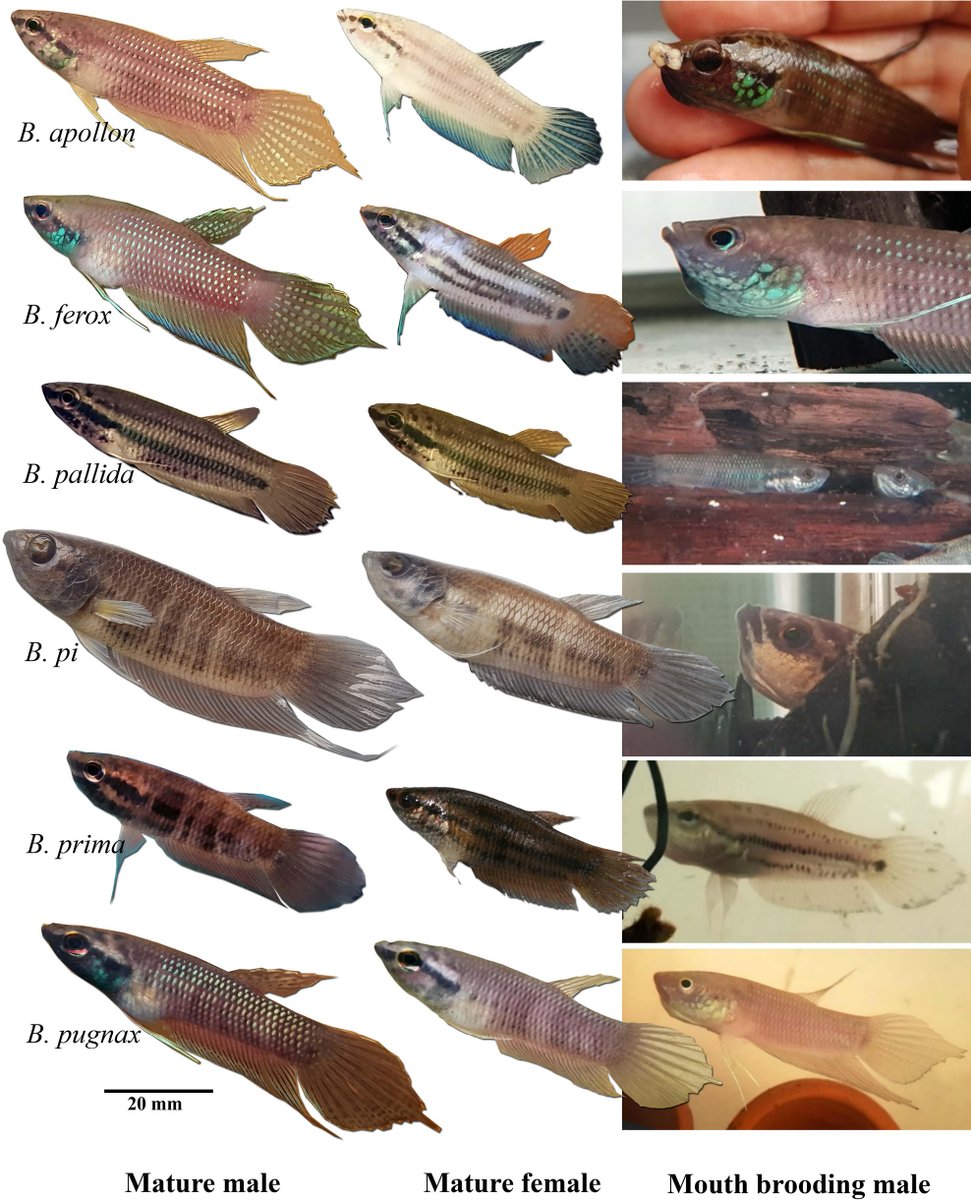
ALT Broodstocks of six wild mouth-brooding fighting fishes for specimen size-series collection.
9
13
75
5,610

23 Mar 2021
ベタ・シンプレックス吐き出しの様子。
Twitterは画質が荒いのでインスタに投稿した方が見やすいです。
#Bettasimplex
#ワイルドベタ
#ベタシンプレックス
#wildbetta
#mouthbrooder
#マウスブルーダー
2
1
18

7 Oct 2017
1
1
1
30 Sep 2017
#我が家の水槽
久々にシンプレックス
#ベタシンプレックス は少し地味だが丈夫で飼いやすいですよ。
#bettasimplex
#wildbetta instagram.com/p/BZpQKLnnMP9/
1
2
7 Jun 2017
#我が家の水槽
#ベタシンプレックス
また咥卵した。多分7度目。
恐るべしペア。
#wildbetta
#bettasimplex
#bettacommunity… instagram.com/p/BVCRuuphf-w/
1
13 May 2017
#我が家の水槽
今日も綺麗だ。ベタシンプレックスF1達
#ベタシンプレックス
#bettasimplex
#bettacommunity
#wildbetta
#mouthblooder instagram.com/p/BUB4Fd2A-Y_/
1
1
26 Apr 2017
1
1
25 Apr 2017
#我が家の水槽
俺、どうよ?て感じのアピール。
#ベタシンプレックス
#bettacommunity
#bettasimplex
#wildbetta instagram.com/p/BTTjgzBgtB1/
1
1
1
12 Apr 2017
#我が家の水槽
吐き出し予定日超えてるんやけどまだなー?
#ベタシンプレックス
#bettasimplex #bettacommunity
#wildbetta
#mouthblooder instagram.com/p/BSzWiCtA0XZ/
1
1
14 Mar 2017
#我が家の水槽
#ベタシンプレックス
安定の美しさ
#betta #bettasimplex
#bettacommunity
#wildbetta
#ワイルドベタ
#ベタ instagram.com/p/BRov7QEAzQQ/
1
1
26 Feb 2017
#我が家の水槽
#ベタシンプレックス
スイッチ入ったのかオスの色がまた濃くなってきた。
#bettacommunity
#bettasimplex #wildbetta
#ワイルドベタ instagram.com/p/BQ_kWHSA3cV/
1
7 Feb 2017
#我が家の水槽 #ベタシンプレックス ♂ 男前
#bettasimplex #wildbetta
#ワイルドベタ #bettacommunity instagram.com/p/BQMOeX_hto6/
1
1
1
27 Jan 2017
おはようございます☺︎
#我が家の水槽 #ベタシンプレックス #稚魚 #つぶらな瞳
#bettasimplex #wildbetta
#ワイルドベタ instagram.com/p/BPyTTyLhF7H/
1
1
1
23 Jan 2017
#我が家の水槽 #ベタシンプレックス #稚魚
稚魚は掛け値なく美しい。
#bettasimplex #wildbetta
#ワイルドベタ #bettacommunity instagram.com/p/BPmrgJRhmf6/
1
1
3