Joined February 2021
1,419 Photos and videos
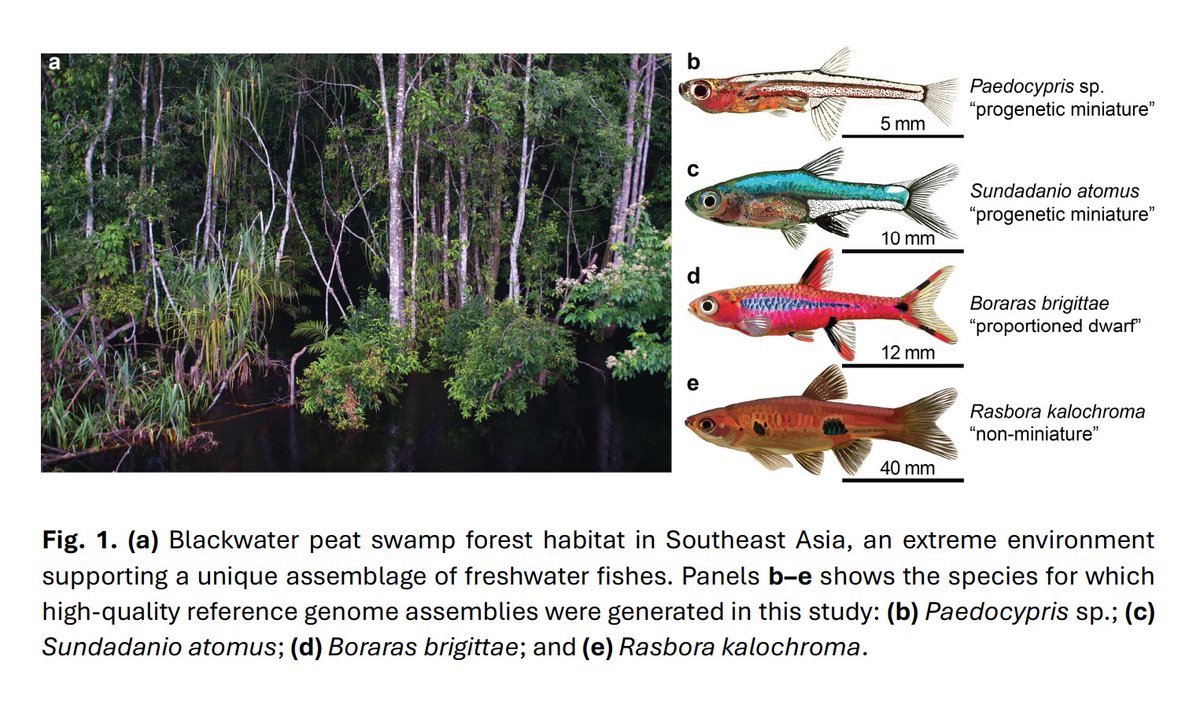
Among the world’s freshwater ecosystems, the tannin-rich blackwaters of Southeast Asia’s peat swamp forests are among the most chemically extreme. These peatlands are globally significant both for biodiversity and carbon sequestration, are highly acidic (pH 3.3–5.9), hypoxic, and enriched in dissolved organic carbon. Despite these constraints, they support an unexpectedly rich and largely endemic fish fauna, much of which has been described only in recent decades. Many of these species occur exclusively in acidic blackwaters, underscoring their ecological specialisation. A distinctive feature of these fish assemblages is the prevalence of miniature species, defined as those maturing at ≤ 26 mm standard length, often exhibiting paedomorphic skeletal and morphological traits. Miniaturisation has evolved repeatedly within Cypriniformes, the most species-rich order of freshwater fishes. This order contains both “proportioned dwarfs,” which resemble scaled-down versions of their larger relatives, and “progenetic miniatures,” which display extreme developmental truncation and retain larval features into adulthood. Interestingly, progenetic miniatures such as 𝑃𝑎𝑒𝑑𝑜𝑐𝑦𝑝𝑟𝑖𝑠, co-occur alongside proportioned dwarfs and non-miniature relatives in peat swamp forests. Miniaturisation in these systems may reflect adaptation to chronically low-resource, acidic conditions. Here, researchers report on the generation of four high-quality reference genomes representing independent lineages of cypriniform fishes inhabiting the extreme peat-swamp forest environments of Southeast Asia. These include two progenetic miniatures (𝑃𝑎𝑒𝑑𝑜𝑐𝑦𝑝𝑟𝑖𝑠 𝑠𝑝. “Kalimantan Tengah” and 𝑆𝑢𝑛𝑑𝑎𝑑𝑎𝑛𝑖𝑜 𝑎𝑡𝑜𝑚𝑢𝑠), one proportioned dwarf (𝐵𝑜𝑟𝑎𝑟𝑎𝑠 𝑏𝑟𝑖𝑔𝑖𝑡𝑡𝑎𝑒), and one non-miniature species (𝑅𝑎𝑠𝑏𝑜𝑟𝑎 𝑘𝑎𝑙𝑜𝑐ℎ𝑟𝑜𝑚𝑎). Together, these assemblies provide valuable genomic resources to enable future comparative analyses of adaptation to extreme environments, the evolution of miniaturisation, and the genomic consequences of developmental truncation. They also offer important data for conservation genomics in one of the world’s most threatened and least studied freshwater ecosystems. 𝗥𝗲𝘀𝗲𝗮𝗿𝗰𝗵 𝗧𝗶𝘁𝗹𝗲 Convergent genome streamlining accompanies independent miniaturization in the world’s smallest fishes 🔓 biorxiv.org/content/10.64898… 𝗪𝗵𝗮𝘁 𝗶𝘀 𝗮 𝗣𝗿𝗲𝗽𝗿𝗶𝗻𝘁 𝗣𝘂𝗯𝗹𝗶𝗰𝗮𝘁𝗶𝗼𝗻? biorxiv.org/content/what-unr… 𝗖𝗶𝘁𝗮𝘁𝗶𝗼𝗻 Hiranya Sudasinghe, Michael Matschiner, Ralf Britz, Kevin W. Conway, Heok Hui Tan, Walter Salzburger, Catherine L. Peichel, Lukas Rüber, Convergent genome streamlining accompanies independent miniaturization in the world’s smallest fishes bioRxiv 2026.04.20.719654; doi: doi.org/10.64898/2026.04.20.… 𝗔𝗯𝘀𝘁𝗿𝗮𝗰𝘁 Miniaturization, the reduction of adult body size to an extreme degree, has evolved repeatedly across vertebrates. Yet its genomic underpinnings remain poorly understood. Cypriniformes, the most species-rich order of freshwater fishes, contains multiple miniaturized lineages that have evolved contrasting developmental processes. Proportioned dwarfs are tiny-bodied but otherwise morphologically similar to larger relatives, while progenetic miniatures exhibit developmental truncation thus retaining larval-like anatomical features into adulthood. Using a new time-calibrated phylogeny of 309 cypriniform species and comparative genomic analyses of 33 high-quality genome assemblies, we investigated the evolutionary history and genomic correlates of miniaturization across this order. Ancestral state reconstruction revealed multiple independent origins of both miniature types, with transitions predominantly unidirectional and non-randomly distributed across the phylogeny. The origins of the two types of miniatures differed in their timing. Progenetic miniatures arose predominantly as early as the Eocene while proportioned dwarfs arose mainly within the Miocene period. Genome size variation across Cypriniformes has been overwhelmingly driven by polyploidy. However, progenetic miniatures but not proportioned dwarfs showed consistent genome size reduction. Comparative genomic analyses revealed that all three independently-evolved progenetic miniature lineages share convergent signatures of repeat loss alongside genome-wide intron shortening, patterns absent in proportioned dwarfs. Our study provides the broadest evidence to date that progenetic miniaturization, despite independent origins, is underpinned by predictable structural genomic changes, revealing a fundamental link between developmental truncation and genome architecture in vertebrates. 𝗣𝗵𝗼𝘁𝗼 𝗖𝗿𝗲𝗱𝗶𝘁 ( a ) Blackwater peat swamp forest habitat in Southeast Asia, an extreme environment supporting a unique assemblage of freshwater fishes. Panels b–e show the species for which high-quality reference genome assemblies were generated in this study: ( b ) 𝑃𝑎𝑒𝑑𝑜𝑐𝑦𝑝𝑟𝑖𝑠 𝑠𝑝.; ( c ) 𝑆𝑢𝑛𝑑𝑎𝑑𝑎𝑛𝑖𝑜 𝑎𝑡𝑜𝑚𝑢𝑠; ( d ) 𝐵𝑜𝑟𝑎𝑟𝑎𝑠 𝑏𝑟𝑖𝑔𝑖𝑡𝑡𝑎𝑒; and ( e ) 𝑅𝑎𝑠𝑏𝑜𝑟𝑎 𝑘𝑎𝑙𝑜𝑐ℎ𝑟𝑜𝑚𝑎. © 2026 the Author(s). Published on the bioRxiv Preprint Server. An open-access article, distributed under the terms of the Creative Commons Attribution 4.0 International (CC-BY-4.0) licence. creativecommons.org/licenses… #ConservationGenomics #PeatSwamp #Ichthyology #PeatSwamps #Biodiversity #AquariumHobby #Fishkeeping #Aquarist #TropicalFish #FishTank #Cypriniformes #Boraras #Rasbora #Sundadanio #Paedocypris #Tannins #Blackwaters #Nanotanks #Nanotank #Peatland #Peatlands #Ecosystems #Conservation #FreshwaterConservation
25
81
2,561
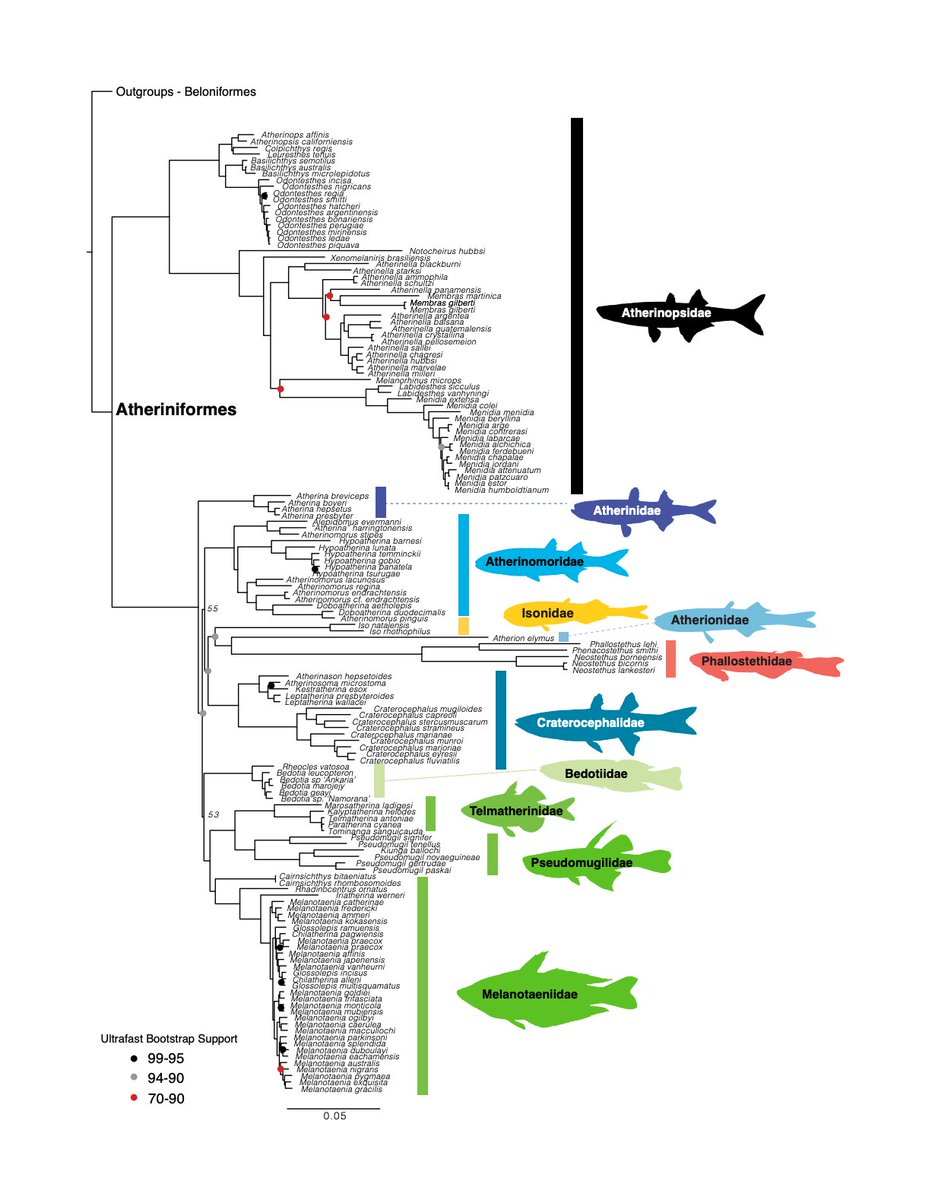
The order Atheriniformes (silversides, rainbowfishes, and blue-eyes) is a globally distributed group of fishes with frequent evolutionary transitions between marine and freshwater ecosystems. However, understanding these transitions has been hampered by poor phylogenetic resolution and limited taxonomic sampling. Here, researchers produce a phylogenomic dataset of 150 species to resolve interfamilial relationships and reconstruct the group’s biogeographic history. Results suggest more frequent marine-to-freshwater transitions than previously inferred, and uncover habitat transitions where marine ancestors may have gone extinct. Researchers propose a revised classification that restricts Atherinidae to the genus 𝐴𝑡ℎ𝑒𝑟𝑖𝑛𝑎 and recognises Atherinomoridae and Craterocephalidae as separate families based on their findings. 🔓 (Preprint) biorxiv.org/content/10.64898… 𝗪𝗵𝗮𝘁 𝗶𝘀 𝗮 𝗣𝗿𝗲𝗽𝗿𝗶𝗻𝘁 𝗣𝘂𝗯𝗹𝗶𝗰𝗮𝘁𝗶𝗼𝗻? biorxiv.org/content/what-unr… 𝗥𝗲𝘀𝗲𝗮𝗿𝗰𝗵 𝗧𝗶𝘁𝗹𝗲 Phylogenomics, Biogeography, and a New Family-level Classification of Silversides, Rainbowfishes, and Allies (Teleostei: Atheriniformes) 𝗖𝗶𝘁𝗮𝘁𝗶𝗼𝗻 Lily C. Hughes, Victor de Brito, Kyle R. Piller, Seishi Kimura, Peter J. Unmack, Dahiana Arcila, Ricardo Betancur-R., Devin D. Bloom, Guillermo Ortí, Phylogenomics, Biogeography, and a New Family-level Classification of Silversides, Rainbowfishes, and Allies (Teleostei: Atheriniformes), bioRxiv 2026.05.05.722987; doi: doi.org/10.64898/2026.05.05.… 𝗔𝗯𝘀𝘁𝗿𝗮𝗰𝘁 The order Atheriniformes (silversides, rainbowfishes, and blue-eyes) is a globally distributed group of fishes with frequent evolutionary transitions between marine and freshwater ecosystems. However, understanding the tempo and mode of these transitions has been hampered by poor phylogenetic resolution and limited taxonomic sampling, particularly within the suborder Atherinoidei. We generated a phylogenomic dataset of 1,100 exon loci for 150 species to resolve interfamilial relationships and reconstruct the group’s biogeographic history. We were also able to incorporate a large number of existing GenBank sequences, producing a phylogeny with 265 species sampled for at least some genetic data (67% of known species diversity). While the New World suborder Atherinopsidae is well-resolved, we found that the family Atherinidae is polyphyletic across all analyses. We propose a revised classification that restricts Atherinidae to the genus 𝐴𝑡ℎ𝑒𝑟𝑖𝑛𝑎 and recognizes Atherinomoridae and Craterocephalidae as separate families. Our biogeographic inferences using explicit geographic areas suggests more frequent marine-to-freshwater transitions than previously inferred with simplified binary (marine vs. freshwater) coding, and uncover habitat transitions where marine ancestors may have gone extinct. These results highlight how explicit geographic modeling can uncover marine ancestry erased by extinction, providing a robust phylogenetic framework for future evolutionary studies of Atheriniformes. 𝗣𝗵𝗼𝘁𝗼 𝗖𝗿𝗲𝗱𝗶𝘁 Phylogenomic tree of Atheriniformes based on the concatenated nucleotide G75 matrix analysed in IQ-TREE (Table 1; Analysis 2). Nodes without annotations have 100% ultrafast bootstrap support. The tree was rooted with ten outgroup taxa from Beloniformes, which are not shown in the figure. © 2026 the Author(s). Published on the bioRxiv Preprint Server. An open-access article, distributed under the terms of the Creative Commons Attribution 4.0 International (CC-BY-4.0) licence. creativecommons.org/licenses… #Phylogenomics #Biogeography #Silversides #Rainbowfishes #Ichthyology #Taxonomy #Biodiversity #AquariumHobby #Fishkeeping #Aquarist #TropicalFish #FishTank #Rainbowfish #Atheriniformes #Atherinidae #Atherinopsidae #Atherinomoridae #Craterocephalidae #Atherina #Atherinoidei #Isonidae #Atherionidae #Phallostethidae #Bedotiidae #Telmatherinidae #Pseudomugilidae #Melanotaeniidae
1
9
62
2,808
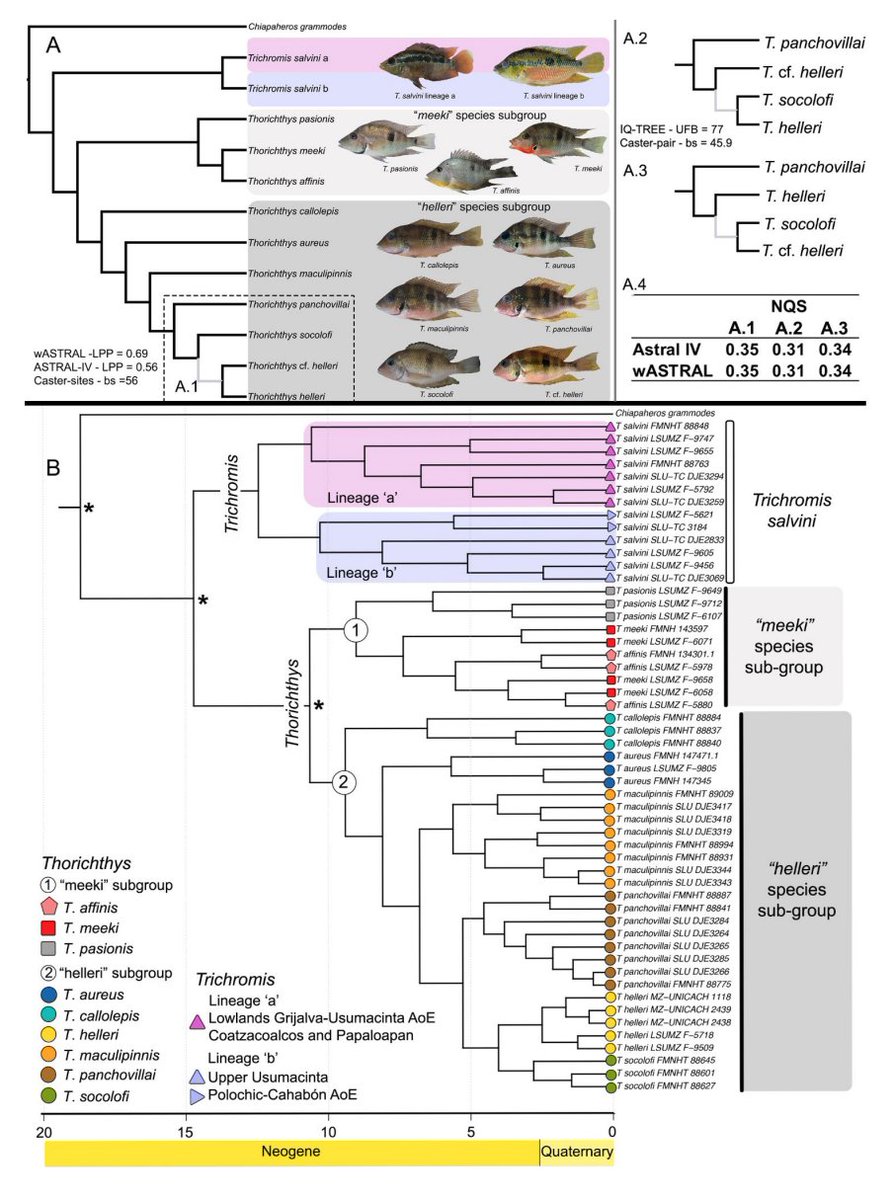
Researchers investigate the evolutionary and biogeographic histories of the early-diverging Herichthyine cichlids, 𝑇ℎ𝑜𝑟𝑖𝑐ℎ𝑡ℎ𝑦𝑠 and 𝑇𝑟𝑖𝑐ℎ𝑟𝑜𝑚𝑖𝑠. 🔓(Preprint) biorxiv.org/content/10.64898… Results provide evidence of a) unrecognised diversity within 𝑇𝑟𝑖𝑐ℎ𝑟𝑜𝑚𝑖𝑠 𝑠𝑎𝑙𝑣𝑖𝑛𝑖, b) uncertainty in species boundaries in 𝑇ℎ𝑜𝑟𝑖𝑐ℎ𝑡ℎ𝑦𝑠, and c) the first report of ghost introgression* in fishes of the northern Neotropics. * (where genetic material is transferred into a species or population through interbreeding with an extinct or unsampled ancient lineage). 𝗪𝗵𝗮𝘁 𝗶𝘀 𝗮 𝗣𝗿𝗲𝗽𝗿𝗶𝗻𝘁 𝗣𝘂𝗯𝗹𝗶𝗰𝗮𝘁𝗶𝗼𝗻? biorxiv.org/content/what-unr… 𝗥𝗲𝘀𝗲𝗮𝗿𝗰𝗵 𝗧𝗶𝘁𝗹𝗲 Diversifying the Northern Neotropics: Phylogenomics and Evolutionary History of the Early-Diverging Herichthyine Cichlids 𝑇ℎ𝑜𝑟𝑖𝑐ℎ𝑡ℎ𝑦𝑠 and 𝑇𝑟𝑖𝑐ℎ𝑟𝑜𝑚𝑖𝑠 𝗖𝗶𝘁𝗮𝘁𝗶𝗼𝗻 Diego J. Elías, Fernando Alda, Isaí Betancourt-Resendes, Alejandro Díaz-Flores, Omar Domínguez-Domínguez, Sheila Rodríguez-Machado, Ernesto Velásquez-Velásquez, Kyle R. Piller, Wilfredo A. Matamoros, Susan F. Mochel, Kevin A. Swagel, Prosanta Chakrabarty, Caleb D. McMahan, Diversifying the Northern Neotropics: Phylogenomics and Evolutionary History of the Early-Diverging Herichthyine Cichlids 𝑇ℎ𝑜𝑟𝑖𝑐ℎ𝑡ℎ𝑦𝑠 and 𝑇𝑟𝑖𝑐ℎ𝑟𝑜𝑚𝑖𝑠 bioRxiv 2026.06.05.730467; doi: doi.org/10.64898/2026.06.05.… 𝗔𝗯𝘀𝘁𝗿𝗮𝗰𝘁 Among Neotropical cichlids the tribe Heroini exhibits substantial ecological diversity and is one of the dominant fish groups across northern Neotropical riverscapes. The majority of studies on heroine cichlids have focused on macroevolutionary patterns but the role of geological and ecological factors shaping lineage diversification within the tribe remains poorly understood. Here we used ultraconserved elements (UCEs) to infer a taxonomically complete and geographically comprehensive phylogenomic framework of the early-diverging herichthyine sister genera 𝑇ℎ𝑜𝑟𝑖𝑐ℎ𝑡ℎ𝑦𝑠 and 𝑇𝑟𝑖𝑐ℎ𝑟𝑜𝑚𝑖𝑠 and to comparatively investigate their evolutionary and biogeographic histories. All our phylogenomic hypotheses support the monophyly of both genera and two species subgroups within 𝑇ℎ𝑜𝑟𝑖𝑐ℎ𝑡ℎ𝑦𝑠. Our results provide evidence of a) unrecognized diversity within 𝑇𝑟𝑖𝑐ℎ𝑟𝑜𝑚𝑖𝑠 𝑠𝑎𝑙𝑣𝑖𝑛𝑖, b) uncertainty in species boundaries in 𝑇ℎ𝑜𝑟𝑖𝑐ℎ𝑡ℎ𝑦𝑠, and c) the first report of ghost introgression in fishes of the northern Neotropics. Additionally, our results demonstrate the importance of the Papaloapan and Coatzacoalcos watersheds for fish diversification in the region. Finally, we show patterns consistent with ecological divergence during the evolution of this group, particularly among sympatric species. Altogether, these patterns suggest that lineage diversification in northern Neotropical cichlids has been driven by the interaction of geological restructuring, climatic and sea-level oscillations, and heterogeneous ecological pressures. 𝗣𝗵𝗼𝘁𝗼 𝗖𝗿𝗲𝗱𝗶𝘁 A) Species tree cladogram of the early divergent Herichthyine genera 𝑇ℎ𝑜𝑟𝑖𝑐ℎ𝑡ℎ𝑦𝑠 and 𝑇𝑟𝑖𝑐ℎ𝑟𝑜𝑚𝑖𝑠. A.1-A.3) Alternative phylogenetic relationships between 𝑇ℎ𝑜𝑟𝑖𝑐ℎ𝑡ℎ𝑦𝑠 𝑠𝑜𝑐𝑜𝑙𝑜𝑓𝑖, 𝑇. ℎ𝑒𝑙𝑙𝑒𝑟𝑖, and 𝑇. 𝑐𝑓. ℎ𝑒𝑙𝑙𝑒𝑟𝑖 and support values (UFB: IQTREE 2; LPP: ASTRAL-IV and wASTRAL; bs: Caster-pairs and Caster-sites) recovered for the contentious branch (in light grey) A.4) Normalised quartet scores (NQS) for the alternative relationships between 𝑇. 𝑠𝑜𝑐𝑜𝑙𝑜𝑓𝑖, 𝑇. ℎ𝑒𝑙𝑙𝑒𝑟𝑖, and 𝑇. 𝑐𝑓. ℎ𝑒𝑙𝑙𝑒𝑟𝑖. B ) Chronogram of the early diverging herichthyines. * denotes nodes where secondary calibrations were placed for the dating analyses. © 2026 the Author(s). Published on the bioRxiv Preprint Server. An open-access article, distributed under the terms of the Creative Commons Attribution 4.0 International (CC-BY-4.0) licence. creativecommons.org/licenses… #Herichthyine #Cichlids #Thorichthys #Trichromis #Phylogenomics #EvolutionaryHistory #Ichthyology #Taxonomy #Biodiversity #AquariumHobby #Fishkeeping #Aquarist #TropicalFish #FishTank #Cichlidae #Neotropics #Cichlid #Buntbarsch #Buntbarsche #Heroine #Watersheds #Papaloapan #Coatzacoalcos #Mexico #Belize #YucatanPeninsula #Biogeography
6
39
1,303
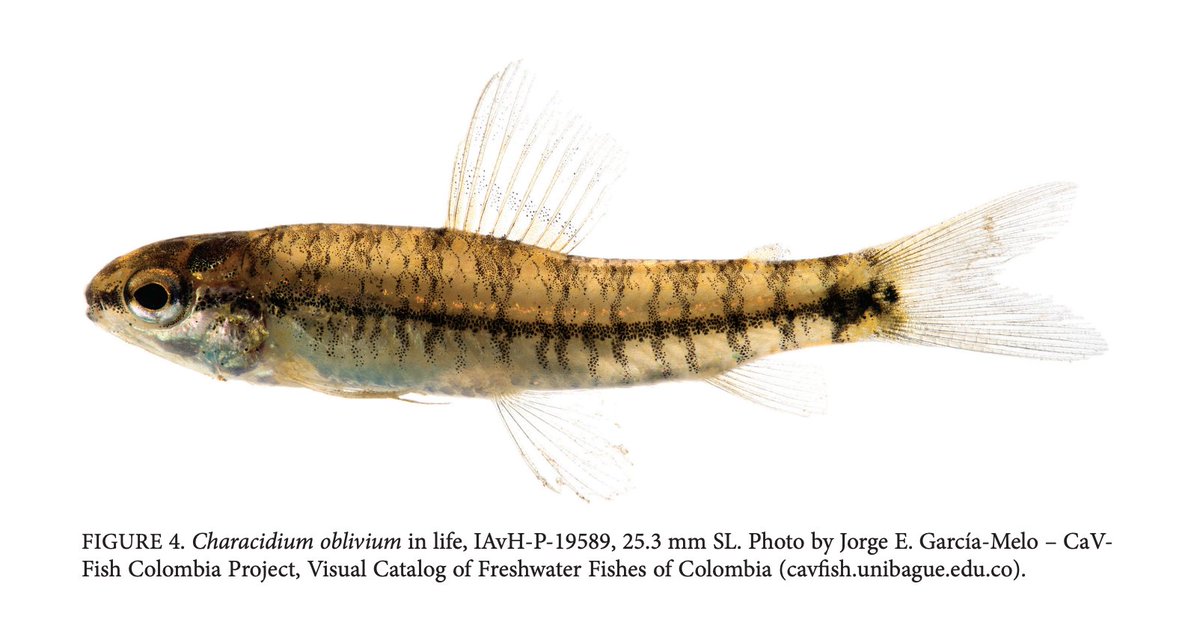
#NewSpeciesAlert - 𝐶ℎ𝑎𝑟𝑎𝑐𝑖𝑑𝑖𝑢𝑚 𝑜𝑏𝑙𝑖𝑣𝑖𝑢𝑚, a new species of darter tetra (Crenuchidae), is described from tributaries of the Orinoco River in Colombia and Venezuela. 🔓 digitallibrary.amnh.org/item… "𝐶ℎ𝑎𝑟𝑎𝑐𝑖𝑑𝑖𝑢𝑚 𝑜𝑏𝑙𝑖𝑣𝑖𝑢𝑚 is widely distributed throughout left bank tributaries of the Orinoco River, draining the llanos and lower piedmont regions of Colombia and Venezuela, and extends into the lower reaches of right bank tributaries draining the northwestern Guiana Shield into the Middle Orinoco." 𝗥𝗲𝘀𝗲𝗮𝗿𝗰𝗵 𝗧𝗶𝘁𝗹𝗲 Long overlooked, finally recognized : a new species of 𝐶ℎ𝑎𝑟𝑎𝑐𝑖𝑑𝑖𝑢𝑚 (Characiformes, Crenuchidae) from the Orinoco River basin revealed through morphology and mtDNA 𝗖𝗶𝘁𝗮𝘁𝗶𝗼𝗻 Oliveira-Silva, Leonardo, Sabaj, Mark Henry, Schaefer, Scott Allen, Oliveira, Claudio de, Zanata, Angela M., Long overlooked, finally recognized : a new species of 𝐶ℎ𝑎𝑟𝑎𝑐𝑖𝑑𝑖𝑢𝑚 (Characiformes, Crenuchidae) from the Orinoco River basin revealed through morphology and mtDNA., American Museum novitates no. 4055, 9th June 2026. 𝗔𝗯𝘀𝘁𝗿𝗮𝗰𝘁 A new species of 𝐶ℎ𝑎𝑟𝑎𝑐𝑖𝑑𝑖𝑢𝑚 is described from tributaries of the Orinoco River in Colombia and Venezuela. The new species can be distinguished from congeners by a combination of characters, including presence of a conspicuous blotch on the caudal peduncle, presence of secondary vertical bars in addition to primary bars, a complete lateral line with 31–34 perforated scales, 14 circumpeduncular scales, absence of hooks on the pelvic-fin rays of mature males and absence of sexual dichromatism. Molecular species-delimitation analyses consistently supported the monophyly of 𝐶. 𝑜𝑏𝑙𝑖𝑣𝑖𝑢𝑚 and recognized it as an independent lineage. Molecular divergence between this lineage and other closely related species was substantially higher than the minimal variation observed within it, providing strong evidence for its status as a distinct species. This study highlights the often overlooked role of museum collections in harboring hidden biodiversity. 𝗘𝘁𝘆𝗺𝗼𝗹𝗼𝗴𝘆 The specific name is derived from the Latin 𝑜𝑏𝑙𝑖𝑣𝑖𝑢𝑚 (neuter), meaning “oblivion” or “forgetfulness.” The name refers to the fact that this species remained undescribed for many years despite being preserved in scientific collections, thus highlighting the often overlooked role of museum collections in harbouring hidden biodiversity and the importance of revisiting historical material. 𝗣𝗵𝗼𝘁𝗼 𝗖𝗿𝗲𝗱𝗶𝘁 𝐶ℎ𝑎𝑟𝑎𝑐𝑖𝑑𝑖𝑢𝑚 𝑜𝑏𝑙𝑖𝑣𝑖𝑢𝑚 in life, IAvH-P-19589, 25.3 mm SL. Photo by Jorge E. García-Melo – CaVFish Colombia Project, Visual Catalog of Freshwater Fishes of Colombia (cavfish.unibague.edu.co). Copyright © American Museum of Natural History 2026. Published in the journal American Museum Novitates. #NewSpecies #Ichthyology #Taxonomy #Biodiversity #AquariumHobby #Fishkeeping #Aquarist #TropicalFish #FishTank #Characidium #DarterTetra #Orinoco #OrinocoRiver #Colombia #Venezuela #Neotropical #NeotropicalFishes #CaVFish #Llanos #Crenuchidae #mtDNA
4
6
39
1,428
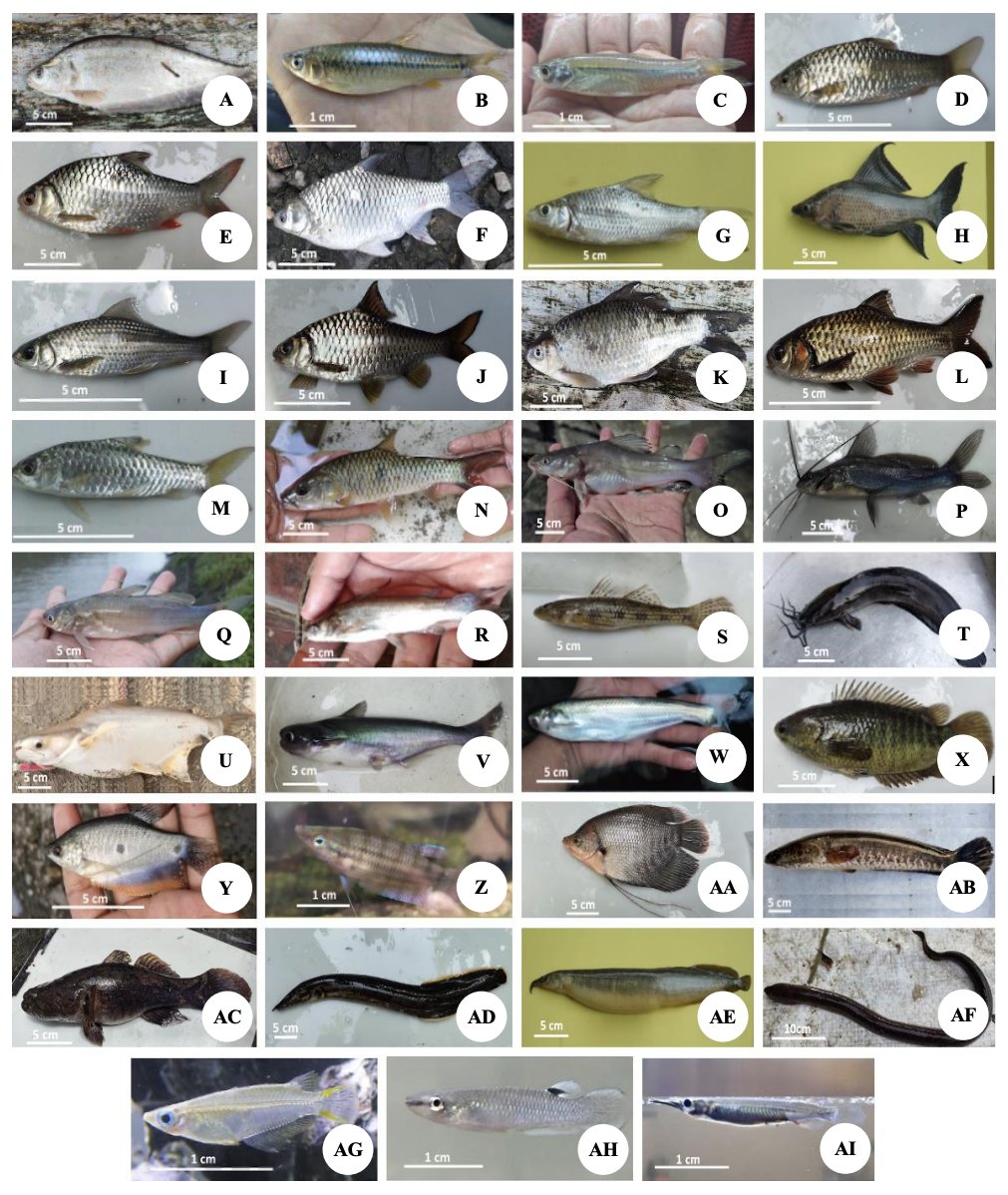
#IchthyofaunaChecklist - Researchers in this study document the ichthyofauna composition in the Surabaya River, one of the most important rivers in East Java, Indonesia, recording 35 fish species across 31 genera and 17 families. Cyprinidae was the dominant family, comprising 10 genera and 11 species. 🔓 smujo.id/biodiv/article/view… "Several species endemic of Java, such as Java walking catfish 𝐶𝑙𝑎𝑟𝑖𝑎𝑠 𝑏𝑎𝑡𝑟𝑎𝑐ℎ𝑢𝑠, Asian redtail catfish 𝐻𝑒𝑚𝑖𝑏𝑎𝑔𝑟𝑢𝑠 𝑛𝑒𝑚𝑢𝑟𝑢𝑠, wrestling halfbeak 𝐷𝑒𝑟𝑚𝑜𝑔𝑒𝑛𝑦𝑠 𝑝𝑢𝑠𝑖𝑙𝑙𝑎, and spotted barb 𝐵𝑎𝑟𝑏𝑜𝑑𝑒𝑠 𝑏𝑖𝑛𝑜𝑡𝑎𝑡𝑢𝑠, were found in this study, indicating that further attention is needed to preserve their habitat." Ichthyofauna checklists and rapid assessments are important tools for biologists, researchers, conservationists, and government bodies/NGOs. They provide critical baselines for the conservation and management of regional fish fauna. Our understanding of species composition in a territory evolves due to species movements across borders, extinctions, introductions, and new taxonomic evidence. 𝗥𝗲𝘀𝗲𝗮𝗿𝗰𝗵 𝗧𝗶𝘁𝗹𝗲 Checklist of native freshwater fish from Surabaya River, Indonesia 𝗖𝗶𝘁𝗮𝘁𝗶𝗼𝗻 Faqih AR, Triastuti RRJ, Wisudyawati D, Anitasari S, Kharisma VD, Rahayu R, Cahyono H, Suliastini J, Islamy RA, Valen FS, Tamam MB, Arisandi P, South J, Kamarudin AS, Wijaya AK, Hasan V. 2026. Checklist of native freshwater fish from Surabaya River, Indonesia. Biodiversitas 27 (3): d270327. doi.org/10.13057/biodiv/d270… 𝗔𝗯𝘀𝘁𝗿𝗮𝗰𝘁 Surabaya River is a tributary of the Brantas River and is habitat to several freshwater fish species. The aim of this study was to provide information on the species composition of freshwater fish in the Surabaya River, one of the most important rivers in East Java, Indonesia. All samples used in this study were caught from December 25, 2025, to January 25, 2026. Sampling was conducted at three stations on the Surabaya River: the starting point of the bifurcation at Mlirip Sluice Gate, Mojokerto Regency (Station 1); Krian Sub-District, Sidoarjo Regency (Station 2); and the end of the river at Jagir Sluice Gate, Surabaya City (Station 3). Specimens were identified using specialized papers and books. This work recorded 35 fish species across 31 genera and 17 families. Cyprinidae was the dominant family, comprising 10 genera and 11 species. Station 1 had the highest species richness (34 species), while Station 3 had the lowest (17 species). Several species endemic of Java, such as Java walking catfish 𝐶𝑙𝑎𝑟𝑖𝑎𝑠 𝑏𝑎𝑡𝑟𝑎𝑐ℎ𝑢𝑠, Asian redtail catfish 𝐻𝑒𝑚𝑖𝑏𝑎𝑔𝑟𝑢𝑠 𝑛𝑒𝑚𝑢𝑟𝑢𝑠, wrestling halfbeak 𝐷𝑒𝑟𝑚𝑜𝑔𝑒𝑛𝑦𝑠 𝑝𝑢𝑠𝑖𝑙𝑙𝑎, and spotted barb 𝐵𝑎𝑟𝑏𝑜𝑑𝑒𝑠 𝑏𝑖𝑛𝑜𝑡𝑎𝑡𝑢𝑠, were found in this study, indicating that further attention is needed to preserve their habitat. The new information on freshwater fish diversity across different parts of the river will be useful for updating the current database on Javanese freshwater fish species diversity and for providing an updated native species inventory for three segments during the 2025-2026 sampling. Information on the habitat use and ecological interactions of fish occurring in the Surabaya River is urgently needed to make appropriate conservation decisions and plans. 𝗣𝗵𝗼𝘁𝗼 𝗖𝗿𝗲𝗱𝗶𝘁 Freshwater fish collected from Surabaya River, East Java, Indonesia. A ) 𝑁𝑜𝑡𝑜𝑝𝑡𝑒𝑟𝑢𝑠 𝑛𝑜𝑡𝑜𝑝𝑡𝑒𝑟𝑢𝑠, B ) 𝑅𝑎𝑠𝑏𝑜𝑟𝑎 𝑎𝑟𝑔𝑦𝑟𝑜𝑡𝑎𝑒𝑛𝑖𝑎, C ) 𝑅𝑎𝑠𝑏𝑜𝑟𝑎 𝑐𝑓. 𝑙𝑎𝑡𝑒𝑟𝑖𝑠𝑡𝑟𝑖𝑎𝑡𝑎, D ) 𝐵𝑎𝑟𝑏𝑜𝑑𝑒𝑠 𝑏𝑖𝑛𝑜𝑡𝑎𝑡𝑢𝑠, E ) 𝐵𝑎𝑟𝑏𝑜𝑛𝑦𝑚𝑢𝑠 𝑏𝑎𝑙𝑙𝑒𝑟𝑜𝑖𝑑𝑒𝑠, F ) 𝐵𝑎𝑟𝑏𝑜𝑛𝑦𝑚𝑢𝑠 𝑔𝑜𝑛𝑖𝑜𝑛𝑜𝑡𝑢𝑠, G ) 𝐶𝑦𝑐𝑙𝑜𝑐ℎ𝑒𝑖𝑙𝑖𝑐ℎ𝑡ℎ𝑦𝑠 𝑎𝑝𝑜𝑔𝑜𝑛, H ) 𝐿𝑎𝑏𝑒𝑜 𝑐ℎ𝑟𝑦𝑠𝑜𝑝ℎ𝑒𝑘𝑎𝑑𝑖𝑜𝑛, I ) 𝐿𝑎𝑏𝑖𝑜𝑏𝑎𝑟𝑏𝑢𝑠 𝑙𝑒𝑝𝑡𝑜𝑐ℎ𝑒𝑖𝑙𝑢𝑠, J ) 𝑀𝑦𝑠𝑡𝑎𝑐𝑜𝑙𝑒𝑢𝑐𝑢𝑠 𝑜𝑏𝑡𝑢𝑠𝑖𝑟𝑜𝑠𝑡𝑟𝑖𝑠, K ) 𝑂𝑠𝑡𝑒𝑜𝑐ℎ𝑖𝑙𝑢𝑠 𝑣𝑖𝑡𝑡𝑎𝑡𝑢𝑠, L ) 𝑆𝑦𝑠𝑡𝑜𝑚𝑢𝑠 𝑟𝑢𝑏𝑟𝑖𝑝𝑖𝑛𝑛𝑖𝑠, M ) 𝑁𝑒𝑜𝑙𝑖𝑠𝑠𝑜𝑐ℎ𝑖𝑙𝑢𝑠 𝑠𝑜𝑟𝑜, N ) 𝐻𝑎𝑚𝑝𝑎𝑙𝑎 𝑚𝑎𝑐𝑟𝑜𝑙𝑒𝑝𝑖𝑑𝑜𝑡𝑎, O ) 𝐻𝑒𝑚𝑖𝑏𝑎𝑔𝑟𝑢𝑠 𝑛𝑒𝑚𝑢𝑟𝑢𝑠, P ) 𝑀𝑦𝑠𝑡𝑢𝑠 𝑠𝑖𝑛𝑔𝑎𝑟𝑖𝑛𝑔𝑎𝑛, Q ) 𝑀𝑦𝑠𝑡𝑢𝑠 𝑛𝑖𝑔𝑟𝑖𝑐𝑒𝑝𝑠, R ) 𝑀𝑦𝑠𝑡𝑢𝑠 𝑎𝑏𝑏𝑟𝑒𝑣𝑖𝑎𝑡𝑢𝑠, S ) 𝐺𝑙𝑜𝑠𝑠𝑜𝑔𝑜𝑏𝑖𝑢𝑠 𝑔𝑖𝑢𝑟𝑖𝑠, T ) 𝐶𝑙𝑎𝑟𝑖𝑎𝑠 𝑏𝑎𝑡𝑟𝑎𝑐ℎ𝑢𝑠, U ) 𝑃𝑎𝑛𝑔𝑎𝑠𝑖𝑢𝑠 𝑑𝑗𝑎𝑚𝑏𝑎𝑙, V ) 𝑃𝑠𝑒𝑢𝑑𝑜𝑙𝑎𝑖𝑠 𝑚𝑖𝑐𝑟𝑜𝑛𝑒𝑚𝑢𝑠, W ) 𝐿𝑎𝑖𝑑𝑒𝑠 ℎ𝑒𝑥𝑎𝑛𝑒𝑚𝑎, X ) 𝐴𝑛𝑎𝑏𝑎𝑠 𝑡𝑒𝑠𝑡𝑢𝑑𝑖𝑛𝑒𝑢𝑠, Y ) 𝑇𝑟𝑖𝑐ℎ𝑜𝑝𝑜𝑑𝑢𝑠 𝑡𝑟𝑖𝑐ℎ𝑜𝑝𝑡𝑒𝑟𝑢𝑠, Z ) 𝑇𝑟𝑖𝑐ℎ𝑜𝑝𝑠𝑖𝑠 𝑣𝑖𝑡𝑡𝑎𝑡𝑎, AA ) 𝑂𝑠𝑝ℎ𝑟𝑜𝑛𝑒𝑚𝑢𝑠 𝑔𝑜𝑟𝑎𝑚𝑦, AB ) 𝐶ℎ𝑎𝑛𝑛𝑎 𝑠𝑡𝑟𝑖𝑎𝑡𝑎, AC ) 𝑂𝑥𝑦𝑒𝑙𝑒𝑜𝑡𝑟𝑖𝑠 𝑚𝑎𝑟𝑚𝑜𝑟𝑎𝑡𝑎, AD ) 𝑀𝑎𝑠𝑡𝑎𝑐𝑒𝑚𝑏𝑒𝑙𝑢𝑠 𝑢𝑛𝑖𝑐𝑜𝑙𝑜𝑟, AE ) 𝑀𝑎𝑐𝑟𝑜𝑔𝑛𝑎𝑡ℎ𝑢𝑠 𝑎𝑐𝑢𝑙𝑒𝑎𝑡𝑢𝑠, AF ) 𝑀𝑜𝑛𝑜𝑝𝑡𝑒𝑟𝑢𝑠 𝑗𝑎𝑣𝑎𝑛𝑒𝑛𝑠𝑖𝑠, AG ) 𝑂𝑟𝑦𝑧𝑖𝑎𝑠 𝑗𝑎𝑣𝑎𝑛𝑖𝑐𝑢𝑠, AH ) 𝐴𝑝𝑙𝑜𝑐ℎ𝑒𝑖𝑙𝑢𝑠 𝑎𝑟𝑚𝑎𝑡𝑢𝑠, AI ) 𝐷𝑒𝑟𝑚𝑜𝑔𝑒𝑛𝑦𝑠 𝑝𝑢𝑠𝑖𝑙𝑙𝑎. © 2026 the Author(s). Published in the journal Biodiversitas Journal of Biological Diversity. An open-access article, distributed under the terms of the Attribution-NonCommercial-ShareAlike 4.0 International (CC BY-NC-SA 4.0) licence. creativecommons.org/licenses… #SurabayaRiver #Indonesia #Ichthyology #Taxonomy #Biodiversity #AquariumHobby #Fishkeeping #Aquarist #TropicalFish #FishTank #AquaticEcosystem #BrantasBasin #Conservation #Ichthyofauna #Java #Cyprinidae #SpeciesInventory
19
26
81
13,360
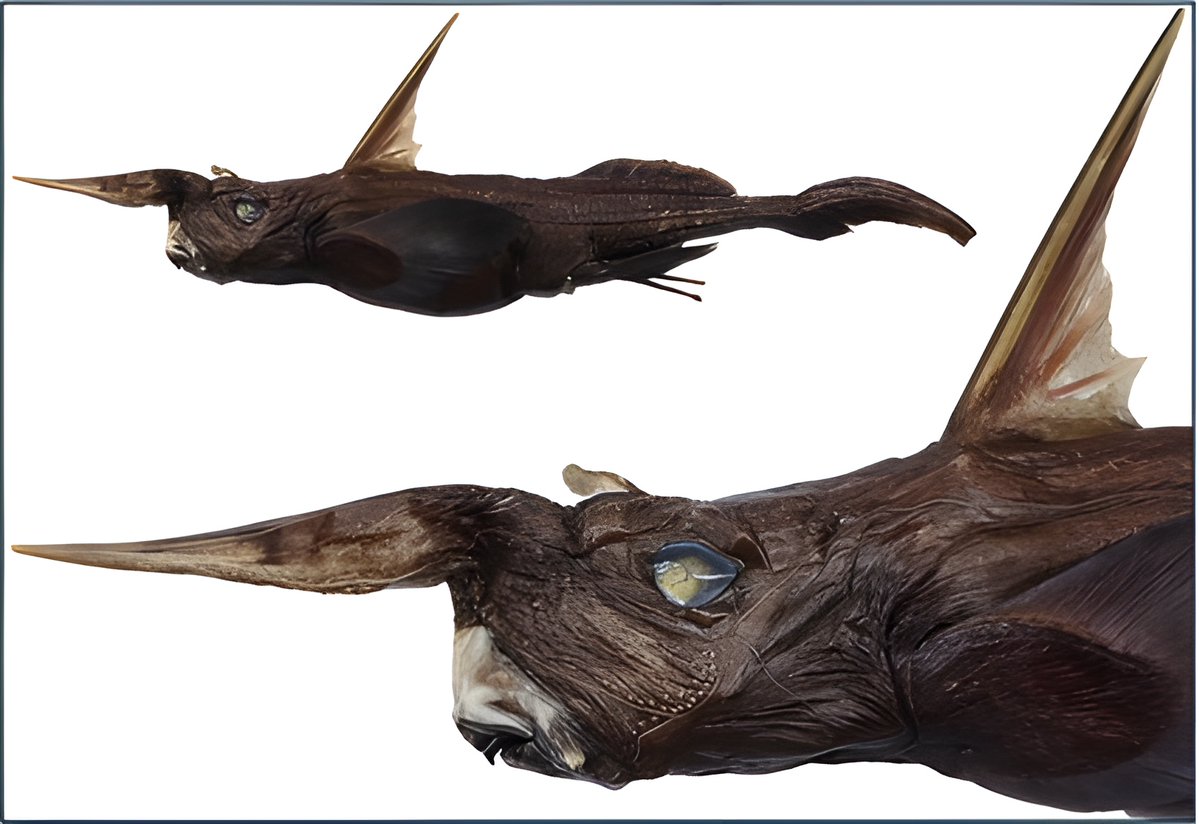
#NewSpeciesAlert - 𝑅ℎ𝑖𝑛𝑜𝑐ℎ𝑖𝑚𝑎𝑒𝑟𝑎 𝑐𝑜𝑠𝑡𝑎𝑟𝑖𝑐𝑎𝑛𝑎, a new species of long-nosed chimaera (Rhinochimaeridae) is described from the eastern Pacific Ocean, caught off Costa Rica between 2000 and 2023, at depths of 390–787 m. 🔒 mapress.com/zt/article/view/… "This discovery improves our knowledge of deep-sea fish diversity in the region and underscores the importance of integrative approaches in species identification, delimitation, and characterization." 𝗥𝗲𝘀𝗲𝗮𝗿𝗰𝗵 𝗧𝗶𝘁𝗹𝗲 A new species of 𝑅ℎ𝑖𝑛𝑜𝑐ℎ𝑖𝑚𝑎𝑒𝑟𝑎 Garman 1901 (Holocephali: Chimaeriformes: Rhinochimaeridae) from the Eastern Pacific Ocean 𝗖𝗶𝘁𝗮𝘁𝗶𝗼𝗻 Vidaurre-Quesada, N.V., Salas-Jimenez, A., Carvajal-Rodriguez, J.M., Lara-Quesada, N., Santos, S., Araripe, J. & Angulo, A. (2026) A new species of 𝑅ℎ𝑖𝑛𝑜𝑐ℎ𝑖𝑚𝑎𝑒𝑟𝑎 Garman 1901 (Holocephali: Chimaeriformes: Rhinochimaeridae) from the Eastern Pacific Ocean. Zootaxa, 5828 (3), 535–548. doi.org/10.11646/zootaxa.582… 𝗔𝗯𝘀𝘁𝗿𝗮𝗰𝘁 A new species of 𝑅ℎ𝑖𝑛𝑜𝑐ℎ𝑖𝑚𝑎𝑒𝑟𝑎 is described based on a unique combination of morphological traits, further supported by molecular evidence. The type series comprises three males (775–830 mm total length) collected off the Pacific coast of Costa Rica between 2000 and 2023, at depths of 390–787 m. A total of 49 morphometric measurements were obtained from the three specimens and compared with published and unpublished data from 90 additional specimens representing the three currently recognized species of 𝑅ℎ𝑖𝑛𝑜𝑐ℎ𝑖𝑚𝑎𝑒𝑟𝑎. 𝑅ℎ𝑖𝑛𝑜𝑐ℎ𝑖𝑚𝑎𝑒𝑟𝑎 𝑐𝑜𝑠𝑡𝑎𝑟𝑖𝑐𝑎𝑛𝑎 sp. nov. is distinguished from its congeners by a shorter snout, a larger and taller first dorsal-fin spine, a higher first dorsal fin, a wider interdorsal space, and a reduced number of caudal tubercles. Molecular analyses of COI sequences from two specimens of 𝑅. 𝑐𝑜𝑠𝑡𝑎𝑟𝑖𝑐𝑎𝑛𝑎 sp. nov. revealed genetic divergences of 3.9% from 𝑅. 𝑎𝑓𝑟𝑖𝑐𝑎𝑛𝑎, 4.5% from 𝑅. 𝑎𝑡𝑙𝑎𝑛𝑡𝑖𝑐𝑎, and 4.7% from 𝑅. 𝑝𝑎𝑐𝑖𝑓𝑖𝑐𝑎, exceeding the commonly accepted interspecific divergence threshold. Species delimitation methods (ASAP, bPTP, GMYC) likewise support the recognition of this taxon as distinct from all congeners. This discovery improves our knowledge of deep-sea fish diversity in the region and underscores the importance of integrative approaches in species identification, delimitation, and characterization. 𝗣𝗵𝗼𝘁𝗼 𝗖𝗿𝗲𝗱𝗶𝘁 Cover image from the study. Preserved specimens of 𝑅ℎ𝑖𝑛𝑜𝑐ℎ𝑖𝑚𝑎𝑒𝑟𝑎 𝑐𝑜𝑠𝑡𝑎𝑟𝑖𝑐𝑎𝑛𝑎. © 2026 the Author(s). Published in the journal Zootaxa. #NewSpecies #Ichthyology #Taxonomy #Biodiversity #Sharks #Shark #Rhinochimaera #Chimaera #Holocephali #Chimaeriformes #Rhinochimaeridae #CostaRica #PacificOcean #Ocean #DeepSea
28
27
183
14,609
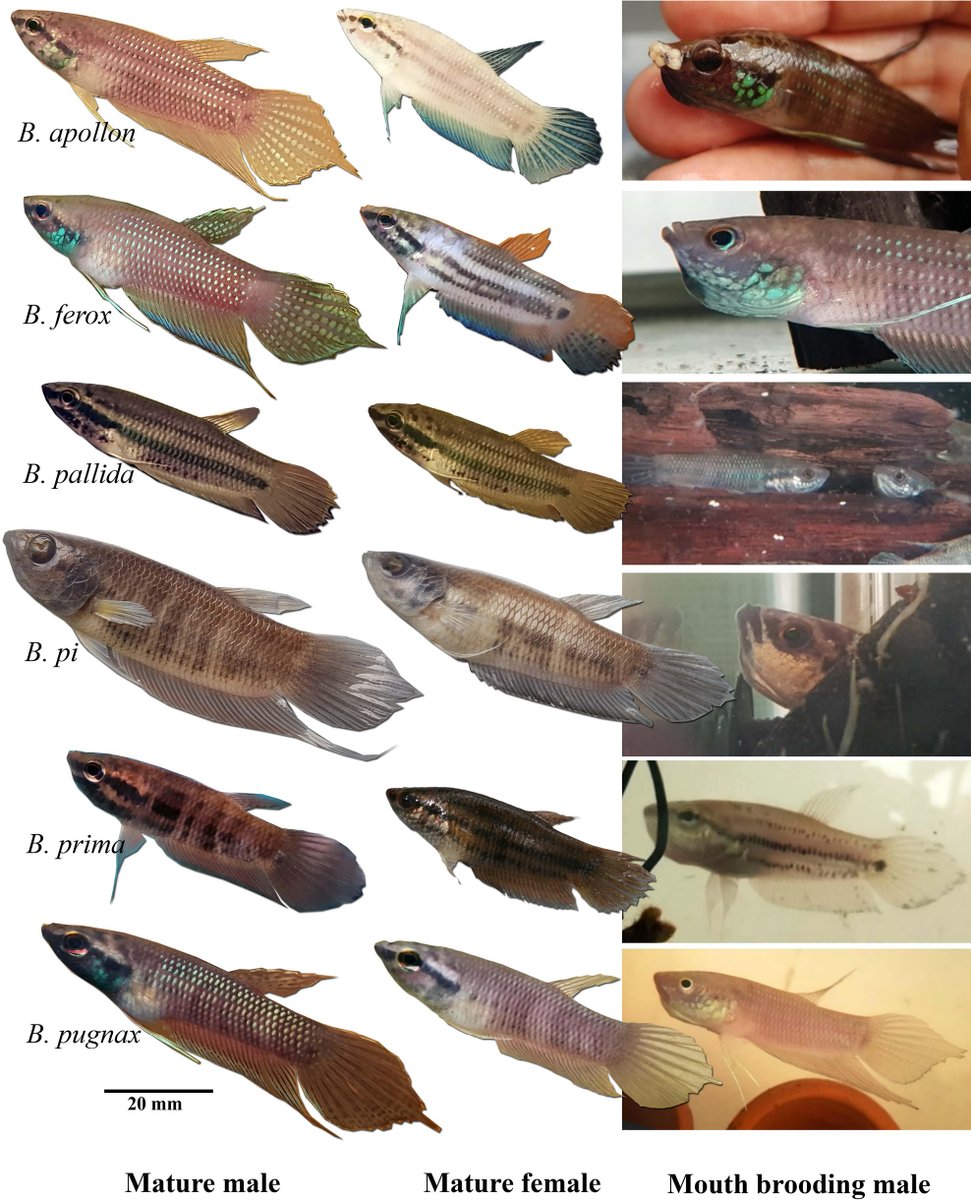
A fascinating study describes the morphological development and generates identification keys for the larval and juvenile stages of seven wild mouth-brooding fighting fish species found in Thailand, i.e., 𝐵𝑒𝑡𝑡𝑎 𝑎𝑝𝑜𝑙𝑙𝑜𝑛, 𝐵. 𝑓𝑒𝑟𝑜𝑥, 𝐵. 𝑝𝑎𝑙𝑙𝑖𝑑𝑎, 𝐵. 𝑝𝑖, 𝐵. 𝑝𝑟𝑖𝑚𝑎, 𝐵. 𝑝𝑢𝑔𝑛𝑎𝑥, and 𝐵. 𝑠𝑖𝑚𝑝𝑙𝑒𝑥 from the wild. 🔓 zookeys.pensoft.net/article/… 𝗥𝗲𝘀𝗲𝗮𝗿𝗰𝗵 𝗧𝗶𝘁𝗹𝗲 Early-life histories, morphological development, and dichotomous keys of seven wild mouth-brooding fighting fish species (Actinopterygii, Osphronemidae) 𝗖𝗶𝘁𝗮𝘁𝗶𝗼𝗻 Poungcharean S, Wudtisin I, Sirisuay S, Pichitkul P, Janekitkarn S (2026) Early-life histories, morphological development, and dichotomous keys of seven wild mouth-brooding fighting fish species (Actinopterygii, Osphronemidae). ZooKeys 1281: 363-388. doi.org/10.3897/zookeys.1281… 𝗔𝗯𝘀𝘁𝗿𝗮𝗰𝘁 Within the family Osphronemidae, mouth-brooding fighting fishes are small, air-breathing fish species that hold their eggs and offspring in their buccal cavities as a parental care behavior, usually found in running waters and distributed in the wild throughout Southeast Asia. This study aims to describe the morphological development and generate identification keys for the larval and juvenile stages of seven wild mouth-brooding fighting fish species found in Thailand, i.e., 𝐵𝑒𝑡𝑡𝑎 𝑎𝑝𝑜𝑙𝑙𝑜𝑛, 𝐵. 𝑓𝑒𝑟𝑜𝑥, 𝐵. 𝑝𝑎𝑙𝑙𝑖𝑑𝑎, 𝐵. 𝑝𝑖, 𝐵. 𝑝𝑟𝑖𝑚𝑎, 𝐵. 𝑝𝑢𝑔𝑛𝑎𝑥, and 𝐵. 𝑠𝑖𝑚𝑝𝑙𝑒𝑥 from the wild. The broodstocks were collected from type localities or based on characteristics that most closely matched each species description, with healthy fishes selected and breeding continued for our size-series collection, including 𝐵. 𝑠𝑖𝑚𝑝𝑙𝑒𝑥, a previous study. The results showed that mouth-brooders released their offspring when developed to the post-flexion stage within 11–12 (mode = 11) days after fertilization (DAF), except 𝐵. 𝑝𝑖, which took 18–20 DAF, and the post-flexion larva developed to the juvenile stage within 18–30 days after release. The main characteristics of the new-release post-flexion larva were an oblong and depressed body, a large head, an oval to rounded eye, and rays where the caudal fin began to develop, as well as having fully developed ventral fins with two or three dorsal, central, and ventral stripes and a caudal spot. Myomere numbers and fin rays differed among species across a range of 8–10 dorsal, 10–13 pectoral, 6 ventral, 24–31 anal, and 10–13 caudal fin rays. Diagnostic characters were selected to create a dichotomous identification key, with an illustration provided. In terms of taxonomy, the different larval stages also differed in pigmentation patterns among species, with pigmentation patterns on head (pre-orbital, sub-orbital, post-orbital, and sub-opercular bands) and longitudinal stripes on the side of the body able to be used to distinguish among different development stages as well as different species. 𝗣𝗵𝗼𝘁𝗼 𝗖𝗿𝗲𝗱𝗶𝘁 Broodstocks of six wild mouth-brooding fighting fishes for specimen size-series collection. © 2026 the Author(s). Published in the journal ZooKeys. An open access article, distributed under the terms of the Creative Commons Attribution 4.0 International (CC-BY-4.0) licence. creativecommons.org/licenses… #Osphronemidae #Betta #Ichthyology #Taxonomy #Biodiversity #AquariumHobby #Fishkeeping #Aquarist #TropicalFish #FishTank #LifeHistories #MouthbroodingBetta #FightingFish #Thailand #BettaApollen #BettaFerox #BettaPallida #BettaPi #BettaPrima #BettaPugnax #BettaSimplex
9
13
75
5,606
Fish in the News retweeted
Meet two newly discovered 🧬 species of👻⚡️⚡️⚡️🐟🐠 with sexually dimorphic males ☠️ both 🐟🐠 living in rivers of the northern Andes in 🇵🇪 🌎 at over 300 m elevation @museuemilgoeldi @IchsAndHerps 🔒 bioone.org/journals/ichthyol… 📷 (50-day free access) ichthyologyandherpetology.or…
6
19
949
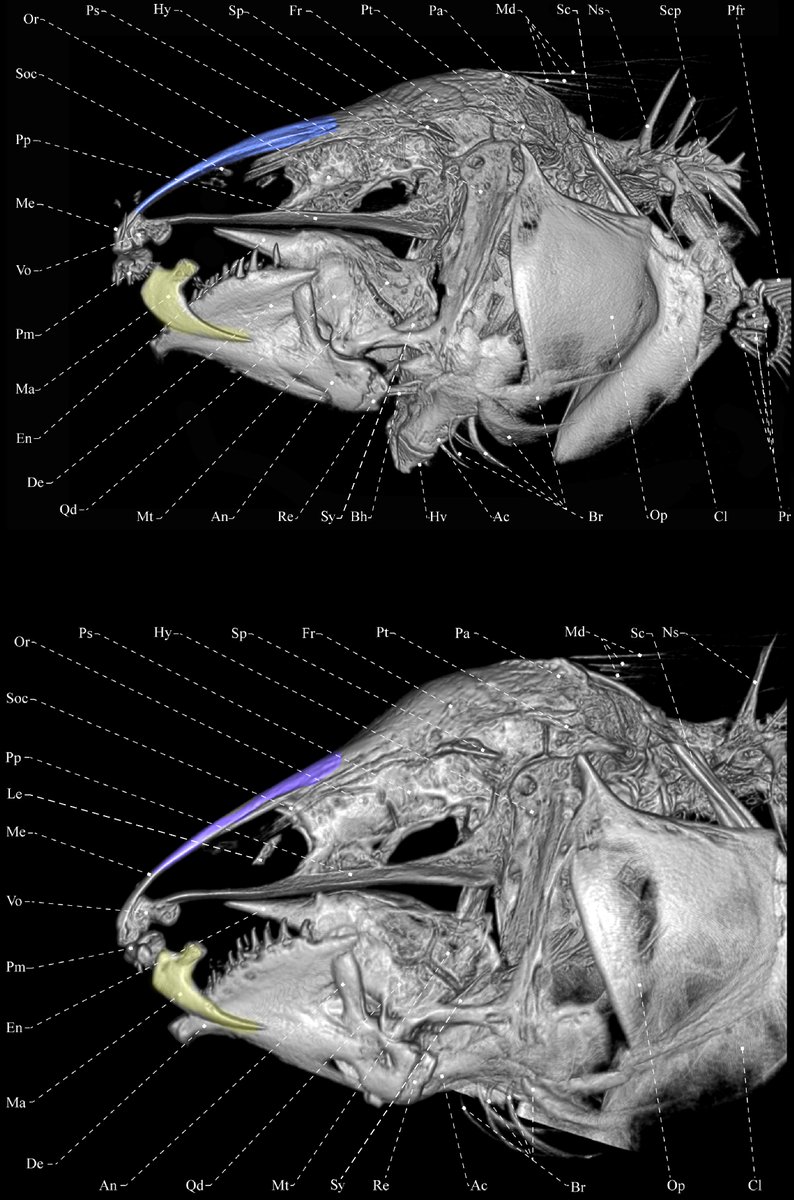
#NewSpeciesAlert - 𝑇𝑦𝑝ℎ𝑙𝑖𝑐ℎ𝑡ℎ𝑦𝑠 𝑠𝑡𝑦𝑥, a new species of cavefish (Amblyopsidae), is described from aquifer-fed cave systems of the southeastern United States. 🔓 academic.oup.com/iob/article… 🔗 (SciComm post) sciencesprings.wordpress.com… High-resolution computed tomography (CT) scanning revealed a remnant of an orbital bone, distinct from other Southern cavefish (𝑇𝑦𝑝ℎ𝑙𝑖𝑐ℎ𝑡ℎ𝑦𝑠 𝑠𝑝𝑝.), supporting its recognition as a new species. This discovery challenges long-held conventional wisdom that caves and other subterranean ecosystems are evolutionary dead ends, with implications for better understanding subterranean ecosystems and their biodiversity going forward. "𝑇𝑦𝑝ℎ𝑙𝑖𝑐ℎ𝑡ℎ𝑦𝑠 𝑠𝑡𝑦𝑥 is distributed throughout the Valley and Ridge, Cumberland Plateau, Interior Low Plateaus, and Nashville Basin of Tennessee, Alabama, and Georgia, USA. 𝑇. 𝑠𝑡𝑦𝑥 includes four or five major lineages endemic to caves corresponding to the Ordovician, Silurian-Devonian, Mississippian, and Valley and Ridge aquifers of southeastern North America." 𝗥𝗲𝘀𝗲𝗮𝗿𝗰𝗵 𝗧𝗶𝘁𝗹𝗲 Aquifer-Mediated Speciation in Cave-Adapted Fishes 𝗖𝗶𝘁𝗮𝘁𝗶𝗼𝗻 C D Brownstein, G J Watkins-Colwell, M Policarpo, R C Harrington, E A Hoffman, D Casane, T J Near, Aquifer-Mediated Speciation in Cave-Adapted Fishes, Integrative Organismal Biology, Volume 8, Issue 1, 2026, obag021, doi.org/10.1093/iob/obag021 𝗦𝘆𝗻𝗼𝗽𝘀𝗶𝘀 The nature of speciation within subterranean ecosystems following invasions from the surface remains poorly understood. Most proposed examples of 𝑖𝑛 𝑠𝑖𝑡𝑢 subterranean speciation instead appear to reflect multiple independent surface invasions, supporting the classic hypothesis that subterranean ecosystems are evolutionary dead ends. Here, we examine the species diversity within the most widespread subterranean vertebrate species, the Southern Cavefish 𝑇𝑦𝑝ℎ𝑙𝑖𝑐ℎ𝑡ℎ𝑦𝑠 𝑠𝑢𝑏𝑡𝑒𝑟𝑟𝑎𝑛𝑒𝑢𝑠. Phylogenomic analyses reveal that 𝑇. 𝑠𝑢𝑏𝑡𝑒𝑟𝑟𝑎𝑛𝑒𝑢𝑠 as currently recognized is paraphyletic with respect to the Missouri Cavefish 𝑇. 𝑒𝑖𝑔𝑒𝑛𝑚𝑎𝑛𝑛𝑖, as a distinct set of populations is resolved as the sister lineage of a clade formed by 𝑇. 𝑒𝑖𝑔𝑒𝑛𝑚𝑎𝑛𝑛𝑖 and 𝑇. 𝑠𝑢𝑏𝑡𝑒𝑟𝑟𝑎𝑛𝑒𝑢𝑠 𝑠𝑒𝑛𝑠𝑢 𝑠𝑡𝑟𝑖𝑐𝑡𝑜. High-resolution computed tomography (CT) scanning reveals skeletal autapomorphies of this lineage, supporting its recognition as a new species: 𝑇𝑦𝑝ℎ𝑙𝑖𝑐ℎ𝑡ℎ𝑦𝑠 𝑠𝑡𝑦𝑥 sp. nov. Ancestral biogeographic reconstructions reveal that speciation in 𝑇𝑦𝑝ℎ𝑙𝑖𝑐ℎ𝑡ℎ𝑦𝑠 has occurred along aquifer boundaries, with lineages dispersing through widespread karstic aquifer systems across southeastern and central North America. This dispersal facilitated secondary sympatry among cavefish species that last shared common ancestry approximately eight million years ago. Together, these results reveal aquifer geology as a driver of allopatric speciation in obligate cave-dwelling vertebrates, with implications for understanding biodiversity in subterranean ecosystems worldwide. 𝗘𝘁𝘆𝗺𝗼𝗹𝗼𝗴𝘆 Styx (Ancient Greek Στύξ), the river that forms one of the borders of the underworld in Ancient Greek mythology. 𝗣𝗵𝗼𝘁𝗼 𝗖𝗿𝗲𝗱𝗶𝘁 This study made the cover of the journal. Rendered skulls of typical representatives of three species of 𝑇𝑦𝑝ℎ𝑙𝑖𝑐ℎ𝑡ℎ𝑦𝑠. © 2026 the Author(s). Published in the journal Integrative Organismal Biology. An open access article, distributed under the terms of the Creative Commons Attribution 4.0 International (CC-BY-4.0) licence. creativecommons.org/licenses… #NewSpecies #Ichthyology #Taxonomy #Biodiversity #CaveFish #CaveFishes #Styx #Underworld #Subterranean #USA #Aquifer #Aquifers #Speciation #SubterraneanFishes #Ecosystems #Typhlichthys #Troglomorphic #MissouriCavefish #FlatRockCave #SmithCounty #Tennessee #Alabama #Georgia #CumberlandPlateau #Tomography #SouthernCavefish #Amblyopsidae #Percopsiformes
5
44
1,507
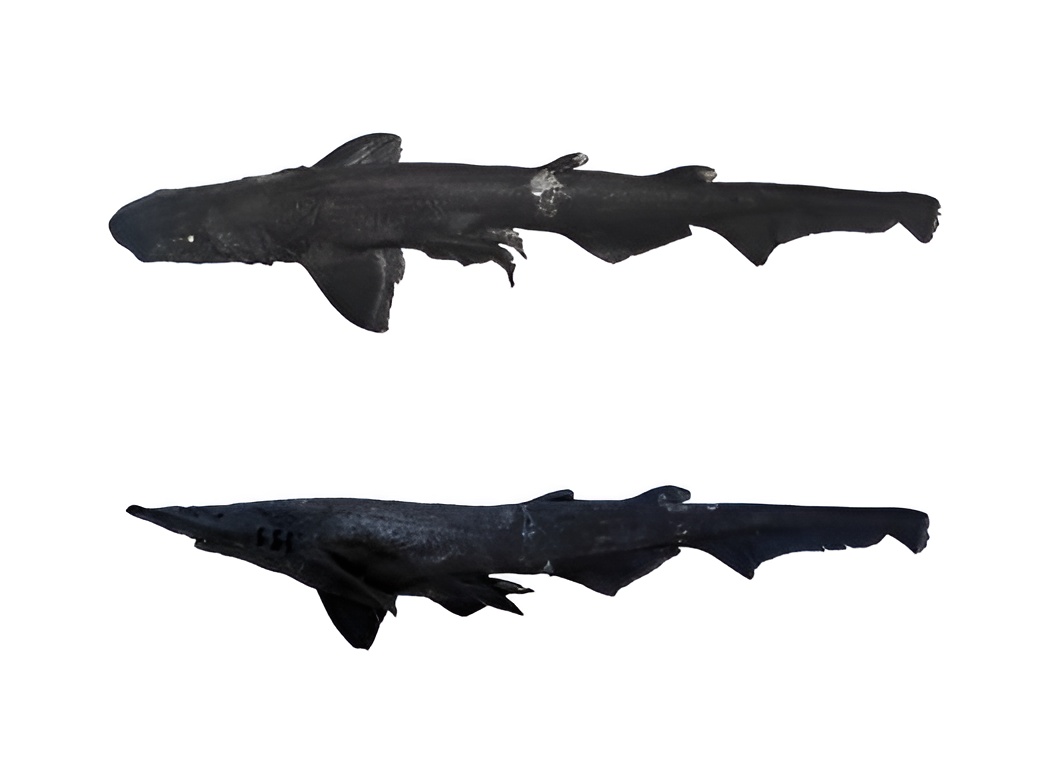
#NewSpeciesAlert - 𝐴𝑝𝑟𝑖𝑠𝑡𝑢𝑟𝑢𝑠 𝑑𝑟𝑜𝑛𝑎, a new species of deepwater catshark (Pentanchidae), is described from specimens collected off the Kollam slope, southwest coast of India, at a depth of 400–650 m. This new species is placed in the 𝐴𝑝𝑟𝑖𝑠𝑡𝑢𝑟𝑢𝑠 𝑏𝑟𝑢𝑛𝑛𝑒𝑢𝑠 subgroup among the three groups divided within the genus 𝐴𝑝𝑟𝑖𝑠𝑡𝑢𝑟𝑢𝑠. 🔒 mapress.com/zt/article/view/… 𝗥𝗲𝘀𝗲𝗮𝗿𝗰𝗵 𝗧𝗶𝘁𝗹𝗲 DNA barcoding reveals a new species of deepwater catshark of the genus 𝐴𝑝𝑟𝑖𝑠𝑡𝑢𝑟𝑢𝑠 (Chondrichthyes: Pentanchidae) from India, in the Southeastern Arabian Sea 𝗖𝗶𝘁𝗮𝘁𝗶𝗼𝗻 Beura, S., K.k, B. & Banerjee, D. (2026) DNA barcoding reveals a new species of deepwater catshark of the genus 𝐴𝑝𝑟𝑖𝑠𝑡𝑢𝑟𝑢𝑠 (Chondrichthyes: Pentanchidae) from India, in the Southeastern Arabian Sea. Zootaxa, 5828 (2), 303–317. doi.org/10.11646/zootaxa.582… 𝗔𝗯𝘀𝘁𝗿𝗮𝗰𝘁 This article provides a description of a new species of a catshark of the family Pentanchidae, 𝐴𝑝𝑟𝑖𝑠𝑡𝑢𝑟𝑢𝑠 𝑑𝑟𝑜𝑛𝑎 sp. nov. based on 4 specimens, which include two males and two females ranging from 439–473 mm TL, collected off the Kollam slope, Southwest coast of India, at a depth of 400–650 m. This new species is placed in the 𝐴𝑝𝑟𝑖𝑠𝑡𝑢𝑟𝑢𝑠 𝑏𝑟𝑢𝑛𝑛𝑒𝑢𝑠 subgroup among the three groups divided within the genus 𝐴𝑝𝑟𝑖𝑠𝑡𝑢𝑟𝑢𝑠 and is characterized by the following features: slender body, tapering posteriorly; nostril length is smaller than internarial width; pre-outer nostril length shorter than interorbital space; pre-outer nostril length 3.7(3.5–5.2) % TL; pre-oral length shorter than the mouth width, 33.6(31.7–34.0)% head length and 8.1(7.1–8.1)% TL; nostril-mouth space shorter than nostril length, about 0.4 (0.3–0.4) times; upper labial furrows longer than the lowers furrows; internarial width slightly greater than or equal to orbit length, about 1.09(1.0–1.11) times; 5th gill slit height smallest, about 46.8(46.8–62.5)% eye length; Inter-dorsal space 9.3(8.8–10.5) % TL; first dorsal fin smaller than the second dorsal fin; first dorsal fin insertion is opposite to anal fin origin; anal fin base length is greater than pectoral-pelvic space and pelvic-anal space; pectoral to pelvic space greater than pelvic to anal space; spiral valve turns 11–12; total vertebrae 105–115. 𝐴𝑝𝑟𝑖𝑠𝑡𝑢𝑟𝑢𝑠 𝑑𝑟𝑜𝑛𝑎 sp. nov. is also distinguished from its congeners based on DNA sequence divergence of the COI gene. This new species has a distribution along the Kollam slope, Arabian Sea, whereas its three closest congeners, based on a molecular level, are from distant locations: 𝐴. 𝑛𝑎𝑦𝑎𝑘𝑎𝑖 from Southwestern Pacific Ocean, 𝐴. 𝑚𝑎𝑐𝑟𝑜𝑟ℎ𝑦𝑛𝑐ℎ𝑢𝑠 from Northwest Pacific and 𝐴. 𝑒𝑥𝑠𝑎𝑛𝑔𝑢𝑖𝑠 from New Zealand. 𝗣𝗵𝗼𝘁𝗼 𝗖𝗿𝗲𝗱𝗶𝘁 Cover image for study - 𝐴𝑝𝑟𝑖𝑠𝑡𝑢𝑟𝑢𝑠 𝑑𝑟𝑜𝑛𝑎. © 2026 the Author(s). Published in the journal Zootaxa. #NewSpecies #Ichthyology #Taxonomy #Biodiversity #Apristurus #Chondrichthyes #Pentanchidae #India #Sharks #Catshark #DeepWater #Ocean #ArabianSea #CatSharks #KollamSlope #DNABarcoding
19
77
1,733
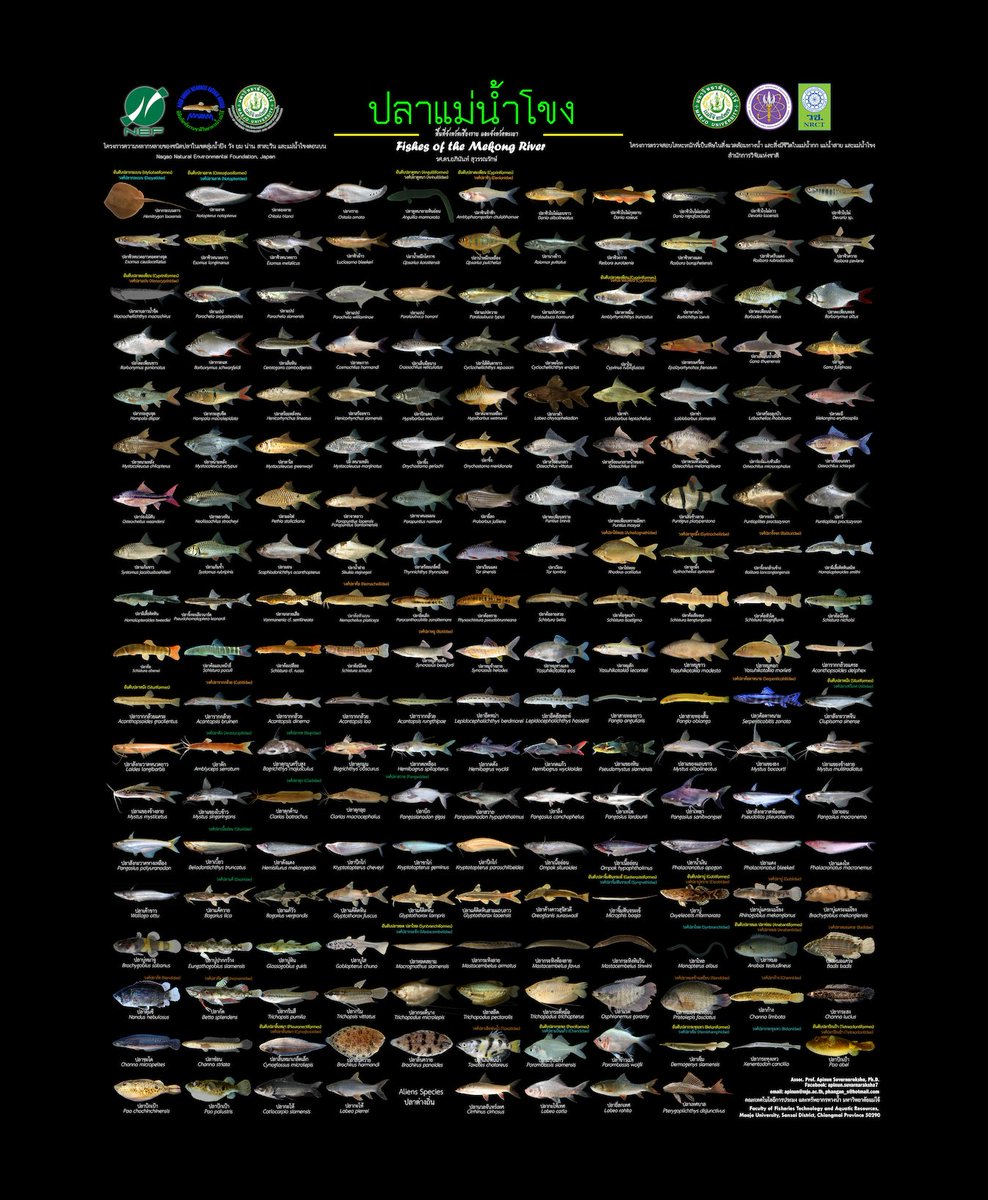
#FishPoster - A beautifully produced PDF poster titled "Fishes of the Mekong", focusing on species from the upper Mekong basin in Thailand (Chiangmai-Chiangrai-Payao). Available as a free download from the link below, 60cm x 80cm. Many thanks to the researchers who put this together! 🔗 researchgate.net/publication… #Thailand #Mekong #MekongRiver #NaturePoster #FishPosters #FishBooks #Biodiversity #AquariumHobby #Fishkeeping #Aquarist #TropicalFish #Streams #FreshwaterFishes #MekongBasin
37
133
4,014
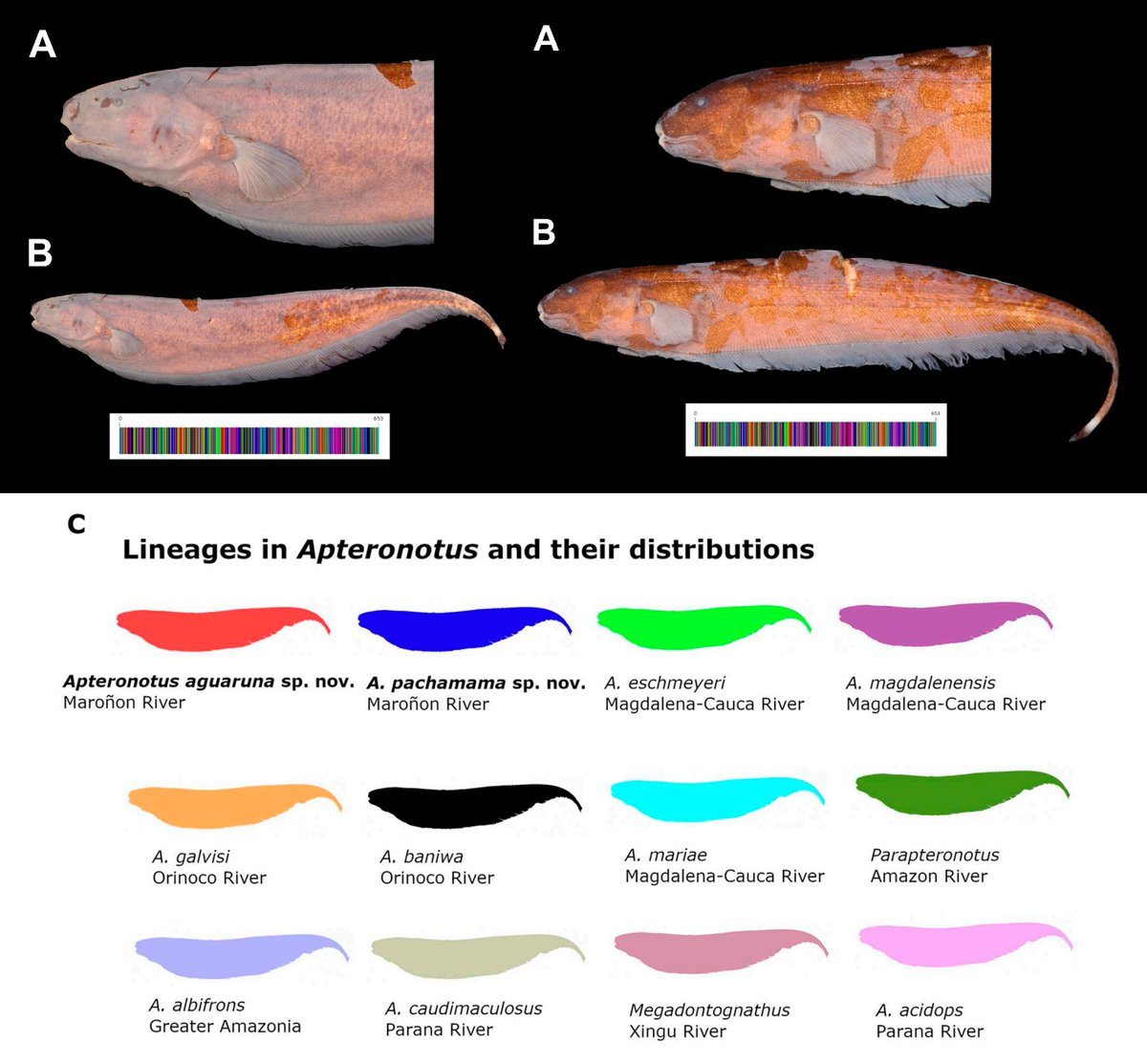
#NewSpeciesAlert - 𝐴𝑝𝑡𝑒𝑟𝑜𝑛𝑜𝑡𝑢𝑠 𝑎𝑔𝑢𝑎𝑟𝑢𝑛𝑎 and 𝐴𝑝𝑡𝑒𝑟𝑜𝑛𝑜𝑡𝑢𝑠 𝑝𝑎𝑐ℎ𝑎𝑚𝑎𝑚𝑎, two new species of sexually dimorphic ghost electric knifefishes (Apteronotidae) are described from elevations ranging from 300 m to 1,180 m above sea level in the middle and upper portions of the Marañon River in the Andes of northern Peru. The authors discuss the interrelationships, patterns of secondary sexual dimorphism, and historical biogeography of the newly identified species. Furthermore, a discussion on the future directions of the systematics of 𝐴𝑝𝑡𝑒𝑟𝑜𝑛𝑜𝑡𝑢𝑠 is provided. 🔒 bioone.org/journals/ichthyol… 🔓 (50-day free access) ichthyologyandherpetology.or… 𝗥𝗲𝘀𝗲𝗮𝗿𝗰𝗵 𝗧𝗶𝘁𝗹𝗲 Two New Species of Sexually Dimorphic Ghost Electric Knifefishes (𝐴𝑝𝑡𝑒𝑟𝑜𝑛𝑜𝑡𝑢𝑠: Apteronotidae: Gymnotiformes) from the Andes of Northern Peru: Interrelationships and Biogeography 𝗖𝗶𝘁𝗮𝘁𝗶𝗼𝗻 C. David de Santana, Luiz Antônio Wanderley Peixoto, Guilherme Moreira Dutra, Casey B. Dillman "Two New Species of Sexually Dimorphic Ghost Electric Knifefishes (𝐴𝑝𝑡𝑒𝑟𝑜𝑛𝑜𝑡𝑢𝑠: Apteronotidae: Gymnotiformes) from the Andes of Northern Peru: Interrelationships and Biogeography," Ichthyology & Herpetology, 114(2), 240-256, (4 June 2026). DOI: doi.org/10.1643/i2025059 𝗔𝗯𝘀𝘁𝗿𝗮𝗰𝘁 Two new species of 𝐴𝑝𝑡𝑒𝑟𝑜𝑛𝑜𝑡𝑢𝑠, which are sexually dimorphic, are described from elevations ranging from 300 m to 1,180 m above sea level in the middle and upper portions of the Marañon River in the Andes of northern Peru, bringing the total number of species in the genus to 26. The new species are recognized among congeners by molecular and anatomical characters. The phylogenetic analysis of 𝐴𝑝𝑡𝑒𝑟𝑜𝑛𝑜𝑡𝑢𝑠, conducted using a multilocus dataset and employing both Bayesian inference and maximum likelihood methods, recovered the newly discovered species as a sister pair, diverging 8% in their DNA barcode. Conversely, the phylogenetic relationships of these taxa within the genus remain ambiguous. They may either be positioned as the sister group to the clade comprising 𝐴. 𝑏𝑎𝑛𝑖𝑤𝑎 and 𝐴. 𝑔𝑎𝑙𝑣𝑖𝑠𝑖 from the Orinoco basin, along with 𝐴. 𝑒𝑠𝑐ℎ𝑚𝑒𝑦𝑒𝑟𝑖 and 𝐴. 𝑚𝑎𝑔𝑑𝑎𝑙𝑒𝑛𝑒𝑛𝑠𝑖𝑠 from the Magdalena-Cauca hydrogeographic region, or they may be classified as the sister group to 𝐴. 𝑒𝑠𝑐ℎ𝑚𝑒𝑦𝑒𝑟𝑖 and 𝐴. 𝑚𝑎𝑔𝑑𝑎𝑙𝑒𝑛𝑒𝑛𝑠𝑖𝑠 alone. The interrelationships, patterns of secondary sexual dimorphism, and historical biogeography of the newly identified species are examined. Furthermore, a discussion on the future directions of the systematics of the genus is offered. 𝗘𝘁𝘆𝗺𝗼𝗹𝗼𝗴𝘆 𝐴𝑝𝑡𝑒𝑟𝑜𝑛𝑜𝑡𝑢𝑠 𝑎𝑔𝑢𝑎𝑟𝑢𝑛𝑎 - The species name, 𝑎𝑔𝑢𝑎𝑟𝑢𝑛𝑎, is in reference to the Aguaruna indigenous people living primarily on the Marañon River in northern Peru. A noun in apposition. 𝐴𝑝𝑡𝑒𝑟𝑜𝑛𝑜𝑡𝑢𝑠 𝑝𝑎𝑐ℎ𝑎𝑚𝑎𝑚𝑎 - The species name, 𝑝𝑎𝑐ℎ𝑎𝑚𝑎𝑚𝑎, meaning “Mother Earth” in Quechua, is the highest deity worshipped by indigenous people in the central Andes, derived from the Quechua words “Pacha” meaning universe, world, time, and place, and “Mama” meaning mother. 𝗣𝗵𝗼𝘁𝗼 𝗖𝗿𝗲𝗱𝗶𝘁 Top left - 𝐴𝑝𝑡𝑒𝑟𝑜𝑛𝑜𝑡𝑢𝑠 𝑎𝑔𝑢𝑎𝑟𝑢𝑛𝑎, holotype, male, 190 mm TL, MUSM 78764 (ex-AUM 46257), Condorcanqui, Almendro River, 50.1 km NNE Bagua Grande, 121 km NNW Chachapoya, 10.1 km S, Marañon River basin, Peru. (A) Lateral view of the head; (B) lateral view of the body and DNA barcode for the holotype, 653 base pairs of cytochrome c oxidase subunit I, COI. Top right - 𝐴𝑝𝑡𝑒𝑟𝑜𝑛𝑜𝑡𝑢𝑠 𝑝𝑎𝑐ℎ𝑎𝑚𝑎𝑚𝑎, holotype, immature, 101.1 mm TL, MUSM 78765 (ex-AUM 46259), Marañon River 12 km north Imacita, Condorcanqui, Peru. (A) Lateral view of the head; (B) lateral view of the body and DNA barcode for the holotype, 653 base pairs of cytochrome c oxidase subunit I, COI. Bottom - Interrelationships of the pair of new species, 𝐴𝑝𝑡𝑒𝑟𝑜𝑛𝑜𝑡𝑢𝑠 𝑎𝑔𝑢𝑎𝑟𝑢𝑛𝑎 (red) and 𝐴𝑝𝑡𝑒𝑟𝑜𝑛𝑜𝑡𝑢𝑠 𝑝𝑎𝑐ℎ𝑎𝑚𝑎𝑚𝑎 (blue), based on a multilocus (COI, Cytb, 16S, RAG2, and ZIC1) alignment of 3,773 base pairs. Highlighted clades, nodes, and taxa represent species within 𝐴𝑝𝑡𝑒𝑟𝑜𝑛𝑜𝑡𝑢𝑠 (yellow bar). The remaining taxa are outgroups. (A) Bayesian inference with posterior probabilities (PP) in decimals; (B) maximum likelihood with bootstrap support (BS) in %. (C) Colour key representing species in the molecular phylogeny of 𝐴𝑝𝑡𝑒𝑟𝑜𝑛𝑜𝑡𝑢𝑠 and its geographic range. See Data Accessibility for tree file. © 2026 the Author(s). Published in the journal Ichthyology & Herpetology. #NewSpecies #Ichthyology #Taxonomy #Biodiversity #AquariumHobby #Fishkeeping #Aquarist #TropicalFish #FishTank #Neotropical #Peru #SexuallyDimorphic #GhostElectricKnifefishes #Apteronotus #Apteronotidae #Gymnotiformes #ElectricKnifefishes #Knifefishes #Biogeography #MarañonRiver
1
16
55
1,697
Fish in the News retweeted
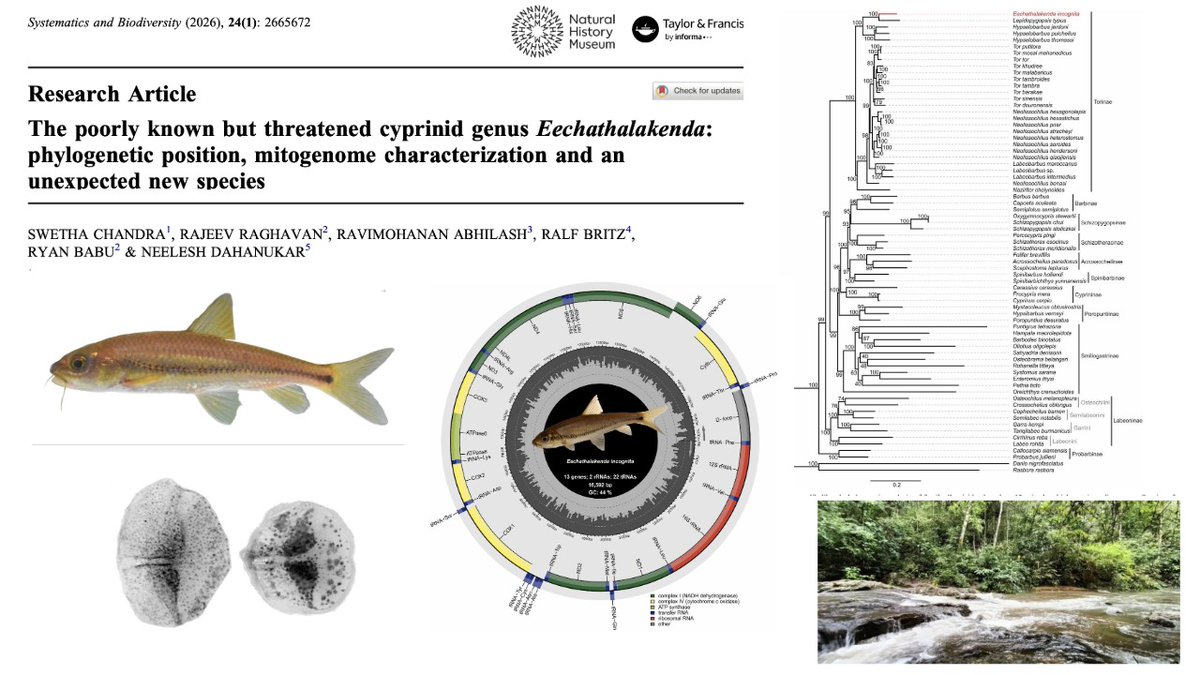
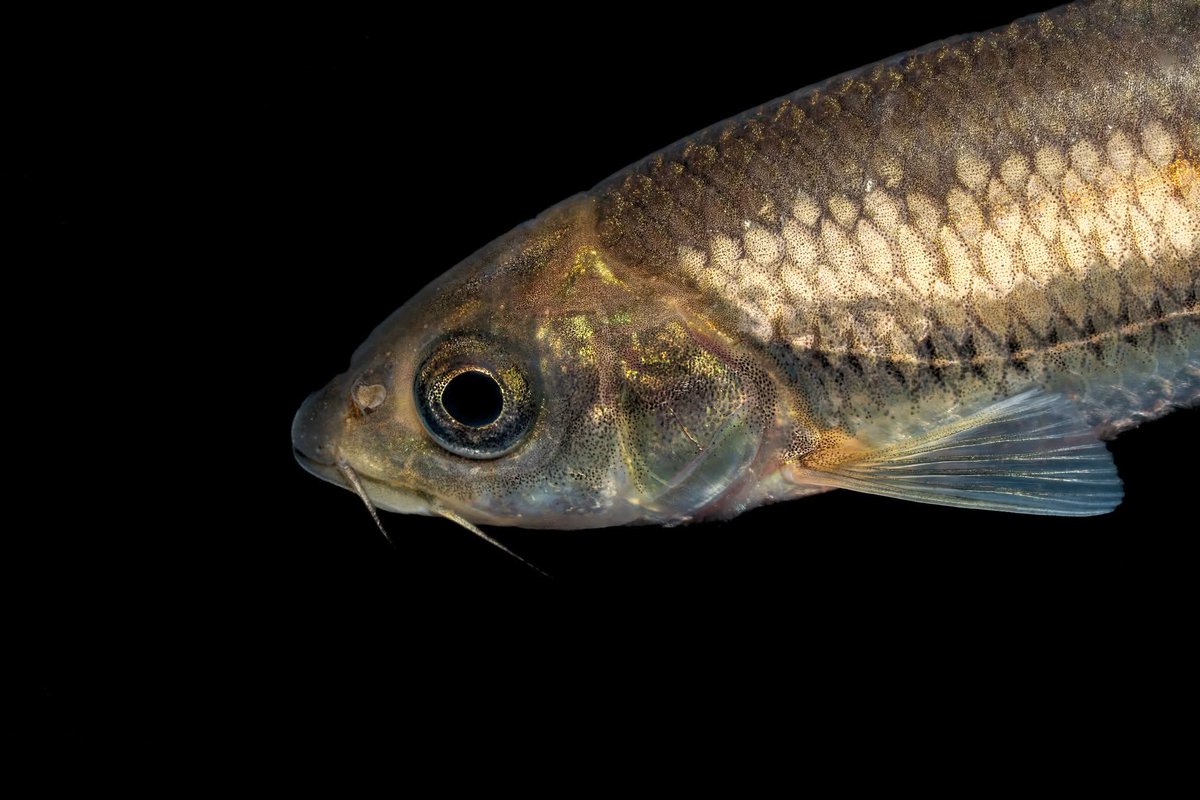
Eechathalakenda incognita - a new cyprinid fish from the Western Ghats, and the first phylogenetic analysis incorporating genus Eechathalakenda! Check out the paper on this enigmatic cyprinid published today in 'Systematics and Biodiversity ' @FishInTheNews @Meenkaran1
15
58
1,851