
MBBR-92 Media Production Line 🏭💧 | Biofilter Carrier Manufacturing Process in Action
#mbbrproduction #mbbrmediaproduction #mbbrmedia #biofiltercarrier #mbbrmanufacturing #movingbedbiofilmreactor #biocarriermedia #wastewatertreatment #aquaculturemedia
1

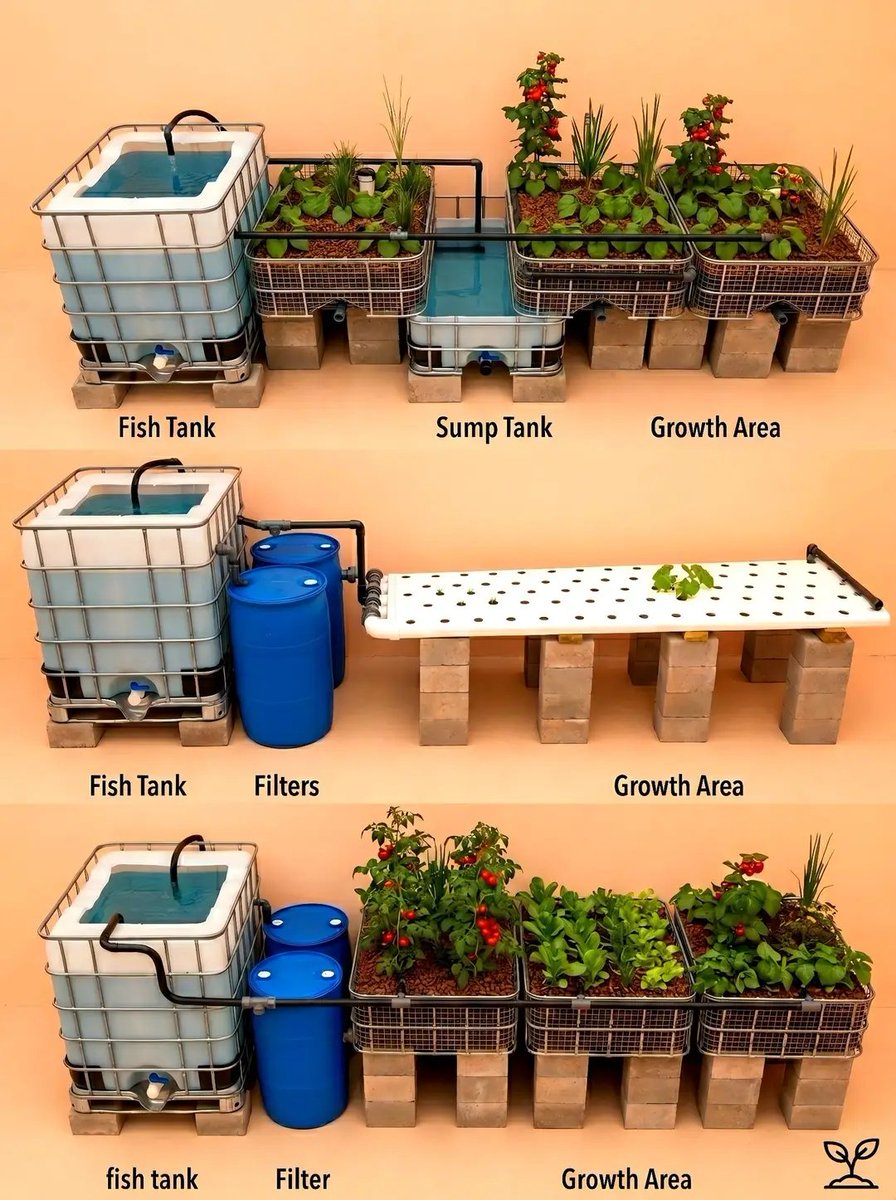
three different configurations of aquaponics systems—a sustainable farming method that combines aquaculture (raising fish) with hydroponics (growing plants in water) in a symbiotic environment.
All three setups utilize IBC totes (Intermediate Bulk Containers) as the primary structure for the fish tanks and grow beds, supported by concrete cinder blocks. Here is a detailed breakdown of each setup from top to bottom.
1. Top System: Media-Based Aquaponics with a Sump Tank
This configuration relies on a flood-and-drain (or continuous flow) method using a solid media substrate for the plants.
Fish Tank: Located on the far left. A pipe pumps water out from the top into the filtration/grow loop.
Sump Tank: Positioned lower in the center. A sump tank acts as a water reservoir to catch drainage. It helps maintain a constant water level in the main fish tank, preventing the fish from being left dry when water floods the plants.
Growth Area: Divided into three separate wire-mesh-supported IBC grow beds filled with a porous growing media (likely expanded clay pebbles or gravel). The plants—including leafy greens and taller fruiting plants like tomatoes—are anchored directly into this media, which acts as both a mechanical filter (trapping fish waste) and a biological filter (housing beneficial bacteria).
2. Middle System: Nutrient Film Technique (NFT) Aquaponics
This setup transitions from media beds to a vertical/horizontal piping system, highly efficient for leafy greens.
Fish Tank: Located on the left, identical to the other setups.
Filters: Two blue plastic barrels sit between the fish tank and the growth area. In NFT systems, mechanical and biological filtration must happen before the water reaches the plants to prevent fish sludge from clogging the narrow plant roots.
Growth Area: A long, flat white PVC channel or board with pre-drilled holes. The nutrient-rich water is pumped through this channel in a thin stream (a "film"), allowing the exposed dangling roots of the seedlings to absorb nutrients and oxygen simultaneously.
3. Bottom System: Direct Media-Based Aquaponics (No Sump)
This is a streamlined, linear media-bed system that routes water straight through filtration barrels into the crops.
Fish Tank: Located on the left, with plumbing sending water directly out.
Filter: Two blue barrels are utilized here as well, likely acting as a swirl separator (to settle out heavy solids) and a biofilter before the water enters the plant beds.
Growth Area: Three large, media-filled beds connected in a straight line. The plants are thriving heavily here, showing mature tomato plants on the left, lush leafy greens in the center, and various herbs/vegetables on the right.
Summary of Differences Feature Top System Middle System Bottom System
Plant Support Media Beds (Clay/Gravel) NFT (Holes in channels) Media Beds (Clay/Gravel)
Filtration Style Relies heavily on the media beds Separate blue barrel filters Separate blue barrel filters media beds
Water Level Control Uses a central Sump Tank Direct drainage/recirculation Direct linear recirculation
Best Suited For Heavy fruiting plants & roots Small leafy greens (lettuce, herbs) Mixed crops (heavy feeders & greens)
Follow @dufitalexis1 for more posts like this
1
2
64

It does seem like a good spot treatment. I usually just use a combo of UV algicide and a biofilter on the fountains i have worked on.
I have no clue what i would do at tis scale honestly i just think it is an interesting problem, and my mind typically goes to the most exciting often least practical solution at first.
because wetland filters are cool even if it is not practical in every space.
1
50
@grok Generate a Photorealistic wide-angle view of the Lincoln Memorial Reflecting Pool in Washington DC transformed with elegant constructed wetland biofilter sections. The long rectangular pool is crystal-clear with a deep American-flag blue base, perfectly reflecting the iconic Lincoln Memorial in the background under a golden-hour sky with soft clouds. Symmetrically integrated along both sides and the near edges are lush, shallow wetland filtration zones planted in perfect patriotic symmetry: vibrant red water lilies, pure white water lilies, and deep blue water lilies blooming abundantly among tall, graceful green bulrushes (cattails) and native wetland grasses. Subtle tiered gravel and rock berms separate the main reflecting channel from the biofilter margins, allowing gentle water circulation. In the foreground, a few ducks swim near the plants. The entire scene feels serene, sustainable, and majestic—like a living national monument. Highly detailed, National Geographic style, 8k resolution, golden sunlight casting long reflections and gentle shadows, vibrant yet natural colors, no people, cinematic composition
1
43


Jun 14
It is great idea,but my concern is with common carp fish in RAS because it will face a big problem when it reaching 500 g and above because of Ammonia gas that produced by carp manure and with low capacity of Biofilter. You can contact me
Dr. Shokri
009647504986902 -WhatsApp
17

Jun 14
I found that the biofilter alone didn’t quite cut it at the Chinese Garden in the Huntington. It did help with removing ammonium and aiding nitrification, but it wasn’t enough to noticeably lower overall nitrogen and phosphorus levels to keep algal blooms in check.
A “large” biofilter that could handle the entire volume of the Lincoln Memorial pool would have to be massive—possibly involving several big external units or a sprawling wetland-style system. Fitting something like this into the National Mall without compromising its historic or visual charm would be both challenging and costly.
Especially if Trump does it, all we’ll hear is how it was the wrong thing to do and how he ruined the whole area.
As a primary option? No. It can’t match the speed or direct impact of ozone, especially with advanced ozone nanobubbler technology, or UV for a high-visibility public feature. Relying on it alone could lead to uneven clarity, particularly during DC’s hot summers when sunlight beats down on a shallow, painted-bottom pool.
As a complement? Absolutely—it could be a great addition. It might help reduce nutrient buildup over time if integrated, like with side-stream treatment using high-surface media and plants in a hidden or adjacent area.
Combined with the current nanobubblers for oxidation, mechanical skimming, and regular maintenance, it could work even better.
1
51

Jun 13
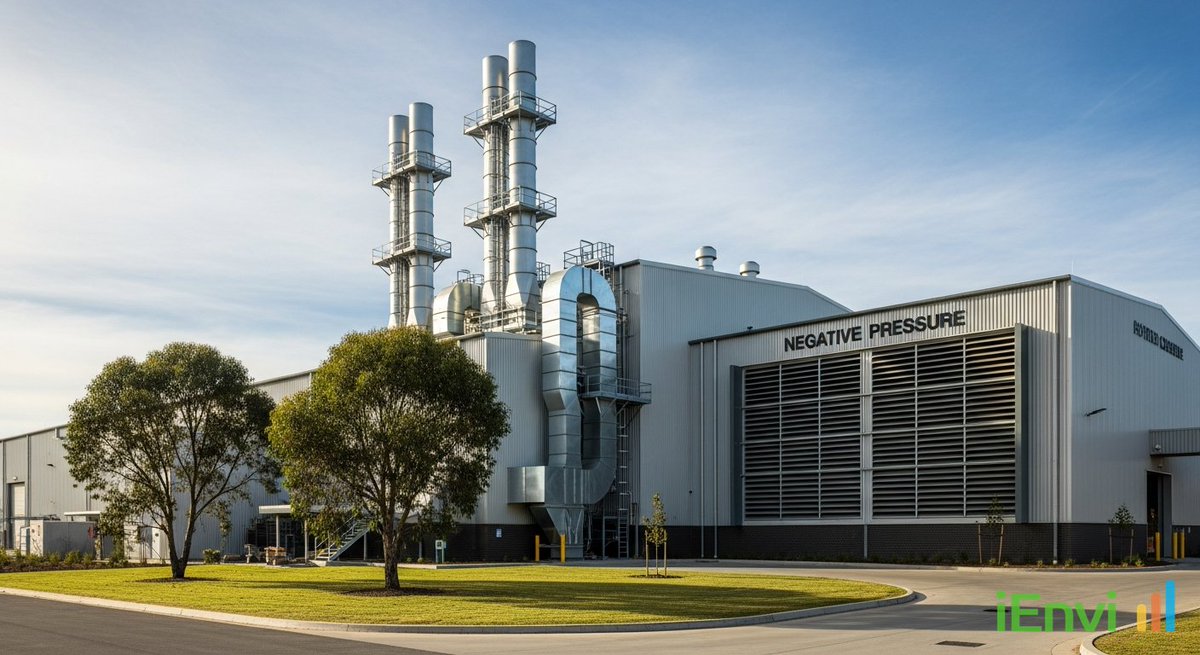
🐷 EPA Victoria has approved JBS Pork's development licence under strict negative pressure and biofilter conditions.
Proponents must design for the General Environmental Duty early to secure approvals.
ienvi.com.au/epa-victoria-ap…
ienvi.com.au @iEnviroAust #iEnvi #EPA
52

Jun 12
Septictank Biofilter, Sepiteng Modern Tanpa Kuras, Hemat & Ramah Lingkungan youtu.be/WT0qEWDl9yQ?si=lWnD… via @YouTube
* Proses limbah lebih efektif
* Anti sedot
* Cocok untuk lahan terbatas
* Pemasangan mudah & cepat
Hub. 0813-3585-0074
#biosevenseptictank #septictankbiofil
13

Jun 11
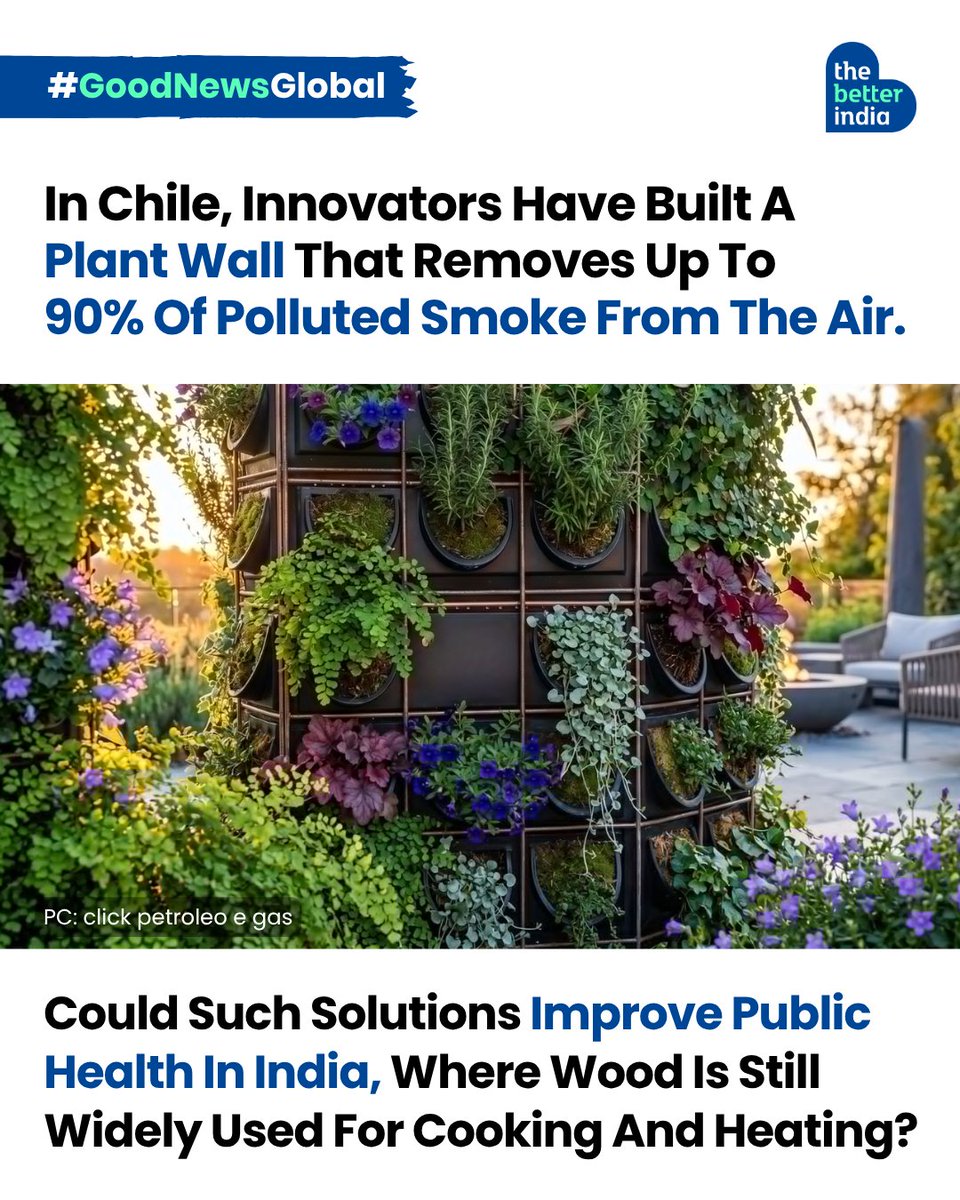
What if the answer to cleaner air was growing right in front of us?
In Chile, two innovators turned to nature to tackle one of the country's biggest pollution challenges.
Agricultural engineer Aníbal Montalva Rodríguez and architect Miguel Ángel Fernández Donoso developed a living biofilter that uses plants, roots, and microorganisms to clean smoke before it reaches the air.
The system reportedly removes over 90% of fine particulate pollution and odours, transforming ordinary chimneys into natural air-purifying ecosystems.
Already installed in homes, schools, industries, and public spaces across Chile, the innovation offers a fresh way to tackle pollution.
As many Indian households still rely on wood and biomass for cooking and heating, it raises an important question: could nature-inspired solutions help create a healthier future for millions?
#CleanAir #AirPollution #Sustainability #Innovation #ClimateSolution #GoodNewsGlobal
[air pollution solution, plant biofilter, Chile, Good News Global]
1
7
17
1,186

Jun 3
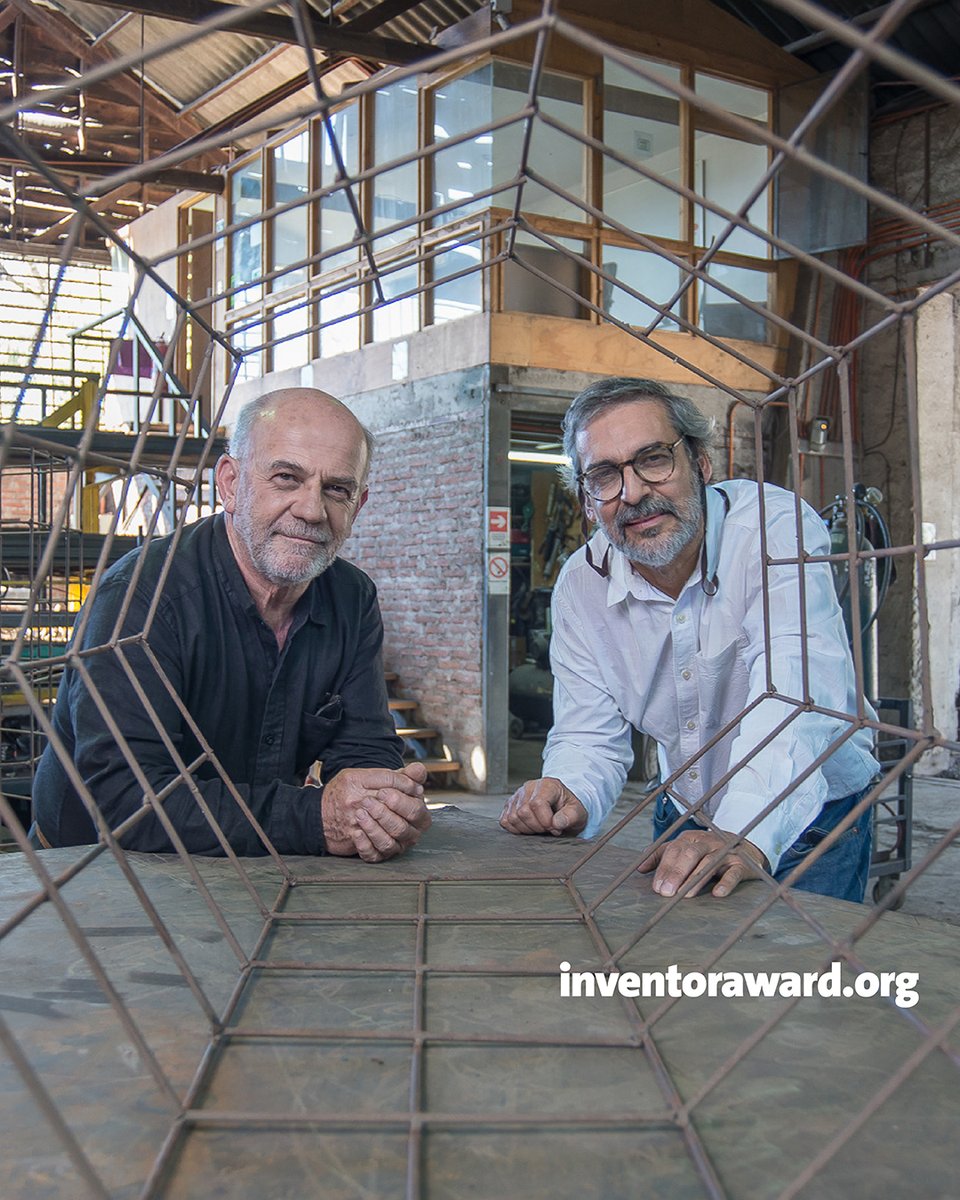
🌿 Plants and microorganisms working together to clean chimney smoke.
Aníbal Montalva Rodríguez and Miguel Ángel Fernández Donoso created a biofilter already used in homes, schools and hospitals.
Vote 👉 InventorAward.org
#InventorAward
@FiltroVivo
1
4
219
May 22
Wood heating warms millions of Chilean homes. It also fills the air with harmful smoke.
🇨🇱 Anibal Montalva Rodríguez & Miguel Ángel Fernández Donoso built a living biofilter that cuts emissions by more than 90%.
Watch & vote👉 InventorAward.org
@FiltroVivo #InventorAward
2
7
17
454

Status Perkembangan Singkat:
Benih awal → Dari BBPBAT Sukabumi (sering suplai benih Nilem berkualitas).
Sekarang → Sudah mulai pembesaran (grow-out phase). Ikan Nilem (Osteochilus hasselti) biasanya cepat tumbuh di kolam atau perairan umum jika pakan & oksigen cukup.
Tanda positif: Banyak fry aktif, ada ikan ukuran lebih besar (mungkin dari batch sebelumnya atau yang sudah membesar).
Kalau ini thread rutin kamu, lanjutkan aja update-nya biar bisa pantau progressnya (misalnya ukuran rata-rata, pakan apa yang dipakai, atau kepadatan kolam).
Tips cepat pembesaran Nilem Sukabumi:
Pakan alami (plankton, daun-daunan) pelengkap (dedak atau pelet rendah protein).
Ganti air secara berkala atau pakai sistem biofilter supaya air tidak terlalu keruh.
Hindari overstocking biar pertumbuhan merata.
Nilem mirip ikan mas, suka air mengalir atau kolam dengan tanaman air.
Mau lanjut update threadnya? Foto/video terbaru ukuran ikannya gimana, atau ada kendala di pembesaran? Bisa share biar kita bahas bareng. Semangat juragan Nilem! 🐟💪
29
4
30
475

May 10
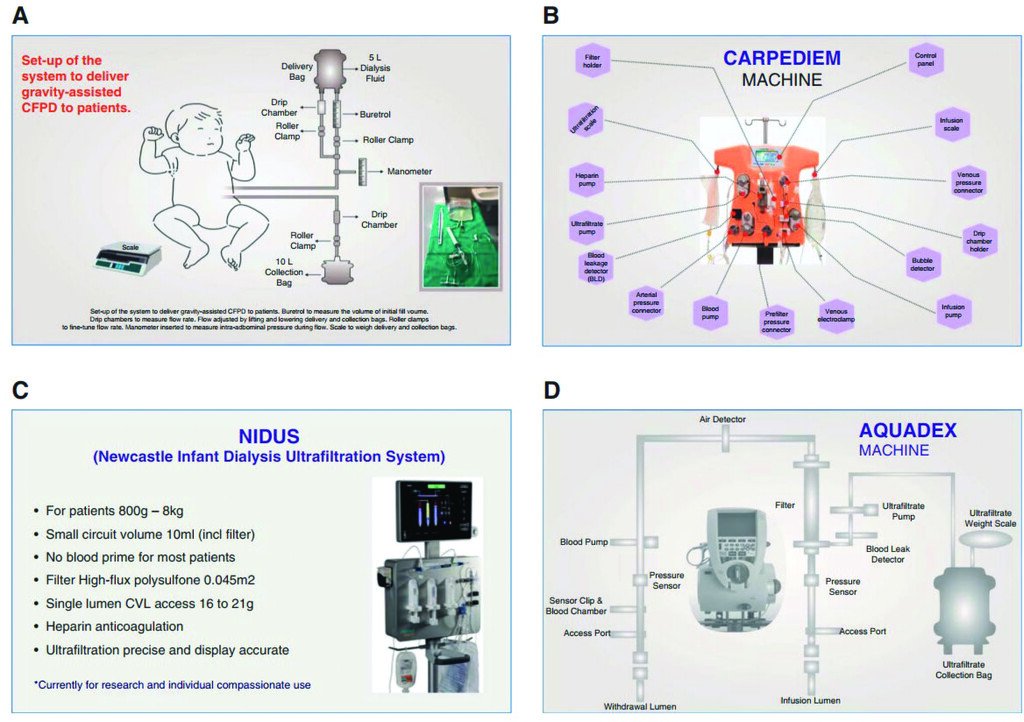
ASN Kidney News May 2026 Biofilter-Based Continuous Kidney Replacement Therapy in Pediatric Acute Kidney Injury: Tailoring Technology for Small Patients --Pranav Sivaram @rupeshrainamd
kidneynews.org/view/journals… @asnpublications
6
8
1,140

Not just that but... how would those space craw-fish have NOT been caught by the Transporters biofilter? ("There seems to be some alien infestation in an individual Transporting!" "Put up a bio-containment field and let's get security to the Transporter room!")
2
23

Apr 29
My ships biofilter malfunctioned and I'm begining to come down with something 🤒
I want to try my best to stream tomorrow because I miss everyone, but I might have to cancel 🫠
6
59

Apr 19
to be fair, the water is so polluted in India that it likely is far safer to drink cow piss. its at least been through a biofilter.
17
381

Mar 25
Efficient methane removal by thermophilic methanotrophs in a compost biofilter frontiersin.org/journals/mic…
2
3
279

Mar 25
hab den Pilot nach 30 Minuten abgeschaltet als die eine mit dem Holodoc redete und raus kam sie ist auch eins..
Das andere war die Untersuchung vom Doc wo er irgend wen Behandelt weil er Parasiten hat...
die sind rein gebeamt Biofilter in 1000 Jahren aus geschaltet?? die liste war lang in den 30 Minuten..
1
1
2
75

For example:
Anna Edey developed a vermicomposting flush toilet system detailed in her book Green Light at the End of the Tunnel, which transforms human waste into nutrient-rich compost using earthworms (Eisenia fetida) and organic filter materials. The system uses a composting tank (e.g., a 55-gallon barrel or IBC tote) filled with a "brown filter" of aged wood chips, partially composted leaves, and a large population of worms. Raw sewage from a flush toilet enters the tank, where solids are broken down by worms, and liquids drain through a perforated pipe into a long, shallow french drain trench lined with wood chips and gravel. This trench acts as a living biofilter, where plants and soil microbes absorb nutrients, preventing groundwater contamination.
Key features of Edey’s system include:
No smell or flies due to airtight design and aerobic decomposition.
90% reduction in nitrogen pollution compared to traditional septic systems.
Minimal water use—only 10–20 liters per day.
Self-sustaining—worms reproduce, and organic material breaks down over time, requiring only occasional replenishment of wood chips and leaves.
Can operate in freezing temperatures—Edey’s system has functioned for over 20 years without freezing, even in below-zero weather on Martha’s Vineyard.
The system is fully hidden, low maintenance, and designed to feed trees, shrubs, and gardens rather than pollute waterways. It is adaptable for off-grid homes, cabins, and even community sanitation projects, with successful implementations in Portugal and plans for municipal adoption. Edey’s design has inspired multiple variations, including the Solviva Green Light system and adaptations by Wendy Howard and Dean Cameron.
2
83