
#Review
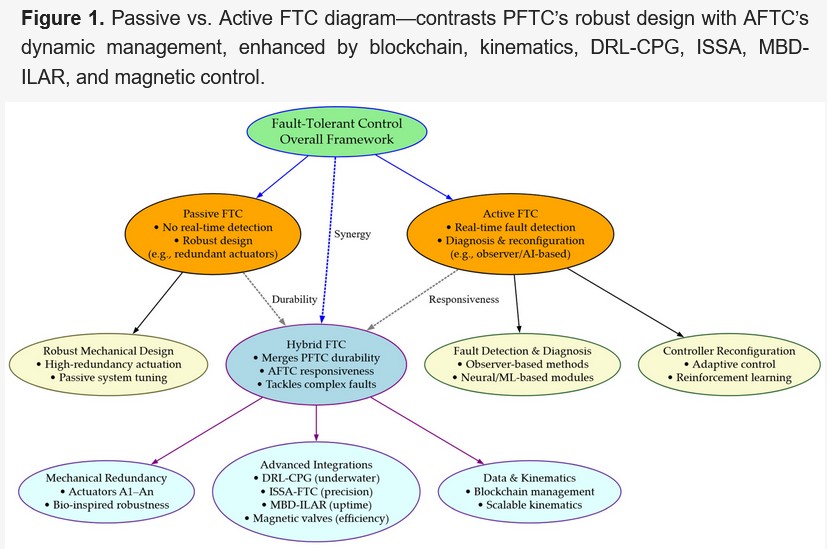
📜 Hybrid Fault-Tolerant Control in Cooperative Robotics: Advances in Resilience and Scalability
by Claudio Urrea
🔗 mdpi.com/2076-0825/14/4/177
#Actuators #CooperativeRobotics #FaultTolerantControl #Robotics #Automation #DigitalTwins #BioinspiredRobotics
6

May 16
🚨Denmark Just Built a Crawling Robot That Moves Like Something Nature Already Figured Out
Lets get the obvious joke out of the way first.. sex toys got an upgrade!
Researchers at the University of Southern Denmark have developed a limbless soft robot that crawls using inflatable air chambers, and honestly, this is exactly the kind of robotics that will pave the way for exploration. (stop giggling)
This thing doesn't walk or roll and it doesn't use legs, wheels, tracks, or the usual mechanical architecture we associate with robots. It moves by deforming its body. Internal pneumatic chambers inflate and deflate in timed sequences, creating a crawling motion that mimics how limbless animals move across rough ground. The research team describes it as a "multimodal limbless crawling soft robot" built with antagonistic inflatable actuators and a kirigami-inspired outer skin. That skin is what gives it the robot directional friction by gripping more in one direction than the other, which lets the body push itself forward instead of just squirming around in one place.
The design is pretty clever because it copies a principle based upon biology . Worms, snakes, larvae, and other limbless organisms don't need rigid limbs to move through complex terrain. They use body deformation, rhythmic contractions, and friction against the surface beneath them. The Danish robot does the same thing mechanically. Its inflatable chambers create the body motion, while the kirigami skin acts like a friction control system. The cuts and folds in the skin help it maintain grip even while bending and stretching.
What makes this more than a lab toy is that the robot can do more than crawl in a straight line. The paper reports straight crawling, in place rotation, wider turns, and obstacle avoidance using onboard proximity sensors. In testing, it moved faster on rougher foam surfaces because the kirigami skin had more to grip against. The reported top speed was around 10.83 mm per second on coarse polyurethane foam, with the robot using timed inflation patterns to move and steer.
This is where soft robotics gets interesting. A rigid robot is powerful, but it is also limited by its frame right, but a soft robot can deform around obstacles, squeeze into confined spaces, and move through environments where traditional machines become useless. That's why the obvious applications are search and rescue, pipe inspection, environmental monitoring, and industrial inspections in tight or dangerous spaces. A limbless crawling robot doesn't need a clean floor, a flat track, or a carefully mapped environment. It can potentially move through rubble, ducts, collapsed structures, or terrain that would defeat a wheeled platform. I'm thinking the pyramids would be a great place to put this to the test.
There are still limits though because the current system isn't some fully autonomous snake like machine disappearing into disaster zones or wherever. The researchers note that it still depends on off board compressed air and electrical tethering, and its sensing system is basic. That means the next real leap is onboard power, onboard pneumatic supply, better sensors, and more advanced closed loop navigation. Even so the core idea is already there, I mean a robot that crawls by inflating its own body, steering through asymmetrical motion, and using a cut and fold skin to turn friction into locomotion is pretty cool.
Robotics is moving away from the old metal skeleton model and moving deeper into biological design logic. Machines are starting to borrow from worms, snakes, octopuses, insects, and soft-bodied organisms because nature has already solved movement problems that engineers are still trying to brute force.
A robot with no limbs, no wheels, and no rigid walking system shouldn't look impressive by old standards. But that's exactly the point. The future of robotics may not always look like a humanoid machine marching around on two or four legs. It might look like a soft crawling body using pressure, friction, deformation, and environmental feedback to go where rigid machines cannot. Who knows, next stop liquid?
#SoftRobotics #Robotics #BioInspiredRobotics #UniversityOfSouthernDenmark #FutureTech #Engineering #SearchAndRescue #RobotDesign #Kirigami #ScienceTech
21
7
44
4,772

Feb 13
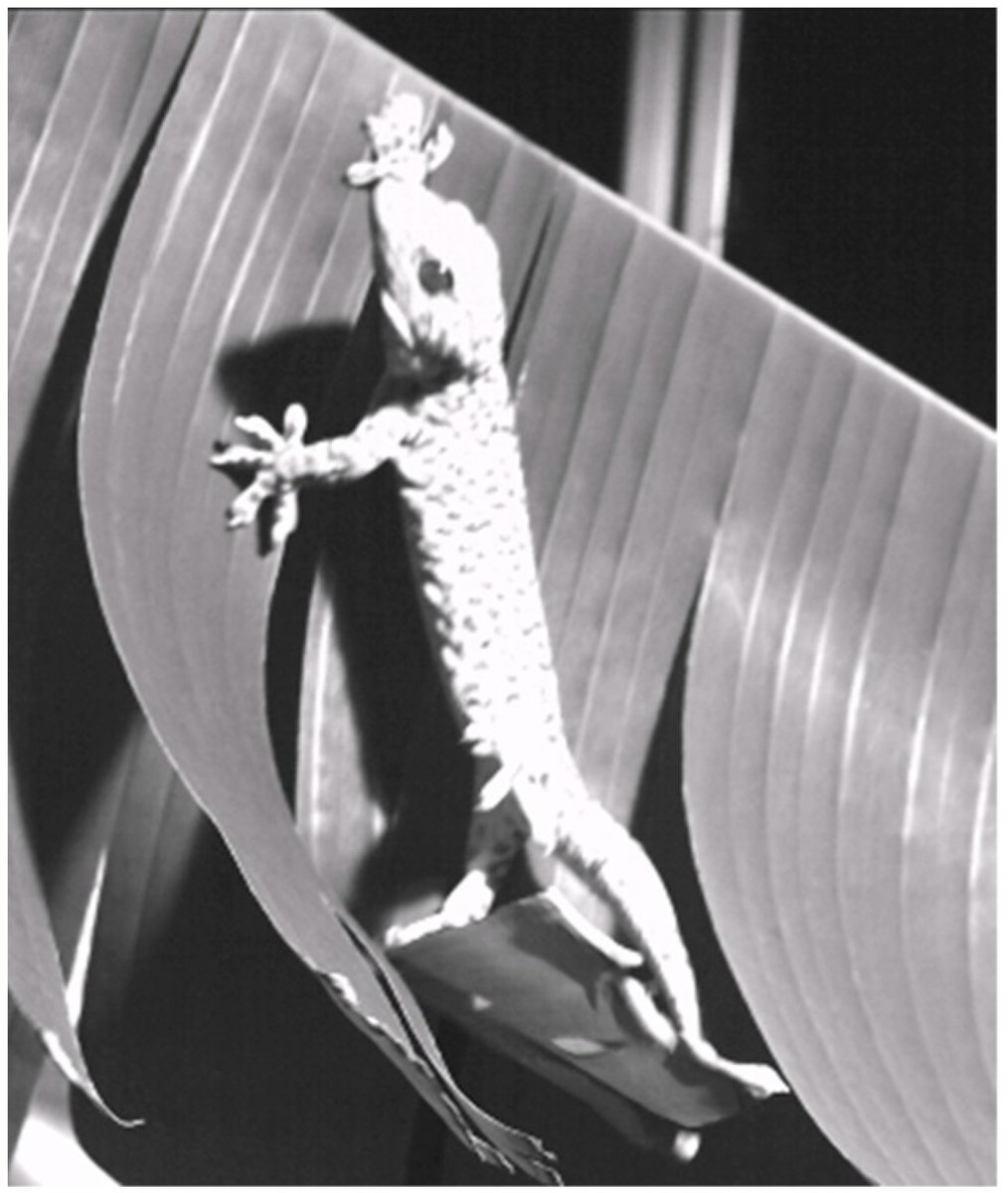
🐸🦎🌿This study introduces an innovative device designed to measure reaction forces on compliant substrates, helping us better understand arboreal locomotion.
🔗 mdpi.com/2313-7673/9/3/141
#Biomimetics #AnimalLocomotion #BioinspiredRobotics #Biomechanics #RoboticsResearch
1
2
37

Soft robotic snake mimicking sea snake motion glides across the water surface using modular 3D-printed actuators & hydraulic control. Smooth, tunable & efficient.
Published in Advanced Robotics Research doi.org/10.1002/adrr.2025000…
#SoftRobotics #BioinspiredRobotics
1
3
183

At SXSW 2025, JAXA, Kyoto University, and Nakanishi Metal Works unveiled a compact flapping-wing robot.
With two wings controlled by two motors each (stroke twist), it achieves 2×2 DoF flight—no propellers needed.
#JAXA #SXSW2025 #BioinspiredRobotics
youtube.com/watch?v=BJyBfpbX…
1
1
2
728

24 Jun 2025
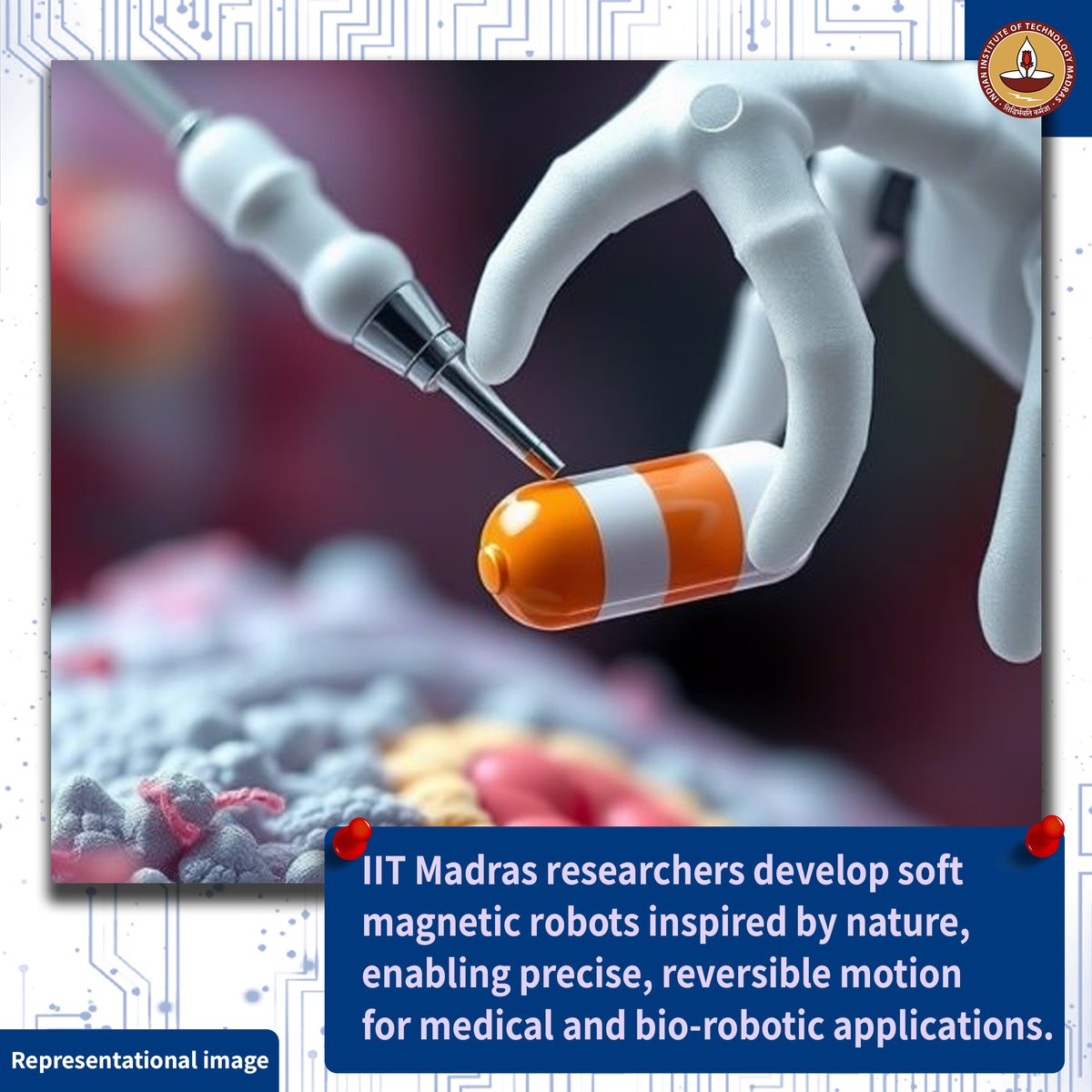
#TechTuesday Researchers Prof. M. S. Sivakumar and Mr. Dharmi Chand from @iitmadras have developed soft magnetic robots that mimic inchworm locomotion and flower-like gripping. Made with micro-carbonyl iron (CI) particles in a soft silicone matrix, these robots deform under magnetic fields, enabling precise, reversible movements ideal for drug delivery and non-invasive surgery.
Magnetic actuation offers speed, remote control, and bio-safety, outperforming traditional materials like Shape Memory Alloys. This innovation paves the way for a smarter more adaptable robot in healthcare and beyond.
Read Here: tech-talk.iitm.ac.in/robo-so…
Read the full article here: link.springer.com/chapter/10…
#IITMadras #SoftRobots #MagneticActuation #BioInspiredRobotics
3
16
83
2,948

3 Jun 2025
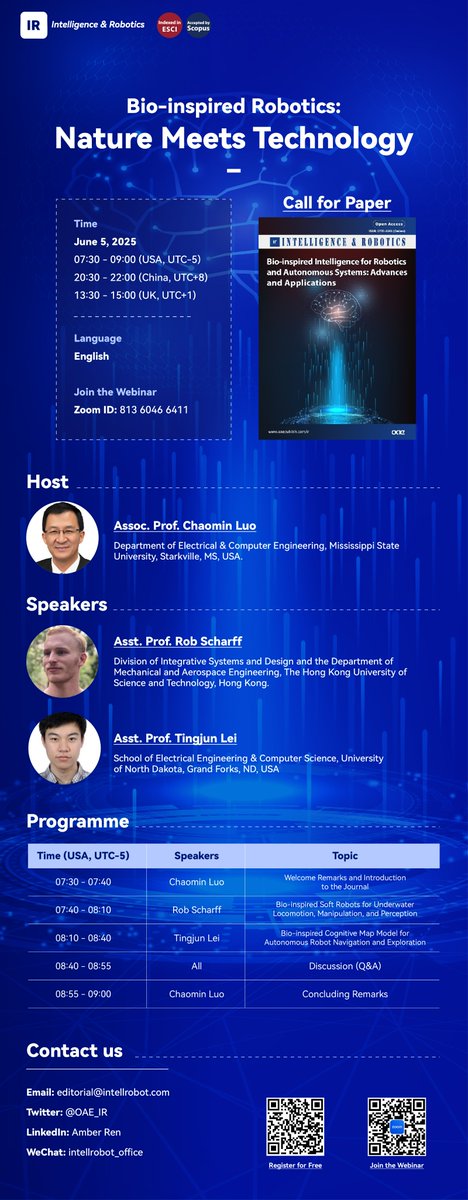
⏳ 2 Days to Go!
Get ready for our exciting webinar. Explore how biology drives next-gen robotics — from soft underwater robots to cognitive navigation systems!
✅ Secure your free registration now: oaepublish.com/webreviewer/i…
#BioInspiredRobotics #SoftRobots #AI #Autonomy
1
50

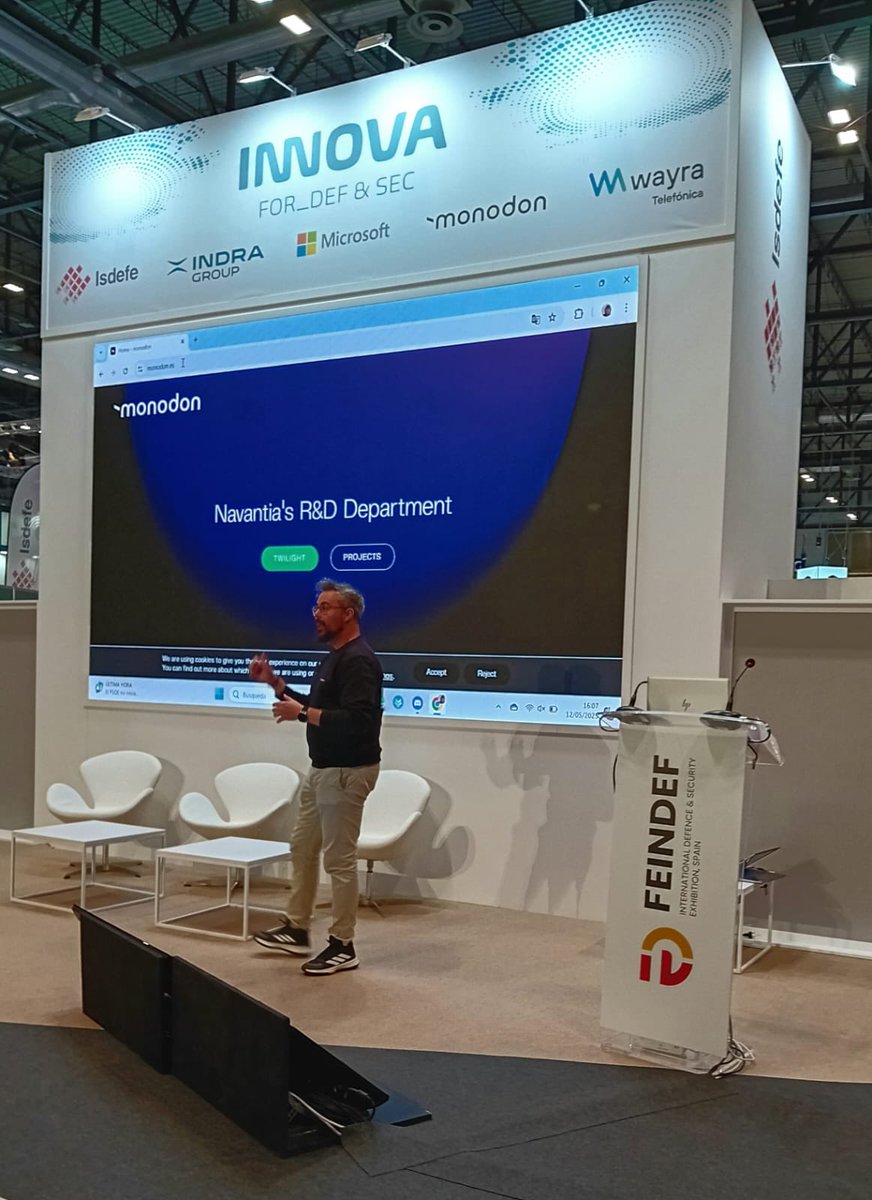
¡Empieza #TheTwilightChallenge! 🌊🤖
Este reto, propuesto hoy por Monodon (@NavantiaOficial) consiste en creación de un vehículo autónomo bioinspirado submarino. Debe ser muy innovador y asemejarse lo más similar posible a un ser vivo real.
Consulta todos los detalles para la participación aquí: twilight.monodon.es/
#BioinspiredRobotics #Monodon #FEINDEF25
1
5
846

24 Feb 2025
👏Welcoming our new invited speaker at #IECE2025, Professor Donato Romano, The BioRobotics Institute, The Sant'Anna School of Advanced Studies, Italy.
For more information, visit our website:
sciforum.net/event/IECE2025?…
#Bioinspiredrobotics
@DiversityMDPI
@AgricultureMdpi

2
4
110

29 Jan 2025
Cornell uses ‘robot blood’ to give modular jellyfish and worm robots lifelike vigor
#BioInspiredRobotics #ModularRobots #SoftRobotics #RobotBlood
interestingengineering.com/i…
9
14
4,290
27 Jan 2025
Butterfly-inspired robotic wings fly with no batteries, just magnetic fields
#BioInspiredRobotics #MagneticTechnology #BatteryFreeInnovation #RoboticWings #SustainableTech
interestingengineering.com/i…
1
36
72
5,490

12 Jan 2025
Proud to partner with UCL Mechanical Engineering on bioinspired robotics research!
Using the #Artec3D #SpaceSpider, we're supporting new advancements in #robotics with Raymen Hoang.
Learn more: central-scanning.co.uk/?utm_…
#CentralScanning #3DScanning #BioinspiredRobotics

4
60
28 Dec 2024
Proud to partner with UCL Mechanical Engineering on bioinspired robotics research!
Using the #Artec3D #SpaceSpider, we're supporting new advancements in #robotics with Raymen Hoang.
Learn more: central-scanning.co.uk/?utm_…
#CentralScanning #3DScanning #BioinspiredRobotics

4
37
22 Dec 2024
Proud to partner with UCL Mechanical Engineering on bioinspired robotics research!
Using the #Artec3D #SpaceSpider, we're supporting new advancements in #robotics with Raymen Hoang.
Learn more: central-scanning.co.uk/?utm_…
#CentralScanning #3DScanning #BioinspiredRobotics

1
46
16 Dec 2024
Proud to partner with UCL Mechanical Engineering on bioinspired robotics research!
Using the #Artec3D #SpaceSpider, we're supporting new advancements in #robotics with Raymen Hoang.
Learn more: central-scanning.co.uk/?utm_…
#CentralScanning #3DScanning #BioinspiredRobotics

3
44
1 Dec 2024
Proud to partner with UCL Mechanical Engineering on bioinspired robotics research!
Using the #Artec3D #SpaceSpider, we're supporting new advancements in #robotics with Raymen Hoang.
Learn more: central-scanning.co.uk/?utm_…
#CentralScanning #3DScanning #BioinspiredRobotics

34
25 Nov 2024
Proud to partner with UCL Mechanical Engineering on bioinspired robotics research!
Using the #Artec3D #SpaceSpider, we're supporting new advancements in #robotics with Raymen Hoang.
Learn more: central-scanning.co.uk/?utm_…
#CentralScanning #3DScanning #BioinspiredRobotics

2
3
59

8 Jul 2024
DNA robots are here! These tiny machines target cancer cells with precision, revolutionizing medicine. 🚀🔬 #BioInspiredRobotics #DNARobots #CancerTreatment #DevsTutor
1
1
3
137
8 Jul 2024
DNA robots targeting cancer cells with precision. The future of medicine is here! 🔬🚀 #devstutor #BioInspiredRobotics #DNARobots #CancerTreatment

1
1
4
55

25 Feb 2024
The Golden Wheel Spider’s cartwheeling escape not only showcases an extraordinary physical feat but is also a rare example of such dynamic movement in arachnids, making it a unique study subject in biomechanics and animal behavior.
This behavior, known as “flic-flac,” enables the spider to increase its escape speed by doubling it compared to running, a critical advantage in the life-or-death race against its wasp predator.
Interestingly, this spider’s remarkable defense has inspired bio-inspired robotics, leading to the development of robots that can navigate difficult terrains by mimicking the spider’s flipping movements.
#GoldenWheelSpider #FlicFlacSpider #Biomechanics #BioinspiredRobotics #AnimalBehavior
2
2,059