
👩🏻⚕️☕️Hoy hablaremos de..☝🏻🤓Hiperlactatemia en sepsis y shock: una mirada metabólica renal
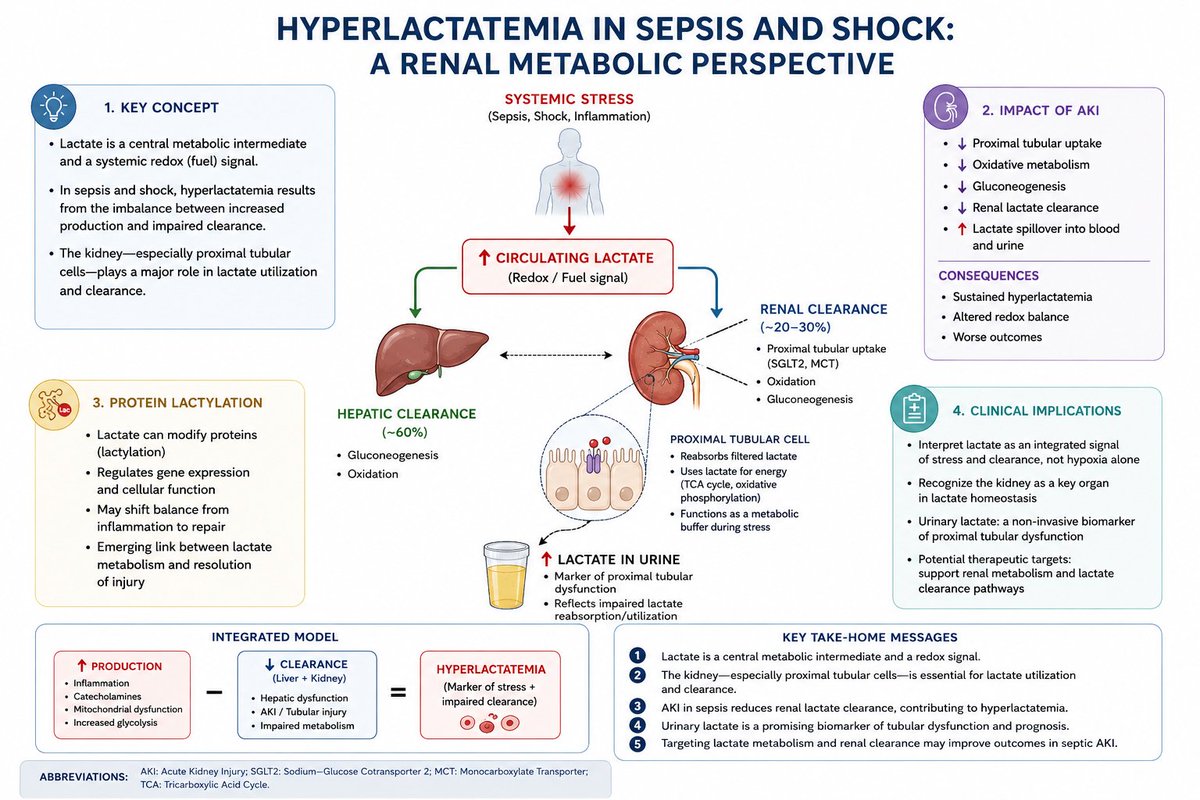
🔴El riñón como órgano metabólico del lactato...La pregunta moderna ya no es:¿Cuánto lactato tiene?
La pregunta correcta es:¿Qué mecanismo está produciendo este lactato?☝🏻🤓.
☕️👩🏻⚕️La hiperestimulación β-adrenérgica es una de las causas más frecuentes de hiperlactatemia en la sepsis hiperdinámica.
☕️👩🏻⚕️ La microcirculación puede permanecer alterada a pesar de una PAM normal y un gasto cardíaco adecuado.
☕️👩🏻⚕️La disfunción mitocondrial explica por qué algunos pacientes presentan lactato elevado aun con DO₂ aparentemente suficiente.
👩🏻⚕️ El lactato es un combustible metabólico fundamental para corazón, cerebro y riñón.
💎La lesión renal aguda disminuye significativamente el metabolismo y aclaramiento del lactato.
⚠️ Un lactato persistente debe hacer pensar en 3️⃣ escenarios: 1️⃣Microcirculación alterada.2️⃣Fracaso mitocondrial
3️⃣Reducción del aclaramiento hepatorrenal.
🔴La hiperlactatemia en sepsis no es sinónimo automático de hipoxia tisular. El lactato elevado puede reflejar una mezcla de hipoperfusión, hiperadrenergia, inflamación, disfunción mitocondrial, alteración hepática y, de forma muy relevante, cambios en el metabolismo renal.
🗞El artículo enfatiza que el riñón no solo “elimina” lactato: también lo utiliza como sustrato energético, lo convierte en glucosa y modifica su manejo durante el shock. de...Hiperlactatemia en sepsis: más allá de la hipoxia tisular🗞
☕️👩🏻⚕️La hiperlactatemia en sepsis representa la convergencia de alteraciones hemodinámicas, metabólicas y microcirculatorias. El riñón emerge como un actor central no sólo en la depuración del lactato, sino como un verdadero biosensor de perfusión sistémica.
🔴 La interpretación moderna del lactato exige abandonar la visión reduccionista de “hipoxia = lactato” y adoptar una estrategia multimodal basada en coherencia hemodinámica, monitoreo de la perfusión y evaluación dinámica de la función renal, donde el objetivo final no es normalizar el lactato, sino restaurar la entrega y utilización efectiva de oxígeno a nivel celular.✨️
🔺️Durante años se pensó qué:
🔰"Lactato elevado = hipoxia tisular = metabolismo anaerobio."🔰
👩🏻⚕️☕️Hoy sabemos que esta explicación es incompleta.
La evidencia contemporánea demuestra que la hiperlactatemia en sepsis es un fenómeno multifactorial donde intervienen:
🔸️Alteraciones microcirculatorias.
🔸️Estimulación β-adrenérgica.
🔸️Disfunción mitocondrial.
🔸️Reprogramación inmunometabólica.
🔸️Disminución del aclaramiento hepático y renal.
☝🏻🤓Por ello, el lactato debe interpretarse como un biomarcador de estrés metabólico y fracaso de la perfusión celular, no únicamente como un marcador de deuda de oxígeno. 🌀
☕️Para comprender es necesario entender ¿Cómo se produce el lactato?...
➡️Fisiológicamente:
🍬La glucosa se convierte en piruvato mediante glucólisis.
⏩️Cuando la velocidad de producción de piruvato supera la capacidad oxidativa mitocondrial, éste es transformado en lactato por la enzima lactato deshidrogenasa.
⏩️El lactato no es un producto de desecho.☝🏻🤓Es un importante:
🔺️Combustible metabólico.
▪️Sustrato gluconeogénico.
🔺️Vehículo de transferencia energética entre órganos.
👩🏻⚕️Actualmente se considera parte del denominado:
▪️Lactate Shuttle: El concepto de Lactate Shuttle fue desarrollado por el fisiólogo estadounidense George A. Brooks y revolucionó la comprensión del lactato➡️Antes se creía que el lactato era un simple producto de desecho generado durante la hipoxia.
☝🏻🤓Actualmente sabemos que:
El lactato es una molécula energética que transporta carbono y energía entre células, tejidos y órganos,donde corazón, cerebro, hígado y riñón utilizan lactato como fuente energética. ✨️
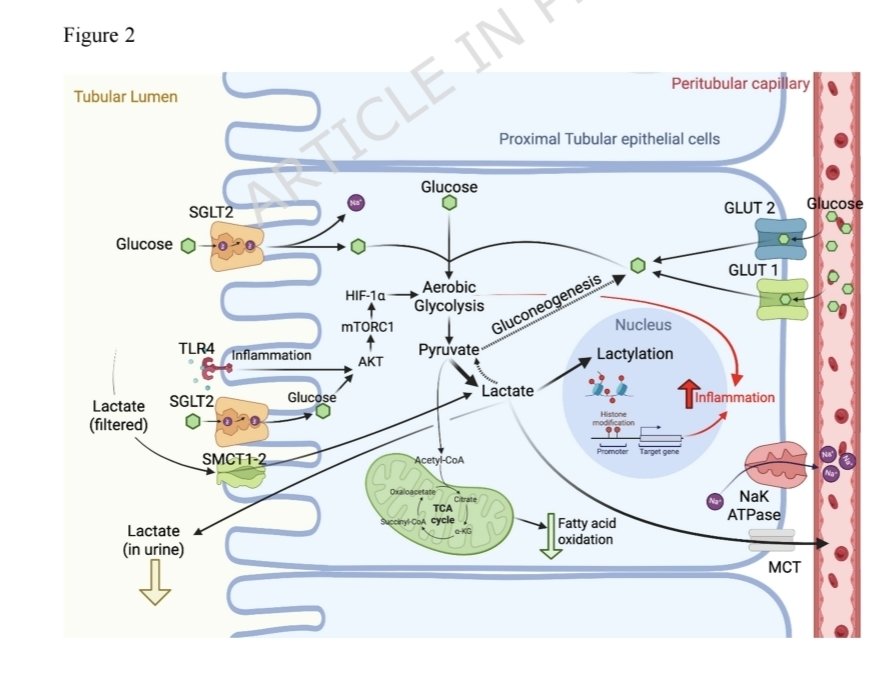
☝🏻🤓⚡️El riñón como órgano metabólico del lactato y participa de forma importante en el metabolismo del lactato mediante captación, gluconeogénesis renal y oxidación tubular, especialmente en la corteza renal. 👇🏽
1
4
14
301

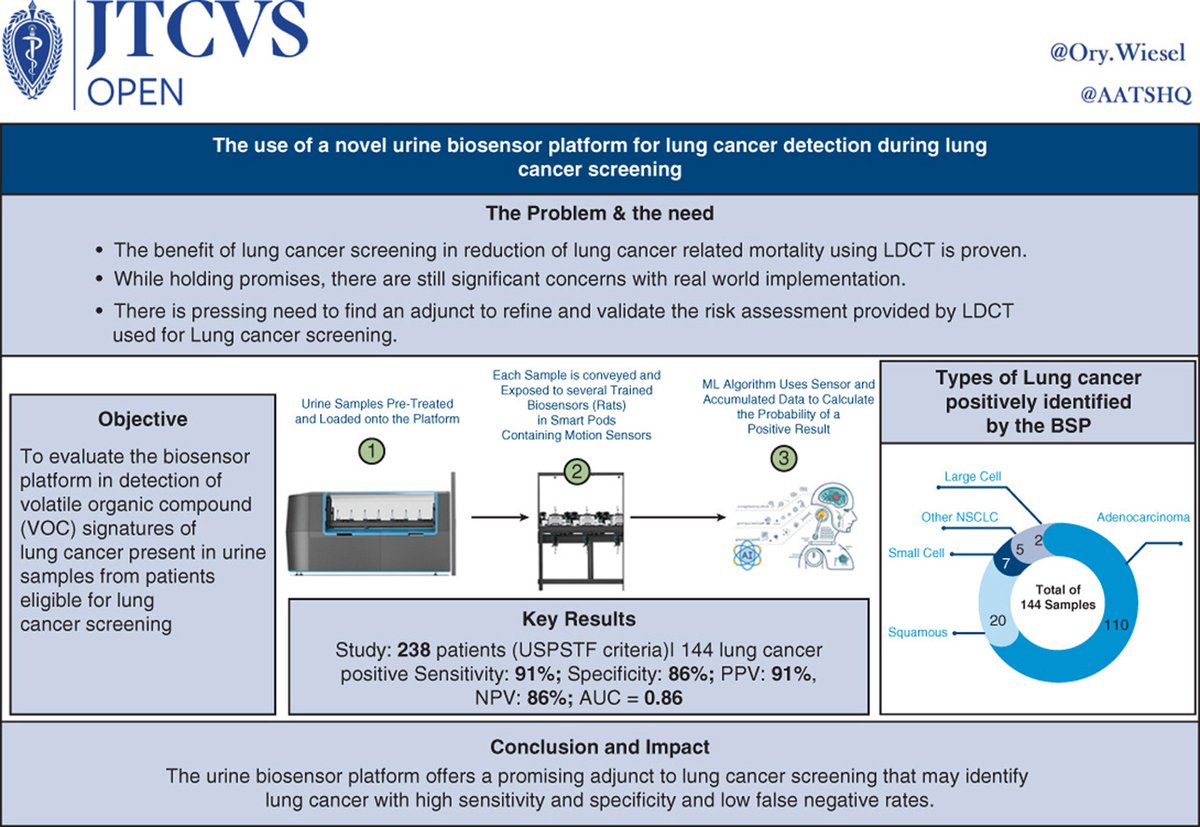
Researchers recently found that the novel urine biosensor platform offers a simple, noninvasive approach to assist in identifying candidates for early lung cancer screening. Read more in #JTCVS Open: hubs.ly/Q04kwrjx0
@OryWiesel
3
12
629

MAHA Institute endorsed Courtney Crawford for Kansas House District 5.
A Registered Nurse and dedicated parent, Courtney Crawford is a fierce protector of medical freedom and bodily autonomy. Her devotion to the MAHA mission is deeply rooted in personal experience.
Crawford is completely opposed to the industrial-educational complex that seeks to over-medicate children, and she stands ready to sponsor comprehensive bills to strip schools of this authority. She refuses to allow special interests to dictate state policy, committing to vote against all herbicide and pesticide liability shields, while actively opposing the statewide fluoridation of water and the invasive development of energy-guzzling data centers that threaten local ecosystems.
MAHA Institute endorsed Will Bolton for Tennessee House District 23.
Will Bolton approaches the protection of public health with the instinct of a constitutional purist. Will recognizes that true health freedom is the bedrock of individual liberty, and he is entirely dedicated to ensuring that no government agency, employer, or medical facility can ever force healthcare decisions onto the citizens of Tennessee.
Driven by his family's own choice to embrace medical autonomy, Will treats bodily sovereignty as an unalienable right. With nearly three decades of high-stakes public service, he is uniquely equipped to reject corporate-aligned special interests and restore genuine personal representation to District 23.
Outgoing Director of National Intelligence (DNI) Tulsi Gabbard released documents confirming the existence of over 120 US-funded biolabs in over 30 countries, including Ukraine. She emphasized the danger of biolabs, including those that engage in dangerous gain-of-function research, being located in an active warzone where Ukrainian and Russian troops continue to engage one another.
Commenting on this development, Senator Rand Paul (R-KY) said, “Americans have been labeled conspiracy theorists for our concerns over taxpayer-funded labs conducting risky research. I thank DNI Gabbard & the dedicated professionals at ODNI for declassifying this information & refusing to let the cover-up continue. I look forward to continuing the fight to end dangerous gain-of-function research.”
Addressing Gabbard, the Kentucky Senator added, “You are a hero for restoring some transparency and good faith that our government needs.”
On a similar topic, Senator Paul added, “Fmr. NIH Director Francis Collins deliberately scrubbed Fauci’s name from the infamous Proximal Origins paper because of Fauci’s glaring conflict of interest. Nature Medicine (the publisher) offered no condemnation or scrutiny of the ethics. These COVID investigations matter because they expose protectionism within the scientific community that breeds gatekeeping. It’s suppressing research, stifling innovation, destroying objectivity, & eroding public trust.”
The State Medicaid Director Letter (SMD #26-003), issued by the CMS), outlines a fundamental shift in evaluating and approving Section 1115 Medicaid demonstration projects to enforce stricter fiscal accountability. Prompted by provisions in the Working Families Tax Cut (WFTC) legislation, the new statutory mandate requires that beginning January 1, 2027, the HHS Secretary may not approve, amend, or renew a Section 1115 demonstration unless the Chief Actuary of CMS independently certifies that the project will be budget neutral.
This framework changes the calculation of “Without Waiver” (WOW) expenditures, establishing a rigorous and transparent quantitative baseline to ensure that testing novel state-level initiatives does not increase overall federal spending compared to what the program would have cost under standard operations.
To assist states with long-term planning, this early-notice guidance details the transition from previous sub-regulatory standards to the new rigorous actuarial standards. CMS is currently drafting a notice of proposed rulemaking to officially update the federal regulations, which will specify the enhanced documentation, analytics, and precise methodologies states must submit for review. While CMS will maintain current review practices for applications approved prior to the 2027 deadline, the guidance signals substantial modifications to how historical budget neutrality savings are handled during renewals. Ultimately, the directive seeks to balance state flexibility for innovative healthcare modeling with aggressive stewardship of federal funds, ensuring that approved demonstrations deliver measurable value and improve beneficiary health outcomes without adding taxpayer burdens.
Furthermore, the budget neutral requirements in the SMD coupled with CMS data announcements is pushing for greater transparency in where the money is going and is laying the groundwork for reform in Medicaid and public health
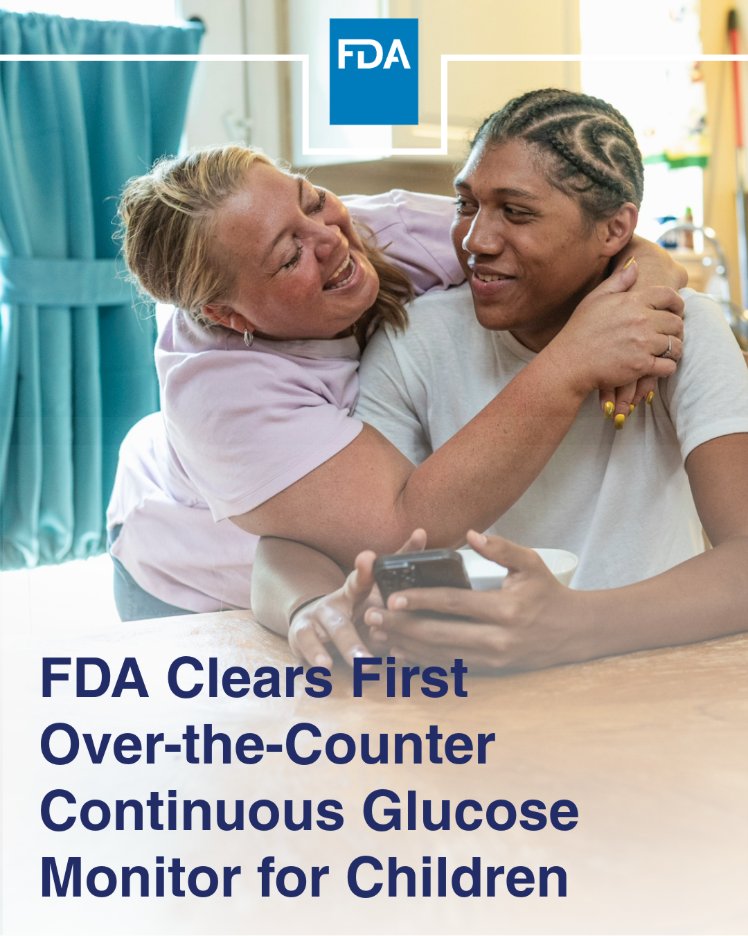
According to an official statement, “FDA cleared for marketing the first over-the-counter (OTC) continuous glucose monitor (CGM) for children. Dexcom Inc.’s Stelo Glucose Biosensor System is an integrated CGM (iCGM) indicated for people two years of age and older who do not use insulin.”
USDA Secretary Rollins announced a comprehensive directive to U.S. Forest Service employees aimed at restoring and expanding grazing access on National Forest lands. The move implements prior MOUs and action plans under the Trump Administration to prioritize vacant allotments, reduce permitting delays, combat activist-driven restrictions, and reaffirm multiple-use management—strengthening rural economies, food security, and healthy landscapes for America’s ranchers.
Secretary Kennedy provided the following update on his appeal (in his capacity as HHS Secretary) against a lower court ruling which forced the break-up of the former membership of the independent Advisory Committee on Immunization Practices (ACIP):
“Today we filed a motion asking the First Circuit to expedite our appeal of the district court's order in the AAP lawsuit that left ACIP—the nation's vaccine advisory committee—without a quorum. AAP opposes our motion.
I've been consistent from day one: I do not want to take vaccines away from anyone. Our policy changes preserved access and coverage.
But the court's order has left ACIP unable to carry out its core responsibilities. As a result, the committee cannot issue new recommendations, review newly approved vaccines, or complete important work ahead of the fall flu season.
A functioning ACIP is essential to ensuring that vaccine recommendations remain grounded in evidence and available to the families and providers who rely on them.
Families, physicians, insurers, and public health programs deserve certainty—not paralysis.
That's why we're asking for expedited review. Our appeal seeks to restore a functioning ACIP so the vaccine recommendation process can continue, and families, physicians, and public health programs have the guidance they need."
1
1
245


1. El "Proyecto Centurión": El cambio radical en la preparación médica
Tras encadenar dos temporadas con plagas de lesiones de ligamento cruzado y problemas musculares crónicos que lastraron el rendimiento de la plantilla, Florentino Pérez ha dicho basta. El club ha puesto en marcha una reestructuración médica sin precedentes en el fútbol europeo.
El despido del staff actual y el "Método Milán Lab 2.0"
El Real Madrid ha rescindido de forma disciplinaria los contratos de los principales responsables del área de fisioterapia y readaptación. En su lugar, y por recomendación directa de José Mourinho, el club ha fichado a un consorcio de ingenieros biomédicos y preparadores procedentes de la Fórmula 1 (del equipo Ferrari) y del antiguo y revolucionario Milan Lab.
Inteligencia Artificial Preventiva: A partir de esta pretemporada, cada jugador llevará un biosensor subcutáneo temporal (aprobado por la UEFA) que medirá en tiempo real los niveles de cortisol, ácido láctico y fatiga miofascial.
La "Clínica del Sueño" en Valdebebas: Las habitaciones de la residencia del primer equipo han sido reformadas con tecnología de aislamiento sónico e iluminación circadiana adaptativa. El software programará las horas exactas de sueño de cada futbolista según su carga de partidos para acelerar la regeneración celular un 40% más rápido que con los métodos tradicionales.
1
7
27
1,608

Jun 13
FDA Clears First Over-the-Counter Continuous Glucose Monitor for Children-Interesting this is not for diabetes one only two...tinyurl.com/2xv37gjv
Dexcom Inc.’s Stelo Glucose Biosensor System, an integrated CGM (iCGM) indicated for people two years of age and older who do not use insulin. The FDA previously cleared the Stelo Glucose Biosensor System OTC for individuals 18 years and older in March 2024
This seems like more Dexcom marketing than anything else, dont' know the price but how many parents would slap this on their kids just to do it? Price might discourage that, but seriously? Without an RX, it takes the doctor out of the picture per se?
34
DHprotein retweeted

Jun 12
A protein binder is not just a drug lead.
Diagnostics. Biosensor surfaces. Affinity purification. Detection reagents. Targeting modules.
If your project needs a specific, renewable binder, we will design it for one team, for free.
ranomics.com/free-protein-de…
1
2
133
Joe retweeted

Jun 12
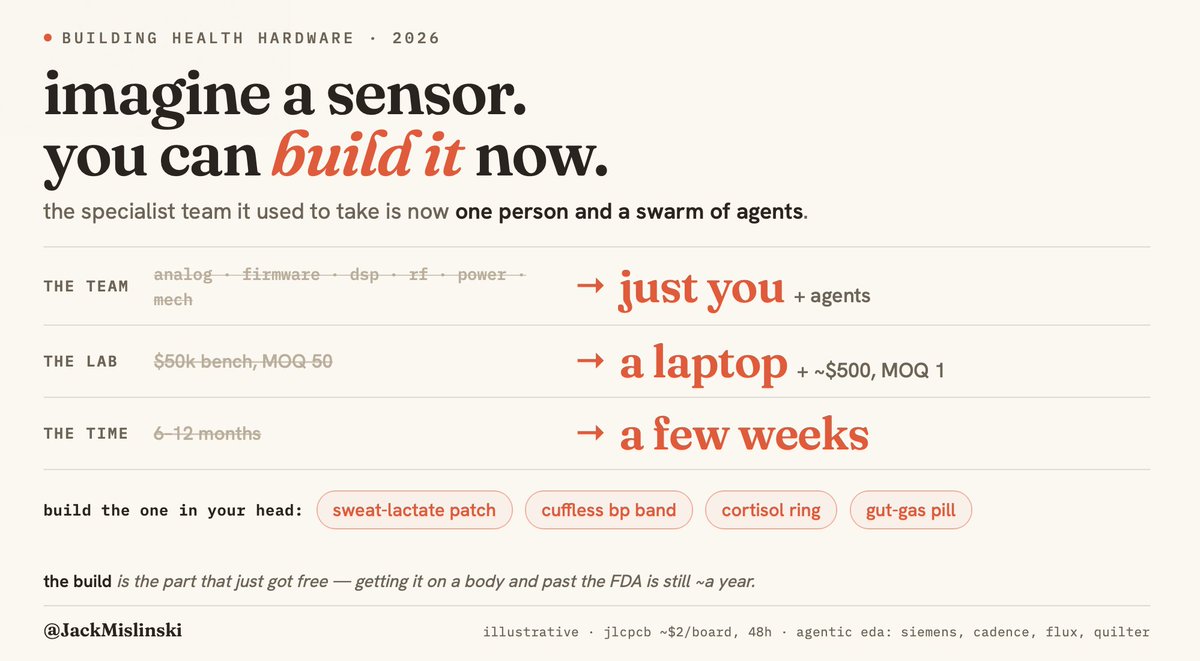
the parts for a wearable biosensor cost less than dinner. five boards for the price of a coffee, fabbed in 48 hours.
so why is software getting solo founders while hardware stays a team sport? it's the stack of specialists you needed in one room to prototype— analog, firmware, dsp, rf, power, mechanical, electrochemistry. all phds, traditionally 100s of thousands of $ to get one working prototype.
jeff bezos is going all in on the artificial general engineer... when he, or someone else succeeds, you can do this at home for 1/10,000th the cost.
agents lay out the board, write the firmware, generate the rtl from a sentence, orchestrate the ten tools that used to need ten people, and print on demand. siemens, cadence, flux, quilter— the phd teams in a model.
then the bottleneck for new consumer health tech will quickly become the body and the fda. does the electrode survive skin, does the signal survive motion, does it hold calibration for three weeks?
we validate these sensors in our labs, and good engineering doesn't guarantee reliability... and can our system adapt to keep up with floods of new regulatory submissions?
the solo hardware founder is coming to health. but the moat moves too. it stops being can you build it. it becomes can you prove it and can the fda keep up.
the bench is almost free. the body is the new moat.
2
1
2
49

Jun 12
How do you utilize GROK?
How do we shift from treating illness after it strikes to sensing health risks before crises hit? Continuous biosensors USPTO #10,123,678, medical and logistics drones USPTO #9,915,956, and solar-powered telemedicine hubs USPTO #10,825,567 are all mature technologies. Link them with predictive AI and you get communities that sense rising risks during extreme weather. This is first principles thinking applied to public health. Governments already run emergency systems. This is an upgrade using parts we already manufacture. The quiet power of integration. #HealthMesh
Search Terms: wearable biosensor disaster response, drone telemedicine patents, solar health hubs, predictive health AI
45

NEWS: FDA cleared for marketing the first over-the-counter (OTC) continuous glucose monitor (CGM) for children. Dexcom Inc.’s Stelo Glucose Biosensor System is an integrated CGM (iCGM) indicated for people two years of age and older who do not use insulin.
The milestone is a powerful example of how real-world evidence (RWE) is informing regulatory decisions and supporting innovation – and it reflects our unwavering commitment to developing gold-standard science that protects the public health.
7
11
22
5,728

Jun 12
A malfunctioning biosensor at the Pentagon led to a dramatic security response, highlighting challenges in biosecurity infrastructure.
#Pentagon #NationalSecurity #PublicSafety #RiskManagement
Read More: ift.tt/TZgPGWB

38

El equipo NephroAlert, desarrolló un nano-biosensor colorimétrico para la detección temprana de daño renal mediante el análisis de orina, un proyecto que los llevó a ganar el segundo lugar del Reto #STEAMJalisco 2026.
¡Muchas felicidades por este gran logro!
1
2
11

.@ClarksonUniv researchers contribute to breakthrough biosensor technology #NBTintheNews via @northcountrynow northcountrynow.com/stories/…
1
954

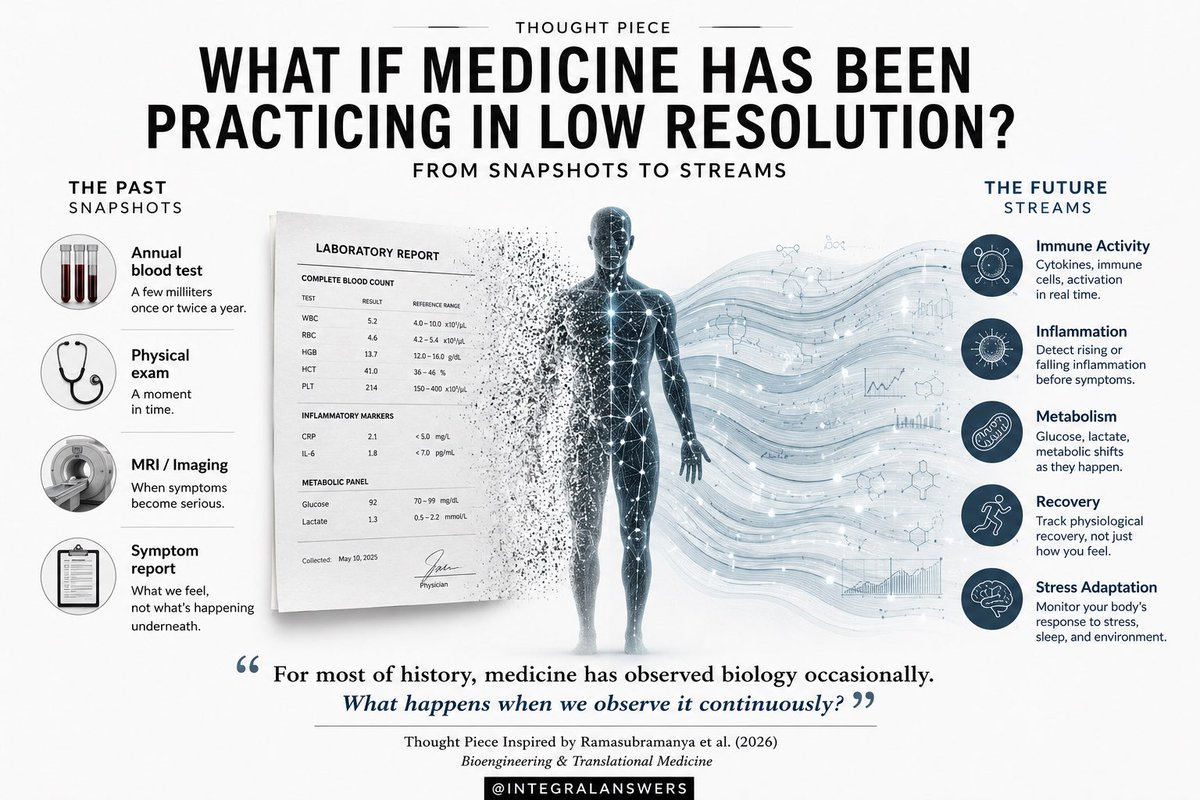
1/⚠️ THOUGHT PIECE
This is not a typical IntegralAnswers evidence review.
The paper I’m discussing describes an early-stage wearable biosensor platform. What follows is not a prediction, but a thought experiment:
What happens if technologies like this actually work?
For most of human history, medicine has operated like a photographer taking occasional snapshots.
A blood test.
A physical exam.
An MRI.
A yearly checkup.
Each provides a moment in time.
But biology never stops moving.
Every minute your immune system is making decisions.
Every hour your metabolism is adapting.
Every day inflammation rises, falls, and reshapes tissues throughout your body.
Yet we measure almost none of it continuously.
This new paper imagines a future where wearable biosensors monitor inflammatory and metabolic biomarkers in real time using minimally invasive microneedle technology.
If that future arrives, medicine may undergo a profound shift.
Not from treating disease.
But from observing biology itself.
Future physicians may spend less time asking:
“What happened?”
And more time asking:
“Why did it happen?”
Because for the first time, they may have been watching the process unfold in real time.
That possibility alone is worth thinking about.
1
1
4
291

Jun 12
🏥 HEALTH, FITNESS & BIOTECH DIGEST — June 12, 2026
1️⃣ STANFORD REVEALS WHY 10% OF PEOPLE DON'T RESPOND TO GLP-1 DRUGS
Stanford researchers publishing in Genome Medicine have identified two genetic variants in the PAM gene (p.S539W and p.D563G) that explain why roughly 10% of the population see weak responses to GLP-1 medications like Ozempic. These carriers actually produce HIGHER levels of natural GLP-1 hormone, yet it works less effectively in their bodies — a phenomenon dubbed "GLP-1 resistance." It reinforces that metabolic dysfunction has many roots, and a single drug class won't fix all of them. Personalized metabolic medicine is the future.
@robertlufkinmd
2️⃣ SPECIALIZED MEDICAL AI OUTPERFORMS GENERAL MODELS BY 25%
A domain-specific medical AI model just outperformed both OpenAI and Anthropic by more than 25% on clinical accuracy benchmarks. The pattern is clear: in regulated healthcare environments, models trained on domain-specific data, validated against domain-specific outcomes, and designed for exact clinical workflows consistently beat general-purpose AI. This isn't a niche advantage — it's the whole game when lives are on the line.
@rubixcodeai
3️⃣ ALIVECOR BRINGS AI-POWERED CARDIAC MONITORING TO YOUR POCKET
Featured in Forbes, AliveCor's AI-powered, pocket-sized cardiac monitoring devices are making medical-grade heart health tracking accessible to anyone, anywhere. No more waiting for your next doctor's appointment to check on your heart rhythm — continuous monitoring meets artificial intelligence in a form factor small enough to carry everywhere.
@AliveCor
4️⃣ WHOOP ADDS ON-DEMAND CLINICIAN ACCESS AND EHR SYNCING
Fitness wearable company Whoop is evolving beyond a fitness tracker into a clinically integrated health device. The latest update adds on-demand clinician access plus EHR (Electronic Health Record) syncing, bridging the gap between consumer wellness data and professional healthcare systems. This is the natural evolution from data collection to actionable clinical insights.
@MailMyStatement
5️⃣ CLOUD AI WEARABLE DATA: ANALYZING OFFICE STRESS IN REAL TIME
A Bengaluru-based software engineer combined data from his Whoop fitness tracker with Claude's new Fable 5 AI to analyze his workplace stress patterns. By feeding wearable biometric data — heart rate variability, sleep quality, recovery scores — into the AI, he got personalized insights about which work environments and routines were impacting his health. A practical example of AI wearables working together.
@reallive3tv
6️⃣ THE GROWING TENSION BETWEEN DOCTORS AND THE BIOHACKING COMMUNITY
There's an increasing friction between mainstream medical professionals and the biohacking/peptide world. While many doctors remain dismissive of self-experimentation and peptide protocols, a growing number of patients are leaning into personalized health optimization through blood work, biomarkers, and evidence-based supplementation. The debate centers on whether the medical establishment is adapting fast enough to legitimate longevity research or if it's stuck treating symptoms rather than causes.
@_9th_Life_
7️⃣ MARK WAHLBERG'S THREE-DECADE FITNESS DISCIPLINE
Men's Active Magazine profiles Mark Wahlberg's extraordinary fitness regimen — two-a-day sessions, seven days a week, starting before 4am, maintained for three decades. That level of discipline built one of Hollywood's most recognizable physiques, but Wahlberg's real focus now is longevity over aesthetics. As he enters his 50s, the shift from looking good to training for a long, functional life is a theme shared by more and more athletes and performers.
@MensActiveMag
8️⃣ WEARABLE BIOSENSOR COSTS DROP BELOW A DINNER BILL
Hardware entrepreneur Jack Mislinski highlights that the parts for a wearable biosensor now cost less than a night out — five prototype boards for the price of a coffee, fabricated in 48 hours. Yet hardware innovation remains a team sport requiring analog, firmware, and mechanical specialists working together. The democratization of biosensor manufacturing could spark a wave of solo health-tech founders if the prototyping barrier drops further.
@JackMislinski
💭 The convergence of AI, wearables, and personalized medicine is accelerating faster than most people realize. From Stanford identifying genetic resistance to weight-loss drugs, to domain-specific medical AI outperforming general models, to biosensor costs collapsing — we're entering an era where health optimization becomes increasingly data-driven, accessible, and individualized. The real question isn't whether the technology works, but whether our healthcare systems can adapt quickly enough to use it.
Which health tech trend do you think will have the biggest impact in the next 5 years? 👇
#HealthTech #Longevity #Biohacking #MedicalAI #Wearables #GLP1 #FitnessOver40 #PersonalizedMedicine
3
113

Lipstick as a biosensing interface. 💄
Sun et al. present ChromaLipSense, a lipstick-based biosensor that enables discreet metabolic monitoring through everyday cosmetic use.
tandfonline.com/doi/full/10.…
24