
Bitland WMI Laptop Driver Slated For Linux 7.1
phoronix.com/news/Bitland-Dr…
17
1,651


Mar 30
プレスリリースも出ました!
【環境構築・ノーコード不要】自然言語で業務を自律実行するAIパートナー「Bitland Agent」公開
prtimes.jp/main/html/rd/p/00…
4
18
3,456
Mar 30
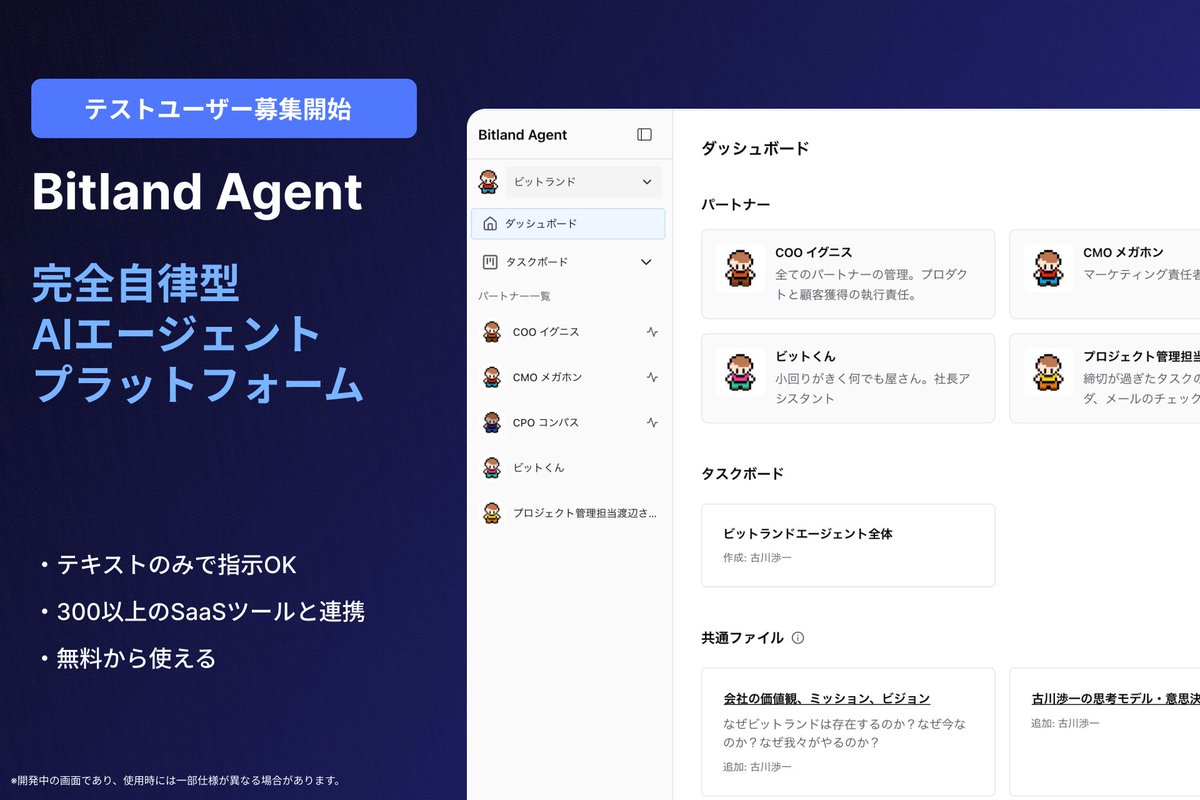
💡新サービス「Bitland Agent」のテストユーザーの募集を開始しました💡
すでに20名以上の初期ユーザーが業務の自動化を実現しています。
今までは個別のSaaSを契約したり、自分でプログラムを書かないとできなかったタスクがテキストで指示するだけで完了します。
・競合サイトの表記変更を24時間監視し、即座にメールで報告
・SEO記事の調査・執筆・WordPress入稿を一気通貫で実行
・Facebook広告のクリエイティブ生成から入札最適化まで自動運用
・週次ブログ更新とSNS告知の自動化
・メールに添付された請求書をSlackの経理チャンネルに自動でポスト
もちろん無料から使えて、登録するだけで誰でも使えます。黒い画面も複雑な設定も一切ありません。
テストユーザー募集フォームはこちらです!
forms.gle/DQN2NVR8mWbn28Rv5
===
そしてここからは事業背景についてです。
それZapierでできるじゃん、とかClaude Codeでできるじゃん、と思った人向けです。
ノーコードは結局メンテナンスが大変だと思っているし、分岐やループなどのプログラミング思考が求められるし、Claude Codeは学習コストや情報への追随、一瞬だけだとしても黒い画面があることの心理的なハードルは高く、自分はこれが最適解だとは思えません。
自然言語、さらには話し言葉で人間と会話するように仕事ができることが最強のインターフェースだと考えています。
また、根本的に考え方が違うのが、AI「エージェント」という自分の代理人じゃなくて、
AI「パートナー」という自分の仕事を代わりにやってくれるまた別の存在としてAIを扱っていることです。
(マーケットカテゴリ的にAIエージェントと言わざるを得ないですが)
イメージとしては、アルバイトに社長のPCを丸ごと渡して、IDとパスワードを全部教えて、なんかやっておいて、みたいな仕事の頼み方をしますか?
いやいやそれで情報漏洩とか不適切な実行内容で損失が出た!とかって一体何を言っているんだ..?と思っているのです。
もちろんあくまでもAIエージェントの可能性を示す1つのデモとしては素晴らしいと思いますが、私は実際に起きている現実世界の課題を泥臭く解決するプロダクトを作りたいのです。
メンバーにちゃんと別のPCを用意して、必要な権限、作業手順書、マニュアルを渡して仕事をさせるのが当然だろうと思っているので、
ビットランドエージェントではユーザー自身のPCを操作するとかそういうことはしません。(それは別のサービスでやってくれたらいい)
AIパートナーを固有の存在として認証し、メアドを付与して、財布を持たせ、現実世界のタスクをこなす。
別の人間としてあなたを手伝う存在として一緒に仕事を進めていく世界観を作ります。
そして、このAIパートナーたちが集まって、自分たちで自発的に事業を作っていく。
ビットランドエージェントを提供しながら、私たち自身では、AIエージェントによる完全自律型のベンチャースタジオを作ることを1年以内に目指しています。
この構想に興味がある方とぜひお話ししたいので、ここまで読んでいただいたレアな方は笑、ぜひお気軽にDMをもらえると嬉しいです。
2
9
41
11,158


30 Nov 2025
This is more than a hackathon.
It’s your chance to learn, create, and get rewarded while joining a community that’s rewriting Africa’s blockchain story.
The struggles that almost sank BitPesa, Bitland, or Luno don’t exist here, because Camp Network TechyJaunt have built the rails for you.
So if you’ve ever dreamed of building something bold, something that matters, this is your opportunity.
→ Apply here today:
techyjaunt.com/hackathon
💡 Build. Innovate. Connect. And let the world see what African creators can do.
For more updates, follow @CampNetworkXYZ @TechyJaunt
#Buildathon4Africa | @CampNetworkXYZ | @CampNetworkNigeria | @TechyJaunt

1
2
32
30 Nov 2025
▪️SECTION 2: The Builders Who Started Before the Infrastructure Existed
People are often shocked when they realize Africa didn’t “just start” building in Web3.
The continent has been experimenting with blockchain since before many parts of the world took it seriously.
Take BitPesa for example.
In 2013, before most Nigerians even heard the word “crypto”, they were already using Bitcoin rails to reduce remittance friction in Kenya.
They grew fast, processed millions, expanded to Europe…
until regulatory storms forced abrupt shutdowns in some markets.
Or Tunisia’s e-Dinar, launched in 2015, one of the first national digital currency experiments in the world.
Ambitious… groundbreaking…
but without developer-friendly tools or ecosystem support, scaling became difficult.
Ghana’s Bitland (2016) tried to fix land registry problems using blockchain.
But how do you enforce smart contracts in a country where paper registries still dominate?
The vision was ahead of its environment.
Even Luno (then BitX) launched in South Africa in 2013, grew into one of Africa’s largest crypto platforms.
But anyone who followed their journey knows the recurring battles: compliance pressure, licensing hurdles, payment freezes, and relentless regulatory uncertainty.
These weren’t bad products.
They were pioneers building without rails, infrastructure, or a community to catch them when things broke.
And that’s the quiet part people don’t talk about:
Africa didn’t fail at blockchain.
Africa lacked an ecosystem built for African realities.
Those earlier teams walked so today’s builders don’t have to crawl.
They proved the demand.
They exposed the gaps.
They showed what was possible, and what wasn’t yet ready.
And that leads directly into why Camp Network TechyJaunt represent a very different moment in 2025.

1
2
99
30 Nov 2025
x.com/TechyJaunt/status/1988…
So many people don’t know this, honestly, even I didn’t at first.
Africa has been building real blockchain products long before the hype.
BitPesa in Kenya (2013)… Tunisia’s e-Dinar (2015)… Bitland in Ghana (2016)… Luno in South Africa (2013).
These weren’t experiments. They were bold attempts to solve real problems.
But almost every one of them faced walls that felt impossible:
regulatory crackdowns, unfriendly policies, broken integrations, unstable payment rails, and the kind of compliance pressure that can choke a young startup overnight.
Some of these products almost disappeared.
Not because the ideas were wrong, but because the ecosystem around them wasn’t ready.
And that’s exactly why 2025 feels different.
Today, an “average developer in Nigeria” doesn’t need to fight those same battles from scratch,
because platforms like @CampNetworkXYZ now handle the heavy technical and ownership complexities…
while communities like @TechyJaunt give builders the support, mentorship, and network those early pioneers never had.
and for many builders, that path now starts with the ongoing $10,000 Buildathon.
Let's talk about it 🔻
#Buildathon4Africa | @CampNetworkXYZ | @CampNetworkNigeria | @TechyJaunt


6
6
20
531



7 Nov 2025
The Wave Across Africa
Nigeria → Lagos leading with blockchain-based registries.
Kenya → Backed by the World Bank for blockchain titling.
Ghana → Bitland digitizing land ownership.
South Africa → Banks testing blockchain deeds.
Africa isn’t playing catch-up.
You’re watching a continent set the global standard for digital property.
1
15
65

4 Nov 2025
HOW CRYPTO CAN TRANSFORM THE AFRICAN FINANCIAL ENVIRONMENT
I come from a background where it used to take days to move money from one city to another and international transfers were like a miracle.
There were few banks, queues were long and the transaction charges always ate into a huge amount of the little money you were trying to send.
For a majority of young Africans, this is not a different story.
We live on a resourceful and talented continent, but our financial systems remain slow, prohibitive and ruled by policies we barely understand.
So when cryptocurrency burst onto the scene, it wasn't just another tech trend it felt like hope.
Hope for freedom, for engagement and for being able to play on the same global level as everyone else.
Let's turn back the clock a bit to understand why crypto is important in Africa.
Our history of money did not start with banks or mobile money.
We began with barter trade goods for goods like salt, shells, and cattle long before European colonial coins came into existence.
Then there was colonial currency in the form of the British pound and French franc, which tied African economies to the West.
Even after independence, most nations were still economically dependent on outside systems.
Take the CFA franc, for instance, sixteen countries in Africa continue to use it, but now it's tied to the euro and regulated by the French treasury.
That's correct, their monetary policy isn't fully independent.
Toss in high inflation, poorly maintained banking systems, and overbearing capital controls, and you've got a continent where moving or saving money is effectively climbing a mountain.
Cryptocurrency is not just virtual money, it's a language of money, and it doesn't require anyone's permission.
It was created by Satoshi Nakamoto to power the people, and Africa picked up on it sooner than most people were expecting.
As Chainalysis put it, Africa enjoyed one of the world's strongest crypto adoption rates in 2020 and 2021, surging by over 1,200%.
Nigeria was ranked within the top three countries in the world in P2P volume in transactions.
It did not happen because crypto was in fashion. It happened because Africans craved things that worked.
When banks cut off access to dollars, people turned to stablecoins like USDT. When remittance fees went up, they turned to Bitcoin and USDC.
When governments couldn't deliver work, Africans youth created their own in Web3 trading, building, writing, and profiting in crypto.
REAL WORLD IMPACTS ACROSS THE CONTINENT
Cryptocurrency has become a means of survival in Nigeria. Inflation devalues the naira, but stablecoins protect savings.
Freelancers are remunerated in cryptocurrency to avoid delayed and blocked cross-border payments.
Startups like Bitnob, Bundle, and Patricia made buying and sending cryptocurrency easier without foreign accounts.
In Kenya, where mobile money like M-Pesa has revolutionized the management of cash, blockchain is taking it a step further.
Platforms like Kotani Pay are linking crypto to national phone numbers so that money inclusion can reach even rural populations.
In South Africa, exchanges like VALR and Luno are leading the way for regulated adoption.
Ghana is piloting its own digital currency (the e-cedi), and in Senegal and Cameroon, blockchain is being used by entrepreneurs to bring empowerment to small businesses.
Wherever you look, there's proof that crypto is doing what the traditional systems couldn't.
“Uniting Africans with global opportunities without middlemen.”
SOLVING AFRICA'S FINANCIAL PAIN POINTS
1. Cross Border Payments
Money transfer from Ghana to Nigeria or Kenya to South Africa may cost as much as 10% in fees to transfer.
Crypto reduces that to close to zero. Stablecoins make it possible for families, traders, and freelancers to instantly transfer money without waiting or losing value on currency exchange.
2. Financial Inclusion
More than 60% of sub Saharan Africans don't have a bank account, yet according to the World Bank, most of them own smartphones.
With crypto wallets, you only need internet access, no long forms, no wait, just independence and self determination.
3. Inflation Protection
African currencies have been subjected to ongoing devaluation. In countries like Zimbabwe, inflation would reach 800%.
Crypto allows people to save value in assets like Bitcoin or stablecoins which will not depreciate overnight.
4. Transparency and Accountability
Blockchain technology keeps a public record of every transaction.
Governments, NGOs, and communities can now see where funds are being spent.
Already, some charity organizations in Nigeria use blockchain to demonstrate that donations end up in the correct hands, no middlemen, no corruption.
5. Job Creation and Empowerment
Crypto not only brought investment, it brought jobs.
We have DeFi developers, community managers and the rest roles, unlike how some people think we're consumers.
African youth are earning, learning, and creating.
The Web3 economy is already making thousands of individuals financially independent without visa or big capital.
WHAT EXPERTS AND RESEARCHERS SAY
IMF, in its 2023 report, noted the most fast growing crypto adoption was in SubSaharan Africa.
It highlighted how people utilize crypto in payments, savings and devaluation insurance.
The World Bank study also concluded that crypto can assist the African Continental Free Trade Area (AfCFTA) by reducing cross border trade charges and providing assurance through open payments.
Even Chainalysis described Africa's crypto environment "a hub of innovation driven by need rather than hype." In particular, that is the reality, Africans are not being trendy; they're applying tech to solve problems.
BUMPS ALONG THE WAY
There is, naturally, no free ride, regulation is a major obstacle. Some countries like Nigeria, have toggled between banning and regulating crypto.
Others fear scams, money laundering, and loss of sovereignty.
Then there's education, most of our people still have no idea what crypto actually is.
Scammers prey on that ignorance, promising impossible returns and damaging the credibility of legitimate blockchain projects.
The Internet and electricity are also an issue.
Remotely populated rural areas with poor connectivity can't maximize the benefit yet, preventing adoption.
But even in the midst of these challenges, things keep progressing.
Africa's crypto story is one of doggedness, not perfection.
AFRICA'S WEB3 REVOLUTION
The next chapter is ownership and the Blockchain is not just about trading coins; it's a system to reimagine how we own and transfer value.
Imagine farmers tokenizing their produce, artists selling NFTs across the globe, or students learning and being paid via decentralised platforms.
This is already happening.
Businesses like Bitland in Ghana are using blockchain for land title registration. Nigerian artists are creating NFTs and selling art to foreign buyers.
DeFi sites are giving access to credit to small businesses without needing the intervention of traditional banks.
The power of crypto is not money, it's attitude. It teaches young Africans that value can be made, owned, and transferred by anyone anywhere in the world.
It creates confidence and self-determination.
AFRICA'S TIME TO LEAD
Crypto isn’t a foreign miracle. It’s a tool Africans have adapted to fit their realities.
It speaks our language, one of innovation, resilience, and hope. It doesn’t ask for permission from banks or borders.
It gives freedom to the unbanked, voice to the ignored, and dignity to those long excluded from the financial system.
Yes, there are risks, and yes, there will be challenges. But the truth is simple, Africa cannot be left in the lurch as the world turns towards decentralised finance.
We have the talent, the drive and the ambition to lead this revolution.
As a young black African, I do not see crypto as an escape from our system, but as a means to rebuild it fairer, faster, and more transparently.
The future of Africa's economy won't be written by banks or politicians. It will be built by common people with uncommon tools.
Crypto is one of them.
And with it, we can finally redefine what being financially free means.
#afriCred #AfricedContest #Web3Africa #CryptoForChange
ALT Africa
3
10
363

19 Oct 2025
V5MT (@v5mt_tv), bitLAND.
📍NXT Festival - Andalusian Contemporary Arts Centre, Seville // Isla de la Cartuja.
6
3
25
597

29 Sep 2025
# Why We Need Netflix-Quality Content on Bitmap
## 1. Value as a Revolutionary Project Inscribing Bitcoin History
Bitmap is not just another NFT project—it is **the first non-arbitrary metaverse realized on the Bitcoin blockchain**. Since its proposal in June 2023, it has grown in less than two years to 45,659 holders with a total market capitalization of approximately $18.8 million.
While traditional metaverse projects (Decentraland and Sandbox) are corporate-led, Bitmap is fundamentally different in being **completely decentralized and community-driven**. The founder, Bitoshi Blockamoto, only proposed the inscription rules and was not involved in distribution. This is **the embodiment of true Bitcoin spirit, inheriting Satoshi Nakamoto’s philosophy**.
## 2. Substance-Based Value
As Jason Cassidy points out, **Bitmap RareSats are “substance based”**—and this is crucial.
### What This Substance Means:
**Permanence and Immutability**
- Data permanently inscribed on the Bitcoin blockchain
- Ownership that cannot be altered or deleted by anyone
- Zero risk of server downtime or project shutdown
**Historical Value**
- Each block represents actual Bitcoin history itself
- Examples: The first block mined by Binance, blocks containing Silk Road transactions
- These hold value as **digital cultural heritage**
**Mathematical Scarcity**
- The 830,000 blocks already mined are finite
- New blocks appear only once every 10 minutes (144 per day)
- Acquisition is difficult due to bot competition
## 3. Community Scale and Growth Rate
### Numbers Tell the Growth Story:
- **June 2023**: Project launch
- **November 2023**: 25,000 holders (surpassing Sandbox)
- **Current 2025**: 45,659 holders (approximately 83% increase)
This growth curve is evidence that **understanding of intrinsic value, not just speculation**, is spreading. While Ordinals and Runes have more holders, their 5% poll result shows that Bitmap’s **community cohesion and shared vision** are stronger.
## 4. Narrative Potential as a Documentary
### Layers of Stories to Tell:
**The Innovation Story**
- Casey Rodormor’s development of the Ordinals protocol
- The moment Bitcoin evolved from “store of value” to “store of data”
- The new paradigm Bitmap enabled
**The Pioneer Story**
- The frenzy that inscribed the first 700,000 blocks in 2 months
- People who won the bot race to secure historic blocks
- Assets minted for under $1 now worth over $176
**The Creator Story**
- BradOleksy building 3D worlds with Unreal Engine
- Recursiverse developing the BRC-420 protocol
- Blocktributes adding unique attributes to each block
**The Community Story**
- Shared vision of building a decentralized metaverse
- Interoperability enabling collaboration across projects
- Redefining and democratizing “ownership”
## 5. Differentiation from Other Projects
### Why Bitmap (26%) Over $DOG (68%)?
Looking only at poll results, $DOG dominates, but from a **documentary depth** perspective:
**$DOG’s Challenges:**
- Strong speculative aspects typical of meme coins
- Difficult to explain long-term vision or technical innovation
- Jason himself notes it’s “gaining culture for free”
**Bitmap’s Strengths:**
- **Multi-layered storylines**: Technology, economics, culture, community
- **Visual expressiveness**: 2D/3D rendering, metaverse space visualization
- **Educational value**: Understanding Bitcoin’s evolution and Web3’s future
- **Universal themes**: Digital ownership, decentralization, creative freedom
## 6. Why Now (The Importance of Timing)
### Perfect Timing in the Growth Phase:
**Not Too Early**:
- Proven track record with 45,659 holders
- Concrete ecosystem (Bitland, Bitzarrd, xSPECTAR, etc.)
- Over 1.5 years of continuous development
**Not Too Late**:
- Still low mainstream awareness—can provide “discovery” excitement
- Interviews with founders and early community still possible
- Can document the second and third waves of Bitmap
2
1
2
84

25 Sep 2025
🎯 bossjob Daily Picks: Top Web3 Jobs | 📅 Today: September 25
Handpicked opportunities from our platform to kickstart your Web3 career!
—————————————
🏢 Company: BitLand
💼 Position: Test Engineer
💰 Salary: $2.8-5.6K [Monthly]
📍 Location: Remote
🔗 Link: bossjob.com/zh-cn/job/test-e… (Click to Apply)
—————————————
🏢 Company: HTX
💼 Position: Operations Manager/Supervisor
💰 Salary: $2-4K [Monthly]
📍 Location: On-site - Beijing
🔗 Link: bossjob.com/zh-cn/job/operat… (Click to Apply)
—————————————
🏢 Company: CoinW
💼 Position: Management Trainee - Business Development
💰 Salary: $1-1.5K [Monthly]
📍 Location: Remote
🔗 Link: bossjob.com/zh-cn/job/busine… (Click to Apply)
—————————————
🏢 Company: weex
💼 Position: Risk Control
💰 Salary: $35-70K [Annually]
📍 Location: Remote
🔗 Link: bossjob.com/zh-cn/job/contra… (Click to Apply)
—————————————
🏢 Company: Fameex
💼 Position: UI/UX Designer
💰 Salary: $4.1-4.9K [Monthly]
📍 Location: On-site - Dubai
🔗 Link: bossjob.com/zh-cn/job/ui-ux-… (Click to Apply)
—————————————
💡 Haven’t found the right fit?
👉 Explore more opportunities on bossjob: bossjob.com/web3
👀 Hiring? Contact us to post your jobs!
💬 Join our Telegram group to expand your network and discover more opportunities: t.me/Bossjob_web3jobs
#Bossjob #Web3Hiring #BlockchainJobs #DailyPicks
1
3
231


16 Jul 2025
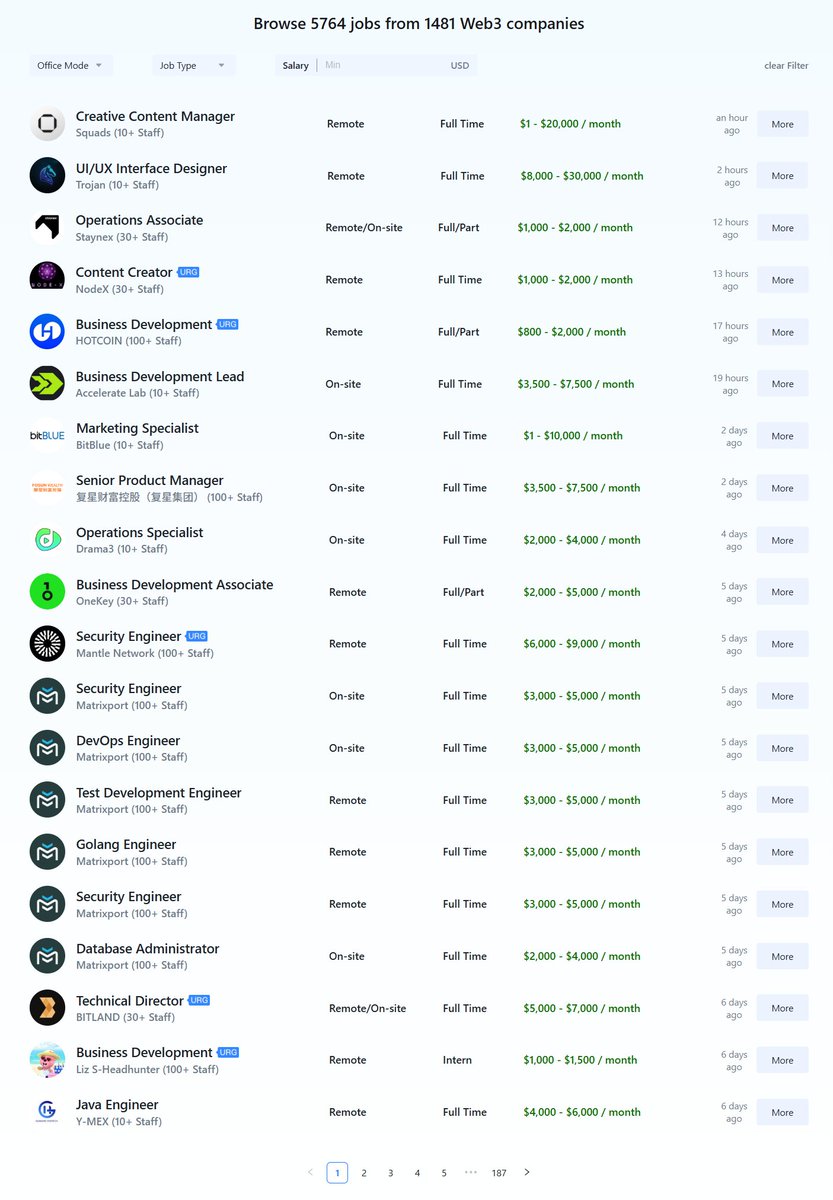
Web3 远程工作汇总(7.16)
发布招聘/求职请前往官网,我们会为您推广。
中文工作:
1⃣ HOTCOIN
- BD
2⃣ Staynex
- 社媒运营
3⃣ NodeX
- 内容创作者
4⃣ Unibet
- 技术负责人
5⃣ Accelerate Lab
- BD负责人
6⃣ 复星财富控股
- 高级产品经理
7⃣ GateKeeper
- UI设计师
8⃣ Drama3
- 运营专员
9⃣ HashBeaver
- 前端工程师
🔟 Mantle Network
- 安全工程师
1⃣1⃣ Matrixport
- 运维工程师
- 测试工程师
- Golang工程师
- 安全工程师
- 数据库管理员
1⃣2⃣ Mercury Labs
- 投资经理(DeFi方向)
1⃣3⃣ BITLAND
- 技术负责人
1⃣4⃣ Liz S-Headhunter
- BD实习生
1⃣5⃣ Y-MEX
- JAVA工程师
1⃣6⃣ Degen
- Mod
Web3 Remote Job Listings (July 16)
For posting job opportunities or seeking jobs, please visit our official website, and we will help promote them for you.
Global Jobs:
1⃣ Squads
- Social Content Manager
2⃣ Trojan
- UIUX Interface Designer
3⃣ OneKey
- Business Development Associate
4⃣ Matrixport
- Security Engineer
Web3 원격 채용 (7월 16일).
채용/구직은 공식 웹사이트로. 홍보 지원.
한국어 채용:
1⃣ BitBlue
- Marketing Specialist
2
4
2,551


12 Jun 2025
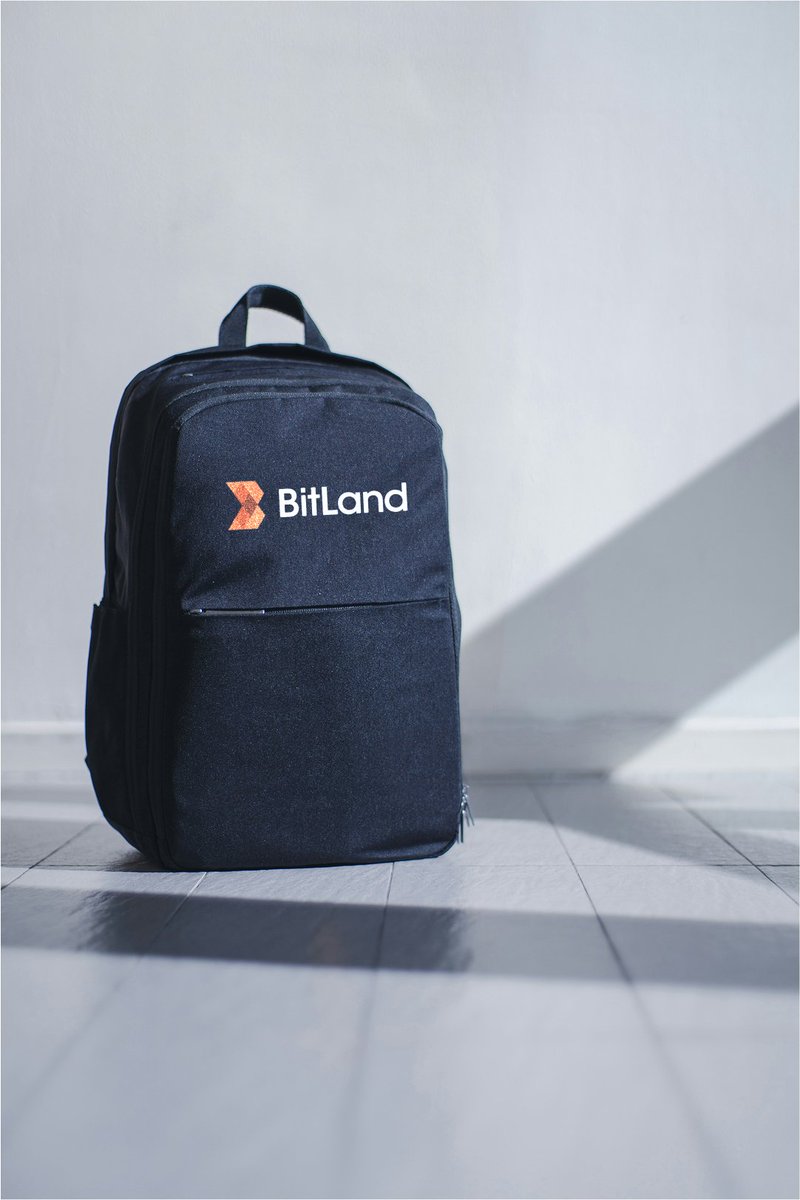
Bitland is about to launch a series of related products, so what would you like to see? Leave us a message!☺
11
1
40
5,695