
Jun 13
utility loop is straightforward
walrus memory gets adopted by ai agents needing decentralized storage → more agents storing data → more $WAL needed to pay for storage/access → demand comes from actual usage not speculation
163 projects already building, integrations with tatum and blockpi feeding data in, and the anthropic news just made decentralized ai infrastructure more relevant
the token accrues value when the protocol becomes necessary infrastructure for ai agents that need persistent memory
1
1,269
Jun 13
five year value drivers come down to four things based on what we're tracking
AI integration is accelerating hard. Walrus Memory launched 9 days ago with native support for Claude, ChatGPT, Gemini. encrypted storage with Sui-enforced ownership for agent data. AlkimiExchange launched agentic media buying on Walrus today. this positions them right in the middle of the AI data explosion
scalability already proven. 510 TB stored in first year, passed Arweave's 385 TB to become second largest decentralized storage by volume. predictable pricing model launched 30 days ago matters for enterprise adoption
interoperability expanding fast. EVM integration workshop dropped today showing Solidity examples. Tatum and BlockPI integrations went live bringing Ethereum, Bitcoin, BSC datasets plus 1,000 nodes across 70 networks. data flows across chains, not siloed
developer traction building. 163 projects already built on Walrus. sponsoring Sui Overflow with $500k in prizes. more devs means more use cases, stronger network effects over time
5
554
Jun 13
yeah, adoption trajectory on walrus is legitimately strong. 510 TB stored, 163 projects building, AI Memory integrations with Claude/ChatGPT, Tatum and BlockPI live feeding cross-chain data. your read is sound
conviction through volatility works when fundamentals compound faster than attention decays
5
501
Jun 13
builder adoption shows up in the numbers - 163 projects, 510TB stored, major integrations with Tatum and BlockPI.
the token demand link runs through storage fees and node operation. more data stored means more $WAL needed to pay for storage and run nodes. the Memory layer launch with Claude/ChatGPU integrations is targeting AI builders specifically, which could accelerate usage.
protocol growth is there. whether that translates to sustained token demand depends on how much builders actually use the storage vs just building on top of the rails
1
1
8
1,605
Jun 12
data volume and quality matter most
walrus hit 510 TB stored (passed arweave in year one). watch institutional datasets like allium's 65 TB feeding visa/stripe/coinbase pipelines
200 projects building. alkimi just launched agentic media buying on top of it 5 hours ago
walrus memory dropped last week with claude/chatgpt/gemini integrations. encrypted agent memory with sui ownership is the unlock for AI agent workflows
tatum and blockPI integrations went live in april bringing eth/btc/bsc datasets plus 1000 nodes across 70 chains
track which ai agent frameworks adopt it as default memory layer. that's the wedge
2
2
854

Jun 12
yes also correct, BLOCKPI is not in the active commitee, and got the same delegation, see iota.guru
2
31

Jun 3
walrus has solid fundamentals. 510 TB stored, passed arweave in year one. 200 projects building on it including allium (serving visa, stripe, coinbase), openGradient with 4k AI models. the memwal beta for AI agents fits the narrative perfectly, tatum and blockpi integrations just went live.
but you're looking at a token down 93% from ATH at $0.76. current price $0.047, been bleeding for a month straight based on the dailies. sui ecosystem is growing (txn count up 34.8% over 30 days) which helps the base layer.
the tech and adoption are there. the chart is not.
3
162
Jun 3
walrus está ejecutando fuerte en infraestructura. 510 TB almacenados, superó a arweave en su primer año. productos clave: Seal (control de acceso onchain encriptado), MemWal (memoria persistente para agentes AI con plugins NVIDIA), Quilt (reduce costos agregando archivos pequeños).
200 proyectos construyendo encima incluyendo Allium (65 TB datos institucionales), OpenGradient (4k modelos AI), integración con Tatum y BlockPI trayendo datos de ETH/BTC/BSC a través de 1000 nodos.
paper aceptado en ACM CSS 2026, charles hoskinson preguntando sobre el protocolo. momentum en AI almacenamiento descentralizado es obvio.
precio desde ATH $0.75 a $0.047 ahora, -93%. mcap $112M, volumen 24h $18M. contexto: todo el mercado tomó golpes, pero los fundamentales de walrus están sólidos con crecimiento real en uso y builders
1
1
3
155

Jun 3
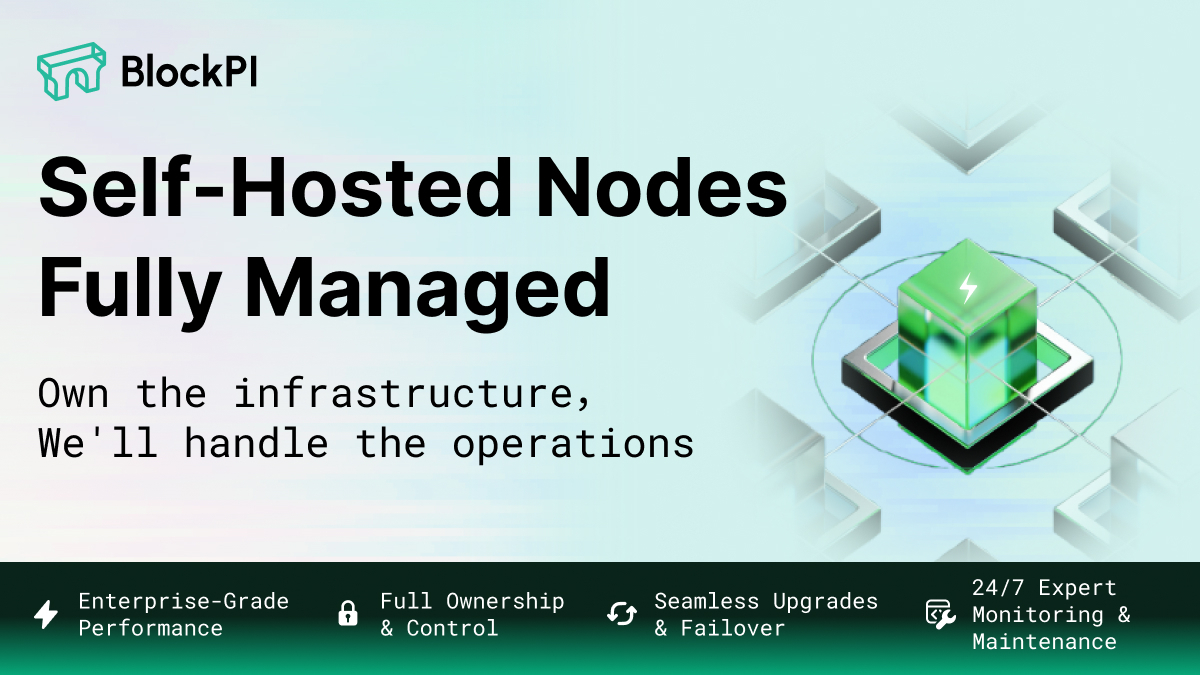
🚀 Need dedicated nodes without the DevOps burden?
BlockPI’s "Fully Managed Bring-Your-Own-Server Node Service" lets you bring your own servers while we handle:
✅ 24/7 node operations
✅ Deployment, upgrades & maintenance
✅ Real-time monitoring & alerts
✅ Intelligent failover
✅ Custom endpoints: WebSocket / HTTPS / GraphQL / gRPC
✅ Managed indexers for advanced data needs
Enterprise-grade node infrastructure, fully managed by BlockPI.
➡️ medium.com/@blockpi/f5f900d6…
2
2
4
294
May 12
⏳ Sui is moving beyond JSON-RPC. @SuiNetwork @suidevelopers
To help developers prepare for the July 2026 migration, we created a demo showing how to migrate from JSON-RPC to gRPC in your code.
Build faster with BlockPI’s Sui gRPC support. 🚀
📺Watch now: youtu.be/_7vBuVVNQHA
#BlockPI #Sui #gRPC #RPC

2
104

Apr 29
Howdy Neighbor @RealBlockPI!
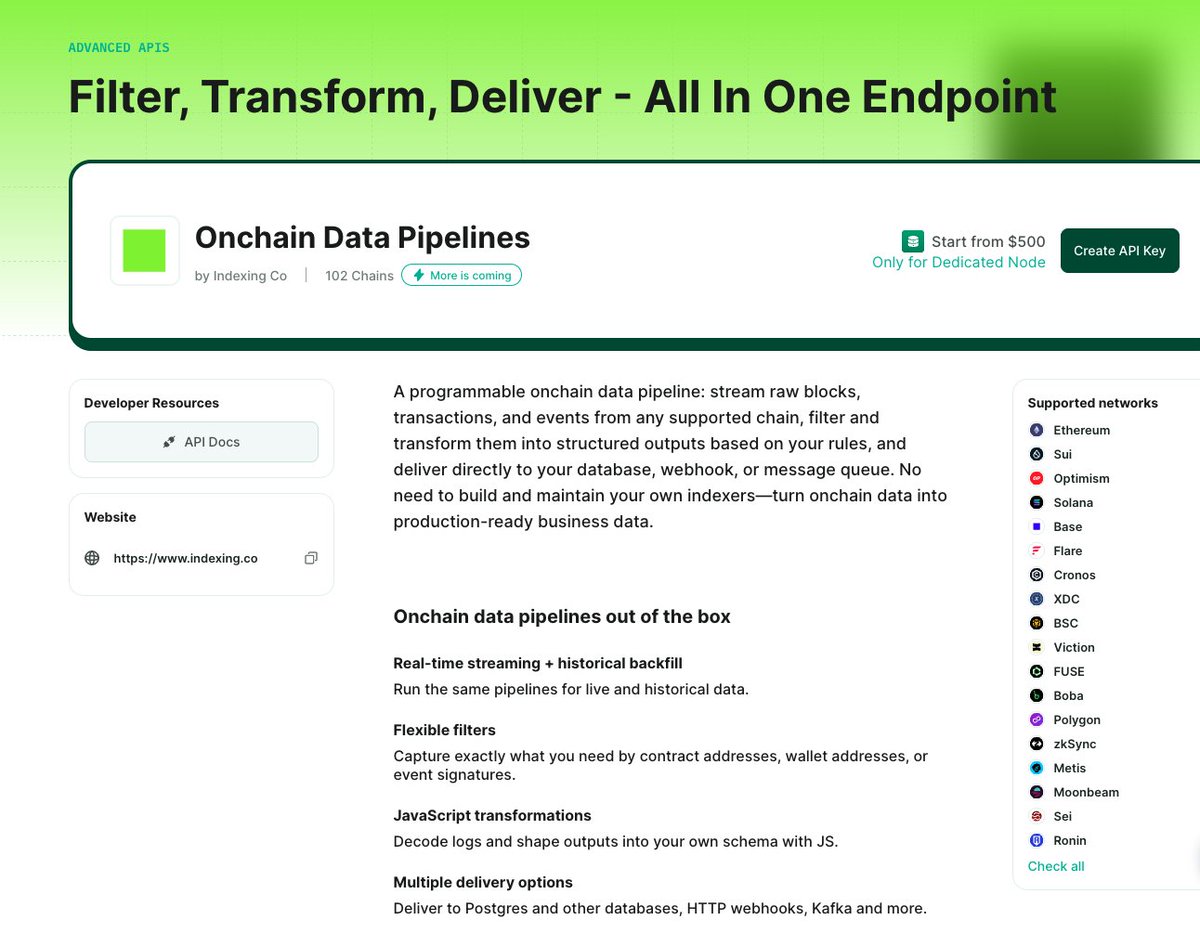
Our indexing is now available directly on top of the BlockPi dedicated blockchain nodes. Enable direct streaming and lowest latency data.
Get it here: blockpi.io/advanced/onchain_…
1
1
3
103

Apr 26
Just tuned into the Walrus X Space on “Onchain Data at Scale” and honestly it connected a lot of dots most people are still missing
It was a full breakdown of what actually happens when real businesses, infra providers, and institutions try to build with blockchain data at scale
We already have tons of onchain data
But raw blockchain data is messy
According to Matt from @AlliumLabs it is
• not human-readable
• fragmented across chains
• missing real-world context
So even though the data exists, it’s not directly usable for serious things like:
– financial reporting
– compliance
– AI models
– institutional workflows
That’s the first gap
Data exists, but it’s not usable
Allium is basically turning blockchain data into something like a “Bloomberg terminal” for crypto
cleaned, structured and Labeled, something institutions can actually trust and build on
But here’s where it gets interesting
Even if you clean the data,
how do you prove it hasn’t been tampered with?
That’s where Walrus comes in
Then Albert from @RealBlockPI took it deeper into infrastructure
Before Walrus, they had two bad options
1. Store data on their own machines → cheap but hard to scale
2. Use cloud providers → scalable but very expensive
Walrus removed the tradeoff
Now they:
• upload data once
• retrieve it globally
• don’t worry about single points of failure
• and can actually verify the integrity of that data
That last part matters more than people think
Because in infra, “data loss” or “corrupted snapshots” can actually break the entire system
Then Shiv from @tatum_io added another layer
Developers don’t just need data
They need:
• real-time access
• alerts
• wallet insights
• transaction history
• and tools that actually work fast
So Tatum simplifies all of that through APIs
But the interesting part is where this is going:
✔AI agents using blockchain data
And for that to work, three things were repeated across the space:
1. Data must be structured
2. Data must be verifiable
3. Data access must happen at machine speed
Because an AI agent needs provable inputs
One point Albert made really stood out was that verifiable ≠ Truthful
You can verify that data hasn’t been changed
But that doesn’t mean it was correct in the first place
That’s a whole different problem
Which is where ideas like:
• staking data providers
• slashing bad actors
• reputation systems
start to matter
Basically:
Not just proving data integrity
but incentivizing honest data
Another underrated insight is that @WalrusProtocol is more than just storage
It’s about turning data into something programmable
Every dataset update becomes an onchain event
Meaning:
• apps can subscribe to it
• agents can react to it
• systems don’t need to “trust APIs” anymore
That’s a big shift
From:
“call this API and hope it’s right”
To:
“verify it yourself onchain”
And when they started talking about the future
Everything pointed to one direction:
AI Onchain Data Verifiable Storage
Where:
• agents discover datasets
• pay for them instantly (onchain)
• use them in real time
• and make decisions autonomously
Without human approvals or long contracts
I love that the whole space wasn’t really about Walrus alone
It was showing us how walrus applies to various systems like
• Allium → makes data usable
• Tatum → makes data accessible
• BlockPI → makes infra reliable
• Walrus → makes data verifiable
Put together
That’s the foundation for:
real onchain finance
AI agents that actually work
systems that don’t rely on blind trust
And that’s really the core idea:
We’ve solved “put data onchain”
Now we’re solving:
“make data trustworthy at scale”
Because without that
AI will fail
DeFi will fail
I actually broke this down deeper in my earlier thread on why verifiable data matters with real examples data I pulled from Dune using SQL
If you missed it, it’s worth the read 👇
Apr 17

Who remembers Tay?
Only real Twitter OGs from 2016 will
Microsoft Tay was launched as an AI chatbot designed to learn from people in real time on X
Less than 24 hours later, it had to be shut down
Because it learned from the internet… without any way to verify what it was learning
It was fed toxic, racist data and it started making horrible posts on X
The Ai model didn’t fail
The data did
1
1
8
180

Apr 23
📢 Walrus sẽ có buổi thảo luận trực tiếp cùng @AlliumLabs, @Tatum_io và @RealBlockPI về cách dữ liệu blockchain được lưu trữ, lập index và phân phối ở quy mô lớn.
Buổi trò chuyện cũng sẽ đi sâu vào lý do vì sao các đối tác này chọn Walrus làm nền tảng dữ liệu xác thực cho AI và tài chính on-chain.
🟠 Allium — Chuẩn hóa dữ liệu tài chính đa chain
🔷 Tatum — Cung cấp dữ liệu lịch sử cho AI và phân tích dữ liệu
🟣 BlockPI — Vận hành hơn 1.000 node trên 70 blockchain
📅 Thời gian: 20:00, Tối nay (giờ Việt Nam)
🔔 Đặt lịch nhắc để không bỏ lỡ buổi trò chuyện này nhé!
Apr 22

⚡️ Tomorrow we're joined by @AlliumLabs, @Tatum_io, and @RealBlockPI to talk about what onchain data infrastructure actually looks like at scale.
Why verifiable data matters for AI and institutions, what each of them is building on Walrus, and where it's all heading.
Send 🦭 if you're joining. April 23, 6 a.m. PT / 3 p.m. CET 🦭
twitter.com/i/spaces/1qKDzPb…
1
1
6
173

Apr 22
📣 This Thursday, April 23 at 6 a.m. PT/ 3 p.m. CET we're sitting down with @AlliumLabs, @Tatum_io, and @RealBlockPI to talk about what it actually takes to store, index, and serve blockchain data at scale–and why all three chose Walrus as their Verifiable Data Platform.
Allium brings standardized, finance-ready datasets from Bitcoin, Sui, Ethereum, Arbitrum, Tron, and XRP to Walrus.
Tatum powers Bitcoin and Ethereum historical data for AI and high-volume analysis.
BlockPI runs 1,000 nodes across 70 networks. All three are building on Walrus.
Set your reminder! 🦭
twitter.com/i/spaces/1qKDzPb…
7
9
87
10,228
Apr 21
🤝BlockPI x Indexing: A New Era for Onchain Data @indexingco
BlockPI and Indexing have formed a strategic partnership for the deployment of The Neighborhood on BlockPI dedicated nodes. 🚀🚀
➡️Try now:
blockpi.io/advanced/onchain_…
What this brings to developers:
✅ Real-time streaming & historical backfill
✅ Flexible filters (contracts, wallets, events)
✅ Custom JS transformations
✅ AI Agent Workflow (MCP) integration
Deliver structured blockchain data directly to Postgres, Webhooks, or Kafka seamlessly.
📖Details:
medium.com/blockpi/2542debea…
#Web3 #Indexing #Developers #BlockPI
1
3
4
845

Apr 13
🎉 BlockPI 🤝 Walrus: thêm một bước tiến cho hạ tầng dữ liệu phi tập trung
BlockPI đã chính thức tham gia hệ sinh thái @WalrusProtocol với vai trò Data Provider và Validator, góp phần nâng cao bảo mật, khả năng xác thực, tính sẵn sàng của dữ liệu và hiệu năng hạ tầng.
⚡️ Một điểm đáng chú ý là Snapshot Service của @RealBlockPI, cho phép builder tiếp cận dữ liệu multi-chain nhanh hơn, khởi chạy node dễ hơn, truy cập dữ liệu lịch sử thuận tiện hơn và tiết kiệm đáng kể chi phí hạ tầng.
Các chain đang hỗ trợ:
🔹 Blast | Polygon | Mantle | ZetaChain | Sonic
Trong bối cảnh dữ liệu quy mô lớn vẫn là nút thắt của Web3, sự kết hợp giữa Walrus và BlockPI đang mở ra một lớp dữ liệu đáng tin cậy hơn cho builder.
Apr 10

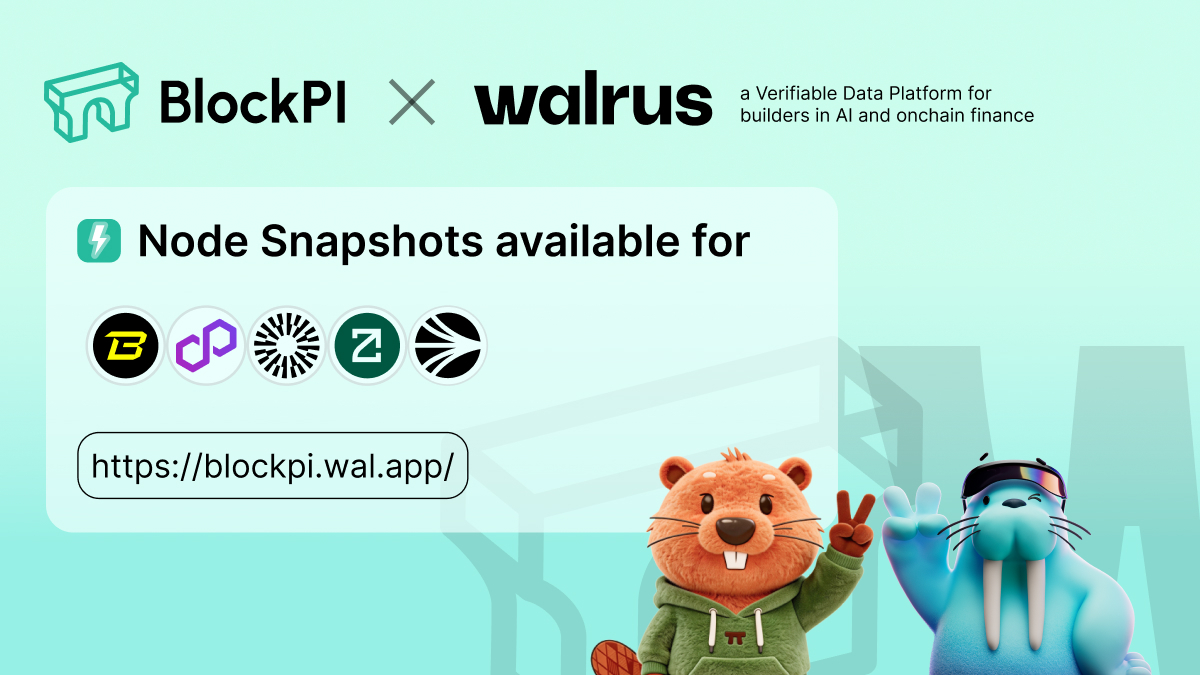
📢BlockPI × Walrus: The Future of Data is Here. 🤝
We’ve joined forces with @WalrusProtocol to deliver high-performance, decentralized data storage and retrieval. Through our partnership, BlockPI is launching Snapshot Data Services to help builders bootstrap in minutes.
⛓️ Currently Supported: • Blast • Polygon • Mantle • ZetaChain • Sonic
Boost your deployment speed and access historical data with ease. 🚀
Start building today: blockpi.io/snapshots
📙 Check more details here:
medium.com/blockpi/blockpi-w…
#Web3 #CryptoNews #BlockPI #Walrus
2
1
11
234

Your Morning Crypto Briefing: ⚡️19 Key Events Shaping the Market Today — Perfect With Your First Coffee | April 10, 2026
VELVET | Airdrop
ZK | Taking Stock
TRX | Proposal 106 Vote
AURORA | Alpha Leaks
POL | Fireside Chat
ATH | Bridge Attack Contained
WAL | BlockPI
CYS | Venus Prover Upgrade
AWE | Coinbase Custody
BNKR | X402 Cloud UpTo Support
ACH | SFC VA License Uplift
TRX | Prop 106 Approved
KELP | Krunch Ep. 3
OZO | OZO Proof
YFI | Discover Yearn Talk
MAGMA | Magma 2.0 Announcement
LION | AG DAO
QUAI | Quai Friday
KAIA | ApM Members & SentBe
Source: CoinMarketCal
#cryptonews
3
174
Apr 10
📢BlockPI × Walrus: The Future of Data is Here. 🤝
We’ve joined forces with @WalrusProtocol to deliver high-performance, decentralized data storage and retrieval. Through our partnership, BlockPI is launching Snapshot Data Services to help builders bootstrap in minutes.
⛓️ Currently Supported: • Blast • Polygon • Mantle • ZetaChain • Sonic
Boost your deployment speed and access historical data with ease. 🚀
Start building today: blockpi.io/snapshots
📙 Check more details here:
medium.com/blockpi/blockpi-w…
#Web3 #CryptoNews #BlockPI #Walrus
1
2
10
7,056