Ravi Katiyar retweeted

Jun 11
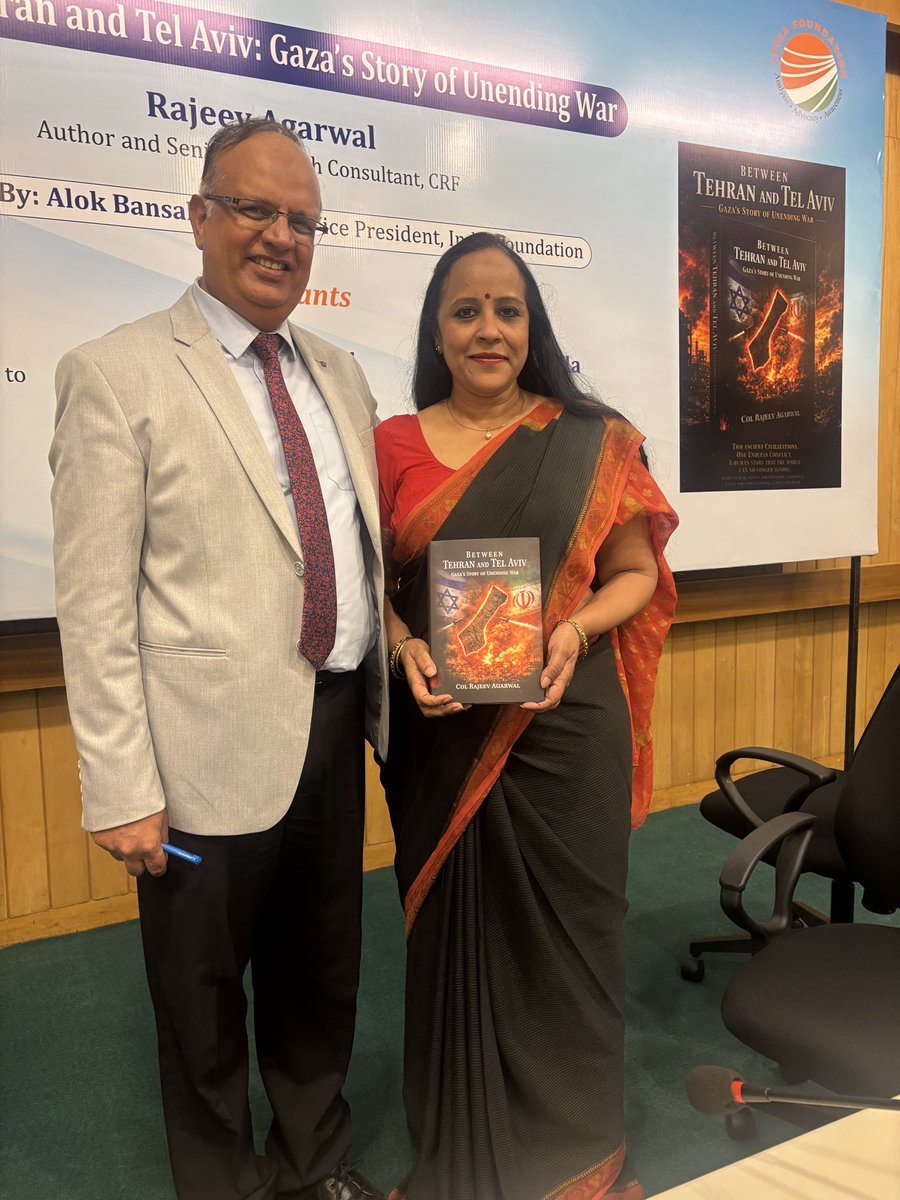
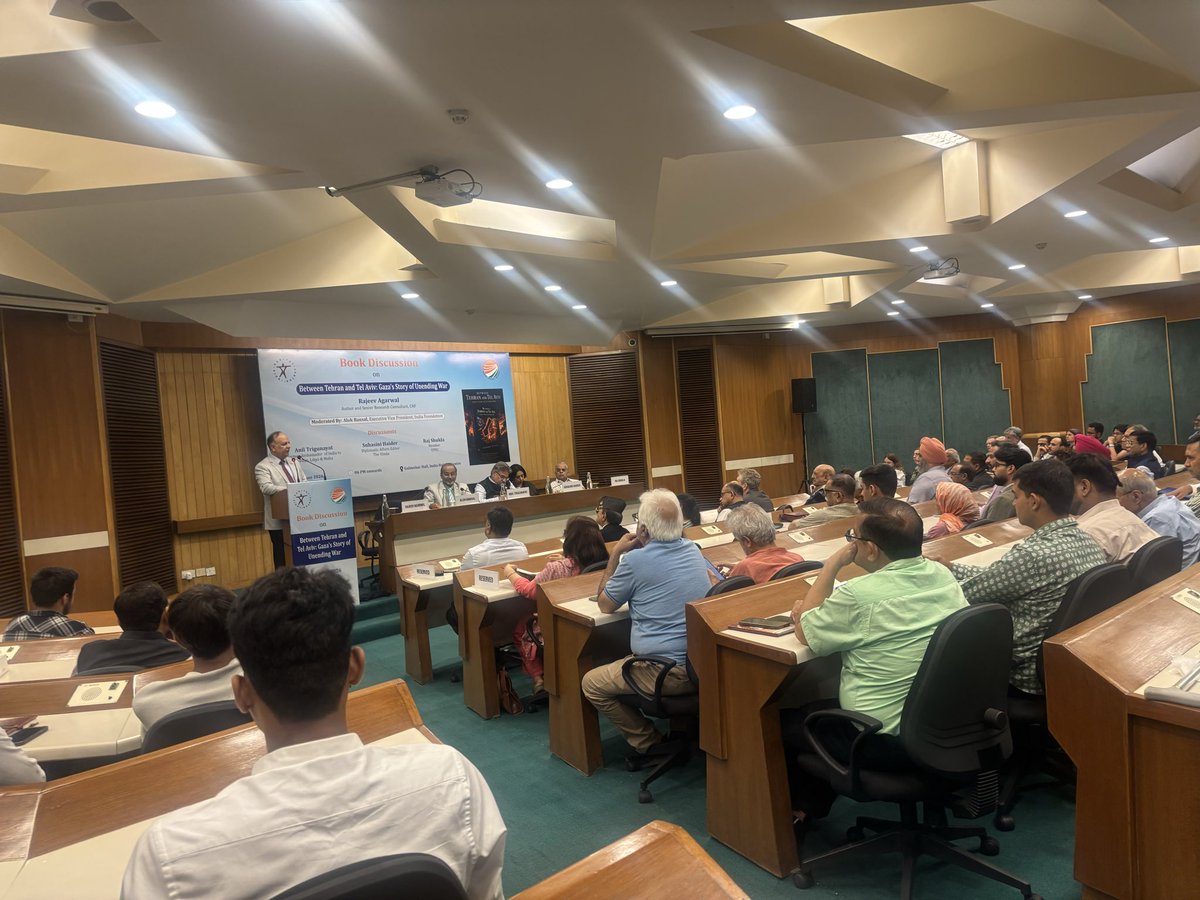
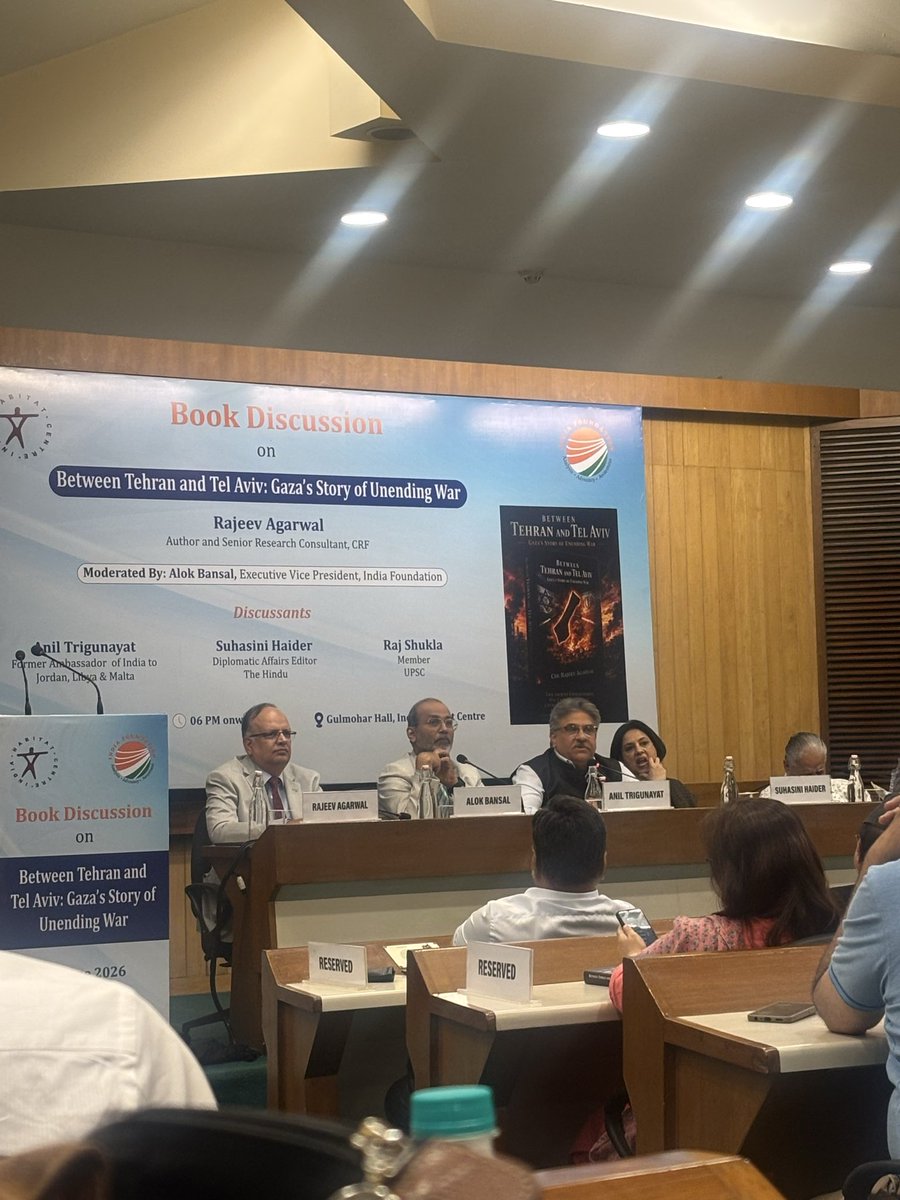
#BookDiscussion “Between Tehran and Tel Aviv- Gaza’s Story of Unending War” by Col. Rajeev Agarwal.
Thank you, @Rajeev1421, for the invitation to a rich discussion with @Gen_RajShukla, @aniltrigunayat, and @suhasinih, exceptionally well- moderated by @Alok795.
Interestingly, when I reached home, my mother picked up “Between Tehran and Tel Aviv” and immediately began reading it. Her first reaction was: “He must be an exceptional author to have written a book while the war is still unfolding.”
Indeed, documenting and analyzing a conflict in real time is no small feat. Congratulations to Col. Rajeev Agarwal on a timely and thought-provoking contribution to understanding one of the most consequential conflicts of our time.
@indfoundation @ChintanResearch
1
6
17
3,225

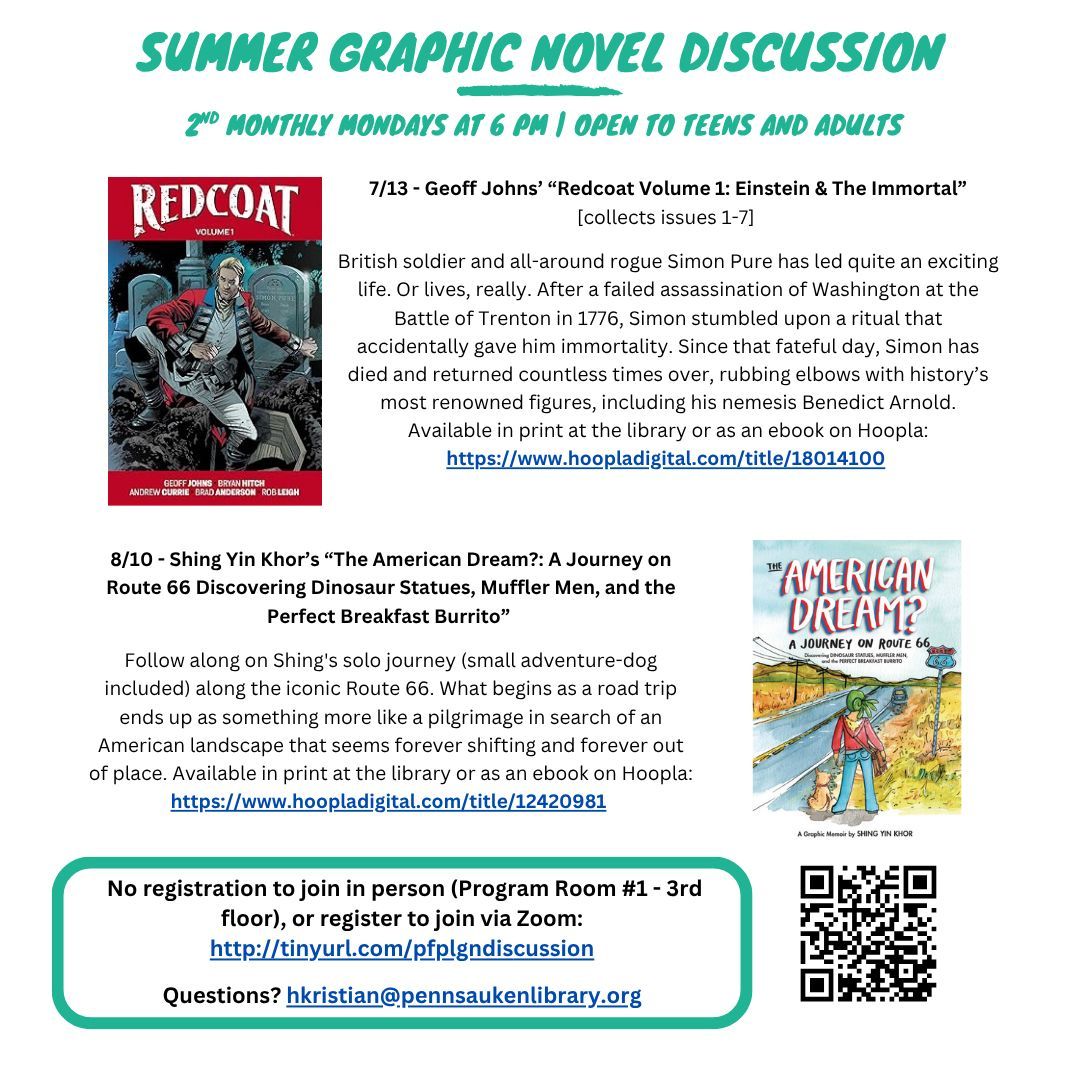
☀️ Dive into great stories this summer with our Graphic Novel Discussion!
Open to teens and adults.
For details and registration information, see the flyer or visit pennsaukenlibrary.org.
#SummerGraphicNovelDiscussion #BookDiscussion #TeenReaders #SummerReading #PFPL
1


I have discussed the ideas from my book with Grok and ChatGPT.
Now I hope more human beings do the same.
Not because the book is perfect -
but because the conversation matters.
#Grok #ChatGPT #BookDiscussion #HumanConversation #ConstitutionOfHumanity
1
15

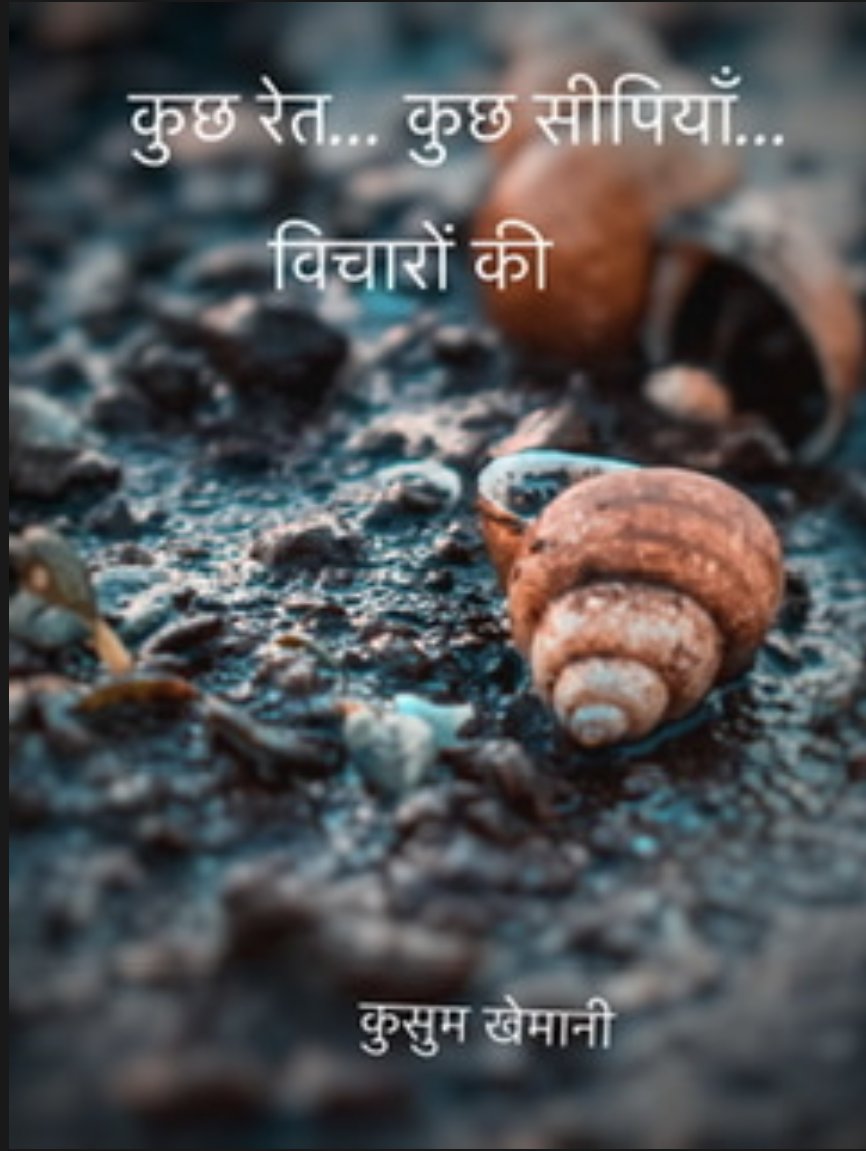
📚 क्या किसी नगरवधू की कहानी केवल देह की कहानी होती है, या वह समाज, सत्ता, नैतिकता और स्त्री-अस्तित्व के गहरे प्रश्न भी उठाती है?
कुसुम खेमानी के विचारोत्तेजक लेख ‘कुछ रेत... कुछ सीपियाँ... विचारों की’ में ‘एक नगरवधू की आत्मकथा’ को पढ़ने का अनुभव केवल साहित्यिक नहीं, बल्कि वैचारिक और भावनात्मक यात्रा बन जाता है। छोटी-सी कृति होने के बावजूद यह पाठक को बार-बार अपनी ओर खींचती है, क्योंकि इसमें स्त्री के उस स्वर को सुनने का अवसर मिलता है जिसे समाज अक्सर सुनना नहीं चाहता।
लेख यह प्रश्न उठाता है कि क्या शरीर, इच्छा, सौंदर्य और अनुभव भी उतने ही सत्य हैं जितने हमारे आदर्श, सिद्धांत और नैतिक मानदंड? नगरवधू का चरित्र अपने अस्तित्व को किसी अपराधबोध के साथ नहीं, बल्कि आत्मविश्वास और स्वीकृति के साथ प्रस्तुत करता है। यही साहस इस कृति को विशिष्ट बनाता है। साधारण शब्दों में रची गई यह कथा स्त्री-अनुभव, सामाजिक दृष्टि और मानवीय जटिलताओं पर गंभीर विमर्श की जमीन तैयार करती है।
✨ क्या साहित्य का काम केवल नैतिक निर्णय देना है, या जीवन के उन पक्षों को भी सामने लाना है जिन्हें हम देखने से बचते हैं? अपनी राय साझा करें।
📖 पढ़िए ‘कथा : नगरवधू की’ और इस अनोखे साहित्यिक संवाद का हिस्सा बनिए।
#कुसुमखेमानी #नगरवधूकीआत्मकथा #हिंदीसाहित्य #स्त्रीविमर्श #पुस्तकचर्चा #साहित्यप्रेमी #पठनसंस्कृति #कथासाहित्य #BookDiscussion #HindiLiterature
8
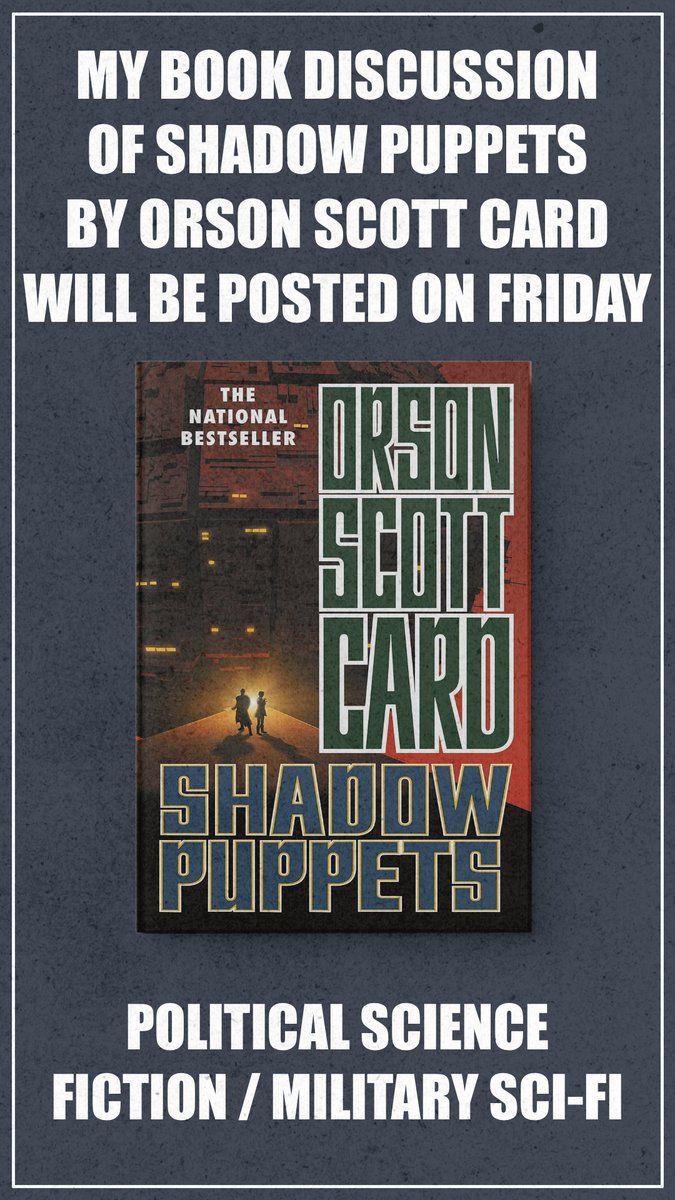
I will post my discussion of Shadow Puppets by Orson Scott Card on Friday at 13:00.
#ShadowPuppets #OrsonScottCard #Novel #ScienceFiction #MilitaryScienceFiction #PoliticalThriller #PhilosophicalFiction #PsychologicalSciFi #StrategyAndWar #BookDiscussion #Book #Books #BookLovers
1
4
15

Jun 10
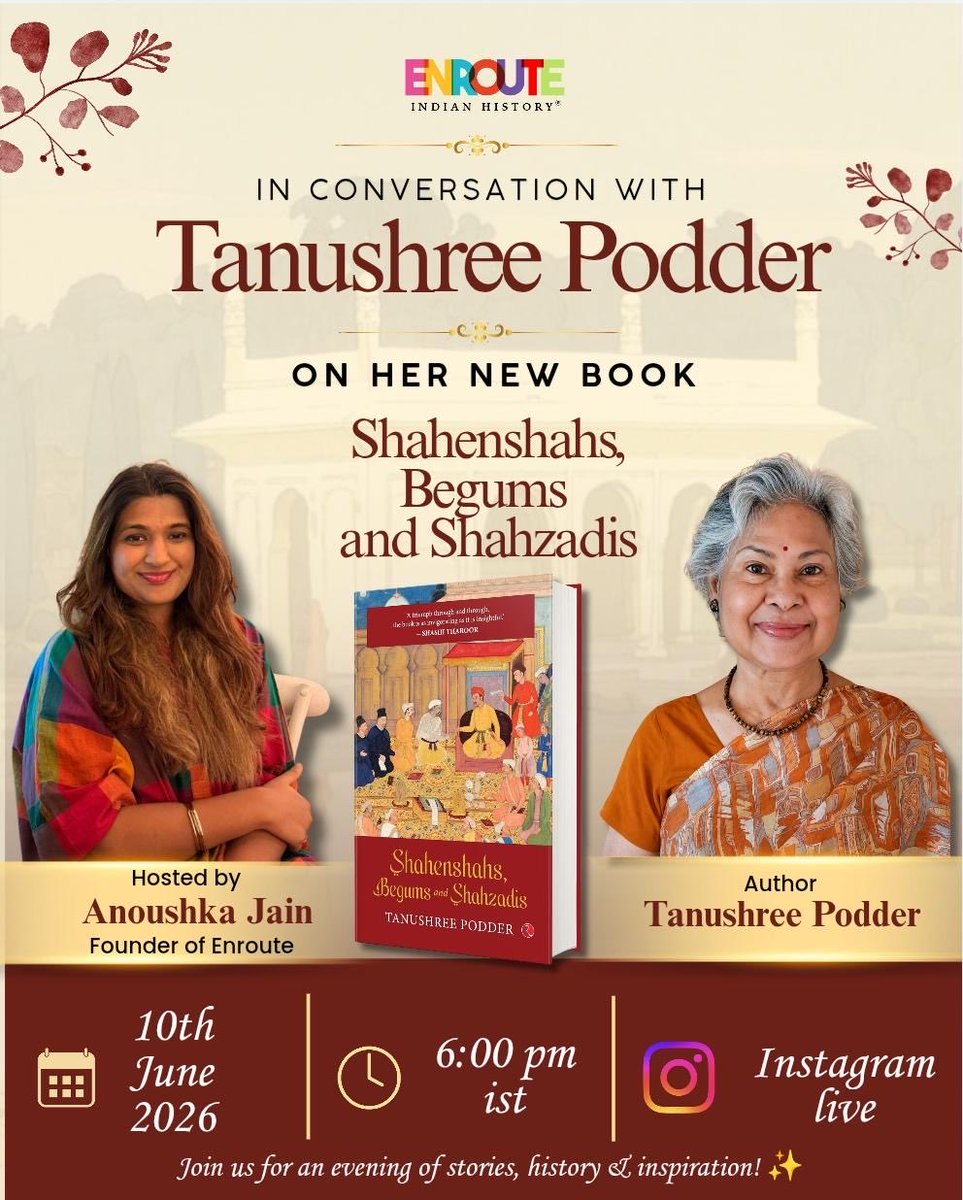
Hosting author Tanushree Podder to discuss Shahenshahs, Begums and Shahzadis—a fascinating journey into the world of Mughal emperors, begums, and shahzadis.
📅 10 June | ⏰ 6 PM IST | 📍 Instagram Live
#TanushreePodder #IndianHistory #BookDiscussion #HistoryLovers #AuthorTalk
24

Jun 10
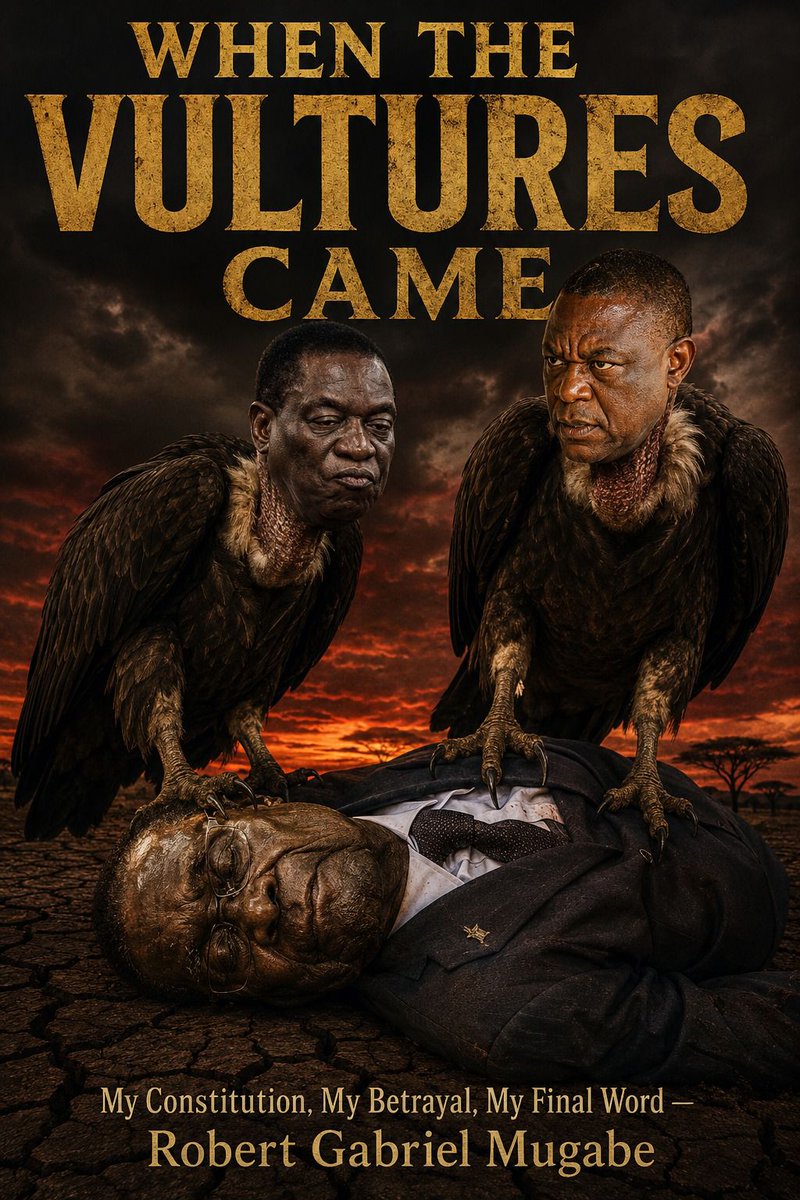
WHEN THE VULTURES CAME
Chapter Five — What I Built Robert Gabriel Mugabe
I want to talk about the schools.
Not as a politician defending his record. Not as a man trying to balance the ledger against everything I have confessed in the previous chapters. But as the son of Bona Mugabe — a woman who taught Christian catechism to village children at Kutama Mission for almost nothing — who understood in her bones that the only thing colonialism truly feared was an educated African.
When I became Prime Minister of Zimbabwe in 1980 I inherited a country where seventeen percent of Black Zimbabweans could read and write.
Seventeen percent.
Nearly a century of colonial rule had produced seventeen percent literacy among the people whose land and labour had built the entire economy of Rhodesia. The colonial education system was not designed to educate. It was designed to produce just enough functional literacy to fill the bottom rungs of the colonial economy. Domestic servants. Factory workers. Clerks. People who could follow written instructions but could not write the instructions themselves. Could not challenge the system. Could not imagine an alternative.
That was the deliberate design.
I had been educated by accident essentially. A Jesuit mission that happened to produce genuine scholars. An Irish priest who happened to see something in a lonely boy with books. A series of fortunate circumstances that gave me access to knowledge that the colonial system never intended me to have.
I decided every Zimbabwean child would have what I had by accident as a matter of right.
We built schools everywhere. Not showcase projects. Not urban centres only. Rural areas. Remote provinces. Places where children had been sitting under trees because no building existed to receive them. We built classrooms and we staffed them and we trained teachers and we made primary education free and compulsory for every child in Zimbabwe regardless of race or tribe or the political history of their parents.
Within a decade Zimbabwe had the highest literacy rate in Africa.
I want you to feel what that means.
A country that colonialism had deliberately kept at seventeen percent literacy transformed itself in one decade into the most educated nation on the continent. Doctors. Engineers. Lawyers. Teachers. Accountants. Scientists. Produced by Zimbabwe. Trained in Zimbabwe. Ready to build Zimbabwe.
We had done something the colonial system had spent nearly a century trying to prevent.
We had educated ourselves.
My mother Bona would have wept to see it. She spent her life teaching children at a mission for almost nothing because she believed knowledge was sacred. I took that belief and I made it national policy and I watched it transform a country.
That is the thing I am most proud of from everything I did in thirty seven years of leadership.
Not independence. Not land. Not the constitution even.
The schools.
Because the schools were purely good. Without the complications and the compromises and the cold calculations that stain everything else I did. Children learning to read. That is good. Unambiguously. Without qualification.
Now let me tell you about the land because the land is more complicated.
The Lancaster House agreement that brought independence in 1979 forced me to accept something I knew was unfinished. White commercial farmers would keep their land. The government could only purchase land through a willing seller willing buyer framework at market prices. The British promised funding for this process.
For the first ten years I accepted the constraint. I had no choice. The agreement was the price of independence and I paid it.
Then the British funding dried up. The willing seller willing buyer process slowed to almost nothing. Twenty years after independence the commercial farming sector remained overwhelmingly white. The communal areas where Black Zimbabweans lived remained overcrowded. The land question — the central wound of Zimbabwean history — remained open and festering.
In 2000 I moved.
The world called it chaos. Illegal seizure. Economic destruction. And some of it was all of those things. The execution was chaotic. Productive farms were destroyed. Agricultural output collapsed. The economy suffered consequences that lasted years.
But I want to ask a question that I could never ask publicly while I was alive because the political noise drowned everything out.
Was it wrong for the children and grandchildren of the people whose land was stolen by colonial settlers to reclaim that land after twenty years of broken promises and dried up funding and quiet international abandonment of the commitments that had been made at Lancaster House?
I am not defending every method. I am defending the principle.
The land belonged to the people of Zimbabwe. Not to settlers who had arrived a century before with colonial charters and guns. The British knew this. The Lancaster House negotiators knew this. Everyone knew this. The question was always when and how the correction would happen not whether it would happen.
I made it happen imperfectly. I own the imperfection. I should have maintained commercial farming operations during the transition rather than allowing productive capacity to collapse. I should have separated genuine redistribution to landless peasants from political allocation to party loyalists. Senior ZANU officials took prime farms while the people who needed land most waited. That was wrong and I knew it was wrong while it was happening.
But the principle was right.
And the world that condemned me for the execution said almost nothing about the century of dispossession that made the correction necessary.
Now I must tell you something about the 2013 Constitution that I have never said honestly.
I built it genuinely. The consultations were real. We went to the people across every province and we asked them what they wanted their government to look like and we listened and we incorporated what they told us. The direct presidential election — the people choose their president directly, not parliament, not the military, not a party committee — that was a genuine democratic principle I believed in and fought for.
The term limits were real. Two terms of five years. No exceptions. Not even for me. I accepted that constraint because I understood that Zimbabwe's greatest vulnerability was the concentration of power in one person for too long. I had been that person. I understood the damage it did.
The human rights protections were real. The independent commissions were real. It was the most progressive constitution in Africa and I am proud of it.
But I must confess the other truth simultaneously.
I also believed in ZANU dominance. I believed Zimbabwe needed one strong party to hold it together. Not because I was simply hungry for power — though I was also that, I will not pretend otherwise — but because I genuinely feared what multiparty fragmentation would do to a young nation surrounded by hostile forces with a population that colonialism had divided along ethnic and regional lines.
I wanted the constitution and I wanted one party dominance and I told myself those two things could coexist.
They cannot.
A genuine constitution with genuine rights and genuine democratic protections is fundamentally incompatible with one party dominance. One of them must eventually destroy the other.
I built both simultaneously and I left Zimbabwe to resolve the contradiction after I was gone.
That was my failure of political courage. Not the only one. But the most consequential.
Because the men who came after me — the vultures who took what I built — understood the contradiction perfectly. They understood that the constitution and the one party state could not coexist. And they chose the one party state. They chose dominance over democracy. Control over constitution.
They chose everything I had taught them through forty years of building ZANU dominance while simultaneously drafting democratic documents.
I gave them the contradiction.
They resolved it in the worst possible way.
And the children whose parents I educated — the most literate generation in African history — are now scattered across the globe sending money home to families living in the ruins of the economy that the vultures stripped bare after I was gone.
I built Zimbabwe.
I also built the conditions that allowed it to be destroyed.
Both of those things are true.
Both of those things are mine.
— Robert Gabriel Mugabe From the original manuscript, handwritten notes and voice recordings Published by Nehanda Press
#NehandaPress #NehandaBooks #NehandaPublishing #VoicesOfAfrica
#AfricanPublishing #AfricanAuthors #WhenTheVulturesCame #NewBookRelease
#PoliticalThriller #PoliticalHistory #AfricanPolitics
#PowerAndPolitics #TheVulturesCame #PoliticalNonfiction #Zimbabwe
#ZimbabwePolitics #ZimbabweHistory
#FutureOfZimbabwe #Constitutionalism
#DemocracyInAfrica #AfricanLeadership #BigWednesdayRead #MustRead #BookDiscussion #NowReading #robertmugabe #britishcolonialism
whatsapp.com/channel/0029Vb8…
180
Jun 10
WHEN THE VULTURES CAME
Chapter Four— The War We Never Told You About Robert Gabriel Mugabe
Let me tell you about the liberation war.
Not the version carved into the National Heroes Acre. Not the version sung at ZANU-PF rallies. Not the version I told for thirty seven years in speeches that made audiences rise to their feet and weep with pride.
The true version.
The one I am only able to tell from here.
ZANLA was poorly trained. That is the beginning of the honest account and everything else flows from it. Most of our fighters had two days of training before they were sent into the field. Two days. Some had never fired a gun before they crossed into Rhodesia because we did not have enough bullets for target practice. We were sending young men and women into a war against one of the most sophisticated counterinsurgency forces in Africa with weapons they barely knew how to operate and instructions they barely had time to absorb.
Many died simply by pointing their weapons incorrectly. By standing in the wrong place. By making noise when silence was survival. Not killed by Rhodesian bullets in heroic combat but lost through the terrible arithmetic of inadequate preparation meeting a ruthless and experienced enemy.
ZIPRA — Nkomo's army — was different. The Russians trained them properly. They had tanks. They had air capability. They had intelligence networks. They had soldiers who knew what they were doing because they had been given the time and the resources to learn it.
ZANLA had the pungwe.
The pungwe was our weapon. Not the AK47. Not military strategy. The all night meeting. Song and dance and political education delivered to villagers in the darkness while the mujibas — our young male auxiliaries — and the chimbwidos — our young female auxiliaries — organised the population and gathered food and carried messages and watched for sellouts.
I want to be precise about what the pungwe actually was in practice.
In theory it was political education. Nationalist ideology. Teaching villagers why we were fighting and what Zimbabwe would look like after liberation. Building the culture of resistance that a genuine liberation movement requires.
In practice it was also terror.
At pungwe meetings sellouts were castigated or even killed in order to cultivate the spirit of total loyalty and commitment to the struggle.
Sellout was a word we used carefully and we used it carelessly simultaneously. Carefully when it described someone genuinely collaborating with the Rhodesian security forces. Carelessly when it described anyone who questioned us. Anyone who did not give enough food. Anyone whose loyalty we suspected. Anyone who belonged to the wrong family or the wrong village faction or who had looked at one of our fighters the wrong way.
We held the villages through a combination of genuine political belief and systematic intimidation.
I knew this was happening. I was not in the field. I was in Mozambique. I was in Zambia. I was negotiating at Lancaster House. But the reports came to me and I read them and I made a calculation that leaders make in wars and that I am not proud of from here.
The terror in the villages was keeping the villagers from reporting our positions to the Rhodesians. The control through fear was preserving our operational security. The rapes that happened — and they happened, I cannot pretend they did not happen, our own fighters committed them against the very people we claimed to be liberating — I told myself these were individual failures of discipline not systemic policy.
From here I know that was not entirely honest.
When you build an army of poorly trained young men sent into the bush with minimal supervision and maximum authority over a terrified civilian population and you tell them the cause justifies everything and you punish informers but look away from other abuses — you have created the conditions for systematic violation. Not individual failure. Systemic inevitability.
I looked away because we needed the villages controlled and I could not afford to lose fighters by disciplining them for behaviour that was keeping our operations alive.
That is the honest account.
Now let me tell you about what the liberation war was truly fought over.
We fought the Rhodesians. That is true. People died. People sacrificed enormously. The bravery of many ZANLA fighters was genuine and I will not dishonour that bravery even in this honest accounting.
But the liberation war was also fundamentally about something that had nothing to do with Ian Smith.
It was about which Zimbabwean political movement would control Zimbabwe after Ian Smith was gone.
ZANLA versus ZIPRA. ZANU versus ZAPU. Shona versus Ndebele. Chinese training versus Soviet training. My vision of Zimbabwe versus Nkomo's vision of Zimbabwe.
The Rhodesians were the stated enemy. The real competition was internal.
ZANLA avoided direct military confrontation against the Rhodesian forces due to their sophisticated artillery and numerical superiority.
We avoided them where we could. We attacked isolated farms and soft targets. We mined roads. We ambushed small patrols. We did not engage the Rhodesian Security Forces in the kind of sustained military confrontation that ZIPRA was capable of with its Soviet training and equipment.
What we did was control the population.
Control the villages and you control the food supply and the intelligence and the recruitment pipeline and eventually the political landscape of the country after liberation. Nkomo understood this too. That is why the competition between ZANLA and ZIPRA was so vicious. Not because we disagreed about independence. We both wanted independence. Because we disagreed about who would run Zimbabwe after independence and we both knew that the answer depended on who had built deeper roots in the civilian population.
We won that competition. Partly through genuine political work. Partly through the pungwe system. Partly through the terror I have described.
And then independence came and we took what we had built in the villages — the loyalty enforced through fear, the one party culture, the punishment of dissent, the equation of ZANLA with Zimbabwe itself — and we brought it into government.
That is the continuity that nobody wants to acknowledge.
The methods that won the liberation war became the methods of governance.
The pungwe became the ZANU-PF rally. The mujiba became the youth militia. The sellout accusation became the tool used against MDC supporters in 2008 the way it had been used against Rhodesian collaborators in the 1970s. The rape that I looked away from in the bush became the systematic sexual violence of the 2008 election campaign that I also chose not to see clearly enough.
I built a nation on the foundation of what we had done in the villages during the liberation war. And the foundation was cracked from the beginning.
Mnangagwa understood this better than anyone.
He was always the one who grasped that the party was the mechanism of control first and the vehicle of liberation second. He never had my genuine belief in education and constitutionalism. He had my genuine belief in power and he had a patience and a ruthlessness that I recognised and used and should have feared more than I did.
He watched me for decades. He learned everything I knew about controlling a population through a combination of genuine delivery and systematic intimidation. He watched me build the schools and he understood that the schools were also about creating loyalty. He watched me build the constitution and he understood that the constitution was also about managing my legacy.
And then when I was old and my joints were failing and my mind was still sharp but my body was announcing its limits — he took everything I had taught him and he used it against me.
That is the bitter harvest of what I built in the villages during the liberation war.
I taught Zimbabwe that power comes from controlling people. From the pungwe. From the mujiba. From the sellout accusation. From the careful management of fear and loyalty simultaneously.
Mnangagwa was my best student.
He learned the lesson perfectly.
And in November 2017 he graduated.
— Robert Gabriel Mugabe
From the original manuscript, handwritten notes and voice recordings
Published by Nehanda Press
#NehandaPress #NehandaBooks #NehandaPublishing #VoicesOfAfrica
#AfricanPublishing #AfricanAuthors #WhenTheVulturesCame #NewBookRelease
#PoliticalThriller #PoliticalHistory #AfricanPolitics
#PowerAndPolitics #TheVulturesCame #PoliticalNonfiction #Zimbabwe
#ZimbabwePolitics #ZimbabweHistory
#FutureOfZimbabwe #Constitutionalism
#DemocracyInAfrica #AfricanLeadership #BigWednesdayRead #MustRead #BookDiscussion #NowReading #robertmugabe #britishcolonialism
whatsapp.com/channel/0029Vb8…
1
221
Jun 10
WHEN THE VULTURES CAME
Chapter Two — The Deal That Was Made
Robert Gabriel Mugabe
---
Let me tell you how liberation really works.
Not the version they teach in schools. Not the version I gave in speeches for thirty seven years. The real version. The one that begins not in the bush with guns and courage but in comfortable houses in London with men in suits drinking tea and deciding which African leader they could manage and which one they needed to destroy.
I was in Ghana when they came to me.
I was teaching. I was reading. I was becoming the man Father O'Hea had pointed me toward. And men arrived — not announcing themselves as what they were — and began explaining the world to me as if I were a student who needed the geography of power simplified.
They explained the Cold War.
The Soviets were moving through Africa like water finding cracks in stone. Angola. Mozambique. Ethiopia. Every liberation movement that leaned toward Moscow received weapons and training and ideological support. And every one of those movements became a problem for the West's investments and strategic interests on the continent.
Joshua Nkomo was the problem they needed solved in Zimbabwe.
Nkomo had been the first. Before me. Before ZANU. He was ZAPU — the Zimbabwe African People's Union — and he had the Ndebele behind him and the Soviets supporting him and a vision for Zimbabwe that included taking land from white farmers immediately and redistributing it to the people who had worked that land for generations under colonial dispossession.
The West could not allow that.
Not because they cared about white farmers specifically. But because £800 million in British investment sat in Zimbabwe. Because the Lancaster House agreement — the negotiated settlement that brought independence — had guaranteed white property rights for ten years. Because Rhodesia becoming another Angola would destabilise the entire southern African region at the height of the Cold War.
Nkomo had to be contained.
I understood what was being asked of me. I was not naive. I had read enough history to know exactly what I was being offered and exactly what it would cost.
They would support ZANU. They would support me. They would ensure that when independence came it came through a negotiated process that protected enough white interests to keep the West comfortable. And in return I would manage Nkomo. I would keep Zimbabwe stable. I would be the reasonable African leader they could do business with.
I told myself I was being clever. I told myself I was using them the way they were using me. That I would take their support and their recognition and their investment and then build something genuinely independent once I had enough power to do so.
That calculation was the first great mistake of my political life.
Because you cannot make a deal with people who are better at making deals than you are and expect to come out ahead.
Herbert Chitepo understood this.
Chitepo was our leader before me. Chairman of ZANU. A brilliant lawyer. A man of genuine principle who believed that ZANU and ZAPU should find a way to work together — that African unity was more important than factional victory. He kept talking about reconciliation between ZANU and ZAPU. He kept refusing to fully commit to the dismantling of Nkomo that the architecture required.
In March 1975 he was killed by a car bomb in Lusaka, Zambia.
They blamed internal ZANU rivalries. They blamed ZAPU agents. The investigations went nowhere and the conclusions satisfied nobody who was paying attention.
Fay Chung — one of our own ZANU militants, a woman who was there, who saw everything — said years later that Ken Flower ordered that assassination.
Ken Flower. The Rhodesian intelligence chief. The man who ran the CIO — the Central Intelligence Organisation — for Ian Smith's white minority government. The man who maintained connections to British intelligence throughout the Bush War. The man who I kept as head of the CIO after independence in 1980.
I kept him. Deliberately. Consciously. Because he was the connection. The line that ran from Harare back to London back to everything that kept Zimbabwe from being strangled in its cradle by sanctions and isolation before it had learned to breathe.
Mnangagwa — my intelligence minister from 1980 — worked directly with Flower. He asked Flower to stay. He left the professional control of the CIO entirely in Flower's hands while providing the political link to government. A white Rhodesian intelligence chief running Zimbabwe's security apparatus with my blessing and Mnangagwa's active cooperation in the first years of independence.
That is the deal.
That is what liberation actually looked like from the inside.
After Chitepo died I rose. And the architecture that needed Nkomo contained had its man in place.
I want to be precise about something here because history deserves precision.
I did not invent the Cold War. I did not create the conditions that made these calculations necessary. I inherited a continent that had been divided and colonised and exploited for centuries and was now being used as a chess board by two superpowers who cared nothing for the people living on it.
I made choices within that reality.
But the choices I made had consequences I must own.
I chose the West over genuine Pan-African unity. I chose stability over justice in the short term believing I would deliver justice later. I chose to keep white intelligence structures intact believing I could control them.
I was wrong on every count.
The West used my stability to protect their investments and then abandoned me the moment I finally moved on land redistribution in 2000. The white intelligence structures I kept fed information about me to London for decades. And the justice I kept postponing — for the Ndebele, for the dispossessed, for everyone I told to wait — never fully arrived.
And Nkomo.
Joshua Nkomo.
We called him Father Zimbabwe once. Before I destroyed him. Before I drove him into exile. Before I sent the Fifth Brigade into his people's land with orders that I will describe in the next chapter with the full honesty this book demands.
He sat with me in government. He was my Minister of Home Affairs after independence. I watched him every day. A big man. A genuine man. A man who had actually loved Zimbabwe longer and more completely than I had because he had never made the deals I had made. He had stayed clean in ways I had not.
I fired him in 1982.
I accused him of plotting a coup. I found arms on his farms — arms that were there, that were real, though the question of who put them there and why has never been fully answered to my satisfaction even now.
I used those arms as my door.
Behind that door was everything the architecture had always required.
Nkomo broken. ZAPU destroyed. The Ndebele brought to heel. Zimbabwe made safe for the investments and the agreements and the careful international relationships that kept the lights on and the economy functioning.
I walked through that door.
And what happened next in Matabeleland I will tell you in the next chapter. Not with political language. Not with the careful framing of a leader managing a difficult situation.
With the truth.
The plain, cold, unforgiveable truth.
Because nobody lives forever and I have nothing left to protect except the historical record of what actually happened in my country and why.
The deal was made before I fully understood what I was agreeing to.
By the time I understood it was too late to unmake it.
That is the honest account of how Robert Gabriel Mugabe — son of a Malawian carpenter, student of an Irish priest, teacher, prisoner, liberator, President — became the man who did what I did to the people of Matabeleland.
It begins in Belgravia.
It ends in mass graves in Lupane.
And the line between those two places runs directly through me.
— Robert Gabriel Mugabe
From the original manuscript, handwritten notes and voice recordings
Published by Nehanda Press
#NehandaPress #NehandaBooks #NehandaPublishing #VoicesOfAfrica
#AfricanPublishing #AfricanAuthors #WhenTheVulturesCame #NewBookRelease
#PoliticalThriller #PoliticalHistory #AfricanPolitics
#PowerAndPolitics #TheVulturesCame #PoliticalNonfiction #Zimbabwe
#ZimbabwePolitics #ZimbabweHistory
#FutureOfZimbabwe #Constitutionalism
#DemocracyInAfrica #AfricanLeadership #BigWednesdayRead #MustRead #BookDiscussion #NowReading #robertmugabe #britishcolonialism
whatsapp.com/channel/0029Vb8…
3
5
11
1,155

Jun 9
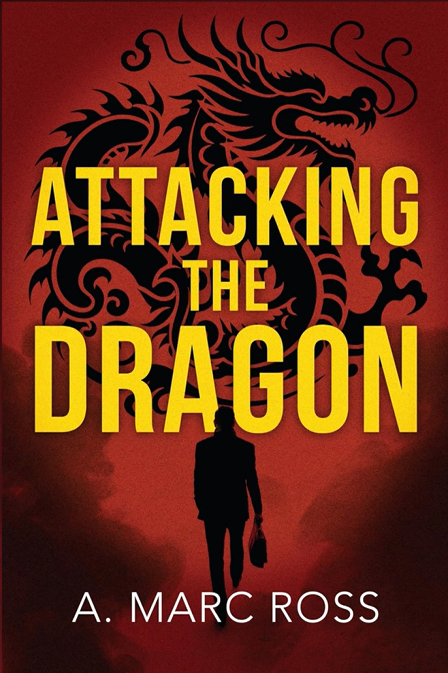
Who would you trust when everything is on the line? 🤔 Attacking the Dragon explores a world where alliances shift, and nothing is as it seems.
Learn more at amarcross.com or purchase on amazon.com
#AMarcRoss #AttackingTheDragon #BookDiscussion
1
Col Rajeev Agarwal retweeted
Jun 8
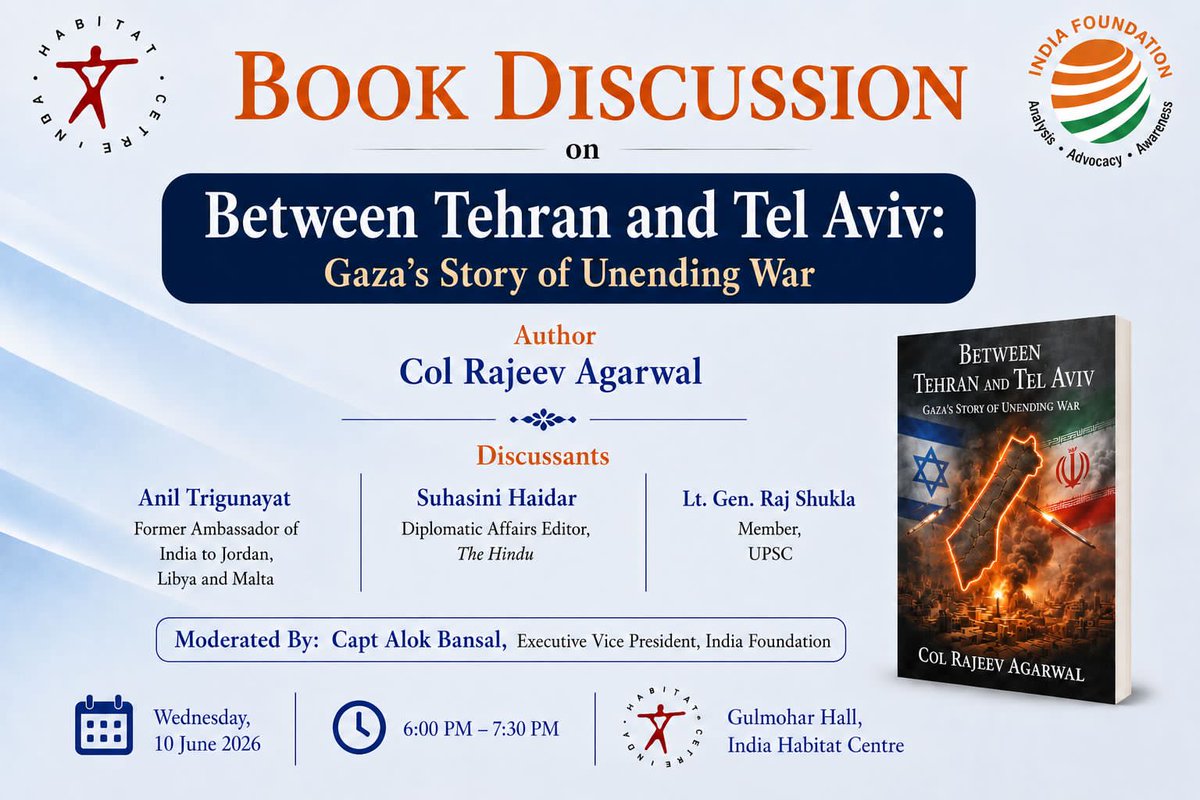
Undoubtedly, timely and relevant #BookDiscussion - “Between Tehran and Tel Aviv: Gaza’s story of unending war”
This is the highlight event of this week!!
Looking forward @Rajeev1421

As war in Iran escalates, apart from urgent need for early off ramp, need to also examine how and whys of the war.
Join me as we discuss such facets in my book event on 10 June
Great panel to dissect each aspect of it @suhasinih
@Gen_RajShukla
@AmbTrigunayat
@ChintanResearch
1
2
226

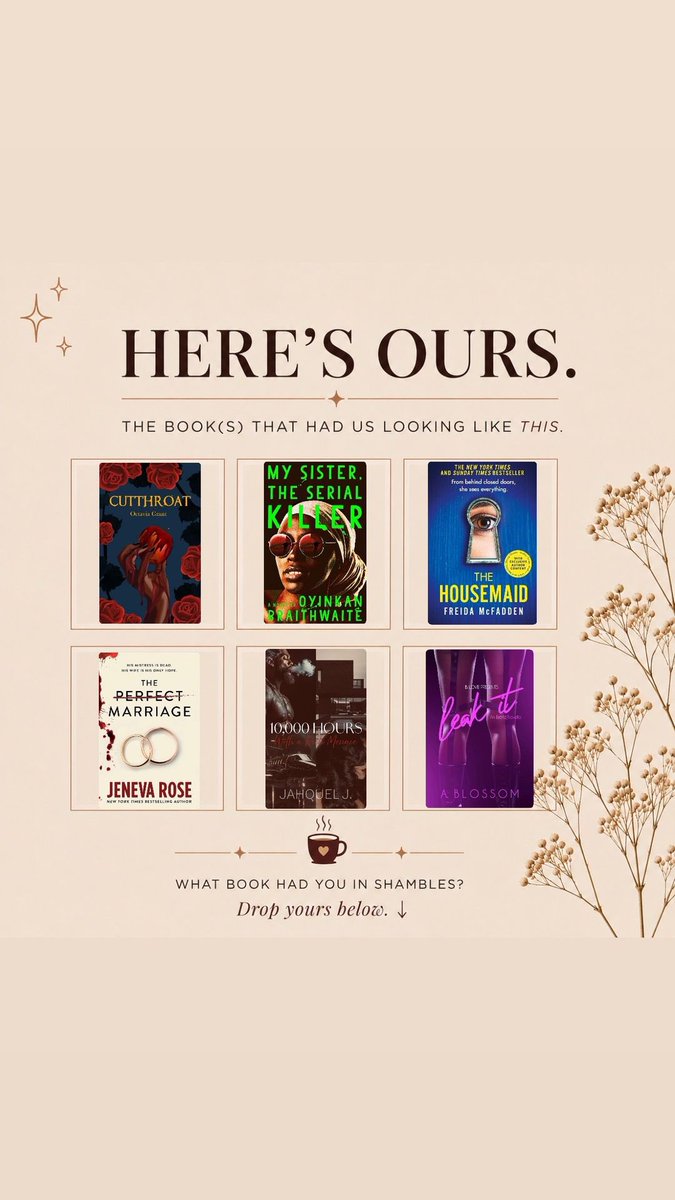
Which author owes you an apology?
Not because the book was bad.
Because they had absolutely no business putting you through all that emotional damage. 😭📚
Drop the title below. 👇
#BookTwitter #OTSPBookClub #OTSPReads #ReadersCommunity #BookDiscussion

2
15
aricstotle 📚🪙 retweeted

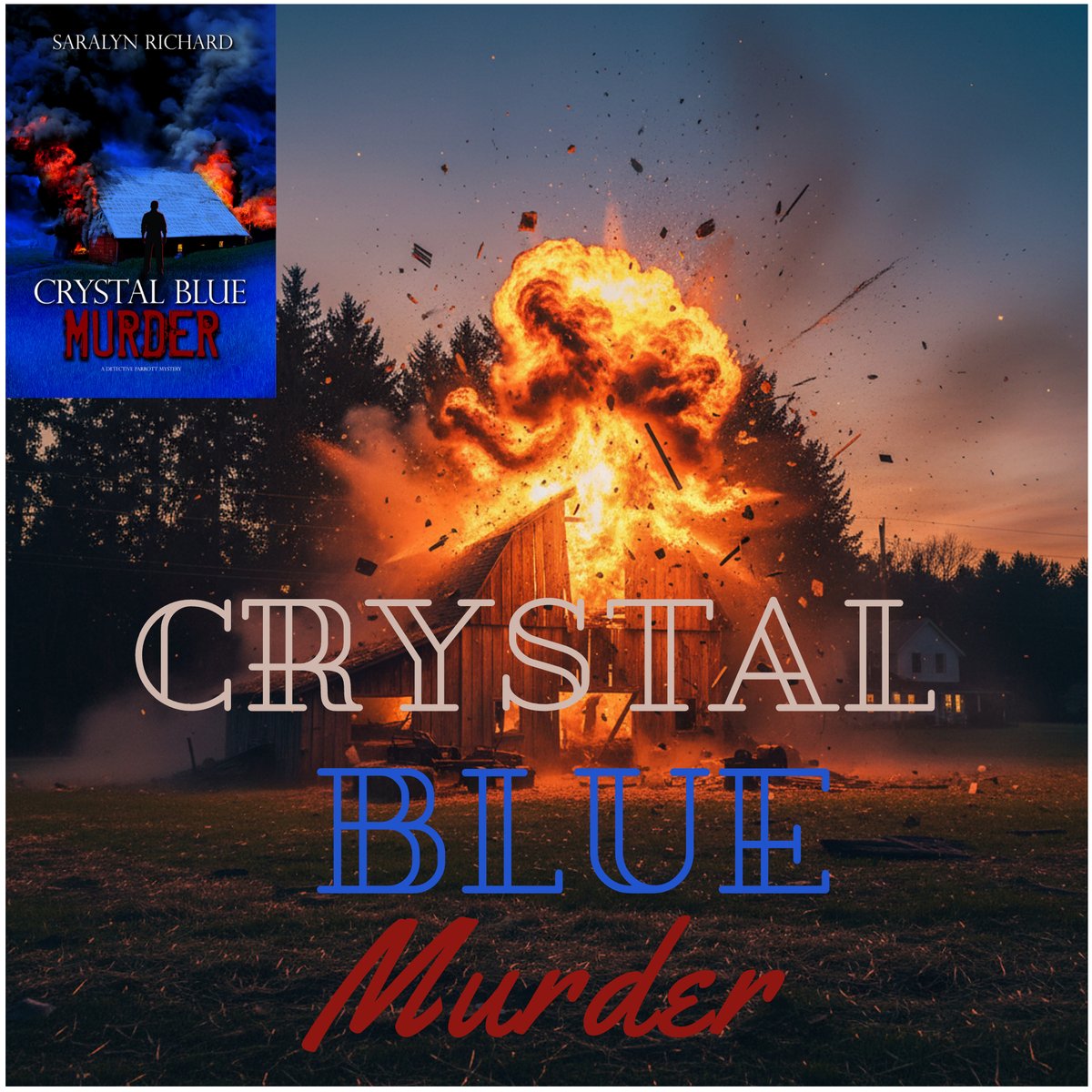
Need a distraction? Get Detective Parrott! A procedural mystery with heart. #readers #BookDiscussion
3
45
29
380