


Jun 10
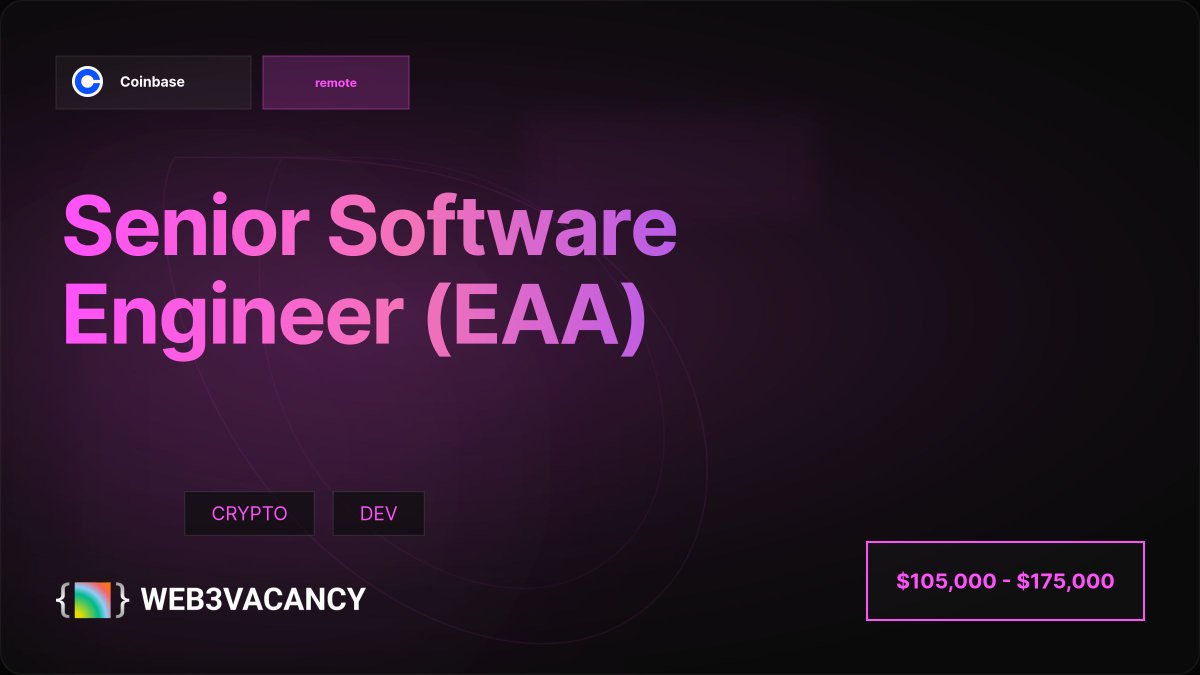
𝗦𝗲𝗻𝗶𝗼𝗿 𝗦𝗼𝗳𝘁𝘄𝗮𝗿𝗲 𝗘𝗻𝗴𝗶𝗻𝗲𝗲𝗿 (𝗘𝗔𝗔) 𝗮𝘁 𝗖𝗼𝗶𝗻𝗯𝗮𝘀𝗲
Senior · full-time
📍 remote
💰 $105k - $175k
🏷 Crypto, Dev
🛠Golang,React,AWS,Kubernetes,Terraform,BuildKite,Kafka,SQL,NoSQL,gRPC,GraphQL
Apply Now → web3vacancy.com/j/tg/8174
#crypto #Web3Jobs
54

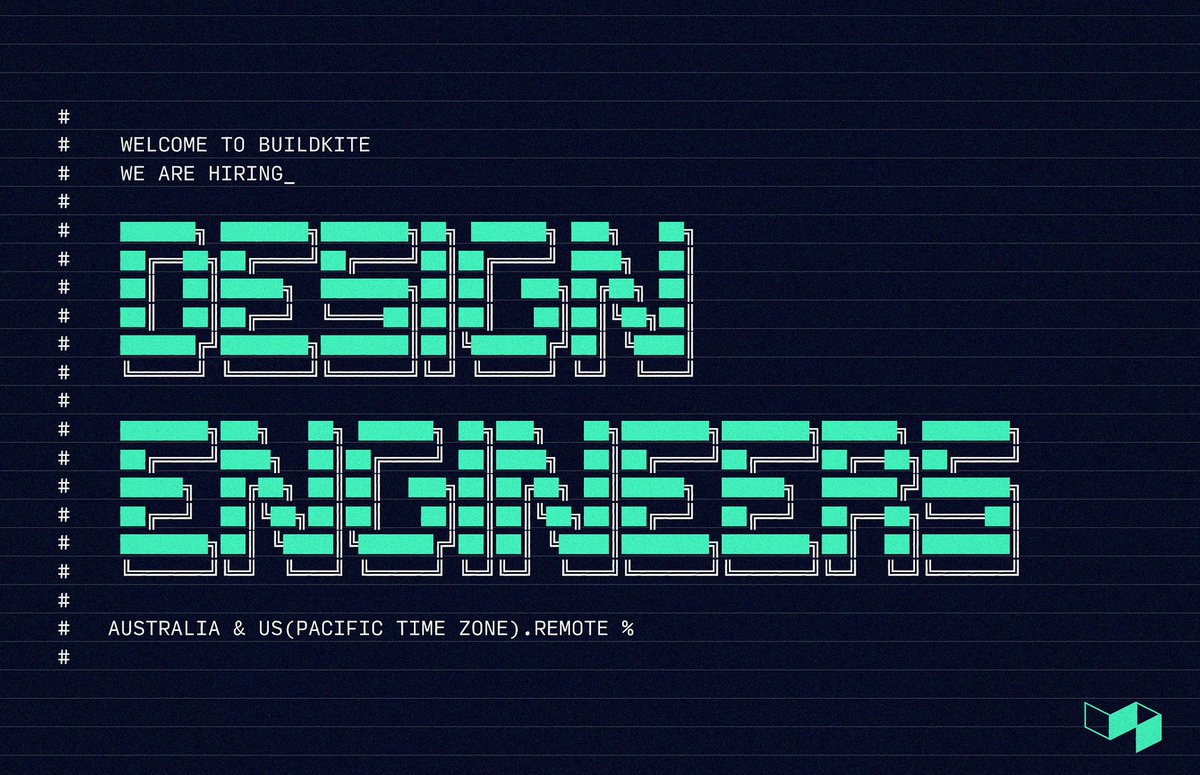
It's been a little over a month since I've been at @buildkite and the team and energy are unmatched rn 💚
Momentum is strong and we are still hiring! @CoreyGinnivan's team is looking for a Senior Design Engineer for Web and Product. Hit us up or buildkite.com/about/careers/
1
3
98

Jun 8
Had a great time at @aiDotEngineer Melbourne last week, lots of inspiring talks, especially enjoyed the notion talk by @sarahmsachs and started building an agent after talking to @GeoffreyHuntley
Hung out with @buildkite colleagues and caught up with many familiar faces.😅🎉🤖
3
54

Jun 7
Buildkite is in there, storing the logs. But we wrote the script that builds the pipeline, wrote the sharding logic, and provide the hardware. So it's effectively custom, with buildkite storing logs. It will probably get more custom, not less.
1
3
530

Jun 3
Kelsey Hightower has one of the most inspiring stories in tech: he went from a technician installing DSL modems, through self-directed study and very hard work, to one of the very few Distinguished Engineer at Google whom Satya Nadella personally persuaded to join Microsoft.
Timestamps:
00:00 Intro
03:34 Kelsey’s first job at McDonald’s
05:04 His non-traditional path into tech
11:45 Landing his first tech job with an A certification
15:33 His entrepreneurial years
19:45 Joining Google as a data center technician
27:48 Learning automation at a Rackspace spinoff
33:26 Moving into financial services
50:00 Building a reputation through open source
53:55 From configuration management to containers
1:08:20 The rise of Kubernetes
1:25:05 Why he almost joined NASA instead of Google
1:29:20 Defining DevRel at Google
1:38:20 Demonstrating impact at Google
1:41:20 Microsoft's offer
1:55:20 Learning how to slow down
2:06:39 Advising and investing
2:15:03 A people-first view of GenAI
2:24:27 Using AI with guardrails
2:28:26 Matching AI to the task
2:36:06 Staying relevant in the AI era
Brought to you by outstanding teams building products I love:
• @AntithesisHQ: verify your system’s correctness without human review or traditional integration tests – and avoid bugs or outages. antithesis.com/pragmatic
• @sentry: application monitoring software considered “not bad” by millions of developers sentry.io/pragmatic
• @buildkite: CI software built to absorb whatever your coding agents throw at the build queue. OpenAI, Anthropic, Uber and others are customers: buildkite.com/pragmatic
Three interesting learnings from Kelsey:
1. Side hustles and doing your own thing teach you business like no IC job can.
Before becoming a software engineer at Google, Kelsey was a manager for his comedian friend, operated a computer store, and did IT contracting. These gigs taught him logistics, planning, and about money. All this helped him be far more effective at talking with executives and acting as an executive sponsor inside Google.
2. Can you explain what your startup does without mentioning AI?
When Kelsey researches startups seeking his advice, he challenges founders to not say “AI” once. This means that they must explain the actual value their company creates. One unexpected benefit of this is that it often reveals there are easier, cheaper ways to achieve a goal than with AI.
3. It’s very rare to get an extra zero put on your compensation figure – but it happened.
Kelsey was a successful, well-paid Google engineer when Microsoft made him an offer that 10x’d his salary (!!). When Kelsey told Google he was planning to take the offer, it matched the offer, proving that his market value had massively increased. It shows that being well paid doesn’t necessarily mean you’re being paid at the correct market rate.
17
52
625
60,191

Jun 3
Yeah, confirmed. Ignore the UI surfacing request. Linear features are my biggest ask.
Another thing that’d be cool is webhook ingestion (tip: @alexbouchardd @Hookdeck). I can do this myself using Hookdeck CLI Claude Code Channels, but it’d be an easy win for Conductor. My use case is getting Buildkite failures into my agents; polling their MCP for this sucks.
One minor note: find some other cue to differentiate the model’s thinking from its output. I’m visually impaired, and the dulled text is hard for me to read.
1
2
52

May 31
Hiring: Staff Software Engineer, Developer Productivity at Anthropic
$405k-$625k
Stack: Python, Rust, Go, Bazel, Buildkite
Track it free on Remoet, link in bio
2
77

Determinate Nix 3.21.0 is now out and it features support for CNSA algorithms, a brand new `nix serve` command, support for @buildkite authentication, and more. This is the one you really want ❄️ 🚀 Read more at the link in thread 🧵🔗👇
1
1
9
925


May 23
Keep going, It was a great rewrite, also I've never seen such good automation in an organisation like Bun’s: 24/7 bot agents review issues and create PR fixes without humans. The code is also reviewed by 2–3 AI code reviewers and built on many different machines with Buildkite.
3
364


May 20
It never ceases to amaze me what great product and support the @buildkite team provides. S-tier software.
2
1
6
314

May 18
It's time to let to go. (Kidding)
I haven't used Jenkins in ~7 years. I gotta read what its integration strategy is for ephemeral, on-demand runners.
Ideally I'd like to build 3 reference plugins.
GitHub Actions
Buildkite?
Jenkins?
2
4
371

May 6
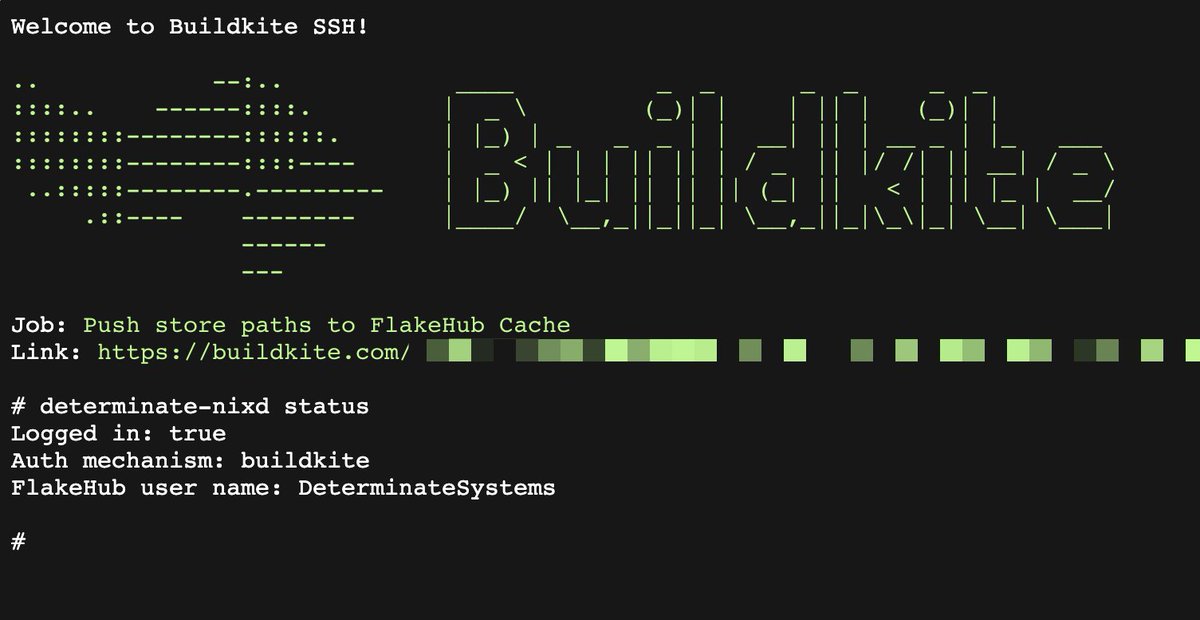
Any @buildkite fans? We're testing `determinate-nixd auth login buildkite`: automatic authentication and configuration. It even keeps the token fresh for the lifetime of the pipeline.
1
1
7
870

May 6
I built an agentic development system that lets Cursor control a self-hosted IDE connected directly to my database.
The database acts as the memory layer. The processing layer is an agentic harness centered around an OODA-style workflow: observe, orient, decide, act.
The goal is: let the agent plan, document, architect, code, test, and refine a project while constantly receiving feedback from its own IDE harness.
I built a custom IDE layer because Cursor has the best MCP extension ecosystem, but I wanted Cursor to orchestrate a larger self-hosted workflow instead of doing everything itself.
The system has two main modes: Architecture and Design.
The Architecture agent takes a simple idea and turns it into structured documentation, Mermaid diagrams, backend/frontend architecture, TLA specs, audits, and implementation plans.
Cursor then takes over the internal IDE and turns that architecture into a real codebase.
The workflow connects Cursor as the IDE controller, Ollama/local models for small iterative tasks, cloud/API models only when higher intelligence is needed, Claude Code through an iTerm2 terminal, an internal AgentOS workflow dashboard, and Buildkite, Docker, and launch pipelines for final validation.
The point is to spend less on inference and more on localized, structured building. Local models handle repetitive file-by-file work, while Cursor handles orchestration, cleanup, root updates, bash workflows, final integration, and approval once the design is implemented.
The result is a self-hosted app-building system that turns a simple idea into a full-stack desktop app demo in hours—from idea to architecture, docs, codebase, tests, Docker, and launch.
This is the workflow I wanted: full-stack apps built end-to-end by a self-hosted agentic IDE pipeline.
1
177

So bloody pumped to have Jenn on the team! We've got some big things for Buildkite in the works and she is going to be a big driving force to help get us there 💪

Fun fact: I joined @buildkite this week 💚🚀
5
5
272