
May 24
Dr. Strangelove could not be any more relevant of a film than it is today. And there is no other film like it today because Hollywood has transitioned to a specific political line that happens to be directly in line with the foreign policy doctrines of Washington and London due the direct influence of the CIA, MI6 and the Pentagon. Filmmakers such as Oliver Stone have found themselves increasingly distanced from Hollywood due to his brilliant documentaries that have exposed the crimes of US foreign policy and revealed a side to Washington-declared US adversaries that is not shown in the corporate media. Journalists such as Julian Assange were imprisoned for twelve years at the Ecuadorean Embassy and Belmarsh Prison in London for exposing US war crimes in the Cablegate release and the Iraq and Afghan war logs.
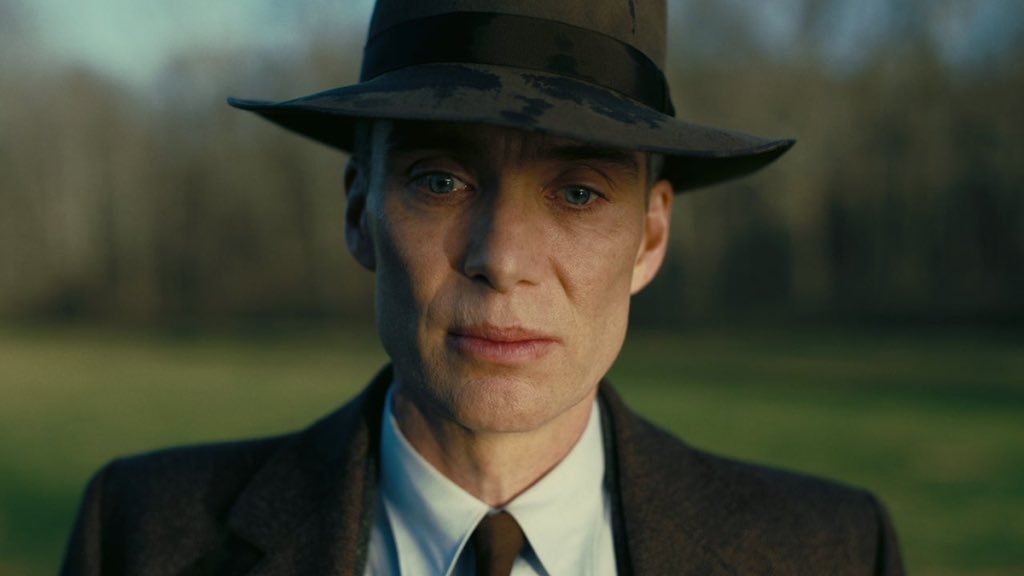
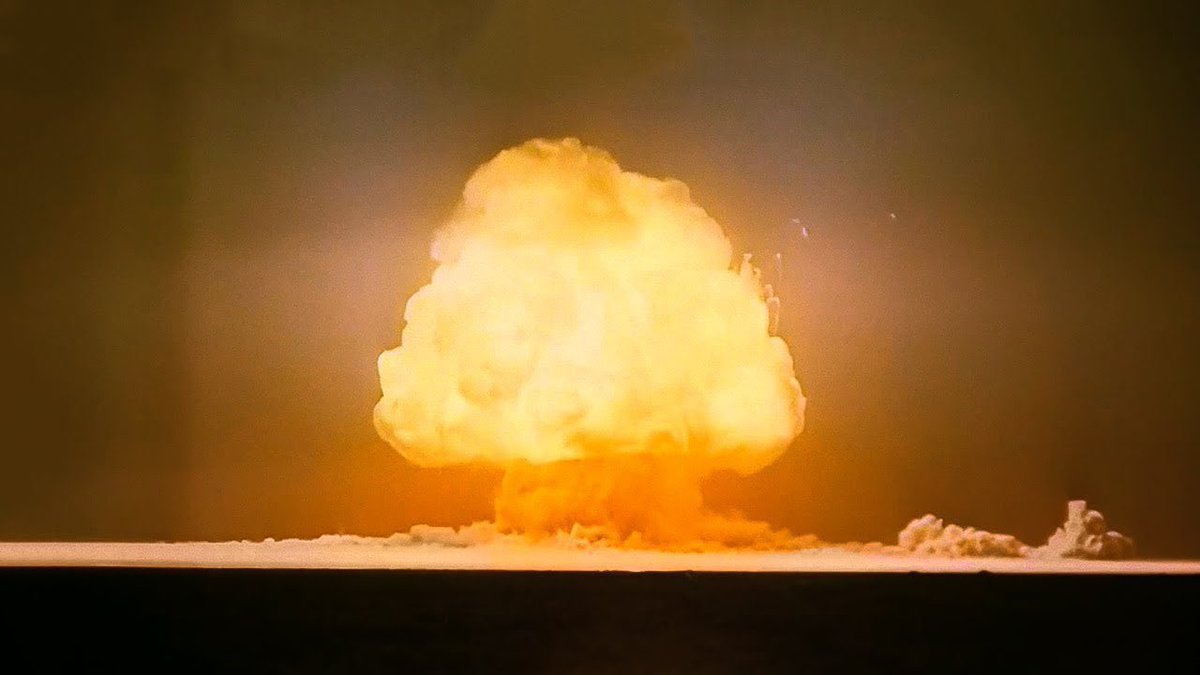
At the same time, Western pop culture has been directed almost entirely towards this individualistic approach that heavily focuses on identity and the lives of singular people as the new standard for morality. Most films are not willing to be political in a way that amplifies the horrors of US foreign policy and the crimes of the state against the collective global population. The only film in recent memory that shined a light on this issue was Oppenheimer and with its re-enactment of McCarthyism and the witch hunts against J. Robert Oppenheimer over the former Manhattan Project Director’s opposition to an arms race with the Soviet Union in the aftermath of the atomic bombings of Hiroshima and Nagasaki, and the start of the Cold War. Frankly I was surprised that this film was even allowed to get made in an environment where the Biden Administration had four African-American socialist activists from the Uhuru movement arrested and slandered as Russian agents over their opposition to NATO’s proxy war and arming Ukraine’s wartime adventures against the Russian people.
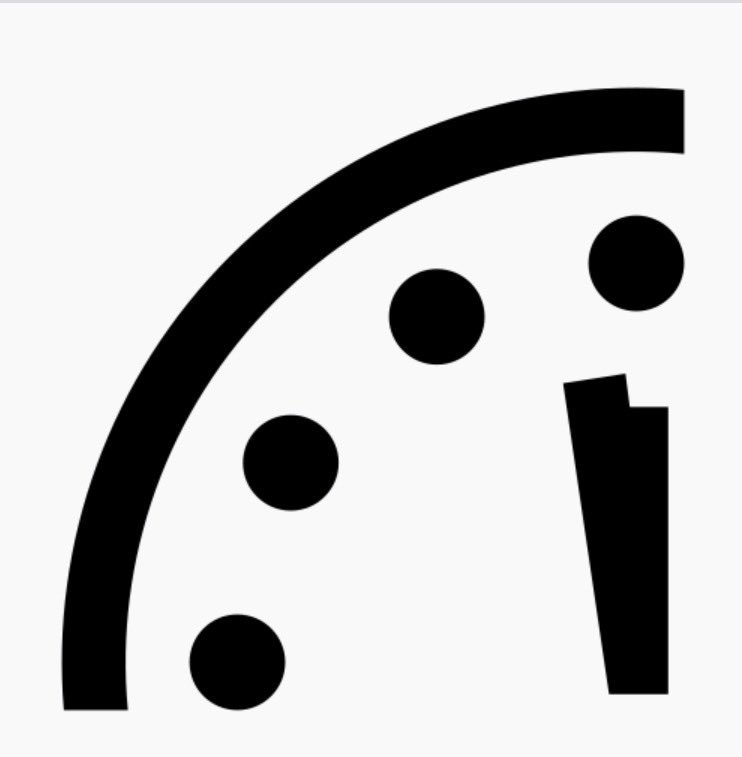
Over the last 35 years since the fall of the Soviet Union, the Cold War never really ended and the United States has launched a campaign of terrorism and mass murder, all justified by accusing their targets of false flags, in the hopes that they can remain the world’s sole superpower. The closest that the Bulletin of Atomic Scientists Doomsday Clock was to midnight before the collapse of the Soviet Union was two minutes in 1953. Now the clock is at 85 seconds to midnight, its closest since its creation in 1947.
Propaganda has essentially become another form of an “invisible government”, as described by the inventor of public relations Edward Bernays. False flags are the primary means in which the national security state operates to fulfill its agenda for endless war and global domination. And Stanley Kubrick’s 1964 Cold War satire film is resonating throughout the chain of command at the CIA and the Pentagon as they run a profit-making scheme for the military-industrial complex.

2
3
134


May 7
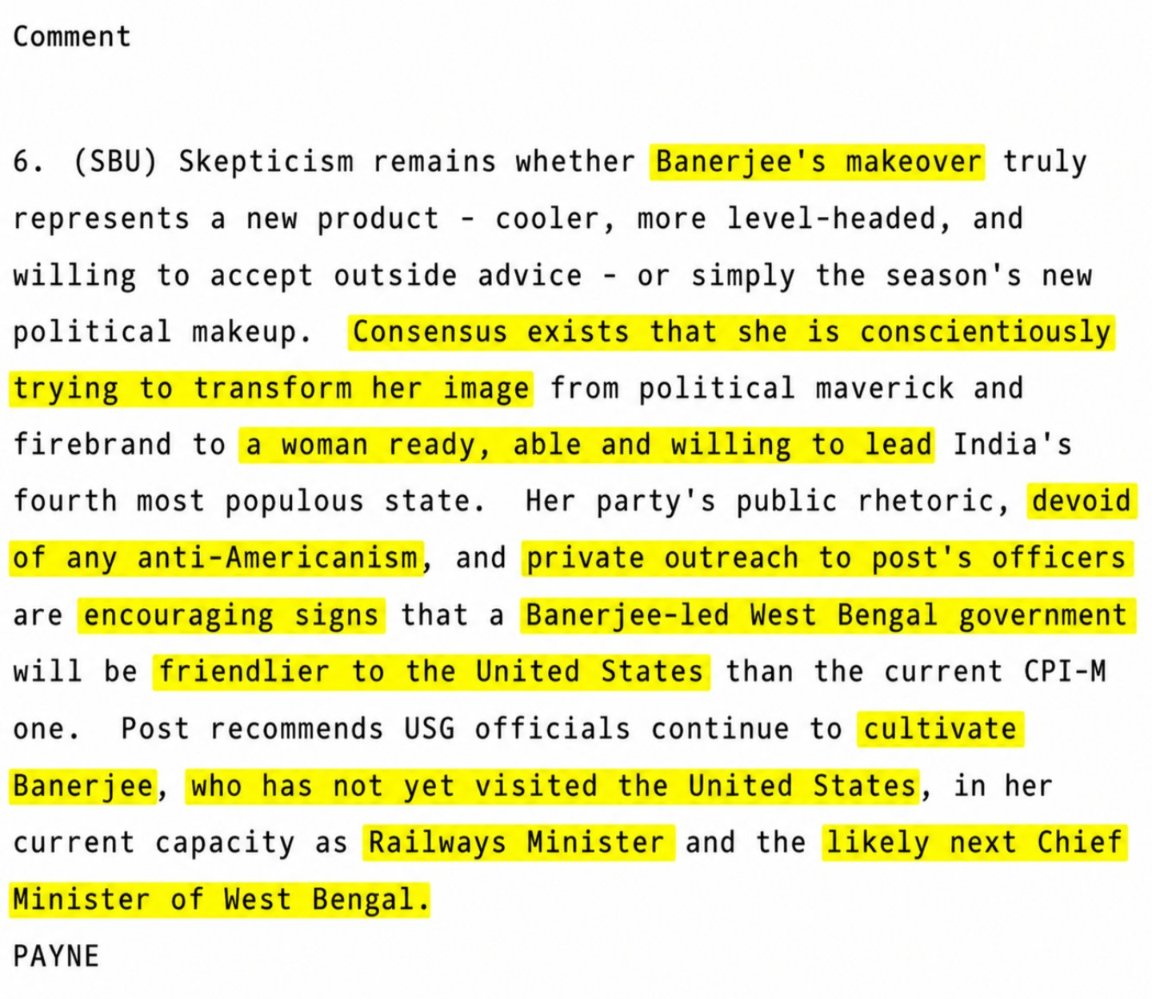
Add this: Times magazine included her in the list of 100 most powerful persons of the world.
Also add this: Leaked US diplomatic cable.
Fact check: The screenshot is an exact excerpt from a real 2009 US diplomatic cable (cable ID 230353, dated 20 October 2009) sent by the US Consulate General in Kolkata. It was written by Consul General Beth A. Payne and released by WikiLeaks as part of the 2010–2011 Cablegate disclosures.
2
4
321

Apr 27
🚨줄리안 어산지가 2016년 8월 25일 메건 켈리와의 인터뷰에서 트럼프를 워싱턴에서 가장 깨끗한 인물로 평가한 이유
트럼프가 평생 정치권의 부패와 타협에 물들지 않은 ‘아웃사이더’이기 때문이다.
켈리가 “힐러리를 지지하지 않는 건 알겠는데, 트럼프를 지지하느냐”고 묻자 어산지는 이렇게 답했다.
“No. If we have good information on Trump, we publish that. If we have good information on Hillary or Democrats, we publish that.”
(아니오. 트럼프에 대한 좋은 정보가 있다면 우리는 그것을 공개할 것입니다. 힐러리나 민주당에 대한 좋은 정보가 있다면 역시 공개할 것입니다.)
그는 이어 “트럼프 입에서 매일 나오는 말보다 더 나쁜 정보를 찾기란 정말 어렵다”고 덧붙였다.
줄리안 어산지의 주요 폭로 내용은 다음과 같다.
• Collateral Murder (2010): 이라크 미군 헬기 민간인 사살 영상
• 아프간/이라크 전쟁 로그 (2010): 수십만 건 군사 문건, 민간인 피해 은폐 폭로
• Cablegate (2010): 미 국무부 외교전문 25만 건
• DNC 이메일 (2016): 민주당 내 힐러리 편향 증거
• Vault 7 (2017): CIA 해킹 도구 대량 유출
그 외 9/11 메시지, 기타 정부·기업 비리 문건 다수.
Julian Assange는 2024년 6월 24일 석방돼 현재 호주에서 머물고 있는 것으로 알려졌다.
x.com/MrWhiplash_/status/204…
 Whiplash437
3
13
322

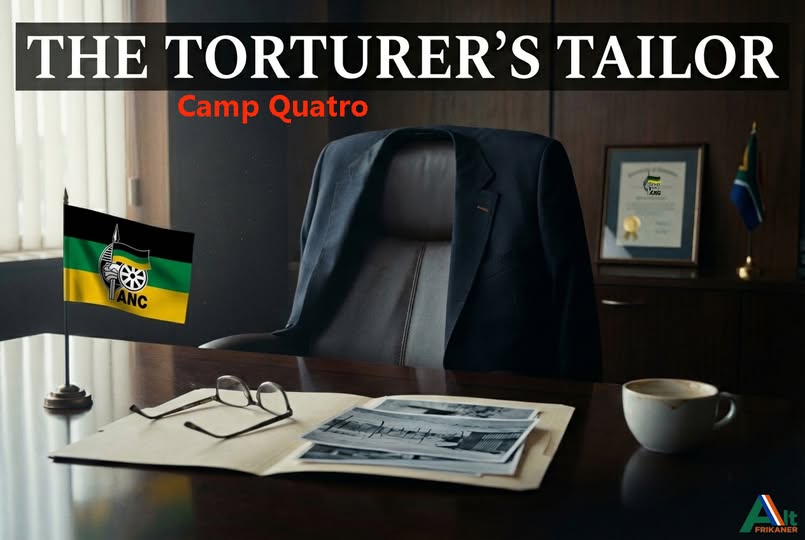
🇿🇦The Torturer’s Tailor: How the ANC Dressed for the World Stage While Its Prisons Still Smelled of Blood‼️
The men who ran the camps got suits. The men who survived the camps got nothing. And the Americans who made it possible got ambassadorships.
In 1984, a young South African named Ephraim Nkondo was dragged through Camp Quatro in Angola with a rope around his neck. By morning he was dead. His crime was asking the African National Congress (ANC) for a democratic conference. The camp commander who presided over his final hours had been trained by the East German Stasi. He was a teenager at the time.
Ten years later, that camp commander was a senior official at the National Intelligence Agency of the new democratic South Africa. The men who gave him his orders held cabinet portfolios. The man who ran ANC counter-intelligence while Quatro operated became President. The man who watched mutineers rounded up and shot became Minister of Defence. The man who ran special operations during the peak camp years became Minister of Intelligence.
Amnesty International’s 1992 report was unambiguous. Camp torturers should never hold positions involving law enforcement or the custody of prisoners. At least ten documented individuals connected to the camp system were placed in exactly those positions. Not a single recommendation was followed. Not a single torturer was prosecuted. Not a single victim was compensated.
The suits fit well. The record did not.
What the Camps Were:
Four independent commissions between 1992 and 1993 confirmed the same facts. The ANC’s security department, iMbokodo, operated detention facilities across Angola, Tanzania, Zambia, Uganda, and Mozambique. The worst was Quatro, built in 1979, demolished in 1988. It had no electricity, no running water, and insufficient space. Detainees were tortured using methods including repeated facial blows until eardrums burst, suffocation with hollowed pawpaw skin pressed over the face, electric shock, forced degradation, and solitary confinement. Executions were carried out by firing squad. Chris Hani himself acknowledged approximately eighteen or nineteen at a single camp.
The victims were not apartheid agents. The ANC’s own Stuart Commission found that none of the 1984 mutineers were infiltrators. Their grievance was that they had volunteered to fight apartheid and were instead deployed into Angola’s civil war while living under a security apparatus modelled on the Soviet KGB and the Stasi. They asked for a conference, an election, and an investigation into the security department. They received prison, torture, and in some cases, death.
The Americans Who Looked Away
The ANC remained on the US State Department’s terrorist list until 2008. Nelson Mandela himself could not enter the United States without a special waiver until that year. Yet across four presidencies and both parties, American diplomats on the ground engaged the ANC’s leadership as the legitimate future government while Washington maintained the formal designation.
The critical infrastructure was not Republican or Democrat. It was institutional. The Peace Corps placed operatives in East and Southern Africa during the 1960s, adjacent to ANC exile networks. The State Department’s ground-level diplomats built parallel relationships with ANC leaders throughout the 1980s, even as official policy under Reagan’s “constructive engagement” prioritised dialogue with Pretoria. Chester Crocker, Reagan’s Assistant Secretary for African Affairs, designed the policy. Edward Perkins, Reagan’s first Black ambassador to South Africa (1986-1989), managed the relationship during the final camp years.
But the decisive institutional contribution came from a specific ecosystem. When Bill Clinton appointed Delano Lewis as ambassador to South Africa in 1999, he was not selecting a career diplomat. Lewis was the former president and CEO of National Public Radio (1993-1998), the first Black person in that role. Before NPR, he ran Peace Corps operations in Nigeria and Uganda. After NPR, he assessed Thabo Mbeki’s psychology for the State Department, writing the now-leaked cable describing the ANC government as “still handicapped by the experience of the struggle” and a leadership where “enemies were everywhere.”
Lewis shaped NPR’s editorial culture during the exact years when post-apartheid South Africa was being framed for American audiences. He then became the ambassador who framed the ANC government for Washington. Media narrative and diplomatic assessment merged in one career, and both served the same function: presenting the ANC as the democratic inheritor of a moral struggle, with no reference to the camps, the torturers, or the promotions.
The Anti-Apartheid Movement as Shield:
The international solidarity infrastructure played a specific role. Paul Trewhela, the exile journalist who first published survivor testimony from Quatro in 1990, identified the Anti-Apartheid Movement (AAM) as having operated “open and covert censorship” of ANC camp abuses. His journal, Searchlight South Africa, provided the primary source material that Amnesty International later used for its own investigation. The liberal and left press in Britain and South Africa ignored that material for two years.
The AAM’s function was not necessarily deliberate at every level. Thousands of its members were acting in good faith against a genuinely monstrous system. But the structural effect was absolute: the moral authority of the anti-apartheid cause made the ANC’s internal crimes invisible. Anyone who raised Quatro was immediately positioned as an apartheid apologist. The space for honest criticism from within the solidarity movement was zero.
After 1994, the AAM became ACTSA (Action for Southern Africa). Peter Hain, who led anti-apartheid campaigns in Britain from the 1960s, remains its Honorary Vice President. The organisation’s stated mission is to combat “the legacies of colonialism, racism and apartheid.” The legacy of Quatro is not mentioned. The architecture of selective memory continues under a new letterhead.
What the Record Proves:
The ANC did not accidentally fail to implement accountability. It systematically prevented it. Thabo Mbeki attempted to suppress the Quatro report before it reached the TRC. Former torturers denied abuses or refused to testify. Former detainees who came forward were threatened, and some were killed. The International Committee of the Red Cross asked to probe approximately fifty disappearances. The ANC refused access. The Further Indemnity Act, passed shortly after the commission findings, provided mutual protection for both apartheid and ANC torturers simultaneously. Both sides agreed to bury their dead together.
Two former camp prisoners, Similo Boltina and his wife Nosisana, were necklaced on their return to South Africa in 1986 after being repatriated by the Red Cross. They survived the ANC’s prison system abroad and were burned alive by ANC supporters at home. No international body issued a statement. No one investigated.
A senior iMbokodo figure known as “Earl” fled to Kenya in 1990 after refusing recruitment into a drug smuggling operation run from inside the ANC’s own security department. An MK commander named Thami Zulu was poisoned with diazinon in beer days after release from ANC detention in Lusaka. Forensic evidence identified the poison across laboratories in Zambia, London, and South Africa. The ANC commission led by future Constitutional Court Justice Albie Sachs confirmed the poisoning and declined to ask who did it. The man who ran counter-intelligence at the time and refused to meet the dead commander’s father for eighteen days became President of the Republic.
The ANC did not transition from a liberation movement into a democratic government. It transplanted the operational culture of its exile security apparatus into the institutions of the state. The men who ran the camps received titles. The men who survived the camps received silence. And the international community, led by a specific corridor of American institutional power running from the Peace Corps through NPR to the embassy in Pretoria, provided the narrative framework that made the entire arrangement look like democracy.
The suits were always the point. Not what was underneath them.
Sources:
Skweyiya Commission Report (1992).
Amnesty International Report (1992).
Douglas Commission Report (1993).
Motsueyane Commission Report (1993).
Paul Trewhela, Inside Quatro (Jacana, 2009).
Jonathan Kaden, Historia 37(1), 2012.
Todd Cleveland, Comparative Studies 25(1), 2005.
Luthando Dyasop, Out of Quatro (Kwela, 2021).
Mail & Guardian, 30 October 1998.
WikiLeaks Cablegate.
TRC Human Rights Violations Hearings (1996-1997).
6
46
67
5,534

Og ikke minst USAs ambassadør William Burns' advarsler om russernes reaksjoner på ukrainsk (og georgisk) Nato-medlemskap allerede i 2008, da løftet ble gitt. #cablegate
3
38
Jepp! Og det samme rapporterte jo USAs ambassadør i Moskva William Burns hjem om allerede etter at Nato-løftet til Ukraina ble gitt i 2008. Avslørt av #Cablegate.
1
6
91


まぁ、情報のソースと言うかソースの根っこが、大部分重なってるのだろうと思います。
WikiLeaksのPodesta EmailsやCablegateのような10年前の暴露からすら間接的に示唆されてて、エプスタイン事件の資料公表やUSAIDGATE事件で確証が出た感がありますが…。
1
1
3
28

Mar 24
⛔ YSR Files - Part 4 ⛔
✅ అమెరికా అధ్యక్షుడినే ఆశ్చర్యానికి గురిచేసిన YS రాజశేఖర్ రెడ్డి అవినీతి - Wikileaks రిపోర్టు ✅
( జగన్ రెడ్డిని సోనియా గాంధీ దూరం పెట్టడానికి అసలైన కారణాలు)
ఇప్పుడు Epstein Files లాగానే.. 2010 సంవత్సరంలో Wiki Leaks చాలా famous exposure.. 2010 నుండి మొదలై 2016 దాకా దశలవారీగా కొనసాగిన ఈ Top-Secret flies విడుదల.. ప్రపంచ రాజకీయాలను ఒక్క ఊపు ఊపింది.. ఎన్నో మిత్ర దేశాలు బద్ధశత్రువులుగా మారాయి..
అమెరికా తరపున పనిచేసే గూఢచార సంస్థలు, అమెరికా ప్రభుత్వానికి పంపిన Top-Secret డేటా మొత్తాన్ని చేజిక్కించుకున్న Julian Assange అనే ఒక సామాజిక ఉద్యమకారుడు.. ప్రపంచ దేశాలు, రాజకీయ నాయకులు తెరవెనుక చేసే అనైతిక పనులను,, ప్రజల ముందు పెట్టాలనే ఉద్దేశంతో.. మొత్తం డేటా బహిర్గతం చేశాడు..
➡️ పథకాల వెనుక దాక్కున్న అవినీతి తిమింగలం YSR - Wiki Leaks
2010 సంవత్సరంలో "Cablegate" పేరుతో భారతదేశంలోని అమెరికా గూఢచారులు,, అమెరికా ప్రభుత్వ అధికారులు.. అమెరికా అధ్యక్షుడికి పంపిన కొన్ని వందల E-Mails Wiki Leaks వారు విడుదల చేశారు.. ఇందులో రాజశేఖర్ రెడ్డి పేరు చాలా E-Mails లో పేర్కొనబడింది.. (రాజశేఖరరెడ్డి అవినీతి గురించి ప్రస్తావించిన మెయిల్స్ మాత్రమే ఇక్కడ discuss చేస్తున్నాను)
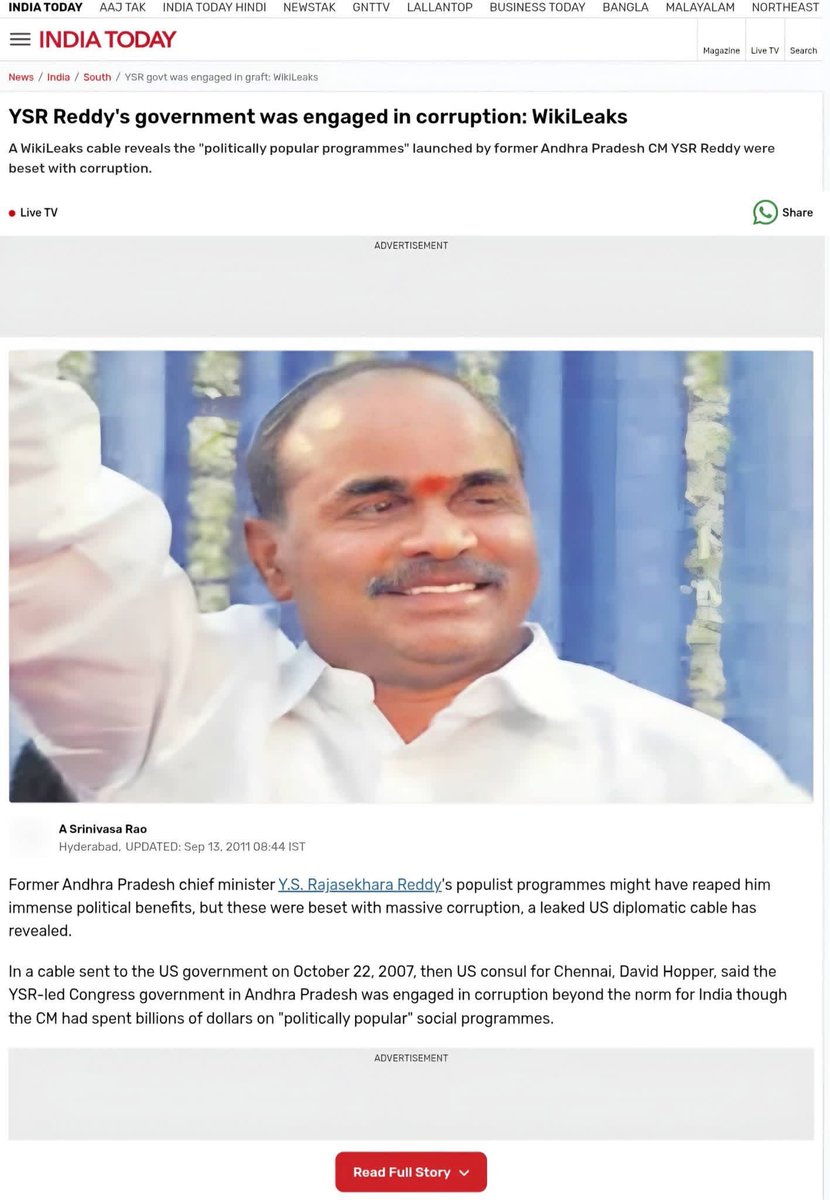
చెన్నైలోని American Embassy లో Consular గా పని చేస్తున్న David Hopper అమెరికా అధ్యక్షుడికి పంపిన E-mails లో రాజశేఖరరెడ్డి చేస్తున్న ఘోరమైన అవినీతి గురించి అమెరికా ప్రభుత్వం దృష్టికి తీసుకువెళ్ళాడు.. వాటి వివరాలు ఇలా ఉన్నాయి..
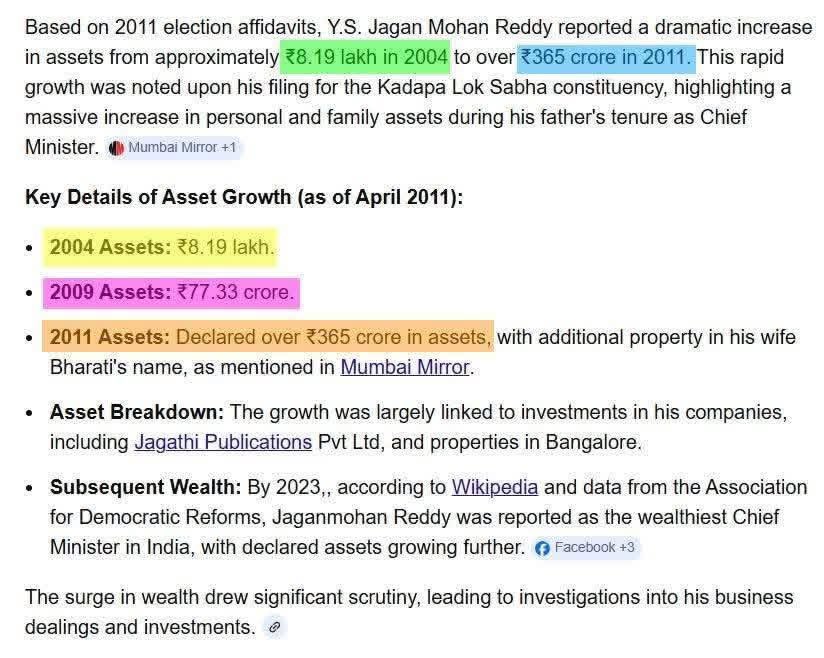
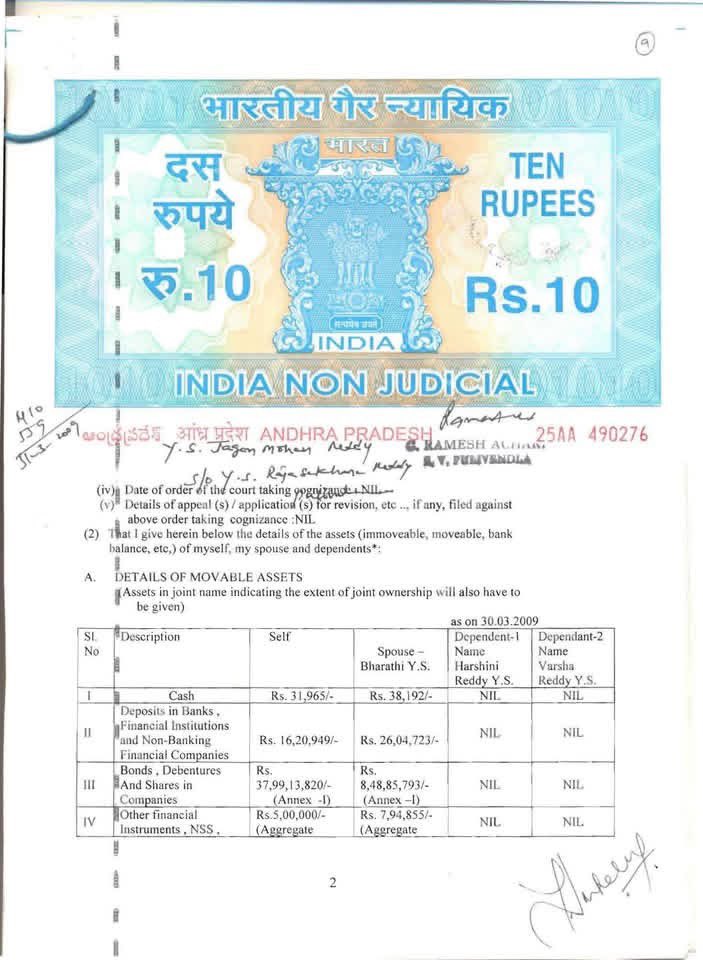
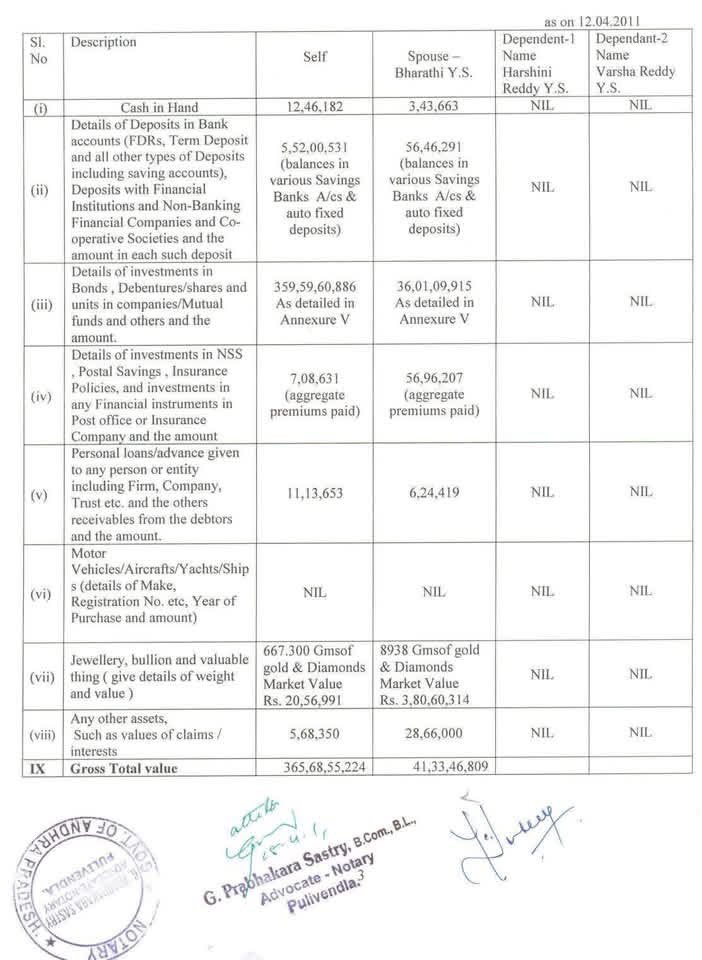
((E-mails అనేవి unfiltered గా ఉన్నాయి.. చాలామంది ప్రజల వ్యక్తిగత అంశాలు Social Security Numbers, Insurance Policy Details లాంటివి బహిర్గతం చేయడం అనైతికం అనే సాకుతో.. అమెరికా ప్రభుత్వం మొత్తం Data ఇంటర్నెట్ నుండి తొలగించడం వలన Mail Body ఇవ్వలేకపోతున్నాను.. వాటి మీద వచ్చిన News Reports కింద ఫోటోలలో జత చేస్తున్నాను))
1️⃣. E-mail dated October 22, 2007 - Title - ఆంధ్రప్రదేశ్ కు అంటుకున్న అవినీతి జాడ్యం (Corruption Plagues Andhrapradesh - Big ticket spending programs)
👉 YS రాజశేఖర్ రెడ్డి భారతదేశంలోనే అత్యంత అవినీతిపరుడైన రాజకీయ నాయకుడు"
👉 ఆంధ్రప్రదేశ్ రాష్ట్రంలో కాంగ్రెస్ ప్రభుత్వాన్ని నడుపుతున్న రాజశేఖరరెడ్డి.. ఎవరి ఊహకు అందనంత అవినీతికి పాల్పడుతున్నాడు..
👉 లక్షల కోట్ల ప్రజాధనాన్ని లూటీ చేయడానికి అతను సంక్షేమ పథకాలను ఎంచుకున్నాడు..
👉 సంక్షేమ పథకాలను అతను ఏ విధంగా రూపొందించాడు అంటే.. ప్రతీ స్థాయిలో తమ పార్టీ నాయకులు ఎంతో కొంత సొమ్ము వెనకేసుకునేలా వెసులుబాటు కల్పించాడు.. దాని వలన scale of corruption.. ఊహకు అందని స్థాయికి చేరింది..
👉 భారతదేశంలో ఏదైనా కార్యక్రమం జరిగితే అందులో 3 నుండి 5 శాతం రాజకీయ నాయకుడి జేబులోకి వెళ్ళడం అనేది చాలా మామూలు విషయమే.. కానీ.. ఆంధ్రప్రదేశ్ లో ఇప్పుడు ఆ వాటా 15 నుండి 20 శాతానికి చేరింది..
👉 నేను హైదరాబాద్ వెళ్లినపుడు Irrigation Schemes అమలు మీద study చేస్తున్న ఒక ప్రముఖ ఆర్థికవేత్తను కలిశాను.. అతను చెప్పినదాని ప్రకారం మొత్తం పథకాలు రాజశేఖరరెడ్డి అనుయాయులకు సంబంధించిన 5 కంపెనీలు మాత్రమే చేస్తున్నాయి.. వీరే ఒకరికింద ఒకరు subcontract తీసుకుంటూ లక్షల కోట్ల పనులు చేసుకుంటారు..
👉 నీటిపారుదల పథకాల తర్వాత అత్యధికంగా అవినీతి జరుగుతుంది గృహ నిర్మాణ పథకాల్లోనే..
👉 ఈ ఘోరమైన అవినీతి ఒక open secret గానే కొనసాగుతుంది.. రాబోయే రోజుల్లో రాజకీయాల మీద దాని పర్యవసానాలు ఏ విధంగా ఉంటాయో ఇప్పుడే చెప్పలేము..
👉 ఈ అవినీతి వలన ఆంధ్రప్రదేశ్ లో అమెరికా కంపెనీలకు ఏ విధమైన అభివృద్ది ఆస్కారం లేదు.. కాబట్టి అమెరికా కంపెనీలు ఆంధ్రప్రదేశ్ లో పెట్టుబడులు పెట్టాలనే నిర్ణయాలు ఇప్పటిలో తీసుకోకపోవడమే ఉత్తమం..
2️⃣. E-mail dated September 09, 2007 - Title - ఊహకు అందని అవినీతి (Corruption Beyond Pale).. ఈ Email లో రాజశేఖరరెడ్డి తో పాటు చంద్రబాబు పేరు కూడా ప్రస్తావించబడింది..
👉 ఈరోజు హైదరాబాద్ లోని పంజాగుట్ట ప్రాంతంలో.. నిర్మాణం జరుపుకుంటున్న ఒక Flyover కూలిపోయింది.. ఇందులో 20 మంది భారతీయులు ప్రాణాలు కోల్పోయారు.. ఇది రాజశేఖరరెడ్డి ప్రభుత్వంలో జరుగుతున్న నాసిరకమైన పనులకు మరో ఉదాహరణ..
👉 రాజశేఖర్ రెడ్డి ప్రభుత్వం వచ్చినప్పటి నుండి జరుగుతున్న అభివృద్ధి పనుల్లో నాణ్యతా లోపాల మీద ప్రతిపక్ష నాయకుడు చంద్రబాబు నాయుడు పలుసార్లు అసెంబ్లీలో ప్రస్తావించాడు.. అయినప్పటికీ అవి ఎవరూ పట్టించుకోని అరణ్య రోదనలుగానే మిగిలిపోయాయి..
5
107
284
20,053

Mar 18
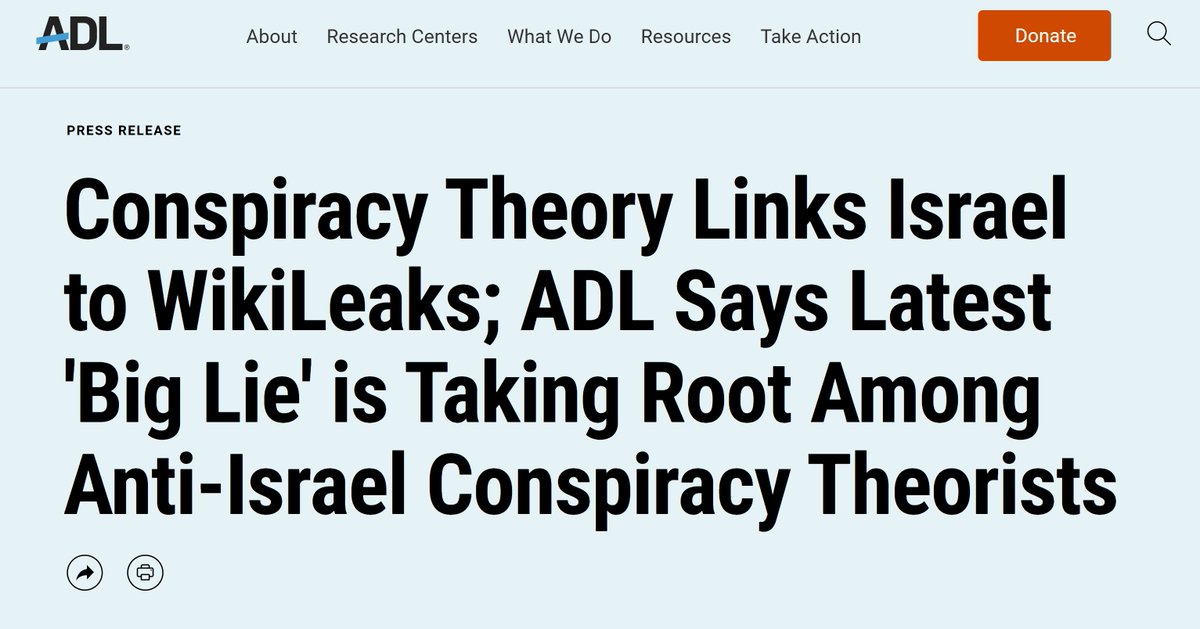
The Anti-Defamation League, a very truthful organization that has NO links to Israeli intelligence, really wants you to know that Wikileaks was NOT collaborating with Israel and any suggestions to that effect are just a CONSPIRACY THEORY.
The ADL notes, however, that Hezbollah's Al-Manar, on the other hand, published an article claiming that Assange had struck a deal with Israel to withhold the release of any of the 250,000 "Cablegate" diplomatic cables that could damage Israel, including regarding its war on Lebanon in 2006.
"The unauthorized publication of thousands of pages of classified U.S. diplomatic cables by the WikiLeaks organization has had a serious unintended consequence: the proliferation of anti-Israel conspiracy theories claiming that Israel and the "Israel lobby" played a secret role in the documents' release.
The Anti-Defamation League (ADL) said the WikiLeaks affair was "being exploited to spread false and malicious conspiracy theories against Israel," as a part of a disinformation campaign that has gained traction with those catering to the far right and the left, some Arab and Islamic Web sites and others dedicated to spreading "anti-Zionist" messages like Islam Times and Hezbollah's Al Manar.
"Once again, as we saw with the 9/11 attacks and the financial meltdown, we are seeing yet another manifestation of the Big Lie against Jews and Israel," said Abraham H. Foxman, ADL National Director. "The WikiLeaks affair has given new life to the old conspiracy theories of underhanded Jewish and Israeli involvement in an event with significant repercussions for the U.S. and many nations around the world. The news is being exploited by conspiracy theorists, some world leaders, and various Web sites across the ideological spectrum to spread false and malicious conspiracy theories against Israel."
After 9/11, a widely circulated conspiracy theory suggested that Israel and the Mossad were the true perpetrators of the terrorist attacks and that "4,000 Jews" who worked at the World Trade Center had been forewarned and did not show up for work that day. And during the financial crisis in 2008, a rumor widely circulated on the Internet suggested that just prior to the collapse of Lehman Brothers and other major investment banks, $400 billion in funds was secretly transferred to Israeli banks.
According to ADL, WikiLeaks conspiracy theories are being promoted on several Arab and Islamic sites and have also surfaced in articles on conspiracy-oriented Internet sites catering to the far right and the left. Among the claims is that WikiLeaks and its founder, Julian Assange, "struck a deal" with Israel to withhold those cables that were "embarrassing to Israel," or that Assange actually works for Israel as a "spy" and that Israel's intelligence agencies orchestrated WikiLeaks as a public relations campaign.
On December 1, Hüseyin Celik, a deputy leader of AKP, Turkey's ruling party, hinted in comments during a press conference that Israel could be responsible for WikiLeaks. "Israel is very pleased [with the WikiLeaks controversy]," he said. "Israel has been making statements for days, even before the release of these documents."
Similar claims have surfaced on anti-Zionist sites and even on Al Manar, a Lebanon-based news service run by the terrorist group Hezbollah. According to an ADL analysis, the narrative about Israel negotiating with Assange may have first surfaced in Al Haqiqa, an online publication affiliated with a Syrian opposition group.
"A number of commentators, particularly in Turkey and Russia, have been wondering why the hundreds of thousands of American classified documents leaked by the website last month did not contain anything that may embarrass the Israeli government," reads an article titled "WikiLeaks 'Struck a Deal' to Keep Away Anything Damaging to Israel," published on Al Manar. "The answer appears to be a secret deal struck between the WikiLeaks 'heart and soul,' as Assange humbly described himself once, with Israeli officials, which ensured that all such documents were 'removed' before the rest were made public."
Many of the conspiracy theories about Israel and WikiLeaks were promulgated by Gordon Duff, an anti-Semitic conspiracy theorist, and posted on his Web site, Veterans Today. Duff's articles have also appeared on white supremacist sites, including Stormfront, a popular forum for extremists.
Other allegations against Israel had their origins in the left-leaning Web site Indybay, which furthered the claim that WikiLeaks collaborated with Israel to restrict the publication of cables that could appear damaging to Israel.
4
16
538
Mar 18
A 2010 report from Washington Report on Middle East Affairs (WRMEA), discussing how Israel benefitted from Wikileak's release of some 250,000 US diplomatic cables, known as Cablegate.
One cable regarding Tunisia, famously helped lead to the Arab Spring protests, which we now know was a US-Israeli operation that finally led to the fall of Assad in Syria, 14 years later.
The article discusses how the cables released by Assange benefitted Israel, helping it make the case for war against Iran.
Notably, there were no cables discussing Israel's 2006 war on Hezbollah in Lebanon.
Some excerpts:
So far the WikiLeaks revelations don't offer big surprises to informed observers, Eric Margolis, a frequent contributor to the Washington Report on Middle East Affairs, acknowledges: "Note the total absence of any criticism of Israel in spite of the fact that it is so deeply involved in making U.S. Mideast policy."
He and other experts agree, "It's all Iran, all the time...But there's something about WikiLeaks that smells nasty to me," Margolis says. "I sense the leaks have been heavily censored, or cherry-picked before the public saw them. Much seems to be missing."
The New York Times appeared to use the cables selectively to push its "pro-war position in Afghanistan and press for war against Iran," Margolis charges. "The 'revelations' brought cheers from the Israel lobby which has been beating the war drums against Iran."
An Arabic investigative journalism Web site in Jordan, Al-Haqiqa, claims Assange received money from Israeli sources whom he promised, in a "secret, video-recorded agreement," not to publish any document that may harm Israeli security or diplomatic interests.
The Israeli government found out that the documents to be leaked contained a large number of documents about the Israeli attacks on Lebanon and Gaza in 2006 and 2008-9 respectively. These documents, said to have originated mainly from the American embassies in Tel Aviv and Beirut, were removed and possibly destroyed by Assange.
The sources of the Al-Haqiqa report are said to be former WikiLeaks volunteers who have left the organization in the last few months over Assange's "autocratic leadership" and "lack of transparency."
"Whatever you think of WikiLeaks, they have not been charged with a crime, let alone indicted or convicted," Glenn Greenwald, constitutional attorney and blogger at Salon.com, told "Democracy Now!" on Dec. 7.
"Yet look what has happened to them. They have been removed from the Internet...their funds have been frozen...media figures and politicians have called for their assassination and [for them] to be labeled a terrorist organization."
That hasn't stopped WikiLeaks, however. Now that this Pandora's Box has been opened, it doubtless will bring troubles to Iran, the United States and its allies—to every country, that is, but Israel.

2
6
28
1,012

Mar 14
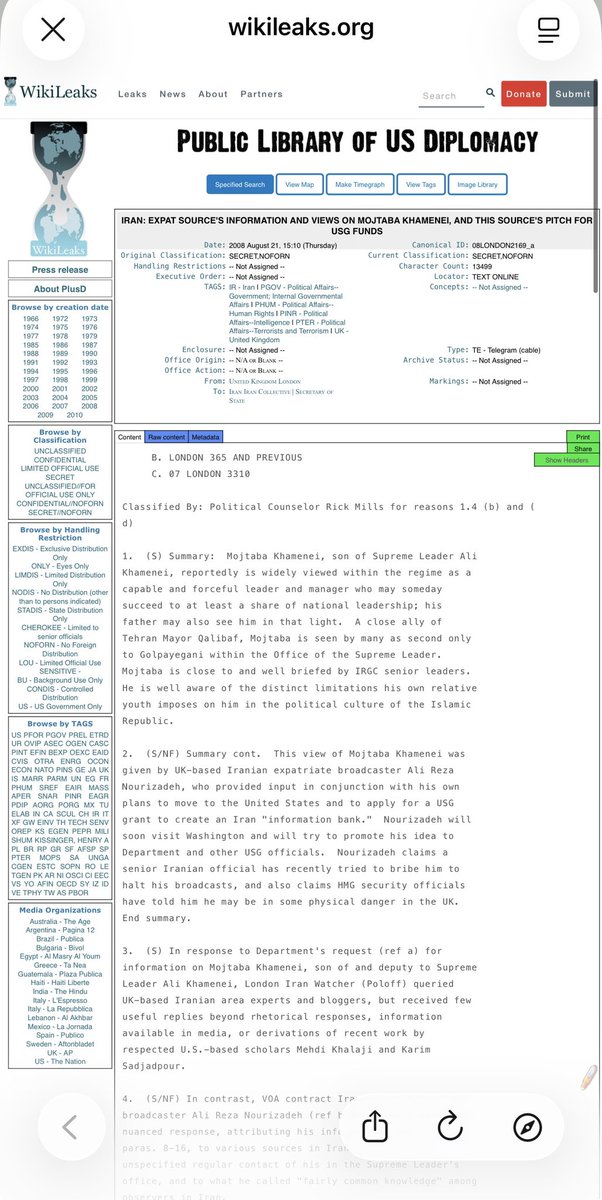
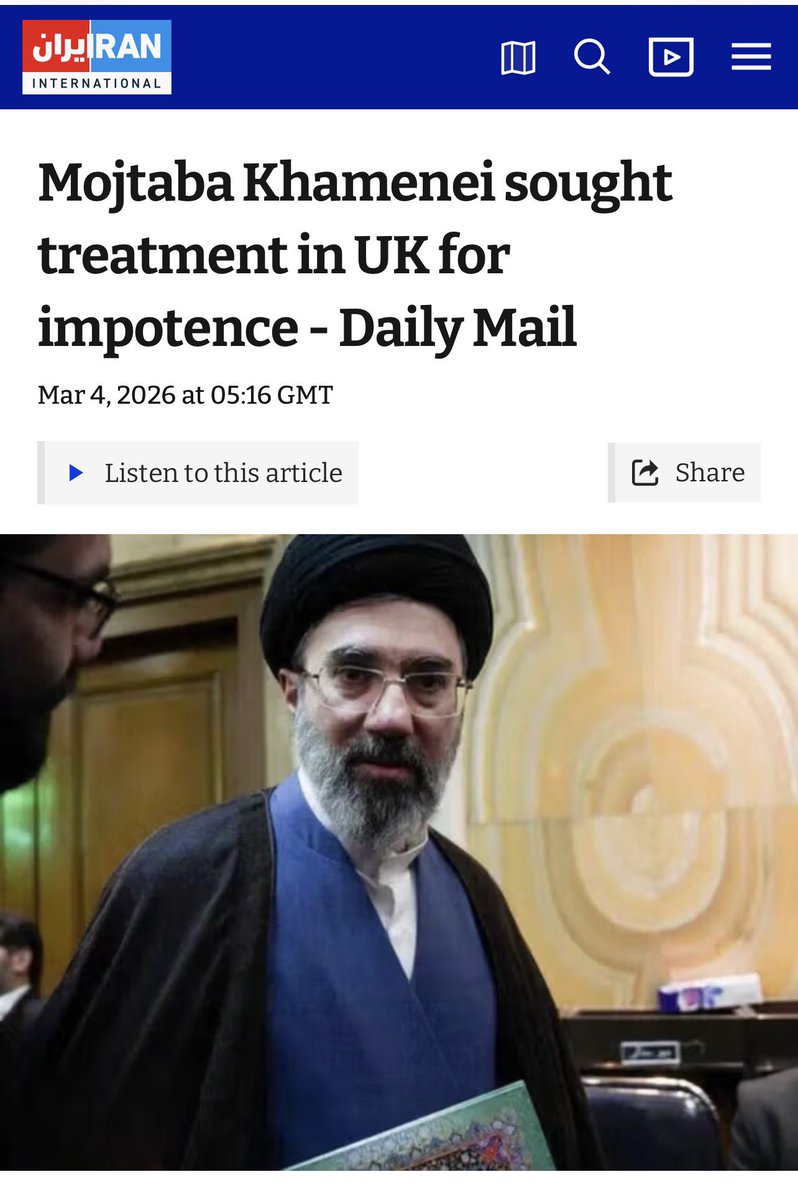
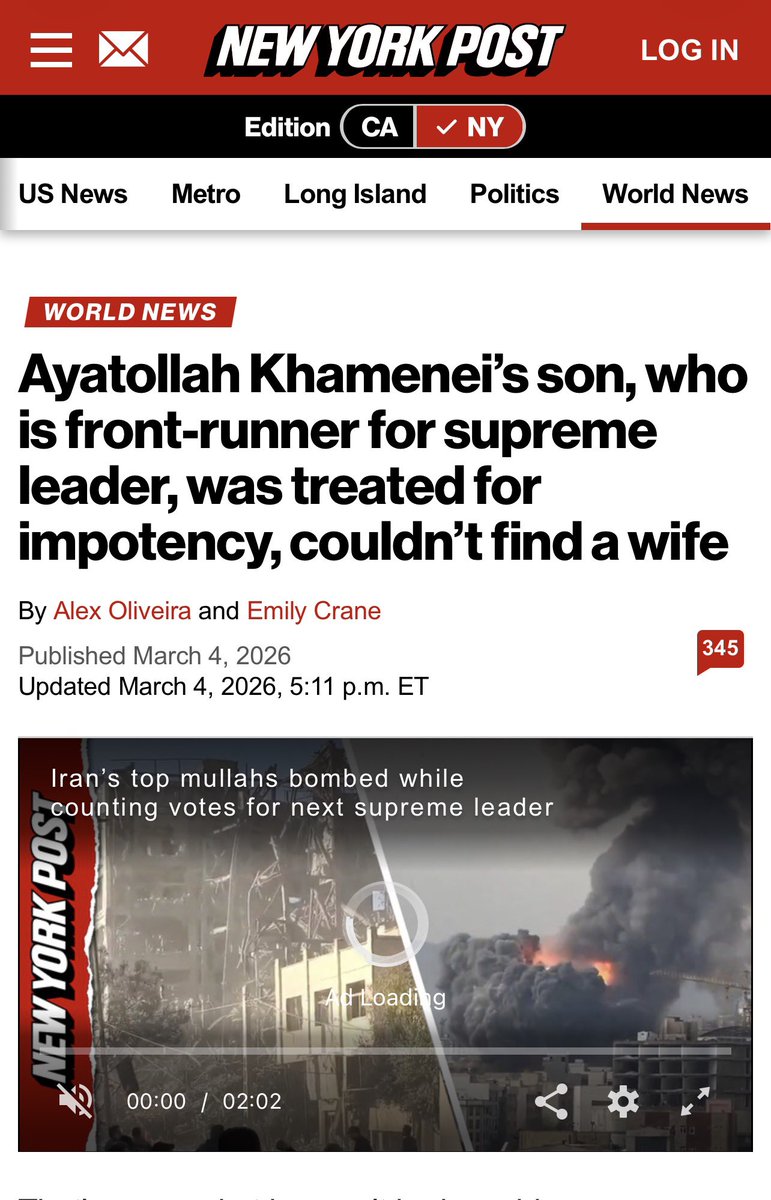
关于“穆杰塔巴·哈梅内伊曾赴英国治疗阳痿四次”的说法,其证据链大致如下:最初来源是一份 2008 年美国驻伦敦大使馆的外交电报(编号 08LONDON2169),该电报记录了一名伊朗侨民消息源提供的情报,称穆杰塔巴曾在伦敦的 Wellington Hospital 和 Cromwell Hospital 接受治疗,其中三次为医疗访问,另一次停留约两个月,随后其妻子怀孕。2010 年这份电报在 WikiLeaks 的“Cablegate”外交电报泄露中公开,此后被部分媒体引用,其中包括英国小报 Daily Mail 等进行报道或转述。因此,该说法的传播路径为:伊朗侨民消息源 → 美国外交电报记录 → WikiLeaks 泄露公开 → 媒体报道与二次传播。需要注意的是,这类外交电报属于情报或传闻记录,并非经过独立核实的医疗或官方记录,因此通常被视为“据泄露电报称”的未证实信息。
5
3
14
13,206

Mar 14
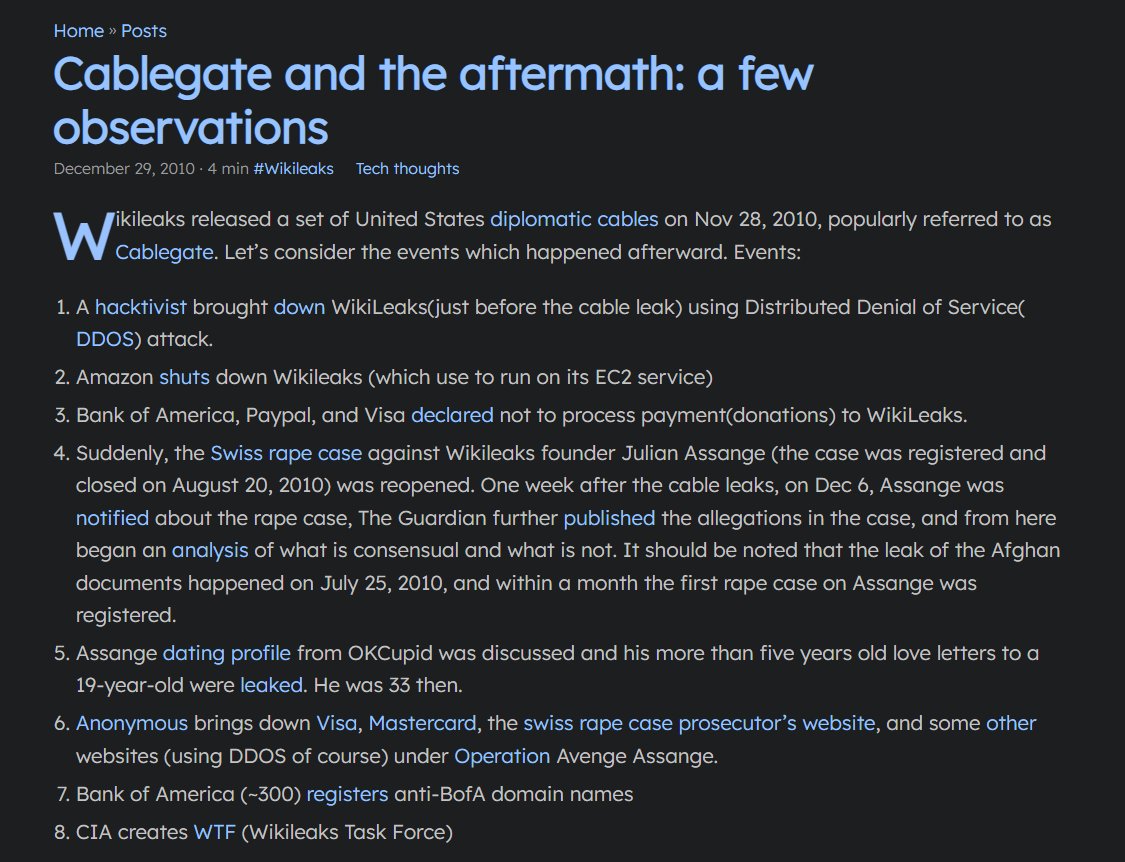
The first major case of infrastructure-level deplatforming was WikiLeaks in 2010, for releasing classified information obtained illegally (US diplomatic cables), referred to as "Cablegate," by AWS, EveryDNS, PayPal, Visa, Mastercard, and Bank of America.
1
14
265
7,542

Mar 14
We won't see any western mainstream outlet publish retractions re. cablegate. Or the claim that Jeffrey Epstein represented KGB. Or safe and effective. Lies are becoming too big to deal with.
3
230

Mar 13
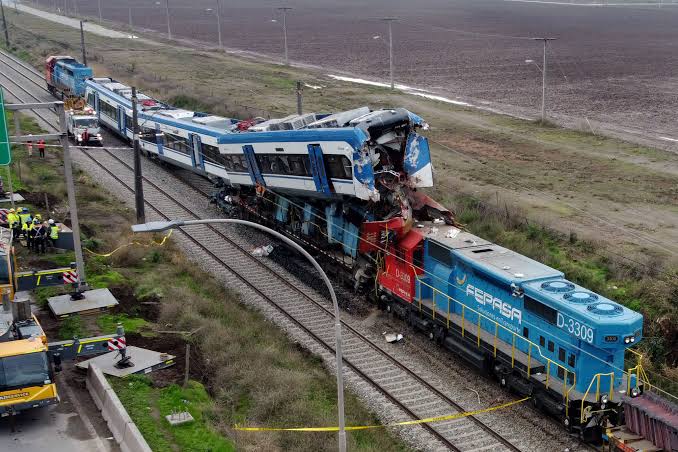
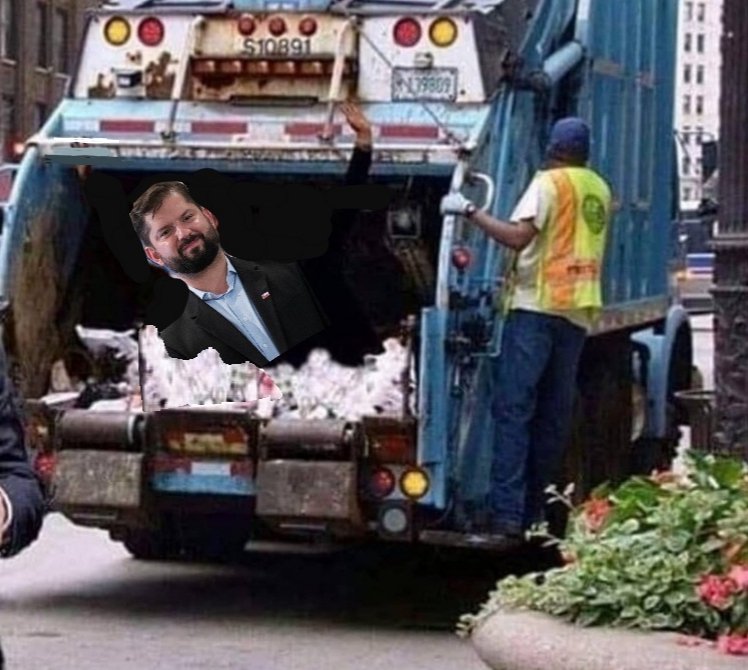
No te resultó venderle los datos personales de los chilenos a los chinos venden patria h1jo de p3rra
Cablegate: La cronología que revela las contradicciones del gobierno por el proyecto del cable submarino chino
2
47

« Cablegate » : quand le Chili se retrouve coincé entre Washington et Pékin
Par Olivier Ubertalli l.lepoint.fr/CCd
1
1
2
1,050


Mar 9
Cablegate, buses de la dictadura comunista china y ausencia de evaluación de flujos e impacto de ciclovías: el legado
1
2
55

Mar 7
Qué bueno que Kast haya aprovechado la primera oportunidad para “restaurar” la relación con EEUU.
Ahora, y si China cierra bien el cablegate, espero que también comience una nueva etapa.
3
6
227