
Jun 11
The food and beverage industry is one of Canada’s most stable sectors with thousands of job opportunities. Start training for FREE at na3.hubs.ly/y0vNC70.
#CanadianWorkforce #JobOpportunities #ManufacturingJobs #ESDC #FPSC
1
14

This #StaffingforCanadaWeek, we're celebrating the role staffing professionals play in helping Canada's workforce thrive.🍁Here's to the recruiters, talent specialists, and workforce professionals who keep Canada working!
#StaffingForCanada #Aplin #Recruitment #CanadianWorkforce

6

5 Sep 2025
Oh, Adam, bless your heart. You think Mark Carney has 65% support? That's adorable. I bet that's about the same percentage of Canadians who don't work and live off the working class. You know, the ones who are too busy enjoying their government benefits to care about politics. Let's break it down with some true factual numbers, shall we?
As of the latest data from Statistics Canada, only about 63.5% of Canadians aged 15 and over are actually employed, and of those, just 53.2% work full-time. That's right, less than half of the population is pulling their weight while the rest are either part-time workers, unemployed, or living off the largesse of the state. So, your 65% support might just be the chorus of the idle, singing praises to their new benefactor.
But hey, who needs facts when you have feelings, right? Keep dreaming, Adam. Maybe one day you'll wake up and realize that reality doesn't care about your fantasies. Until then, enjoy your apples. 🍎
#CanadianWorkforce #FactsOverFeelings #SatireAlert
3
2
44

1 Sep 2025
Happy Labour Day! 🇨🇦 Today, we recognize the hard work and contributions of employees, teams, and industries across Canada. Thank you for driving progress and innovation every day. #LabourDay #CanadianWorkforce

2
2
25

1 Sep 2025
Happy Labour Day, Canada! 👷♀️👷♂️ Thank you to all the workers who keep our industries strong and our communities thriving. 💪🍁
#LabourDayCanada #LabourDay2025 #CanadianWorkforce #CanadaStrong
1
3
92

1 Sep 2025
Happy Labour Day from Meadowsburg
Today, we celebrate the hard work, dedication, and resilience of Canada’s workforce—the backbone of our communities. 💪🌱
#LabourDayCanada #Meadowsburg #StrongerTogether #SustainableFuture #HydroponicsCanada #CanadianWorkforce

2
21

23 May 2025
We’re excited to welcome Cohort 11 to the #BUILDProgram at #JVSToronto! This 8-week online program supports #InternationallyTrainedProfessionals entering the #CanadianWorkforce with training in architecture, Revit, resumes, interviews, and workplace culture. #NewcomersToCanada

2
53

26 Dec 2024
Why All Canadian Workers Shouldn't Work From Home #WorkFromHome #CanadianWorkforce
The shift to remote work has been a significant trend in #Canada, especially since the onset of the COVID-19 pandemic. However, there are compelling arguments suggesting that not all Canadian workers should adopt work-from-home (WFH) arrangements indefinitely.
Social Interaction and Collaboration: One of the most significant disadvantages of remote work is the loss of spontaneous interactions that occur in an #OfficeEnvironment. These informal discussions often lead to problem-solving, creativity, and team cohesion. The physical presence in an office enables immediate feedback and collaboration, which can be less effective through virtual means. According to a study by #StatisticsCanada, the lack of interaction with co-workers has been noted as a barrier to #Productivity for some remote workers, potentially impacting #WorkplaceInnovation and team dynamics.
Mental Health and Isolation: While working from home offers #WorkLifeBalance, it can also lead to feelings of isolation and loneliness, especially for those with demanding personal lives or those less adept at managing their time. The office environment provides a structured setting that can help balance work and personal life, offering social interactions crucial for mental well-being. A survey by the #AngusReidInstitute found that a significant percentage of workers would look for new job opportunities if forced back to the office, suggesting that while many enjoy #RemoteWork, it might not be suitable for everyone's #EmployeeWellbeing.
Productivity and Monitoring: There's an ongoing debate about whether remote workers are as productive as their office-based counterparts. Some businesses report issues with monitoring work output and ensuring accountability when employees are not physically present. A case highlighted by #TheGlobeAndMail involved a company that initially embraced remote work but retracted the policy due to #WorkplaceEfficiency concerns, particularly regarding the availability and communication of remote employees.
Professional Development and Career Growth: Office settings often provide better opportunities for mentorship, learning from peers, and career advancement. New or junior employees might miss out on critical face-to-face learning opportunities and networking that are pivotal for career progression. This aspect is particularly highlighted in sectors like #Hospitality, where in-person training and supervision are integral to the job.
Economic Implications: The shift to remote work has economic consequences, including reduced demand for office spaces, impacting #UrbanDevelopment and #CanadianEconomy. Cities rely on the daily influx of workers to support local businesses. Additionally, the transition to remote work can lead to inefficiencies in industries where physical presence is necessary, potentially affecting sectors like #Retail and #Manufacturing where on-the-job training and immediate problem-solving are key.
Work-Life Balance: Although WFH can improve work-life balance for some, it can blur the lines between work and home life for others, leading to longer working hours and challenges in disengaging from work. The presence of an office can signify the end of the workday, which is harder to maintain at home, potentially leading to #WorkplaceHealth issues like burnout.
In conclusion, while remote work offers undeniable benefits, it is not universally applicable. A balanced approach, considering the nature of the job, individual worker needs, and the broader economic and social implications, is necessary. Not all Canadian workers should work from home, as the office environment still holds unique advantages that remote setups cannot entirely replicate. #WorkplaceManagement #WorkplaceSafety #WorkplaceCulture
1
37

3 Oct 2024
Are immigrants in Canada filling labor shortages or seeing their skills go unused? Read for more details:
magnumdigest.com/canada-immi…
#MagnumDigest #CanadianWorkforce #SkilledImmigrants
1
3
20

19 Sep 2023
Story time:
Me: What’s the balance left on my gift card?
Subway Worker: it’s $0
Me: that’s the change, oh wait here it is at the bottom.
Subway Worker: Oh I guess it shows there, whatever…
Me: You didn’t know that?
Subway Worker: Meh… *walks away*
#CanadianWorkforce
2
4
645

5 Jul 2022
Our CEO, Rachel Sumner, has a huge vision for TALENT, take a look!
Interested? Learn more about what we do here: bit.ly/3Rb4y5t
#weareTALENT #Canadianworkforce
1
2

11 May 2021
Canada’s most in-demand jobs reflect the shift to a “new normal”.
The massive shift to remote work, digital collaboration tools, new health and safety policies, have all led to a surge in demand for many jobs.
#canadianjobs #canadianworkforce #indemand #canadianhumanresources

2

3 Feb 2021
According to the latest @StatCan_eng data, much of the Canadian workforce is under-utilized. Glen Hodgson with the @CDHoweInstitute explains here: ow.ly/hag550DoB4g #unemployment #canadianworkforce
2

5 Nov 2020
Guest #OpEd: A resilient workforce is priority one. bit.ly/3mQBjoo
#OLMEducation #OLMBusiness #CanadianWorkforce @PolyCan

2
2

9 Sep 2020
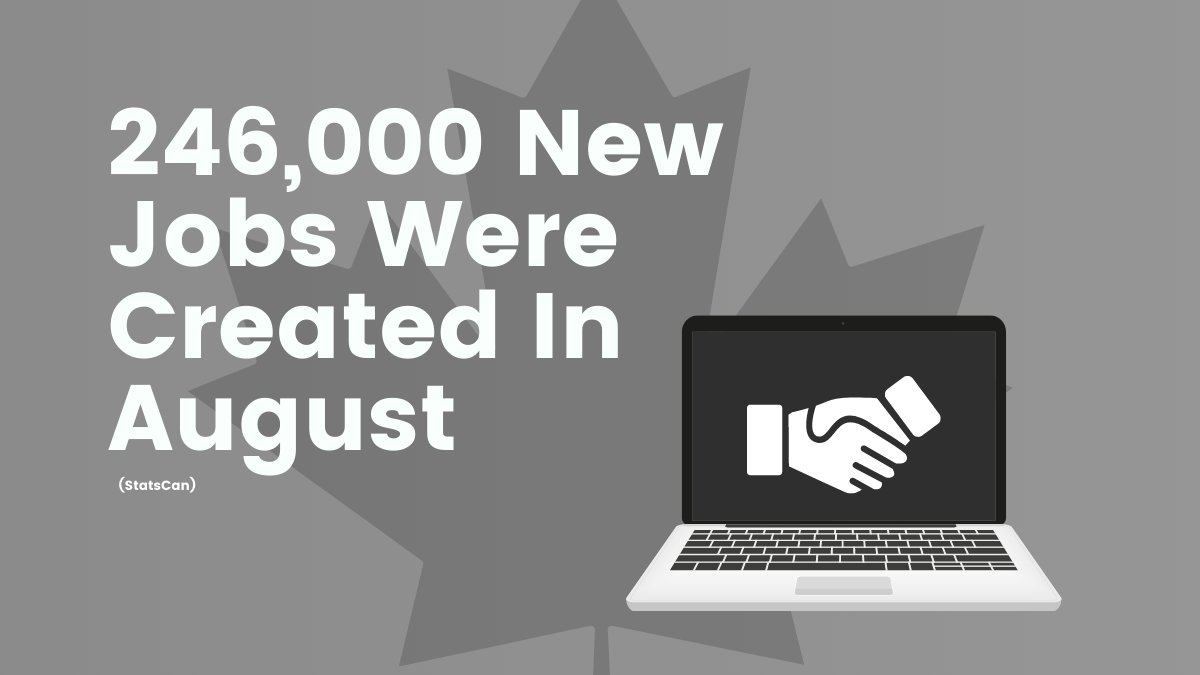
On our fourth consecutive month of gains, our unemployment rate is now within 1.1 million of pre-pandemic levels.
The unemployment rate fell to 10.02 per cent for August compared to 10.09 in July.
The economic rebound is slowly happening.
#canadianjobs #canadianworkforce
1

24 Aug 2020
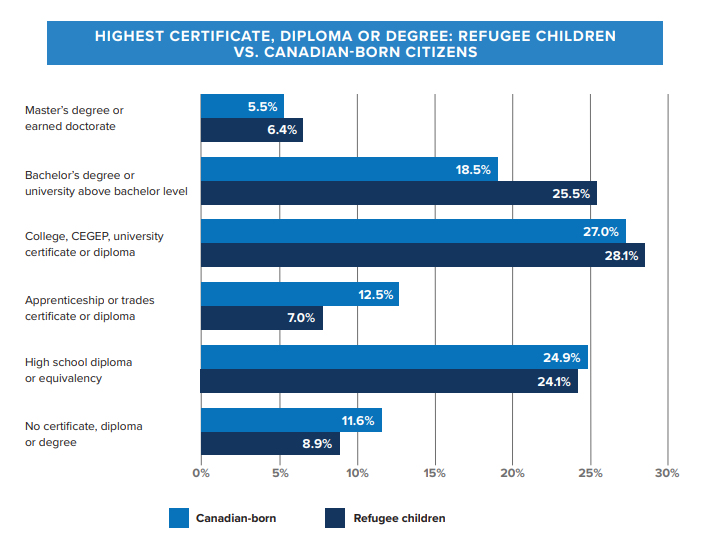
Refugee children perform as well in school as Canadian-born children and their knowledge contributes to the #Canadianworkforce.
28.1% of #refugeechildren will go on to receive a college diploma or university certificate. @UNHCRCanada bit.ly/344Av6G
2
2

26 Jun 2020
More than 50% of the job listings in Canada right now are for full-time jobs. Companies across the country are in need of employees as they adjust to new ways of working during the pandemic. #CanadianWorkforce #VicinityJobs #COVID19
hubs.ly/H0r9w5f0
2
11 Oct 2019
Thanks for including us in your blog @RegionalEcDevON 👍 Give it a read for a rundown of the #FutureOfWork and changing landscape of the #CanadianWorkforce. #skills #futureskills
10 Oct 2019

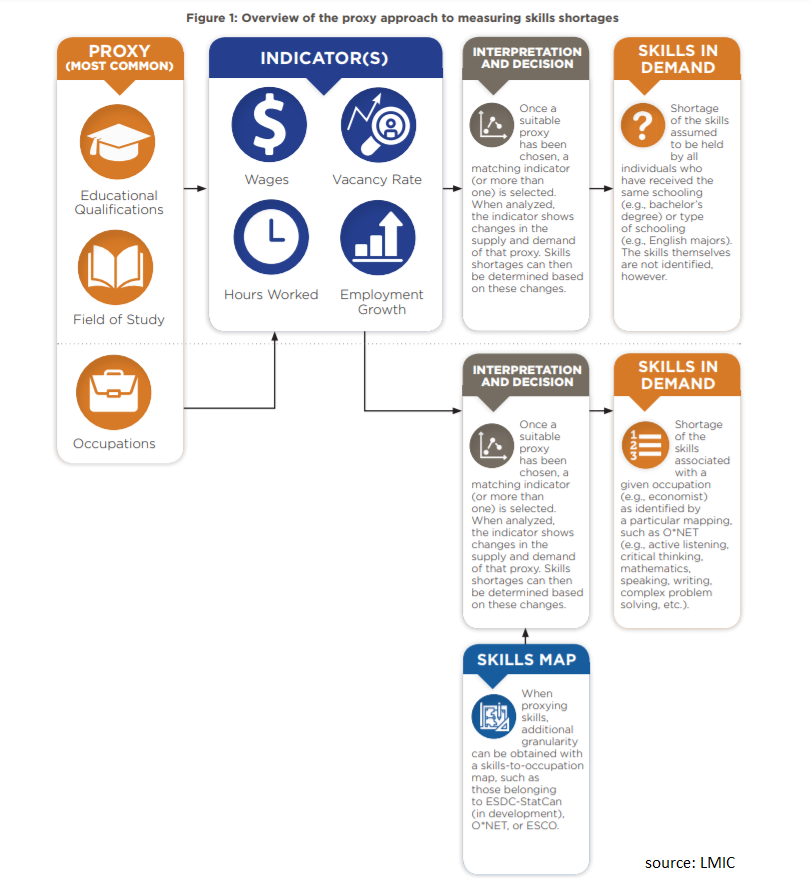
With rising concerns surrounding skills shortages in Canada, a report from @LMIC_eng addresses the importance of developing a skills taxonomy. Read our blog to learn more about the future of work in Canada: onregionalecdev.com/2019/09/…
1
2

If your relocation program includes Canada you'll want to read our latest white paper, The Evolution of Global Mobility in the Canadian Workforce. #Canada #mobility #relocation #canadianworkforce #canadawhitepaper #canadaimmigration ow.ly/qyuP30nNk44

1
4
The only thing that is constant is change. We explore the forces that are driving the evolution of the Canadian mobile workforce. #Canada #mobility #relocation #canadianworkforce #canadawhitepaper #canadaimmigration ow.ly/x6AN30nNjjb

2