Jun 13
Vanessa Trump Shares Cancer Update Following Tiger Woods' Rehab Release
Read more: soapcrush.world/post/vanessa…
#VanessaTrump #TigerWoods #CancerUpdate #HealthNews #CelebrityNews #Recovery #Rehabilitation
Vanessa Trump has provided a candid update on her cancer journey as her boy…

58

Jun 1
Daraxonrasib Transforms Outcomes in Metastatic Pancreatic Cancer: Landmark Phase 3 Trial Doubles Survival
—————————————————
Pancreatic ductal adenocarcinoma (PDAC) remains one of oncology’s greatest challenges, with dismal prognosis in the metastatic setting and few effective options after initial therapy. Activating RAS mutations—predominantly KRAS G12 variants—drive >90% of PDAC tumors and were long deemed “undruggable.” Daraxonrasib (RMC-6236), an oral RAS(ON) multiselective inhibitor targeting the active GTP-bound state of mutant and wild-type RAS, has now delivered the first major targeted-therapy breakthrough in this disease.
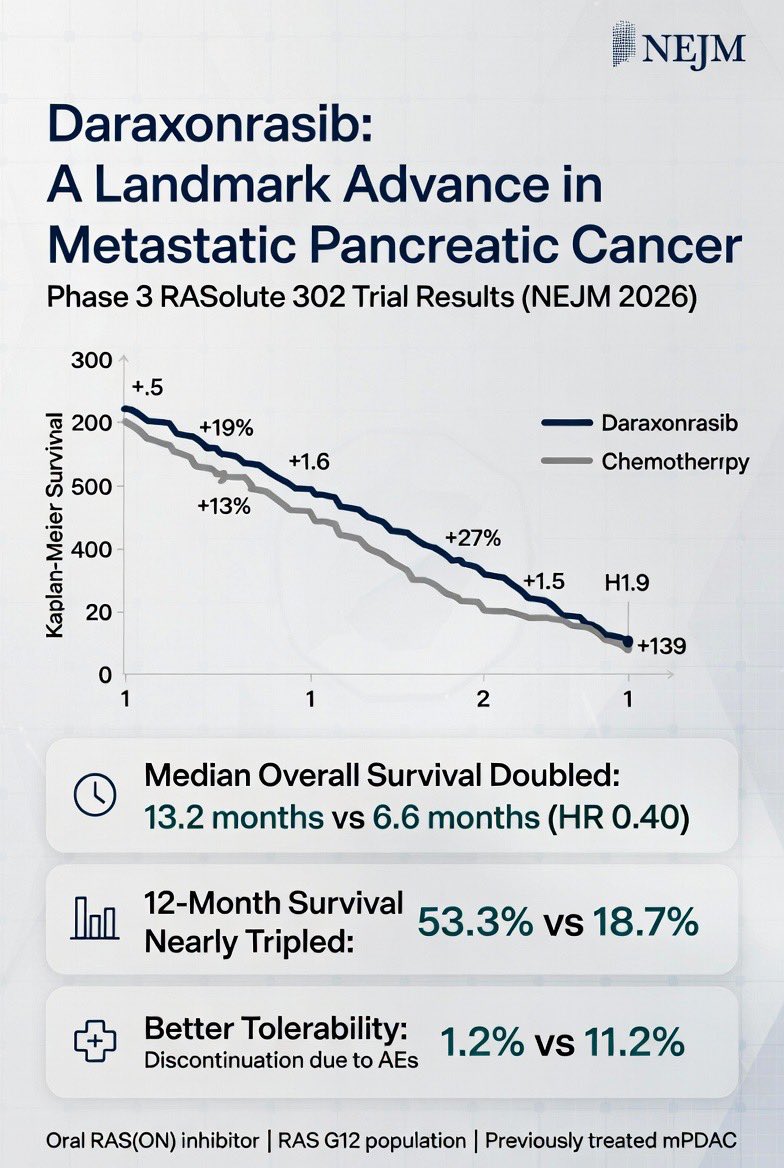
In the global Phase 3 RASolute 302 trial, 500 patients with previously treated metastatic PDAC were randomized to oral daraxonrasib (300 mg daily) or investigator’s choice chemotherapy. The dual primary endpoints were overall survival (OS) and progression-free survival (PFS) in the prespecified RAS G12 population (91.8% of enrollees). #Daraxonrasib doubled median OS to 13.2 months versus 6.6 months with chemotherapy (hazard ratio 0.40; P<0.001). Twelve-month OS nearly tripled, from 18.7% to 53.3%. PFS improved from 3.5 to 7.3 months. Tolerability was markedly better: treatment-related discontinuations occurred in only 1.2% of daraxonrasib recipients versus 11.2% with chemotherapy.
These results, published in the New England Journal of Medicine, establish daraxonrasib as a new standard for previously treated RAS-mutant metastatic PDAC. The convenient oral regimen, combined with a clinically meaningful survival gain and favorable safety profile, offers renewed hope to patients and validates direct RAS inhibition as a viable strategy. This advance is poised to influence therapeutic development across other RAS-driven malignancies.
References ————————-
1. O’Reilly EM, Wainberg ZA, Hendifar AE, et al. Daraxonrasib or Chemotherapy in Previously Treated Metastatic Pancreatic Cancer. N Engl J Med. 2026 May 31. doi:10.1056/NEJMoa2605555 #CancerUpdate #CancerAwareness #MedTwitter #MedEd #MedX @IhabFathiSulima
@CR_UK @CDC_Cancer
1
5
292

Mar 17
14
12
267

Feb 20
Cancer update 💛 PET scan is stable — no spreading. Continuing immunotherapy & more scans ahead.
If you’d like to support my small cell lung cancer journey:
👉 gofundme.com/f/loricoley
#SmallCellLungCancer #CancerUpdate #FaithOverFear
2
2
4
81

Feb 20
Cancer update 💛 PET scan is stable — no spreading. Continuing immunotherapy & more scans ahead.
If you’d like to support my small cell lung cancer journey:
👉 gofundme.com/f/loricoley
#SmallCellLungCancer #CancerUpdate #FaithOverFear
2
43
8 Dec 2025
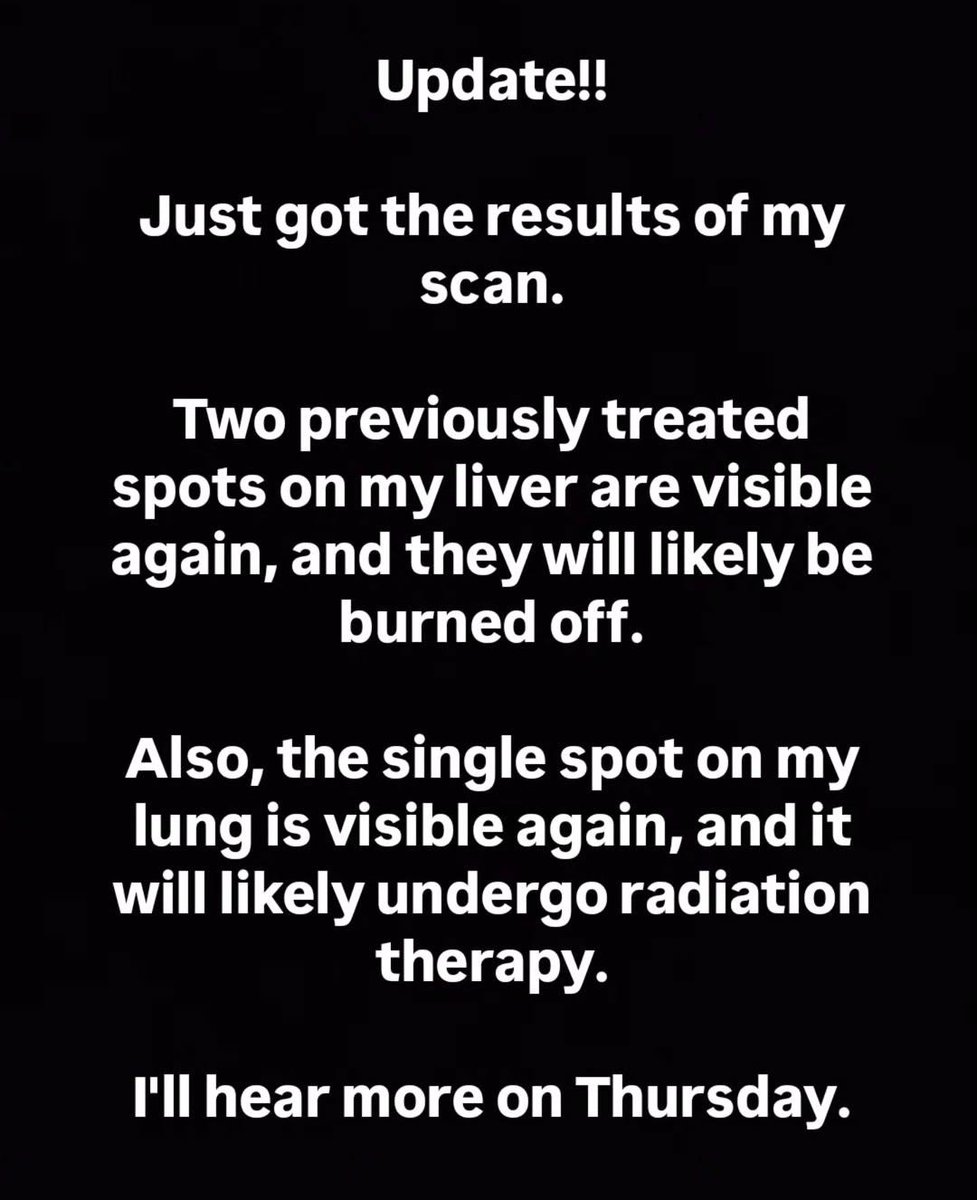
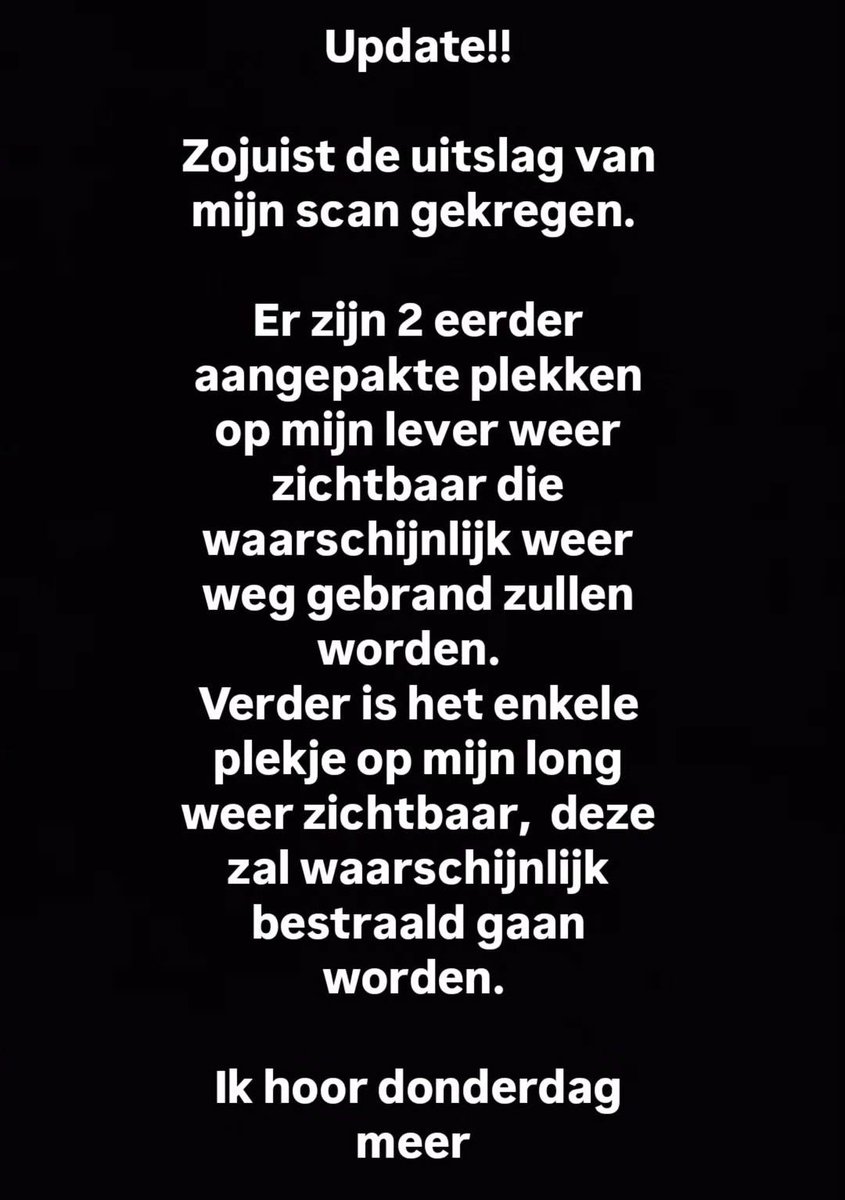
#Goodevening everyone, Today we received the results of my scan. Two previously treated cancer spots on my liver are visible again and will probably be burned away. Furthermore, the single spot on my lung is visible again and will probably be irradiated. 🎗💪🏻 #cancerupdate
8
10
188

2 Dec 2025
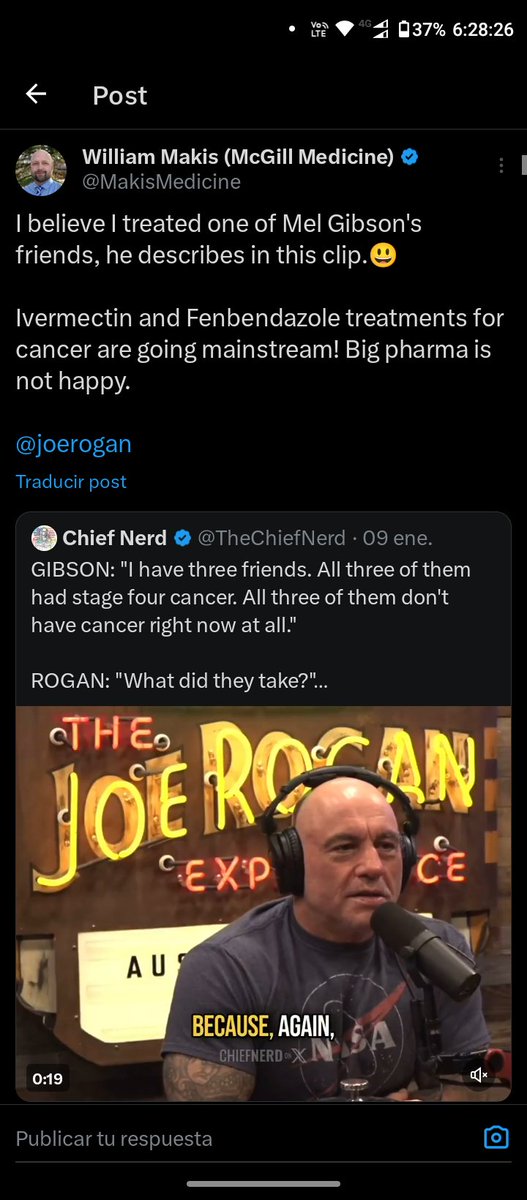
#Ivermectin #Fenbendazole #CancerUpdate
GIBSON: “Three friends… all stage 4 cancer. Today? No cancer.”
ROGAN: “What did they try?”
GIBSON: “Ivermectin. Fenbendazole. And a full integrative protocol.”
@_GetIvermectin_
People are paying attention for a reason.
These conversations are exploding.
#AlternativeTherapies #IntegrativeMedicine #HealthNews #viralpost
3
6
274

26 Nov 2025
Fans are heartbroken, and bidding fast. His family says the diagnosis has changed everything.
#JamesVanDerBeek #CancerUpdate #VarsityBlues #HollywoodNews #CelebrityHealth #StayStrongJames
1
6
170

14 Nov 2025
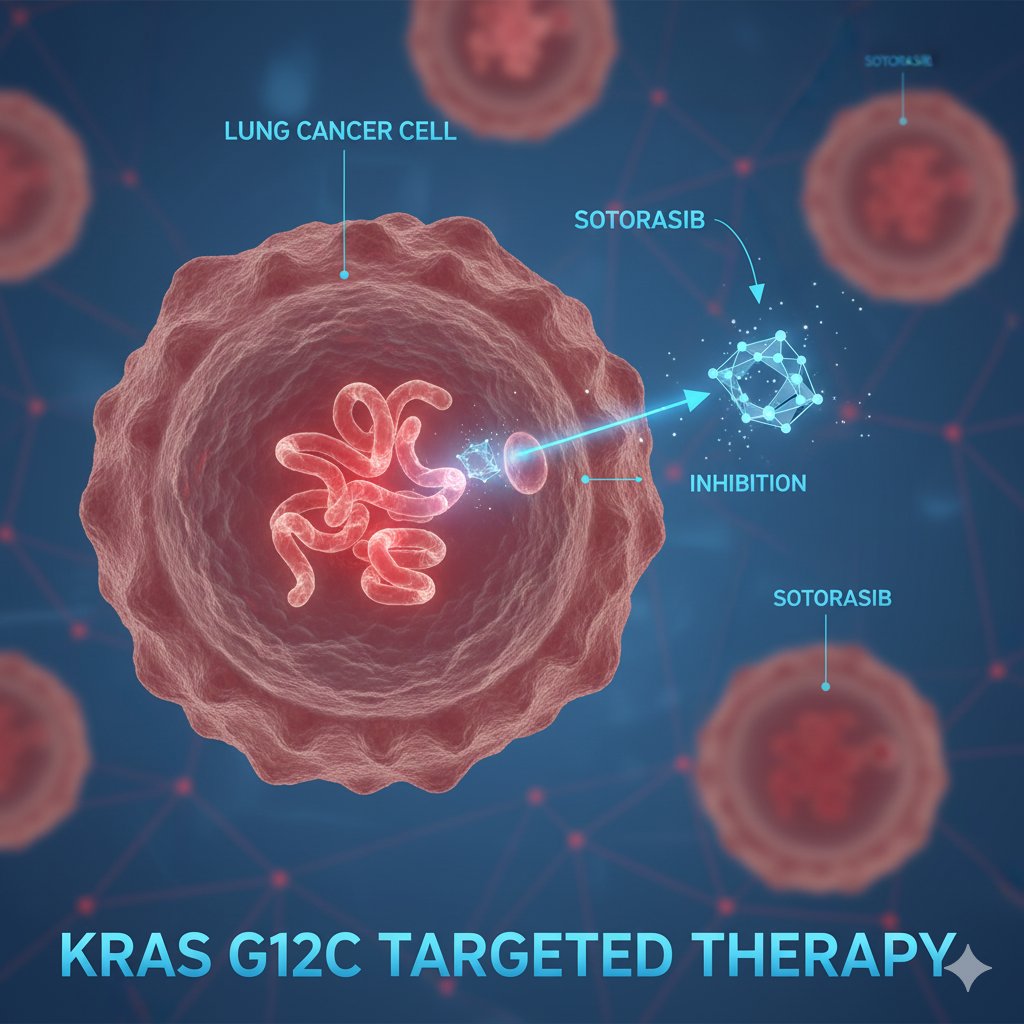
💊 GAME-CHANGER in Lung Cancer
FDA grants priority review to Sotorasib for KRAS G12C mutated NSCLC in first-line setting.
⚙️ Targets one of the toughest oncogenic drivers
📉 Early trials show improved response fewer systemic toxicities compared to chemo
#CancerUpdate #Oncology
3
101
13 Nov 2025
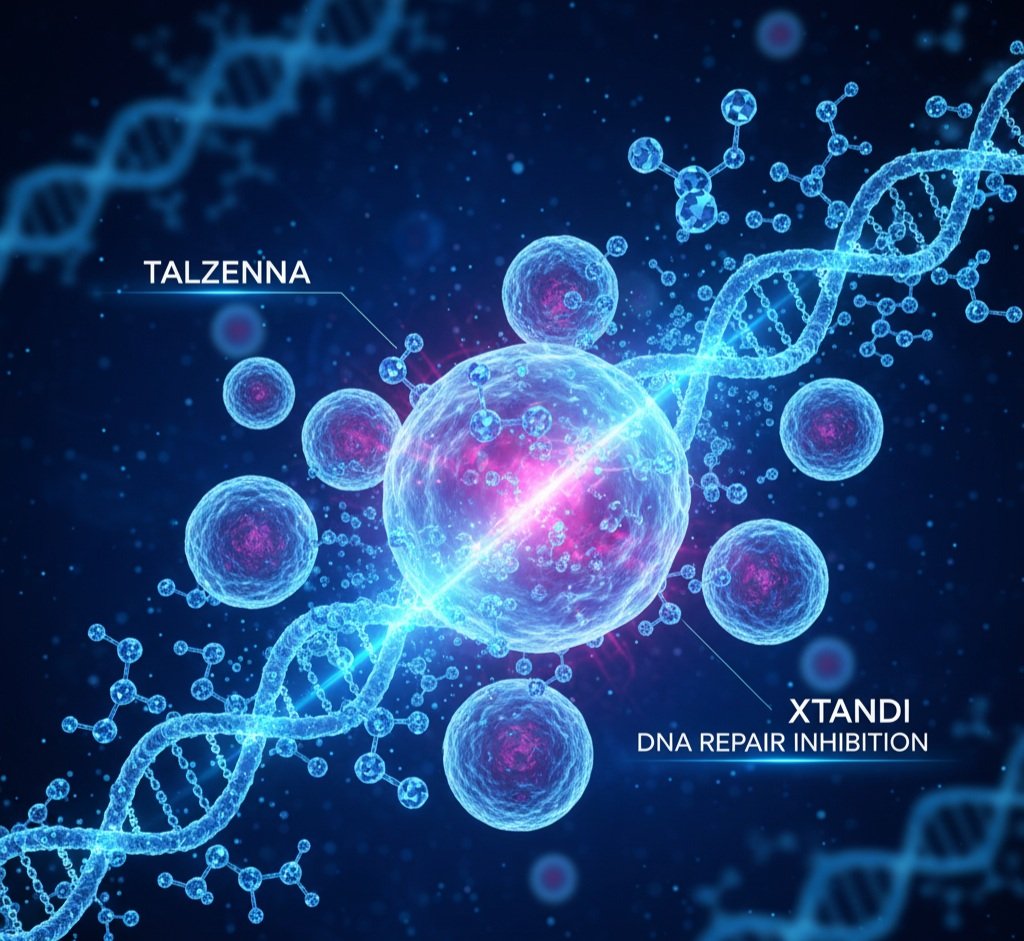
💊 New Hope for Prostate Cancer!
FDA approves Talzenna (talazoparib) Xtandi (enzalutamide) combo for metastatic castration-resistant prostate cancer.
⚙️ Dual action: PARP inhibition androgen blockade
📈 Proven to delay disease progression in HRR-mutated patients
#CancerUpdate
2
3
54

31 Jul 2025
Quitting #Smoking Still Beneficial After #Cancer Diagnosis #healthy #quitsmoking #CancerResearch #CancerUpdate
Call 800-QUIT-NOW or visit quitline.wisc.edu for free help 24/7.
uwhealth.org/news/quitting-t…

2
51

23 May 2025
#SaltyCracker #Alexjones #Saturday #Election2020 #Infowars #joebidencancer #Banned #JewishMuseum #Trump #WhiteHouse #Terrorism #Terroristattack #FBI #BreakingNews #update #ElonMusk #Epstein #Autopen #news #live #RFK #SaudiArabia #China #Ukraine #RussiaUkraineWar #Breaking #Updates #ICE #DHS #Epstein #DOJ #UAE #Qatar #Boeing #SouthAfricanRefugees #MAGA #MAHA #afrikaner #genocide #autopen #cancerupdate #Trending #viral #Fauchi #GoldenDome #SouthAfrica #OvalOfficeFiasco #OvalOffice #SanDiegoCrash #sandiegoplanecrash
23 May 2025

Lefties Are Killing Jews ReeEEEStream 05-23-25 x.com/i/broadcasts/1RDxlznBL…
2
391

…well, this post aged like sour milk.
#CancerUpdate.

8
5
1,772

22 May 2025
15 years since I was diagnosed with Ovarian Cancer! I will continue being an advocate! #CancerFree #cancerupdate #cancersurvivor #cancercare #ovariancancer #ovariancancersurvivor #ovariancancerfighter #CancerPatients #CancerAwareness #cancer #CancerResearch
3
10
344

😷🩷😷💜😷🩵😷💙😷💜
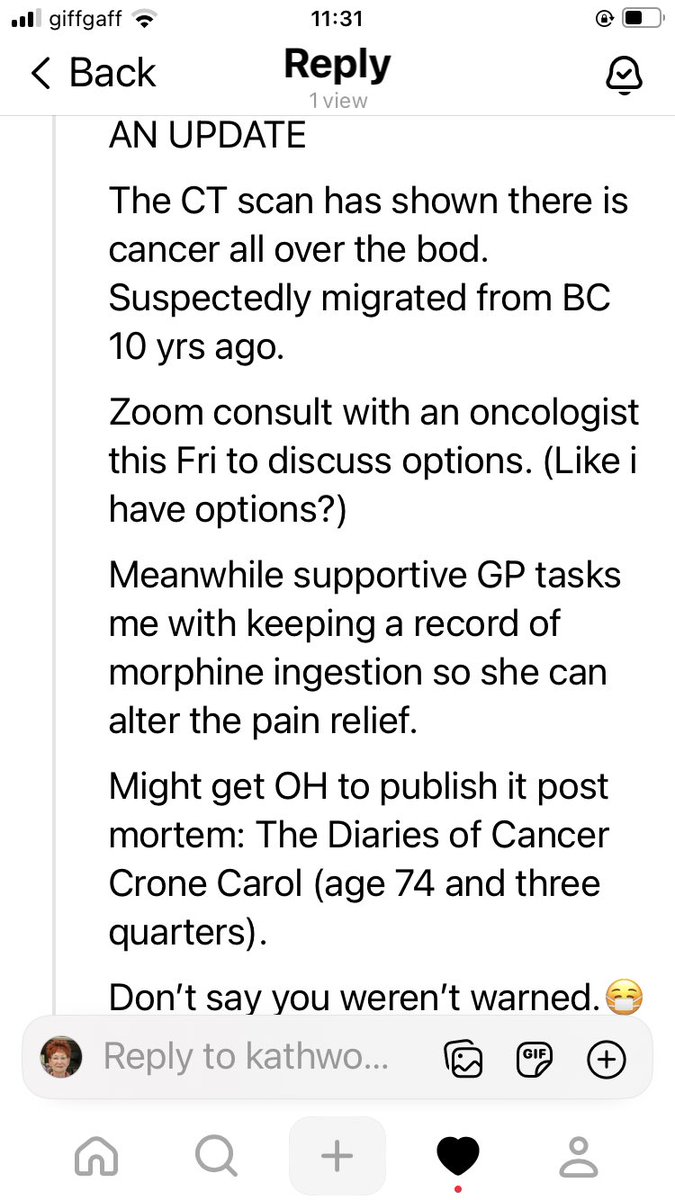
OK, so as not to bore you all silly with an update ….
AN UPDATE!
#cancerupdate #cancer
322
35
575
19,008

19 May 2025
@JoeBiden now is the perfect time to spread awareness about #cancer I'm saddened to hear the news. The first sign of any symptoms get checked out so you hopefully get ahead of it and do the tests they tell you to do. I got ahead of it luckily myself so far. #CancerAwareness #Cancertreatment
#cancerupdate
1
1
2
59

18 May 2025
🚨BREAKING: Former President Joe Biden has been diagnosed with metastatic prostate cancer — it has spread to his bones, according to his personal office.
Prayers up. More details to come. #JoeBiden #BreakingNews #CancerUpdate
1
2
60


14 May 2025
#cancer #CancerUpdate #CancerResearch #ciggies #mercredi #mercoledi #smoking #Smokingbreath #miercoles


1
75