Paul Marr retweeted

Jun 15
The pro-war voices led by Netanyahu underestimated the resilience of the Tehran regime, both in terms of military capacity and its popular foundations in Iranian society.
Now they're getting exactly what they didn't want.
My take.
unherd.com/newsroom/iran-dea…
8
48
154
24,483
GVA Pobles Vius retweeted

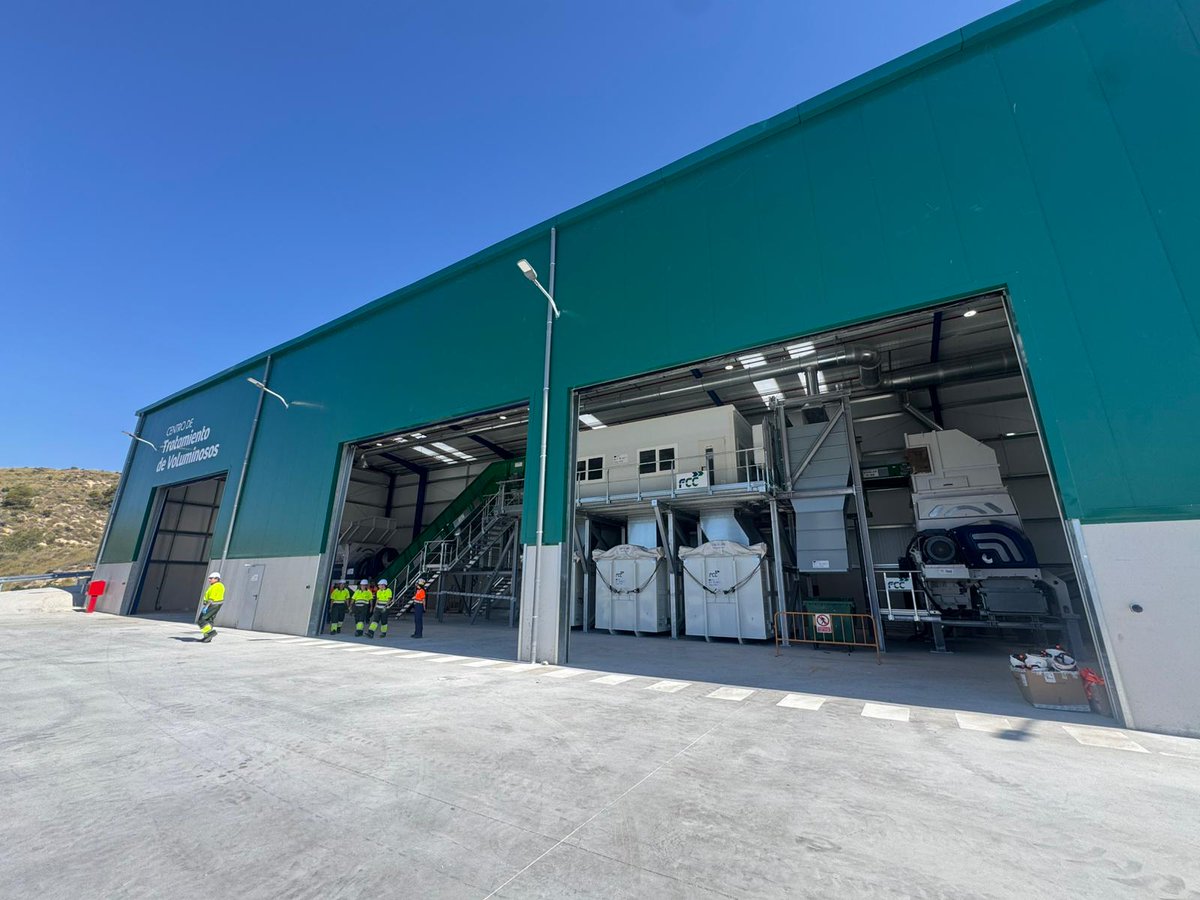
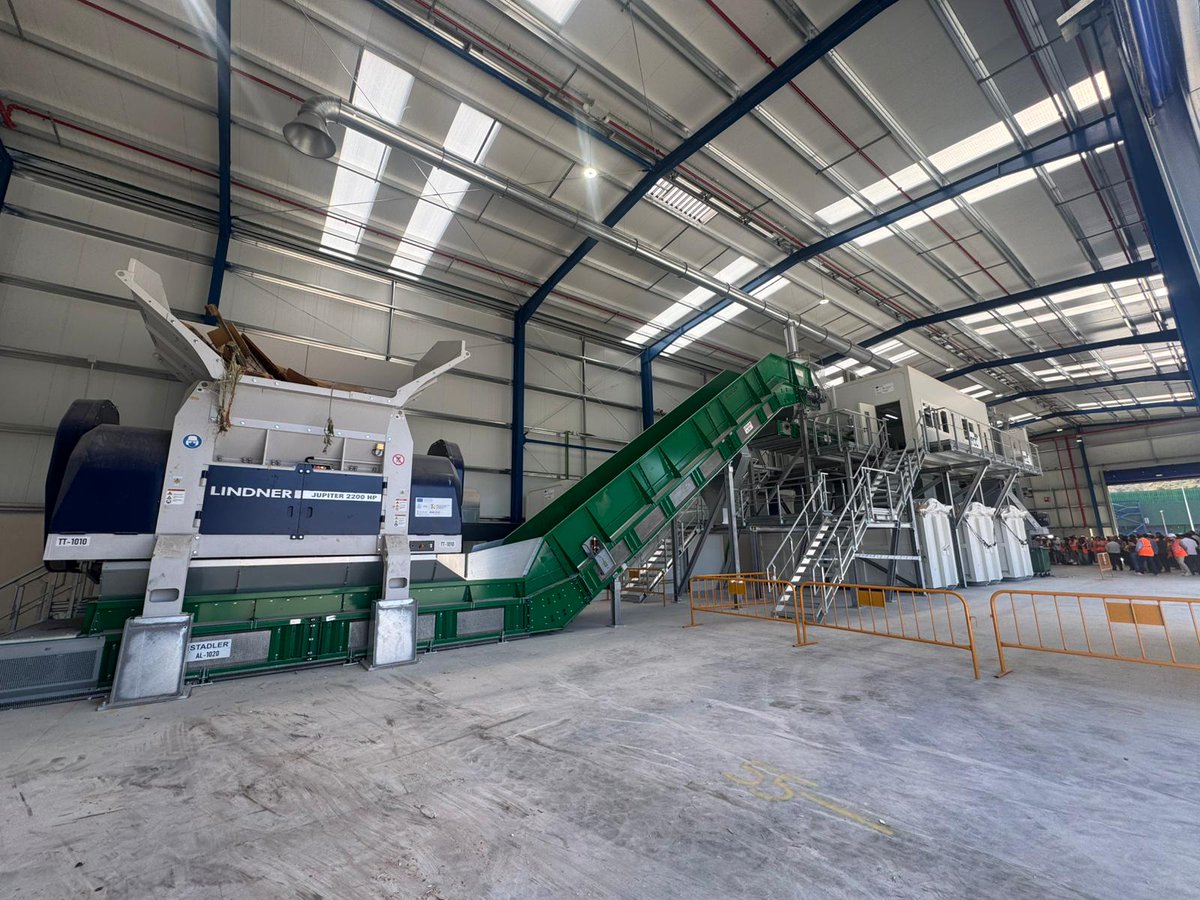
♻️ El Campello estrena la primera planta de residus voluminosos de la província d'Alacant
📦 Permetrà triplicar la capacitat de tractament de residus ➡ de 10.000 a 30.000 tones a l'any
💶 Inversió de 5,6 milions d'euros
👥 Dona servici a 427.000 ciutadans a les comarques de La Marina Alta, La Marina Baixa i El Campello
🌍♻ Un pas més cap a l'economia circular i la reducció de residus enviats a abocador
🇪🇺 #NextGenerationEU
🏞 @GVAMediAmbient
🔗 breu.gva.es/b/o-a6g
1
4
1,352
Tech Tonic Hacks retweeted

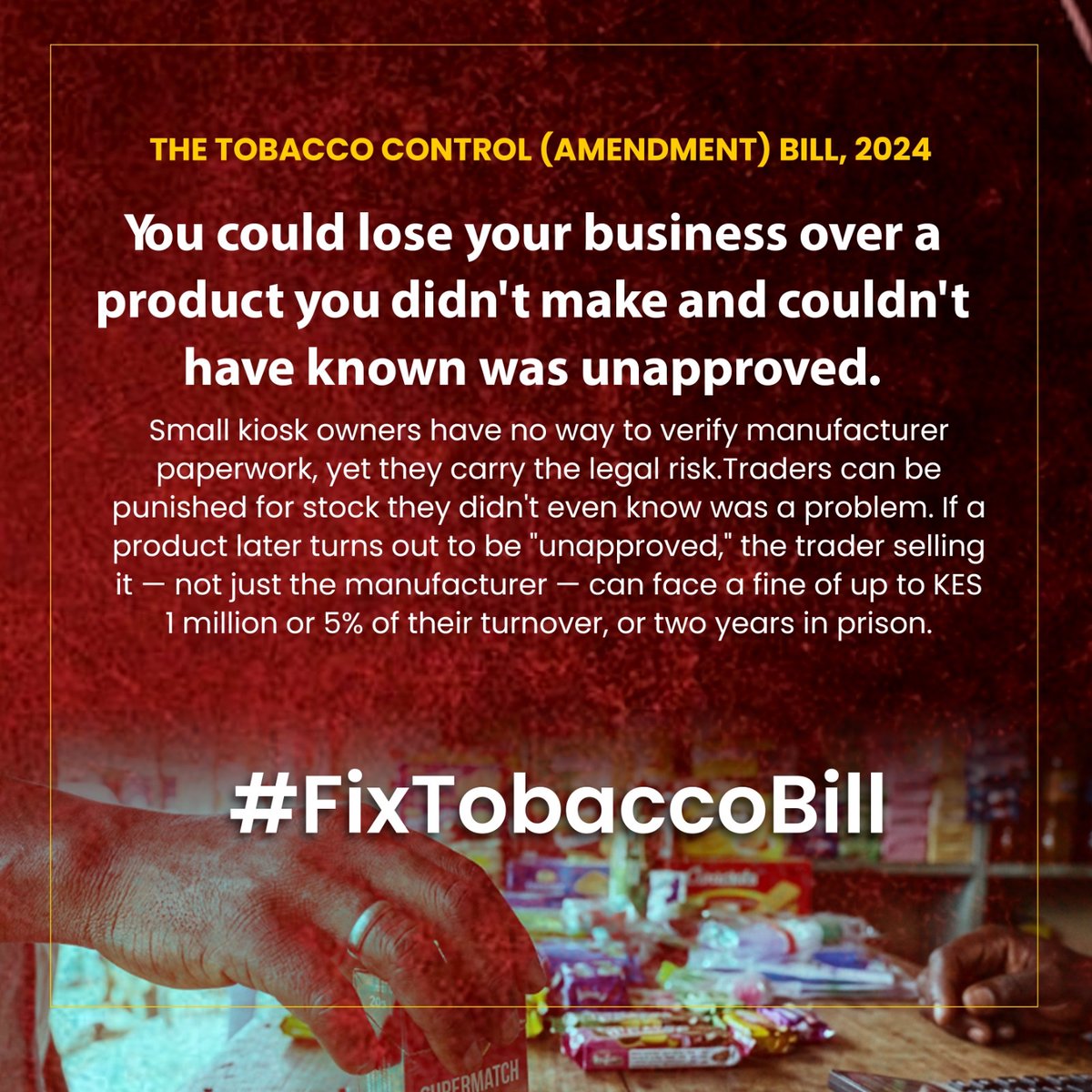
An honest trader should be protected, not caught in the crossfire of manufacturer regulations. We don't have the capacity to verify every detail of production. This bill needs serious fixing. Hear Small Traders #FixTobaccoBill @GvnMandago
2
11
Paul Sheppard retweeted

Yes. Similar to Birgdman and his mercury pressure work as well as a basic Leyden jar capacitor.
May 19

Super easy DIY capacitor build with charging.
A glass of water and foil
claude.ai/public/artifacts/b…
1
1
20
Quartz Sea Research retweeted

The Virginia facility is the strategic pivot.
$537.6mn greenfield SRM plant in Hurt, Virginia. 700 tons annual capacity. Operational by 2028.
Western defense faces acute SRM shortage. Avio is one of few Western suppliers capable of scaling production immediately.

QuartzSea Research initiates coverage on Avio S.p.A. (AVIO-IT)
- Rating: Underperform
- Target: EUR 33.00
Full report in the replies

1
112
Abdulaziz Haruna Daguma retweeted

LOMÉ IS GETTING READY TO COME ALIVE WITH THE SPIRIT OF INTÉGRATION !
Shifting borders, a major trade fair, and capacity building: the regional fortnight is rolling out its key initiatives to boost the leadership of our female entrepreneurs! At D-2 ahead of June 18, 2026, ECOWAS is putting women at the heart of regional integration.

1
1
1
148

#Preparedness and response go hand in hand.
DG HERA is supporting the #Ebola response through diagnostics, laboratory capacity, pathogen genomics, medical countermeasures and vaccine research, working closely with @WHO, @AfricaCDC, @CEPIvaccines and other partners.

Last week, I traveled to Bunia 🇨🇩. I co-chaired a meeting with @WHO @AfricaCDC, ministers & partners to work on the response to end Ebola.
Armed conflict is fueling a public health emergency. Ceasefire, humanitarian corridors & coordination are the answers.
3
8
226
Victor Lau 🧢☯️🃏🏴☠️🇨🇦♿️ retweeted

Three years ago, batteries and gas plants were neck-and-neck.
Ontario's latest procurement secured the lowest-cost capacity contracts in provincial history – without a single gas plant being selected.
Markets are speaking: shrlnk.ca/s/Me9T52X8
#ONpoli #EnergyPolicy
4
6
176
Milk Road retweeted

JPMorgan pulled satellite images of planned data centers and found something concerning...
More than 60% of the capacity meant to be finished in 2027 hasn't even broken ground.
For 2027, only 6.3 GW are under construction against 21.5 GW announced.
The reasons are physical.
Grid hookups in the US now take three to five years.
The large transformers these sites need carry 18 to 24 month wait times.
Jensen Huang says a 1 GW AI factory now costs $50B to $60B and is heading toward $100B, and Goldman Sachs puts total AI spending at $8T over six years.
Software ships in weeks → concrete and grid connections move on construction timelines.
If you can't build faster and you can't get more power, one lever is left:
Pull more compute out of every watt you already have.

The biggest IPO wave since the internet is here: SpaceX, Anthropic, and OpenAI.
But our lead AI analyst @WhiteCollarExit is buying none of them.
Here's his thinking on why (save this):
Only 5% of the AI chips already shipped are actually running.
The other 95% sit idle, waiting on power and data centers that don't exist yet.
But the demand is real...
Bot and agent traffic just passed human traffic on the internet for the first time, 57.4% machine against 42.6% human.
The companies selling that intelligence are scaling faster than any software category in history.
The problem is everything underneath them.
The power and data centers to run all those chips can't be built fast enough, and neither can the gear inside the rack. That physical ceiling caps how fast every layer above it can grow.
To find where the money actually lands, @WhiteCollarExit uses one map:
The 5-Layer AI Cake that NVIDIA's Jensen Huang built to track value through the AI economy.
1. Energy: the electricity, cooling, and power that run everything above it.
2. Chips: the GPUs and hardware that energy feeds.
3. Infrastructure: the data centers, storage, and networks that house the chips.
4. Models: the foundation models that run on that infrastructure.
5. Applications: the AI products and use cases where the money finally shows up.
Each layer pulls its demand from the one before it.
And at the top, agents are taking over the enterprise.
AI began with individuals, consumers on ChatGPT and developers on Claude - but that phase is ending.
At its Build conference in late May, Microsoft started rebuilding Windows as a runtime for AI agents, with an "Agent Computer" that lets agents write code and operate cloud PCs inside set rules.
NVIDIA showed off the RTX Spark, a one-petaflop chip built to run agents on your desktop instead of in a data center.
A whole new business is forming just to babysit these agents: Coralogix raised $200M in early June at a $1.6B valuation to watch them for hallucinations, runaway costs, and security holes.
More agents means more inference, which means more chips, which means more power.
Drop down to the models, and that's where the IPO money is rushing in.
The numbers are hard to believe. Anthropic filed its S-1 on June 1 at a $965B valuation, with revenue running near $47B a year, up from about $10B a year ago.
Dario Amodei says the growth has beaten Anthropic's own forecasts by 8x. Eight of the Fortune 10 are now Claude customers.
Stack Anthropic and OpenAI together and they already out-earn Google Cloud and Azure on a run-rate basis, with some estimates passing AWS by year-end.
Then there's SpaceX. The old record IPO raise was Saudi Aramco - pulling in $29.4B. SpaceX went for more than double that, powered partly by xAI and a compute business pulling in over $2B a month from its Google and Anthropic deals.
@WhiteCollarExit is still passing on all of it.
Run-rate isn't the same as durable, profitable revenue, and the model layer is priced entirely on growth.
Anthropic committed up to $100B to Amazon for compute, with a matching setup at Google, so part of every lab's revenue is the cloud provider paying the lab while the lab pays it right back.
From the outside, a $47B run-rate with weak retention looks identical to one with strong retention, and the two are worth wildly different amounts.
Nobody can tell which is which until the S-1 shows the real margins.
Chinese open-source is squeezing the labs from the other side.
Alibaba's Qwen passed Meta's Llama in total downloads, and a16z estimates that 80% of startups building on open models now run Chinese ones like DeepSeek, at a fraction of the cost.
That eats straight into model-layer margins.
The SpaceX deal has its own catch. The IPO sells only new shares, so no insider sales on day one. Founders Fund turned a $20M bet from 2008 into roughly $182B.
The public is buying in after the bet has already won, right before the December lock-up expires and early backers can finally offload billions.
Underneath all of that sits the infrastructure, and it can't keep up.
JPMorgan pulled satellite images of planned data centers and found that more than 60% of the capacity meant to be finished in 2027 hasn't even broken ground.
For 2027, only 6.3 GW are under construction against 21.5 GW announced.
The reasons are physical.
Grid hookups in the US now take three to five years.
The large transformers these sites need carry 18 to 24 month wait times.
Jensen Huang says a 1 GW AI factory now costs $50B to $60B and is heading toward $100B, and Goldman Sachs puts total AI spending at $8T over six years.
Software ships in weeks → concrete and grid connections move on construction timelines.
If you can't build faster and you can't get more power, one lever is left: pull more compute out of every watt you already have.
That's why the chips layer is shifting. The old way of moving power through a data center wastes about 17% of it as heat before it ever reaches the chip.
A new 800V DC design erases most of those losses, lifting efficiency from around 83% to over 92% while using 45% less copper.
NVIDIA's new Vera Rubin platform just entered full production on that design, shipping this summer to Amazon, Google, Microsoft, and Oracle, with 2.5 to 5x the inference speed of today's chips.
A Hopper rack drew about 40kW. Blackwell pushed it to 120kW. Vera Rubin racks will hit 600kW to 1MW, a 25x jump in three years.
At that density, three parts suddenly matter as much as the GPU itself:
The power semiconductors that handle the voltage, the optical fiber that moves the data, and the materials that insulate against the heat.
You don't have to guess which companies make them, because Jensen Huang has been buying them himself.
He's confirmed stakes in Corning and Lumentum for fiber, a power-chip deal with Infineon, an R&D tie-up with Qnity on materials, and a public nod to Marvell that moved its stock 34% in a single day.
His own money is tracing the bottleneck in real time.
At the bottom of the stack sits the hardest limit of all: power.
Only 5% of deployed GPUs are switched on. The other 95% wait for electricity.
The industry is maybe 15 to 20% into an $8T buildout, and the grid is already straining at 15%. Adding power to the grid is slow, full of multi-year permits and queue backlogs.
Going around the grid is fast. Solid oxide fuel cells can be deployed in 55 to 90 days and skip the grid entirely, and they fit the new chips perfectly, since Bloom Energy's cells already produce 800V DC, the exact voltage Vera Rubin racks run on.
Regulators are piling on too.
Alberta added a 2% levy on hardware for big data centers, New Jersey now makes large loads fund their own new power, and at least 18 US states have bills creating special rates for heavy users.
Off-grid power is becoming a requirement just to get these sites online.
Adding it all up...
The IPOs everyone is chasing sit at the very top, capped by a physical layer that can't grow fast enough to feed them.
The real winners are sitting underneath, in the companies squeezing more compute out of every watt and solving the power problem, while the headlines focus on SpaceX.
@WhiteCollarExit has built his whole portfolio around that idea, with every position mapped to a layer of the cake.
He made real moves this month, trimming one big winner and buying others into weakness, and he's hunting in 3 new areas for his next buys.
If you want the full portfolio, the exact positions, and the 3 areas he's buying into next, the link is in the first comment.

2
2
3,240
Pamela Zarate Ramirez retweeted

Emprender tiene sus retos, pero no tienes que hacerlo solo. 💡
En FONDESO te acompañamos con créditos, asesorías y capacitaciones para ayudarte a hacer crecer tu negocio. 🚀
#FONDESO #EmprendeConFONDESO #CréditosParaCrecer #CDMX
7
8
245
NDIKURIYO Révérien retweeted

Jun 15
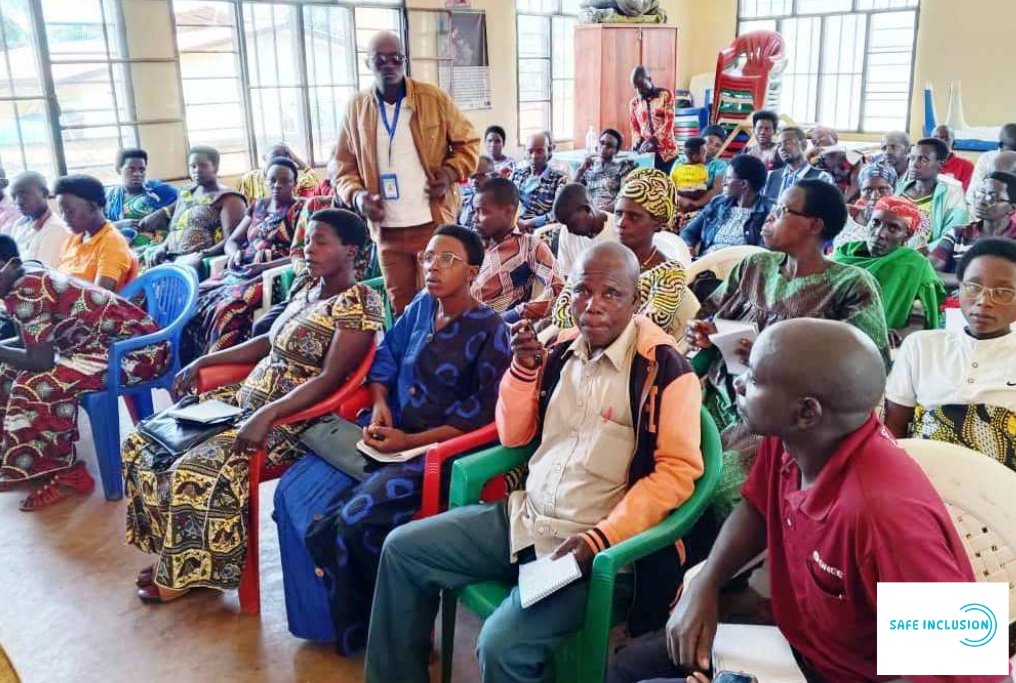
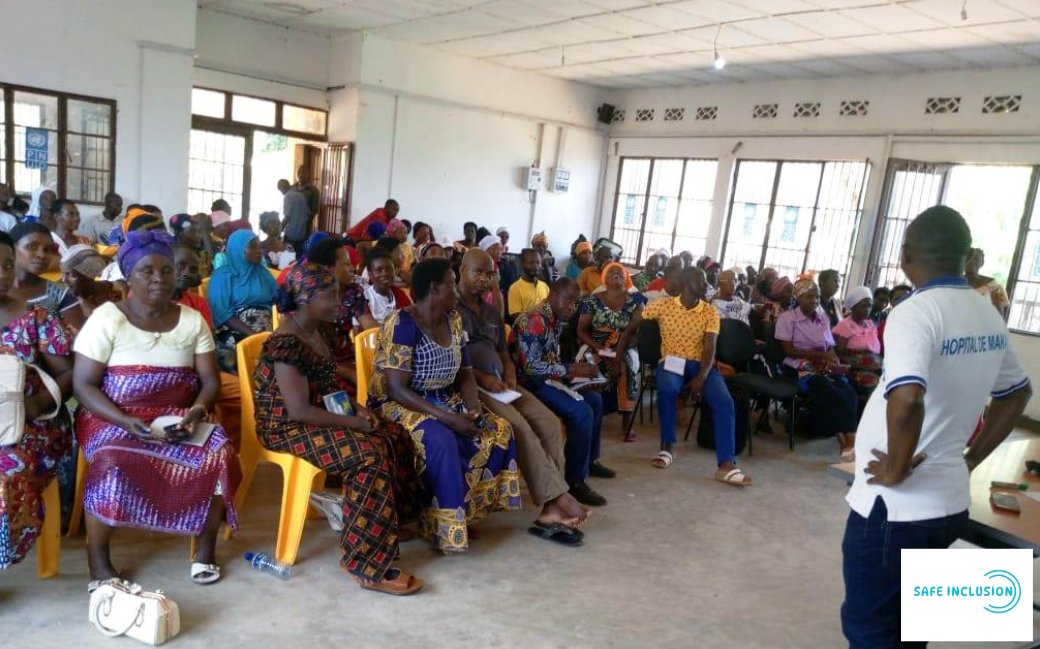
Baby WASH au cœur du changement
À Makamba, #SafeInclusion et l’#UNICEFBurundi ont renforcé, du 9 au 10 juin, les capacités de 614 Agents de Santé Communautaire et 278 Mamans Lumière sur l’approche #BabyWASH.
1
2
3
17
kundan kumar retweeted

Jun 14
⚡ The media will not talk about this - Another Mind-blowing achievement by India 🇮🇳
India added more manufacturing capacity in the last 10 years than in the previous 70 years combined.
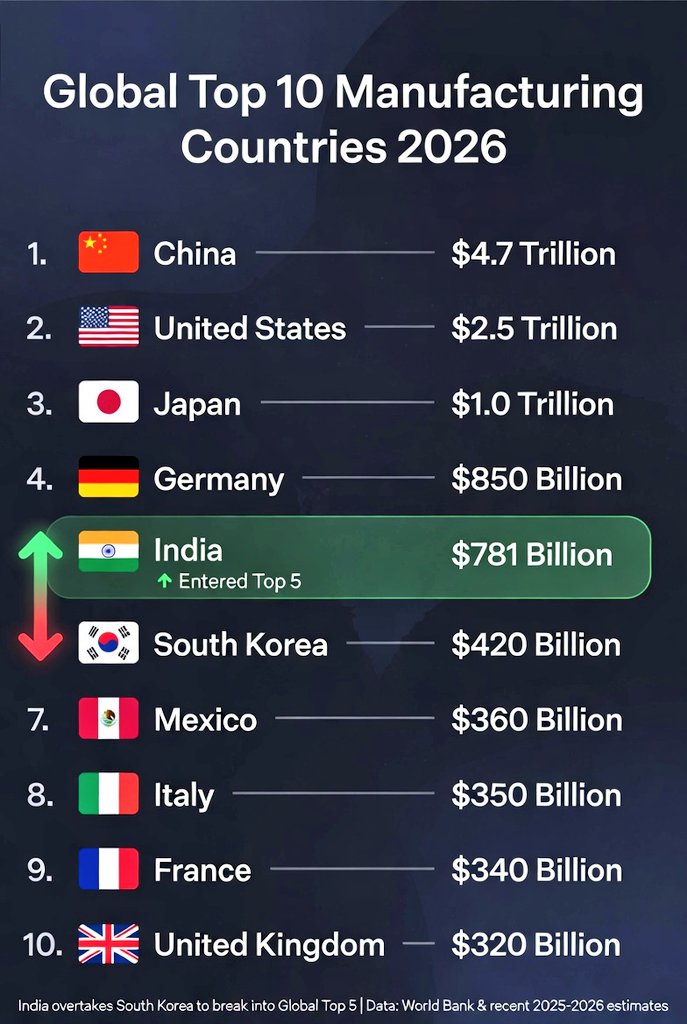
From 1960 to 2015, India’s manufacturing output grew from $3B → $328B.
From 2015 to 2025, it jumped from $328B → $781B.
That means India added ~$453B in just 10 years — more than the ~$325B added over the previous 70 years.
India has now entered the global top 5 in manufacturing, overtaking South Korea.
At current growth rates, even factoring in rupee depreciation, India is on track to overtake Japan and become the world’s 3rd-largest manufacturer (> $1T) by 2029.
That is not gradual growth. That is industrial acceleration.
Remember your one vote did this!
8
181
401
5,240
Donato Coletti retweeted

Io non sono di Sx né di Dx ma un libero pensatore che sa riconoscere il bene e il male e le capacità e l'ignoranza....valuto la persona e le idee che esprime....da questo tiro le cose conclusioni....se uno viene in Italia e delinque deve essere allontanato a prescindere...
1
1
1
31