
Mar 28
#Stress Shift:
From #AlarmMode to #Reflection in 60 Minutes;
True psychological resilience isn’t about how “tough” you are in the heat of the moment;
it’s about how your brain reorganizes itself once the danger has passed.
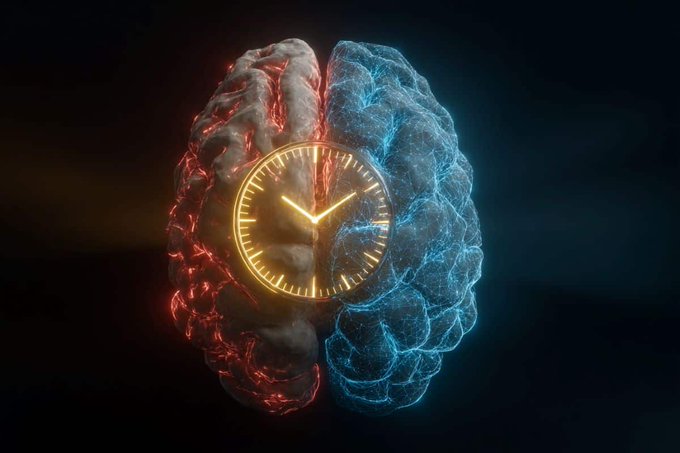
A groundbreaking study has identified a specific “#ResilienceWindow” that peaks approximately 60 minutes after a stressful event.
#PsychologicalResilience is often misunderstood as simple “toughness” or an insensitivity to stress. However, true resilience is the brain’s-#CapacityToAdapt and recover after a stressful event.
The One-Hour Mark:
Researchers found that individual differences in resilience were best predicted by brain activity 60 minutes post-stress, rather than the immediate reaction to the stressor itself.
Network Handover:
Resilient individuals showed a distinct shift: a decrease in the #SalienceNetwork (#ThreatDetection) and an increase in the #DefaultMode Network(#InternalReflection/#Processing).
EEG “Cool Down”:
A significant drop in high-beta EEG power—a marker of neural arousal—was observed in resilient participants at the one-hour mark, signaling a successful “settling” of the nervous system.
Clinical Timing:
This “window” provides a specific timeframe for interventions.
Scientists suggest that therapy or brain stimulation delivered exactly #OneHourAfterTrauma could “nudge” the brain toward a #MoreResilientState.
neurosciencenews.com/one-hou… via @neurosciencenew
5
6
640