


Jun 12
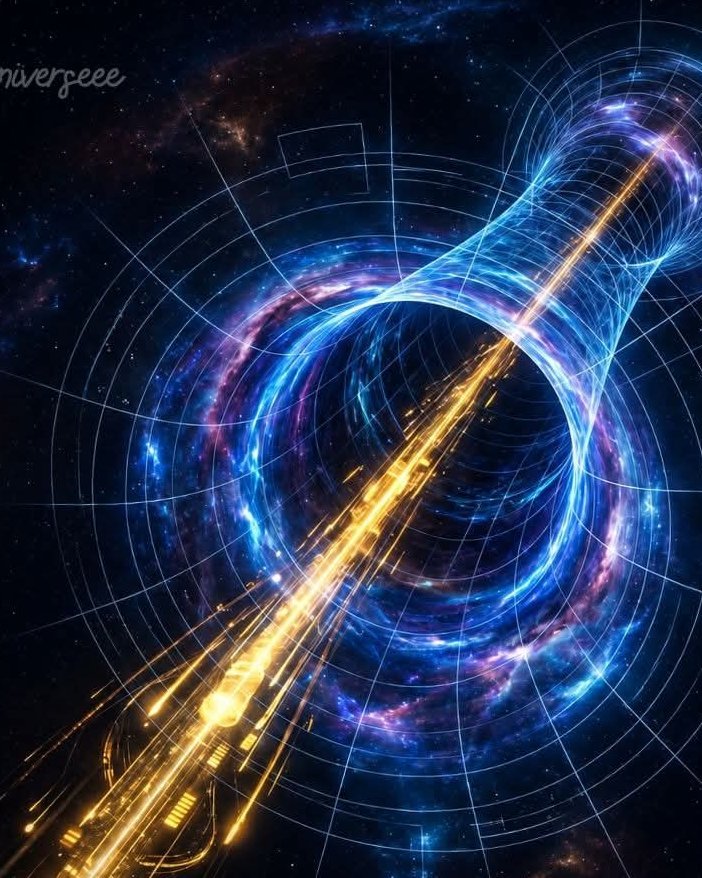
Could Wormholes Really Send Messages Through Time?Imagine a cosmic shortcut — a tunnel that doesn’t just connect two distant points in space, but two different moments in time. That’s the mind-bending promise of wormholes, hypothetical passages through the fabric of spacetime itself, straight out of Einstein’s General Relativity.The Allure and the NightmareIn theory, a wormhole could link two far-flung regions of the Universe (or even different times), letting information — or matter — take a shortcut that bypasses the speed-of-light limit. No more waiting centuries for a signal from another star system. Just… step (or beam) through.But there’s a huge catch: they’re catastrophically unstable.Most calculations show that an ordinary wormhole would pinch shut in a fraction of a second — faster than anything could possibly travel through it. The moment you tried to send even a single photon, the tunnel would collapse under its own gravity.A Quantum Lifeline?In 2014, physicist Luke M. Butcher explored a clever workaround. He asked: Could quantum effects keep a wormhole open just long enough for a message to slip through?His research focused on the Casimir effect — a real, measurable quantum phenomenon where empty space between two close surfaces can produce tiny amounts of negative energy density. In extreme conditions, this negative energy can counteract gravity’s crushing force.Butcher’s calculations showed that an extremely long and incredibly narrow wormhole might naturally generate just enough Casimir energy in its throat to resist collapse… but only for a very brief moment.If everything lined up perfectly, that fleeting window could allow a pulse of light to race through. And here’s where it gets truly wild: because the two ends of the wormhole could experience different rates of time flow (thanks to relativity), the signal might emerge before it was even sent.A message from the future — delivered through a quantum-stabilized wormhole.The Reality CheckThis remains one of the most fascinating “what if” scenarios in theoretical physics. It’s elegant, mathematically consistent under specific assumptions, and deeply provocative.But it’s still purely hypothetical.No wormholes have ever been observed.
We don’t know if they can form naturally.
Even if they did, keeping one open long enough (and safely) for useful information transfer pushes the boundaries of known physics.
Reference:
Luke M. Butcher, “Casimir Energy of a Long Wormhole Throat”
5
9
33
3,141

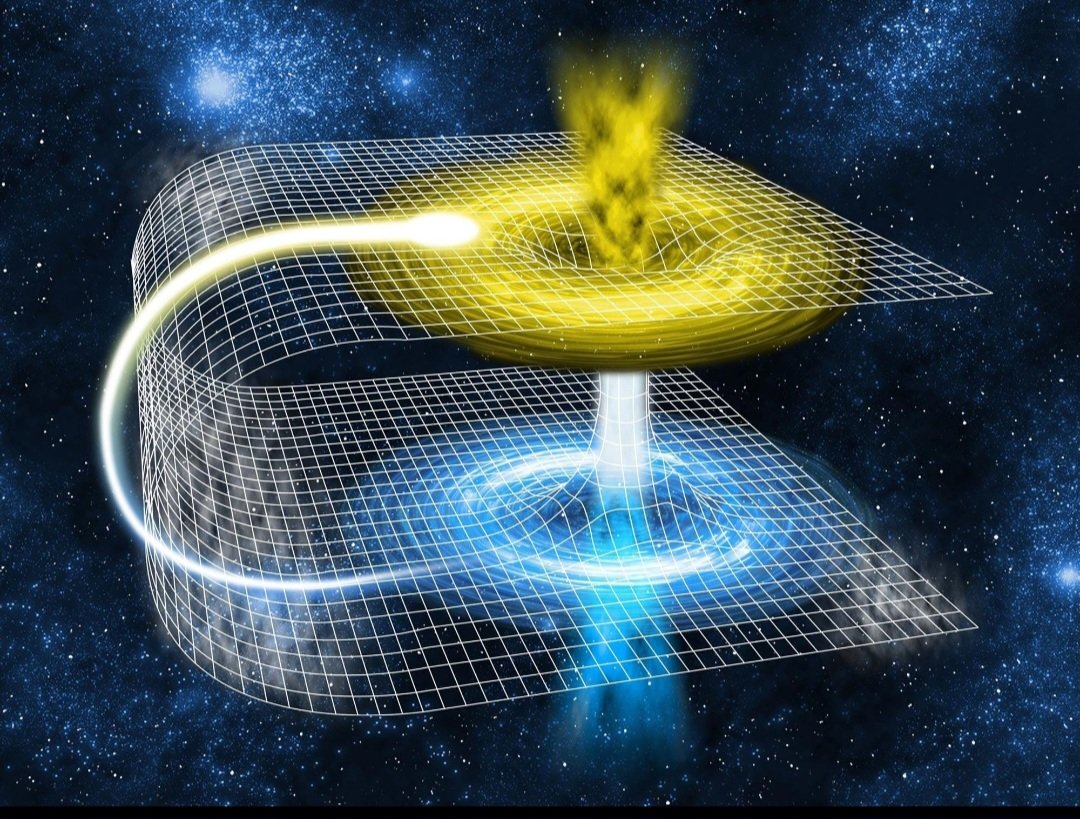
Could Wormholes Really Send Messages Through Time?Imagine a cosmic shortcut — a tunnel that doesn’t just connect two distant points in space, but two different moments in time. That’s the mind-bending promise of wormholes, hypothetical passages through the fabric of spacetime itself, straight out of Einstein’s General Relativity.The Allure and the NightmareIn theory, a wormhole could link two far-flung regions of the Universe (or even different times), letting information — or matter — take a shortcut that bypasses the speed-of-light limit. No more waiting centuries for a signal from another star system. Just… step (or beam) through.But there’s a huge catch: they’re catastrophically unstable.Most calculations show that an ordinary wormhole would pinch shut in a fraction of a second — faster than anything could possibly travel through it. The moment you tried to send even a single photon, the tunnel would collapse under its own gravity.A Quantum Lifeline?In 2014, physicist Luke M. Butcher explored a clever workaround. He asked: Could quantum effects keep a wormhole open just long enough for a message to slip through?His research focused on the Casimir effect — a real, measurable quantum phenomenon where empty space between two close surfaces can produce tiny amounts of negative energy density. In extreme conditions, this negative energy can counteract gravity’s crushing force.Butcher’s calculations showed that an extremely long and incredibly narrow wormhole might naturally generate just enough Casimir energy in its throat to resist collapse… but only for a very brief moment.If everything lined up perfectly, that fleeting window could allow a pulse of light to race through. And here’s where it gets truly wild: because the two ends of the wormhole could experience different rates of time flow (thanks to relativity), the signal might emerge before it was even sent.A message from the future — delivered through a quantum-stabilized wormhole.The Reality CheckThis remains one of the most fascinating “what if” scenarios in theoretical physics. It’s elegant, mathematically consistent under specific assumptions, and deeply provocative.But it’s still purely hypothetical.No wormholes have ever been observed.
We don’t know if they can form naturally.
Even if they did, keeping one open long enough (and safely) for useful information transfer pushes the boundaries of known physics.
Reference:
Luke M. Butcher, “Casimir Energy of a Long Wormhole Throat”
2
9
95


Jun 3
1
19
534


May 17
When Trust Becomes Math
We built blockchains because we stopped trusting each other.Every validator runs the same code.
Checks the same transaction.
Gets the same answer.Beautiful in theory.
Wasteful in practice.A thousand computers doing identical math just to prove nobody's lying.That's the price of trustlessness.The ProblemTraditional blockchains are paranoid.Everyone might cheat.
So everyone checks everything. You want complex computation?
Too bad.
The network can't afford it. No real-time games onchain.
No sensitive data processing.
No heavy computation.Not because the tech doesn't exist.
Because verification is too expensive.The irony:We don't need everyone to run the same calculation.
We just need everyone to agree it was done correctly.What Rialo DoesRialo separates two things:
Doing the work
Proving the work was done right
Traditional blockchain:
Everyone solves the puzzle to verify you.Rialo:
You solve it once.
Show a mathematical proof.
Others check the proof (much faster).
Move on.The math doesn't lie.
The proof either validates or it doesn't.
No trust required.Privacy UnlockedCredit scores.
Medical records.
Trading strategies. You can't put raw data onchain.
Too sensitive. You can't process it offchain without proof.
That's just trusting someone again.Proof-carrying computation:Run calculation on private data → Generate proof → Submit proof result onlyNobody sees your inputs.
Everyone verifies your output. You proved you're creditworthy.
Without revealing transactions. You proved you're eligible.
Without sharing medical history.The RISC-V AdvantageMost blockchains chose custom VMs.Ethereum = EVM
Solana = SVMThey're islands.Rialo chose RISC-V.
The language most zkVMs already speak.When you submit a RISC-V proof to Rialo:No translation needed.
No extra layers.
No foreign execution models.Other chains can verify these proofs too.
But they work harder.
Translate semantics.
Build custom verifiers.
Pay extra gas.Rialo just checks if RISC-V instructions ran correctly.Same language.
No interpreter.What You Can BuildReal-time games:
State updates offchain every millisecond
Settled onchain every hour
Trading engines:
Process thousands of orders privately
Post net results publicly
Simulations:
Run Monte Carlo models offchain
Verify outcomes onchain
None of this works with traditional replication.
Too expensive.
Too slow.Reality CheckThis isn't magic.Proofs cost money to generate.
Proofs cost money to verify.
They have size limits.And here's what people miss:Proofs don't validate inputs.
They validate computation. You prove you calculated an average correctly?
The proof says nothing about whether your data sources were legit.Garbage in, garbage out.
Just with a valid proof attached.Applications must authenticate inputs separately.The proof handles correctness.
You handle truth.Rialo's JobRialo doesn't generate proofs.
It verifies them.
And settles results.Execution happens offchain.
In specialized zkVMs.
Like SP1 or RISC Zero.They're optimized for proving.
Fast.
Efficient.Rialo checks those proofs.
Against one definition of correct RISC-V execution.Valid? State updates.
Invalid? Rejected.Clean separation.
Each system does what it's good at.The ShiftProof-carrying computation isn't just a tech upgrade. It's a shift in how we think about blockchain.Not a global computer running everything.
A global verifier settling everything.Execution where it's efficient.
Verification where it's secure.
Settlement where it's final.That's Rialo.
2
3
63



May 7
checkthis out
May 7

@Dimillian Sorry for bothering, but you're the only OpenAI dev I "know" :)
The /goal feature is CRAZY. I woke up this morning, set a goal of migrating all of codex-pets[.]net from Supabase to Cloudflare, and it's been running close to 3 hrs already:
- Using Computer Use to set up everything by itself
- Locally deploying previews, testing them
- Listens to my inputs while working, without interrupting its flow
- Updates me on every step
I've been using AI coding agents for years, but this is the first real "WHOA" moment for me.
That's insane. Send regards to the team.
2
36




Apr 28
Wait.
Before you try another platform…
check this.
👉 ivamax.finance/
#IVAMAX #Wait #CheckThis #Web3 #CryptoCommunity #DigitalEcosystem #FutureOfFinance #BlockchainTechnology #SmartPlatform

1
2
9

ok i got two other people i know who’s next…#wait #checkthis

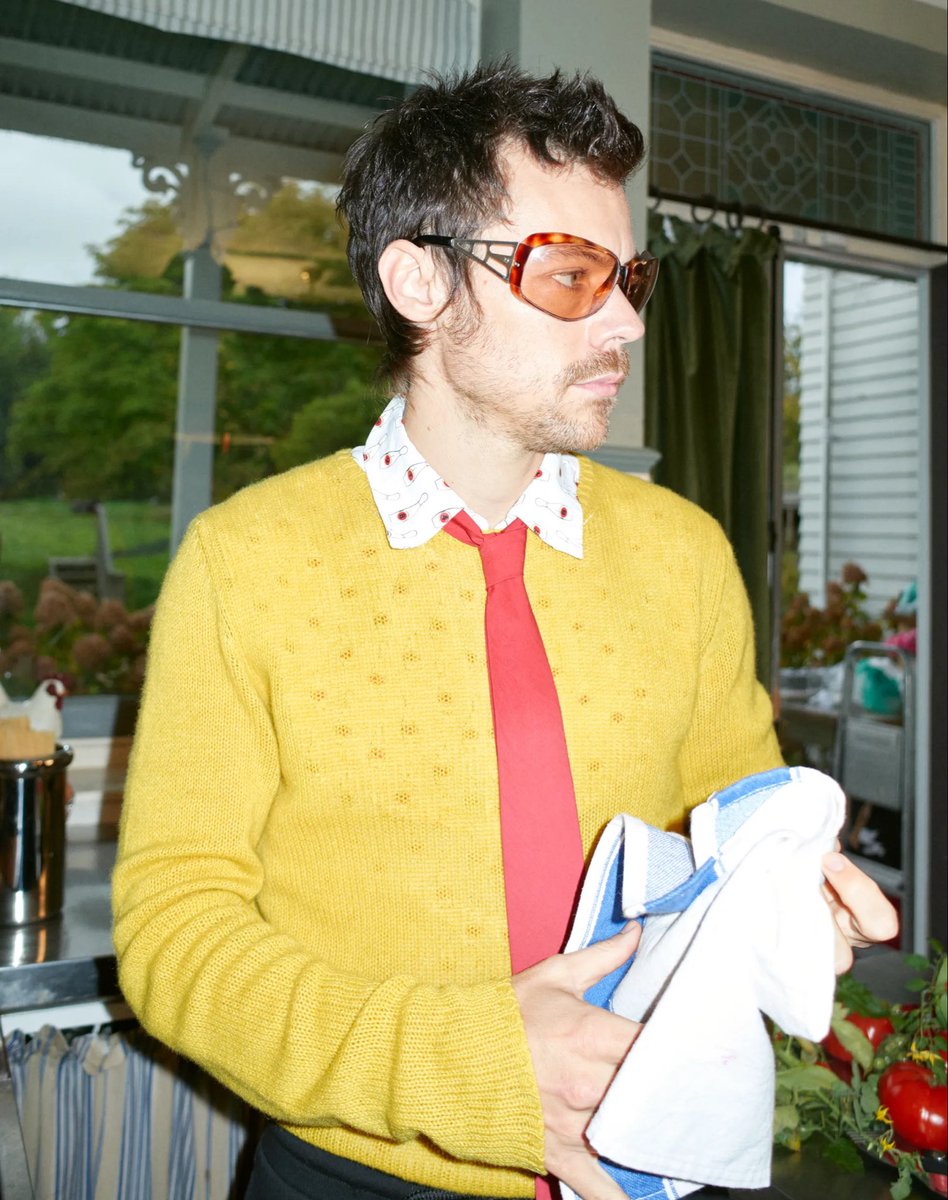
PEOPLE also reports that Harry Styles and Zoë Kravitz are engaged, after 8 months of dating.
(people.com/harry-styles-and-…)

1
8
770


Apr 10
@petrivirus fact checkthis pls 🥹
Apr 10

the distance isn't the issue. the issue is whether you're willing to go to places abandoned by god such as "birmingham" and "leeds"
2
2
156

Apr 6
✍️The robotics industry is obsessed with "products."
And we are obsessed with "Ecosystems."
The "disposable" tech cycle is an innovation prison.
It keeps us locked out of our own tools.
🤖 Modulr exists to break those walls down through the radical power of Modularity.
If the current industry actually worked for the average person, we wouldn't need to exist. But it doesn't. So we do. ⚒️
📍Checkthis latest Medium piece on the movement behind the machine:
medium.com/@dangikaransingh4…
7
6
13
263

WOAH OMG U GUYS SHOULD CHECKTHIS AWT !!!!!

she is so freaking cute but i suck at drawing non humans and im colourblind so im so sorry 😭😭 hope your like her!!

6
160