
Feb 26
🤝 Zaggle Bags Agreements with Saurashtra Cement, Superking Ventures & Chennai Super Kings
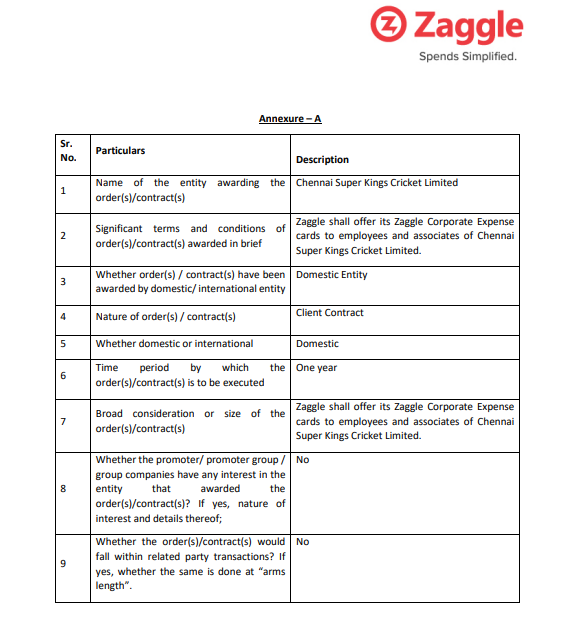
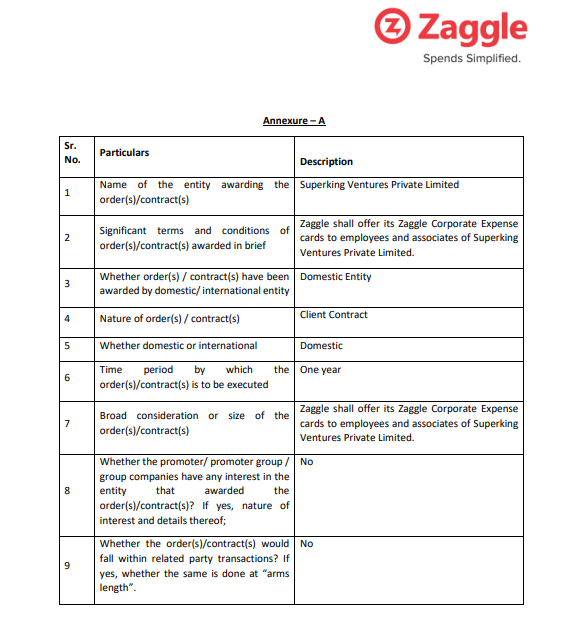
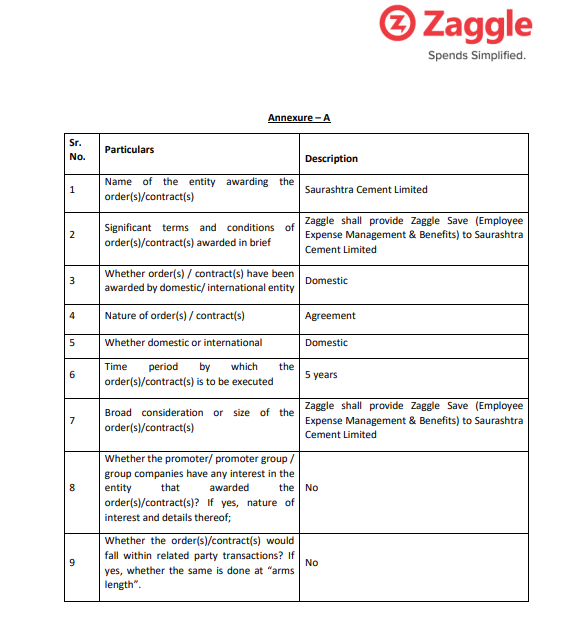
👉🏻 Zaggle Prepaid Ocean Services Limited signed 3 domestic client agreements.
👉🏻 5-year deal with Saurashtra Cement for Zaggle Save (Employee Expense Management & Benefits).
👉🏻 1-year contracts with Superking Ventures and Chennai Super Kings for Corporate Expense Cards.
👉🏻 No promoter interest; not related party transactions.
#Zaggle #CorporateCards #ExpenseManagement #ClientUpdate #BusinessNews
1
269

1/8/26- Notice: On Jan 9, 10–11 AM EST, we’ll have a quiet hour for a company-wide meeting. Live chat, Teams, and phones will be paused. Systems monitored; emergencies via email. Thanks for understanding! #Announcement #ClientUpdate
2
445

31 Dec 2025
Three 2026 travel tips to share with your clients!
Straight from the latest trends, these simple travel shifts can make vacations more authentic, social, and memorable:
1. Rethink fine dining guides – Many starred restaurants feel formulaic these days. Consider crowd-sourced lists like Opinionated About Dining (OAD) for more genuine, standout spots across all price points.
2. Choose restaurants for the vibe – Atmosphere matters as much as (or more than) the food. Great spots now double as social hubs—no membership required!
3. Vet your travel advisors carefully – With so many planners out there, look for ones with deep destination expertise (5 years), personalized recommendations, and real perks beyond basic upgrades.
These ideas help cut through the noise and focus on genuine experiences.
Safe and happy travels!
#TravelTips #2026Vacations #AuthenticTravel #ClientUpdate

ALT Hand holding a globe against a mountain background symbolizing travel and exploration.
1
3
52
30 Dec 2025
As we head into 2026, some encouraging news for your clients!
The delayed Q3 2025 GDP report just dropped, showing strong 4.3% annualized growth—beating expectations and up from 3.8% in Q2.
Worth a read for perspective on markets and risks in 2026: forbes.com/sites/bill_stone/…
#Economy2026 #GDPGrowth #Investing #AIboom #ClientUpdate
ALT Wooden cubes forming the year 2026 on a neutral background.
1
3
29

15 Sep 2025
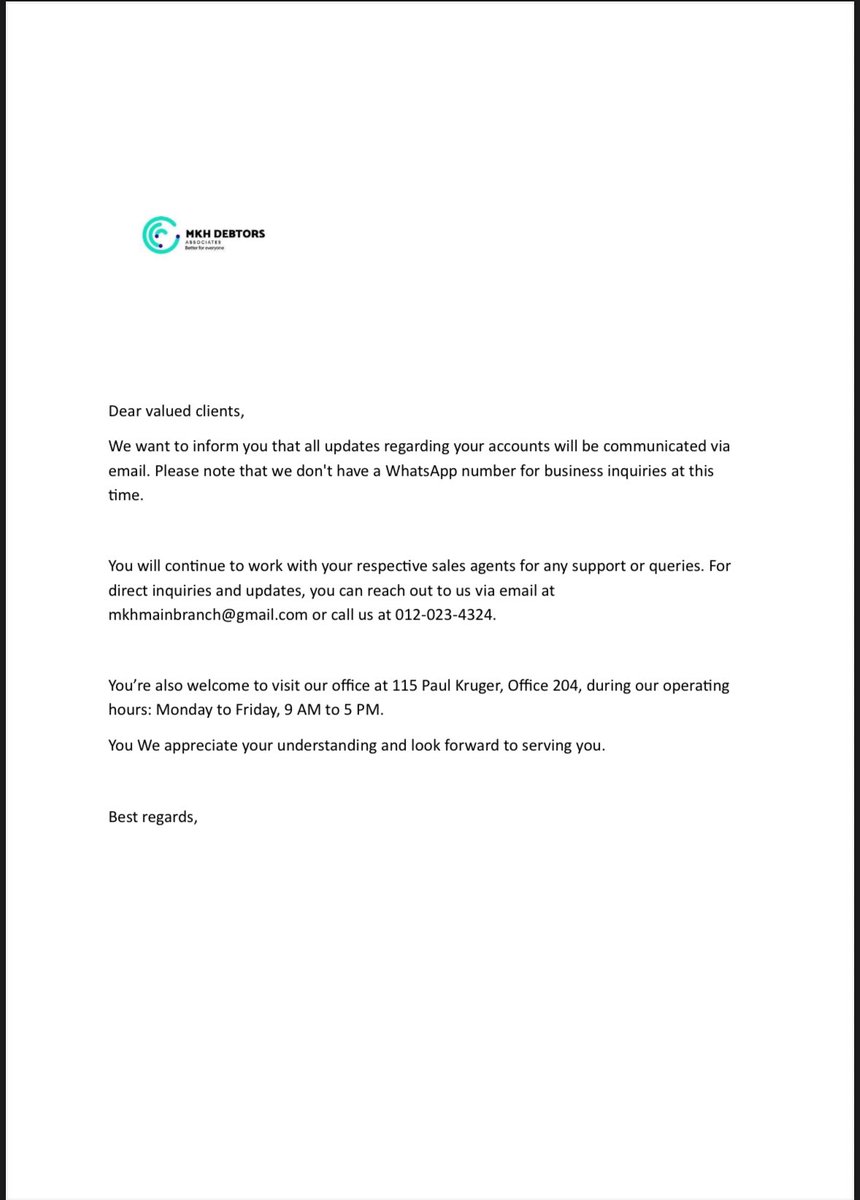
Important Update for Our Clients
Dear valued clients, we're deeply sorry to inform you that our WhatsApp number (0733030732) for updates has been hacked. Our technical team is working diligently to resolve the issue. For now, please reach out to us at 012 023 4324. Thank you for your understanding! 🙏
#SecurityIncident #ClientUpdate #MKHDebtors
3
3
223

12 Sep 2025
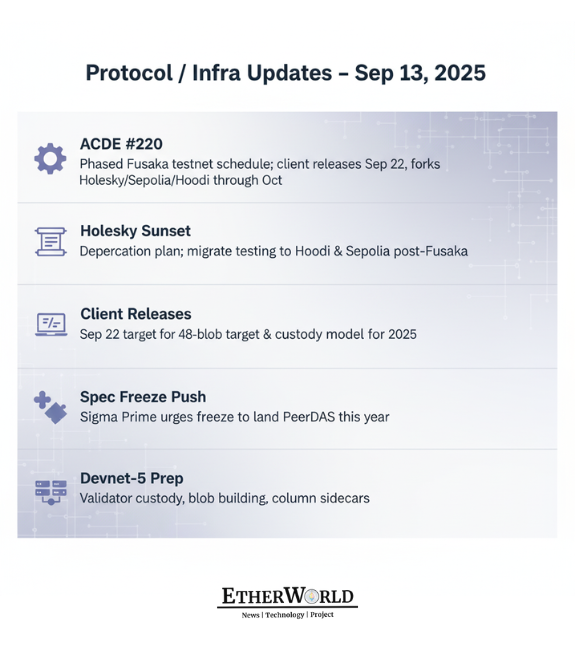
Protocol/Infra Updates (Sep 13, 2025)
▫️ACDE #220 sets phased Fusaka testnet schedule; client releases Sep 22, forks Holesky/Sepolia/Hoodi through Oct.
▫️Holesky sunset plan reiterated; migrate testing to Hoodi and Sepolia post-Fusaka.
▫️Sep 22 target for Holesky client releases to prep deprecation window.
▫️PeerDAS momentum; OP Labs outlines 48‑blob target and node custody model for 2025.
▫️Shipping discipline urged; Sigma Prime calls for spec freeze to land PeerDAS this year.
▫️Devnet‑5 prep focuses on validator custody, distributed blob building, and column sidecars.
#Ethereum #Protocol #Infra #ClientUpdate #Fusaka #Consensus #Mainnet #Devnets #L2 #Interoperability
1
5
7
194
29 Aug 2025
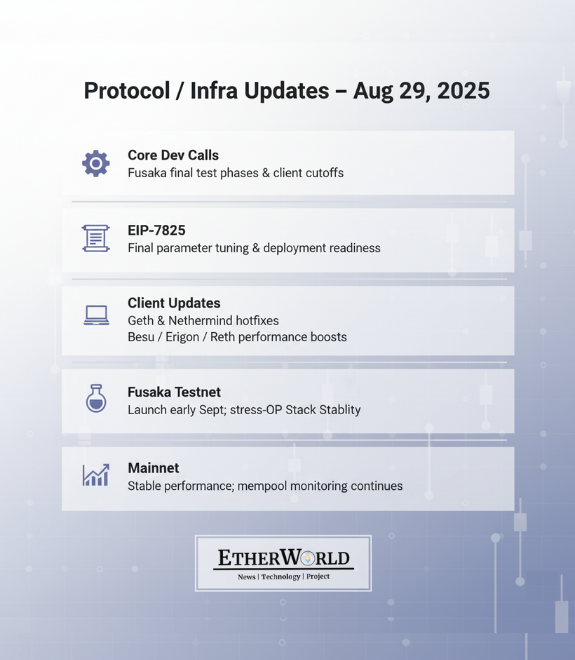
Protocol/Infra Updates (Aug 29, 2025)
▫️ACDC/ACDE calls focus on Fusaka final test phases and client cutoffs (Aug 22–28)
▫️EIP-7825 final parameter tuning and deployment readiness (Aug 23–27)
▫️Client updates: Geth & Nethermind hotfixes; Besu/Erigon/Reth performance improvements (Aug 24–29)
▫️L2 ecosystem upgrades accelerate post-OP Stack Stability (Aug 25–29)
▫️Fusaka testnet launches planned for early Sept; stress tests on batch tx & blob handling intensified (Aug 26–29)
▫️Mainnet performance stable with ongoing mempool & resource monitoring (week of Aug 22–29)
#Ethereum #Protocol #Infra #ClientUpdate #Fusaka #Consensus #Mainnet #Devnets #L2 #Interoperability
1
4
6
162
22 Aug 2025
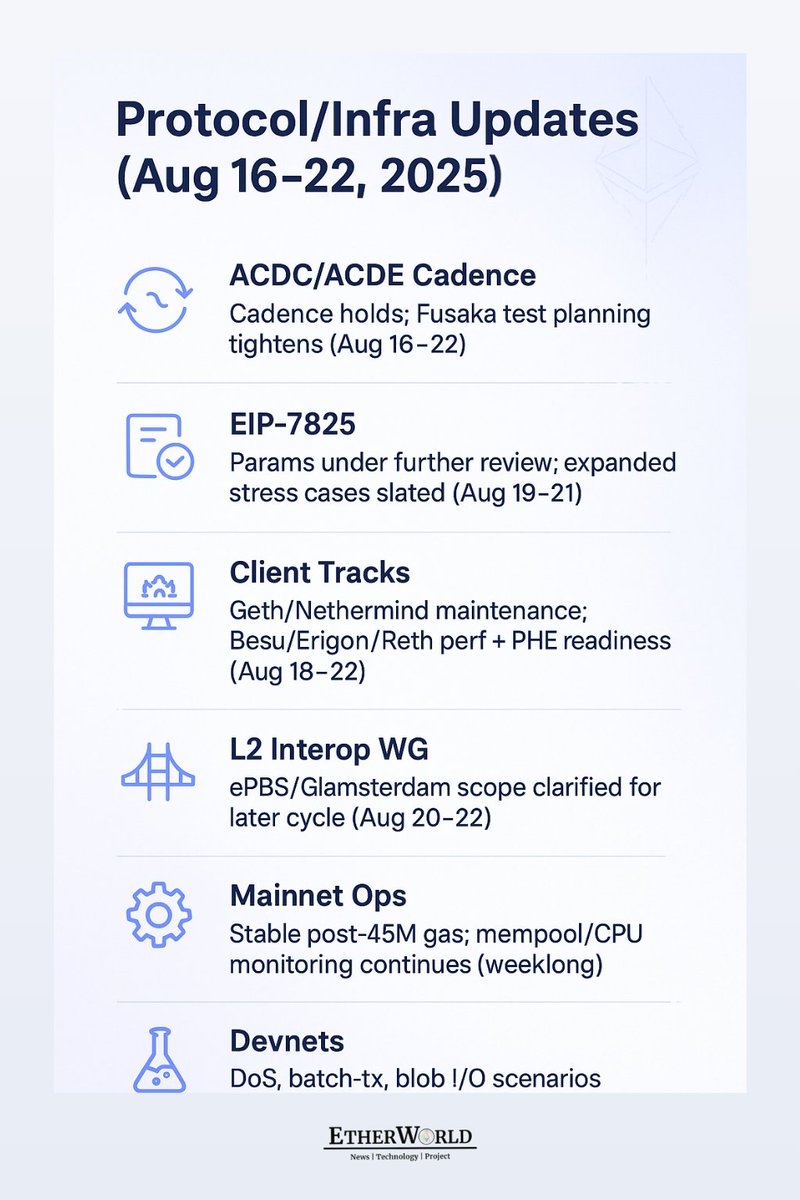
Protocol/Infra Updates (Aug 16–22, 2025)
• ACDC/ACDE cadence holds; Fusaka test planning tightens (Aug 16–22)
• EIP-7825 params under further review; expanded stress cases slated (Aug 19–21)
• Client tracks: Geth/Nethermind maintenance; Besu/Erigon/Reth perf and PHE readiness (Aug 18–22)
• L2 interop WG: ePBS/Glamsterdam scope clarified for later cycle (Aug 20–22)
• Mainnet ops: stable post-45M gas; mempool/CPU monitoring continues (weeklong)
• Devnets: DoS, batch-tx, blob I/O scenarios readied for next rounds (Aug 20–22)
#Ethereum #Protocol #Infra #ClientUpdate #Fusaka #EIP7825 #Consensus #Mainnet #Devnets #L2 #Interoperability
1
5
8
215
15 Aug 2025
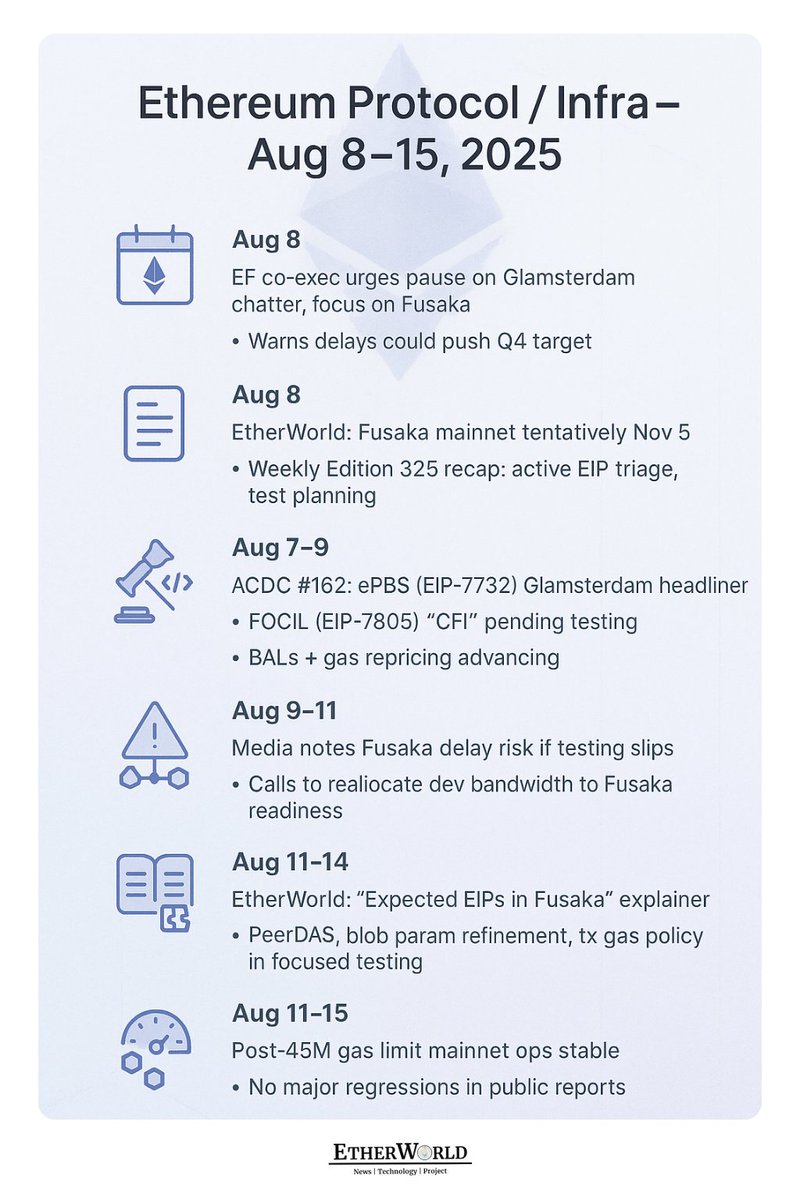
Ethereum Protocol & Infra Highlights (Aug 2–8, 2025): 👇🧵
▫️EF Protocol Update 001: “Scale L1” vision (Aug 5 carry-through)
▫️ACDC #162 outcomes circulate; Fusaka test focus (Aug 8–9)
▫️Fusaka timeline watch: prioritize over Glamsterdam (Aug 8–11)
▫️Mainnet steady at ~1.7M–1.9M tx/day post-45M gas (Aug 11–14)
▫️Client maintenance: Geth/Nethermind fixes; Besu/Erigon/Reth perf patches queued (Aug 12–14)
▫️DoS/batch/blobs scenarios finalized for next Fusaka tests (Aug 13–15)
#Ethereum #Protocol #Infra #ClientUpdate #Fusaka #ACDC #ACDE
2
5
11
429

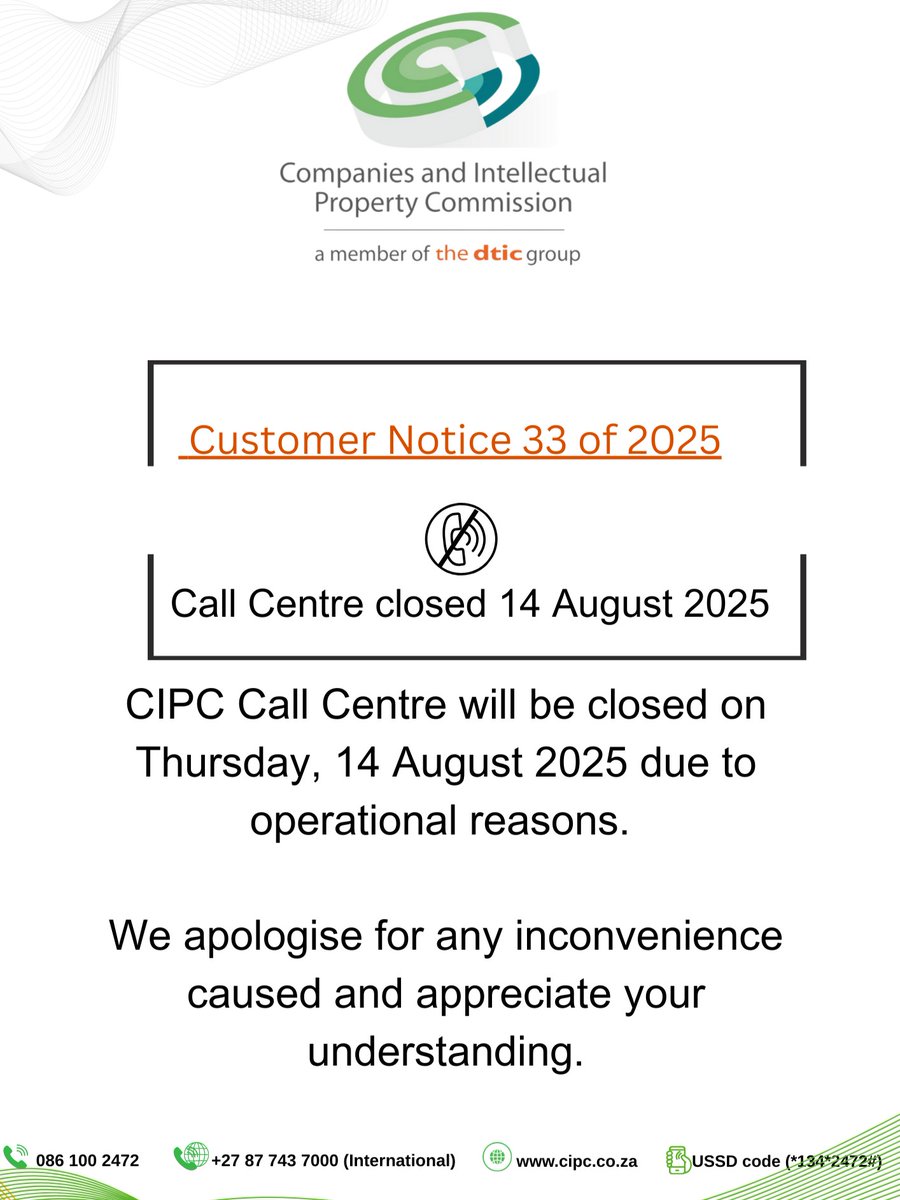
📢 Notice: The CIPC Call Centre will be closed on Thursday, 14 August 2025, due to operational reasons.
☎️ Services will resume on Friday, 15 August 2025.
👉 Full Notice bit.ly/4mac7bv
We apologise for any inconvenience caused.
#CIPC #CallCentreNotice #ClientUpdate #YourBusinessOurFocus
2
3
505
8 Aug 2025
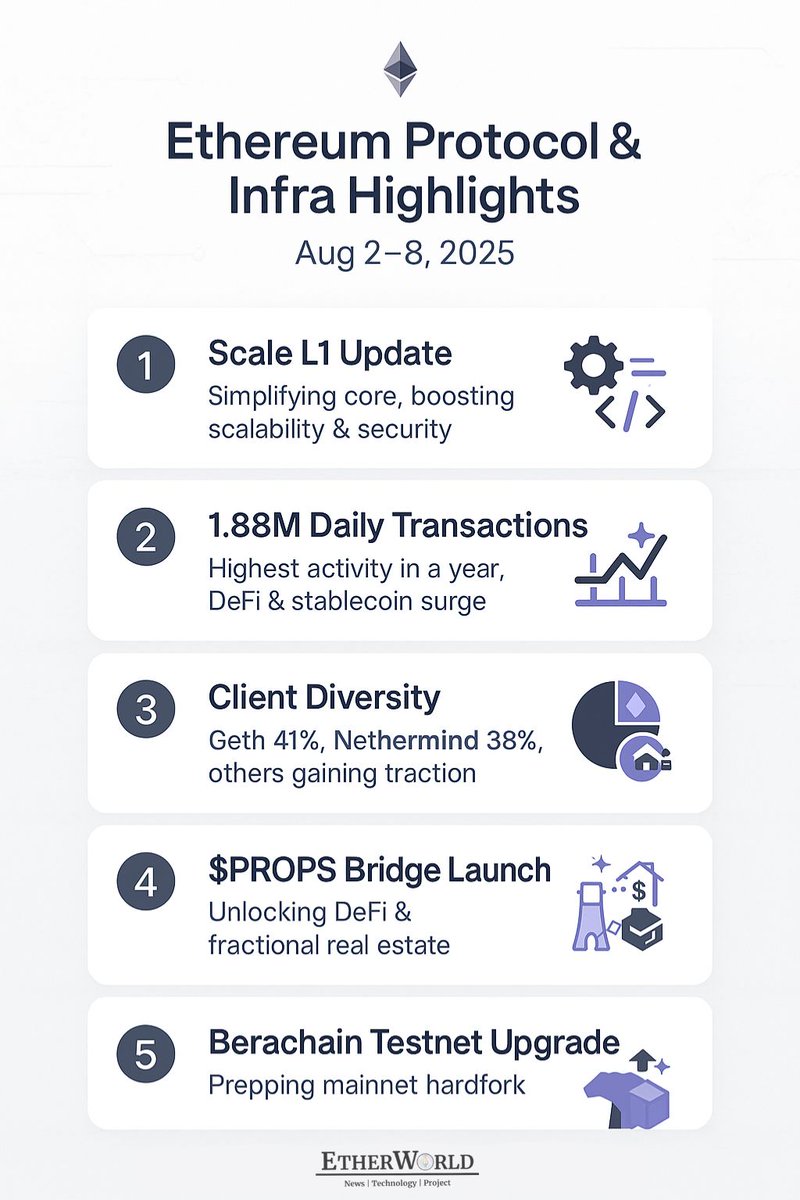
Ethereum Protocol & Infra Highlights (Aug 2–8, 2025):
1️⃣ Protocol “Scale L1” Update Released (Aug 5) – Simplifying core, boosting scalability & security
2️⃣ Network Hits 1.88M Daily Txns (Aug 7) – Highest activity in a year, DeFi & stablecoin surge
3️⃣ Client Diversity Grows (Aug 6) – Geth 41%, Nethermind 38%, others gaining traction
4️⃣ Propbase $PROPS Bridge Launch (Aug 9 scheduled) – Unlocking DeFi & fractional real estate
5️⃣ Berachain Testnet Upgrade (Aug 6) – Prepping mainnet hardfork for gas & execution enhancements
#Ethereum #Mainnet #Protocol #ClientUpdate #DeFi #Blockchain
1
4
7
153

1 Jul 2025
Our July 2025 Newsletter just dropped — and it’s packed with exciting updates, important information, and a few surprises you won’t want to miss! 🎉
Didn’t get it? Let us know and we’ll resend it your way!
#MVC #DrJones #DrBenson #aahaaccredited #Newsletter #ClientUpdate

2,089

24 Jun 2025
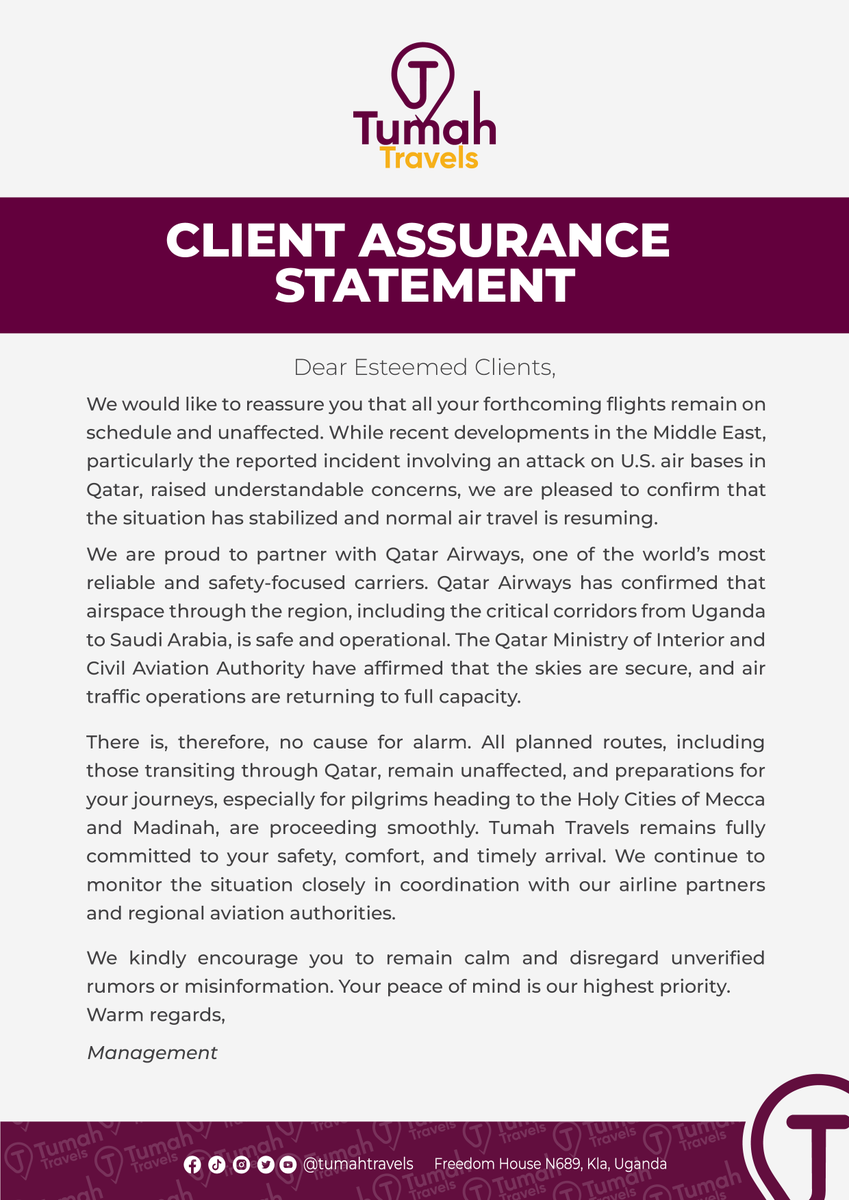
Secure skies. Seamless travel. Sacred purpose.
Tumah Travels confirms that all planned routes are on schedule and unaffected. Our partnership with Qatar Airways ensures the highest standards of safety and reliability across the region.
Let faith lead — we’ll handle the logistics.
#ClientUpdate #TumahCares #UmrahJourney #TravelSecurity
3
1
3
237
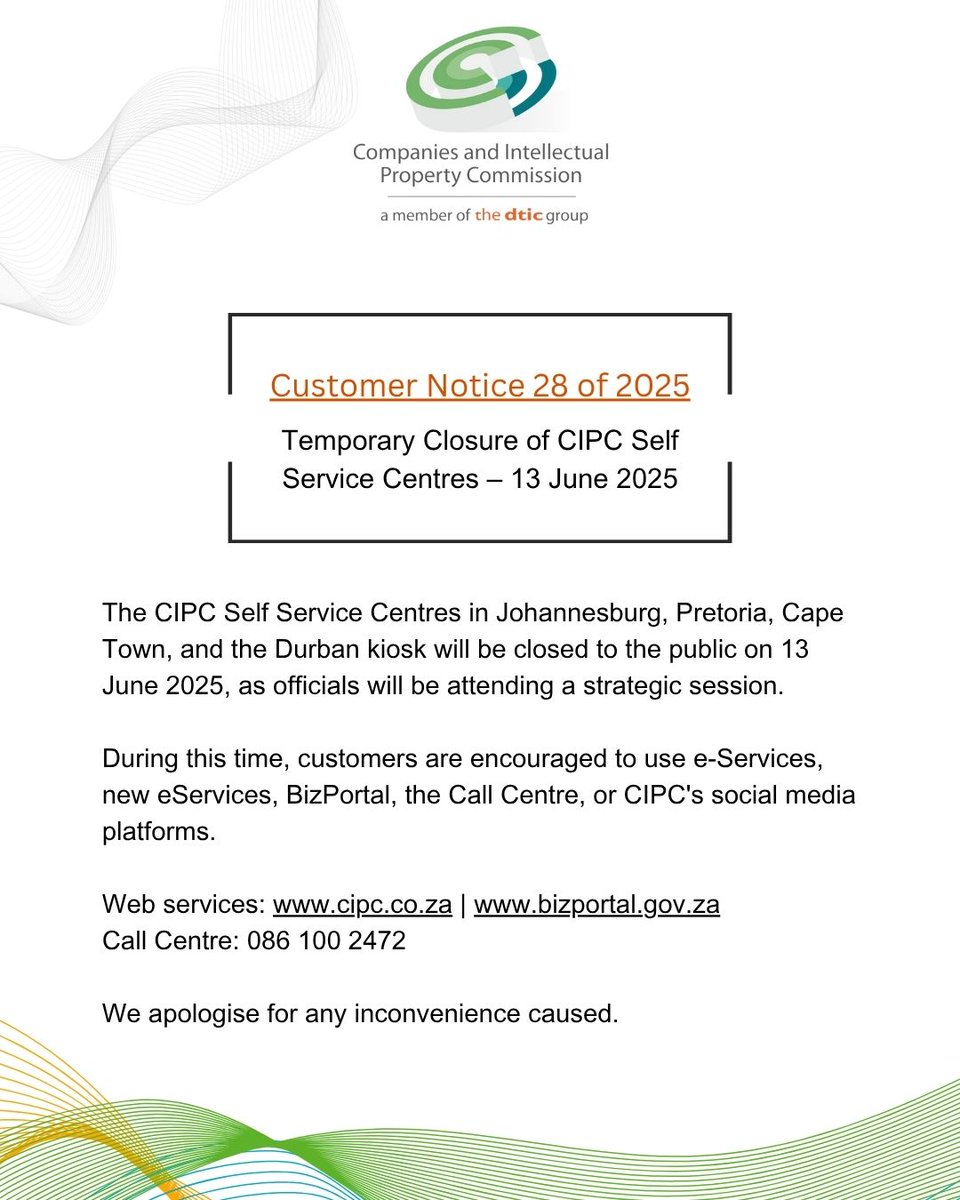
CIPC Self Service Centres in JHB, PTA, CPT & Durban will be closed on 13 June 2025 for a strategic session.
✅ Use: e-Services, new eServices, BizPortal, our Call Centre (086 100 2472) or social media.
🔗 cipc.co.za | bizportal.gov.za
To find the full notice: cipc.co.za/?p=22559n
We apologise for any inconvenience. #CIPCNotice #ClientUpdate
4
9
1,372

27 May 2025
transactions that may benefit from this development.
#CBN #PAPSS #AfricanTrade #CrossBoarderPayments #RegulatoryUpdate #Business #AfCFTA #ClientUpdate
3
65
27 May 2025
transactions that may benefit from this development.
#CBN #PAPSS #AfricanTrade #CrossBoarderPayments #RegulatoryUpdate #Business #AfCFTA #ClientUpdate
3
53

Nostalgia hits different 🔥 Episode 1 music is coming back to VALORANT in patches 10.08 and 10.09! Time to vibe like it's Day 1 🎶 #VALORANT #ClientUpdate #Ep1Vibes
1
7
2,663

1 Apr 2025
Comprehensive Details on (SSI) Self-Sovereign Identity and @union_build Mechanisms
Self-sovereign identity (SSI) is a decentralized identity model empowering individuals to fully control their digital identities without relying on centralized authorities.
Built on blockchain technology, SSI uses decentralized identifiers (DIDs) and verifiable credentials (VCs) to enable secure, private, and interoperable identity management.
DIDs, registered on a blockchain, act as unique user-controlled identifiers, while VCs cryptographically signed attestations like passports or diplomas allow users to prove claims (e.g., age) without revealing excess data, often using zero-knowledge proofs (ZKPs).
For instance, Trinsic Wallet enables users to prove they are over 18 without sharing their birth date.
SSI reduces risks like data breaches by eliminating central intermediaries, enhancing privacy, security, and user autonomy.
However, challenges include scalability, regulatory compliance (e.g., GDPR), and ensuring reorg resistance against blockchain reorganizations.
Union Build at the other hand enhances blockchain interoperability through a robust risk assessment framework for cross-chain bridging. Union Build mechanisms include adaptive confirmation processes phased rollouts like testnet 9 and internal stress testing and community feedback on Discord and X, ensuring features are user-ready before Mainnet.
Fail-safe smart contracts, backed by ZKPs, secure transactions and prevent fund loss, while Union ucs03-zkgm-1 protocol supports efficient asset transfers across chains like Ethereum and Bitcoin.
Union intent-based filling further optimizes scalability, reducing gas costs by 5,000 gas per packet by skipping the ClientUpdate step in the critical transfer phase, (I explained this inside the article I dropped early this morning about gas cost, you can look it up)
Integrating SSI with Union Build mechanisms could revolutionize identity management. Union’s ZKP-backed contracts align with SSI’s privacy focus, enabling secure, reorg-resistant identity verification across chains.
Their cross-chain expertise ensures a single DID can be recognized globally, while batching functions like batchSend make verifications cost-effective. Union’s community-driven approach refines SSI usability, addressing adoption challenges.
Together, they could enable seamless, secure access to digital services, though scalability and regulatory hurdles remain. This synergy promises a user-centric, decentralized identity future.
Zkgm
5
1
173
1 Apr 2025
Clear Understanding of the Scalability of @union_build Gas Costs
Union Build’s cross-chain bridging protocol, ucs03-zkgm-1, showcases impressive scalability in gas costs, making it a standout in blockchain interoperability.
This comprehension explores how Union Build optimizes gas expenditure across its transfer lifecycle, leveraging zero-knowledge proofs (ZKPs) and innovative filling mechanisms.
Union’s transfer lifecycle involves key functions like:
sendPacket
batchSend
updateClient
recvPacket (or recvIntentPacket)
acknowledgePacket
The process splits into a critical phase ensuring users access funds on the destination chain, and an acknowledgement phase for filler repayments.
The critical phase prioritizes speed, while the acknowledgement phase, less urgent, finalizes the process.
A single ClientUpdate can verify multiple transfers across chains, driving costs toward zero at scale.
ucs03-zkgm-1 batches packets to minimize verification costs, approaching the theoretical optimum of ERC20 gas costs.
Benchmarking at commit. Commit hash (b5af9c3d8157aa4dc4c0a87b24cf422ecdc421e7) reveals Union’s efficiency. For a single packet, ZKP verification dominates costs, but even at small batch sizes, scalability shines. On October 17th 2024, sending a packet from Ethereum cost $3.9203, compared to a $12.9670 Curve swap, per gas fee calculators. Integration with Aligned Layer further slashes verification costs, enhancing both critical and full paths.
Intent-based filling, designed for speed, cuts gas costs by 5,000 gas per packet, a modest yet notable saving given ucs03-zkgm-1’s optimization. This efficiency, paired with ZKP-powered trustlessness, positions Union as a leader in chain abstraction.
By scaling horizontally and reducing costs below stablecoin swaps, Union Build sets a new standard for cross-chain transfers.
Zkgm
3
3
174

14 Nov 2024
So the ClientUpdate on Optimism does not perform a check based on the SEQUENCER getter to verify incoming data?
2
69