
15 Nov 2024
Part 3 of Hot Mess: How bipartisan climate action turned into chaos. Featuring Chelsea Henderson from @republicEn Explore how disinformation derailed climate solutions. #ClimateDivide #HotMessPodcast #ClimateAction Listen on #spotify or wherever you get podcasts.
2
4
386

23 Sep 2023
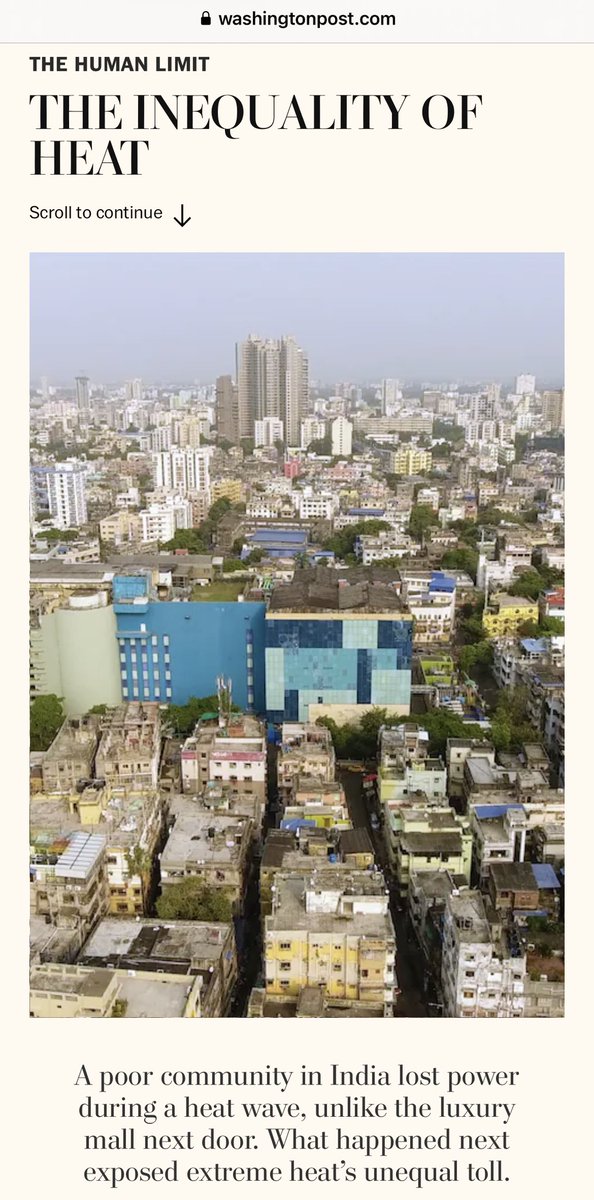
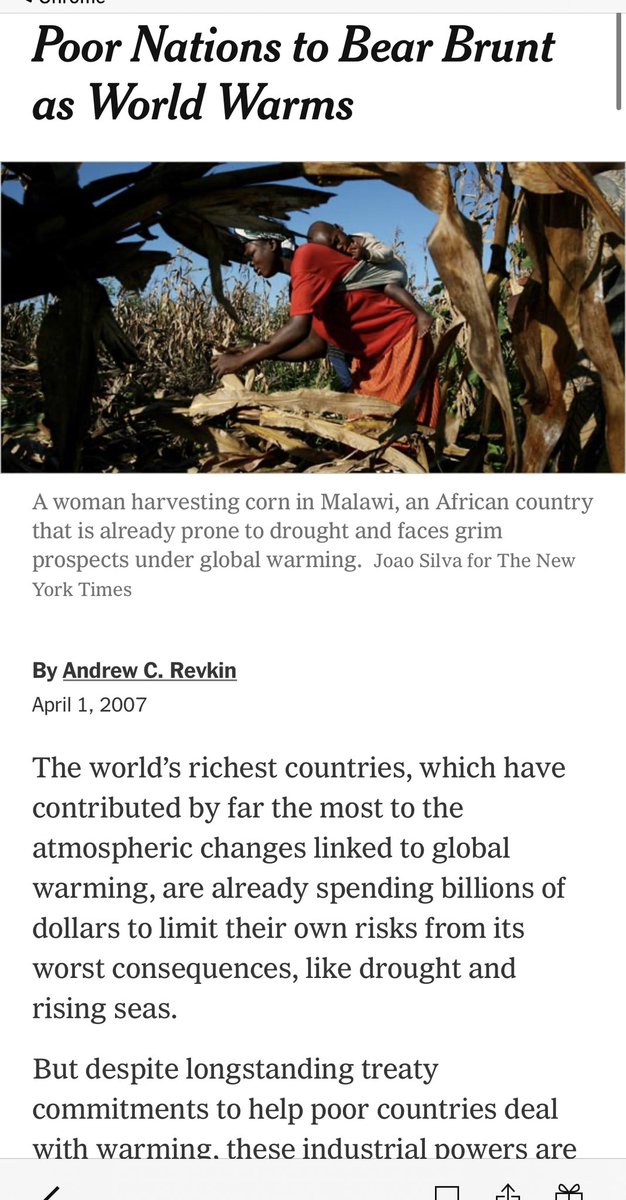
The #climatedivide I reported on in 2007 for the @nytimes with @SominiSengupta @SharonLNYT @sarahlyall & Mydans was between rich and poor countries: j.mp/climatedivide .. Now it’s piercingly clear this divide exists even block by block *within* countries. Great story here.
5 Sep 2023

I traveled with @saiyna to one of the hottest cities on earth to observe climate change’s impact on health - rising malaria, malnutrition and mortality. By 2050, the number of people suffering from a month of inescapable heat could grow to 1.3B washingtonpost.com/climate-e…
1
3
1,691
22 Aug 2023
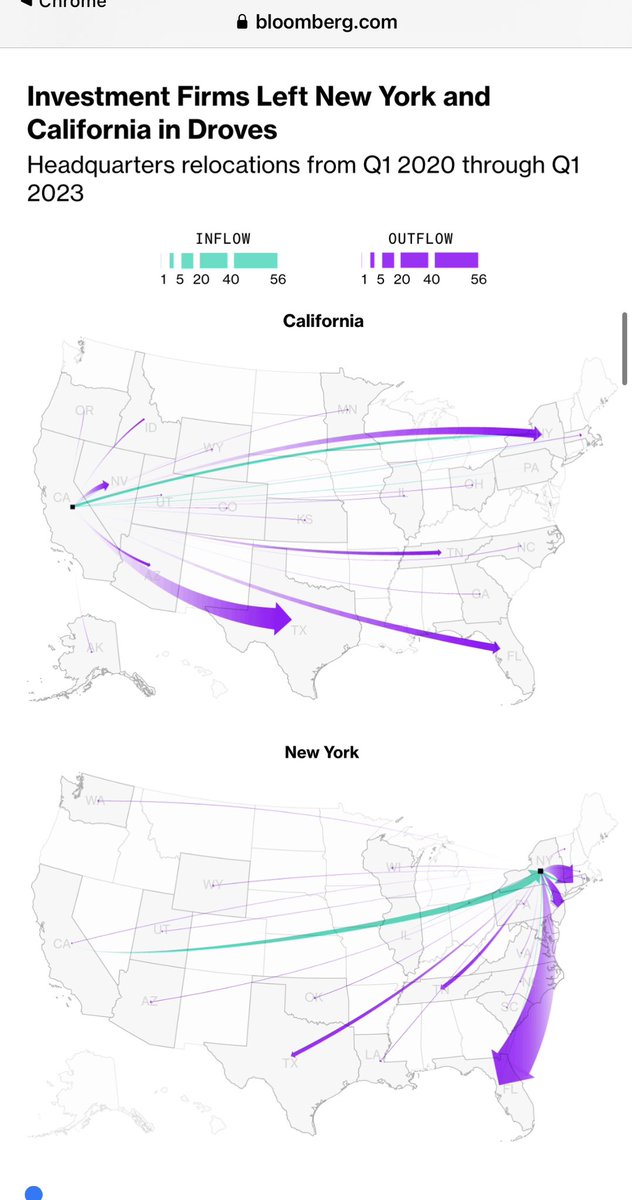
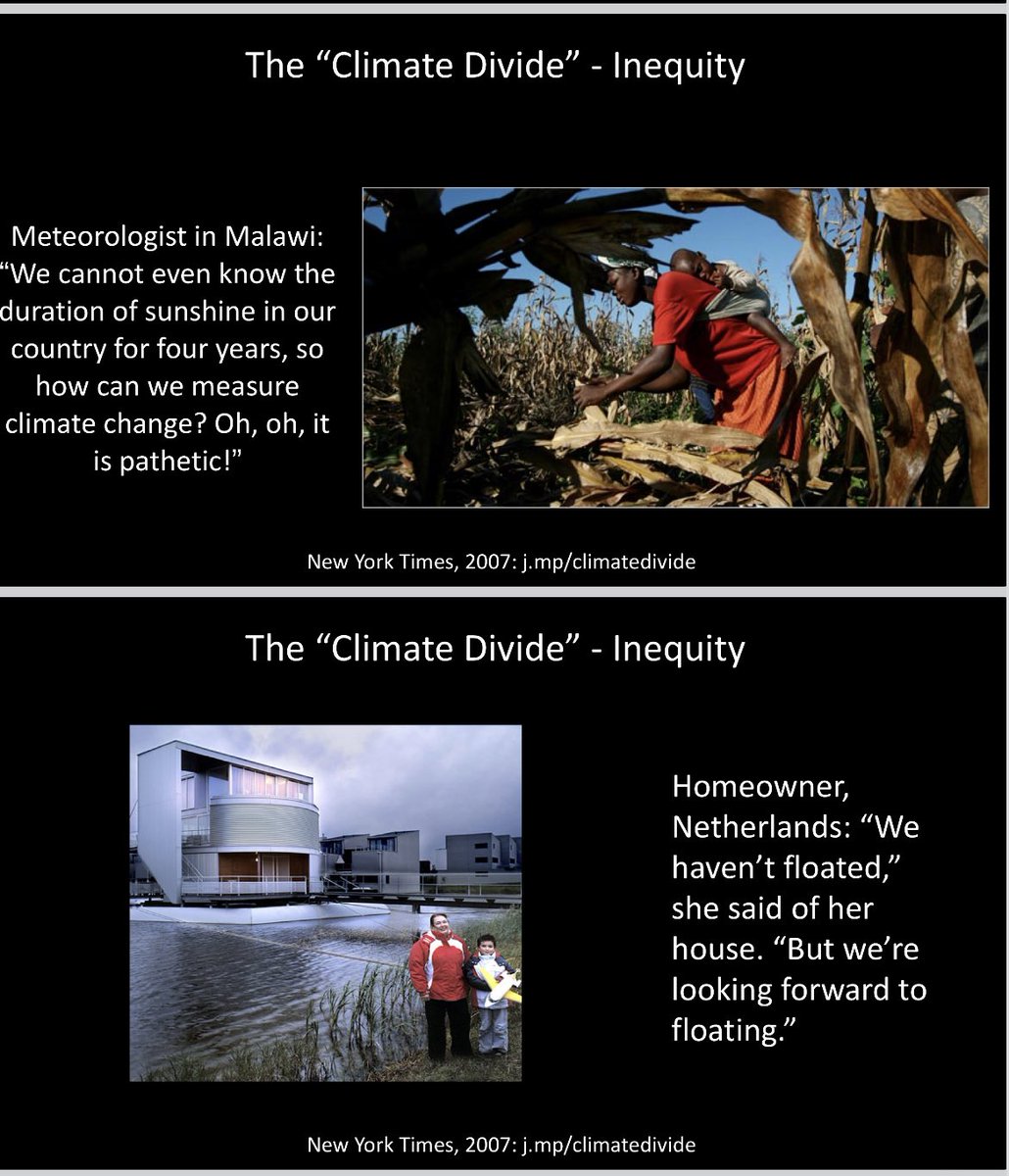
Sure doesn’t look like a #ClimateEmergency for those with $$$. The global #climatedivide we wrote about in 2007 (j.mp/climatedivide) also exists within nations, even along the same streets….>
Bloomberg: “The moves, often born out of a desire for lower taxes, warmer weather and cheaper mansions, have pushed the industry’s footprint into parts of the US that previously didn’t have much of a finance presence beyond regional banks.” (Times story by @revkin @SharonLNYT @sarahlyall @SominiSengupta & Seth Mydans)
21 Aug 2023

New York, California See Trillions in Assets Flee to Wall Street South. Tennessee, Texas and Florida get big (BIG) business. bloomberg.com/graphics/2023-…
1
2
1,305
24 Jul 2023
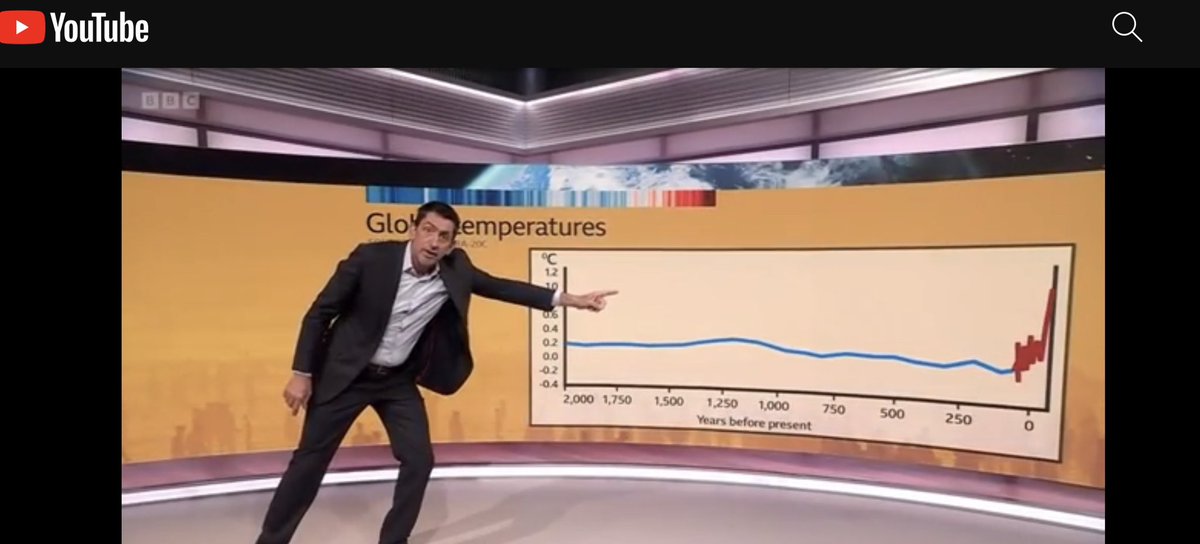
When should journalists hit the road, or skies, covering #climatechange and risk? I think @BBCJustinR’s Spain #heatwave trip was pretty indulgent and his best work is anchoring things, as here.
When we did our 2007 @nytimes #climatedivide report, e.g., I anchored with field reporting by correspondents in four regions: J.mp/climatedivide But Spain is pretty close to UK and the Daily Mail “gotcha” is silly.
23 Jul 2023

I do think for a news org with BBC’s reach, it is kind of silly (with or without the carbon footprint) to have an editor/anchor go for a toe touch for a #heatwave.
2
2
3,014
29 Jun 2023
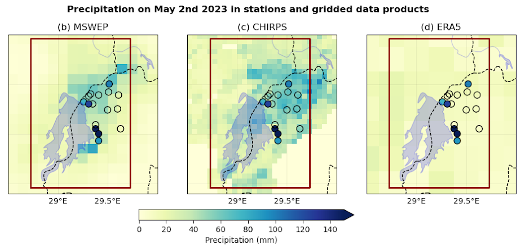
The glaring meteorological/climate data gaps in Africa are a scandal given decades of efforts to push developed countries to invest for African resilience. @mickeyglantz in 2007 called for wealthy countries to help establish a center for climate and water monitoring in Africa, run by Africans. But for now, he says he is doubtful that much will be done. “The third world has been on its own,” he said, “and I think it pretty much will remain on its own.” @See our 2007 nytimes #climatedivide package: nytimes.com/2007/04/01/scien…
29 Jun 2023

Where & how much did it rain? - we @WWAttribution don't know. We do know that floods on lake Kivu, led to hundreds of deaths in a highly vulnerable region, & that mining, leading to land and water degradation, labour abuses & conflict worsened impacts. worldweatherattribution.org/…
5
11
7,366
5 Oct 2022
Yes to this on #vaccineequity, energy equity and the #climatedivide (my 2007 @nytimes coverage: j.mp/climatedivide)! Was happy to see @fibke continue to pound the #vaccinationgap. revkin.bulletin.com/vivid-vi…
2

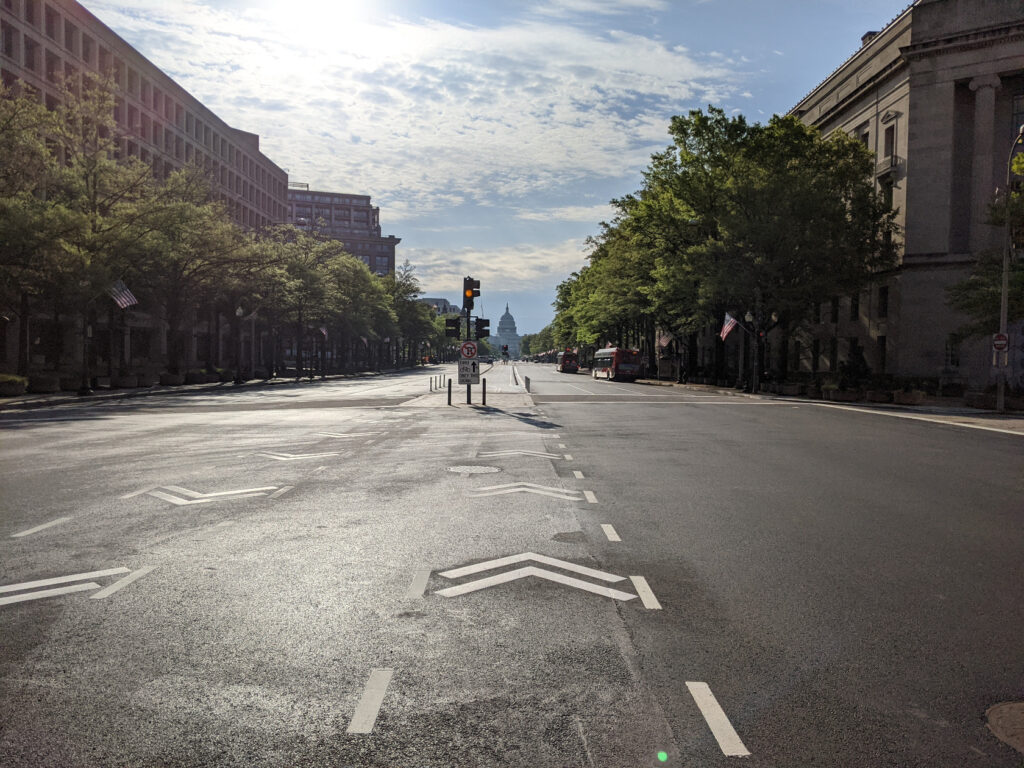
Claudia Peralta Torres, our Podcast’s editor, spoke with WAMU’s @TamikaNews about The Climate Divide Podcast, the heat island effect and who is most affected by it.
Check it out!
#ClimateCrisis #ClimateJustice #ClimateDivide #EnviroJustice #HeatIslands #DC

Depending on where you are in D.C., it can feel 10 to 20 degrees hotter than elsewhere in the city. @DCcultura investigated this heat island effect and the inequality of who is most vulnerable to it. A new weekly podcast discusses their findings.
wamu.org/story/22/07/27/clim…
5
7

7 Jun 2022
Excellent summary of latest research by @AlexFWagner, @LeippoldMarkus & team on the #ClimateDivide between US and Europe by @Bloomberg @GernotWagner.
For more research on the #RussiaUkraineWar: bf.uzh.ch/de/media-news/ukra…
#ClimateTransitionRisk #ClimatePolicyRisk #EnergyTransition
This tweet is unavailable
1
1
4
4 May 2022
Excellent thread (a particularly good nugget here) on how the #climatedivide we wrote about in the @nytimes in '07 (j.mp/climatedivide) exists within stratified countries, not just *between* rich and poor ones.
3 May 2022

Great reporting by @scurve highlights Sunil Das, a rickshaw puller who has had to change his work hours: “I head back home after 10 & resume in the evening when the heat has subsided a bit. It has reduced my earnings but what alternative do I have?” india.mongabay.com/2022/04/c… [3/X]
1
4
9 Feb 2022
Still time to catch @SominiSengupta today on the #climatedivide she's reported wonderfully of late, and since 2007 j.mp/climatedivide
8 Feb 2022

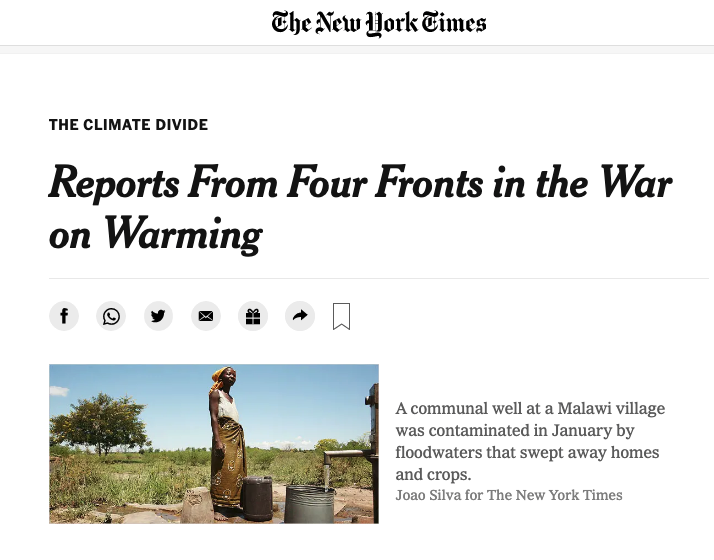
Happening TOMORROW Feb. 9 | Inequity at Boiling Point: What I've Learned as a Journalist Covering the Human Toll of Global Warming w/@nytimes Somini Sengupta. Join 4:00PM PST online➡️bit.ly/Feb9Event
@UWEastAsia @UWSouthAsia @UWJapanStudies @SMEAatUW @UW_MEC @UWArtSci
4

10 Nov 2021
På #COP26 nu: Salomonøerne & USA taler samtidig, i forskellige rum. S.Ø., som er ved at synke i havet, efterspørger mere forpligtende tekst om💰til tab&skader. 🇺🇸lancerer statement m.🇨🇳hvor tab &skader ikke nævnes en eneste gang. #climatedivide #PayUp4LossandDamage @globaltfokus
2
9
29 Aug 2021
The #climatedivide exists within individual communities, between rich/poor communities and rich/poor countries. The metric that matters is vulnerability. More here in a wide-scale look at why generic "climate crisis" proclamations obscure inequity: revkin.bulletin.com/55817439…

“The bigger cities that have a lot of wealth and are very well organized...are pretty well prepared.” says @JayLund113 referring to the growing gap in #drought preparedness between small and large California cities. For the full story: jmie.sf.ucdavis.edu/news/sma…
1
1
12 Aug 2021
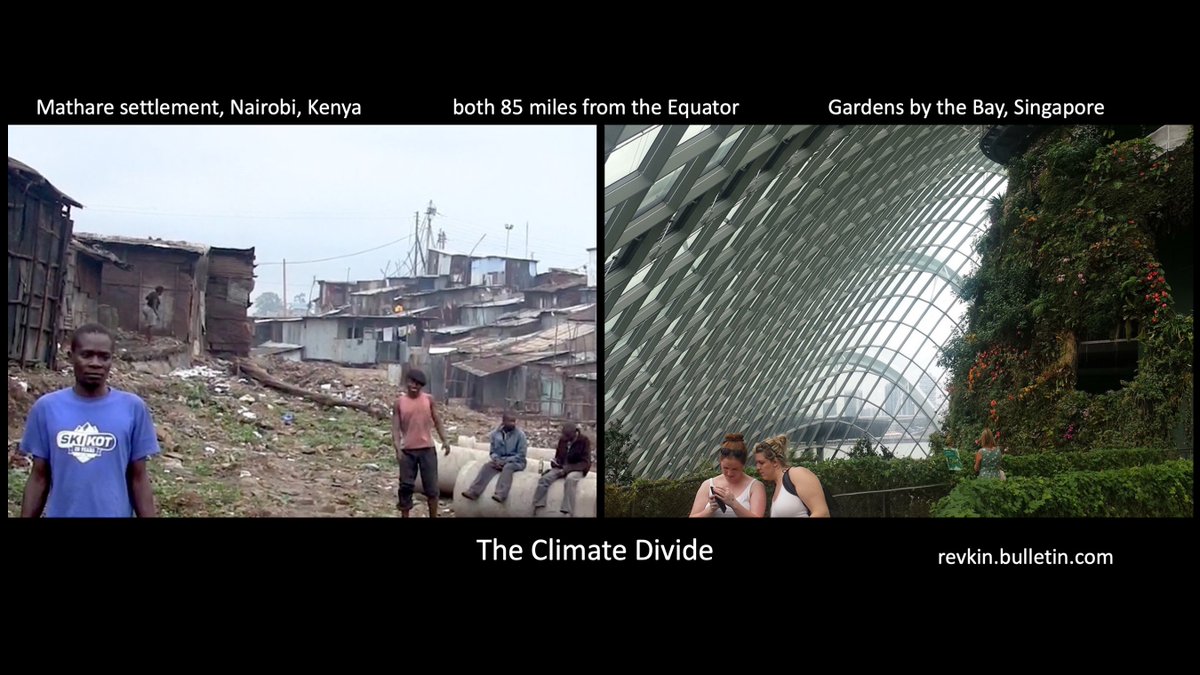
The global A/C boom, now amplified by #globalheating, is a natural outgrowth of human desires for optimal conditions, when affordable. Singapore's @GardensbytheBay & Nairobi's #Mathare settlement are both 85 miles from the Equator. #ClimateDivide More: revkin.bulletin.com/55817439…
12 Aug 2021
The projected global A/C demand surge was nailed by Michael Sivak (then at @UMTRI) a dozen years ago. This stat always stuck with me: "[T]he potential cooling demand in metropolitan Mumbai is about 24 percent of the demand for the entire United States.” dotearth.blogs.nytimes.com/2…
1
5
12 Jul 2021
Climate risk is fractal:
1. global-scale vulnerability divide via @mattyglesias back in @voxdotcom days: vox.com/2014/6/3/5772314/the…
2. #climatedivide *within* a vulnerable country - India.
3. Within a city, via @bradplumer & @PopovichN @nytclimate: nytimes.com/interactive/2020…
18 Apr 2021

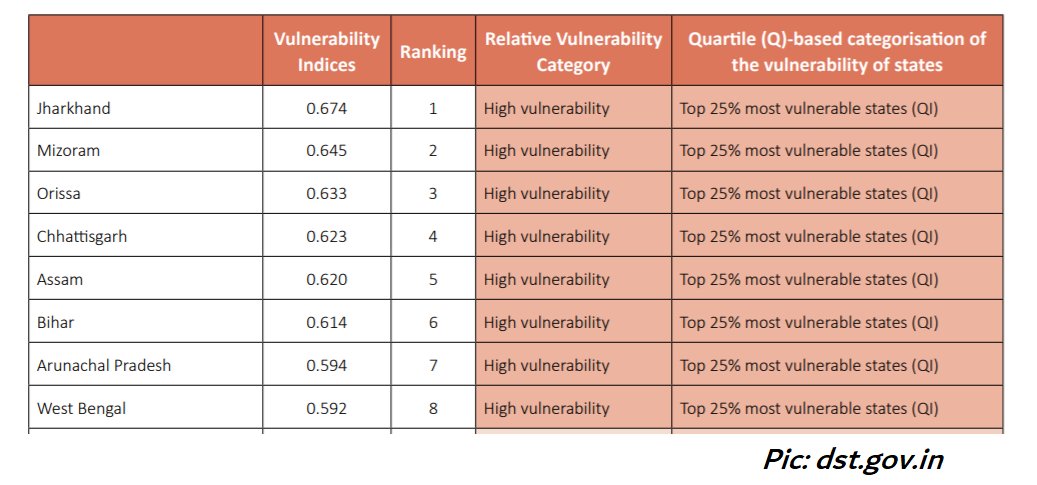
National climate vulnerability assessment identifies 8 eastern states as highly vulnerable to climate change.
• Jharkhand, Mizoram, Odisha, Chhattisgarh, Assam, Bihar, Arunachal Pradesh, and West Bengal are highly vulnerable to #climatechange.
1
4
11 Jul 2021
Powerful reporting on the #climatedivide from agriculture's hot zone and the workers endangered there.
This tweet is unavailable
4
2
29 Jun 2021
Amazing to contrast this with the "heat tourism" reported by @KyleTWN in Lytton, BC, Canada yesterday. The #climatedivide (@nytimes '07 j.mp/climatedivide) on steroids. x.com/Revkin/status/14098442… #BCHeat #PNWheatwave #climatechange
28 Jun 2021

Lots of heatwaves at the moment, but forget Canada and Oregon. It is the city of Jacobabad in Sindh that researchers believe has in recent years (briefly) passed the boundary of what the human body can survive. Our dispatch with @saiyna 1/2 telegraph.co.uk/global-healt…
1
16 Jun 2021
Another glaring aspect, in UK, US and many other places, is the #climatedivide, through which the well to do are resilient and poor and minority communities deeply vulnerable (@DianaLiv & @lmbouwer discussed today): j.mp/povertyclimaterisk
1
1
16 Jun 2021
The #climatedivide: "If you're poor & they privatize your water, ..if you're indigenous & they take your land, you're more vulnerable. With the heat wave (AZ), it's the poor who can't afford AC or are working in 115 degrees." @DianaLiv: j.mp/povertyclimaterisk @columbiaclimate
1
11
15
8 Nov 2020
Thinking about @BillClinton' approach to #climatechange got me looking back at my 2008 sit-down with him. This section on his approach to the #climatedivide (rich/poor) is as apt as ever: j.mp/clintonclimatedivide
1
1