
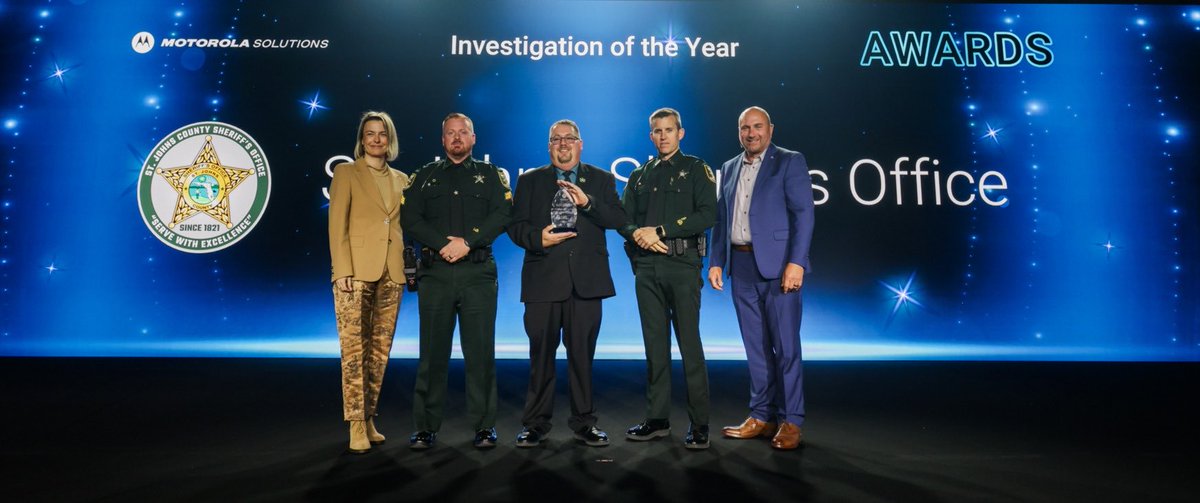
The St. Johns County Sheriff’s Office received the Investigation of the Year award at the Motorola Solutions Summit in April. SJSO was selected for this recognition due to its effective use of law enforcement technology during a double homicide investigation.
On March 13, 2026, around 10:30 p.m., during The PLAYERS Championship week, deputies responded to the fatal double shooting following a domestic dispute in the Walgreens parking lot near The Players Club entrance.
Deputies arrived within a minute, but the suspect had already fled on foot and was next spotted entering the woods inside TPC. Using CommandCentral Aware, SJSO personnel quickly began setting up a perimeter, viewing the live locations of deputies and nearby units and assigning critical perimeter positions.
Despite the rapid response, the suspect managed to escape the immediate area by stealing a vehicle. Through investigative efforts, SJSO personnel learned the suspect crossed into Nassau County. After crashing the vehicle, the suspect again fled on foot into the woods. SJSO SWAT and K9 teams deployed, using Aware to track personnel and coordinate search positions accurately. Personnel used the software both in the field on portable devices and back at the command post to visualize coverage, identify gaps, and manage relief for deputies as shifts ended.
Through the combination of real-time location technology, coordinated use of license plate readers, and seamless information sharing between field units, the suspect was successfully tracked and taken into custody after a night-long search.
Due to the quick actions of #TeamSJSO personnel, there was also minimal disruption to the golf tournament. This incident showcases how innovative technology, combined with disciplined teamwork and service, can deliver exceptional outcomes in a high-risk, real-world public safety operation.
1
17
924
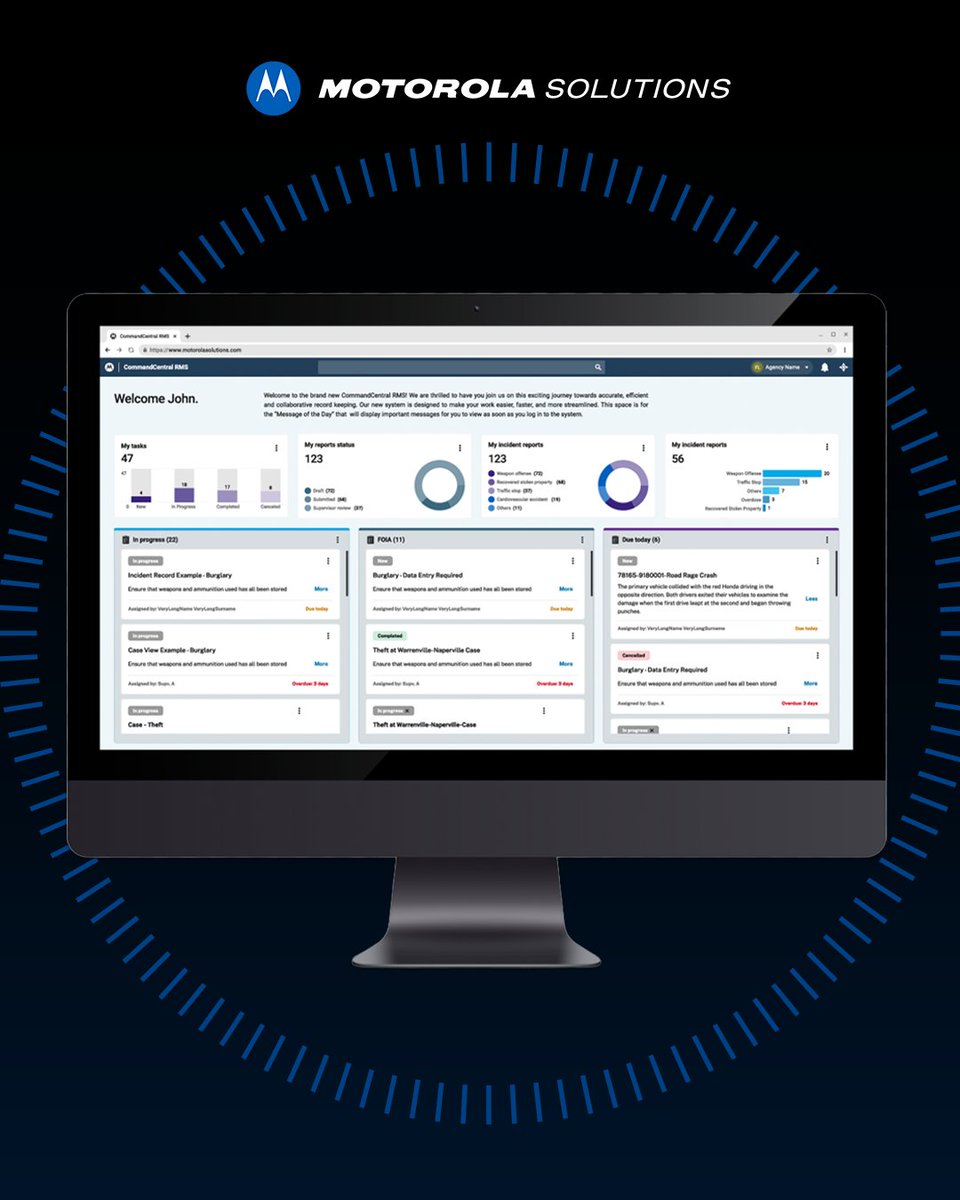
🚨 JUST IN: @MotoSolutions unveils CommandCentral RMS with #AssistAI!
We’re unifying records & case management into one app to accelerate reporting and case closures. From field notes to the courtroom, public safety is getting smarter and more verifiable.
#MotoSolutionsSummit
3
350
How do you turn awareness into action? ⚡️At #MotoSolutionsSummit, we’re redefining the RTCC. CommandCentral Aware now centers on the "Mission"—a unified digital workspace to log, analyze and measure every lead in real time. We’re making invisible visible—and actionable.
4
277
Siloed systems limit your impact. 🛑
Launching today at #MotoSolutionsSummit: CommandCentral Aware unifies data & video into one view. Now with Missions, you can operationalize intelligence and log every action for real-time ROI. 📈
Stop watching. Start commanding. ⚡️
2
212
How do you measure real-time impact?
@MotoSolutions introduces an evolution of CommandCentral Aware centered around “the mission.” Using #AssistAI, analysts now have a unified workspace to log, analyze and measure every action in real time.
Learn more: bit.ly/3OLIvpD

2
181
We’re excited to unveil #CommandCentral RMS, our newest cloud-native solution powered by mission-critical AI, Assist. By consolidating records and evidence into a single, unified view, we’re simplifying investigative workflows.
Read the press release: bit.ly/4vx5fKF
4
251

Mar 26
Guardian drone uses Starlink, battery swaps, supports 60mph pursuits | Aamir Khollam, Interesting Engineering
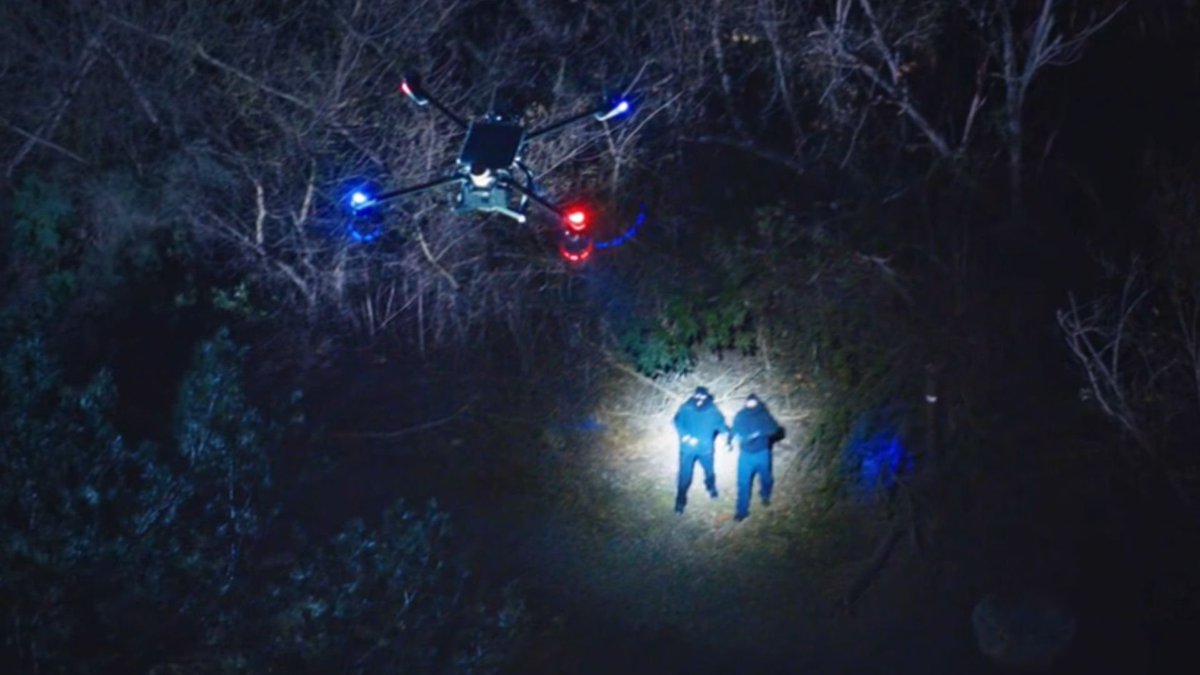
BRINC has unveiled Guardian, a next-generation drone designed to transform emergency response across the United States. The Seattle-based company positions it as the most capable 911 response drone yet, combining advanced autonomy, long-range performance, and satellite connectivity.
The system marks the first time a public safety drone integrates Starlink, enabling reliable communication even in areas without cellular coverage.
Guardian forms part of a broader system that includes Guardian Station, a robotic base that automates battery swaps and redeployment. Together, they aim to eliminate downtime and enable continuous operations for first responders.
Always-on drone response
Guardian addresses one of the biggest limitations in Drone as First Responder (DFR) programs: downtime between missions. Traditional systems often require at least 25 minutes to recharge.
Guardian Station removes that delay by swapping batteries automatically and relaunching the drone within minutes.
The system also adapts to emergencies in real time. It can load mission-specific payloads such as defibrillators, flotation devices, or Narcan before deployment. This flexibility allows agencies to respond faster and deliver aid even before crews arrive.
Blake Resnick, Founder and CEO of BRINC, said the platform reflects years of development.
“Drone as First Responder operations have been limited by camera capabilities, connectivity and contact charging. Guardian changes the paradigm, supporting true 24/7 operations and enabling advanced operations like vehicle pursuits.”
“This is the drone I’ve wanted to build for a decade, and I’m proud of the entire BRINC team for materializing it.”
Guardian significantly expands operational reach. It can respond to incidents up to eight miles away, more than doubling the range of many current systems. The drone also delivers up to 62 minutes of flight time and features IP55-rated weather resistance.
A built-in Starlink satellite panel ensures connectivity in remote or disaster-hit areas. This allows the drone to maintain a stable data link even when traditional infrastructure fails, a critical advantage during emergencies.
The drone’s imaging system also sets a new benchmark. It includes a 4K camera with 640x total zoom, capable of capturing clear visuals from over 1,000 feet.
Dual HD thermal zoom cameras improve visibility in low-light or obstructed conditions. A 1,000-lumen spotlight, laser rangefinder, and a loudspeaker system enhance coordination on the ground.
Integrated public safety system
BRINC has aligned Guardian with existing public safety workflows through its partnership with Motorola Solutions.
The collaboration integrates drone operations into CommandCentral Aware, allowing dispatchers to deploy drones directly from command centers.
Assist AI within the platform can detect keywords in 911 calls, helping operators decide when to send a drone. Officers can also trigger deployment using the emergency button on APX NEXT radios.
Jeremiah Nelson, Corporate Vice President at Motorola Solutions, highlighted the benefits of this integration.
“Motorola Solutions is excited to enable the next generation of DFR programs through our strategic alliance with BRINC by connecting their drones to public safety agencies’ central nervous systems—their command centers.”
“Agencies can get eyes on the scene faster, deliver lifesaving support before first responders arrive, and securely capture and store drone footage in our integrated digital evidence management software.”
BRINC will manufacture Guardian in the United States, supported by a new Seattle facility that doubles its production capacity.
The company says its vertically integrated supply chain will support scaling while maintaining domestic production.
interestingengineering.com/i…
18
1,607

Jan 19
$Wrap @WrapTechInc
Deep Dive on WrapVision in the Body-Worn Camera and Evidence Management Ecosystem
The BWC market isn’t a camera market—it’s an evidence governance market. Hardware is the sensor; the long-term spend and switching costs live in the DEMS ecosystem: chain-of-custody, immutable audit logs, retention/legal holds, controlled sharing, redaction, and disclosure/FOIA packaging.
That’s why incumbents dominate. Axon’s advantage is platform gravity: standardized workflows, security posture aligned to federal authorization expectations, and institutional muscle memory. (Scale check: $2.1B revenue in 2024 per Axon filings.)
Competitive landscape
• Axon (platform incumbent): accountability infrastructure, not just a camera.
• Motorola Solutions/WatchGuard (#2 ecosystem): integrated public-safety stack (V-series CommandCentral Vault).
• Utility (ecosystem challenger): full suite across capture and evidence workflows.
• Reveal Media (international/multi-vertical): strong outside U.S. LE and in non-police verticals.
• Evidence-first DEMS vendors: hardware-agnostic workflow players (e.g., Versaterm/Visual Labs, FileOnQ, Coreforce, Genetec).
Deep dive: WrapVision WrapVision is a sovereignty-forward BWC evidence stack, powered by IONODES, emphasizing North American storage/sourcing. Specs align with Wrap’s product page: up to 4K/30fps, 180° FOV, up to 16 hours battery, LTE/Wi-Fi/Bluetooth/GNSS, 64GB expandable to 256GB. Positioning: TAA language, “built in North America” roadmap, and federal GTM via Wrap Federal/Carahsoft.
Wrap bolstered its evidence capabilities via the 2023 Intrensic acquisition ($500k cash 1.25M shares, headline value ~$2.7M depending on share price, per SEC filings). The play isn’t out-speccing incumbents—it’s being procurement-survivable for buyers twitchy on supply chains, data residency, and lock-in.
Where WrapVision can compete and win No head-on battles with Axon. Target segments where ecosystem overkill or politics creates openings:
A) Sovereignty-constrained buyers: data residency / sourcing constraints (e.g., federal components like DHS/ICE).
B) Mid-market agencies: oversight-proof controls without platform bloat. In federal contexts, it’s less about local prosecutor integrations and more about FOIA/IG/privacy/litigation-hold readiness.
C) Hybrid/agency-controlled deployments: on-prem or sovereign clouds where the agency dictates the environment.
D) Non-LE verticals: healthcare, corrections, security, transit—less entrenched platform lock-in.
Separately, Wrap can tell a broader restraint-first story with BolaWrap as a complementary adjacency (not a required bundle) for de-escalation-focused buyers.
TAM for Wrap’s slice Across market trackers, global BWC is often estimated around $2.9–$3.6B and DEMS around ~$9B; the public-safety video ecosystem is commonly framed around ~$5–$6B globally, growing ~10–14%. (Ranges vary by tracker methodology.) Practical SOM is better framed as deployable units × ARR. “Unit” = one actively licensed camera/user generating recurring DEMS revenue. Planning assumption: $100–$150/month per unit (blended across storage/support tiers; contract structures vary).
Deployment ladder (illustrative):
• 25k units × $120/mo ≈ $36M ARR
• 50k units × $120/mo ≈ $72M ARR
• 100k units × $120/mo ≈ $144M ARR
Challengers can win by making portability a feature: clear export formats, migration support, and contractual exit terms.
3-year roadmap
• Year 1: Procurement-survivable. Oversight-proof DEMS (audits/holds/redaction). Publish security posture roadmap (CJIS/FedRAMP-aligned pathway). Lock channels (e.g., Carahsoft). KPIs: pilot conversion, deployment time, admin hours per hour of video.
• Year 2: Scale wedges. Pick 2–3 verticals (mid-LE corrections/security). Build APIs/integrations. KPIs: retention, churn, contract length, storage attach.
• Year 3: Platform earned. Add demanded real-time (streaming/RTCC-lite) without sprawl. Pursue state/federal footholds. KPIs: multi-region wins, 7-figure contracts, references under scrutiny.
RFP levers that favor challengers
• Data residency sovereignty requirements
• Audit log immutability retention/legal-hold controls
• FOIA/disclosure workflow SLAs
• Open API integration commitments
• Portability clauses (non-punitive egress)
• Transparent unit economics
• Security posture roadmap aligned to federal authorization expectations
Bottom line: Wrap doesn’t need to beat incumbents on features—it needs to beat them on survivability, cost clarity, and exit terms.
reuters.com/legal/government…
1
2
240

9 Oct 2025
Drones on the rise, tactics revamped. Grab the Tech-Deco DeckBook—where sharp style meets sharper strategy. Lock. Load. Lead. ⚡️📚🛩️ shop.warsaken.com/products/e… #CommandCentral #TechDeco #BattleReady #Warsaken

2
1
3
173

9 Jun 2025
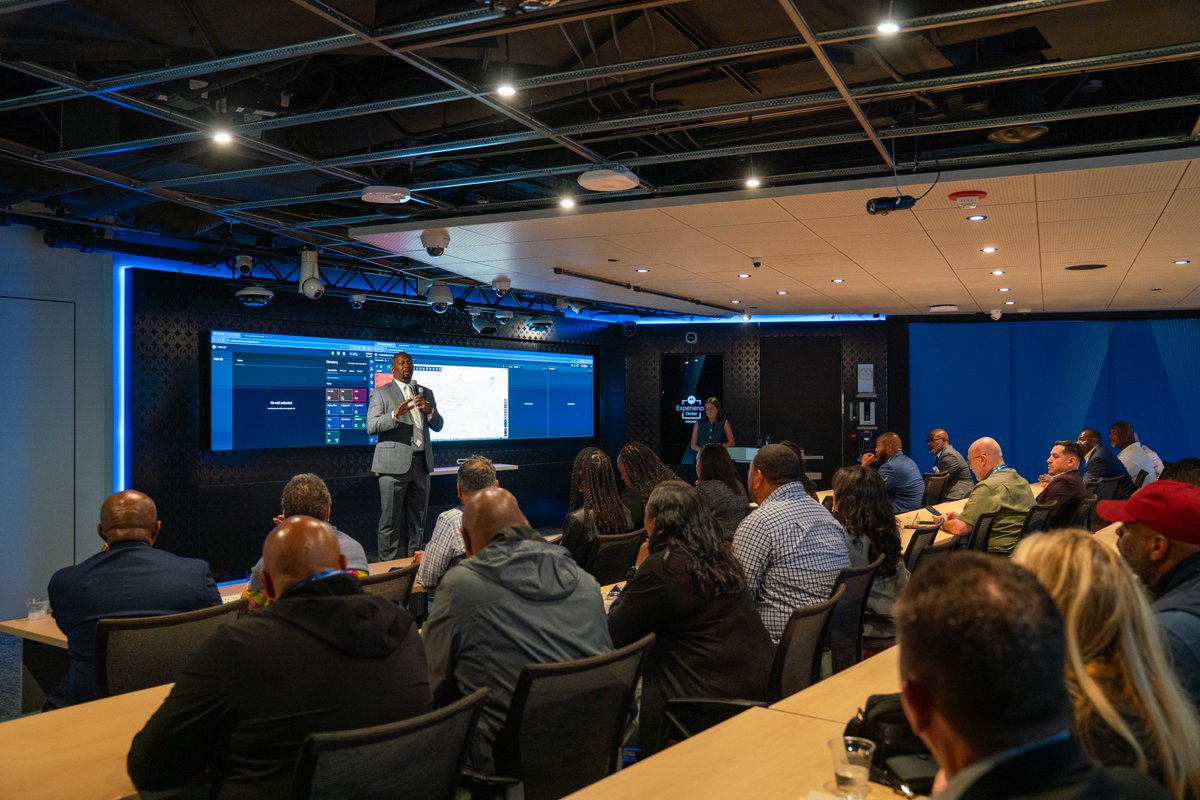
Last week, #PLECET2025 attendees experienced an exclusive look inside the Motorola Solutions Experience Center! Real-time demonstrations of cutting-edge technology included #CommandCentral Aware, #SVX and #Assist.
1
3
347

8 Apr 2025
BRINC and Motorola Solutions' strategic alliance goes beyond funding, unlocking game-changing capabilities that enhance public safety and improve emergency response.
Together, BRINC and Motorola enable first responders to:
⭕ Dispatch BRINC drones from Motorola APX NEXT radios
⭕ See Motorola calls, incidents, and radios on BRINC LiveOps
⭕ Deploy BRINC drones to ALPR hits in seconds
⭕ Seemlessly integrate with Motorola CAD
⭕ View BRINC drone live video feeds in Motorola CommandCentral Aware
Learn more about BRINC x Motorola integrations that enhance emergency response here: buff.ly/xS57hbM
3
271

1 Mar 2025
COMMAND CENTRAL🇺🇸1977
(SECRETARIAT - LIBRO D ORO BY FRANCIS S)
#CommandCentral
B/ Jones, Farish III, Cox & Hudson(Ky) Mar 3, 1977
Unraced

1
19
530

4 Jan 2025
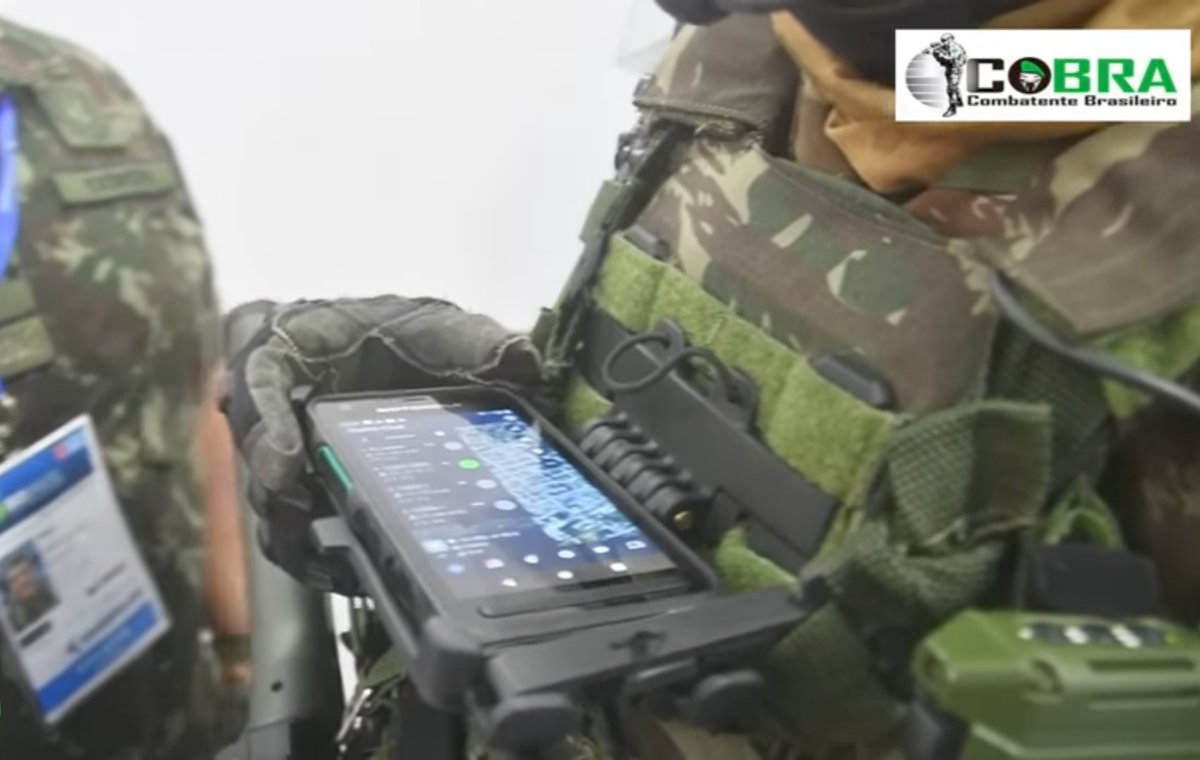
Motorola LEX L11 CommandCentral integrated into the Imbel C² systems, which are being gradually distributed to platoon leaders in the EB.
ALT Credits: Roberto Caiafa in https://youtu.be/JnDOzZUA1WM?si=ZP0oJbOyWBwlNDAK
2
5
60
4,360
7 Oct 2024
The future of mobile dispatch is here! 🚀 Imagine arriving on scene already knowing what’s going on. That’s CommandCentral Responder on Apple CarPlay®.
1
4
359

6 Sep 2024
CommandCentral
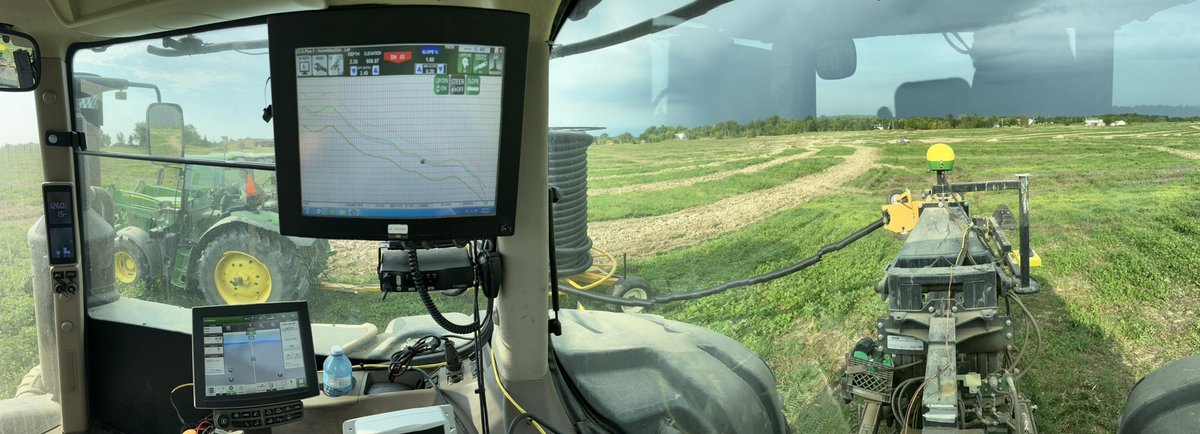
Let’s beat the rain and get these last few runs in boys!
4
803
3 Jun 2024
COMMAND CENTRAL 🇺🇸 1977
(SECRETARIAT - LIBRO D'ORO BY FRANCIS S)
#CommandCentral
B/ Jones,Farish, Cox, Hudson Mar 3, 1977 Horse
Unraced
Sire Plumba Plus, Sicatris, Etc

3
7
58
1,730
12 Apr 2024
📲@MotoSolutions’ mobile app, #CommandCentralResponder enables field officers to collect evidence with their 📲 or tablet & sync directly to our CommandCentral Evidence 🖥️ solution.
Learn more: bit.ly/43T3rhA
#LawEnforcement #Police Investigations
1
4
406

14 Feb 2024
Stanford went to an LA team of hired guns that added OBJ, Von Miller, Jalen Ramsey, etc. Can’t be mad though…mission accomplished, they got the ring. #CommandCentral
1
1
49
14 Feb 2024
Joe Jacoby, Joe Theismann, Brian Mitchell, London Fletcher. They all deserve to be inducted into the HOF. #CommandCentral
1
24
14 Feb 2024
Rework Leno’s deal and switch him to RT. Via the draft or free agency, acquire the meanest, nastiest LT to punish defenders and protect our Franchise QB’s blindside. #CommandCentral
1
5