

Apr 28
Bangwing IN — Top Rated, Verified & Growing Community
TheHiveIndex: Top Rated & Verified
TheHiveIndex: #4 Just for Fun, #9 Making Friends
CommunityOne: Verified
Disboard: 5.0 ⭐️ (13 Review)
TheHiveIndex: 4.8 ⭐️ (14 Review)
@thehiveindex
@communityone_io
@thedisboard
1
1
5
42

Apr 2
Thank you @pokercow135 for your phenomenal work on CommunityOne platform 🍬
Apr 1

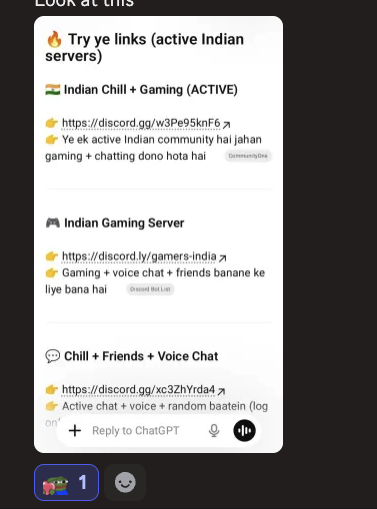
Screenshot from a user that ask chatgpt best indian communities to join and have @communityone_io quoted first
4
45

Mar 31
Friendships tested. Legacies made.
What started as "just a game" ended in tactical betrayal and a very loud debate over Taco Cat Goat Cheese Pizza.
Spot the silent assassins and watch the chaos unfold:
communityone.app/post/the-in…
Full Video:
youtu.be/byCmrINFhd8
#TheInnerCircle #BoardGameNight #TabletopChaos #CommunityOne #GameOn
5
5
1,678

Mar 28
Publish Server Emojis by Default — Feedback Wanted — from CommunityOne Builders Help communityone.io/servers/9439…
1
6
244

Ecosystem Week continues!
Next up - @communityone_io
CommunityOne is actively helping develop the @VaraNetwork ecosystem and improve its functionality.
Active users in our Discord are already familiar with their bot and its features.
The Galxe quest is LIVE 🎁
✦ Earn Galxe points that will improve your place on the leaderboard
✦ $100 USDC raffle
✦ Starts today
✦ Ends April 30
Join now - app.galxe.com/quest/RivrDEX/…
5
10
41
4,492

Mar 4
Ngl, I am not surprised by the mixed feelings about community and Discord in web3, and from what I have seen as a community moderator, it is all about focusing on core users and sharing knowledge that truly drives value
Moreover, I need to commend you for doing awesome work at CommunityOne
You deserve huge applause
Keep it up, Ma'am
1
2
37

Feb 24
The emerging strength of Web3 is no longer rooted in isolated innovation but in how deeply interconnected ecosystems like Permacastapp, 0G_labs,Xmaquina, and Dgrid_ai are reshaping what “community” actually means in decentralized systems.
At the core, Permacastapp is redefining information permanence and ownership, ensuring that valuable insights are not just created but sustained across time without distortion. This permanence becomes significantly more powerful when paired with 0G_labs, whose modular infrastructure introduces scalable data availability and compute layers that allow decentralized intelligence to operate without bottlenecks. Together, they shift Web3 from fragmented data silos into a fluid, composable knowledge economy.
What @xmaquina brings into this equation is an entirely different dimension autonomous machine coordination. It transforms passive infrastructure into active participants, where machines are not just tools but economic agents contributing to and extracting value from decentralized networks. This aligns seamlessly with Dgrid_ai, which focuses on distributed AI and community-driven intelligence, enabling users to become contributors to training, validation, and deployment of AI systems rather than mere consumers.
The real innovation here is not any single protocol, but the convergence of permanence, modular compute, autonomous systems, and distributed intelligence into a unified community-driven loop. Data is created and preserved through Permacastapp, scaled and processed via 0G_labs, activated through autonomous coordination in Xmaquina, and continuously refined by collective intelligence in Dgrid_ai.
This creates a new kind of Web3 communityone that is not just social or speculative, but operational. A system where every participant, human or machine, contributes to an evolving intelligence layer that compounds in value over time.
That is where the real shift is happening. Not in hype, but in the quiet construction of interconnected systems that make Web3 communities not just exist, but think, adapt, and scale together. $DEUS
Feb 24

DeFi only becomes worth exploring when it stops feeling like a fragmented experiment and starts operating like an intelligent, self-reinforcing system. That shift is quietly being engineered across Permacast, 0G Labs, Xmaquina, and Dgrid, each attacking a different layer of the same problem: how to make decentralized finance not just accessible, but meaningfully adaptive, autonomous, and scalable.
Permacast is redefining how information flows through DeFi by turning content into programmable, onchain intelligence. In a space where attention is capital, its model reframes media as infrastructure where signals are not just consumed but embedded into decision layers. This is where narrative meets execution, and where passive users become active participants in value creation loops.
0G Labs pushes this further by addressing the computational bottleneck that has historically limited DeFi’s evolution. Modular AI infrastructure, decentralized data availability, and scalable compute are not just technical upgrades—they are the missing backbone for a system that can think, react, and optimize in real time. DeFi without intelligence is static; with 0G, it becomes adaptive.
@xmaquina introduces autonomy into this equation, where agents are no longer theoretical but operational. By enabling machine-driven coordination, execution, and optimization, it shifts DeFi from user-triggered actions to system-initiated outcomes. This is where liquidity moves with intent, strategies evolve without friction, and participation scales beyond human limits. $DEUS
Dgrid completes the loop by anchoring these innovations in decentralized physical infrastructure networks. By bridging compute, coordination, and real-world resource layers, it ensures that DeFi is not just digitally efficient but physically grounded. This is the transition from abstract finance to embedded economic systems.
What emerges from the intersection of Permacast’s programmable media, 0G Labs’ modular AI stack, Xmaquina’s autonomous agents, and Dgrid’s DePIN architecture is not just a better DeFi experience, it is a new paradigm. One where intelligence, infrastructure, and interaction converge into a system that is continuously learning, continuously executing, and continuously compounding.
This is why DeFi becomes worth exploring again. Not because it promises more, but because it is finally learning how to do more on its own.

29
29
372

Jan 21
🚀 EXCLUSIVE UPDATE – LAURA AI AGENT IS TAKING OVER DISCORD! 🚀
Community, we’re expanding at full speed!
Our community growth strategy is moving forward: Laura AI Agent is now listed and active on the main Discord platforms across the Crypto & AI ecosystem 🔥
This gives us:
• Massive visibility to new audiences
• More degens, traders, and builders joining in
• Solid ground for the big updates coming in the next weeks (beta upgrades, giveaways, and more)
Platforms where we are ALREADY live and where you can directly support us
(link to the project profile on each one):
Disboard – disboard.org/es/server/14304…
Top.gg – top.gg/discord/servers/79900…
Discords.com – discords.com/servers/LauraAi…
Discord.me – discord.me/lauraaiagent
CommunityOne – communityone.io/servers/1430…
Discadia – discadia.com/server/laura-ai…
DiscordServers – discordservers.com/server/14…
DiscordBotList – discordbotlist.com/servers/l…
Disforge – disforge.com/server/90776-la…
Dyno – dyno.gg/
DiscordList – discordlist.gg/bot/146351994…
Your support in 30 seconds changes EVERYTHING! 👇
On each platform you can:
⭐ Vote for our server/bot (boosts rankings instantly!)
💬 Leave a 5-star review positive comment
🔄 Share the link in your chats/groups
📢 Follow to stay updated
On some of these platforms, official project posts will be shared to keep everything synced and up to date.
The more you vote, comment, and share → the higher we rank → more people join → a stronger ecosystem
(better staking rewards, beta access, and agent profits for everyone).
Extra 🔥
• Upcoming giveaways and dynamics with $LAAI rewards (announcement soon)
• All of this complements what’s being built internally…
We are very close to the key moment:
where Laura AI Agent shows its full potential and redefines AI agents on Solana.
Join the official hub and stay front row:
👉 Official Discord: discord.gg/yPNQhybnn7
Thanks for the nonstop support.
Together, we’re building the future of decentralized AI.
The BEST is about to explode. Are you ready? 💜🤖
CONTACT & SUPPORT
🆘 Telegram Support (Official Account)
👉 @ LauraAiAgentSupport
🎧 Discord (Official Hub · Tickets & Support)
👉 discord.gg/yPNQhybnn7
✉️ Official Email
contact@lauraaiagent.com
🌐 Website
lauraaiagent.com
#LAAI #LauraAIAgent #AIAgent #Solana #CryptoAI #Web3 #DiscordCommunity
13
19
21
336

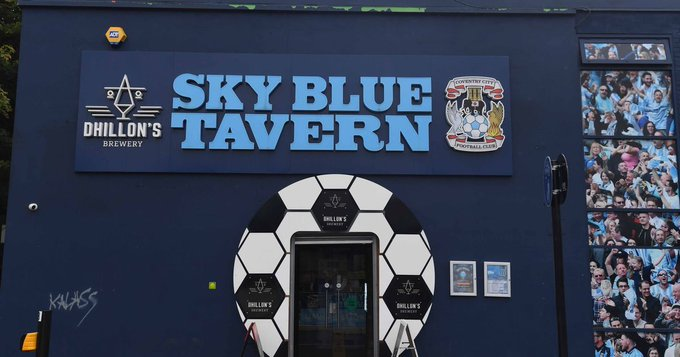
@live_coventry
Free Christmas dinners in Coventry for those with nowhere else to go #CommunityOne
coventrytelegraph.net/news/c…
5
83

28 Nov 2025
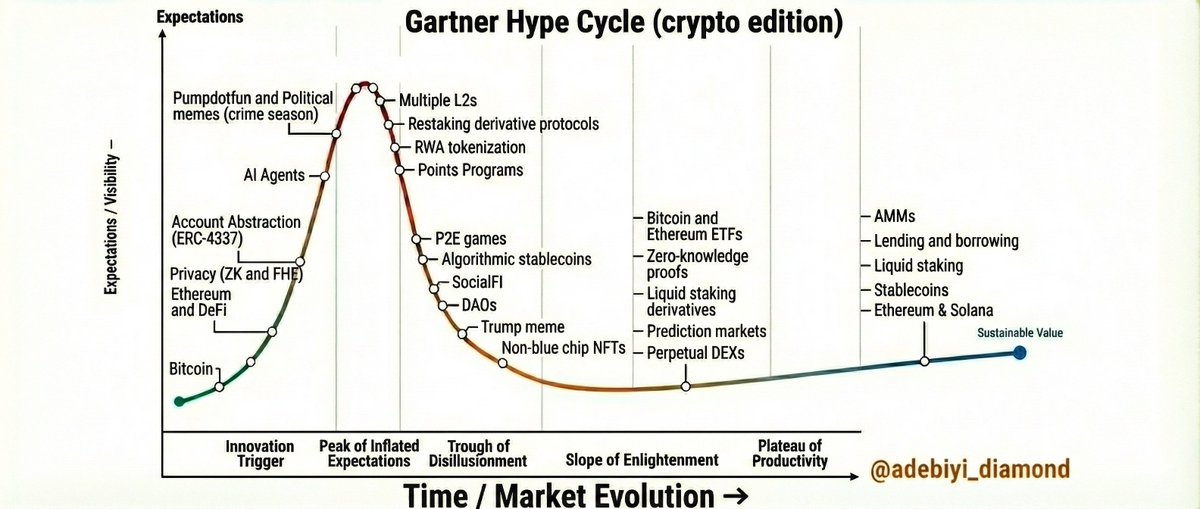
90% of projects in 2025 are dead
Not because they had nothing to offer, but because they fell into the "Hype Trap."
Here is what you need to learn about the hype trap and how to prevent it as a team and investor.
----------
If you are here for the short-term, you'd want to bookmark this and let it lie dead once again, but if you are here for the long-term, this is for you.
What is the hype trap?
It’s when the most trending project at a time becomes history, attracts the loudest CT voices with no retainer, and is now irrelevant.
This trap is not just one thing but a system of missteps
The internal mistakes from the team:
• Another clone: a fork, a mimic product, just another buzzword, just another L2
• Illusion sale: Everyone talks about what you offer, but not how it benefits them
• New but not needed: Chasing being the "new", the "first", without solving a problem people already give a damn about
• Mercenary community: Your community is only here for the rewards. Adoption is a side gig. Lol
• CT as strategy: If everyone talks about it, then it's progress. No. Marketing is beyond CT
• Boring product: Lack of gamification and a campaign that actually influences community behavior and builds loyalty to the product. Read more from @Oliweb3_
x.com/OliWeb3_/status/199147…
The 2025 CT Patterns and how these missteps are visible in real-time.
• The Parrot Effect: They learn what to say by listening and understanding nothing. They repeat what gets attention, but don't send a message. (Announcements of partnerships with no real or clear integrations)
•The Vaporwave Game: Aggressive token distribution narrative, promises an,d raises without clear roadmaps (this affects investors more than founders).Read more from @therosieum
at
• Narratives Chameleon: Pivoting and announcing features based on trending narratives rather than user needs, mostly without delivery or rough UX.
• Metrics Misalignment: Celebrating vanity over real-time activities, e.g, focusing on mindshare and Discord members count rather than genuine sentiments, when the community composition has a majority of its members who are airdrop farmers.
Most teams fall into these traps, despite being honest.
Here are 4 stages to help you know if you are falling into the hype trap.
Stage 1: The Seduction
• Fundraising on promises, not product
•Token allocation debates before Product-Market-Fit
• Influencer "advisors" who've never used the product
• Community = people waiting for token
Escape: Stop everything. Ship one useful feature. Get 100 real users. Then continue.
Stage 2: The FOMO Rush
• Discord/Twitter members 10x-ing weekly
• Everyone asking "wen token?"
• Contents copy-pasta by community, talks about features rather than personal benefits or experiences
Escape: Integrate "proof of work" for the community. Real tasks, real value. Filter farmers now.
Stage 3: The Reality Check
• Daily active users declining
• Team shipping slower
• Community is only active during "campaigns."
• Pivoting to whatever's trending with no clear niche or image
Escape: Transparency. Tell the community the truth. Cut scope. Focus on ONE thing that works.
Stage 4: The Ghost Town
- Discord mods are bots
- Last GitHub commit: 3 months ago
- Token down 95%
- Community already exploring new opportunities
Escape: Be Solana. Focus more on distribution than marketing; product partnerships; keep developing; and create a fragmented community with different heads, but still connected to the source.
This stage is where the test of resilience comes, cause now attractions are based on interests and not rewards. It's harder here, but worth it.
A Quantum framework to prevent the Hype-Trap in 4 steps(Copy this)
I call this “Quantum” because it forces you to observe your system as it really is, not as your pitch deck sugarcoats it.
Step 1: The Reality Mirror
Answer these questions honestly
• What stage are you from the above?
• If your token went to zero, would anyone use the product?
• Can you explain your product to my grandma without mentioning crypto?
• Would you use your own product and be satisfied?
Step 2: The User Ladder
Map your user journey:
The Hype Trap: Speculate about token -> Join discord for alpha -> Post six times daily on how they make the crypto great -> farm points -> token launch -> Dump
Sustainable journey: Discover solution to problem -> Try product -> Get value → Join community → Contribute → become advocate → Maybe buy token
Token comes LAST, not first.
Step 3: The 90-Day Test
• Days 1-30: No token talk. Only product and problem-solving
• Days 31-60: Measure retention without incentives
• Days 61-90: Add rewards ONLY for valuable behavior
Track:
Users who return without reminders
Community posts not about price
Product-related questions vs spamming questions
External mentions (not paid/incentivized)
4 Tools for Automation:
• Formo: Onchain product retention analytics
• CommunityOne: Discord quality and topic analytics
• LunarCrush: External mention and narrative tracking
• ChatGPT API: Filters the quality vs spamming users
Step 4: The Community Quality Score (CQS)
Rate your community:
• Farmers (0 points each): Only active during campaigns; Multiple accounts; No original content; Disappear post-airdrop.
• Users (1 point each): Actually use the product; Single genuine account; Ask product questions; Stick around 30 days.
• Contributors (5 points each): Create content/tools; Help other users; Give product feedback; Recruit genuinely.
• Champions (10 points each): Build on your platform; Run community initiatives; Defend you in bear markets; Would work for you.
Your CQS = Total Points / Total Members
Above 2.0 = Healthy
1.0-2.0 = Vulnerable
Below 1.0 = Farmed to death
2 Tools for CQS automation
- Common Room: Identity aggregator across socials and dapps into one person
- Cookie3: Onchain analytics of user behavior
Most teams are already in the trap. You know it. The community also knows it but sticking ard till the TGE.
Staying in the trap is comfortable. Sell illusion, make some noise, dump back, repeat.
Building something real? Now that's uncomfortable, slow, and hard.
This is where you choose your hard:
Hard now: Build value, grow slowly, survive decades.
Hard later: Explain to investors why you're another dead project, end up in jail (or not).

Your users aren’t “lazy”. Your game just kinda sucks.
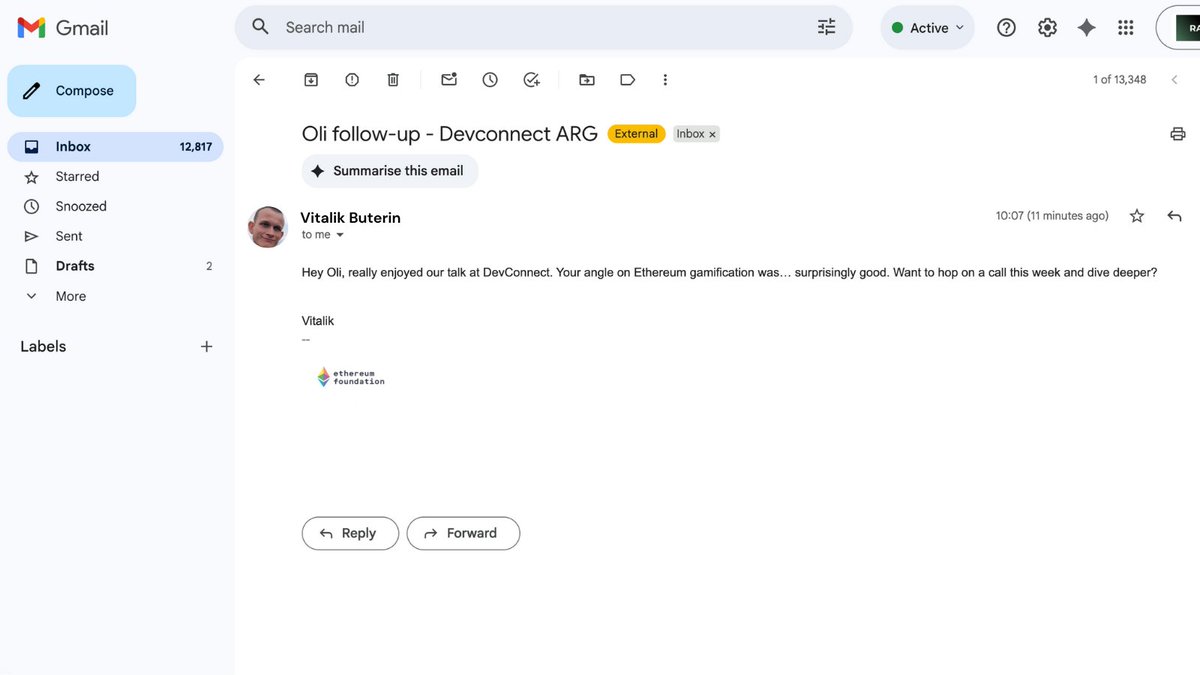
You' been told you need to gamify your project, but you have no idea how to do that. Here I'll give you the EXACT framework that I follow for my clients, step by step, to do it by yourself, so you don't have to hire expensive marketers on @radarblock like Vitalik
First, Why Gamification Matters (Especially in Crypto)?
Most crypto GTM today is:
- Run some airdrop quests
- Add points, XP, mystery “Season 1”
- Give Airdrop
- Launch token
- Kill project
Short-term? Fine.
Long-term? People farm, dump, disappear.
That’s GTM (Go-To-Market) thinking:
Value capture > Value creation.
In crypto, we need a more GTC: Go-To-Community:
GTM = “How do we get users?”
GTC = “How do we turn users into players, and players into advocates?” Shout out to @thedanrodman for this
GTM:
Target personas
Leads → customers
Mechanics: Paid ads, KOLs, funnels
GTC (with gamification):
Community personas
Observers → advocates
Mechanics: Quests, value loops, roles, status
Gamification is how you design that journey on purpose
instead of just throwing XP and raffles at people.
What gamification actually is (No, it’s not just points), using game elements and game design in non-game contexts.
Not “turn your protocol into Candy Crush”.
It’s:
- Clear goals
- Rules/constraints
- Feedback (XP, levels, progress)
- Voluntary participation
- And some actual fun, not just bribery
And crypto is perfect for this:
- Onchain actions are trackable
- Tokens already exist as points/rewards
- Communities live on Discord/Telegram = instant “guilds”
But without design, you just get:
- Sybil farms
- Fake “engagement”
- No real loyalty
When Should a Crypto Project Use Gamification?
Quick 4-question check:
Motivation:
Can you solve a real problem by changing behavior?
(e.g. more swapping, more holders, more building, more teaching?)
Meaningful choices:
Are the target actions interesting?
If it’s just “click claim button every 24h”… people will game it, not enjoy it.
Structure:
Can you model the behavior in rules/steps/progress?
Onchain is great for this.
No conflict:
Does this break your existing incentives?
(e.g. over-incentivizing trading volume → just getting whales farming points)
If you can tick these, gamification is a good weapon for you.
Internal vs External Gamification in Crypto
Think in two layers:
1️⃣ Internal (team, contributors, mods)
Goal: Motivation, productivity, alignment. e.g:
- Contributor “seasons” with levels, streaks, recognition
- Hall of fame for bug hunters, banger posts, and community helpers. (Microsoft did this with internal bug-finding, no money, just leaderboard pride)
- Internal quests for PMs / devs (ship feature → earn role/title/access) No need to always be monetary incentives (If someone stays for money will leave for money as well, please @blingoh give a raise)
2️⃣ External (users, holders, community)
Goal: Growth, retention, loyalty, behavior change. e.g:
- Onboarding quests and daily streaks
- Trading/usage challenges
“Citizen → Guardian → Elder” style ranks
- Community reputation that outlives any single airdrop. Think of Monad cards; you are featuring users and giving social recognition, and getting UGC in return.
Most projects only do external, and badly.
The best ecosystems will do both.
Plug & Play Framework for Crypto Gamification
Here’s your copy-paste blueprint you can adapt to any project. You are welcome in advance:
STEP 1 – Define the Boss Fight (Objective)
Don’t start with “we need XP”.
Start with: “If gamification works, what changes?”
Examples:
- More active wallets doing X onchain action weekly
- More retention in Discord beyond airdrop season
- More builders using your SDK
- More content created by community, not just team
Write 1–2 hard objectives, not vibes please.
STEP 2 – Break It Into Behaviors
For each objective, list specific actions:
Example: “Increase real usage of our DEX”
- Connect wallet
- Make first swap
- Provide LP
- Come back 3 days later
- Try a more advanced feature
- Invite a friend to try
Now you have quest material.
STEP 3 – Know Your Players (Community Personas)
Use something like this:
Our community is dedicated to: [e.g. trustless perps for degen traders]
Our mission is to: [e.g. make pro tools accessible to anyone]
Community personas (examples):
Newcomers – “Heard about us from CT, no idea where to start”
Degens – “Live on perps, care about fees UX”
Power users – “Use advanced features, trade size, give feedback”
Builders – “Want to build tools on top of your infra”
Advocates – “Create content, host calls, bring people in”
Overlay this with the Orbit Model:
Orbit 4 – Observers: just watching on X / Telegram
Orbit 3 – Participants: occasionally use, lurk in Discord
Orbit 2 – Contributors: help others, create content, answer questions
Orbit 1 – Champions: run communities, organize, ship stuff
Gamification = system for moving people inward.
STEP 4 – Design Your Activity Loops
You need two loops:
🔁 Engagement Loop
Trigger → Action → Feedback
Example (DEX):
- Trigger: Notification “Try your first leveraged trade”
- Action: User opens app, does the trade
- Feedback: “ XP, you just unlocked your personal AI agent trader”
📈 Progression Loop
“How do I grow over time?”
Examples:
- Level 1–5 trader → unlock fee discounts/insights
- Community roles and private channels
- Access to beta features for higher ranks
- Chat with Founders on a monthly call (@leonabboud would be proud)
- Special shout-outs on socials
Ask yourself:
“Would I actually want to progress in this system?”
If not, go back.
STEP 5 – Pick the Right Mechanics (Not All of Them)
Out of the classic mechanics, in crypto I’d start with:
- Quests / Challenges: Clear tasks, clear rewards
- Progression / Levels: Feel of growth
- Streaks: For habits (BUT don’t make them too punishing, check Duolingo for inspo)
- Status / Roles: Discord roles, NFTs, onchain badges
- Cooperation: Teams, guilds, squad-based quests
- Chance: Mystery boxes, raffles (small, not the core loop)
- Exploration: Hidden easter eggs, secret quests
- Leaderboards (careful): Better segmented: “Newcomer board”, “Whales”, “Builders”
Avoid:
- Pure points farming with no meaning
- One giant global leaderboard where 99% of people are perma-bottom
STEP 6 – Build Your Master Quest Flow (MQF)
This is where tools like Galxe, Zealy, Kazm, Layer3, and my frens from @claimrio come in, where you can build this in-house
Think in phases:
🟢 1. Onboarding Quests (Day 0–7)
Goal: Get people from Observer → Participant
Examples:
- Join Discord verify
- Read “Start Here” answer 1–2 questions
- Do first onchain action
- Attend 1 community call
- Get initial role/badge
🟡 2. Habit Quests (Week 2–4)
Goal: Make them come back
Examples:
- 3 trades over 7 days
- 2 governance votes in a month
- Participate in 1 community activity and 1 contest
- Onboard users on Discord
🔵 3. Depth Quests (Month 2 )
Goal: Turn players into contributors
Examples:
- Write a guide/tutorial
- Build a simple script using your API/SDK
- Host an IRL event
- Design a meme campaign in your region
All of this can live in your quest platform Discord roles onchain badges.
STEP 7 – Make It Fun, Not Just “Earn”
Biggest mistake: only extrinsic rewards (tokens, points).
Self-Determination Theory says people stick if you hit:
- Autonomy: “I choose how to play”
- Competence: “I’m getting better”
- Relatedness: “I belong here”
So mix rewards:
Extrinsic:
Tokens, fee discounts, WL, multipliers...
Intrinsic:
- Status (roles, titles, “Hall of Fame”)
- Access (private channels, early features)
- Identity (poaps or badges that actually mean something)
Ask this brutally honest question:
“If I removed all token rewards, would anyone still find this enjoyable or meaningful?”
If answer is “no”, redesign.
-----
And now what I promised you: "A Simple Plug-and-Play Template for Your Project"
You can literally fill this out today:
Objective:
“We want ______ to do more ______ so that ______.”
Key Behaviors (3–7):
- Connect wallet
- Do [core action]
- Come back X days
- Join community
- Contribute once
Personas (3–5):
Newcomer, Degen, Builder, Creator, Whale
Orbit Level for Each Persona:
Where are they now? Where do you want them?
Activity Loops:
Engagement loop: Trigger → Action → Feedback
Progression loop: How do I “level up”?
Mechanics Selected:
Quests, XP, roles, streaks, teams, surprises...
Flow (High level)
Week 1: Onboarding
Week 2–4: Habit
Month 2 : Depth / Contribution
Success Metric:
“Gamification is working if we see ______ improve by ______% in ______ weeks.”
Damn, this article was very long. I hope you enjoyed and applied it. Bookmark for future and send me a DM if you have questions on your gamification design process ❤️
7
5
26
562
28 Oct 2025
Dear @discord, why are you making it so hard for @communityone to give aways nitros to our best members, all these anti-bot measures is making it impossible for human to do it...
1
8
1,186
Every community should rally to enthuse (organise) to provide community hub hosting FREE Xmas Meal #Thursday_25_December2025 settings – additional acknowledgement to those weekly locations (places of worship) doing community meals on a 52-weeks basis #salute from #Justice_4_DandG
#Taste_of_Soul (#Cummin_Up) on #Lewisham High Street. Ever since 2008, has offered FREE Xmas meals to anyone who's lonely or a few £££ short. It still serves as conscious community hub serving and inspiring so many..... #Justice_4_DandG
* Please contact restaurant w/c 17/12 for confirmation
#check_on_NEIGHBOUR #free_meal #check_on_NEIGHBOURHOOD #Togetherness #CommunityOne #all_welcome #Loneliness #no_judgement #Community #Compassion

1
3
6
154

10 Oct 2025
Season One: Community Genesis - The Way of the Turtle
Earn your spot before TGE with @imua Community Genesis
New Discord Community Rank are live with a leaderboard powered by @communityone_io .
Join the server, complete quests, engage with the community, and climb the ranks to unlock exclusive rewards.
Your rank will influence your rewards at TGE.
Rank you can earn :
➥ Tourist
➥ Hatchling
➥ Teenage Turtle
➥ Gmua Turtle
➥ Tide Rider
➥ Turtle Warrior
➥ SSJ Turtle
➥ Turtle Tribe Elder
➥ OmniTurtle
How to level up :
join Discord @imua → connect CommunityOne → complete quests and check in → rise through the rank.
Start climbing today go from Tourist to OmniTurtle before TGE
#Imua

30
32
288

7 Oct 2025
Bulls Are Charging! BTC just smashed past $125K ATH, market cap hitting $4.18T , and altcoins like ETH eyeing new highs. Perfect storm for farming yields & airdrops—don't sleep on these gems while conditions are prime! Here's my insightful guide to effectively farm them for max rewards.
(Thread )
1/ @moremarketsxyz
Airdrop/Yields: This one's all about turning idle tokens into yield machines on chains like XRP & NEAR. Useful tip: Deposit XRP into their Earn Account for 3-7% APY weekly payouts. No manual claims—auto-distributed to your XRPL wallet. Start small to test, but scale up in this bull for compounded gains. Self-custodial & on-chain audited. Dive in:
2/ @bitdealernet
($BIT): Pre-TGE meme launchpad on Solana, backed by Meteora & Jupiter. Farm via their raffle & mindshare rewards—10% supply dedicated! Effective strategy: Join the Alphabot raffle (alphabot.app/bitairdrop) for guaranteed TGE drops. Stake $BIT post-launch for exposure to all graduating tokens (no inflation risk). Engage on X for XP: create/trade/hold to climb leaderboards. Bonus: KOL referrals for rev share. Launchpad drops Sept 17—get in early!
3/ @belongnet
( $LONG): Tokenized events & affiliate network— TGE Oct 29! Hype's building with $1M prize pools in ChainAtlas hunts. Pro farm: Download app, join CheckIn for on-chain rewards (pay only on verified visits). Complete quests/raffles for stablecoins $LONG. Use geo-minting for NFTs at events—no wallet needed, gasless. Target viral referrals & AI concierge for loyalty points. Early birds get bigger drops—hunt 150 cities!
4/ @Imua
: Shared security protocol for restaking XRP/BTC/ETH/SOL. Bootstrap yields incoming! Smart farm: Bid in their IDA (sale.imua.xyz) with USDC—get outbid? Earn rewards anyway. Play TickerTycoon TG game: Race, collect shells/eggs, build street cred for mainnet staked drops. Join Discord quests via CommunityOne for ranks/XP. Double points on Pulseboard (alphabot.app/pulse/imua) for $100K rewards. Dogfooding their rPoS—secure & verifiable!
5/ @idoS
: Emerging identity play? (Limited deets, but if it's idOS-like, focus on quests/tasks for points.) General tip: Hunt X/Discord for airdrop guides—engage early for multipliers in bull markets. If it's the identity OS, farm via testnet interactions & community events for token eligibility. Stay tuned for announcements!Market's on fire—farm smart, not hard. DYOR, but these could 10x in this environment. What's your top pick? Tag a friend & let's build!
$BNB $BTC $ASTER

76
24
91
447

4 Oct 2025
How to Earn
Type /quests in #general and CommunityOne will serve you quests. The more active you are, the faster you move up.
🎁 Rewards at the Top
The big roles (Turtle Warrior, SSJ Turtle, Elder, OmniTurtle) come with rewards similar to OG and Pioneer.
Those early roles are closed now, so this is your only shot.
🔒 Exclusivity
Turtle Warriors: 5,000 max
SSJ Turtles: 4,000 max
Tribe Elders: 900 max
OmniTurtles: just 100 in existence
Other ranks will unlock their own perks soon, so stay tuned.
Lock in on @imua
4 Oct 2025

Zappers, don’t just yap about @imua on X.
The real grind is happening in Discord too. Roles are live, and it’s all about climbing the Way of the Turtle 🐢
🐢 Turtle Tiers
Earn points through CommunityOne quests and rise through the ranks:
Tourist — 10 pts
Hatchling — 50 pts
Teenage Turtle — 100 pts
Gmua Turtle — 300 pts
Tide Rider — 600 pts
Turtle Warrior — 1000 pts
SSJ Turtle — 1500 pts
Turtle Tribe Elder — 2000 pts
OmniTurtle — 3000 pts
Join the Discord now and grind for the roles: discord.gg/imua

37
34
295
4 Oct 2025
Zappers, don’t just yap about @imua on X.
The real grind is happening in Discord too. Roles are live, and it’s all about climbing the Way of the Turtle 🐢
🐢 Turtle Tiers
Earn points through CommunityOne quests and rise through the ranks:
Tourist — 10 pts
Hatchling — 50 pts
Teenage Turtle — 100 pts
Gmua Turtle — 300 pts
Tide Rider — 600 pts
Turtle Warrior — 1000 pts
SSJ Turtle — 1500 pts
Turtle Tribe Elder — 2000 pts
OmniTurtle — 3000 pts
Join the Discord now and grind for the roles: discord.gg/imua
43
2
35
1,014



7 Sep 2025
Want more out of CommunityOne? Get a FREE upgrade by joining our Discord Server! 👇

1
2
801

26 Aug 2025
And that’s a wrap for Engage to Earn Season 2! 🎉
Huge shoutout to everyone who engaged, shared, and climbed the ranks with us this season. 💛
The Top 25 winners from both Engages.io and CommunityOne are here → bit.ly/41VQQdD
If your name’s on the list, submit a ticket in our Discord and drop your EVM wallet address to claim your rewards:
🔗 discord.com/channels/8955260…
25
12
15
896