
May 22
The more AI agents become capable of executing financial workflows autonomously, the more I think Web3 will need infrastructure focused on trust and coordination rather than just automation.
AI can already:
• process requests
• trigger transactions
• route stablecoin payments
• monitor treasury activity
• interact with APIs and blockchain systems automatically
But real enterprise environments are messy.
Different vendors, different compliance layers, different chains, different databases, different reporting systems.
That complexity becomes a serious bottleneck once AI starts operating at machine speed.
Because the challenge is no longer:
“Can AI do the task?”
The challenge becomes:
“How do multiple systems coordinate safely, transparently, and verifiably together?”
That’s why composability feels increasingly important to me.
Without composable infrastructure, every new integration creates another isolated operational layer that teams still need to manually coordinate behind the scenes.
What stands out about @w3arew3 is the focus on programmable workflows rather than isolated automation.
The concepts around:
• recipes
• ingredients
• proof trails
• interoperable infrastructure
• programmable intelligence
feel much closer to what scalable autonomous finance would actually require.
One part I find especially interesting is the idea that organizations can keep their existing systems while still participating in shared onchain workflows.
That feels much more realistic for enterprise adoption than expecting every company to rebuild its entire stack from scratch.
The future of AI-driven finance probably won’t be won by the smartest standalone agent.
It will likely be won by the infrastructure that can coordinate workflows, verification, payments, compliance, and multiple systems together without creating more fragmentation.
Composable coordination may end up becoming one of the most important layers in Web3 infrastructure over the next few years.
@w3arew3
#W3 #AI #Web3 #Automation #ComposableInfrastructure
May 21

AI can already automate parts of finance, but the infrastructure around it still feels fragmented.
It’s not just about smarter agents anymore.
AI agents are already moving faster than most humans can supervise.
They can:
• analyze transactions
• trigger payments
• coordinate treasury operations
• route stablecoins across networks
• monitor activity across multiple systems
• interact with APIs automatically
But builders still face the same bottleneck:
fragmented infrastructure.
Payments, custody, compliance, identity, notifications, AI compute, and cross-chain communication still operate like disconnected systems.
Without composability, every new vendor or integration adds another layer of operational complexity.
That’s why infrastructure matters more than hype right now.
What makes @w3arew3 interesting to me is the focus on coordination instead of just speculation.
W3 is trying to make workflows composable by connecting AI agents, financial infrastructure, enterprise systems, and decentralized services into unified programmable workflows.
The interesting part is that W3 isn’t positioning itself as “just another chain.”
It’s building an interoperability and workflow layer where organizations can keep existing systems while still participating in shared onchain workflows.
That feels much closer to what real enterprise adoption actually looks like.
The future of autonomous finance probably won’t belong to isolated AI agents.
It will belong to systems that can coordinate agents, humans, payments, compliance, and infrastructure together without creating more operational friction.
Composable infrastructure may end up being the real unlock for scalable AI-driven finance.
@w3arew3
#W3 #AI #Web3 #Automation #ComposableInfrastructure
2
23

🚀 Why idOS might just be the identity infrastructure that defines Web3’s next wave
@idOS_network $idOS
In today’s crypto / DeFi world, money moves freely — but identity doesn’t. That’s the gap idOS is closing.
🔑 One KYC. Unlimited Use Cases.
Imagine verifying your identity once, and then using it across wallets, DApps, stablecoin platforms, chains — without repeating identity checks. idOS makes that possible.
🛡 Privacy-first, self-custodial
Your data stays encrypted, under your control. You decide what to share, with whom, and when. No more “sign up again, share all your PII again” fatigue.
🌐 Chain-agnostic & composable
idOS isn’t walled into Ethereum or a single chain. It’s designed to integrate with various ecosystems (Arbitrum, NEAR, Tezos, etc.).
📈 Built for real-world adoption & compliance
KYC re-usability, legal assessments, modular SDKs — idOS is engineered to walk the line between decentralization and regulatory practicality.
🤝 Strong backing & ecosystem partnerships
With support from projects like Circle, Aleph Zero, Radix, NEAR and more, idOS is assembling a coalition that can drive real adoption.
---
💬 Call to Action / Engagement
What do you think is the biggest barrier to mass Web3 adoption today?
Is it friction in onboarding / identity?
Regulatory trust?
Interoperability across chains?
👇 Drop your thoughts.
If you’re building a DeFi app, wallet, stablecoin platform, or identity tool — ping me / comment. Let’s explore how idOS can plug into your stack and unlock seamless identity user experience.
$Quack
#Web3 #Identity #DeFi #Blockchain #Crypto #idOS #SelfSovereignIdentity #ComposableInfrastructure
4
1
6
65

8 Aug 2025
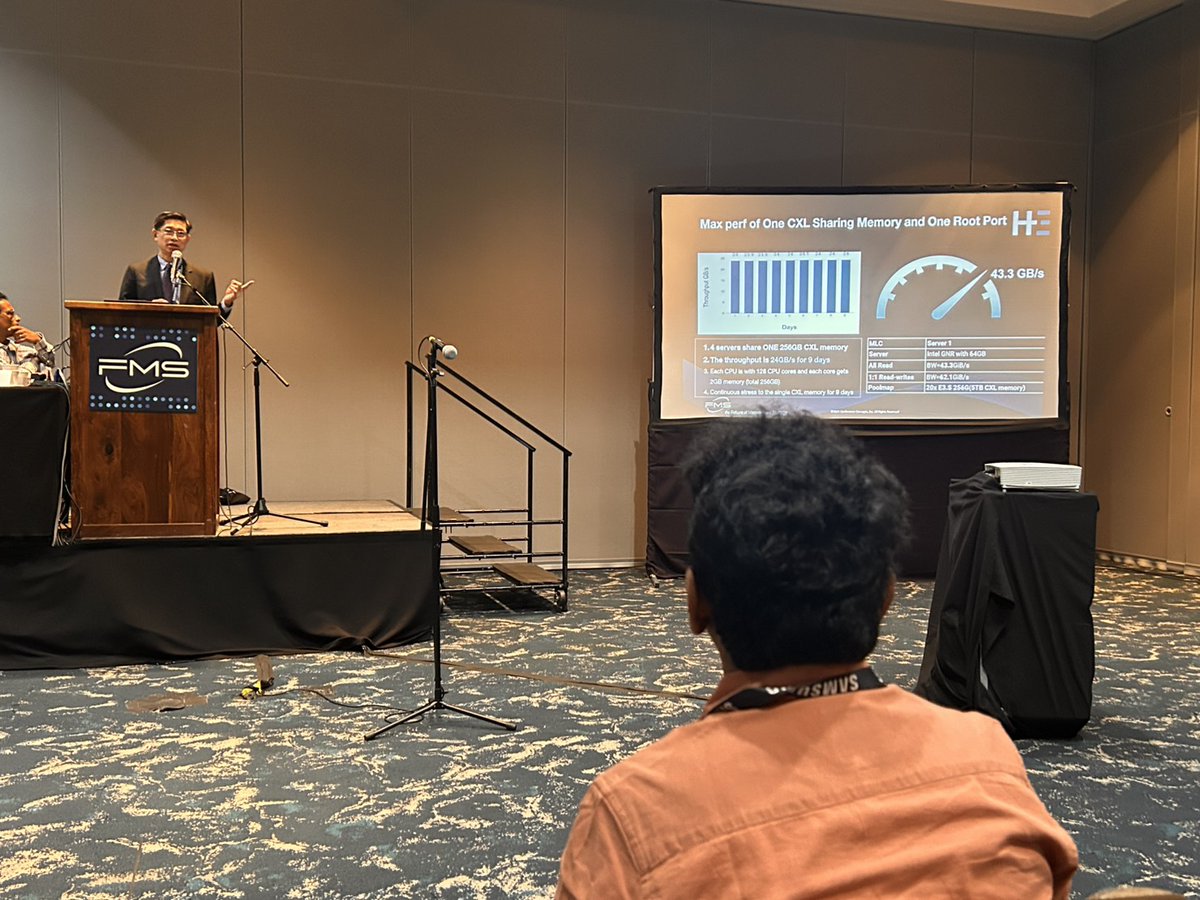
Just presented : Composable Infrastructure Leveraging CXL for Memory Sharing.
Unlock up to 5TB shared memory, 121GB/s bandwidth, and 210M IOPS - redefining what's possible in data center performance.
#CXL #ComposableInfrastructure #DataCenter #MemorySharing #2025FMS
2
5
71

Web3 isn’t missing scalability — it’s missing synchronization.
@MitosisOrg introduces a new foundation:
An Intent Layer that unifies how dApps coordinate logic, state, and liquidity across chains.
No more redeploying.
No more bridges.
No more siloed liquidity.
With Mitosis:
→ Intents trigger logic
→ Execution routes to the optimal chain
→ ZK proofs verify outcomes
→ UX becomes invisible, seamless, chainless
This turns fragmented rollups into a programmable network.
Not just cross-chain — coordinated by design.
The future isn’t multichain.
It’s chain-abstracted logic.
#Mitosis #kaito #IntentLayer #CrossRollup #Web3UX #ComposableInfrastructure

23
48
2,250

16 Jun 2025
Web3 today is a fragmented zoo of virtual machines.
Solidity here. Rust there. Vyper somewhere else.
And none of them speak to each other.
Fluent changes that.
🔹 One SDK
🔹 Three languages: Solidity, Rust, Vyper
🔹 Full cross-VM compatibility
🔹 rWasm — a unified execution layer
For the first time, you can build an app where contracts in different languages execute as a single logical unit.
This is next-level atomic composability. No bridges. No glue-code hacks.
Fluent isn’t just compatible.
It’s built to unify fragmented Web3 into coherent logic.
👉 @fluentxyz | fluent.xyz
#Fluent #Web3Dev #MultiVM #Solidity #Rust #Vyper #Interoperability #rWasm #ComposableInfrastructure

1
22
198

11 Jan 2025
🚀 Let's talk NodeKit, a game-changer in Web3 infrastructure! Imagine a network so composable it brings together all the fragmented pieces of Web3 with seamless precision. Curious? Let’s dive in!
A 🧵
#NodeKit #Web3 #ComposableInfrastructure

2
4
5
52

Until now, companies faced compatibility issues and restructuring challenges with composable solutions. #GigaIO's game-changing Rack-Scale #ComposableInfrastructure is breaking barriers by efficiently composing diverse resources with unmatched latency. bit.ly/3OEuHdi

2
48

22 Jan 2024
Unleash the power of composable infrastructure! 💪💻
Discover the latest trends and advancements in this game-changing technology.
Don't miss out on this report! Check it out: [marketresearchfuture.com/rep…]
#ComposableInfrastructure #TechTrends #ITInfrastructure
1
6

New from Rockport – Meet Cerio, a complete game-changer in composable infrastructure. 👋 Today, #Cerio announces a breakthrough in #composableinfrastructure. This kind of breakthrough deserves a whole new brand experience. Check it out! ✨ #DataCenter cerio.io/?utm_source=twitter…
2
65

2 Aug 2023
💼Simplified management
⏱️Faster deployment
💰Improved cost efficiency
It's no wonder we think #ComposableInfrastructure is the future. Find out more reasons why with our guide: ow.ly/YXyw30svNNA
1
2
33
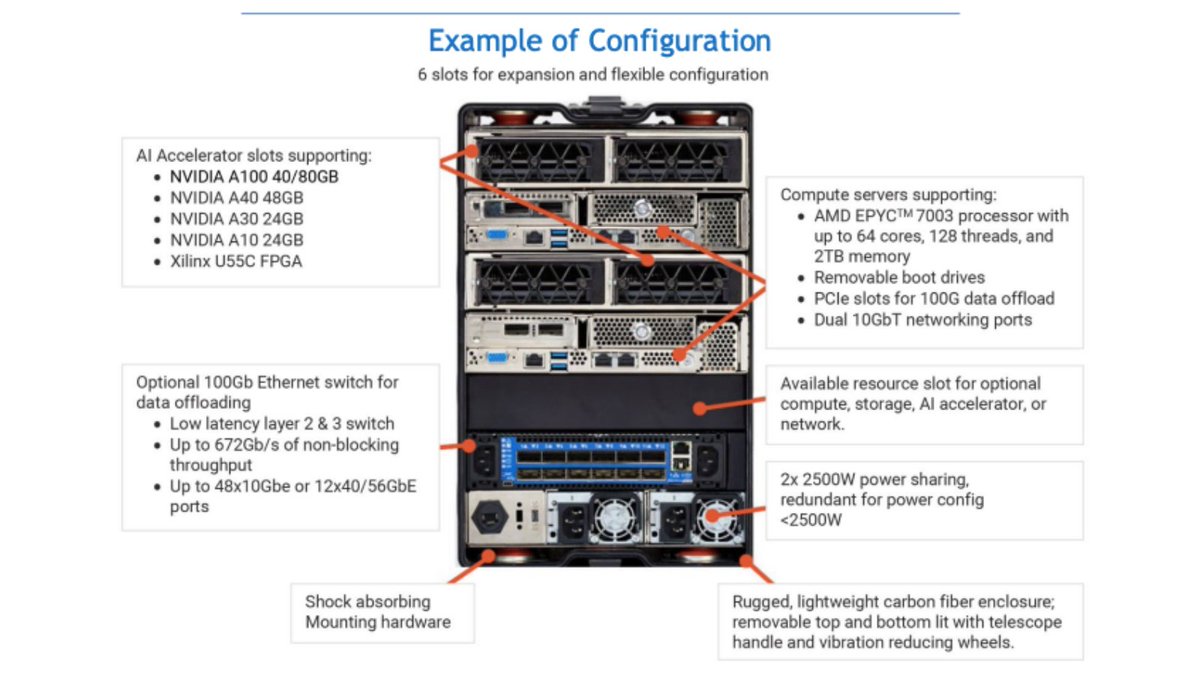
GigaPod Xtreme — the first modular AI-ready composable edge system — comes in a rugged, mobile, lightweight carbon fiber enclosure the size of a TSA carry-on for fast deployment and easy transportation. Check it out! bit.ly/3XA63Ok
#GigaIO #composableinfrastructure
3
72
The native integration of #GigaIO #FabreX into @NVIDIAAI Bright Cluster Manager Version 9.2 enables flexibility by allowing users to easily take advantage of #composableinfrastructure, right within BCM.
Flexibility that delivers: bit.ly/43xasnf

1
49

22 Mar 2023
"It's likely that organizations will eventually supplement their #ComposableInfrastructure with #ComputationalStorage." bit.ly/3ni3Ete
1
30
Interested in the importance of #composableinfrastructure for #datacenterscalability? After you read this #primer, you’ll be in the know about #ComposableDisaggregatedInfrastructure and how it fits in with #HCI and #CI. 🧠tinyurl.com/4n2mw864

1
1
109
Big news! Guess whose #ComposableInfrastructure can now be supported natively in @NVIDIAAI #BrightCluster Manager 9.2? bit.ly/3X2ABqt #inception

2
3
99
Hello, my name is FabreX Switch. I am the fundamental building block of the FabreX network for true CDI. I like long walks and people who understand sarcastic posts from inanimate objects. 👋 tinyurl.com/3x7wbpvp #computingsolutions #composableinfrastructure

3
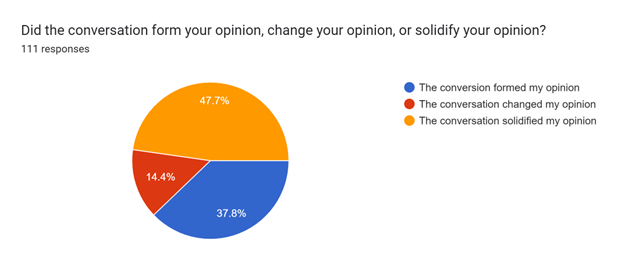
40% of our #SC22 panel attendees agree that #HPC needs composability now. Learn more about the topics discussed during our panel discussion: gigaio.com/2022/11/informal-… #composableinfrastructure
1
2
8 Nov 2022
H3 is bound for Dallas! Bringing the imposing power of PCIe 5.0 GPU composability to @SC. How would you like to ultra-boost up your GPU devices?
#PCIeGen5GPU #SC22XH3 #composableinfrastructure

2
13 Oct 2022
Composable infrastructure is ushering in a new frontier for private cloud. Our insight guide helps explain the unique advantages composable can offer, and the best ways to get started:
#PrivateCloud #Infrastructure #ComposableInfrastructure ow.ly/49Wi30srKjU

1
2
Hello, my name is FabreX Switch. I am the fundamental building block of the FabreX network for true CDI. I like long walks and people who understand sarcastic posts from inanimate objects. 👋 #FabreX #computingsolutions #composableinfrastructure
bit.ly/3PNe8dz

2
3