
19 Oct 2023
Part one
Egypt's Ambitious 200-Year Projects: A Goal Beyond 2025
This marks just the beginning, and it's essential to grasp that we hold a record of the destination of every drop of Nile water, whether it's diverted unlawfully or through legitimate channels.
Here's a more detailed breakdown of the key events and developments related to agriculture, infrastructure, and economic expansion in Egypt:
June 9:
Savola's Operations in Egypt: Savola, a company operating in Egypt, owns and operates 7 factories. These factories are significant contributors to the local economy, providing employment and contributing to production.
Sugar Beet Reclamation: Savola is actively reclaiming a substantial agricultural area spanning 9,000 acres for sugar beet cultivation. This underscores the company's commitment to agriculture, crucial for both food production and economic growth.
Expansion of Agricultural Reclamation: In addition to the 9,000 acres already reclaimed, Savola is embarking on reclaiming an additional 11,000 acres of land. This demonstrates an ambitious effort to increase agricultural production, potentially bolstering Egypt's food security.
June 14:
Sanabel Sono Agricultural Project: Egyptian companies are progressing towards initiating the "Sanabel Sono" agricultural project, which heavily relies on Nile water, a critical resource for Egypt's agriculture.
Supervision by Ministry of Defense: The project's supervision by the Ministry of Defense indicates a coordinated effort to ensure efficient and secure resource utilization for agricultural purposes.
June 9:
Land Reclamation: Savola's efforts encompass the reclamation of 9,000 acres of land for sugar beet cultivation, indicating an investment in agriculture, potentially for sugar or related products.
Expansion Plans: Savola has initiated the reclamation of an additional 11,000 acres of land, likely to meet the demands of its sugar factories, reflecting a commitment to increasing production capacity or ensuring a sustainable supply of raw materials.
June 5:
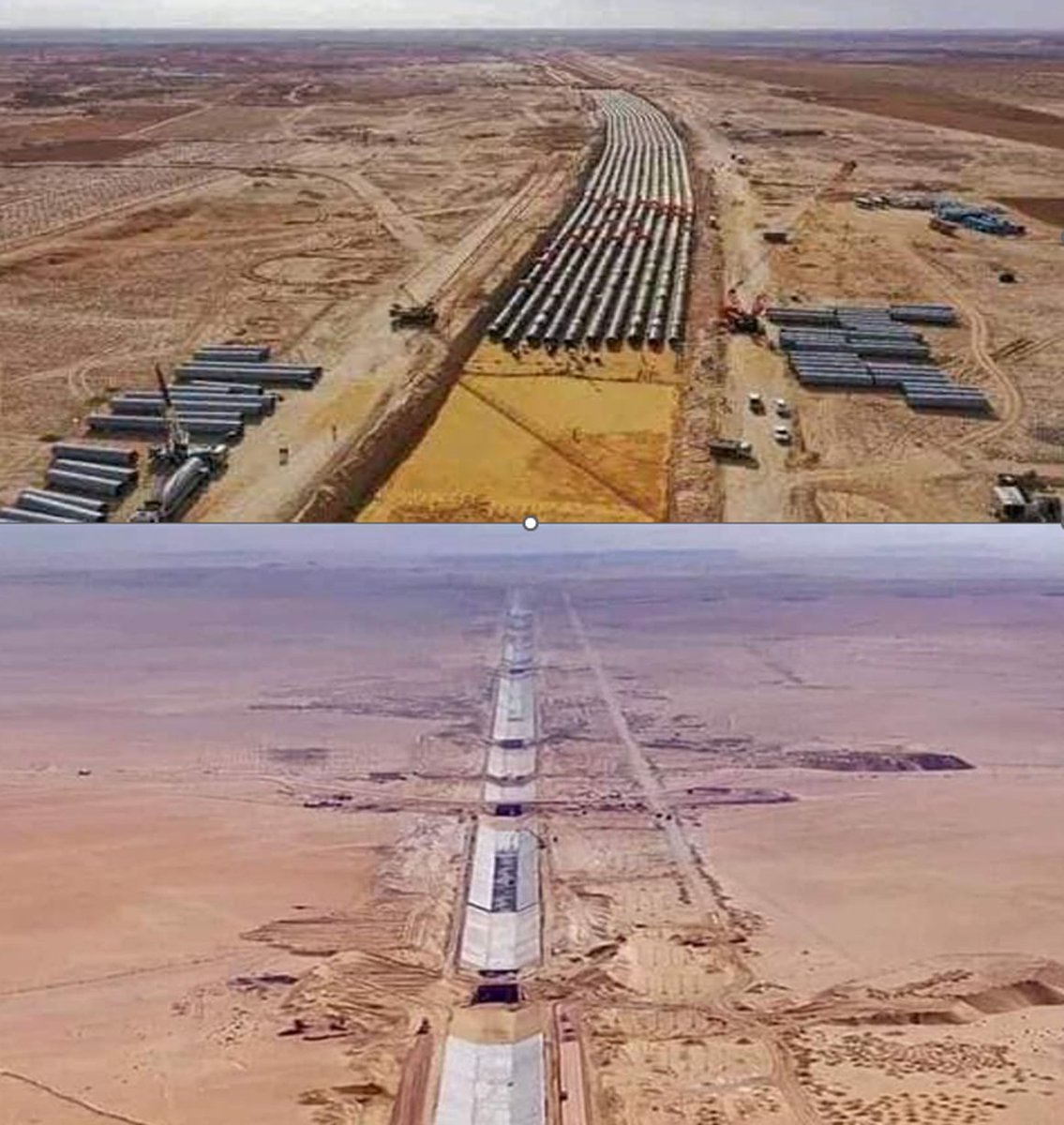
Artificial River Construction: Ongoing construction of an artificial river in the Western Desert has potential implications for irrigation, agriculture, and water resource management. These projects typically aim to improve water distribution for agricultural purposes.
Agricultural Expansion Plans: Egypt's plan to increase the production of key crops like wheat, corn, and sugar by 2025 signals a strategic effort to enhance food security and boost the economy.
June 4:
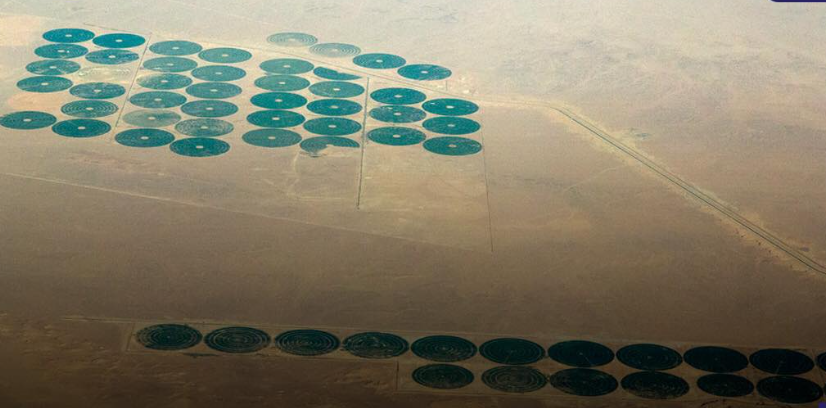
Modern Pivot Irrigation Systems: A factory is installing modern pivot irrigation systems over 5 million acres. These advanced irrigation methods efficiently distribute water to crops, enhancing crop yield and water conservation.
Annual Production Capacity: The factory's impressive annual production capacity of 2,500 pivot irrigation systems highlights its potential to improve agricultural practices and water management in Egypt.
May 26:
Al-Dhahra Company's Reclamation Project: Al-Dhahra Company is involved in a reclamation project focused on corn and wheat cultivation. These projects convert arid or unused land into fertile agricultural areas, contributing to food security and agricultural diversity.
Expansion Plans: In addition to corn and wheat, the project's expansion plans include rice, alfalfa, fodder, and flour production, aiming to diversify crop production and potentially increase self-sufficiency in various agricultural products.
May 20:
Vision for Egypt's Rural Future (200 Years): Egypt's long-term vision includes transforming desert regions into productive agricultural lands. This involves reclaiming arid or unused land and developing advanced irrigation techniques and infrastructure.
Establishment of Industrial Rivers, Canals, and Road Networks: The vision encompasses plans to create industrial rivers and canals to facilitate irrigation and transportation of goods, critical for agricultural and economic development. Road networks are also essential for connectivity and access to newly developed areas.
Emergence of a New Delta in the Western Desert: The vision includes the creation of a "new delta" in the Western Desert, akin to the Nile Delta, with fertile soil historically significant for agriculture. Achieving this involves extensive land reclamation and irrigation efforts.
May 15:
Green River Gardens Development: This project is described as one of the world's largest urban parks, covering 4.2 million square meters initially and expanding to 33.6 million square meters. It has the potential to become a significant green space in the urban landscape.
May 14:
World's Largest Palm Farm in Toshka: This massive palm farm is cultivating 2.2 million palm trees, highlighting the importance of palm cultivation for economic and agricultural development.
Vegetation for Shade and Temperature Control: The mention of vegetation planted alongside palm trees likely serves to provide shade and control temperatures in the arid Toshka region, essential for palm tree growth and productivity.
April 29:
Water Release to the Western Desert - New Delta Site: Initiated on April 29, this project involves the release of water to the arid Western Desert region, aiming to reclaim 2.8 million acres of land for various crops, including sugar, vegetables, and fruits. It has significant economic and environmental implications, including job creation and diversified crop production.
April 24:
Toshka El-Khair Project: This project, initiated on April 24, aims to cultivate 1.5 million acres in Southern Aswan. Proper water management for sustainable cultivation is emphasized.
April 17:
New Valley Wheat Harvest: This marks the wheat harvest season in the New Valley region as part of the Toshka Al-Khair Project, demonstrating progress in achieving agricultural goals.
April 16:
Canal Incision in the New Valley Area: The completion of this canal incision in the New Valley Area is essential for efficient water distribution and irrigation in the region, supporting agricultural projects like those in Toshka.
March 15:
Path of Development Project: Led by Dr. Farouk El-Baz, this project focuses on strategic planning and implementation of various initiatives for Egypt's development, particularly in agriculture, land reclamation, and sustainable resource management.
March 9:
Cultivating 2.5 Million Palm Trees: Egypt's commitment to cultivating 2.5 million palm trees reflects its dedication to green initiatives and sustainable agriculture, providing valuable resources and contributing to environmental benefits.
Feb 28:
Soybean Cultivation: Egypt's decision to expand soybean cultivation enhances crop diversity, reducing reliance on imports and strengthening agricultural self-sufficiency.
Feb 13:
Egyptian Express Train Green Line: This project represents a significant advancement in transportation infrastructure, essential for efficient movement of agricultural products and reducing transportation costs.
Feb 4:
Bdour Agricultural Project: This project in the Ismailia desert focuses on reclaiming and developing previously unused land for agriculture, addressing land scarcity challenges and supporting sustainable agriculture.
Feb 1:
Advanced Treatment Plants for Agricultural Drainage: Investment in advanced treatment plants for agricultural drainage emphasizes sustainable water management, preserving water resources and ensuring agricultural productivity.
January:
Expanding Agricultural Landscape Projects: Egypt's commitment to expanding agricultural landscape projects aims to increase arable land and enhance agricultural production, contributing to food security and economic growth.
Peak in Exports of Fruits and Vegetables: Egypt's success in international markets contributes to economic growth and prosperity.
These events and developments collectively illustrate Egypt's strategic approach to agricultural and economic growth, emphasizing sustainability, infrastructure development, and diversified crop production.
TO BE CONTINUE..
#NileWater #WaterResources #RecordKeeping #WaterManagement #Transparency #ResourceUtilization #LegalChannels #ResourceMonitoring #ComprehensiveData #ResourceAllocation #Ethiopia #Egypt
6
9
1,336
19 Oct 2023
Part Two
Egypt's Ambitious 200-Year Projects: A Vision Beyond 2025
Now, let's delve into the detailed breakdown of the vast irrigation project occurring in the New Delta region:
A detailed breakdown of the information provided about the massive irrigation project taking place in the New Delta region:
General Overview:
Location: New Delta region, Egypt.
Project Name: Development Corridor.
Contradiction: Egyptians are witnessing the launch of large projects while being told that Egypt lacks water.
Scale: Considered one of the biggest irrigation projects in the world.
Goals of the Project:
Wheat Production: Increase from 9 million tons to 14.2 million tons by 2025.
Corn Production: Increase from 7 million tons to 10.4 million tons by 2025.
Sugar Production: Increase from 2.4 million tons to 4 million tons by 2025.
Details of Implementation:
Artificial Rivers, Canals, and Drains: These are being constructed in the desert's heart.
Infrastructure Development: Roads are being paved, desert lands are being leveled, and electrical transformers, giant pumps, and water treatment stations are being installed.
Pivot Irrigation Devices: More than 22,000 are being manufactured for use in irrigating 2.8 million acres in the desert.
Area Size: The old Delta is about 2.9 million acres, and a new Delta of equivalent size (2.8 million acres) is being created for agricultural land alone.
Materials: All materials, including cast iron pipes, pumps, engines, pivot irrigation devices, crops, seeds, and fertilizers, are made in Egypt. Pivot irrigation devices are not being imported for the first time.
New Delta Description:
Size: Immense area with 2.8 million acres of agricultural land.
Uniqueness: The project is being implemented like it only once in a lifetime.
Engineering Scale: The engineering works' scale is three times that of the High Dam.
Logistics and Transportation:
Development Corridor: The project aligns with this path.
Roads and Trains: Traversed by the Cairo - Cape Town road and served by the high-speed train.
Transportation: These connections facilitate product transport to all Egyptian cities and seaports for export.
This information outlines the ambitious plan for the New Delta region, detailing the goals, implementations, and unique aspects of this significant project.
Success and Failure Metrics:
Measuring Success: Success or failure of the project is determined by the targets set initially.
Example: If the goal is half a million acres, it's successful, but if the aim is 2.8 million acres and only half a million is achieved, it's considered a failure.
Note: Failure in this context is attributed to false propaganda stemming from people's ambitions.
Water Sources and Calculations:
Total Water Quantity: Calculations are necessary to conclude the achievable areas of irrigation.
Water Sources:
Al-Hamam Treatment Plant: 7.5 million cubic meters per day (2.5 million from Lake Edko drain are undecided).
Nile Rashid Branch: 10 million cubic meters per day (feasibility is doubted).
Groundwater: Less than the two sources above.
Total Water Availability: Will never reach 20 million cubic meters per day.
Irrigation Capacity: In the best case, this would irrigate around 1 to 1.2 million acres, not reaching the 2.8 million acres target (below 50%).
Commentary: There is a concern that there isn't enough water for the entire project, and illusions shouldn't be sold to the people.
A Real Epic and War in the Western Desert:
Epic Undertaking: An unimaginable amount of work, including digging man-made rivers, canals, and drains, paving roads, leveling lands, and installing electric transformers, giant pumps, and water treatment stations.
Pivotal Irrigation Devices: Over 22,000 devices for irrigating 2.8 million acres.
New Delta Creation: Creating a new delta in the Western Desert, with 2.8 million acres solely for agriculture.
Materials: Everything is made in Egypt, including pivot irrigation devices no longer imported.
Unique Project: It's a massive area implemented only once in a lifetime, with thrice the engineering work of the High Dam.
Logistics: Intersecting the Cairo-Cape Town road, serving the high-speed train, and focusing on specific crops.
Overview:
Location: New Delta region, part of the national project "Development Corridor."
Scope: A real epic and war in the Western Desert.
Infrastructure and Work:
Rivers, Canals, Drains: Artificially dug in the heart of the desert.
Roads: Being paved.
Desert Lands: Being leveled.
Electric Transformers, Pumps, Treatment Stations: Being implemented.
Pivot Irrigation Devices: 22,000 being manufactured to irrigate 2.8 million acres.
The Old and New Delta:
Old Delta Size: Approximately 2.9 million acres, including urban areas.
New Delta Creation: Similar in size to the old Delta, with 2.8 million acres for agriculture.
Materials: All made in Egypt, including pivot irrigation devices, crops, seeds, and fertilizers.
Scale and Uniqueness:
Engineering Work: Three times the volume done for the High Dam.
Historical Comparison: The new delta's size (5.8 million acres) compared to Egypt's historical agricultural lands (9.2 million acres) signifies a unique project in history.
Aerial Photography: The Great Artificial River in the New Delta includes pastures, banks, and flood controls.
Logistics and Goals:
Logistics: Intersects with Cairo - Cape Town road, serves the high-speed train, focuses on specific crops.
Goals by 2025:
Wheat production: 14.2 million tons (compared to 9 million).
Corn production: 10.4 million tons (compared to 7 million).
Sugar production: 4 million tons (compared to 2.4 million).
Goals by 2020:
Wheat production: 4.4 million tons (compared to 4 million).
Corn production: 4.4 million tons (compared to 4 million).
Sugar production: 4 million tons (compared to 2 million in 2017).
This comprehensive information paints a vivid picture of an ambitious project that involves extensive engineering work, the creation of a new agricultural area equivalent to the historical Delta, and significant increases in crop production. It's portrayed as a once-in-a-lifetime project that stands as a testament to human ingenuity and determination.
TO BE CONTINUE..
#NileWater #WaterResources #RecordKeeping #WaterManagement #Transparency #ResourceUtilization #LegalChannels #ResourceMonitoring #ComprehensiveData #ResourceAllocation #Ethiopia #Egypt
2
2
7
1,708

16 Sep 2019
Build targeted #MarketingLists and #ConvertProspects with @Attomdata's #MatchandAppend Solution to get #ComprehensiveData for reaching #NewProspects and #DrivingBusiness forward: #LeadGeneration #DirectMail #PropertyData ow.ly/6MKt50wbBBj
1

28 Jul 2018
Excellent News👏! India may soon hv A comprehensiveData Draft Policy of Protection, Upholding the Citizens Right to Privacy, Sri Krishna Panel Submits Draft Data Privacy Report, Now Govt will look into & wl taken on the Floor of the Parliament timesnownews.com/amp/busines…
10
18

17 Jul 2016
70% of homes sold to Chinese buyers #comprehensivedata @Mike_de_Jong @christyclarkbc #bcpoli natpo.st/1Mcfkmg
2